High school students to create video games for social change at AT&T & RIT ROCtheChange Game Jam Jan. 15

Rochester-area public school students will create social change using video games at the AT&T & RIT ROCtheChange Game Jam held Jan. 15—the first free youth game jam in the region.

At the event, local students in grades 8-12 will learn about programming and get hands-on experience creating functional digital video games. With the event taking place on Dr. Martin Luther King Jr.’s birthday, students will be challenged to create games with the theme of social change and social good.

To eliminate economic barriers, the game jam is free. All technology and meals will be provided. Additionally, students are not required to have any previous experience with computer coding or digital game design.

The game jam is a collaboration between RIT’s School of Interactive Games and Media and AT&T. It aims to expand digital literacy skills and coding and game development opportunities for Rochester-area students—especially those from underrepresented schools and communities. The program seeks to help youth from all backgrounds and economic situations consider careers in the growing technology job market, an industry that is known for its lack of diversity.

The AT&T & RIT ROCtheChange Game Jam will take place from 9 a.m. to 7 p.m. Jan. 15, in RIT’s Golisano College of Computing and Information Sciences building. Parents can register their children on the Eventbrite page by Dec. 31, 2021. The event is limited to 65 students.

Throughout the day, professors and students from RIT’s School of Interactive Games and Media will help participants learn the basic technology and digital skills needed to create digital games. Additionally, game makers will be there to talk about what it’s like to have a career in game design and development.

When creating the games, students will incorporate ideas of social change into the themes and actions of the gameplay. Topics can include Go Green, Stand Up, Speak Up, Equality for All, and Mental Health Awareness/Support. The projects will then be scored by a panel of judges made up of game developers, local tech experts, community leaders, education experts, and elected officials.

The event is made possible by financial support and event management collaboration from AT&T, as part of the company’s $2 billion nationwide commitment to help bridge the digital divide and homework gap.

AT&T’s partnership with RIT to develop and offer the free game jam aligns with AT&T’s legacy of supporting the digital divide and educational programs focused on digital literacy and STEM disciplines in New York, through the AT&T Aspire initiative. Aspire is one of the nation’s largest corporate commitments focused on advancing education, creating opportunities, strengthening communities, and improving lives, particularly amongst historically underserved populations, by creating new learning environments and educational delivery systems that promote racial equity in academic and economic achievement.

RIT’s School of Interactive Games and Media offers some of the best programs for aspiring game developers in the world, according to international rankings from The Princeton Review.

For more information and to register for the event, go to the AT&T & RIT ROCtheChange Game Jam Eventbrite page.

American Heart Association says Physical Activity even more Critical as Students return to Classroom

American Heart AssociationNashville, TN – The American Heart Association, the world’s leading nonprofit organization focused on heart and brain health for all, the National Football League (NFL) and the Tennessee Titans are doubling down on kids physically active through NFL PLAY 60 as students return to the classroom following remote, distant and hybrid learning due to COVID-19 Coronavirus.

Now in its 15th year, the NFL PLAY 60 program establishes healthy habits and reduces sedentary behaviors in kids, which is key to immediate and long-term health benefits that can play a role in the classroom experience.

“Now that school is back in session, moving more is even more important following more than a year at home away from physical education classes, team sports, and daily recess,” Annie Thornhill, Executive Director of the Middle Tennessee American Heart Association. “Research has shown healthy behaviors are important in the classroom as active kids learn better. When kids are active, they focus more, think more clearly, react to stress more calmly, and perform and behave better in the classroom.”

In a recent scientific statement released by the American Heart Association, data continues to show poor cardiorespiratory fitness in youth, which includes cognitive and academic functions. As children return to the classroom, it is important for parents and educators to prioritize physical activity for immediate and long-term health.

Rooted in science, NFL PLAY 60, helps children to develop healthy physical and mental health habits for a better chance of a healthy adulthood. The program encourages kids to get a minimum of 60 minutes of vigorous physical activity each day to meet the U.S. Department of Health and Human Services’ 2018 Physical Activity Guidelines for Americans (Department of Health and Human Services, Physical Activity Guidelines, page 14. Available for download here).

The American Heart Association and the NFL will continue to provide free resources to support parents and educators in making physical activity fun and engaging.

Resources available now:

  • Powered by GoNoodle, a landing page of videos and activities to help kids get 60 minutes of movement each day along side fun animated characters.
  • NFL PLAY 60 App– The free NFL PLAY 60 app helps kids get more movement throughout the day. The PLAY 60 app allows users to control personalized avatars onscreen with their own physical movement. The app is available for iOS and Android devices.
  • NFL PLAY 60 Exercise Library– In collaboration with the 32 NFL clubs, the first-ever NFL PLAY 60 library features kid-friendly exercises to help kids to get their recommended 60-minutes of daily physical activity.


The NFL and the American Heart Association have teamed up since 2006 to inspire kids through a fun and engaging way to get physically active. The impact of physical activity on overall mental and physical wellness is essential to help children grow to reach their full potential.

Additional NFL PLAY 60 resources can be found online at heart.org/nflplay60.

About the American Heart Association

The American Heart Association is a relentless force for a world of longer, healthier lives. We are dedicated to ensuring equitable health in all communities. Through collaboration with numerous organizations, and powered by millions of volunteers, we fund innovative research, advocate for the public’s health and share lifesaving resources. The Dallas-based organization has been a leading source of health information for nearly a century.

Connect with us on heart.org, Facebook, Twitter or by calling 1.800.AHA.USA1.  

About NFL PLAY 60

NFL PLAY 60 is the League’s national youth health and wellness campaign to encourage kids to get physically active for at least 60 minutes a day. Since PLAY 60 launched in 2007, the NFL has committed more than $352 million to youth health and fitness through PLAY 60 programming, grants, and media time for public service announcements. Over the past decade, the NFL has partnered with leading academic, scientific, and nonprofit organizations to help children of all abilities lead healthier, active lives.

The NFL and its clubs have supported programs in over 73,000 schools and constructed more than 265 youth fitness zones nationwide—giving more than 38 million children an opportunity to boost their physical activity levels. NFL PLAY 60 is also implemented locally, as part of the NFL’s in-school, after-school and team-based programs.

For more information, visit www.NFL.com/PLAY60

Elementary school to benefit from endowment fund | News

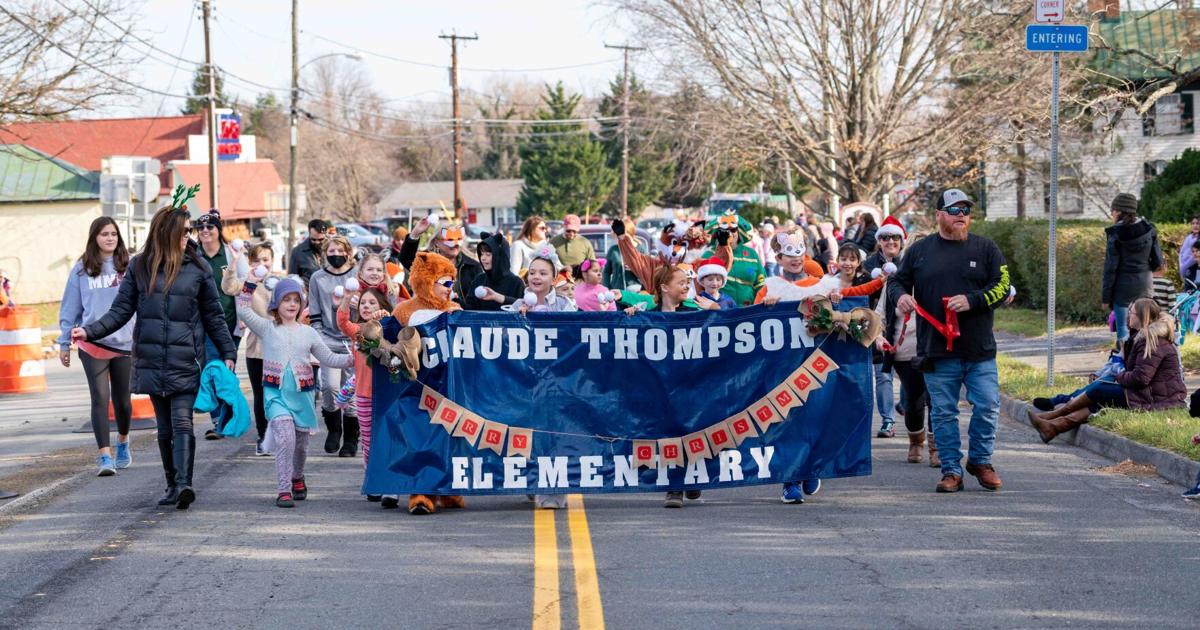
The Friends of Rectortown, a nonprofit created in 2003, has created an endowment fund to benefit Claude Thompson Elementary School. Organization President Henry Lavine is spearheading the effort.

“The principal and teachers use personal funds to help with students’ emergencies,” he said. “Perhaps a child needs a warm coat. Dad has no gas in the car to take a child to the doctor … the list goes on and on. Our teachers are underpaid, and this is a recurring hardship. The fund initially will provide the principal with a modest fund to deal with this. As the fund grows, there will be other benefits for the school.”

Lavine has already collected $20,000 for the endowment fund. The goal for this year is to have $30,000 to $40,000 for this year; over the next few years Lavine would like to raise $100,000 or more. The principle would remain intact; the interest would be used for students’ needs.

Claude Thompson Principal Mary Pat Warter said she — along with her team of administrators and the school’s guidance counselor — will decide how best to utilize the funding. “Students and families have needs that don’t fit into a line in a budget … shoes, backpacks, gas for a trip to the dentist.” She said at least one teacher has driven to Front Royal to pay for and pick up a pair of eyeglasses for a student.

Warter insists, “It’s not just us. I think all teachers are superheroes.”

She said, “We keep track of the expenses, for accountability, but not to judge.” Warter said that a high number of her students come from families that may be economically disadvantaged. “Before COVID, more than 60{e4f787673fbda589a16c4acddca5ba6fa1cbf0bc0eb53f36e5f8309f6ee846cf} of our students were eligible for reduced lunches. I can’t imagine that it hasn’t gotten worse.”

The pandemic has caused challenges for her students in particular, she said. Last year was so difficult because “the technology is inconsistent. We are all learning new things every single day, but it’s like flying a plane and building it at the same time. There is an academic deficit, and we find ourselves trying to catch up,” she said.

Warter said that the school does some limited fundraising. “We don’t make much from fundraising. Five hundred dollars from an event would be an amazing success. And we don’t like to ask more of our families,” she said.

Friends of Rectortown has contributed in myriad ways to the school, said Warter. “They have helped with weekend meal packs and with our food garden – they and some garden clubs helped us create that.”

Warter remembered when Henry Lavine and his wife Ronda McCrea moved to Rectortown. “We got phone call from this couple that had just moved to the area and wanted to help the school. We thought, ‘Oh, they’ll read to the kids,’ but he said, ‘Ah … no. We want to do more. We want to have people write checks.’”

Warter said, “Hank has a tremendous passion for community. He and his wife have made us a better school, helping us create strong partnerships with our community that have lasted for years.”

Warter has been principal at Claude Thompson for 20 years. “I feel better about everything now because of the community’s involvement.”

Donations to the endowment fund may be made out to Friends of Rectortown, Inc. with the notation: Claude Thompson Endowment Fund. They can be mailed to Friends of Rectortown, c/o Henry Lavine, P.O. Box 333, Rectortown, Virginia 20140.

Donors committed before the end of the  year will be listed as “founding sponsors” on a plaque at the school. 

No administrative fees will be incurred, said Lavine, “Every nickel will go to the endowment fund.”

What Can You Do With a Master’s in Education?

Educators have the privilege and opportunity to shape both the future of education and the minds they educate. At once a challenging and fulfilling career, they play a key role in our society by equipping students of all ages with the knowledge and skills they need to succeed in life. For those looking to pursue supervisory roles or specialize in their careers, discovering what you can do with a master’s in education can be the key to pursuing professional goals and an exciting vocation.

Benefits of a Master’s Degree in Education?

Many recent college graduates grapple with whether to begin teaching or to pursue an advanced degree. For those opting to pursue a specialization or teachers who have work experience and wish to transition to a specialty or supervisory role, a master’s degree may be the gateway to reach these career goals. By pursuing advanced education, future leaders gain the skills and in-depth knowledge needed to excel in their specialty and the opportunity to earn the increased salary that can accompany it.

Some of the advantages of earning a master’s degree in education include:

  • Increased confidence within and outside of the classroom
  • Professional networking opportunities
  • Increased chances of consideration for specialized roles such as instructional coach, mentor teacher, or school district specialist
  • Potential for a higher salary and increased benefits
  • Subject specialization

Pursuing a master’s degree allows instructors to take control of both the content they teach as well as the type of position they wish to pursue. With added knowledge, skills, and a network of fellow teachers, candidates increase their value as an educator and may have a better chance at reaching their professional goals, dictating how, where, and when they work.

Educator Specializations

Earning a master’s degree provides an exciting opportunity for teachers to develop their skills and knowledge in a particular area of education. Specialization allows instructors to embrace the aspects of teaching that inspire them, working in various areas, including student-focused specializations, such as exceptional student education; leadership roles; or programs, such as instructional design and technology.

Exceptional Student Education

Teachers who work in exceptional education work with pupils with disabilities. For those who already have a certification in exceptional student education, pursuing a master’s degree in exceptional student education is an opportunity to refine and build upon existing skills, gain an in-depth knowledge of alternative strategies and techniques to approach education, and improve the lives of their students.

Applied Learning

Instructors who specialize in applied learning focus on innovation in teaching, adapting both the ways in which they teach and the ways in which students learn by engaging in active and reflective learning. An advanced degree in applied learning focuses on modern psychological theories, principles of human learning and motivation to create a positive and engaging learning environment for students.

Educational Leadership

The field of education is constantly evolving, requiring leaders to drive change and innovation in the development of both new techniques for the education of students and the theories that inform education itself. Candidates interested in pursuing supervisory roles may want to seek a master’s in educational leadership to influence those changes and policies.

Elementary Education

Students learn differently and benefit from various teaching techniques throughout their educational careers. Individuals who enjoy working with children may decide to specialize in elementary education and pursue an advanced degree that focuses on the theories and practices that are most effective for young students. With a master’s in education, candidates are able to pursue roles at elementary institutions and advocate for positive change in the development of young minds.

Instructional Design and Technology

As business becomes increasingly dependent on technology, educators need to understand and embrace technology to equip their students with the knowledge and skills to succeed in the modern workplace. Teachers interested in pursuing advanced education in instructional design and technology are able to focus on a rapidly evolving specialty, learning current processes and influencing the future of their field.

Career Opportunities and Salaries for Educators

With the proper education and qualifications, graduates have the freedom to pursue various types of education and employment. As teachers seek more specialized areas of focus, the value of an advanced degree increases exponentially. Some roles may require a set of core competencies that may not be taught at the bachelor level making the completion of an advanced degree a crucial step to building sought-after skills.

Special Education Teacher

Special education teachers work with students with a wide range of emotional and physical learning disabilities. With the ability to work in both private and public institutions, special education teachers can positively impact students of all ages. According to the U.S Bureau of Labor Statistics (BLS), special education teachers earned a median annual salary of $61,400 as of May 2020.

Literary Coach

As students in elementary and middle school work on developing their reading skills, many organizations rely on literary coaches to aid in both teaching students how to read and creating plans to teach reading skills. Through public speaking, evaluations and the development of reading-focused programs, literary coaches establish programs to improve reading ability and comprehension. According to PayScale, reading specialists earned a median annual salary of around $53,700 as of August 2021.

Instructional Technology Specialist

With strong communication and technical skills, instructional technology specialists develop programs and teach other instructors how to implement them. Leveraging their in-depth knowledge of specific technologies, programs, procedures and theories, instructional technology specialists assist in key activities, such as creating and reviewing curricula, suggesting ideas for future innovations, and helping staff identify effective teaching and learning outcomes. According to PayScale, instructional technology specialists earned a median annual salary of about $52,100 as of July 2021.

Curriculum Specialist

Schools rely on curriculum specialists to ensure that students are exposed to the most relevant and accurate information and to help shape the theories, programs, and topics that teachers cover. By analyzing test scores, student or teacher feedback, and the functionality of different subjects or program tracks in the classroom, these specialists adjust curricula to improve educational outcomes and graduation rates. According to PayScale, curriculum specialists earned a median annual salary of around $58,700 as of August 2021.

Education Consultant

Choosing the most suitable postsecondary path can be a daunting prospect for many students and their family members. Education consultants are experts who aid in the decision-making process and advise students of their options as well as the steps required to pursue avenues such as higher education or workforce entry. According to PayScale, the median annual salary for education consultants was about $63,200 as of August 2021.

Instructional Coordinator

Instructional coordinators collaborate with other educators to develop, implement, and assess the curricula and teaching standards of schools. By evaluating the effectiveness of programs, coordinators can guide the policies of an organization to improve the learning environment. According to the U.S Bureau of Labor Statistics (BLS), employment growth for instructional coordinators is projected to increase by 6{e4f787673fbda589a16c4acddca5ba6fa1cbf0bc0eb53f36e5f8309f6ee846cf} between 2019 and 2029. These professionals earned a median annual salary of $66,900 as of May 2020.

Dean of Students

Tasked with overseeing faculty research, student services and the success of academic programs at colleges and universities, postsecondary education administrators attend to a broad variety of highly influential responsibilities. Typically graduates of an advanced degree program, such as a master’s in education, administrators implement the policies and procedures that guide educational institutions and earned a median annual salary of $97,500 as of May 2020, according to the BLS.

Shape the Minds of Tomorrow

Leaders in education have the opportunity and responsibility to motivate and inspire current and future generations of students. By pursuing specializations and career paths that embrace their strengths and passions, individuals with an advanced degree in education set themselves up for success and achieve their professional goals.

With a passionate team of faculty members and several comprehensive online programs to choose from, the UCF Online’s master’s degrees in education are designed to provide you with every opportunity to succeed. Discover what you can do with a master’s in education and make a positive impact on the minds of tomorrow.

UNC system to launch ambitious $97 million ed-tech start-up

The University of North Carolina system is leveraging $97 million in pandemic recovery funding to launch a nonprofit ed-tech start-up intended to bolster adult online education in a state with a looming need for more skilled workers.

Project Kitty Hawk is named after the North Carolina beach town the Wright brothers returned to repeatedly before achieving their dream of flight, an apt metaphor for an undertaking that UNC leaders herald as a transformative effort to reach the state’s estimated one million working adults who have some college education but no degree. Sweeping in its ambition, Project Kitty Hawk’s five-year financial plan projects 120 new online program launches and 24,000 net new enrollments across the system’s 16 university campuses by the 2026–27 academic year, according to working papers project leaders shared with Inside Higher Ed.

Half of the state’s workers are eligible for employer education benefits, which UNC system leaders hope to capture by doing a better job of keeping adult learners in the state. As of fall 2019, Liberty and Strayer Universities topped the list of most popular online offerings sought by North Carolina students, more than 60,000 of whom are enrolled in what the working papers called “high-cost, out-of-state programs.” UNC leaders say they want to draw those students into the state system, but in order to succeed, they must better tailor online services and infrastructure to working adults.

Project Kitty Hawk will officially launch after the new year. System leaders plan an equitable revenue share between participating campuses, which will be “well below the rate typically charged by third-party providers.”

By effectively creating its own nonprofit online program manager, UNC is trying to avoid the expense of the profit-driven OPM model for building online education programs. OPMs are increasingly under fire from educators and outside experts who believe the companies’ business models prioritize profits over educational outcomes and learning. Leaders at UNC assert that by forgoing an outside OPM—which they point out can take as much as 60 percent of revenue in exchange for covering up-front costs—Kitty Hawk will be self-sustaining by 2026 and will rely on what the working papers call a “private sector–like approach ​on behalf of a tremendous public good.”

The working papers depict a system with a uniquely ambitious vision for Kitty Hawk, which they say will provide “end-to-end support to help universities rapidly design and take workforce-aligned programs online as well as attract, enroll and support learners through graduation.” Kitty Hawk will rely on “a central technology and service infrastructure” to help UNC campuses reach working adults, in part, the working papers say, because it will be “less expensive than the traditional approach of more buildings, more personnel, and more programs … or [campuses] doing it themselves.”

While a handful of the system’s campus leaders hailed the initiative and said they weren’t worried about losing revenue or students to a competitive new systemwide hub, outside experts said UNC’s plans are at least partly reminiscent of systemwide online efforts elsewhere that struggled to get off the ground, partially because of such competition. They also questioned what they characterized as an overly ambitious goal to enroll 24,000 net new students in 120 programs with only $97 million in seed money across five years.

“Ninety-seven million is a lot, but not when you hear that they’re talking about 120 programs—that’s less than a million dollars a program,” said Phil Hill, an educational technology consultant and blogger. “The OPMs quite often invest several million per program … They might be biting off more than they could chew. They might not realize just how much time and effort and money is needed to really get these programs running.”

Richard Garrett, chief research officer at the higher education advisory firm Eduventures, called the effort “unprecedented.” But he added that while the system’s effort to centralize rather than create 16 separate online models may seem logical, the track record for doing so has not been good elsewhere.

“The culture of higher ed is decentralized, even among state systems,” Garrett said. “There’s a lot of pitfalls ahead … It’s hard to point to system-level initiatives like this in the online sphere that have thrived as opposed to struggled or been diluted … or, in some cases, failed.”

Competition for the Campuses

Administrators at the system’s campuses may see the initiative as competing with successful online programs they’ve already built at their universities, Garrett said.

Just a handful of representatives of the various campuses contacted about the initiative replied. Many of the more than a dozen queried did not return emails and calls seeking comment.

University of North Carolina at Greensboro provost Debbie Storrs’s response was emblematic of the overall reticence to discuss the initiative. Storrs said in a text message that the system was “in the best position to speak about this initiative.”

Allen Guidry, interim vice provost for academic affairs​ at East Carolina University, said via email that his campus has been “working for some time” to reach adult online learners and offers over 100 undergraduate, graduate and certificate programs online. He said that nearly half of ECU’s 28,000 students took at least one online course in fall 2021, and 8,261 took exclusively online courses. About 5,700 of the 8,261 exclusively online learners were 24 or older.

“With our history and success in online learning at ECU, we have certainly watched the development of Project Kitty Hawk with great interest,” Guidry said in his email. “We are eager to explore how this entity could add further value to our efforts to scale online learning at ECU.”

Asked about the potential for competition as institutions vie for students and revenue, Guidry said that because UNC Online now allows students to access resources across the system, “we really have joined hands in our efforts.” UNC Online currently enables students to register for thousands of online courses from the various UNC institutions but is distinct from Kitty Hawk, which will operate as an affiliated nonprofit OPM.

Chancellor Darrell Allison of Fayetteville State University, a historically Black college where about half of the 5,661 undergraduates are 25 or older, said Project Kitty Hawk will be an important addition to the system, which he said must adapt to changing demographic trends.

“We don’t have an option—this is the new reality,” Allison said. He added that the days of counting on recent high school graduates to populate a freshman class “are long gone.”

Only 9 percent of UNC system undergraduates currently learn exclusively online, and just 13 percent are over the age of 25. UNC leaders believe these statistics underscore the need for a more robust adult online offering.

System planning documents show the statewide growth rate for 18- to 24-year-olds is forecast to be 8 percent through 2029 and just 1 percent from 2029 to 2039, a radical slowdown that system leaders say is in part fueling their work.

UNC system president Peters Hans said he is determined to win back adult online learners who now turn to outside online education providers, many of whom he called “bad actors.”

“I think about those adults and the chance for them to get ahead in their jobs, or perhaps start a new career, [and] what a difference we can make towards hitting our state’s ambitious educational attainment goals,” Hans said. “We set the goal of two million more North Carolinians with high-quality credentials by 2030, and we see [Project Kitty Hawk] playing a critical role.”

Hans added that while some of the system’s universities already offer online programs targeted to adult learners, the current offerings do not engage them “nearly to the extent I think that we could and should be.”

He said Kitty Hawk classes will be high quality and more than “basically Zoom classes.” He hailed his senior vice president for strategy and policy, Andrew Kelly, who helped create the blueprint for Kitty Hawk after meeting and speaking with other system leaders and educational technology experts across the country about lessons learned from prior efforts. 

The plan “was to create an OPM-like nonprofit,” Kelly said, “thereby enabling our universities to build more of those undergraduate programs that can really serve those 25-plus working adults.”

He added that Kitty Hawk’s nonprofit status will give new programs “more latitude” to merely break even.

But even if programs are allowed to break even, UNC has a tough road ahead, said Iris Palmer, a deputy director with the education policy program at the center-left think tank New America who has studied other state university systems’ online education models. Palmer said her research has focused on adult learners and the difficulties many have faced. 

How Others Have Targeted Adult Students Online

Many state systems and individual universities have long viewed adult students as an important population to cultivate and have created or expanded online programs to appeal to the demographic. Strategies for building these programs have varied, with some systems electing to take over an existing university to lay a foundation for their efforts and others building a new internal unit, as UNC is doing. Still others have created entirely new institutions, as the California Community Colleges opted to do with their Calbright College effort.

Purdue University, the University of Arizona and the University of Arkansas and University of Massachusetts systems are among the most notable examples of institutions that have bought existing online programs. The model typically requires relying on external—and expensive—OPMs. These attempts to co-opt existing online universities are broadly seen as risky and have at times been riven with controversy.

Purdue’s acquisition of the for-profit Kaplan University, for example, spurred an outcry from faculty members who worried about lower educational quality and blurred lines between the university and its online counterpart, Purdue University Global. While many of these new efforts are still too nascent to judge, institutions have faced tough questions about how they intend to achieve their vision for massive new online efforts without sacrificing quality or introducing a troubling profit motive to nonprofit state systems.

An important precursor to the UNC effort can be found at the University of Missouri, which in March united the online programs offered by its four system universities under one umbrella, Missouri Online. The new online platform debuted with 260 degree and certificate programs, and officials promised an additional 22 programs by next year. System leaders spearheading the Missouri effort said the consolidation would increase collaboration and efficiency, though whether that prediction will prove true remains to be seen.

The California Community Colleges’ Calbright initiative has posted clearer results—and they are disheartening. Calbright was launched in late 2019 to great fanfare, but it is now under threat of being closed, with a recent state audit finding the online-only institution graduated merely 12 of more than 900 enrolled students in its first year. Calbright leadership was blasted by auditors for making poor strategic choices even when armed with a staggering $175 million in state funding promised through June 2025.

Palmer said her research findings make clear why programs like Calbright have struggled: adult learners often strain to learn online, particularly given the competing pressures they face at work and home. She said faculty mentorship and significant engagement with professors has proven to be vital for these students. Palmer worries that an online-only model could be challenging for UNC, since it is difficult for all but the most self-directed students to stay motivated when learning exclusively online.

Kelly said student success coaches are central to the Kitty Hawk model and that he foresees in-person support to complement the online instruction once the pandemic ends.

Project Kitty Hawk leaders say campuses will be able to opt out of participating, and they made clear they view their organization as a source of support for individual institutions. But competition dynamics are nonetheless a problem embedded in these efforts, Palmer said. With Kitty Hawk anticipating 24,000 new enrollees in five years—which Palmer said in an email is “very ambitious”—the 16 university campuses inevitably will be vying for the same students and revenue.

“Once you start to have centralized online programming,” Palmer said, “it can be seen as competition; it can be seen as the beginning of some kind of regulation, or throttling, of the online programs that are offered at each individual campus. It’s a very difficult thing to pull off.”

UNC leaders seemed to anticipate Palmer’s line of reasoning; the working papers assert that the organization will not support any institution’s plans for new programs without an attempt to “validate market demand.”

“New program opportunities can originate from Kitty Hawk’s own market intelligence function, emerge from the universities, or be solicited directly from employers and education benefit providers,” the documents say. 

Kelly emphasized the autonomy individual campuses will have to execute programs. He said the individual institutions will award degrees, offer the instruction and make assessments.

Hill reviewed the working papers and said he came away with the impression that the system hasn’t yet “done the hard work” of consensus building.

“They make a compelling argument why we need to invest internally, as in UNC system capabilities,” Hill said. “But it raises the question … ‘Are we building up capabilities just within this Kitty Hawk initiative? Or are we going to do it as a way of making each of the … campuses better?’ And I don’t think they’ve figured it out.”


Some districts looking to cut back PE as campuses reopen

Photo by Jessica Nosal/Courtesy of Playworks

Some districts have contracted with Playworks, an Oakland nonprofit, to provide activities and games for students.

As many students begin returning to campus after a year of being mostly stuck indoors during school hours staring at screens, some districts in California are cutting the programs that advocates say students need more than ever: physical education.

Faced with declining enrollment, several school districts are trying to save money by laying off or reassigning PE teachers. Hermosa Beach School District, an elementary district south of Santa Monica, laid off its only PE teacher in February. In Capistrano Unified in Orange County, about half the PE teachers have been reassigned, leaving some remaining PE teachers with rosters of more than 500 students. San Lorenzo Unified, south of Oakland, voted to eliminate 12 PE teachers, including its entire elementary PE staff.

These cuts follow deep reductions to PE that many districts made during the pandemic, due to the difficulties of teaching PE virtually. Over the year that campuses were closed, 40{e4f787673fbda589a16c4acddca5ba6fa1cbf0bc0eb53f36e5f8309f6ee846cf} of California PE teachers said they provided less instruction than they did before the pandemic, according to a research brief published in March by the California Association for Health, Physical Education, Recreation and Dance.

In addition, 1 in 10 PE teachers said they’d been reassigned to teach a subject other than PE, and 2 in 10 elementary schools said they didn’t offer PE at all during the pandemic, according to the report.

Physical education instructors in elementary schools are especially vulnerable to cutbacks. That’s because under state law most regular elementary school teachers have multiple subject credentials, which means they are qualified to teach PE in addition to other subjects. In middle and high schools, PE instructors must have a special credential.

The cutbacks to physical education in some districts could not come at a worse time, advocates said. Exercise, games, time outdoors and other hallmarks of PE can play a key role in helping students readjust to in-person school, especially after a year that’s left many students stressed and out of shape, said Terri Drain, president-elect of the Society of Health and Physical Educators and a former PE teacher in Pleasanton.

“We know what kids need right now. They need to get moving, reconnect with their peers, build their self-esteem. They need to laugh again,” Drain said. “Why would we not do everything we can to prioritize students’ physical and mental health right now?”

California’s K-12 physical education standards are mandatory, and state law requires that schools provide 200 minutes of physical education every 10 days in elementary schools and 400 minutes every 10 days in middle and high schools. In March 2020, Gov. Gavin Newsom waived the minimum number of required PE minutes when campuses closed, and PE teachers found creative ways to get students moving while learning from home.

As federal and state funding becomes clear over the next few months, some districts may reinstate their PE teachers. It may be too early to predict a drastic downsizing of PE teaching staffs, said Troy Flint, spokesman for the California School Boards Association.

“It’s hard to generalize about teacher layoffs, and the current moment is more unpredictable than usual since districts are undertaking so many new endeavors and there are so many different approaches to instruction during the pandemic,” Flint said.

But even before the pandemic, some districts were cutting back on PE as a way to save money. Some eliminated elementary school PE teachers and assigned classroom teachers to lead PE with their students, which is allowed by their credentials, but which some teachers say they have little time for. Other districts cut back their PE staffs in middle and high school, leading to classes of 100 or more students. Some rely on online PE programs, which is allowed under state law.

And some districts have cut back PE while hiring nonprofit groups to run on-campus sports and physical fitness programs.

Playworks, an Oakland-based nonprofit, was founded in the 1990s in part to fill the gap left by diminishing PE programs, especially in elementary schools. It now serves 525 schools nationwide, including 140 in California.

Playworks provides coaches and trains existing school staff and volunteers to lead games such as tag and kickball during recess, something students were doing less of as PE was cut back. Learning to play simple childhood games — especially those that involve plenty of exercise — can help students learn teamwork and conflict resolution, gain social skills, focus better in class and have fewer behavior problems, according to a 2013 study by Mathematica.

But Playworks staff are not credentialed PE teachers, and the coaches don’t necessarily follow the state’s PE standards.

“We are very clear. We provide a complement to PE. We’re not a replacement,” said Michelle Serrano, Playworks’ vice president of field operations for California. “We focus on recess, which can be a challenging part of the school day for some students.”

During the pandemic, most schools offered PE online. These classes were mostly delivered virtually by the school’s PE teachers, but in some cases by for-profit online curriculum providers. The quality varies, but some online PE courses have advantages over in-person PE when it is a choice for both student and teacher, said Dr. David Daum, an assistant professor of kinesiology at San Jose State who’s studied virtual PE programs.

For under-resourced schools that only have a few basketballs or crumbling facilities, online PE can provide a safe way for students to get exercise. It also eliminates the need for locker rooms, which are a frequent site of bullying and all-around dread for some students. It also focuses on individual activities, such as running or calisthenics, instead of team sports, which some students prefer. And students who are working or caring for younger siblings like the flexibility to exercise when they have time, Daum said.

But online PE has a few significant shortcomings, he said, because it usually focuses on fitness, and only covers a fraction of the state’s PE standards. Also, during the pandemic, it’s difficult for students to establish personal relationships with teachers online, he said.

“The whole goal of PE is to give students skills for a lifetime of physical activity,” Daum said. “Online PE existed prior to the pandemic and will continue post-pandemic. It’s out there, it’s not going away. I think we need to ensure that it’s high quality.”

Dan DeJager, a PE teacher at Meraki High School in San Juan Unified near Sacramento, said his job is secure but his son’s elementary school in a nearby district reassigned its PE teacher. DeJager’s son, Hunter, a 2nd-grader, was crushed when he found out.

“He cried,” DeJager said, noting that the lack of PE during the pandemic has also been hard on his son. “My son is very active, he loves to move around. Now, he gets almost none of that. He’s gone from playing tennis and baseball to playing a lot of video games. I do what I can, but telling him to do pushups is not the same as him learning movement skills in PE.”

DeJager, a national High School Physical Education Teacher of the Year in 2019, said he’s frustrated that PE is not more of a priority for school districts as campuses reopen. Playing games, getting exercise and having fun outdoors can provide students with a healthy and much-needed chance to blow off steam after a year of lockdown, he said.

“Here we are in the middle of a pandemic, with rising rates of obesity, mental health challenges, underlying health conditions … and yet the first thing we cut is PE? It’s ridiculous,” he said.

Do you count on EdSource’s reporting daily? Make your donation today to our year end fundraising campaign by Dec. 31st to keep us going without a paywall or ads.