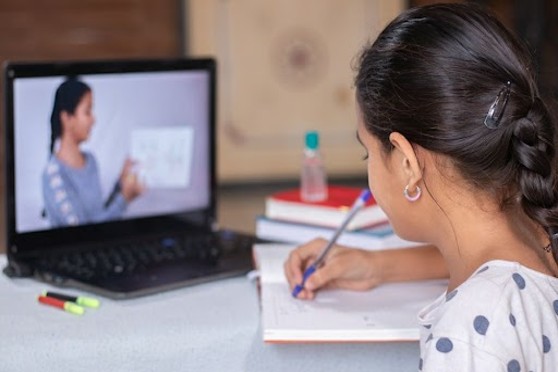
Note to policymakers: Home-schooling is here to stay | Lifestyle

Note to policymakers: Home-schooling is here to stay | Lifestyle

Homeschooling is here to stay and the time has come for policymakers to acknowledge that fact. After years of increasing at a rate of about 3 percent a year, the number of parents choosing to homeschool their children has spiked, triggered by the COVID-19 pandemic.

According to the U.S. Census Bureau, the portion of children being homeschooled doubled from 5.4 percent during the 2019-20 school year to 11 percent in 2020-21. Among Black families, homeschooling jumped nearly five-fold during that time, from 3.3 percent to 16.1 percent.

Even in Massachusetts, where only 1.5 percent of students were homeschooled before the pandemic, the number was up to 12.1 percent by the fall of 2020.

And it’s no longer just for religious conservatives. There has been a big jump in “second choice” homeschoolers, who choose the option for more pragmatic reasons. With more parents working from home when the pandemic began, they had a bird’s-eye view of K-12 education in the age of COVID. Many didn’t like what they saw.

It didn’t take an education degree for them to see that overall student progress was slowing – a fact that has since been borne out in state tests. It was equally clear to parents that online learning wasn’t working for one or more of their children.

Many thought about homeschooling for the first time. Others who had previously considered it concluded that this was the time to give it a shot. Lest we forget, homeschooling IS “in-person” learning – one of the factors that public school authorities have insisted that parents were demanding.

Another indication that homeschooling has grown beyond its fundamentalist roots is that about half of parents with more than one child in school don’t homeschool all of them. This not only suggests that parents can tell when online education is working and when it isn’t, but that their motivation is educational, not ideological.

While the belief that learning at home is a safer environment than going to school was a motivator, especially for urban parents, having more say over their child’s education was the dominant reason for the increase in homeschooling.

As for the idea that attending school is critical to a child’s socialization, homeschooling parents would counter that their choice doesn’t prohibit their children from participating in sports, cultural and other group activities, or even just hanging out with the neighborhood kids.

Still, homeschooling will undoubtedly be a temporary solution for some. But the upward trend in families choosing to do it is sure to continue and likely to accelerate. Many parents had options for educational choices during the pandemic. But the increase in families opting for homeschooling was far more significant than that experienced by other options such as private/parochial, charter, vocational and virtual schools.

Many in the educational establishment vehemently oppose homeschooling, but the fact is that it results in massive savings for traditional schools. If it were banned and the five million American students the Census Bureau estimates are being homeschooled is correct, it would cost $50 million-to-$75 million a year, or nearly $1 trillion over a student’s 13-year K-12 career.

In addition, schools across the country would need 80,000 more teachers at an annual cost of $13 billion, and between 4,000 and 10,000 school buildings would have to be built.

Homeschooling is legal in all 50 states, but each has its own regulations. Some are encouraging, but others make the homeschooling choice unduly difficult for families.

Opposition from traditional education interest groups is one reason why homeschooling often gets the cold shoulder from government. But the time has come for policymakers to acknowledge it as a viable educational choice and do more to support those who are considering non-traditional options for their children’s education.

That means school districts should provide information to parents seeking information about those options and include links on their websites to the homeschooling support groups that exist in every state.

We are only beginning to appreciate the long-term impacts the pandemic has had on our way of life. In education, one of those impacts is accelerating the rise of homeschooling. It’s time for policymakers to catch up with the times.


Physical education classes can help schoolkids in other areas, analysis finds

Physical education classes can help schoolkids in other areas, analysis finds


Physical education classes may boost intellectual and academic performance in schoolchildren, a new study has found. Photo by Michael Schwarzenberger/Pixabay

June 29 (UPI) — Enhanced physical education classes in school boost children’s brainpower and academic performance, particularly in math, according to an analysis published Tuesday by the British Journal of Sports Medicine.

Students at schools in which physical education classes were taught by dedicated teachers and included intellectually challenging activities had evidence of improved cognitive and academic performance based on standardized test scores and grades, among other measures, the data showed.

However, the analysis also revealed that students ages 5 to 18 gained little benefit from more frequent or longer-duration physical education classes, the researchers said.

“Physical education seems to promote improvements in several future health-related outcomes,” study co-author Dr. Antonio García-Hermoso told UPI in an email.

“Although physical education alone may not provide young people with all the exercise they need to fight childhood obesity, [it can] provide young people with tools to lead a healthy and physically active lifestyle,” said García-Hermoso, an investigator at the Public University of Navarra in Spain.

The findings are based on analysis of data from 19 studies that collectively enrolled nearly 8,700 children and teens in 11 countries, including the United States, the researchers said.

The included studies evaluated the effects of physical education on intellectual and academic performance using standardized test scores and students’ grades.

Amid increasingly limited budgets, many schools worldwide, and nationally, have made cuts to physical education programs — a trend that prompted García-Hermoso and his colleagues to conduct their analysis.

This is despite several studies that have linked physical activity with improved learning and academic performance, the researchers said.

The new analysis of the study data revealed that interventions focused on boosting the quality of physical education programs boosted students’ brainpower, particularly at the primary school level.

Adding “cognitively challenging” activities such as dance or martial arts, having lessons led by a physical education specialist and including high-intensity fitness activities, sports and team games had the most impact, the data showed.

But boosting the number or length of physical education classes had a “marginal and insignificant” effect on academic performance.

Still, increasing the length of physical education class time does not negatively affect academic performance, the researchers said.

“The beneficial effects of regular physical activity on young people’s cognition are more than well known,” García-Hermoso said.

“Overall, physical activity may enhance cognition by modifying white matter integrity and activating key regions of the brain responsible for cognitive processes,” he said.

India to become a $313 billion online education market soon: Report

India to become a 3 billion online education market soon: Report

Summary

Report by non-profit Aspire Circle elaborates on 10 disruptive investment ideas that can transform the way Indians receive education

It shows the way forward in building human capital, keeping in mind the needs of the 21st century education and job market

India is poised to become a $313 billion online education market soon, thanks to the pandemic-induced shift to online classes as the chief mode of education, a new report has found.

The report, titled “Investing for Impact: Education, Skills and EdTech”, has been released by Gurugram-based Aspire Circle, a not-for-profit forum promoting enlightened social leadership in India through fellowships and research.

The report elaborates on 10 disruptive investment ideas that can transform the way Indians receive education, including skilling and training catalysed by new-age educational technologies. It shows the way forward in building human capital, keeping in mind the needs of the 21st century education and job market.

The 10 ideas that may steer the online education boom in India are:

  • Technology-enabled K-12 education
  • Online test preparation platforms-led inclusion and affordability
  • Supplemental and extra-curricular education
  • Teacher training and development
  • Affordable education loan platforms
  • Gig economy and unbundled microtasking
  • Affordable student housing
  • Innovative finance in education and skilling
  • Micro and alternative credentials for employability skills
  • Social and emotional learning

According to Amit Bhatia, founder of Aspire Circle, India’s education and skills market will grow almost double in this decade — from $180 billion in 2020 to $313 billion in 2030 — while creating five million incremental jobs and impacting 429 million learners.

Investors, entrepreneurs and policy makers will engage with Aspire Circle research based recommendations to help India truly realise its demographic dividend, Bhatia added.

The Covid-19 situation had led to mass school closures, affecting 150 million girls, 90 million among them being left without any learning opportunity whatsoever, informed Safeena Husain, founder of NGO Educate Girls which works to provide education to girls in rural and educationally backward belts in the country.

Husain added that if these girls are given the opportunity to access technology-driven quality education that is also affordable — including the supplementary social and emotional learning, and loan platforms envisioned in the report — that would go a long way in maximising the impact on education.

Aspire Circle’s three foundational initiatives include Aspire Young Achievers, a scholarship programme launched in 2008. The Rs 1 lakh scholarship is awarded annually to three young achievers from humble backgrounds under age 30 in the field of sports, art, culture, academics or civil society.

The Aspire Circle Fellowship is a one-year curriculum for CSR heads, foundation heads, impact investors, impact entrepreneurs and NGO heads to inspire enlightened leadership.

In 2020, Aspire Circle launched RISE Interns, which prepares youth as new cadre of impact professionals for an imminent impact revolution with the aim to enhance India’s chances of global leadership.

Last updated on 20 Nov 2021

5 Ways To Break Into The Video Game Industry

5 Ways To Break Into The Video Game Industry
video game developer working on a computer with 3d videogame design

Video games are part of a multibillion-dollar industry in which lucrative employment opportunities abound.


Getty Images


When you break out the game console to play a video game like NBA2K, chances are the biggest decision you’ll have to make is which player or team you want to be. But have you ever considered becoming one of the people who actually designs a game like NBA2K?

Worth an estimated US$336 billion, the video game industry is bigger than TV, movies and music combined. And since the industry is growing at a rapid pace, there are plenty of opportunities to work in this field. From game designers and software engineers who program the games to graphic artists or electrical engineers who design the game consoles, careers in the video game industry abound.

These jobs pay from about $55,000 to $100,000 or more annually. But somewhat like the NBA itself, the path into the video game industry is filled with tough competition.

As former head of graphics for a large video game company – and as head of the Learning Interactive Visualization Experience – or LIVE Lab – at Texas A&M University, I know firsthand what it takes to land a job in the video game industry. Here are 5 tips on how to do just that.

1. Design Your Own Games

When it comes time to apply for a job or even an internship at a video game company, it helps to show the games you’ve created or modified.

Fortunately, game engines, which are the underlying technology for games, are available free of charge and allow you to create your own game. Unreal and Unity are two you may want to try out.

You can also use free software, such as Houdini and Blender, to create video game assets such as buildings, characters, vehicles and animations.

If it’s too daunting to create a game from scratch, you can always “mod” – short for “modifying” – an existing game like Portal 2, Civilization or Minecraft. This is a great start to learning the basics of game design and asset creation.

2. Participate In Game Jams

A game jam is a contest in which participants create a new video game within a set time frame. Game jams are a great way to meet and work with others on a game project and just learn how to design games. Many jams feature video game company representatives. These company reps serve as mentors, judges and coaches. They can give you tips and tricks on how to break into the industry. They can also give you leads on jobs.

Game jams are usually short, like a day or two, but some last a week or more. You can enter a game jam as an individual or as a small team. Some game jams are focused on specific themes such as health, conservation or science and provide resources for teachers and students to participate, such as the Games for Change Student Challenge. Other game jams are open to anyone including professionals, like the Global Game Jam. Some game jams are in-person, allowing you to meet face to face with other game designers, artists, developers, industry mentors and game companies, like Chillennium.

players at a gaming convention

Video game conventions are a great way to advance a player’s career.


Joe Buglewicz/Getty Images

3. Attend Game Conventions

One of the biggest conferences in the U.S. is the annual Game Developers Conference in San Francisco, which historically has attracted over 29,000 attendees. In Europe, the annual Gamescom conference in Cologne, Germany, has drawn over 370,000 attendees. Several PAX conferences happen throughout the year in different locations in the U.S. PAX started out as Penny Arcade Expo before developing into a full conference and exhibition. These conferences enable attendees to find out about new games, meet professionals from the games industry, play games and attend seminars and workshops on topics related to designing and developing games.

A conference like PAX East also provides opportunities for indie developers to showcase their games and get feedback from the public. Most of the conferences will be back in person in 2022 and require a fee to attend or exhibit. The price for tickets can range from $50 to several hundred dollars.

4. Take Classes In Game Design

Many high schools, community colleges and universities now offer game design classes.

In addition to these classes, it helps to take classes in math, physics, art and technology, starting in high school if you can. Almost all careers in the video games industry benefit from all of these fields. A game designer trying to create a balanced game requires a solid foundation in math and statistics. Balancing a game requires the designer to use math and statistics to ensure that no particular game element – such as a particular character or strategy – overpowers any other element.

Even if you don’t think you will be using math or doing any art, having a basic understanding of both and being able to talk about those subjects with colleagues goes a long way.

5. Play Away

In order to create great games, you need to be well versed in the games that are currently being played and have been successful in the past. This means that you should also play games that you normally would not play and even games that you don’t like. Not all people like all games. There are many different types of games from entertainment games to educational games, games for health, games for science and many more. Being able to critically look at games and identify which elements work well, which elements could be improved and which elements you might use for your own games will help you become a great game designer.

Breaking into the games industry is possible with a little bit of work. It can also be hugely rewarding. Just imagine the game you helped create is teaching players new knowledge, or helping players heal faster, supporting scientists in the discovery of new proteins or entertaining players for hours.

County holds off on acquisition of McDowell Elementary School property

County holds off on acquisition of McDowell Elementary School property

Shifts in Education Trends: What are the Advantages of Online Learning?

Shifts in Education Trends: What are the Advantages of Online Learning?
Picture through Pexels

Remember to Help Local Advertisers

Thanks to the availability of information and facts on the internet, people today have located a way to understand in a practical and price tag-helpful manner. Online understanding is a fashionable approach that allows learners to acquire accessibility to online programs from major universities close to the planet. In this article are some strengths of on the internet finding out.

1. Flexibility

In on-line classes, students study at their individual pace and time. Pupils can attend a course as for every their timetable with out the hassle of commuting to the physical university. Some college students and doing work specialists simply cannot show up at a common school class because of their hectic schedules. However, on the internet programs enable them to study new ideas each working day with out owning to wait for the following readily available semester or expression. In a actual physical classroom, academics limit the number of course options to a specific stage of discipline. However, in the case of on the net studying, college students can accessibility a wide variety of courses from their possess homes. You can obtain the very best on the net study course platforms just with a bit of research on Google. Additional and additional universities are creating their classes accessible on the web, as it is advantageous for pupils who are not able to journey day-to-day.

2. Value-efficiency

On the internet courses deliver equivalent opportunities to every single college student and enable them in reaching far better educational outcomes even if they are not able to manage costly degrees at classic universities. Even right after paying for tuition charges, textbooks, transportation expenses, and so on., students are nevertheless in a position to preserve dollars with on the net understanding. They can also get used books that are economical. Moreover, college students with disabilities and persistent diseases do not have to commute each individual day, which will save them funds for their health care expenses. Using conventional classes usually requires attending lectures or seminars which need touring to make it worthwhile, and not every person can have an condominium in the city or go by bus every single day. For this reason, on-line learning is extra convenient and very affordable.

3. Tailored Mastering

The regular learning method is not versatile and simply cannot be custom made as for each the needs of every college student. It is successful but does not present specific focus to every single pupil, not like on-line mastering. In a classroom, every pupil has to rely on the teacher and other students when communicating new concepts. However, in on-line courses, students can get a ton of methods from a wide network of methods. Furthermore, they have the means to connect with other learners and academics even immediately after finishing an academic course, which enables them to further improve their capabilities.

4. Contemporary Approach

Remember to Help Local Advertisers

On the net programs are now widely employed by pupils all around the globe simply because it supplies present day education and learning that matches today’s technological improvements. Lectures can be seen on desktops or smartphones, which lets students to study at their very own speed. What’s more, lecturers use interactive tools these as video clips, video games, quizzes, virtual laboratories, and online conversations to aid helpful understanding for their students. On-line programs also allow pupils who lack self-confidence thanks to language barriers or stress difficulties to really feel more snug learning in an setting absolutely free of judgmental peers and academics.

5. These programs can be applied as a reference for long term work

Quite a few corporations want to seek the services of new workforce who have at the very least a bachelor’s degree and in some cases an innovative degree. Many universities supply online programs, and these courses may well give the important knowledge and practical experience expected for pupils to come across positions or new opportunities. On line classes are getting extra reputation because they permit college students to understand at their personal pace. What’s more, these courses provide instruction on the hottest developments in engineering, which is critical for today’s competitive work market. Many thanks to online learning, numerous new ways of instructing have been formulated, so students can maintain up with the quickly-shifting earth.

Is on the net mastering better than regular learning?

When evaluating standard and online studying, both have their very own strengths and disadvantages. Nonetheless, in normal, on-line classes are much more effortless and versatile than regular courses. Pupils do not have to commute each individual day, which will save them income for their clinical charges. They can also purchase made use of textbooks that are affordable.

In addition, learners with disabilities or long-term sicknesses do not have to commute each individual day, which will save them cash for the transportation fees included. Having classic lessons needs touring to make it worthwhile, as a result staying primarily based at household would be a terrific gain to these varieties of students.

An additional aspect of the coin indicates that typical understanding is required for building strong individual relationships, though on the net programs absence regularity since the instructor simply cannot see their encounter or observe other features of this interaction. This makes on-line learning less human, top to it currently being less efficient. Moreover, some learners are not fantastic writers and may perhaps have problems expressing by themselves, which would make on the web programs tough for them.

Impression by way of Pexels

As the entire world proceeds to acquire, on line mastering has turn into a important section of training and understanding for today’s new generations, and the pros of on-line mastering are extra clear. This will support the firms afterwards on and students will be a lot more successful.