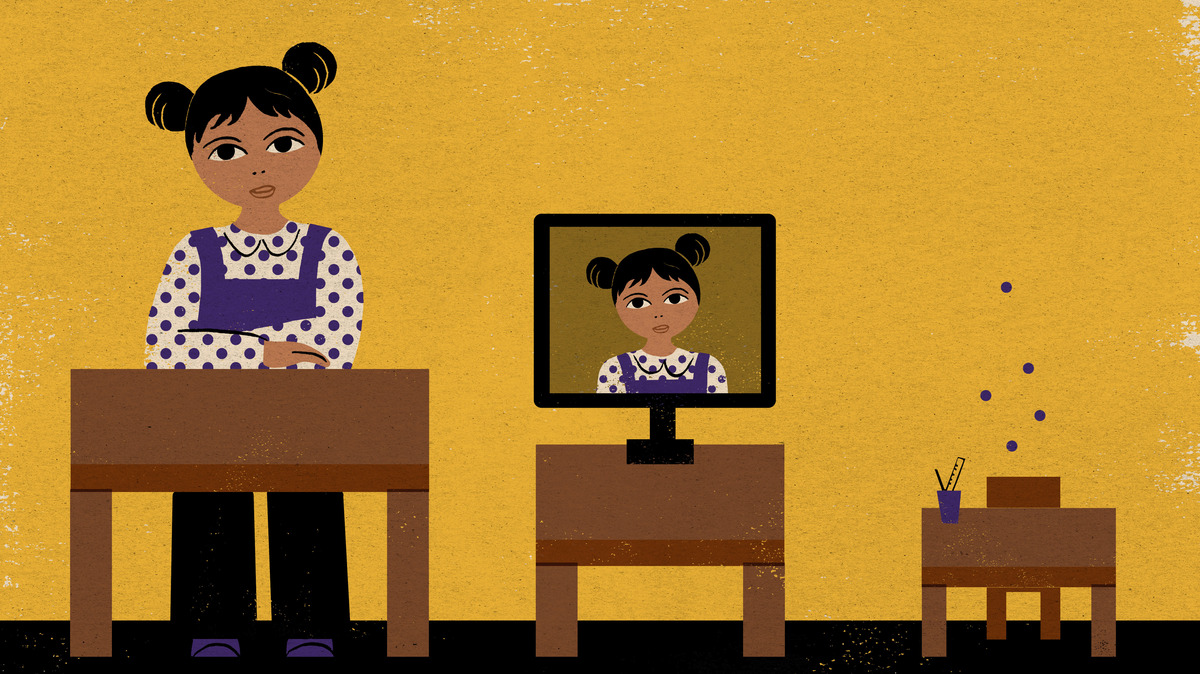
Smart Horizons Career Online Education Encourages Adults to Finish High School in 2022

Smart Horizons Career Online Education Encourages Adults to Finish High School in 2022

POMPANO BEACH, Fla., Dec. 16, 2021 /PRNewswire/ — Smart Horizons Career Online Education encourages Floridians who haven’t completed high school to make earning their high school diplomas a 2022 New Year’s resolution.

Thanks to the Florida Legislature, adults can earn an accredited private high school diploma with Career Online High School through their local public library. More than 2.5 million Florida residents 25 and older do not have a high school diploma, according to the 2019 U.S. Census.

“As everyone’s considering New Year’s resolutions and how they can improve their lives, we encourage them to finish high school and to earn a career certificate for free through their public library,” said Dr. Howard Liebman, Superintendent of Schools, Smart Horizons Career Online Education.

Anyone who is interested in finding out whether they are eligible for a scholarship through their public library should visit FL.CareerOnlineHS.org to complete a brief survey.

Participating libraries offer the nationally accredited private high school program, which includes a 24/7 online classroom, personal academic coaches, and real-world career training in nine fields.

The following Florida libraries are offering scholarships for this program:

  • Barbara S. Ponce Public Library of Pinellas Park
  • Boca Raton Public Library
  • Boynton Beach City Library
  • Broward County Library
  • Calhoun County Public Libraries
  • Charlotte County Libraries and History
  • Citrus County Library System
  • Clay County Public Libraries
  • Columbia County Public Library
  • Clearwater Public Library System
  • Dunedin Public Library
  • Flagler County Public Library
  • Haines City Public Library
  • Heartland Public Library Cooperative
  • Hendry County Libraries
  • Hialeah Public Libraries
  • Indian River County Library System
  • Largo Public Library
  • Leesburg Public Library
  • Mandel Public Library of West Palm Beach
  • Mulberry Public Library
  • Nassau County Public Library System
  • New Port Richey Public Library
  • New River Public Library Cooperative
  • North Miami Beach Public Library
  • Northwest Regional Library System (Bay, Gulf, & Liberty Counties)
  • Okaloosa County Public Library Cooperative
  • Orange County Library System
  • Osceola Library System
  • Safety Harbor Public Library
  • Santa Rosa County Library System
  • St. Johns County Public Library System
  • St. Petersburg Library System
  • Tampa-Hillsborough County Public Library
  • Tarpon Springs Public Library
  • Volusia County Public Library

Career Online High School is part of Smart Horizons Career Online Education, the world’s first private accredited online school district. Visit shcoe.org.

Media Contact: [email protected]

SOURCE SMART HORIZONS CAREER ONLINE EDUCATION

For Alta View second-graders, math night’s sums equal educational games combined with family

For Alta View second-graders, math night’s sums equal educational games combined with family

By Julie Slama | [email protected]

Second-grader Liam Johnson was at school all day, but that didn’t stop him from returning that evening. Alongside of him, were Trak Johnson and Natalie Brun.

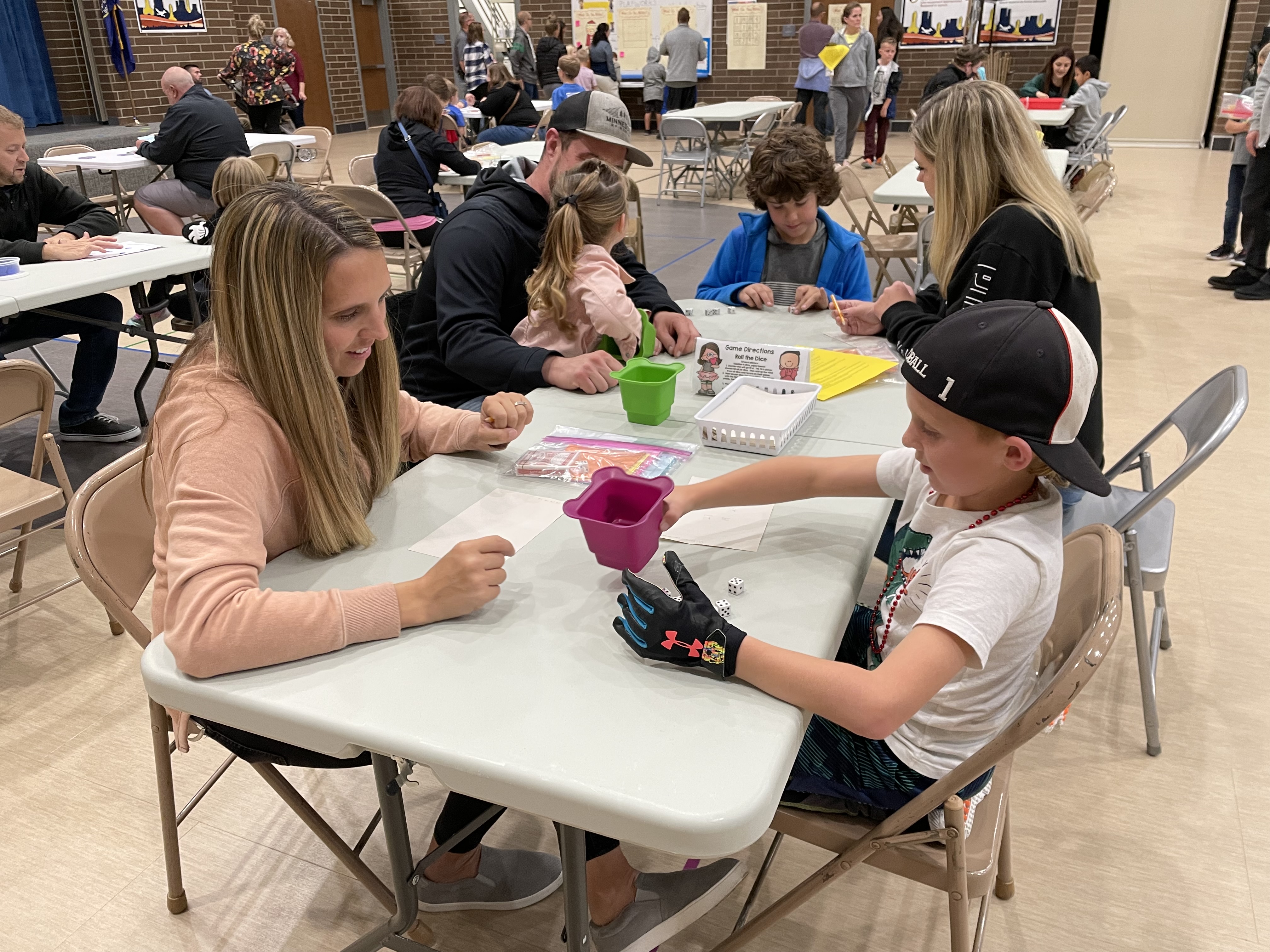
Together, they helped him adhere colored square stickers onto a black sheet of paper. It looked like a building with colorful windows, and even more so like one, when it was posted alongside other second-graders’ papers. Yet, Liam counted, by twos, the number of windows he created on his building and recorded the number of each color window he had.

It was Alta View Elementary’s fourth annual math night, designed and prepared for second-graders to have time with their parents or guardians, as a chance to learn math activities that will help their skills, said second-grade teacher Tami Malan, who added each student received a bag with a set of cars, two dice and directions for 40 different math games they could play at home.

“The whole idea was to give the families things to go home and practice with math so that the kids can make growth and can feel successful in doing something that they’re learning and practicing math facts,” she said, about the idea she came up with years ago after having a frustrating week at school. “I came back to school Monday and told my team, ‘how about a math night?’ I had everything planned out. It’s such a fun thing, because it is just the kids and they’re excited because it was just mom and dad and no other siblings; it was just them.”

While the COVID-19 pandemic may have had an impact on all students’ learning, Malan said this night wasn’t aimed at catching up from that year, but rather it “is an emphasis we are trying, to bring our math scores up schoolwide.”

However, it wasn’t like sitting in desks, adding up sums. Alta View’s math night was in the school’s gym, which was set up with activities that go along with the second-grade curriculum. About 60{e4f787673fbda589a16c4acddca5ba6fa1cbf0bc0eb53f36e5f8309f6ee846cf} of the second-graders came to have an opportunity to estimate the number of candies in a jar; or adding numbers from five cards drawn from a deck to a roller coaster dice multiplication game where students would roll dice and multiply the two numbers. There also was a mental math strategy game where the object was to roll dice and try to get as close to 101 without exceeding it.

“It was just really fun to watch the families doing them and then, they took them home so now they have activities to do for math practice every night if they desire,” she said about the games they researched and collected over their teaching years. 

Malan said one game, Roll the Dice, would challenge students against their parents, determining who could add up the six dice rolled fastest.

“It was just fun to watch and the parents were amazed how well the kids were doing and how quickly they were able to get it. The kids were excited and we had really good comments from the parents about how much fun it was for them to sit down and spend time with their kids.”

Brun, who played many of the games before with her daughter after attending a previous math night, said they plan to play them with Liam this year.

“Having the games at home or having a math box is something that we can pull out and play and have fun, yet know he is learning at the same time,” she said.

Liam’s father, Trak, said that he likes the simplicity of the games and the variety, instead of just reviewing flashcards that “may get kind of mundane.”

“Hearing that you’re playing math games sounds intimidating, but there’s actually simplicity in all these games,” Johnson said. “They’re all very unique and it just shows how just doing simple things like this really works with them to cognitively do the steps that are involved in mathematics without realizing that they’re doing it. They’re just playing a game as far as they’re concerned. And they’re (the games) very nice, simple, quick and easy. I like being able to have these as a way to take a break and play again. Then, it becomes a whole lot less intimidating that way.”

Liam remembers an Ancient Egypt game like “tic, tac, toe” that he played at math night where he moved his yellow game pieces along the nine dots, without skipping any spots, to create a row of yellow and to win.

“I like math sometimes, like easy math, but sometimes I don’t because it’s hard to do,” Liam said. “Then, I do it more, like these games, and I get better at it, and it becomes easy and it’s just fun.”

FCPS lays out possible timeline for new Dunn Loring Elementary School

FCPS lays out possible timeline for new Dunn Loring Elementary School
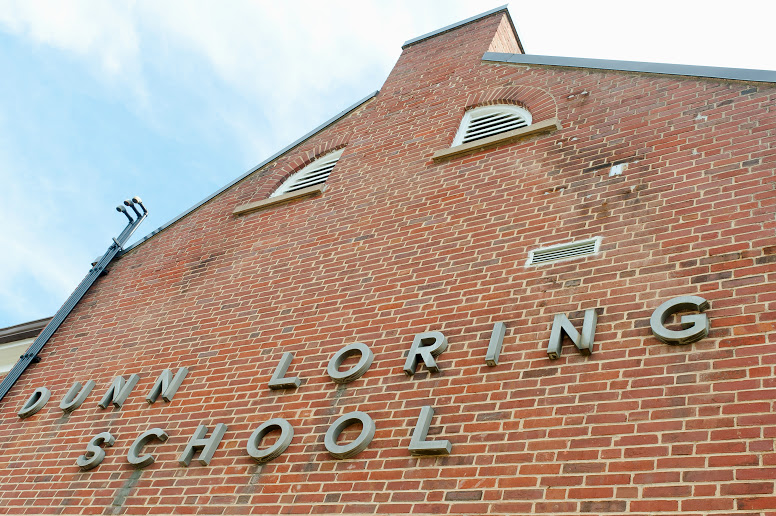
Dunn Loring Center (courtesy Fairfax Public Schools)

Planning for a new elementary school in Dunn Loring could begin as soon as the second half of 2022, Fairfax County Public Schools projects in its proposed Capital Improvement Program (CIP) for fiscal years 2023-2024.

As approved by the Fairfax County School Board back in January, the new school will take over the Dunn Loring Administrative Center at 2334 Gallows Road, which started as an elementary school before being repurposed in 1978. The building is now being used for some special education and parent programs.

The project’s estimated $36.7 million budget is already fully funded by money from 2017 and 2019 school bonds that were originally destined for a new school in Oakton High School area.

Funding for the new school was welcomed by parents at Shrevewood Elementary School, which was at 118{e4f787673fbda589a16c4acddca5ba6fa1cbf0bc0eb53f36e5f8309f6ee846cf} capacity in the 2019-2020 school year. The CIP says its capacity dropped to 99{e4f787673fbda589a16c4acddca5ba6fa1cbf0bc0eb53f36e5f8309f6ee846cf} this year after an enrollment decline and minor facility modifications.

However, the boundaries for the Dunn Loring school have yet to be determined beyond it being “intended to relieve overcrowding in the Dunn Loring/Falls Church/Tysons area,” as stated in the CIP.

“School assignments for the repurposed Dunn Loring Elementary School will be determined as part of any boundary study for the school,” FCPS said in a statement. “The boundary study is currently estimated to begin toward the end of construction in 2026.”

The CIP indicates that planning for Dunn Loring Elementary will begin in fiscal year 2023, which starts on July 1. Permitting could start in FY 2024, followed by construction in FY 2025. The project is expected to be complete in FY 2027.

Other Tysons-area projects addressed by the proposed CIP include:

  • Madison High School: a 35,000 square-foot addition, currently under construction and expected to finish by the end of 2022 ($18 million)
  • Louise Archer Elementary School: renovation adding over 50,000 square feet to the building. The voter-approved 2021 school bond included funds for construction, which is expected to start this fiscal year and finish in FY 2024. ($39.9 million)
  • Cooper Middle School: renovation expanding the building by approximately 65,000 square feet. Construction is underway and set to finish in summer 2023. ($54.4 million)
  • Falls Church High School: approximately 126,000 square-foot renovation, in the permitting process with an anticipated construction finish in FY 2026 ($136 million)

FCPS staff will present the proposed CIP to the school board tonight (Thursday). The board will hold a public hearing on Jan. 4 and a work session on Jan. 11, with a final vote scheduled for Feb. 10.

School enrollment drops again as COVID disruption continues : NPR

School enrollment drops again as COVID disruption continues : NPR
A student goes remote, then disappears.

The troubling enrollment losses that school districts reported last year have in many places continued this fall, as the COVID-19 pandemic continues to disrupt public education across the country, an NPR investigation has found.

We compiled the latest headcount data directly from more than 600 districts in 23 states and Washington, D.C., including statewide data from Massachusetts, Georgia and Alabama. We found that very few districts, especially larger ones, have returned to pre-pandemic numbers. Most are now posting a second straight year of declines. This is particularly true in some of the nation’s largest systems:

New York City’s school enrollment dropped by about 38,000 students last school year and another 13,000 this year.

In Los Angeles, the student population declined by 17,000 students last school year, and nearly 9,000 this year.

In the Chicago public schools, enrollment dropped by 14,000 last year, and another 10,000 this year.

“When I talk to my colleagues … across the country, there’s a lot of concern right now,” says Chicago schools chief Pedro Martinez. “Pre-pandemic, we were already seeing enrollment decline. So it wasn’t that we had stability. What happened during COVID, we just saw an increase in the number that didn’t come.”

In 2019-2020, public school enrollment dropped by 3 percent nationwide, erasing a decade of slow gains. The decline was attributed largely to COVID-related disruptions, and was concentrated in the early grades. Many families simply opted out of remote learning in the non-compulsory grades of pre-K and kindergarten. School leaders hoped this year would bring recovery.

To the contrary.

Our sample is neither comprehensive nor necessarily representative, but it is large enough to suggest some important patterns. This reporting builds on NPR’s reporting from 2020, which documented enrollment drops at a similar sample of districts across the country. That finding was substantiated nine months later by the National Center for Education Statistics, including the fact that enrollment losses in public schools were greatest in pre-K and kindergarten.

Where have the students gone?

Educators and researchers we spoke with gave several possible explanations for the continuing falloff: an increase in home-schooling, a shift to charter schools and private schools, another year of delays in entering pre-K or kindergarten, and families moving to enroll in districts that weren’t captured in our sample.

But educators are most worried about vulnerable students who may have fallen through the cracks in the widespread economic and social disruption caused by the pandemic.

“We think we found most of them, but there are still probably a thousand kids out there, we just don’t know what happened to them,” says Dallas Superintendent Michael Hinojosa. “Other urban superintendents are telling me they have significantly higher numbers of students that they’re really worried about.”

Below are some of the enrollment trends we found this year and what they say about the pandemic’s lingering impact — as well as what school leaders are doing to win back families.

Some of the youngest students still have not enrolled

Between the fall of 2019 and the fall of 2020, federal data found a remarkable, 13 percent drop in pre-K and kindergarten enrollment. Districts hoped to see many of these children arrive this fall.

In Champlain Valley, Vermont’s largest school district, enrollment hasn’t returned to pre-pandemic levels, but the schools are seeing a kindergarten bump this fall. “Some of these students were held out of school during the pandemic so they could start kindergarten this year,” says the district’s superintendent, Rene Sanchez.

“Half the kids we lost were pre-K kids,” says Hinojosa in Dallas. Over the summer, he says, his team mounted “a very intentional drive in the community to get those kids back.”

While some did return, overall enrollment in the Dallas Independent School District remains down more than 10,000 students from fall 2019.

The challenge now, for educators, is understanding where those young children and their older siblings went. Did they simply stay home — or did their families enroll them elsewhere?

A shift to private schools

Private and parochial schools generally enroll about 10 percent of all students in the United States, or about 5.7 million students. While nationwide enrollment in private schools dropped last year along with public schools, this year it has rebounded.

The National Association of Independent Schools comprises private, non-parochial schools. They report a net enrollment growth of 1.7{e4f787673fbda589a16c4acddca5ba6fa1cbf0bc0eb53f36e5f8309f6ee846cf} over the two pandemic years.

There’s a particularly big rebound in private preschool enrollment in the NAIS sample. That number dropped dramatically between 2019-20 and 2020-21, but then grew 21{e4f787673fbda589a16c4acddca5ba6fa1cbf0bc0eb53f36e5f8309f6ee846cf} this fall for a net growth of 6{e4f787673fbda589a16c4acddca5ba6fa1cbf0bc0eb53f36e5f8309f6ee846cf} over two years.

While accurate data are not yet available for parochial schools, media reports suggest their enrollment has rebounded this fall as well.

“We saw a couple thousand students that transferred over to private schools in the city,” says Martinez, who took over as chief executive officer this summer in Chicago. “And that was because the private schools were assuring the families that they would be open in-person, no matter what.”

Similarly, “the New Hampshire diocese gave some significant discounts for folks to come [last school year], and it made it really affordable for some families to have that option,” says John Goldhardt, the superintendent in Manchester, that state’s largest district.

Sarah McVay pulled her children from the Seattle Public Schools this fall. “We stuck it out the pandemic year — bad choice — and my 3rd grader essentially sat bored, learning very little all year,” she says. “The number of tech issues was infuriating … it was constant.”

McVay says a staffing change announced at the end of the last school year for seniority reasons, which would have left her son with a long-term substitute, was the last straw.

Tim Robinson, lead media relations specialist for the Seattle schools, acknowledged the difficulties some parents faced last year amid the disruption. “We recognize – and always did recognize – that remote learning presented many challenges,” he said. “And we are very pleased to be able to be back in the classroom this year.”

The Seattle Public Schools report that the district has lost 6.4{e4f787673fbda589a16c4acddca5ba6fa1cbf0bc0eb53f36e5f8309f6ee846cf} of its students since the start of the pandemic. Statewide, districts in Washington are down 3.5{e4f787673fbda589a16c4acddca5ba6fa1cbf0bc0eb53f36e5f8309f6ee846cf} in the same time period.

“We moved to Concordia Lutheran,” McVay says. “We aren’t Lutheran, or even religious, and it was an act of desperation. But it has been truly amazing, and we are going to stay through 8th now.”

The charter school factor

In the fall of 2020, charter schools, which are publicly funded but run separately from districts, saw a 7 percent jump in enrollment, adding about 240,000 students nationwide.

“It translated to the single highest year, in terms of raw numbers, that we’ve ever seen charter schools grow,” says Debbie Veney at the National Alliance for Public Charter Schools. This figure included a big jump at virtual charter schools — a controversial, largely for-profit sector.

In fall 2021 that story has shifted: K12 Inc and Connections Academy, the nation’s largest virtual charter providers, told NPR their enrollment is relatively flat from last year.

Meanwhile some brick and mortar charters continue to gain students, as NPR’s examination of statewide data in Massachusetts and Georgia showed.

In New York City, the KIPP charter school network opened three new schools this fall, fueling an enrollment jump of 11 percent. In fact, KIPP schools in the city grew during both pandemic years, to a total of 7,150 students.

“We benefited just from having deep relationships with our families for retention,” says Jane Martinez Dowling, KIPP NYC’s external chief officer. “And we sort of doubled down on making sure that we were in touch with our families, that we did have different modes of going out there and doing recruitment even during COVID.” This included multilingual advertising in local publications.

In the Rochester, N.Y., public schools, enrollment has fallen from 25,000 before the pandemic to around 22,000 this year, says Lesli Myers-Small, the superintendent. Almost 7,000 students now attend local charters, which, she says, tells her: “We have to make our schools attractive again.”

Homeschooling is up, too

Public schools face competition not just from charters and private schools, but from families who have chosen to keep their kids home another year.

In Rochester, the district’s homeschooling numbers are still above average, “because we are limiting the remote options this year,” says Myers-Small. “And we recognize and honor the fact that it might be concerning or scary” for some parents to send their children back to school at this point, especially with fresh fears around the Omicron variant.

A rise in remote work, and the experience of managing students’ virtual learning, may have made more families take a serious look at teaching their children at home. Yet homeschooling oversight varies widely from state to state.

Errick Greene, the superintendent of the Jackson, Miss., public schools, worries about “bootleg homeschooling” — families that may be keeping children at home, but not necessarily giving them a thorough education. Mississippi has no testing requirements, no teacher qualifications and no mandated subjects for homeschooled students.

For some parents, continuing concerns about safety are driving them to keep their children home.

Tanesha Grant, the founder of Parents Supporting Parents New York City, represents a group of about 250 families who, she says, were “traumatized” by the pandemic. They are keeping their kids home from public school, but not officially removing them from the district. They call themselves “school strikers,” holding out for a permanent remote option because they don’t see school as safe.

“Black and brown families we know are disproportionately affected and have had someone die or have COVID-19 in their families,” Grant says. “We live in multigenerational homes. We are still in mourning and still traumatized.”

Lingering concerns about COVID rules and enforcement

COVID safety protocols have been polarizing and politicized in this country, and that is keeping a vocal minority of parents away from public schools.

“We have people in our community that are anti-mask. I’m not saying they’re wrong. I’m just saying, they have their right to self-identify that way,” says Jon Dean, the schools superintendent in Grosse Pointe, Mich. “We exist in a county that has a mask mandate. So we know we have families that are not attending right now because masks are mandatory in our school district.”

Dean says parents’ frustrations over masking requirements showed up in surveys of families who have opted out of public school.

Goldhardt, in Manchester, also saw students leave for private schools with looser COVID rules. “They didn’t require masking … and we did.”

High school students are dropping out to work

Students opting out for charters, private schools or homeschooling can hurt public schools because their funding is based on headcount. For the moment, federal relief funds may cover for revenue lost to enrollment drops, but that money is designed to phase out in several years.

Declining district enrollment is also a community-wide matter, because strong public schools are a selling point for businesses and homebuyers.

But the biggest concern for the country at large is students who drop out of school entirely.

In Baltimore, John Davis, the city’s chief of schools, says his district used federal relief dollars to actively find and reconnect with these students over the summer.

“Literally, just do outreach nonstop … We made thousands of contacts. Those folks did a wonderful job, and I think that’s why we, overall, didn’t see a huge decline [this school year],” Davis says.

Superintendents say they are often losing students to paid jobs.

“A lot of my principals were saying, ‘Dr. Small, we’re losing kids. They’re telling us, I have to work,’ ” says Myers-Small in Rochester. “We did talk to some businesses and said, ‘Listen, you know, Cory should not be working [at this time]. School is in session. He is a student.’ “

Myers-Small says Rochester has increased opportunities for working students to make up lost credits online.

“We … knew that we were fighting against survival and poverty,” she explains. “We wanted to make sure that there were learning opportunities in the afternoon and evening, and we track that we had some scholars who were logging on at seven or eight o’clock at night and doing their coursework.”

In Jackson, Miss., Superintendent Greene says that, during remote learning, teachers told him of students “who were on Zoom calls during the day and at work.” He says some of his principals and staff have reached out to local business-owners to plead for students to have shifts that start after a particular required course.

Greene says he’s tried hard not to force these teens to choose between school and work, and the district is designing a new, fully virtual option for working students or anyone who thrives learning from home.

“School does not have to happen in the hours in which it happens right now. You know, late afternoon, early evening, weekends,” Greene says.

In Dallas, educators are trying to help working students by offering night school.

“It has become popular because now these kids have started making some money, and their families depend on them,” says Superintendent Hinojosa. “And they don’t want to give up their jobs. And so we had to find a different way to meet their needs.”

‘We need you back’

Superintendents across the country tell NPR the pandemic pushed many families to think more deeply about each child’s education — what they need and how best to get it.

“I think families have a desire to gain more control of their lives,” says Ed Graff, the superintendent of the Minneapolis public schools, where enrollment has also continued to decline. “The public education landscape has changed significantly, and families are making calculated decisions to pursue other learning options that are best for their children and for themselves.”

That’s one reason Hinojosa, in Dallas, put up billboards. “We got very aggressive with families and said, ‘We need you back,’ ” he says.

His district paid for billboards along the city’s roadways, display ads on buses, even in convenience stores — an approach pioneered by charter schools.

“We have [an image of] a little kid with a stethoscope and a doctor’s jacket — to say, ‘Look, these kids are going to become doctors, but, if they don’t come back to school, they’re going to fall further behind.’ “

Roughly 40,000 children attend Dallas-area charter schools, and Hinojosa says he’s had to get creative, even before the pandemic, reaching families and winning them over. Now, he says, they’re pulling out all the stops, including the creation of new schools with more popular curricular offerings.

“We embrace competition, which makes us better,” Hinojosa says. “And I think we’re beating them.” Though that’s not yet reflected in the district’s enrollment.


Online Education Market to Reach US$ 729.1 Bn by 2031: TMR Study

Online Education Market to Reach US$ 729.1 Bn by 2031: TMR Study

ALBANY, N.Y., Dec. 15, 2021 /PRNewswire/ — The past few years have been witnessing the popularity of smart e-learning solutions for the remote delivery of education, pivoting on flexibility and accessibility for learners. Education delivery institutes and universities promoted the importance of virtual learning platforms to stay on the course of learning. The global valuation of the market is projected to advance at CAGR of 12.3{e4f787673fbda589a16c4acddca5ba6fa1cbf0bc0eb53f36e5f8309f6ee846cf} during the forecast period of 2021–2031.

After the outbreak of COVID-19 pandemic, online education had become the new normal among most educational institutes, globally. The closing of education institutions across the world had offered tailwind to the online education market.

In the past few months, the shift to learning platforms has been rapid notably among learners who have been leveraging these for skill development, reskilling and online certifications, and corporate learning. The preference for e-learning platforms continues to grow, increasingly propelled by the growing awareness about and acceptance of various smart learning tools among teaching professionals and learners. 

EdTech companies are keenly offering online courses for coding and programming in order to intrigue students. Some of the key applications of online education are language and casual learning, primary and secondary supplemental education, and higher education.

Request Brochure of Online Education Market Research Report at https://www.transparencymarketresearch.com/sample/sample.php?flag=B&rep_id=77609

Key Findings of Online Education Market Study

  • Integration of AI with Online Learning Platforms Boosting Outcomes: Prominent providers of smart learning systems are implementing innovative strategies such as artificial intelligence (AI) and machine learning tools to identify skill gaps in the workforce and promote talent development for meeting the needs for various end users in developed and developing economies. Stridently, cloud have rendered online education ecosystem more interactive and informative for both providers and end users.
  • Wide Access to High-speed Internet and Mobile Devices Propel Adoption: Technology is a key enabler for an effective and seamless online delivery of courses. Especially in the developing and developed economies, reliable access to high-speed Internet and cost-effectiveness of the courses are boosting the accessibility to and affordability of e-learning platforms. In this regard, 5G is expected to prove game-changing technology for connecting students on online platforms in real time. Smart learning modes have notably augmented the flexibility of learning, thus enriching the landscape. Moreover, the growing adoption of smart learning tools and apps is transforming the virtual learning experience, notes the TMR study on the online education market.

Request for Analysis of COVID-19 Impact on Online Education Market – https://www.transparencymarketresearch.com/sample/sample.php?flag=covid19&rep_id=77609

Online Education Market: Key Drivers

  • The proliferation of e-learning platforms has helped educators and learners to break away from the traditional learning mode. The rapid pace of digitalization of the education sector has imparted a steady impetus to the evolution of the online education market. The drive stems from the need for making learning more personalized and democratized.
  • Learners and educators globally are leveraging social media to connect with peers and actively participate in learning systems. These aspects underpin the growing role of online education in interactive learning worldwide.

TMR offers custom market research services that help clients to get information on their business scenario required where syndicated solutions are not enough, Request for Custom Research – https://www.transparencymarketresearch.com/sample/sample.php?flag=CR&rep_id=77609

Online Education Market: Regional Growth Dynamics

  • North America held a major share of the global online education market. The revenue streams have been fueled by the rapid uptake of online learning platforms and tools in education technology industry in the U.S.
  • The Asia Pacific online education market is projected to rise at a prominent CAGR during the forecast period. Substantial spending by the governments of emerging economies on the education sector, notably India and China, is a key driver for the expansion of the regional market.

Online Education Market: Key Players

Some of the key players in the online education market are edX, Pearson PLC, MPS Interactive Systems Limited, McGraw-Hill Education, BYJU’S, Simplilearn Solutions, Excelsoft Technologies Pvt Ltd., EduComp Solutions, Blackboard Inc., and Adobe Corporation.

Buy this 368 Pages Premium Report @ https://www.transparencymarketresearch.com/checkout.php?rep_id=77609&ltype=S

Global Online Education Market: Segmentation

Online Education Market, by Learning Type

  • Synchronous
  • Asynchronous
  • Hybrid

Online Education Market, by Application

  • Test Preparation
  • Reskilling and Online Certification
  • Language and Casual Learning
  • Primary and Secondary Supplemental Education
  • Higher Education

Online Education Market, by End-user

  • Academic
    • Vocational Training
    • Higher Education
    • K-12
  • Corporate
  • Government

Online Education Market, by Region

  • North America
  • Europe
  • Asia Pacific (APAC)
  • Middle East & Africa (MEA)
  • South America

Browse Latest IT & Telecom Market Research Reports by TMR:

  • E-Learning Content Providers MarketIncrease in rate of adoption of learning management system in the corporate sector and a rise in the demand for e-learning platform among individual users fuels the demand for advanced and interactive e-learning content for different age groups
  • Blended E-learning Market – Increasing adoption of advanced offline and online learning systems for students and working professionals is expected to drive the blended e-learning market during the forecast period.
  • E-Learning Virtual Reality MarketWith the advent of virtual and augmented reality traditional e-learning is no more a boring theoretical lectures. The virtual reality makes it interesting with simulation, bring in a complete new dimension to e-learning platform.

About Transparency Market Research

Transparency Market Research is a global market intelligence company, providing global business information reports and services. Our exclusive blend of quantitative forecasting and trends analysis provides forward-looking insight for thousands of decision makers. Our experienced team of analysts, researchers, and consultants use proprietary data sources and various tools and techniques to gather and analyse information.

Our data repository is continuously updated and revised by a team of research experts, so that it always reflects the latest trends and information. With a broad research and analysis capability, Transparency Market Research employs rigorous primary and secondary research techniques in developing distinctive data sets and research material for business reports.

For More Research Insights on Leading Industries, Visit our YouTube channel https://www.youtube.com/channel/UC8e-z-g23-TdDMuODiL8BKQ

Contact

Mr Rohit Bhisey 
Transparency Market Research
State Tower,
90 State Street,
Suite 700
Albany NY – 1220
United States
USA – Canada Toll Free: 866-552-3453
Email: [email protected]
Follow Us: Twitter | LinkedIn
Blog: https://tmrblog.com
Website: http://www.transparencymarketresearch.com
Press Release: https://www.transparencymarketresearch.com/pressrelease/online-education-market.htm

SOURCE Transparency Market Research

The Best Educational Toys, Games and Media for Kids and Teachers – 2021 |

The Best Educational Toys, Games and Media for Kids and Teachers – 2021 |

APTOS, Calif., Dec. 15, 2021 /PRNewswire-PRWeb/ — Academics’ Choice today congratulates all winners of the Fall 2021 Academics’ Choice Awards, a prestigious seal of educational quality, reserved only for the best mind-building media and toys. The winners include teacher-approved, brain-boosting products from Scholastic, VTech, Educational Insights, SAM corporation, Ningbo Mideer Toys Co., DMAI Animal Island Learning Adventure (AILA), FoxMind Toys & Games, SimplyFun, Vijua, Ashe Books, Think Tank Scholar, Make-A-Fort, Plus Up, LLC, FlowLab, BYJU’S FutureSchool, Project Learning Tree, Help Me 2 Learn Company, KneeBouncers LLC, hand2mind, Learning Resources, LeapFrog, and more! The full list of winners is posted online at http://www.academicschoice.com/2021.

The Academics’ Choice Advisory Board consists of leading thinkers and graduates from Princeton, Harvard, George Washington University, and other reputable educational institutions. Product-appropriate volunteer reviewers, combined with the brainpower of the Board, determine the coveted winners. Entries are judged by category (i.e. mobile app, toy, book, website, magazine, etc.), subject area, and grade level, and evaluated based on standardized criteria rooted in constructivist learning theory.

“Super Star by Help Me 2 Learn is honored to have been awarded the Academics’ Choice Award for ‘Numbers – Counting’. We appreciate that Academics’ Choice recognizes outstanding educational products that are so important to the development of education for kids. Thank you Academics’ Choice for all your support and thank you for the kind words from your reviewers – we look forward to continuing our mission to make education fun and engaging! We appreciate Academics’ Choice for helping us spread the word about ‘Numbers – Counting’ and how ‘Kids will Love Learning with Super Star'” – Dan Sheffield, Director, Help Me 2 Learn Company

“As a family-owned start-up business, the Academics’ Choice Award brings credibility to our positive parenting device and gives parents the confidence that Goodtimer works as advertised and that not only will parents, caregivers and teachers love it, so will kids! We appreciated the quotes you shared from your testers, which made us feel like you really put Goodtimer through its paces and that it excelled for you! It’s very clear your testers opened the samples we sent, read everything we included and appreciated the details we baked into our product. Thanks for doing such a thorough evaluation job for us!” – Adam Ashley, Founder and CEO, Plus Up, LLC | Goodtimer

Many of the products that are evaluated by the Academics’ Choice Awards team are donated to a variety of worthy charities including the Kids In Need Foundation and the Toys for Tots Foundation.

About Academics’ Choice:

Academics’ Choice helps consumers find exceptional brain-boosting material. Academics’ Choice is the only international awards program designed to bring increased recognition to publishers, manufacturers, independent authors and developers that aim to stimulate cognitive development. A volunteer panel of product-appropriate judges, including parents, educators, scientists, artists, doctors, nurses, librarians, students and children, evaluate submissions based on educational benefits such as higher-order thinking skills, character building, creative play, durability and originality. Only the genuine “mind-builders” are recognized with the coveted Academics’ Choice Awards.

Press Contact

Stephanie Howard

Academics’ Choice Awards

[email protected]

888-392-6643

Media Contact

Stephanie Howard, Academics’ Choice, +1 (888) 392-6643, [email protected]

Facebook


SOURCE Academics’ Choice