Want to Have Fun in the Classroom? Try Learning Games (Opinion)

Want to Have Fun in the Classroom? Try Learning Games (Opinion)

(This is the final post in a two-part series. You can see Part One here.)

The new question-of-the-week is:

What are your favorite classroom games?

In Part One, Shannon Jones, Jennifer Bay-Williams, Molly Ness, and Sheniqua Johnson shared their favorites.

Today, Jenny Vo, Donna L. Shrum, David Seelow, Kathleen Rose McGovern, Melisa “Misha” Cahnmann-Taylor, and Ciera Walker provide their recommendations.

‘Students Are More Focused’

Jenny Vo has worked with English-learners during all of her 26 years in education and is currently the Houston area EL coordinator for International Leadership of Texas. Follow her on Twitter at @JennyVo15:

Games are great tools to engage students in their learning. There are many educational benefits to playing games in the classroom. One, games make learning fun. Two, they encourage the students to pay attention. As a result, the students are more focused when playing games. Three, students learn to collaborate and cooperate with their team members when playing on a team. They learn the social skills of communication, listening, and compromising, just to name a few. The best benefit that occurs from playing games in the classroom is that students are learning content in a fun, engaging way!

Games can be used anytime during your lesson. You can use them to assess students’ background knowledge about a certain topic before you begin a unit. You can also use games to build background knowledge before you actually introduce your lesson/topic. There are some great games to practice and review vocabulary. Other games are perfect for whole-group or individual reviews before an assessment. Below are some of my favorite classroom-learning games.

Charades, Pictionary, and Pyramid are great games to use for vocabulary review. Charades is a word guessing game. Students can be paired with partners or in teams. One member will act out a word or phrase without talking or making noises. Along the same vein, Pictionary requires a team member to draw pictures, and the rest of the team guesses what the word or phrase is based on the pictures. Pyramid is a two-person game and relies on words only. The objective is to guess the mystery word using only words or phrases given by the teammate. I love using these three games because they require the students to pay attention to each other, collaborate with each other, and study/learn the vocabulary beforehand so their team can do well.

Another game that my students love to play is Kahoot!, a game-based learning platform. It is made up of quizzes that the students can play in class and at home. Teachers can access a database of ready-made games or create the games themselves. I used Kahoot! in a variety of ways—to build background knowledge, as vocabulary practice, and to review before an assessment. Students are not only competing against each other but also a time limit (adjustable by the teacher). With online learning during the pandemic, I relied on Kahoot! a lot for both in-person and virtual classes. The students loved the competitive aspect of the game and worked hard to see their names on the Kahoot! virtual podiums at the end.

The third kind of game that my students love to play in class is the old-fashioned board game. This may be surprising considering the technology-advanced world we live in, but my students LOVE rolling the dice and moving the game pieces around the game board! One year, when I was given extra money by my department, I bought a bunch of board games that focused on reviewing reading-comprehension skills such as main idea, details, inference, context clues, etc. Each year after that, whenever I would be given extra money, I would add to my collection with games from other subjects—math, science, and social studies. We had so much fun playing them, and the students asked to play them so much that we designated Friday as our game day. I chose the Friday game based on the skill we were working on that week. I think the students knew we were doing schoolwork, but they didn’t mind because we were also having fun, not sitting at our desks and doing worksheets.

gamesmakejenny

Adding ‘Snap, Crackle, and Pop’

After teaching English for over 20 years, Donna L. Shrum is now teaching ancient history to freshmen in the Shenandoah Valley of Virginia. She remains active in the Shenandoah Valley Writing Project and freelance writing for education and history magazines:

When students play a game, their brains reward them with dopamine. Incredibly, your curriculum alone doesn’t always provide that same brain rush for your students, so mixing games into your curriculum can add some snap, crackle, and pop. In fact, some teachers are completely gamifying their courses, structuring their curriculum as an ongoing game. But that is a discussion for another day.

While teaching with Zoom, I struggled to find ways to adapt the active games I’d used in my physical classroom. One success was playing tag: Someone in Zoomland was “it” and tagged someone of whom I asked a question. Answer the question wrong, and you’re “it”; get it right, and the tagger had to try again with another student.

This year, while teaching 8th grade civics, I used some of the review games I’d used for years to introduce material. I discovered that creating a Kahoot about current events was a fun way for the students to see if they could predict the correct answer and then I’d briefly fill in the details of the event once they saw the answer. I used Kahoot as an anticipation guide in the same way, creating brief “What Do You Already Know?” Kahoots before teaching a topic. At the end of the lesson, students could play again to see what they had learned.

I sometimes use Quizizz for variety, but this year, I have fallen in love with Quizizz Lessons. Instead of introducing material on Google Slides, I could put it into a Quizizz slide, then follow with a formative-assessment slide as a poll, open-ended answer, or multiple-choice question. Video slides are part of the paid package. Lessons still gave a score at the end, and I was surprised students viewed Lessons as a competitive game. It was a wonderful tool for Zoom, because providing the code allowed them to see the game on their computers (a feature Kahoot also introduced this year) without relying on a possibly unsteady Zoom screen share.

I’ve had the paid version of Gimkit for three years now, and in that time, an increasing number of other teachers have found out about this treasure, which offers a high level of competition as well as multiple game modes. As the school year drew to a close, I used the Drawing mode for short curriculum breaks. Drawing didn’t work well with my existing Kits, so I created ones just for drawing in which I entered words and phrases and then simply put a period as all the answers. In the future, I plan to create drawing Kits related to the classes I teach.

I comb online sites to find new game ideas, and these are the most popular with my students and links explaining how to play:

  • The Unfair Game While I sometimes played whole class, I usually let them partner up and keep their own scores while they played on one computer between them.
  • Grudgeball For some reason, honors classes play Grudgeball the most intensely.
  • Motor Mouth. Use Google Draw to create playing cards. On each, put 4-6 terms you’d like students to learn. Print on card stock and laminate. Create enough sets for students to play in pairs. The game is like Password: The students split the cards, then take turns trying to get the other person to correctly guess the term. The partners who finish first win.
whenstudentsplaydonna

Games for all Ages

David Seelow currently teaches at the College of Saint Rose in Albany, N.Y., writes the Revolutionary Learning blog, and consults on game-based learning, online education, interdisciplinary instruction, and comics in the classroom. He is the editor of two collections of essays on innovative teaching: Teaching in the Game-Based Classroom: Practical Lessons for Grades 6-12, a Routledge, Eye on Education book, and Lessons Drawn: Essays on the Pedagogy of Comics and Graphic Novels:

I have several favorite games for different grades levels. For the elementary grades, Dragon Box Algebra 5+ is wonderful. It introduces algebra through fun, engaging activities that transition seamlessly into algebra without students even realizing they are solving mathematical equations. Minecraft remains a favorite. Students can build entire worlds and work either individually or as part of a team.

Pokémon Go takes the class out of the school building into the world where students can explore famous geographical and historical landmarks by visiting pokestops. In keeping with a geography theme, the board game Trekking: The National Parks allows students to experience an outdoor adventure indoors, learn valuable information about the country’s national parks, and cultivate the value of conservation, while enjoying magnificent photography of our natural wonders. KidCitizen uses primary documents in an interactive experience pertaining to democracy. The KidCitizen Editor gives teachers the tool to create their own episodes tailored to their class. Castle Panic provides children with a rich fantasy world to capture their imagination while also requiring cooperation to be successful in the game. Learning how to work in teams at an early age will be indispensable throughout a child’s education.

For the middle school age group, Biome Builder-Card Game has students build food chains in a race to help one of four biomes (the American Prairie, Pacific Ocean, Amazon Rain Forest, Sahara Desert) survive. Before leaving the middle grades, I want to recommend the online game Kind Words; students learn the value of being kind and helping others by responding anonymously to requests for help. The game promotes the best in social and emotional learning and can have a transformative impact on students’ approach to life.

Kind Words also reminds me to point out that many games can be played across grades levels. Biome Builder, mentioned above, has curricular alignment with elementary, middle, and high school students. Portal 1 and 2 can be applied to learning missions ranging fromr using statistics in 6th grade all the way up to AP Physics. iCivics has a suite of 30-minute games exploring all aspects of the U.S.’s three branches of government. Every student will benefit from playing these games in class.

Finally, for the high school age, making ethical decisions should be an essential skill, and no game teaches this better than Papers, Please. In the game, you play an immigration officer making life-changing decisions about who can or cannot cross the border of a totalitarian country. The board game Pandemic has immediate relevance for students living through COVID-19. Importantly, this game requires cooperative learning to win. The game effectively simulates the need to cure, cope with, and prevent a pandemic in 60 minutes play time.

Language arts/English are well served by two narrative-based games: Gone Home and What Remains of Edith Finch. In both games, players explore a family home in the Pacific Northwest. In the former, as protagonist Kate, you learn about family secrets including a nuanced depiction of an LFBTQ+ relationship. In the latter game, you explore a haunted ancestral house in a brilliantly executed story reminiscent of Edgar Allan Poe and perfect for teaching literary elements. Finally, encouraging students to slow down and appreciate both the wonders of the natural world and the marvels of language will prove invaluable to their future lives. Students need to step outside their screen-dependent world to reflect on their surroundings and their own life, and, paradoxically, Walden, a Game helps them do just that.

Oh, before I go, Jeopardy! is still a great game for the classroom; just have students design the answers.

jeopardy

Building a ‘Trusting Community’

Kathleen Rose McGovern is a TESOL specialist with the U.S. Department of State and a lecturer in applied linguistics at the University of Massachusetts Boston. She’s authored several publications at the intersections of drama, language teaching, and immigration theories, including Enlivening Instruction with Drama and Improv:

One of my favorite games to play with intermediate learners involves an extension of the popular language-teaching (and party) game: 2 Truths & 1 Lie.

Basically, it involves inviting students to share three personal stories (not statements, but stories with a beginning, middle, and end). Then, after each person has told their stories, and classmates have guessed the lie, I divide students into groups and guide them through an improvisational process in which they perform one another’s stories.

I find that students are typically very engaged because they are sharing stories that are important to them with their classmates and negotiating the language involved in putting together a scene (e.g., “come in from the right and stand by that table”). This also offers opportunities for literacy practice as students can write out their stories or even draft scripts from their improvisations. This activity was the backbone for my work devising plays with my intermediate ESOL students at a nonprofit language school for immigrant learners in Massachusetts. But I have used it in nonperformative contexts as well. It’s a wonderful way to collaboratively explore language relevant to the students’ interests and build a trusting community at the same time.

oneofmyfavoritekathleen

Improv Games

Melisa “Misha” Cahnmann-Taylor, a professor of language and literacy education at the University of Georgia, is the author of five books addressing intersections between language education and the literary, visual, and performing arts including her newest co-authored book, Enlivening Instruction with Drama and Improv: A Guide for Second and World Language Teachers (Routledge, 2021):

“Getting to know you” games can be terrific for any time you want a group to learn more information about each “player” in the class, including and going beyond learning one another’s names.

By using it at the beginning of any class or semester, teachers gather a great deal of information about who is in the room, including how comfortable and familiar each student is with performance as well as information about any limitations or concerns students may bring to these embodied practices. The information garnered from these games, including students’ individual needs, strengths, and limitations, will assure greater trust and success in play and language learning throughout your group’s time together.

One of my favorites that I use with any group is the Poetry in Names Game. Even if a group already knows one another, it can be a fun and lyrical challenge to create a class poem for which each student uses alliteration and/or rhyme to describe themselves in their person. First, show students how to play by saying your name and something you like in the following formula: [Name], he/she likes _______. E.g.: “Misha, she likes marshmallows.” While you say this, make an exaggerated movement (e.g., mime eating lots of marshmallows). Advanced learners may consider things that have the same first-letter sound (alliteration), consonance sounds, assonance (vowel) sounds, or rhyme (exact or slant). Here’s a video of a group of TESOL educators playing this game.

Many theater and improv games can and should be played repeatedly. By changing the prompt, teachers can change the target language of the game—from vocabulary acquisition to specific grammatical forms or pronunciation features such as intonation and stress. Just as the same game can be played differently, the same words can be communicated differently depending on how they are said, where, to whom, by whom, and for what ends. These games introduce or review target language words and phrases that help students understand an important communicative lesson: It’s both what you say, and how you say it!

A wonderful example of this is the game, “The house is on fire, let’s…”. One person in the pair begins, saying, “The house is on fire, let’s_____,” filling in the end of the sentence with ANY suggestion not connected to the actual scenario of a house on fire. (For example, “Let’s buy a canoe”; “Let’s eat some candy”; “Let’s study math”; “Let’s braid our hair.”) This game exercises students’ fluency, creativity, sense of humor, and ability to laugh in light of making L2 (second language) errors. See this video to watch how hilarity ensues and fluency is developed!

gettingtoknowyoumelisa

‘Running Dictation’

Ciera Walker is a seventh-year systemwide elementary school ELL teacher in east Tennessee:

At the beginning of the school year, my students set academic goals based on their WIDA Access scores from the previous year. While goals always vary, this year, many students had a goal to improve their speaking scores. I set out to intentionally create differentiated lessons for my students that involved multiple opportunities to speak. Each week, students use Flipgrid with rubrics and personalized feedback to practice and improve speaking. Additionally, I utilized a learning game I read about in 39 No-Prep/Low-Prep ESL Speaking Activities for Kids written by Jackie Bolen and Jennifer Booker Smith called Running Dictation. This game was a favorite among my students this year. Below is a list of materials needed for the game, a description of my interpretation of the game and how I used it in my classroom, some benefits of the game, and suggested improvements to the game to fit my students’ needs in the future.

Materials:

  • Printed phrases, sentences, or paragraphs from a text that students are reading (I typed out sentences from passages or novels that we were reading in class.)
  • Paper
  • Pencil

Description/How to Play:

Benefits:

  • Students are constantly communicating very specific information.
  • Students are engaged in using punctuation and spelling patterns.
  • Students must be able to verbalize when they need more information or are confused.
  • Students are actively engaged in grammar while writing.
  • Students are practicing speaking, listening, reading, and writing all in one game.
  • Cross-curricular connections can be made in various subjects such as language arts, science, or social studies.

Implications for the Future:

  • I hope to use Flipgrid captions in combination with the running-dictation game to show students that what they say isn’t always interpreted or heard correctly. This will help emphasize the importance of speaking clearly.
  • For higher English-proficient students, I might use a paragraph, and once the paragraph is written, have students put it in order (as suggested by Bolen and Booker Smith).
  • Have students use the original text to answer questions about what they wrote during the running-dictation game.
  • Have students interpret and discuss the paragraph.
  • Use a paragraph that students haven’t read yet to introduce a new unit/topic/vocabulary.

The game is a wonderful and fun way to get students reading, writing, listening, and speaking. Additionally, I would recommend the book 39 No-Prep/Low-Prep ESL Speaking Activities for Kids for anyone looking to enhance engagement in the ESL classroom.

iutilizedciera

Thanks to Jenny, Donna, David, Kathleen, Melisa, and Ciera for contributing their thoughts!

Consider contributing a question to be answered in a future post. You can send one to me at lferlazzo@epe.org. When you send it in, let me know if I can use your real name if it’s selected or if you’d prefer remaining anonymous and have a pseudonym in mind.

You can also contact me on Twitter at @Larryferlazzo.

Education Week has published a collection of posts from this blog, along with new material, in an e-book form. It’s titled Classroom Management Q&As: Expert Strategies for Teaching.

Just a reminder; you can subscribe and receive updates from this blog via email (The RSS feed for this blog, and for all Ed Week articles, has been changed by the new redesign—new ones are not yet available). And if you missed any of the highlights from the first 10 years of this blog, you can see a categorized list below.

I am also creating a Twitter list including all contributors to this column.

Knightdale Elementary going remote Wednesday due to COVID

Knightdale Elementary going remote Wednesday due to COVID

Knightdale

Some schools are switching again temporarily to distant instruction thanks to COVID-19 .

dtfoster@charlotteobserver.com

Knightdale Elementary University will come to be the hottest Wake County university to quickly suspend in-person mastering simply because of COVID-19.

In an e mail to mother and father, Knightdale Elementary cited staff members shortages and/or a substantial amount of college student absences because of to COVID-19 for switching to distant instruction on Wednesday. The university suggests it hopes to return to in-person understanding on Thursday and will enable families know by Wednesday.

Knightdale Elementary will be the only college in the district that switches to distant instruction on Wednesday since of COVID, in accordance to Lisa Luten, a district spokeswoman. She claimed a further college is getting HVAC issues but individuals are predicted to be preset to have lessons Wednesday.

This will come following Carroll Middle University in Raleigh switched to remote instruction on Friday owing to COVID problems. It’s reopening for in-particular person studying on Wednesday immediately after owning been shut Monday for Martin Luther King Jr. Day and Tuesday for a instructor workday.

Faculties in Wake County and throughout the condition are facing challenges keeping open up for in-individual instruction at a time when the omicron variant is major to history figures of new COVID conditions.

Process for going to distant instruction

Wake experienced set up a technique previous week exactly where principals at colleges with 20{e4f787673fbda589a16c4acddca5ba6fa1cbf0bc0eb53f36e5f8309f6ee846cf} or more of their staff members who are out thanks to COVID-19 can start off looking at distant instruction. Principals at individuals colleges are to call their space superintendent to discuss their choices.

Underneath a adjust made in point out regulation, universities and courses can only change to remote instruction in a COVID-19 crisis this college calendar year if they really don’t have more than enough employees or they have also many pupils quarantined. The change in state legislation will make it incredibly challenging, if not difficult, for full school districts to swap to remote instruction.

Universities are so shortstaffed that Gov. Roy Cooper announced very last 7 days that condition employees can use their 24 hours of paid out neighborhood leave to develop into substitutes at educational facilities. He explained state staff members can serve in roles this sort of as substitute lecturers, faculty bus motorists and cafeteria personnel.

Comply with much more of our reporting on Coronavirus in North Carolina

See all tales

Associated stories from Raleigh News & Observer

Profile Image of T. Keung Hui

T. Keung Hui has included K-12 education for the Information & Observer considering the fact that 1999, assisting parents, pupils, school employees and the local community comprehend the essential position instruction performs in North Carolina. His primary concentrate is Wake County, but he also addresses statewide instruction issues.

AASP/NJ Unveils Educational Program for NORTHEAST 2022

AASP/NJ Unveils Educational Program for NORTHEAST 2022

The Alliance of Automotive Services Companies of New Jersey (AASP/NJ) has announced the education software for the NORTHEAST Automotive Expert services Exhibit established for March 18-20 at the Meadowlands Exposition Centre (MEC) in Secaucus, N.J.

Click Here to Study Far more

The premier regional automotive show of its kind in the Northeast will aspect a three-working day instructional method designed to give collision repairers everything they need to have to be profitable in their business enterprise in 2022 and further than.

Kristen Felder (Collision Hub) and Larry Montanez (P&L Consultants) will return to NORTHEAST this 12 months. Collision Hub will current four showcased programs:

  • Whole Decline Basic principles: will give repairers an being familiar with of the whole reduction managing practices and the prospective pitfalls of failing to doc
  • RO Documentation Realities: explores what repairers should and really should not be documenting on estimates with pictures and in logs
  • Estimating Approaches for Productivity: will cover instruments and strategies for writing exact estimates quicker and instruct attendees how to use these tactics to carry consistency to the shop
  • Comprehension Buyer Training: will open up repairers’ eyes to the client mentality and the significance of presenting facts in a way that boosts the customer’s knowing.

“Larry and Kristen devoid of a doubt are two of the most expert and talented instructional presenters out there,” explained Jerry McNee, president of AASP/NJ. “Their backgrounds are unmatched by most. Bringing them again to the exhibit to host a couple teaching courses is a substantial reward to all. Who superior to learn from? I am surely looking ahead to possessing them as part of this year’s NORTHEAST.”

NORTHEAST’s 2022 academic plan will also involve “The Continuing Tech Lack: How Do We Correct It?” showcasing panelists Greg Settle (TechForce), Josh Laurent (Automotive Company Management), Keith Egan (Betag Innovation), Brandon Eckenrode (Collision Mend Education Basis) and Bart Mazurek (CCC Smart Solutions Automotive Products and services Group). The panel, which will be moderated by Michael Bonsanto (Passaic County Complex Vocational Faculty), will established out to handle the significant manpower challenge currently being felt by repairers all across the state.

An ADAS panel and a seminar on the appraisal clause are also scheduled, as properly as a system for New Jersey collision repairers to get paid a coaching certificate that will qualify them for renewal of their 2022 New Jersey Automobile Body License.

“Even if you go to 1 class, you are very likely to get house at minimum three items that you can implement promptly and place it to superior do the job in your amenities,” reported McNee.

Badge registration for NORTHEAST 2022 is now open up class registration is scheduled to open Feb. 1.

For more information or to pre-register online for absolutely free, take a look at aaspnjnortheast.com. For much more data on AASP/NJ, pay a visit to aaspnj.org.

ON THE ROCKS: Members of Jones team are home-schooling, Olympic-training moms a few weeks ahead of trip to Beijing

ON THE ROCKS: Members of Jones team are home-schooling, Olympic-training moms a few weeks ahead of trip to Beijing

Article content

At home, the days are spent home-schooling young children, who have been cooped up inside for the last month.

Advertisement

Article content

Outside the house, it’s like picking your way through a minefield, in order to do something as simple as going to the store.

A drive in the car, or a walk around the block, are highlights of the day.

How does that sound for people who are slated to represent Canada in the Olympics in three weeks?

“I’m a home-schooling, Olympic-training mom right now,” Canadian women’s curling skip Jennifer Jones said.

“But it’s good. You’re never gonna complain cause you’re going to the Olympics and how fortunate are we to have that opportunity. But you never thought this would be how you’d train to go to the Olympics. We haven’t played a competitive game since we won the Olympic trials.”

Jones, 47, will get together with teammates Kaitlyn Lawes, Jocelyn Peterman, Dawn McEwen and Lisa Weagle on Saturday in Ontario to start a bubbled training camp ahead of their appearance at the Olympic Winter Games in Beijing. The team is due to fly out of Toronto on Feb. 3 and the women’s curling Olympic competition begins on Feb. 10.

Advertisement

Article content

The last month has looked like anything but Olympic training.

“My poor kids,” Jones said of daughters Isabella, 9, and Skyla, 5.

“They haven’t seen anybody since Dec. 17, when they were done school. Even when school is done here, they won’t go back. (Husband Brent Laing) is amazing, so I’ve got that, but we can’t even get anyone to babysit or help with that because we’re not seeing anybody.”

It’s the same situation at the McEwen house in Winnipeg, where Dawn and her husband Mike are dealing with a daughter (Vienna) who is currently being held out of Grade 1, not seeing any friends, getting her schooling from her parents.

“A lot of Olympian moms are doing bigger sacrifices to compete than they have ever been asked to do before,” Mike McEwen said.

Advertisement

Article content

Jones and Laing live in Horseshoe Valley, Ont., just north of Barrie. Curling clubs across Ontario are closed because of COVID-19 omicron outbreak, but an exception was made for athletes training for the Olympics. So she’s had to drive an hour each way each day in order to get on the ice at a club that was willing to open just for her and select teammates.

Because most of her teammates live in different provinces, they aren’t able to get together as a group to train until later this week.

Jones is looking at the positives of that situation.

“The one nice thing is it’s pretty focused,” she said. “We’re gonna be immersed in training right before the Olympics because we can’t see anybody else except each other.

“ I feel like we’ve come up with a really good training plan and we’re really happy with it and we’re all pretty excited.”

Advertisement

Article content

The Jones team, which represents the St. Vital Curling Club in Winnipeg, will open the Olympic tournament on Feb. 10 with a game against South Korea.

SCOTTIES UP IN AIR

While the Jones team, the Brad Gushue foursome out of Newfoundland and the Rachel Homan/John Morris mixed doubles team are all moving into training bubbles this week ahead of the Olympics, the rest of Canada’s curlers are waiting on pins and needles to see if the national championships can be played in the coming weeks and months.

The Scotties Tournament of Hearts is slated to start Jan. 28 in Thunder Bay, Ont., though Curling Canada is still working with Ontario Health to see if it can even happen amid current restrictions.

Curling Canada is working to establish a bubble-type setting for the Canadian women’s championship, much like it did for several big events in Calgary last year.

Advertisement

Article content

That would suggest there will be no fans at Fort William Gardens, curlers will be confined to their hotel rooms and the competition facility, and there will be rigorous testing for all involved.

Talks are proceeding this week, though the clock is clearly ticking, with the event slated to begin at the end of next week.

MISKEW MOVES UP

With Homan selected to represent Canada in mixed doubles curling at the Olympics, her four-player team has had to shuffle the deck ahead of the Scotties.

Emma Miskew, Homan’s long-time vice-skip, will move up and handle the skipping duties in Thunder Bay, while fifth player Allison Flaxey comes in at second and Sarah Wilkes moves from second to third.

The only player staying in her usual position is lead Joanne Courtney.

Advertisement

Article content

After the Scotties, Courtney will move into a different role, providing colour commentary during CBC’s coverage of the Olympics. She’ll be working with 1998 Olympic silver medallist Mike Harris and play-by-play man Bruce Rainnie.

ARSENAULT STILL AT IT

If the Scotties are pulled off, there will be an expanded 18-team field, with three wild card teams and no play-in game.

Mary-Anne Arsenault, 53, didn’t need to wait for the field expansion to get in.

A five-time Canadian champion with the Colleen Jones team out of Halifax, Arsenault has retired to the British Columbia interior, but hasn’t slowed down at all in terms of curling.

Arsenault won the B.C. women’s provincial title over a week ago, skipping a team that already included three world champions.

Advertisement

Article content

The foursome, with third Jeanna Schraeder, second Sasha Carter and lead Renee Simons, once played with skip Kelly Scott and won two Canadian titles (2006 and 2007) and a world championship (2007).

“It’s pretty exciting going back with this experienced team,” Arsenault said from her home in Lake Country, B.C.

“When I was first moving out to B.C., the rumour mill started churning and I got a number of e-mails, phone calls, looking for me to be on various teams. This was the only one that really caught my eye.

“I was contemplating hanging up the shoes, but when this opportunity presented itself I thought ‘OK, I’m gonna keep playing.’”

“It feels pretty great to win. You can’t ask for much more. The girls said afterward that they never thought they’d be going back to another Scotties, but here we are.”

This will be Scotties appearance No. 15 for Arsenault, though her first representing a province other than Nova Scotia.

“That’s gonna be weird,” she said.

Twyman@postmedia.com

Twitter.com/Ted_Wyman

Advertisement

Comments

Postmedia is committed to maintaining a lively but civil forum for discussion and encourage all readers to share their views on our articles. Comments may take up to an hour for moderation before appearing on the site. We ask you to keep your comments relevant and respectful. We have enabled email notifications—you will now receive an email if you receive a reply to your comment, there is an update to a comment thread you follow or if a user you follow comments. Visit our Community Guidelines for more information and details on how to adjust your email settings.

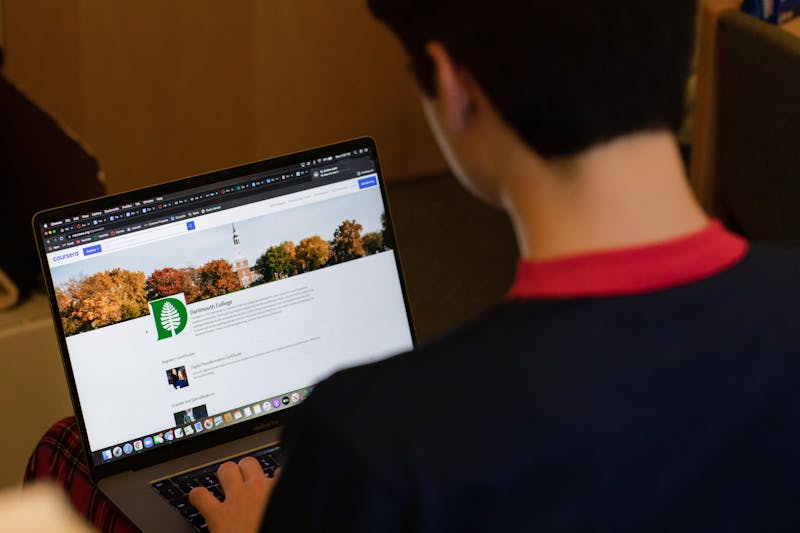
Dartmouth partners with Coursera to offer two fully online courses

Dartmouth partners with Coursera to offer two fully online courses

The very first program, “Energy Justice: Fostering Far more Equitable Power Futures,” released on Nov. 20, although the second class, “Digital Transformation” introduced on Jan. 17.

by Lauren Adler
| 1/18/22 5:05am

1-17-22-coursera-carolinekramer

Two months following the announcement of Dartmouth’s partnership with on the internet training support Coursera, 1 training course has observed a prosperous get started on the system, and a 2nd introduced Jan. 17.

The to start with system, “Energy Justice: Fostering Much more Equitable Energy Futures,” launched on Nov. 20 and has witnessed “fantastic” engagement with 184 customers, in accordance to Irving Institute academic director Amanda Graham, who formulated the system and is the instructor. The next course, “Digital Transformation,” presently has 40 learners enrolled.

Coursera chief content material officer Betty Vandenbosch wrote in an emailed statement that Coursera is “pleased to welcome Dartmouth” as a lover to the platform, as “millions of learners about the earth will now have accessibility to Dartmouth’s world-class school and deep experience.”

Users are presently getting edge of Dartmouth’s new on line means: Graham explained that the program has a fairly significant completion fee of 6.5{e4f787673fbda589a16c4acddca5ba6fa1cbf0bc0eb53f36e5f8309f6ee846cf}. As of Jan. 17, the training course experienced about 4,400 modern views.

“I have not finished this ahead of, so I think that [having] any learners is superb,” Graham said. “The hope is that it will go on to snowball in terms of sights and enrollments and completions for the study course.”

Engineering professor Geoffrey Parker, one of the instructors of the “Digital Transformation” system alongside fellow engineering professors Vikrant Vaze and Elizabeth Murnane, has formulated a number of on the net classes through his time at the School, while this will be his 1st to start on Coursera.

“This is not my to start with online course … [but] we do not know how it is going to go,” Parker mentioned. “We hope [viewers] will like the content material, but we don’t know if our procedures for… reside sessions are debugged.”

The courses also had really various development procedures from conventional courses. Whilst Parker, Murnane and Vaze tailored their in-man or woman courses to an on line structure, Graham developed her class from scratch.

Graham stated that the growth approach for her on line training course was “really demanding,” as in the previous she had only taught classes that the Faculty held are living and in human being. “Energy Justice” is a wholly asynchronous program, with pre-recorded videos and no dwell periods. She recorded “a pair of dozen,” seven-to-10-minute films for the study course in buy to make it “really flexible” for consumers although still “pack[ing] in that material.”

Graham explained that regardless of these troubles, she thinks the system of establishing her course has designed her a better trainer.

“It created me get a lot extra concentrated,” she mentioned. “This definitely sharpened the target on learning outcomes and objectives and on how to be as specific as achievable [while] respecting students’ time.”

Parker claimed that his most significant problem in developing course content was making sure that it would be obtainable to a broad array of pupils who could be using the training course from all more than the planet, due to the fact it will be far more difficult to “react and alter on the fly” than it would be in a class held in excess of Zoom.

“When you are teaching reside, you can see in [students’] eyes if persons are paying focus,” he stated. “I can alter in real time when a class doesn’t get it — I’ll be like, ‘oh, okay, allow me just take 10 minutes.’ You just can’t do that in this ecosystem.”

Parker said that in order to help predict some likely spots of confusion for students, he worked with users of Dartmouth’s Understanding Style and Technologies crew — including assistant director of mastering style and engineering Erin DeSilva and mastering and technologies associate Dushyandhan Yuvarajan — who he claimed were “great partners” all through the progress procedure.

Both of those Graham and Parker see the partnership as an vital action ahead in Dartmouth’s development in the direction of electronic studying.

“I see on-line studying as a device, like I see the printing press as a software or like I see the pc or the web as a device — it’’s a different instrument in our toolkit,” Graham said. “We are in the system appropriate now of getting what it is effective well for, and that is where by we will need to amplify our use of it.”

Parker said that he views mastering on the internet mastering as “mission important for greater schooling,” as “the world is altering all-around us.”

Virtual ‘HealthKick’ program to focus on physical activity, nutrition, more; register by Monday

Virtual ‘HealthKick’ program to focus on physical activity, nutrition, more; register by Monday

Virtual ‘HealthKick’ program to focus on physical activity, nutrition, more; register by Monday
This plan supports the actual physical health pillar of the Healthier Boiler System.

Purdue’s Centre for Healthful Residing (CHL) is featuring “HealthKick,” a six-7 days digital education and learning system. HealthKick will address physical activity, nourishment schooling and how to make wholesome practices and reduce worry – all with the objective of those patterns turning out to be prolonged-phrase behaviors. The method is out there to all advantages-eligible workforce on the West Lafayette, Fort Wayne and Northwest campuses.

The next session will begin Jan. 3.

The plan is primarily based on every day video clips, approximately 5 minutes in duration, sent by way of textual content or e mail (primarily based on desire), Monday by Friday for the program’s six-7 days period of time. Additionally, the program has four built-in, a single-on-one particular wellness coaching periods, which are recognized at the beginning of the application.

Contributors are essential, at the close of every single 7 days, to full a survey that will assist provide insight into the overall health journey of each and every individual. Wellbeing coaches get the weekly surveys and access out personally each individual week to offer you assistance and encouragement overall health coaches also will be available for in-man or woman or telephonic wellbeing coaching appointments as desired.

“Feedback from workforce has asked for additional digital and telephonic software selections,” says Candace Shaffer, senior director of benefits in Human Means. “HealthKick is a person way we can get started to fulfill people requests whilst also supporting the Healthful Boiler Program and its actual physical health pillar, which champions well being schooling and additional to assist men and women achieve long lasting actual physical wellness and well-remaining. We seem forward to seeing how the program is obtained across the Purdue community.”

The six-7 days application runs from Jan. 3 via Feb. 11 and follows the outline below:

  • Right before the begin of the system, participants will meet 1-on-one with a health and fitness mentor – both in-human being or by means of phone. Those people who fulfill in-human being have the possibility to build their first labs and InBody evaluation at CHL.
  • 7 days 1 (Jan. 3-7). Topic: Motion and Water
  • 7 days 2 (Jan. 10-14). Subject matter: Diet Label.
  • Week 3 (Jan. 17-21). Topic: All About Fats
  • Week 4 (Jan. 24-28). Subject: All About Carbs
  • 7 days 5 (Jan. 31-Feb. 4). Subject matter: All About Protein
  • Week 6 (Feb. 7-11). Matter: Developing Behavior to Last

Those intrigued in collaborating in the HealthKick plan must indication up by Monday (Dec. 20) by means of the Healthy Boiler Portal. The registration backlink can be observed under the “Engage” tab, “Wellness Events” on the portal’s homepage.

Healthy Boiler workshops are totally free to all benefits-suitable faculty and workers and dependents protected on a Purdue professional medical plan. Any issues about “HealthKick” can be directed to the Centre for Healthy Living at 765-494-0111.