SAVANNAH, Ga. (WSAV) – How are the elementary universities in Chatham County stacking up against each individual other? Here are the leading 5 community faculties, according to the 2018-2019 Ga University Grades Report.
This report provides information on how every faculty is carrying out in contrast to the state on their reading through proficiency. The details in this piece if primarily based off of this report’s examining proficiency ranges for the academic yr of 2018-2019 in the third quality. These exams are not a reflection of the perform that each individual teacher places into their particular person college students, nor the benefit that each university student has.
Coming in at the leading of the checklist is May possibly Howard Elementary College. This school’s overall overall performance and educational progress are both 39{e4f787673fbda589a16c4acddca5ba6fa1cbf0bc0eb53f36e5f8309f6ee846cf} greater than the relaxation of the state. In the 2018-2019 tutorial yr, 66.1{e4f787673fbda589a16c4acddca5ba6fa1cbf0bc0eb53f36e5f8309f6ee846cf} of Could Howard Elementary’s 3rd quality college students had been looking through at or over their looking through stage.
A shut next on the listing is Charles Ellis Montessori Academy. This school’s in general effectiveness is greater than 59{e4f787673fbda589a16c4acddca5ba6fa1cbf0bc0eb53f36e5f8309f6ee846cf} of the colleges in the point out. Its educational development is larger than 83{e4f787673fbda589a16c4acddca5ba6fa1cbf0bc0eb53f36e5f8309f6ee846cf} of elementary educational institutions in the point out. For Ellis Montessori Academy, 64.9{e4f787673fbda589a16c4acddca5ba6fa1cbf0bc0eb53f36e5f8309f6ee846cf} of its 3rd graders were being looking through at or above their examining stage in the 2018-2019 educational 12 months.
Upcoming on the listing of best elementary schools is Marshpoint Elementary. This school’s all round overall performance is increased than 42{e4f787673fbda589a16c4acddca5ba6fa1cbf0bc0eb53f36e5f8309f6ee846cf} of faculties in the point out of Ga and it’s tutorial development is bigger than 38{e4f787673fbda589a16c4acddca5ba6fa1cbf0bc0eb53f36e5f8309f6ee846cf} of faculties in the point out. 58{e4f787673fbda589a16c4acddca5ba6fa1cbf0bc0eb53f36e5f8309f6ee846cf} of the 3rd quality college students attending Marshpoint Elementary have been looking at at or earlier mentioned their examining degree in 2018-2019.
The fourth greatest school in terms of examining proficiency scores in Chatham County is Godley Station Faculty. This school’s overall performance is larger than 64{e4f787673fbda589a16c4acddca5ba6fa1cbf0bc0eb53f36e5f8309f6ee846cf} of educational institutions in Ga and it is academic expansion for it’s elementary university is bigger than 36{e4f787673fbda589a16c4acddca5ba6fa1cbf0bc0eb53f36e5f8309f6ee846cf} of elementary schools in the point out. 55.3{e4f787673fbda589a16c4acddca5ba6fa1cbf0bc0eb53f36e5f8309f6ee846cf} of third grade learners attending Godley Station Faculty had been reading at or above their studying degree in the 2018-2019 school 12 months.
Rounding off this listing is Herman W. Hesse K-8 College. This school’s all round performance is increased than 43{e4f787673fbda589a16c4acddca5ba6fa1cbf0bc0eb53f36e5f8309f6ee846cf} of educational facilities in Ga. It’s educational expansion is bigger than 28{e4f787673fbda589a16c4acddca5ba6fa1cbf0bc0eb53f36e5f8309f6ee846cf} of elementary educational facilities in the condition. 49.6{e4f787673fbda589a16c4acddca5ba6fa1cbf0bc0eb53f36e5f8309f6ee846cf} of third quality pupils attending Hesse K-8 College in the 2018-2019 college calendar year tested at or over their reading through degree.
In earlier articles I’ve reminded freelance platform leaders that freelancers need ongoing instructional aid to make their business enterprise.
For new-to-freelancing industry experts, it’s a problem to construct a thriving business. Would-be solopreneurs, eager to get started their part- or entire-time freelance occupation, realize success or are unsuccessful on how properly they recognize that freelancing is a little company like any other, and develop the skills necessary for results: Creating a manufacturer, developing a consumer base, efficiently delivering product or company, allotting time to the correct priorities, creating good shopper relations, and handling funds are as necessary skills in freelancing as in any other industrial business. Existing and previous full-time workers, utilised to doing work in a significant corporation, often deficiency the option to create these abilities. As Google study and other studies stage out, technological excellence is essential but not sufficient. It’s smooth capabilities that make-or-crack success.
For industry experts embarking on comprehensive-time freelancing the stakes are increased, the value of failure larger, and attaining the knowledge and ability to mature their company is even extra vital. We know from our World Study on Freelancing that 60{e4f787673fbda589a16c4acddca5ba6fa1cbf0bc0eb53f36e5f8309f6ee846cf} of freelancers explain them selves as fast paced and happy with their monetary general performance, though four of ten freelancers had been not so happy. Had this cohort entry to very good instruction, and potentially a mentor or mentor, disappointed freelancers could be significantly much less.
Here’s the dilemma: Quite a few freelance platforms run as talent warehouses, not energetic and dynamic talent developers. Platform leaders frequently experience driven to focus more on expertise amount than good quality. After all, demand considerably outstrips source in several fields. It’s more difficult to obtain knowledgeable expertise, enable on your own leading talent. Moreover, two-sided marketplaces are enthusiastic to give as deep and wide a bench possible to fulfill emerging or surprising client wants. The end result is lumpy prospect. Authorities in AI and fintech are in significant demand unbiased vacation brokers not so significantly at existing. Freelancers in the International Survey saw additional chance resulting from Covid-19, but also much more competitiveness. Even though most freelancers gain from their platform, they should not rely on it as their only or main source of steady function. Business schooling and talent is critical.
Step just one in freelancer education and learning is location up the enterprise, and various platforms supply aid. Corporations like Wethos provide “business in a box” to productive independent freelancers in quite a few spots as does Collective, a recent startup in the same space. Honeybook is yet another, offering enterprise set up aid and ongoing help for immediate supply freelancers in spots like hair styling, exercise coaching, daily life coaching and treatment. But, although these platforms are of great aid operationally, a continuing educational gap frequently stays: “Now that I am organized and able to serve shoppers, how do I get them, continue to keep them, produce the expert services that will delight them as proficiently as achievable, as properly as fulfill all of my financial necessities and legal compliances?”
As competitiveness for very good freelance expertise proceeds to improve, platforms are progressively investing in freelancer education.
For instance, the neighborhood crew at Contra have invested significantly in on the web education and learning. Contra’s freelancers are typically very first timers, and the on the web method walks through the techniques of becoming a successful solopreneur. Malt in the EU offers on-boarding support by means of month-to-month webinars for the two new system members and expert freelancers wanting for an instructional strengthen. Ravenry, Singapore based, operates as an incubator of solopreneurs and long run business people, providing platform customers on-line and video clip workshops that handle the fundamentals of freelancing accomplishment.
While these platforms concentration on early achievement, other folks invest much more in continuing training. Toptal has a potent name for contributing to freelancers’ education as a result of regular and ongoing workshops, possibilities to publish in Toptal’s well-examine Engineering and Finance blogs, group meetups, and even scholarships in technical development spots. Hoxby in the British isles presents on-line and interactive education and learning provided by Hoxbies in aid of its “workstyle” philosophy of balancing operate, family members and other everyday living interests, and has a short while ago introduced on board a director of “future-proofing” to direct complex and specialist education.
Nevertheless other platforms encourage mentorship or coaching amongst fascinated freelancers. Weem.team, a French unbiased consulting platform, encourages mentoring associations in between more youthful and additional experienced feminine consultants. Wethos delivers a teaming-up assistance as part of its provide to customers. Gigged.ai, the Scottish tech freelance system, is just kicking off a mentorship method and Talmix, a British isles primarily based system, has initiated a very similar system. Coaching courses are also operating or in the organizing phase. MBO Associates, centered in the US, has, for some time, offered coaching to its higher performing freelancers. Fiverr in Israel, and Malt in France, also offer you development coaching to their far more effective platform members.
Nonetheless a further way platforms deliver schooling is as a result of community engagement. Adeva, a tech system found in Macedonia, holds monthly group conferences (“fireside chats”) on tech topics like “Laravel-at-scale”. Many other platforms, like Indielist.ie, in Eire, offers normal digital group meetings, as does Comatch and Vicoland in Germany, Workana and Seeds in Latam, and the Africa Foresight Team in Ghana. Freelancebusines.be devotes an entire thirty day period to continuing educating for its freelance customers. Omdena.com, an AI system, has produced a freelance archipelago of over 60 chapters, every single foremost AI enabled social action projects e.g., “How to reduce relatives violence throughout periods of famine.” Chapter customers perform with each other to find sponsorship, elevate funding, organize the group, and comprehensive and current the chapter project to its sponsor. The course of action is by itself a impressive instructional encounter for its volunteer freelancers.
This is all superior information for the freelance revolution, but here’s the problem: The assist ecosystem for freelancing instruction is way behind. We can do far better. Instead than depend on each individual freelance platform to make its possess academic articles, why not band with each other? Businesses like Europe’s Freelancebusiness.be and Uk / US based mostly Open-Assembly and its non-income Heart for the Transformation of Work (notice. I’m a section-time Qualified in Home) could possibly operate with freelance platforms and communities to co-create a global utility for freelance small business schooling, and most likely do the job with universities to give freelance business enterprise education at the undergraduate level. Soon after all, platforms like Techintern and Parkerdewey now supply chance to scholar freelancers.
Small business schooling is the growing tide that lifts all freelance boats. Mckinsey estimates that platforms could finally provide in excess of 500,000,000 freelancers entire world-huge, and Gartner likewise anticipates ongoing, sizeable, freelance expansion. Let’s satisfy that obstacle by organizing to provide superior quality, small value, education to every single freelancer on each and every platform on the planet, and decrease the gap in instructional assistance among nicely-funded platforms and some others. We can provide the freelance revolution with helpful academic material at scale. We know best exercise. Let’s make it available to every freelancer.
West Bend, WI – When it will come to homeschooling, Diane Fechter of West Bend, WI, has knowledge, expertise, and connections.
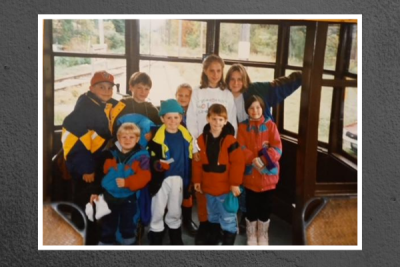
Homeschooling discipline excursion to East Troy Electrical Railroad and The Elegant Farmer in Mukwonago, circa 1996. Image courtesy: Diane Fechter
Fechter put in a total of 12 many years (1984-1996) homeschooling her 3 youngsters, Tim, Dave, and Jessica.
“Since numerous of our founding fathers ended up homeschooled, we felt it was correct for us, way too,” explained Fechter. “We took it year by calendar year. All of our children went to private university for 7th and 8th quality, and then to community higher school.”
Today’s homeschoolers have a lot of curriculum options, allowing moms and dads to effortlessly tailor their children’s academic expertise. “There are so many a lot more alternatives for homeschoolers today,” explained Fechter.
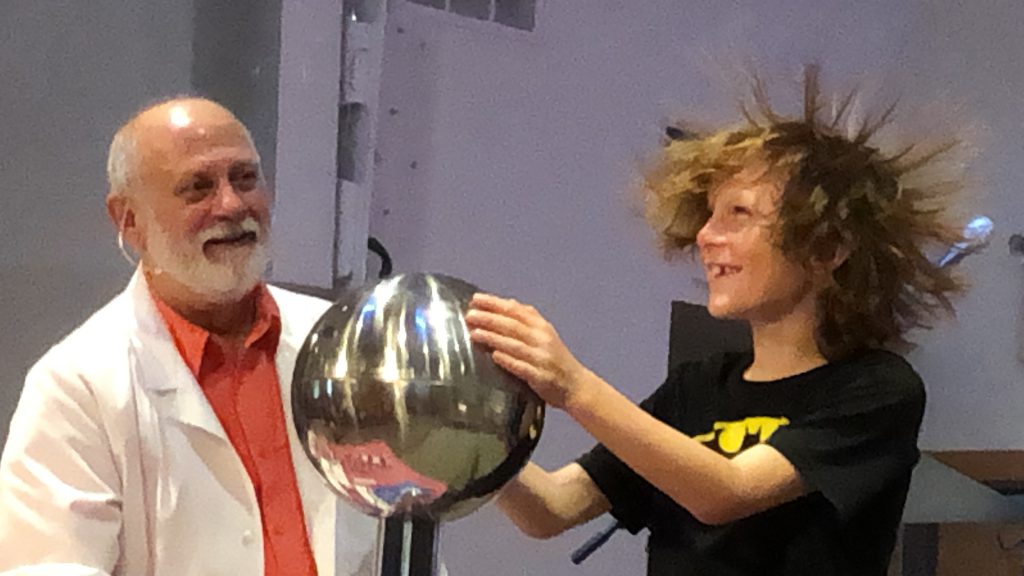
Michael Lane visits homeschool group in West Bend.
Homeschooling mother and father had loads of guidance as they navigated the everyday waters of property instruction. “We occasionally had father or mother conferences to swap tips, and get and give encouragement to other people,” explained Fechter. “We also had demonstrate-and-explain to days where by mothers would carry their young children to give reserve reports, display screen their science tasks, read an essay, complete skits and performs for other people about historical figures like our founding fathers, and so forth., while their peers would pay attention.”
In accordance to the Wisconsin Section of Instruction (DPI), enrollment in excess of the previous 10 years (2011-2021) in public education and learning has witnessed a decline from 871,105 in 2011 down to the current 829,935. In 2011, homeschoolers manufactured up 1.79{e4f787673fbda589a16c4acddca5ba6fa1cbf0bc0eb53f36e5f8309f6ee846cf} of the state’s students in 2021, that amount improved to 3.25{e4f787673fbda589a16c4acddca5ba6fa1cbf0bc0eb53f36e5f8309f6ee846cf}.
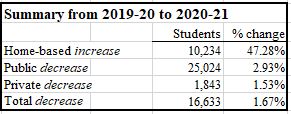
DPI facts also confirmed, in the shorter phrase in between the 2019-2020 university 12 months and the 2020-2021 university calendar year, homeschooling jumped 47.28{e4f787673fbda589a16c4acddca5ba6fa1cbf0bc0eb53f36e5f8309f6ee846cf} whilst community school enrollment decreased 2.93{e4f787673fbda589a16c4acddca5ba6fa1cbf0bc0eb53f36e5f8309f6ee846cf} and personal education declined 1.53{e4f787673fbda589a16c4acddca5ba6fa1cbf0bc0eb53f36e5f8309f6ee846cf} as perfectly.
Fechter thought there is an maximize in household education for the reason that, “parents are fed up with what is staying taught – this kind of as Social-Psychological Learning and Essential Race Idea.”
For parents who are now contemplating homeschooling their small children, Fechter has these words of knowledge.
“Years ago, I browse an post identified as “The Tomato Plant Philosophy of Property Schooling.” The primary tale is this: Like younger tomato vegetation in Wisconsin, youthful youngsters should be moved incredibly gradually from the overall protection of your ‘greenhouse’ into full exposure to the outdoors world. They want the rich soil of loved ones everyday living, the sunshine of love and awareness, and water of reality. They want to be shielded from the chilly winds of their peers’ thoughtless and at times cruel behavior, humanistic training, etc. Your little vegetation have to produce their possess root and leaf programs so they can absorb God’s really like and reality for on their own just before they can endure the storms of everyday living. When they are sturdy more than enough, they can be put out in the temperature for short and very carefully managed exposure to the outside the house earth.”
Increase Understanding, an on the web educating and finding out platform, grew by 25 instances for the duration of the pandemic.
KIRKLAND, Clean. — Growth Discovering has surely noticed a boom of acceptance throughout the pandemic.
The special, online academic guidance software was created by Kirkland parents Eric and Mary Oemig.
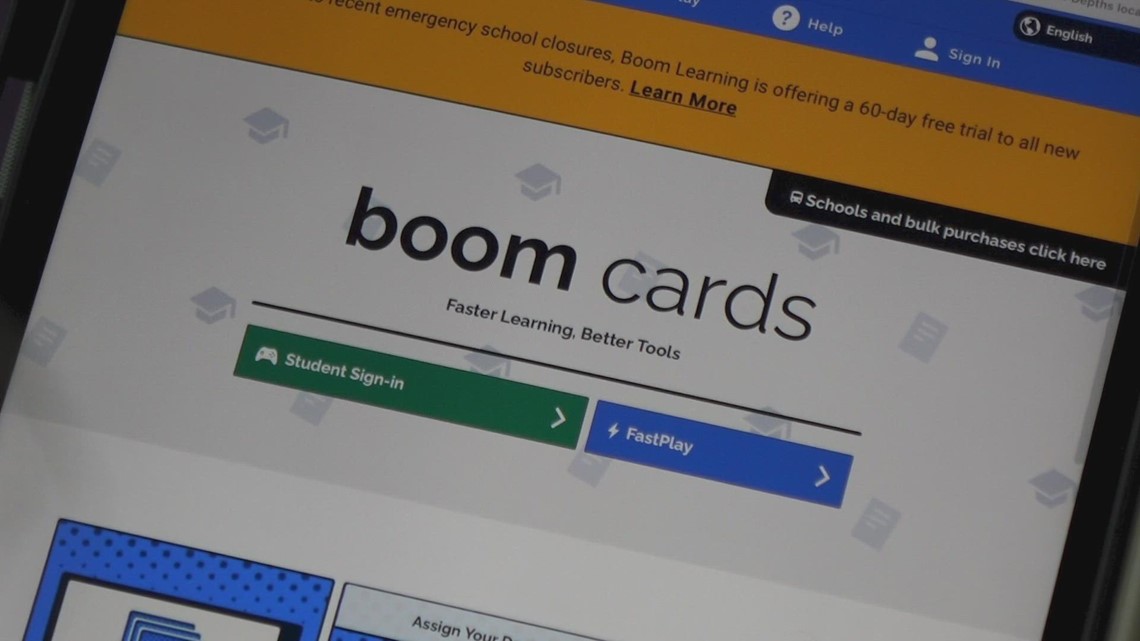
Boom Mastering is an online system that makes it possible for lecturers to generate and assign electronic understanding sources named Boom Cards. Growth Playing cards can be a variety of things like flash cards, activity cards, quizzes, interactive lessons and far more.
Boom Learning has developed by 25 instances during the pandemic. It is now utilized in 12 of the 15 greatest university districts in the state.
Eric said he hardly ever envisioned a time when distant mastering would be so important to colleges. He was a Washington state senator from 2007 to 2011 and his major emphasis all through his legislative occupation was assisting general public educational facilities.
Eric explained his knowledge working with directors and lecturers organized him to make a tangible variation for teachers and pupils alike.
“I was the vice-chair of the K-12 committee when I served in the state senate,” he said. “I put in a good deal of time on how educational institutions have been funded, what colleges desired, etcetera.”
Mary Oemig is the CEO and President of Boom Understanding. Earlier, she established a non-revenue personal property-education application that highlighted the exclusive finding out requires of young children who are building asynchronously.
She stated that getting mother and father in general public education encouraged them to generate an progressive system to assistance teachers. The duo are also dad and mom of college students by themselves and say the genesis behind their thought was basic.
“We determined we needed to leverage and boost education. We wished to disrupt the training marketplace. The Guarantee of Growth Discovering is a self-paced, self-grading software that will save teachers time and supports the little ones,” Mary stated.
The couple are Microsoft alumni and say they centered on taking part in to their strengths: building the technological innovation system so lecturers can produce the material.
Teachers can produce, trade and even market their Growth Playing cards to other educators.
“Some teachers are building far more dollars from Boom cards than they do instructing. It’s wonderful to see so numerous trainer-preneurs,” Eric mentioned.
Social media validates the recognition of Growth Cards as Instagram alone has above 24 thousand posts from lecturers and college students who applied the hashtag #boomcards.
In 2020 Growth Mastering decided to offer their system for free to teachers who have been scrambling to adjust to remote finding out.
Mary stated the time is appropriate to make the platform additional obtainable all over again.
“We are doing it again. With Omicron below we wished to give no cost accessibility although faculties are brief-staffed and many will require to be distant all over again.”
I’m taking a break from finishing the series on teacher observations and, instead, sharing this series on classroom-learning games.
In the midst of the pandemic, I’m finding games an essential part of classroom instruction. They serve two (and many more) purposes: engagement in learning and distraction from COVID.
Today, Shannon Jones, Jennifer Bay-Williams, Molly Ness, and Sheniqua Johnson share their favorites.
You might also be interested in several game collections I’ve created. You can find all the updated lists here, and here are a few key ones:
Shannon Jones is a 15-year educator working in Wheaton, Md. She is a focus teacher for students in kindergarten through 5th grades. She can be reached at shannon.l.jones@mcpsmd.net or @MsJonesLuvsMath:
Learning games are an effective way for students to review current and previously taught content. Zaretta Hammond states that: “The very act of playing the game encourages the brain to strengthen the new neural pathways by making the learner continuously search his memory for information.” I typically use learning games during my small-group time. I also may use them at the beginning of a lesson to spark engagement and raise the energy level in my classroom.
The text Mini-lessons for Math Practice by Rusty Bresser and Caren Holtzman is full of quick and engaging math games that are great for brain breaks in the classroom and time fillers for the very end of the school day. Several of my favorites from this text include: Digit Place, Estimation Jar, Whole-Class Pig, and Guess My Rule.
Mall Math from The Great Big Book of Super-Fun Math Activities’ Jean Liccioneis year after year one of my students’ favorite games. Students are provided with a menu of items from different stores at the mall that they can buy. Students use the spinner to choose a store from which to buy or return items. The game reinforces adding and subtracting decimals, but the students love the shopping and choosing aspect.
Battleship can be played with either the coordinate grid system or place value. In the place-value version, each player builds a secret nine-digit number, and students take turns guessing the place value of their partner’s digits. This is a great way to fortify knowledge of place value because students are required to use place-value language on each of their turns.
Rio, from A Month-to-Month Guide: Fourth-Grade Math by Lainie Schuster or the game Knock It Off are games that focus on the most challenging of the multiplication facts. Typically, I choose the 6s, 7s, 8s, or 9s to set up the board due to the challenging nature of these facts. Focusing on just one set of facts at a time, students roll a 12-sided dice or find the sum of two six-sided dice, then they multiply their number by 6, 7, 8, or 9 depending on the game board they’ve chosen. They win by using all of their 10 “chips.”
Fraction War is played with the same rules as the popular card game War. Students have a deck of like or unlike fractions. They take turns flipping over a card, then they compare the size of their fractions to determine a winner for each round.
Minecraft and Fortnite are currently very popular with my students, and it is always great when you can take a current trend that is in demand with your students and turn it into a game that meets one of your grade-level standards. The figures from Minecraft can be printed in color on 10 by 10 or 5 by 10 grids. Students can then work in learning centers to determine the fraction, decimal, and percent that is shaded. With Fortnite, print the map in either one or four quadrants, and students can work to find the coordinates of given places and their reflections, etc.
Some of my favorite online games include: Nearpod’s Time to Climb, Kahoot, Quizziz, and Blooket. My students enjoyed each of these games during virtual learning. All of these games can easily be played in the classroom, with some even offering a self-paced version that is ideal for independent learning in the classroom.
Game Criteria
Jennifer Bay-Williams works with preservice and practicing teachers as a professor at the University of Louisville and with teachers all over the world through conferences and workshops. She is the author of over a dozen books, including two books with Corwin Press Figuring Out Fluency in Mathematics Teaching and Learning, K-8 and Everything You Need for Mathematics:
I love games. My favorite games involve mathematical reasoning. Over the years, I have found and created hundreds of games. Today, as I select or create games, here is what I consider.
Is there a speed component? If yes, it is a “no” for me. When students are in a hurry, they can’t think straight. You can probably relate.
Are students solving the same problem? Well, this goes back to the last bullet. If two or more people are solving the same problem, the faster thinker dominates the thinking in the game. This is a “no” for me.
How is winning determined? If it is based on who knows more, or is faster, or any other personal attribute, then this is a “no” for me. No student should feel less “smart” than the person they are partnered with, even if they are competing to win a game.
With a scan for these three pitfalls, here is short list of what I hope to find, or that I build in, to games that make the cut:
Student reasoning is embedded. Many games have strategies to win the games, but what I want in a game is reasoning strategies related to the mathematics.
Students can learn from their opponent or partner as they play.
I (and other teachers) can see and hear student reasoning as they play.
It is adaptable and reusable (so we don’t get bogged down in a new game taking time to learn the directions).
A few favorites. It is really hard to pick, but here are two that I hold up for different reasons.
Rectangle Fit.Students have grid paper (e.g., 25 by 15). The teacher rolls two die, which are the sides of a rectangle. Students fit that rectangle on their grid paper and record the product inside that rectangle. Teacher rolls again. Eventually, the teacher rolls something like 5 and 6, and some students cannot fit that rectangle on their grid. These students are out of the game. Winners are the last ones still playing.
Why I like this game: It connects visual representation to multiplication facts and helps students “see” commutativity. It is easily adaptable—use regular die for smaller products, 10-sided die for larger; you can even adapt to decimals! Change the grid size. Play with a group of six instead of the whole class. Oh, yeah, and kids love it (just today I received such a message from a teacher in summer school):
Photo byJennifer Bay-Williams
Strategories:This is not a misspelling but an adaptation of a popular game. Students are given a recording card with strategies listed and a blank cell to write in an example problem. For adding fractions, the card looks like this:
To begin, students work individually to create a problem that “fits” that strategy. Then, students find a partner and talk through how to solve their own problem (or alternatively, talk through how to solve their partner’s problem). Students can have a different partner for each strategory. If you want to score it, you can score a correct process and correct answer each at 5 points.
Why I like this game: Real fluency is knowing when a strategy is a good idea—AKA flexibility. Flexibility is a neglected component of fluency! As students create a problem, they are thinking about when they would use it. The pair-exchange is great peer teaching, active movement, built in accountability, and 100 percent participation. As follow-up, I can ask partners to describe how their two examples are alike (comparing is so important in math learning) or focus on nonexamples (What problems don’t “fit” a strategory?)
A word has yet to be used in this response that is almost always used in response to the question, Why use games? “Fun.” Games are fun. I love fun. Math should be fun. But fun is an outcome, not a purpose. My favorite games happen to be fun, but they are my favorites because of the opportunities for students to engage in meaningful practice, show off their good reasoning, and learn with and from each other, realizing along the way that everyone can do math.
Elementary educators know how important it is to infuse fun into your classroom routines—and we know time is precious. Yet there are so many spaces throughout the day when we have transition times: starting the day, lining up for an assembly, waiting for buses, and even small spaces when lessons take less time than we’d planned. Instead of turning to worksheets to fill those spaces, teachers I work with play with language in those transition times throughout the day.
Remember the childhood favorite Battleship, where you would place your plastic ships in pegs without your opponent seeing? The goal was to sink your opponent’s ships using horizontal and vertical coordinates. Sink or Spell is an engaging adaptation. In this version, students use their spelling and/or vocabulary words as their ships. Simply make a 10 x 10 grid, with numbers running horizontally and letters running vertically. Glue two of these sheets inside a file folder and laminate (so it’s reusable and ready to go for many games!). Students play in pairs, so both players get folders. Give students a list of words (this is a great review activity!), and each player secretly chooses five words from the list and writes them on their board—horizontally or vertically (but not backward or diagonal). Players take turns calling out coordinates (for example, C7). If a player’s opponent has a letter in that box, the opponent says, “Hit” and tells the other player what letter is in the box. If the box is empty, the child says, “Miss.” Players may guess the word or continue to guess coordinates. To sink a word, the player must correctly spell the word—and they get bonus points for defining it, using in a sentence, etc.
Use a label maker or printing labels to adapt a Jenga game into a literacy-rich version of Tower Tumble. Write vocabulary words, sight words, or homophones on each block. Students pull a block, read the word, define it and/or use it in a sentence, and then place it on the topmost level. The game ends when the tower tumbles!
I’m all for getting kids up and active, and kids love doing this with Beach Ball Bonanza. Hit up the dollar store and buy inflatable beach balls. Using a permanent marker, write open-ended prompts on each section of the ball. Ideas include the following:
Sight words
Comprehension questions: “What’s your favorite character in the book … and why?”
Prompts for vocabulary: “Use it in a sentence” or “Here’s a synonym”
Model soft throws (this isn’t dodgeball!) and how to read the prompt closest to your right thumb. When kids catch the ball, they read the prompt underneath and share their answer, before gently tossing it to a classmate. To use this as a vocabulary-review activity, call out the word while the ball is in midair. So if the word is furious, a child might catch the ball, see the prompt under their right thumb is “Give an antonym for the word,” and answer happy before tossing the ball to a friend.
Creating a fun, literacy-rich classroom is a win-win, especially when you infuse games into those “found moments” throughout the day.
Kahoot, Jenga, & More
Sheniqua Johnson is a language-acquisition specialist in north Texas:
The classroom-learning games I enjoy the most allow students to be interactive while applying their knowledge or having the opportunity to review academic-vocabulary terms, problem-solving skills, or concepts. These games include Draw Me, Headbands, Kahoot, and Jenga.
Draw Me: Students practice and apply knowledge of academic-vocabulary terms by drawing visuals of the terms and allowing players to guess the term.
Headbands: Students review knowledge of academic-vocabulary terms by placing a term over their heads while players give clues until the person holding the term guesses correctly.
Kahoot: Interactive game through an app. Provides immediate feedback for teacher to plan small-group interventions. This game can be played independently or with small groups.
Jenga: Academic-vocabulary terms are written or placed on game pieces. As students choose pieces to remove from the tower, they must define words or answer questions, such as, word problems.
Thanks to Shannon, Jennifer, Molly, and Sheniqua for contributing their thoughts!
Consider contributing a question to be answered in a future post. You can send one to me at lferlazzo@epe.org. When you send it in, let me know if I can use your real name if it’s selected or if you’d prefer remaining anonymous and have a pseudonym in mind.
Education Week has published a collection of posts from this blog, along with new material, in an e-book form. It’s titled Classroom Management Q&As: Expert Strategies for Teaching.
Just a reminder; you can subscribe and receive updates from this blog via email (The RSS feed for this blog, and for all Ed Week articles, has been changed by the new redesign—new ones are not yet available). And if you missed any of the highlights from the first 10 years of this blog, you can see a categorized list below.
Betty Lassiter was rarely breathless when she answered a phone simply call.
The practically 82-12 months-outdated was completing her usual stroll all over the monitor at the Pat Jones YMCA on Republic Street before her exercising course afterwards that afternoon as she spoke about her existence and why she now spends most of her time at the gymnasium.
Having lived in southwest Missouri for a lot more than 4 many years, Lassiter even now speaks with the sweet drawl of a Ga accent that other people instructed her she was guaranteed to drop at some position.
“Someone stated, ‘I assume you happen to be dropping your southern accent’ and the people today at the Y reported, ‘Oh no, she isn’t possibly,'” Lassiter reported.
Lassiter’s been retired given that she was 75 several years outdated and, despite the fact that she mentioned she has always eaten nutritious, she by no means put in substantially time functioning out.
Now, she’s going to classes, from time to time many, almost each individual day at the Y. She focuses on body pump, Zumba, indoor biking and barre — wherever she can get the job done on stability — when also fitting time in to often stroll the keep track of.
“I’m really experiencing it or I would not be listed here,” Lassiter reported. “The men and women are wonderful. I am an inspiration to a large amount of persons in this article due to the fact they really encourage me all the time, and they say, ‘When I am your age, I hope I can do what you do now.’ It can take a ton of work and I’m a go-getter.”
Lassiter returns encouragement to some others, specifically following getting her have accidents in the previous several decades.
“I’ve encouraged two folks that had medical procedures and now they came back with a walker and then they came back again with a cane and I stated, ‘Pretty soon you can expect to be like I did. You may just get rid of that cane and start off going for walks,'” Lassiter said. “Now, they virtually run all over the monitor each individual working day.”
Lassiter nonetheless makes time for other activities, like accomplishing her own yardwork, attending Ridgecrest Baptist Church, or experiencing days with her relatives, which features 5 grandchildren and two wonderful-grandchildren.
Volunteering with Red Cross keeps Walter Roberts Jr. active
Walter Roberts Jr. expended yrs as a professor of counselor instruction at Minnesota University. He spoke to a reporter about celebrating 40 yrs of marriage with his wife, Laurie, moving to southwest Missouri and their passion for operating with treatment canine spanning much more than two decades.
Roberts spends his times as a Catastrophe Psychological Wellbeing Lead for the Missouri, Arkansas Region of the American Purple Cross. His most current deployments ended up to the Caldor Hearth in the Sierra Nevada mountains of California, Hurricane Ida in Louisiana and the tornado outbreak in northeast Arkansas and the Missouri Bootheel. Responding to disaster regions is an energy to give limited-expression relief as folks navigate their earth that may be complete of loss.
Keeping energetic mentally and physically is how Roberts keeps up with all he is received likely on.
“I feel the previous adage of ‘use it or drop it’ genuinely results in being more critical as we age,” the 65-year-outdated claimed. “I feel remaining mentally lively is almost certainly just one of the very best chances that we have to reduce quite a few of the difficulties of more mature age from environment in.”
While some might watch ageing as the commencing of a “limiting process,” Roberts stated that the actual opposite can take place.
“People today, when we retire, instantly are blessed with several much more possibilities than we’ve had in several, a lot of many years, which may possibly extremely well be viewing with close friends, growing our capability to interact with other individuals when we could not in the years just before due to the fact we ended up hectic with people and with get the job done,” Roberts explained.
Remaining on as a volunteer with the Pink Cross through the aftermath of Hurricane Katrina has provided Walter prospects to continue to be engaged, becoming informed of others’ desires and extra.
“We constantly want to be reminded that the globe goes on as we age and we are nevertheless a aspect of it,” Roberts said. “1 way to be a element of it is to have interaction with other people.”
To discover local ways to volunteer or interact, visit United Way of the Ozarks at https://www.uwozarks.org/
Sara Karnes is an Outdoors Reporter with the Springfield News-Leader. Observe together with her adventures on Twitter and Instagram @Sara_Karnes. Got a story to explain to? Email her at skarnes@springfi.gannett.com.