Why Chinese Soccer Is Still Waiting for Its Golden Generation

Why Chinese Soccer Is Still Waiting for Its Golden Generation

When the final whistle blew at Mỹ Đình National Stadium in Hanoi on February 1, the first day of Lunar New Year, the fans in attendance could hardly believe their eyes: Vietnam 3, China 1. If it weren’t for a garbage-time goal, China would have been shut out by a team it had never lost to before. As it was, pandemonium enveloped the stadium as Phạm Minh Chính, the Vietnamese Prime Minister, distributed red packets to the home side.

Pandemonium erupted on the Chinese internet, too. It was a deserved win for Vietnam but a nightmare for Li Xiaopeng, who had been introduced as Team China’s new head coach just five days prior. Chinese soccer fans could only watch in disbelief as their team made the Vietnamese look like circa-2009 FC Barcelona. It wasn’t just this match; the team’s performance in the current qualifying cycle has been disastrous. Prior to their humiliation in Hanoi, China only just squeaked by Vietnam — long a regional punching bag — in their first leg.

The Chinese team reacts after a losing a FIFA World Cup qualifiers match against Vietnam in Hanoi, Vietnam, Feb. 1, 2022.  Minh Hoang/Getty Images via VCG

The Chinese team reacts after a losing a FIFA World Cup qualifiers match against Vietnam in Hanoi, Vietnam, Feb. 1, 2022. Minh Hoang/Getty Images via VCG

To paraphrase an old Ernest Hemingway quip, Chinese soccer declined gradually, then suddenly. It might seem reasonable to expect China, with a population of 1.4 billion people, to be able to field a starting 11 capable of beating, or at least competing with, Vietnam. Chinese fans certainly think so. But the population comparison becomes meaningless if no one in China bothers to take up the sport.

Although never a soccer powerhouse, there was a time when China was competitive at the international level. In the socialist period, Soviet-style sports-industrial fusion was the order of the day, and many top players were drawn from blue-collar professions. Li Fusheng, a goalkeeper who famously saved a penalty against Kuwait in the 1982 World Cup qualifiers, was a riveter for the Dalian Shipyard team before being scouted by a more prestigious squad.

At the time, sports offered ordinary Chinese a path to a better life. This was true of students as well as factory workers. In 1964, Beijing organized a soccer league for primary school students, and talented players were recruited to local soccer academies for further training. During the chaos of the Cultural Revolution, those who made it through the academy system and onto a team’s roster were exempted from the duty of laboring in the countryside — a powerful incentive for the families of the era.

By the late 1970s, China’s men’s national team was, if not dominant, at least respectable. A World Cup birth always seemed within reach, and though the breakthrough wouldn’t come until 2002, a number of players on that team had ties to the Soviet-style factory-to-academy pipeline.

The Chinese national team prepares for the 2002 World Cup in Kunming, Yunnan province, April 1, 2002. Peter Charlesworth/LightRocket via VCG

The Chinese national team prepares for the 2002 World Cup in Kunming, Yunnan province, April 1, 2002. Peter Charlesworth/LightRocket via VCG

Yet it would be a mistake to romanticize this era of Chinese soccer. In 1978, the Beijing Football Team club visited Japan as part of the country’s opening-up to the world. Other Chinese teams soon followed suit. What the Chinese players saw in Japan impressed them; the youth teams they played not only had better jerseys and boots than they did, but they were also tactically superior to teams back in China.

The country’s soccer officials, however, dismissed the reports brought back by players and coaches, in part because they couldn’t bring themselves to believe just how far behind China had fallen after decades of isolation.

Despite official complacency and inadequate funding, Chinese soccer continued to make progress throughout the 1980s. In 1985, the capital’s top soccer coaches were recruited by the Beijing Sports Science Association and tasked with designing a blueprint for training a new generation of players. Tournaments were organized at the university, middle-, and primary-school level; official school teams were set up; training syllabi were written, tests were conducted, and exam standards were created. Experienced coaches were assigned to oversee every level of the sport. By 1988, a new “primary school-academy-professional team” path was formally established.

Sports school students during a soccer match in Suzhou, Jiangsu province, Oct. 7, 2021. Guan Yunan/VCG

Sports school students during a soccer match in Suzhou, Jiangsu province, Oct. 7, 2021. Guan Yunan/VCG

Satisfied with the experiment’s progress, the Beijing Municipal Sports Bureau trumpeted the initiative as something that could to be copied by other sporting authorities nationwide. For all the progress it represented, however, the program also introduced a more hierarchical management style to the country’s formerly diffuse soccer system, while doing little to address chronic funding shortages.

As it turned out, few kids were interested in the new school-to-academy pipeline anyway. In the early 1990s, a research group led by An Tieshan of the then-Beijing Institute of Physical Education found that, as of late 1990, only 10,000 kids between the ages of 7 and 16 were undergoing regular soccer training in major cities. The northeastern port city of Dalian, home of the above-mentioned goalkeeper Li Fusheng, led the pack with 2,000 players, while Beijing and Shanghai had 1,000 each. In some cities, researchers found zero kids on the field.

As it turned out, few kids were interested in the new school-to-academy pipeline anyway.

A key problem with the “school-academy-professional team” system was that pupils not enrolled on the soccer team were forbidden to use the school fields, while those who were on the team often struggled to balance their playing responsibilities and schoolwork. Corruption was on the rise, too, as age and school registration details were routinely forged to obtain an advantage. The system eventually collapsed in the early 1990s as China moved to marketize its soccer system in line with the rest of its economy.

In 1994, a new professional league was formed, and the league’s clubs soon took over the country’s youth academy system. Beijing Guoan, for example, set up a youth team and three academies in 1996 alone. The hype surrounding the new pro league helped lure a new generation of kids onto the pitch. By 1998, there were 11 soccer academies affiliated with Guoan in the capital, with over 1,000 students in total.

But teams soon ran into the same old problem: There were simply too few kids playing soccer to sustain teams’ ambitious expansion plans. Meanwhile, many academies operated in a speculative way that emphasized increasing enrollment over improving the quality of training, which frustrated parents. In 2000, a joint recruitment program by Guoan and local Beijing academies set a goal of recruiting thousands of new players. They received a little over 300 applications, only around 100 of which were deemed qualified. The soccer academies started losing money, and the number of academies affiliated with Guoan was cut down to four.

When the men’s team successfully qualified for the 2002 World Cup, it briefly ignited a soccer craze, renewing parents’ interest in the sport. But rather than validating Chinese soccer’s training paradigm, it further highlighted the system’s weaknesses. Unprepared for the wave of new applicants, fierce competition and poor regulation fostered an environment conducive to corruption. The country’s outdated recruitment metrics, which emphasized quantitative criteria such as height and straight-line speed over ball skills, didn’t help either.

Fans watch a World Cup match in front of a large LED screen in Chengdu, Sichuan province, 2002. VCG

Fans watch a World Cup match in front of a large LED screen in Chengdu, Sichuan province, 2002. VCG

That’s not to say there were no bright spots. At the start of the 2010s, Guangzhou Evergrande, owned by the once-towering property developer China Evergrande, pioneered a new training model. After buying the scandal-plagued team in 2010, China Evergrande invested modern training methods, balancing professional management with the need to ensure pupils didn’t fall behind in their schoolwork, a common concern among parents weighing whether to bet their kids’ futures on a career in sports.

Thanks in part to its successful academy, Guangzhou Evergrande won eight top-flight championships in nine years, along with two continental titles. The system also contributed key players to the Chinese women’s national team.

Then it all came crashing down. Unfortunately but not surprisingly, China Evergrande turned out to be a house of cards, and the collapse of the country’s real estate bubble has left both the club and its once-promising academy model in limbo. Its downfall also confirmed families’ worst fears about the risks of allowing kids to pursue a soccer career.

With the country’s top pro league in chaos, China’s soccer authorities are reportedly mulling over the idea of sending a youth team to play in the French youth league. But as the Chinese idiom goes, a general cannot be picked from the rabble. If China has only 1,000 kids playing soccer, its first priority has to be getting that number to 10,000, not identifying the top 11 of a mediocre lot.

That runs counter to the approach preferred by soccer officials in recent years. The sporting bureaucracy wants quick results, which can be used to justify moving up the ladder. But soccer titles require patience. There’s no going back to the era of Soviet-style factory teams, and the past three decades of ambitious short-term reforms have done little to convince families that a soccer career can be a viable future. What Chinese soccer needs now are steady hands — and realistic goals.

Editors: Cai Yineng and Kilian O’Donnell; portrait artist: Wang Zhenhao.

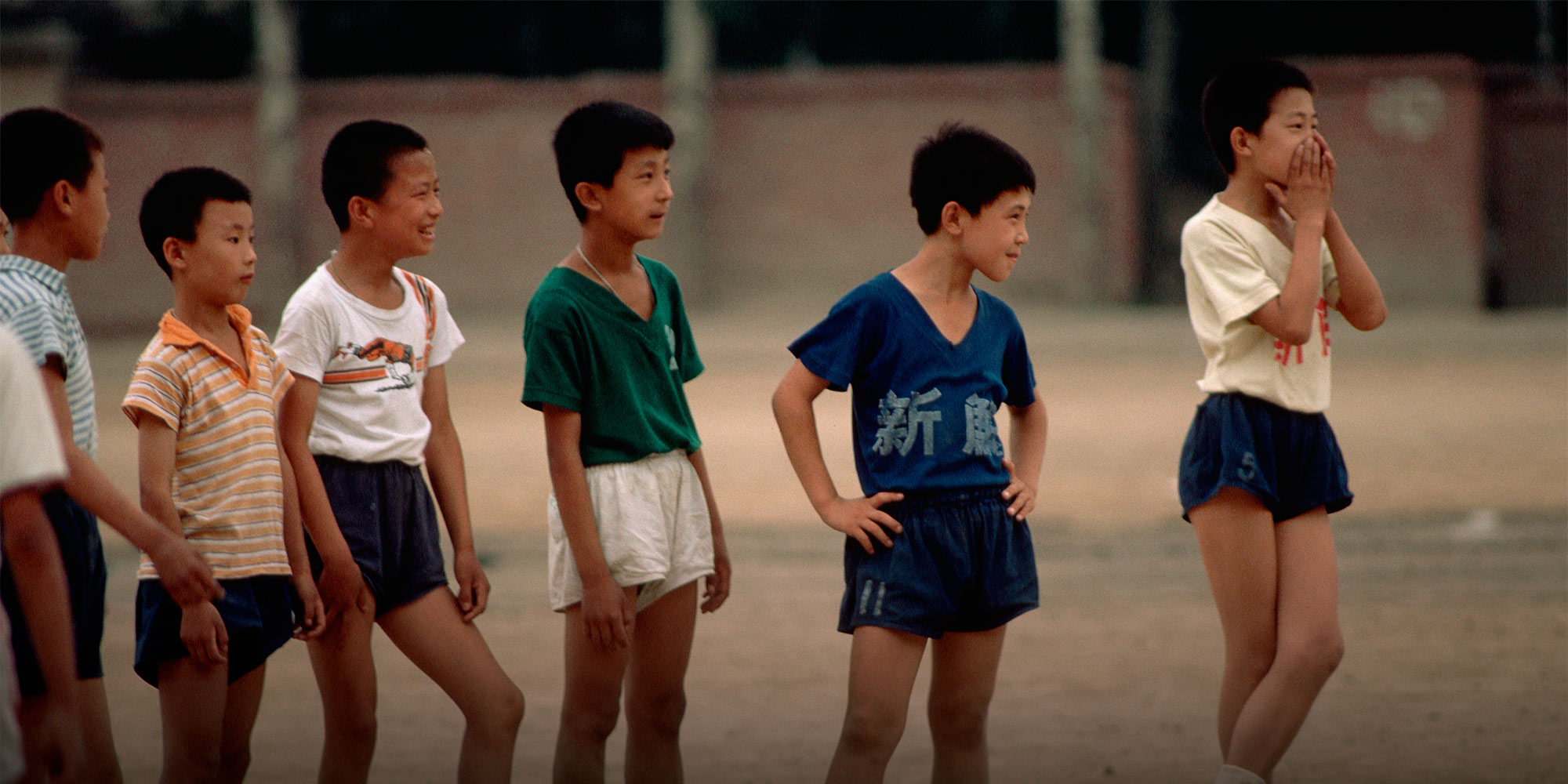
(Header image: Boys line up for soccer practice after school in Beijing, 1983. Bettmann Archive/VCG)

A Hawaii-Based Education Is The Best Option For Hawaii’s Kids

A Hawaii-Based Education Is The Best Option For Hawaii’s Kids

It is been two years given that the Covid-19 pandemic started. Two decades considering that learners skilled a “normal” faculty working day. Two a long time because moms and dads were being hurled into property education with no street map or lesson approach.

Opinion article badge

Even soon after two decades, numerous households are nonetheless in limbo. Numerous are however wondering if their keiki are powering for the reason that their educational institutions ended up ill-well prepared for a pandemic and not able to pivot in a successful way.

Hawaii requires to get motion now to assure our keiki are completely ready to lead us in the long term, and it can be accomplished by utilizing equipment now out there.

The pandemic’s impact was severe and polarizing particularly when it arrived to schooling. While quite a few personal colleges ended up capable to adapt at a swift tempo, family members relying on community education ended up still left floundering. A lot of general public colleges experienced no system for classes and no in depth or uniform prepare for health and fitness and wellness when college students returned to campus.

We noticed how ohana were being having difficulties to retain keiki linked to their education although remaining rooted in their tradition. As mothers, we professional the troubles firsthand, and we knew we could assistance make a variance. As mothers and fathers, as educators and as Native Hawaiians, we couldn’t permit that take place. That’s why we designed our possess schooling application: Ka Hale Hoaka.

Ka Hale Hoaka is the only Hawaii-primarily based online academic application obtainable to assistance college students in regular and household-university environments and their people thrive through an unsure time. Aside from applying standard types of instructing with a internet site, we also leaned on social media to improve our neighborhood and assistance train the lessons our keiki so desperately needed.

Perpetuating Hawaiian Lifestyle

We provided no cost classes by means of Fb Dwell, which helped our little kanaka and wahine-owned organization arrive at persons around the globe and prosper. We have been capable to share not just Olelo Hawaii but our society as well. We have connected college students by means of oli, crafts and other actions. By creating the classes ourselves, we were being ready to weave standard and modern-day tutorial resources to bridge the cultural and academic divide that was made by the pandemic.

Our method begun tiny with only a couple hundred individuals. Two many years later, via live streaming courses, contests and sponsored Facebook adverts, we have been capable to connect with more than 12,000 men and women who consider element in absolutely free and paid classes and now have a vested curiosity in perpetuating Hawaiian culture.

Due to the fact Ka Hale Hoaka’s inception, we have been capable to foster a new cohort of Hawaiian language teachers, and have been in a position to train the Hawaiian Language to communities from as much away as Europe and New Zealand.

What Our Keiki Need

As Hawaiians, we are elevated to malama just about every other. As a kumu, Maile Naehu knew what required to be accomplished, what our keiki were being lacking as they spent times, weeks, months, now several years, attempting to learn in a unique way. She also understood how important that cultural relationship would be to enable ohana navigate the academic troubles offered.

Our curriculum is established where by we stay. It has a sense of location and pleasure and link. The on the internet platforms offered to moms and dads correct now are produced on the mainland, and although they may perhaps be a great in good shape for young children there, they are missing what our keiki need.

At a time when the significant expense of dwelling in Hawaii is driving people away from the islands, Ka Hale Hoaka delivers a way to maintain them connected to their birthplace and their tradition, no make a difference where by they settle. Our packages are designed for the whole family members to come collectively and share this mastering encounter — wherever mom and dad and small children can be learners with each other.

The curriculum was developed by us: two performing mothers who saw a need to have to teach their keiki at a time when the regular education method could not. There demands to be a way to superior combine the indigenous language and society into lecture rooms.

As Hawaiians, we are raised to malama each and every other.

The two formal languages of Hawaii are Olelo Hawaii and English, nevertheless the only distance learning accessible to most college students, which includes all those in immersion programs, was in English. If we could construct an complete method in both Olelo Hawaii and English, there should really be a way to use equally in lecture rooms statewide. Additional lifestyle-dependent and Hawaiian language-primarily based classes need to have to be out there to not just pupils, but also instructors and mother and father who are elevating these keiki to be far better citizens of Hawaii.

The pandemic has definitely created its mark on fashionable historical past, and although it brought with it so substantially reduction, it also introduced us prospects. As mama, we increase to the occasion for our keiki and our communities. We make certain that the history of our men and women, the foundation laid by our kupuna, and the legacy of outstanding contributions of wahine reside on in our young children.

We need to have to apply programs that can teach our keiki and get ready them for the foreseeable future. Two moms could do it. Hawaii can, much too.

STEM students struggled with online learning (opinion)

STEM students struggled with online learning (opinion)

The COVID-19 pandemic has led to a stunningly immediate transformation in how and exactly where undergraduate college students understand. In the span of a yr, the number of students having courses online across about 2,200 faculties and universities amplified by 93 percent. The embrace of on the net mastering is pretty very likely to proceed: additional than fifty percent of this substantial sample of establishments expected to continue to produce some or all of the classes they’d shifted on the web via distance schooling following the pandemic.

What could this perhaps everlasting transform in finding out environments necessarily mean for undergraduates’ learning, specifically for these pupils who are usually marginalized? We are a team of scientists researching the affect of the pandemic on the mastering experiences of undergraduates. Our team involves undergraduate co-researchers who carry youth voice and viewpoint (two are co-authors on this piece). Our investigation indicates some important cautions that increased instruction leaders should really retain entrance of head in considering a lot more on the web mastering.

By a longitudinal examine we’ve been conducting, we have followed the trajectories of a group of 560 students who have generally been marginalized in STEM schooling. All individuals began our review originally as members in a high school application. Approximately all are now undergraduates or have not long ago graduated with an undergraduate diploma.

These learners are intrigued in science and investigate and had an intensive mentored science investigation working experience in substantial faculty, and we are seeking to understand what helps them remain in science. Seventy-six percent of the college students in our study are men and women of colour. More than 50 {e4f787673fbda589a16c4acddca5ba6fa1cbf0bc0eb53f36e5f8309f6ee846cf} are multilingual, more than a third are very first-generation college learners (39 percent) and pretty much half have just one or both mother and father born outdoors the United States.

As the pandemic worsened, we started to stress about the effect on the academic encounters of this group of assorted and inspired pupils. What outcomes could this profound societal and academic crisis have on their finding out in increased training? We had been struck by results from analysis on education in emergencies that points to the significance of accumulating data for the duration of crises. Doing investigation is a crucial way to put together for the potential and to ameliorate the impacts of an instructional unexpected emergency.

We sought and been given a National Science Foundation Speedy grant to locate out how this team of students fared all through the pandemic. We hoped our just-in-time research about how undergraduates navigated the big disruptions of the pandemic could enable guidebook plan and final decision producing by school and administrators immediately after the pandemic by giving some empirical information on scholar encounters. We surveyed a set of 190 college students drawn from our larger sized examine twice in the course of the height of the pandemic, the moment in tumble 2020 and once more all through spring 2021. We also interviewed a smaller team of 26 students. Eighty percent of the students collaborating in this Quick research determined as folks of coloration.

What we observed has vital implications for institutions considering about expanding remote choices for undergraduates. Eighty-five percent of students reported that the pandemic had an influence on their academic trajectories. Issues with on-line and hybrid courses have been a crucial source of the impacts. The negatives our members shared with us not only negatively shaped their encounters but also had both equally immediate and lengthy-time period ramifications for them academically and professionally. Their stories make us particularly careful about developing on line choices for undergraduates. Their activities with on-line studying reveal challenges that—if still left unaddressed—could increase inequity in increased training.

Pupils pointed to skipped alternatives in 3 main spots: foundational knowledge of critical principles, peer collaboration and interactions. A fourth missed possibility, specially applicable for learners in STEM, was the lack of chance for engaging in science practices these kinds of as inquiring and acquiring concerns based mostly on observations, organizing and carrying out investigations, and examining data. Learners would have engaged in these tactics in lab or area-centered coursework, most of which was canceled all through the pandemic.

Learners emphasised, in each surveys and interviews, a reduction of deep mastering. In some cases, learners famous that when they received great grades, they felt their comprehension was much more superficial. They considered that the online discovering knowledge had manufactured it more difficult for them to create a solid comprehending of foundational concepts in their classes—and felt that their grades may possibly mask the fragility of their comprehension. Students claimed that their facial cues about confusion or misunderstanding appeared harder for college to pick up and interpret. Shaky understandings could lead to later confusion and misunderstandings as they progressed via coursework. One suggestion they presented was a need to have for professors to offer you shorter, minimal-stakes strategies for them to show studying.

Learners also felt the absence of collaboration and peer-to-peer finding out. They missed in-human being problem-solving possibilities and skipped getting in a position to be a part of review teams. At times college students identified that college associates confined scholar interaction on chats or discouraged pupil conversation in the course of courses—a significant choice that college students recognized afflicted their skill to share queries, concerns and clarifications. This intended students from time to time felt even additional isolated from peer connections that could assistance them. They proposed that school really encourage chat interaction and enable established up and even be part of chat teams made for informal collaboration and dilemma resolving.

Undergraduates also skipped options to make interactions with peers, faculty and opportunity mentors. The likelihood to have casual discussions about professional perform and lecturers was almost completely absent for our college students in a remote environment. This impeded critical casual and formal advising—even the system of identifying advisers—as perfectly as the prospective for networking, collaborating and locating social and emotional aid. As a person 1st-calendar year computer system science main (who changed to a well being science major throughout the pandemic) instructed us, “Before the pandemic, it was form of a society of performing on comp sci. Comp sci is really challenging and the lessons are very rigorous, and the pupils have a lifestyle of assisting each individual other. There is this neighborhood of comprehending it. And it is less complicated understanding you could just converse to a close friend or a student next to you … you have peer enable.” One particular suggestion the college students had was for faculty to determine out structured techniques to get to know college students outside course time.

Finally, for learners majoring in STEM (approximately 80 percent of the sample), skipped options for hands-on encounters with science procedures, these as amassing knowledge or making and employing models, ended up a distinct impediment. Some learners felt that certain courses that demanded these skills ended up specifically challenging in a digital natural environment and did not want to pursue a important that incorporated those specifications. Our survey final results also indicated that for learners who have been even more alongside in their main (2nd- and third-calendar year undergraduate college students), COVID-related disruptions were even more outstanding. These troubles may possibly have greater the issues of them finishing majors.

Our college students did report rewards of on the internet teaching when it was done well. Some professors incorporated strategies that had been much more productive, according to our undergraduate individuals. These professors pre-recorded their lectures and posted notes. Synchronous learning time was utilised to focus on what was offered in the lecture and notes. Notably, whilst both college students and school appreciated this change to far more conversation for the duration of class, findings from a faculty study we performed as element of this investigation unveiled that faculty required time and sources to shift their teaching in this way.

Our individuals, having said that, did not sense that these rewards outweighed their significant problems. While most of our college students did keep in science (95 percent of STEM majors reported that they experienced not switched majors, and 86 percent reported currently being quite assured they would continue being in their big around the prolonged time period), they also documented tremendous worries, which include challenges all-around mental overall health. These experienced ripple effects, major to them experience less grounded in their understandings, significantly less related and far more apprehensive about next actions professionally.

Even so, the 6 pupils who did adjust their key to go away STEM are a considerable reduction. In interviews, we uncovered that these switches transpired in circumstances when courses essential computational imagining or mathematical trouble fixing that were more durable to full on the net many others pointed to the difficulty of partaking in science procedures on-line for unique majors like physics. When even a single scholar is not ready to go after their enthusiasm and push, it is deeply concerning—and particularly in the circumstance of our pupils of shade, who have been marginalized because of to systemic racism. A person initial-era previous physics big described the disappointment and loss of her dream of pursuing science. She instructed us, “This [physics major] is type of a dream I have to permit go … I’m going to have to go after something additional sustainable or less difficult, in a way. I appreciate the sciences, but this is a really hard reality that I have to deal with.”

If increased education and learning heads in a path of pursuing and even increasing on-line discovering, we will need to have to be organized to handle the similar issues. Examining for and ensuring deep knowing, enabling peer-to-peer collaboration and romantic relationship setting up, as perfectly as supplying learners alternatives to interact in the disciplinary procedures important for their individual skilled advancement in their fields, are places significant to deal with for undergraduates engaged in on the net finding out.

It’s tempting to anticipate the flexibility, responsiveness and attainable expansiveness of distant finding out as even a lot more responsive to learners in a superior-tech globe, and most likely even a lot more equitable. We need to be certain that this change does not stop up inadvertently increasing inequities and dampening and diverting the passions, commitments and opportunity of our college students.

Governor Newsom Promotes Physical Fitness and Mental Well-Being with Advisory Council

Governor Newsom Promotes Physical Fitness and Mental Well-Being with Advisory Council

Co-chaired by 1st Companion Jennifer Siebel Newsom and Pro Football Hall of Famer Ronnie Lott, the Council will spot a particular emphasis on youth physical wellbeing and mental wellness

SACRAMENTO – Governor Gavin Newsom now named 16 associates to the Governor’s Advisory Council on Physical Fitness and Mental Effectively-Staying, which is tasked with checking out approaches to market health and wellness amongst Californians of all ages. The Advisory Council is led by First Husband or wife Jennifer Siebel Newsom, who was a Division 1 athlete at Stanford University and a member of the women’s junior nationwide soccer staff, and Professional Football Corridor of Fame Inductee Ronnie Lott.

“The pandemic has put a highlight on the importance of actual physical and psychological health,” explained Governor Newsom. “We are dedicated to elevating balanced nutritional and fitness patterns, and psychological perfectly-getting, to aid create a more healthy, far more resilient California for all.”

“As a lifelong athlete and the mom of four younger young children, I’m eager to embark on this enjoyable partnership to give California small children with ample tools and options to create lifelong mental and bodily wellness methods,” reported 1st Associate Siebel Newsom. “After all, we know that lifetime practices all-around physical exercise, athletics, diet and wellness are formed in early childhood.”

The Advisory Council includes reps from wellbeing and wellness corporations, youth sports plans, schooling, the entertainment and health and fitness market, and other specialists on bodily and mental health and fitness:

  • Dr. Sergio Aguilar-Gaxiola, Professor of Medical Inner Medication, UC Davis University of Drugs, and Director of the Heart for Lowering Health and fitness Disparities at UC Davis
  • Brandi Chastain, Olympic and Globe Cup Winner, Nationwide Soccer Hall of Fame inductee, mom and grandmother, and cofounder of BAWSI
  • Jessica Cruz, CEO of NAMI California
  • Nisha Devi, Founder of Kala Wellness, Japanese Drugs Practitioner
  • Fran Gallati, CEO of YMCA of the East Bay
  • Ashley Hunter, Founder and Executive Director of Fit Young ones
  • Savannah Linhares, Varsity Ladies Basketball Mentor, Biology Instructor, Leadership and Backlink Crew Teacher at Chowchilla Substantial Faculty, and “Double-Goal” 2020 Coach of the Year, Good Coaching Alliance (PCA)
  • Cheryl Miller, Olympic Gold Medalist, NCAA Higher education Basketball 3-time Player of the 12 months, Head Coach Women’s Basketball at Cal Point out LA
  • Dr. Bill Resnick, psychiatrist and philanthropist, and mindfulness practitioner
  • Stephen Revetria, President, Giants Enterprises
  • Francesca Schuler, President of the California Physical fitness Alliance
  • Dr. Dan Siegel, Medical Professor of Psychiatry at the UCLA Faculty of Medicine and the founding Co-Director of the Mindful Recognition Investigate Centre
  • Renata Simril, President and CEO of LA84 Foundation
  • Dave Stewart, Former Major League Baseball Participant
  • Dr. Vernon Williams, Sports Neurologist and Founding Director of the Heart for Sports Neurology and Discomfort Drugs at Cedars-Sinai Kerlan-Jobe Institute
  • Kristi Yamaguchi, Olympic Gold Medalist, Founder of Generally Aspiration Basis

“During my job as a experienced athlete, I figured out the great importance of both equally actual physical and mental health,” claimed Ronnie Lott, who served safe 4 Tremendous Bowl victories for the San Francisco 49ers. “We as a society tend to spot a large aim on bodily well being, but currently being healthful in head is just as significant. I appear ahead to remaining aspect of this Advisory Council to make sure all California older people and small children can be healthy in head and human body.”

The Advisory Council’s activities may well consist of, amongst other items, furnishing steerage on the advancement of actual physical activity and wellness targets for Californians of all ages expanding awareness among the all age teams about the benefits of actual physical action, sporting activities, nourishment and psychological wellness encouraging intergenerational actual physical exercise functions endorsing equitable access to outdoor and physical routines for underserved communities and facilitating collaboration between federal, condition and neighborhood businesses, training, company and industry, the non-public sector, and many others in the promotion of actual physical exercise and psychological wellness.

###

How the Indian government took credit for Pesochin evacuation done by education firms

How the Indian government took credit for Pesochin evacuation done by education firms

The Indian government has vastly exaggerated its claims of evacuating Indian students from Pesochin in war-ravaged Ukraine, students and educational consultants have alleged.

Pesochin is a settlement on the outskirts of Kharkiv, a city in eastern Ukraine, which lies 40 km from the Russian border. Ever since the war began on February 24, Kharkiv has been relentlessly pounded by Russian forces.

On March 1, an Indian medical student was killed in the city. The next day, the Indian Embassy in Ukraine asked all Indian students stranded in Kharkiv to leave “immediately”, even if that meant walking several kilometres to three settlements that it had identified. One of them was Pesochin, also spelt as Pisochyn.

Three nights after nearly 950 students arrived in Pesochin, the Indian ambassador to Ukraine released a statement, in which he claimed: “In the past two days alone, we have evacuated more than 500 Indians from Pisochyn.”

A little over an hour later, Edu Pedia Overseas, an education consultancy group that helps Indian students get admission into Ukrainian universities, posted a video on social media platforms, contradicting the ambassador. In the video, Dr Aman Sandhu, a practicing doctor in Germany and managing director of the group, said: “It looks as if they are claiming that they came physically there to help, that they took students out of Pesochin, but there were no buses or any kind of help…”

Sandhu should know. Her husband and chairman of Edu Pedia Overseas, Dr Karan Sandhu, was in Pesochin, helping out the students.

In fact, several students, who are now back in India, told Scroll.in that the evacuation from Pesochin was driven by education consultants like him, and that the Indian Embassy only made a delayed intervention well after most students had left the settlement.

The consultants said on the final day of the evacuation, the embassy offered to pay for five buses that they had hired. On social media, however, the embassy claimed it had “organised” the buses. Four days later, the consultants are yet to receive any money from the embassy.

Waiting for help from the embassy

The representatives of three education firms – Edu Pedia Overseas, Global Focus Pvt Ltd and Bobtrade Education Group – worked together to pull off the Pesochin evacuation. Scroll.in spoke with them on the evening of March 8, after they had reached the border of Ukraine and Romania, where their cars were stuck in an 8-km long queue.

“We left Pesochin only after all the students boarded the bus,” said Dr Swadhin Mohapatra, a director in Global Focus Pvt Ltd.

Mohapatra, aged 30, is from Odisha. He studied in Bengaluru and moved to Ukraine 12 years ago. He said hundreds of students who had been stranded in the war had been placed in Ukrainian universities through his firm.

When Russia invaded Ukraine on February 24, several students, most of them studying medicine, started calling him, Mohapatra said. Those in Kyiv, Kharkiv and Sumy – places that were under relentless shelling from Russia – sounded the most alarmed.

In Kharkiv, students took take refuge in underground metro stations and old bunkers built in the basements of their hostels. On March 1, Naveen SG, a fourth-year medical student from Karnataka, stepped out to buy groceries and was killed in shelling.

The next day, hundreds of Indian students went to Kharkiv railway station in a bid to flee the city, but they were unable to board a train. According to a headcount maintained by Mohapatra, there were as many as 1,188 Indian students in the city that day.

By afternoon, the Indian embassy sounded an alarm, asking the students to immediately leave the city and reach the safe zones of Pesochin, Babaye or Bezlyudovka, located on the outskirts of the city.

About 245 students decided to stay back and try their luck with the next train. But nearly 950 students walked to Pesochin, amidst shelling and chaos, said Dr Karan Sandhu, who followed them along with Mohapatra and the other consultants.

But when they reached Pesochin, the consultants realised that the embassy had made no arrangements for the students. “In hindsight, I feel if the students had stayed in Kharkiv, they had a better shot at catching a train in the next 24 hours,” Sandhu said. “Some of my students stayed back and got on a train the same night.”

When Scroll.in spoke to the students on the night of March 2, many of them believed that the accommodation in Pesochin had been arranged by the Indian embassy with help from Ukrainian authorities. But Sandhu said the embassy had played no role at all.

“The Kharkiv National Medical University has a sanatorium. It is used as a shelter home, long-stay home and old age home,” he said. “They allowed us to keep the students there after we reached out to them.”

The first night, everybody went to sleep without a meal. On March 3, Sandhu, along with Mani Chahal from Bobtrade Education Group, another firm that helps Indian students with university admissions in Ukraine, started visiting nearby villages to buy ingredients to cook meals for the students.

“We had a huge group to look after and limited resources,” Chahal said. “Somehow we bought bread, biscuits. There was a mess nearby where we got soup cooked.”

Sandhu said he stayed in constant touch with the Indian embassy. “They took all the information from us,” he said. “But they did not arrange anything.”

Looking for buses

On March 3, Mohapatra, Sandhu, Chahal and his colleague, Hardeep Singh, began calling local bus operators.

“Imagine walking into a desert and looking for water – that was how it was to find a bus in Pesochin,” Sandhu recalled.

Mohapatra said the closest exit route was the Russian border, but it was highly unsafe. The only viable option for an evacuation was Ukraine’s western borders with Poland and Romania, 1,000 km away. But most bus operators refused to undertake such a long journey. “It was a risk to the driver’s life,” Mohapatra said. “The few who agreed, asked for ten times the fare.”

On March 3, he said, they managed to hire two buses from transporters that were charging $200 – about Rs 15,000 – per seat. About 85 female students left for the western border in these buses.

The next day, the cost of a bus seat more than doubled to $500, or Rs 38,000. But recognising that they could not afford any delay in the evacuation, the consultants hired six buses, a few minivans and a car, which were used to transport over 560 students.

The smaller buses took about 70 students each, while the larger buses packed in about 130 students, even if it meant many did not get a seat and had to stand in the aisles through the journey.

The transport was collectively financed. Both the students and the consultants “pitched in whatever cash they had,” said Vasu Dev Sharma, a medical student. “We arranged for funds from locals we knew well in Kharkiv,” he added.

Abhishek Kumar, a student of Kharkiv National Medical University, who did not have enough cash on him, said he boarded the bus on the understanding that he would transfer the remaining money into Sandhu’s account once he was back in India. The educational consultants were “very helpful”, Kumar said. “They tried to get buses for us, food for us.”

Eventually, Chahal, Mohapatra and Sandhu managed to get buses from at least seven different operators, each charging a different rate. All three consultants said the vast majority of Indian students left Pesochin between March 3 and March 5, without the embassy’s help.

A few lucky ones, like 19-year-old Pralay Kumar Nayak and his friend Debashish Rout, were bailed out by the Odisha government, which paid for the bus tickets of students belonging to the state. “I had no money to pay for the bus,” Rout said.

Mohapatra, from Global Focus, which had facilitated Rout’s admission in Kharkiv, said senior officials from the Odisha government had contacted him as early as February 25, extending all possible support for the evacuation of the state’s students.

In contrast, the Indian embassy was slow to offer help. On March 5, after the vast majority of students had left Pesochin, it contacted the consultants and offered to pay the bus fares of 298 students left behind. “But we still have not received any amount,” Dr Aman Sandhu said.

Chahal from Bobtrade echoed this: “So far, they have not paid us in any way.”

Publicity overdrive

This has not stopped the Indian government from taking credit for the evacuation.

On March 5, the Indian embassy posted several tweets related to Pesochin. One featured photos of water bottles and packets of food that it claimed to have delivered to the stranded students despite “major adversities”.

The embassy also said it had arranged buses for the 298 students who were still left behind in Pesochin, while claiming that it had already evacuated 500 students between March 3 and 4. The embassy even posted photographs of the students travelling in the buses.

But within a day, Karan Sandhu contradicted these claims in a video on Facebook. “Posting photos will not help evacuate students,” he said. He added that Indian officials “don’t know in what condition students are in here”. He told Scroll.in that the five buses that left Pesochin on March 5 had also been arranged by them – not by the embassy.

Abdul Zaheer, another director in Global Focus, who is based in Delhi, pointed out that the Indian government, in its self-congratulatory posts on social media, had posted pictures that had been taken by his colleagues, of buses that they had arranged. The embassy was “only bothered with PR”, he said.

Scroll.in contacted the spokesperson of the Ministry of External Affairs to seek its response to these allegations, but the spokesperson refused to comment.

Stayed to help students

Mohapatra, Chahal, Singh and Sandhu have their own cars. They could have fled Ukraine on February 24 when the Russian invasion began, but they chose not to.

Aman Sandhu, who lives in Germany, said her husband “put all his energy in saving all students while the embassy officials left Kyiv for Lviv”. The couple have a young daughter.

Mohapatra said he decided to help out because he knew students and their families depended on him. With several students now back in India, he has been inundated with messages of gratitude from them. “It is overwhelming,” he said. “I feel we did good by staying back.” He said he did not want any credit or acclaim. “But the government went after a credit seeking campaign,” he added.

Chahal has lived in Ukraine for 21 years. “I will wait for a few days in Romania and then decide where to go next,” he said.

From right to left: Dr Karan Sandhu, Hardeep Singh, Dr Pooja Praharaj, Dr Swadhin Mohapatra, Mani Chahal. The team had a meal in Ukraine on March 6 before leaving for the Romanian border.

EPISD awarded $60k grant for ‘Bike On’ Outdoor Program

EPISD awarded k grant for ‘Bike On’ Outdoor Program

TPWD Grant to help EPISD center-schoolers discover mountain biking fundamental principles

EL PASO, Texas (KTSM) – El Paso Independent University District (EPISD) officers just lately introduced that the Texas Parks and Wildlife Section (TPWD) awarded the district a $60,000 grant for its Bike On: Bicycle Safety and Outdoor Discovering program.

The plan, in accordance to EPISD officers, is meant to stimulate bicycle using among center college college students and motivate path using in the Franklin Mountains.

In accordance to EPISD, the grant will give middle university physical-instruction academics with education to supply a three-week bike schooling curriculum in the 2022-23 college 12 months for 1,250 pupils.

Instruction combines the physical fitness benefits of biking with riding procedures, safety and upkeep. The device concludes by connecting college students to close by using trails at Franklin Mountains Condition Park, with a group bicycle experience to instruct path basic safety, etiquette and stewardship.

“With the help of the Texas Parks and Wildlife Division and community businesses, the district will manage group rides to encourage students’ interest and appreciation of the outdoors,” district officials shared.

Officials extra that the implementation of this application will create on earlier out of doors mastering systems established at El Paso ISD in partnership with TPWD that enrich the academic choices for its pupils.

The system will use supplemental curriculum and assets to educate and prepare learners of all experience stages on the added benefits of bike riding, these as enhanced cardiovascular endurance, flexibility, physique energy and psychological target to command overall body motion. The curriculum will consist of street basic safety, system positioning, system, and bicycle maintenance. College students also will master about Franklin Mountain Point out Park trails, trail security, conservation, and stewardship.

EL PASO Unbiased Faculty DISTRICT

The El Paso ISD Bike-On System, operate as a result of the district’s Overall health & Wellness Section, will develop the repertoire of engaging wellness-developing applications these kinds of as balance bikes, in-line skating, and archery for the two pupils and families.

EPISD is just one of 41 recipients of the far more than $2 million in grants from the Texas Communities Outside Outreach System (CO-OP). 

For Community and breaking news, sports activities, weather alerts, video and far more, down load the No cost KTSM 9 Information Application from the Apple App Keep or the Google Perform Retail store.