Can Online Education Be a Force for Equity and Institutional Sustainability?

Many reviewers, in my judgment, have misread Robert Ubell’s new book, Staying Online. It’s been largely treated as a compendium of practical advice about how colleges and universities can successfully embrace online learning.

Ubell, a pioneer in online program development at the Tandon School of Engineering at New York University and Stevens Institute of Technology, certainly offers a great many sensible recommendations about:

  • Formulating and implementing an online strategy, including calculating the right price for an online degree and making solid enrollment and revenue projections.
  • Designing, developing, delivering and growing online programs and providing online student services.
  • Integrating active learning into digital instruction.
  • Mitigating cheating in online courses.
  • Managing online course ownership.
  • Using data analytics to improve online instruction.
  • Deciding whether or not to partner with an online program manager.

But at its core, the book offers a compelling argument that online learning can be a force for equity, despite the widespread claim that low-income and first-generation college students fare relatively poorly in online courses.

Done properly, Ubell contends, online learning can boost outcomes for marginalized students, increase retention rates, improve student learning and stabilize institutional costs.

Staying Online is, in short, a clarion call for institutions to mainstream virtual learning.

In addition, he is convinced that digital instruction can be the savior of many traditional institutions, not just during the pandemic, but beyond, as they seek to sustain and increase enrollment.

Online teaching offers a practical and pragmatic way to address the market forces that are upending institutional finances: the shrinking college-age population, deepening economic inequality, rising numbers of adult learners and stiffening competition among institutions for undergraduates and master’s students.

Were it not for lower-cost online education, he argues persuasively, the national decline in postsecondary enrollment would have been far worse than it has been.

As economic inequality intensifies, Ubell contends, it is more important than ever that colleges and universities take steps to bridge the economic divide. That will require these institutions to deliver an education that is more affordable, flexible and convenient than they have historically offered.

Scaled online education, in his view, must be a big part of the solution.

Myth busting constitutes a big part of Ubell’s book.

  • Must it cost tens of thousands of dollars to develop effective online courses? Absolutely not, he insists. High-end production values are far less important than effective online pedagogy.
  • Must a digital education be more expensive than a face-to-face education? Certainly not. It’s undeniable that some institutions do treat online learning as a revenue generator. But any accurate cost accounting shows that online classes can be cheaper to deliver, especially if campuses are willing to embrace alternate staffing models that allow the classes to be scaled.
  • Must lower-income and other nontraditional students perform less successfully in online classes? Nope. Ubell cites numerous examples of online students outperforming their in-person counterparts.

But if institutions are to succeed online, campus leadership and faculty must recognize that delivery methods aren’t the only difference between face-to-face and virtual instruction. Pedagogy, assessments, curricula and support structures all need to change if online students are to succeed.

In Ubell’s opinion, the keys to effective online learning involve:

  • Rejecting the notion that effective online instruction should replicate the conventional in-person experience.
  • Recognizing that online students differ markedly from their on-campus counterparts; they are much more likely to work part- or full-time, to be older, and to have to juggle demanding work and family responsibilities.
  • Re-engineering courses around a more student-centered approach to engaging, motivating, instructing and assessing students that emphasizes active learning, peer-to-peer interaction, inquiry, digital exercises, virtual labs and guided projects.
  • Treating student support not as an afterthought but as central to academic success in an online environment.

Among the many important arguments that Staying Online advances are these:

  • An online education need not be inferior to an in-person experience. Online learning generally allows students to process information in their own time, to take part in online discussions and ask questions without losing face, and to engage more actively with peers and in interactive activities.
  • A scaled online education can also be a more personalized education. Data analytics can allow instructors to identify students who are disengaged, confused or at risk of failure so they can address these challenges in near real time. Such data can also pinpoint material or skills that are particularly difficult to comprehend or master and prompt instructors to develop tutorials and activities to help students achieve proficiency.
  • Cheating is more a consequence of misguided approaches to assessment than it is to students who are unethical or unprincipled. Here, Ubell is one of many innovators calling for more frequent low-stakes assessments distributed throughout a course.
  • Online learning need not be alienating or isolating. The design challenge is to make online courses more participatory, collaborative and interactive than their conventional in-person counterparts.
  • Institutions without an online strategy will deprive themselves from key sources of future enrollment. One of the greatest benefits of digital education in this century is its capacity to offer greater access to colleges and universities to students who must work while they advance their studies. It allows campuses to serve not only nontraditional students but growing international markets as well.
  • A successful online strategy at the postbacc level requires institutions to convert individual courses into bundles of steeply discounted, connected classes that carry credit in targeted high-demand fields. He also stresses the importance of branding these programs effectively. Here, he cites the example of Specializations, MicroMasters, Nanodegrees and Professional Certificates.

For many academics, the pandemic has been a wake-up call. It’s among those once-in-a-generation occurrences that forces a reconsideration of many taken-for-granted assumptions.

Many of us now recognize that the kind of education that we offered in the past, for all its virtues, hasn’t served many of our existing students well, while ignoring the needs of the nonstudents who could benefit from a college education. Cost and a rigid academic calendar are part of the problem, but so too is pedagogy and delivery modalities.

If we truly want to address postsecondary equity, online—or hybrid or low-residency—education must be part of the mix. Short-term certificates and certifications and alternate credentials, too, need to be part of the future.

But as Staying Online makes clear, it’s not enough to deliver conventional classes online. We need to radically rethink the academic experience and our pedagogies, curricula and assessment strategies. Ubell’s most important takeaway: input from the learning sciences and instructional designers and educational technologists won’t simply help online students; it will benefit more traditional on-campus students as well.

It’s a lesson we should take to heart.

Steven Mintz is professor of history at the University of Texas at Austin.

Indigenous video game streamers advocate for representation and education

(RNS) — Marlon Weekusk, a member of the Onion Lake Cree Nation from Saskatoon, in central Canada, is known by his icon: a howling white wolf that has held significance for him throughout his spiritual journey as a Cree. Those who know him expect conversations about tokenizing Indigenous people and representation of Cree characters in the video games he plays for fun and profit — Call of Duty and Dead by Daylight. 

Weekusk is a streamer — an expert video gamer who plays for a public of mostly other avid gamers — and like other Indigenous streamers, he offers running commentary while he plays: critiques of popular games, opinions about streaming platforms like Twitch, YouTube Gaming and Facebook Gaming and stories about his culture and spirituality. 

As well known as Weekusk’s identity is to his fans in the small world of Indigenous gaming, he realizes that he and his culture go almost completely unrecognized in the greater gaming world. And he is determined to change that by educating the online world while empowering other Indigenous content creators.

Weekusk said that on Indigenous reserves, sports tend to be the main pastime for kids, but “there are a lot of Indigenous youth that just don’t fit into the sports area,” he said.

Weekusk fit into the latter category. He and his siblings and cousins spent hours sitting around their TV chatting. He said it was a time to escape.

Marlon Weekusk. Courtesy photo

Marlon Weekusk. Courtesy photo

Today, Weekusk, a commerce student at the University of Saskatchewan who is married with two children, livestreams on his own channel, Marmar Gaming. 

Weekusk occasionally features a Cree word of the day during his streams, explaining its meaning and origins. He also answers questions from viewers: What is the significance of offering tobacco? What is a powwow? What does he think about Indigenous characters in video games?

In a recent stream, Weekusk discussed the controversy surrounding the Chief Poundmaker character in the game Civilization VI. The game developers have been accused of cultural appropriation by the Poundmaker Cree Nation.

Weekusk said his goal is to show that Indigenous streamers can occupy this creative space and do it successfully. He wants to motivate and inspire other Indigenous people to take on similar roles. “Gaming has allowed me to be a positive role model for young Indigenous kids,” he said.

“I’m not prancing around in my regalia or anything like that,” said Weekusk. “I’m just sharing stories and relating to other people.”


RELATED: Native America has lessons for surviving an apocalypse, says Choctaw elder and Episcopal priest


Aretha Greatrix. Courtesy photo

Aretha Greatrix. Courtesy photo

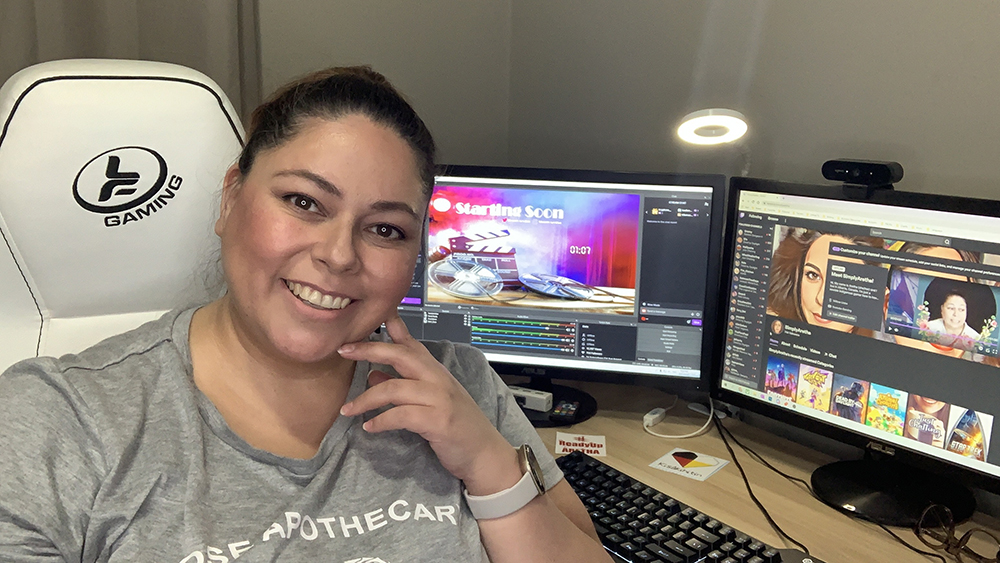
Other Indigenous streamers are bringing their cultures to their gaming platforms. Aretha Greatrix, who is from Kashechewan First Nation in the James Bay area of northern Ontario, has been streaming video games on her channel SimplyAretha for more than a year. Greatrix, who was born and raised in Edmonton, Alberta, is focused on fostering community among Indigenous streamers.

“We need to figure out who we are, so we can help support one another,” she said.

Last year for Native American Heritage Month in November, Greatrix invited streamers to her channel to discuss Indigenous representation in video games as they battled live. She played games such as Never Alone, which includes Indigenous communities in its plot, and Civilization VI (despite its appropriation of Chief Poundmaker).

“I try to create space for education and conversation,” said Greatrix.

Cedric Sweet. Courtesy photo

Cedric Sweet. Courtesy photo

Cedric Sweet, of the Seminole Nation of Oklahoma, shares his identity with viewers around the world via his channel ChiefSweet, named for his great-grandfather and great-uncle, who were both chiefs of his tribe. Sweet said he draws a mix of Indigenous and non-Indigenous viewers, which leads to lots of conversation and questions about his culture.

“There are so many Indigenous cultures,” said Sweet. “And I am happy to educate and talk about mine.”

Sweet, who lives in Ada, Oklahoma, said Indigenous people have flocked to video game streaming since he began in 2016. One reason for the increase, he theorizes, is that historically lamentable internet connections on reservations have slowly gotten better in the United States and Canada.

“I see so many Native streamers in the scene now, it is really blossoming,” said Sweet. “I think right now is the best time to be a Native content creator.”


RELATED: Why Oak Flat in Arizona is a sacred space for the Apache and other Native Americans


Some, however, such as Nathan Cheechoo, from Moose Cree First Nation on Treaty 9 Territory in northern Ontario, said gamers in his home area are still waiting for better internet and more recognition. Cheechoo, who streams on his channel realswampthings, likes to advocate for the support of gaming with hopes that other Indigenous people may choose to pursue it.

Nathan Cheechoo. Courtesy photo

Nathan Cheechoo. Courtesy photo

Cheechoo said it is up to the streaming platforms to feature Indigenous gamers more prominently on their sites. In the past, Twitch has celebrated Black History Month and Hispanic Heritage Month. In June, Indigenous History Month in Canada, and in November, Native American Heritage Month in the United States, the platform held no such events.

“It hurts because we can bring so much to platforms across the continent, yet the support for awareness is lacking,” said Cheechoo.

More support and awareness for Indigenous content creators means more opportunities, said Cheechoo. Knowing that there are companies, games, organizations and platforms that celebrate Indigenous people respectfully is important.

“This will allow for the future of Indigenous players to be proud of their identity,” he said.

On the other hand, both Cheechoo and Sweet said they do not get much hate from viewers because they are Indigenous — in part, they said, because commenters do not realize that Indigenous people still exist.

“Most people assume Indigenous people are extinct,” said Cheechoo. “So, we are definitely not a focus to those that like to criticize.”

This story has been updated to correct Aretha Greatrix’s birthplace.

KBE approves regulation placing more requirements on schools using corporal punishment

Photo of the Kentucky Board of Education's Dec. 1 regular meeting at the Kentucky School for the Deaf.
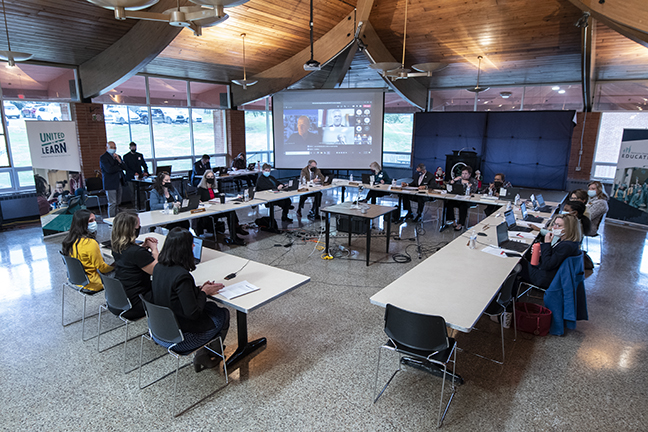
The Kentucky Board of Education held its Dec. 1 regular meeting on the campus of the Kentucky School for the Deaf.

The Kentucky School for the Deaf (KSD) had the opportunity to host the Kentucky Board of Education (KBE) on its campus for the board’s regular meeting on Dec. 1.  As part of a packed schedule, the board approved a regulation relating to the use of corporal punishment.

A 1982 Kentucky statute permits the use of corporal punishment by teachers for the purpose of maintaining classroom discipline. In 2019, the legislature passed  KRS 158.4416, which requires KDE to provide resources related to, and requires districts to adopt, trauma-informed discipline policies. Trauma-informed discipline policies seek to balance accountability with an understanding of traumatic behavior.  

“There is a persistent rub between our work related to trauma-informed discipline and the permissive statute KRS 503.110,” said Matthew Courtney, policy advisor in KDE’s Office of Continuous Improvement and Support (OCIS).

Based on the KBE’s authority to promulgate regulations related to student discipline and student welfare, he said KDE saw fit to bring forward the regulation to place guardrails around corporal punishment and what it looks like in Kentucky.

Courtney clarified it is the stance of KDE that corporal punishment is not a trauma-informed discipline resolution, and should not be used in Kentucky public schools. KDE has actively fought to prohibit corporal punishment for about 30 years.

The American Academy of Child and Adolescent Psychiatry suggests that corporal punishment at school may be harmful to students and may increase problematic behaviors, may hurt a student’s ability to self-regulate and make it harder for them to develop trusting and secure relationships with adults. Many other national advocacy organizations have taken a similar stance.

Since corporal punishment cannot be viewed through a trauma-informed lens, KDE applied a harm reduction approach in drafting the new corporal punishment regulation.

 “This should not be seen in any way as an endorsement of corporal punishment from the department or the board,” said Courtney. “This is the next step in what has been a 30-year mission to end corporal punishment in Kentucky.”

The regulation defines corporal punishment as the deliberate infliction of physical pain by any means upon the whole or any part of a student’s body as a penalty or punishment for misbehavior. It also seeks to exempt from corporal punishment students with an Individual Education Plan (IEP), 504 plan and those who are classified as homeless or are in foster care.

If a district chooses to allow corporal punishment, the regulation requires schools to get written consent from a student’s legal guardian within the first five days of the school year if the guardian wishes to allow corporal punishment to be used as a behavior intervention for their child. Before administering corporal punishment, the school must receive an additional verbal consent from the student’s parent or guardian.

The corporal punishment must be administered by a principal or assistant principal and must be in the presence of at least one additional certified staff member who is of the same gender as the student. Each corporal punishment incident must be recorded in the student information system.

After administering corporal punishment, the student must receive a minimum of 30 minutes of counseling provided by the school guidance counselor, school social worker, school psychologist or other qualified mental health professionals by the end of the next school day.

Each local school board must adopt a policy that either prohibits or allows use of corporal punishment. There currently are 156 districts in Kentucky that explicitly prohibit the use of corporal punishment in their district policy manuals. Four school districts have permissive policies and 11 have no clear corporal punishment policy.

“I’m on record as saying I consider this a barbaric practice,” said Education Commissioner Jason E. Glass. “I’m embarrassed that it exists anywhere in the state of Kentucky.”

KBE Chair Lu S. Young said she received several comments encouraging the approval of the regulation

“We do know that there is an effort afoot to engage the General Assembly in a conversation about revising the statute in such a way to ban corporal punishment entirely,” said Young. “In the absence of such a statute, I applaud this work.”

Now that the regulation is approved by the KBE, it will be filed with the Legislative Research Commission on or before Dec. 15.  Depending on various steps in the legislative review process, the regulation will likely become effective near July 2022.

Early literacy initiatives

KDE Chief Academic Officer Micki Ray discussed Kentucky’s early literacy initiatives and ways KDE’s Office of Teaching and Learning (OTL) is working to support local schools and districts in addressing students’ literacy needs. 

According to Ray, between 2015-2019, approximately 118,000 Kentucky students in 3rd grade performed below proficient on the K-PREP reading assessment.  In 2019, a total of 47.3{e4f787673fbda589a16c4acddca5ba6fa1cbf0bc0eb53f36e5f8309f6ee846cf} of Kentucky’s 3rd-grade students did not meet proficiency on the K-PREP reading assessment.

Ray said this issue goes beyond assessment scores. Students who are proficient in reading by the 3rd grade are more likely to have continued academic success; less likely to have problems with attendance, dropout rate and juvenile crime; more likely to feel higher self-esteem and feelings of adequacy; and more likely to break the cycle of intergenerational poverty.

Ray discussed early literacy initiatives, including the Read to Achieve (RTA) grant. The RTA grant is a two-year, renewable grant that, per KRS 158.792, was “created to help teachers and library media specialists improve the reading skills of struggling readers in the primary program.” Applications are currently being taken for the next round of Read To Achieve grants.

At its Sept. 30 meeting, the Reading Diagnostic and Intervention Grant Steering Committee approved the grant size and range of awards and the request for applications (RFA) notice as specified in KRS 158.794 and 704 KAR 3:408. Since the time the RFA was released, KDE has received questions and concerns about the current RFA.  Some of those questions were from potential applicants through the RFA question-and-answer process.  Other concerns have been sent more informally through the KBE’s public comment documents.

KDE is committed to the success of RTA programs to assist struggling readers throughout the state.  KDE does have the option of amending the RFA and extending the deadline to apply.  At the close of the RTA question period, KDE anticipates amending the RFA to provide clarity and address some concerns.  As it has done to date, KDE must continue to comply with statutory requirements regarding RTA grants, regulatory requirements of the KBE and state procurement requirements for RFAs. 

Since this involves an active RFA, KDE is unable to provide details of exactly how the RFA may be amended.  However, KDE is committed to the successful implementation of reading intervention programs for struggling readers throughout the Commonwealth.

In other business, the board:

  • Presented the Kevin M. Noland and Mary Ann Miller Award for Outstanding Public Service to Kentucky Schools to Reeca Carver, state advisor for the Family Career and Community Leaders of America at KDE;
  • Heard updates from AdvanceKentucky Executive Director Anthony Mires and KDE’s Ray;
  • Heard an update from KDE Associate Commissioner Robin Kinney on the KDE Employment Report;
  • Heard from KDE Associate Commissioner Kinney and Division Director Karen Wirth on the audit update and expense reports;
  • Heard an overview of the recommendations of the School Facilities Task Force;
  • Heard a report from the Council on Postsecondary Education;
  • Heard a report from Deputy Secretary of the Education and Workforce Development Cabinet Mary Pat Regan;
  • Heard Glass present the commissioner’s report;
  • Approved consent agenda items:
    • New District Facility Plans;
    • Amended District Facility Plans;
    • 2020-2021 school year Local District Working Budgets and Local District Tax Rates Levied;
    • 702 KAR 1:115, Annual In-Service Training of District Board Members;
    • Amendments to 704 KAR 19:002, Alternative Education Programs;
    • Request to withdrawal emergency regulations 702 KAR 1.191E and 702 KAR 7.125E;
    • 704 KAR 3:395, Extended School Services;
  • Heard a year in review update from 2021 Kentucky Teacher of the Year, Donnie Piercey;
  • Listened to a presentation from Kentucky School for the Deaf Principal Toyah Robey and KSD students;
  • Approved the recipient of the 2021 Kevin C. Brown Strategic Priority Award;
  • Approved KBE’s legislative priorities;
  • Approved the federal Carl D. Perkins Consolidated Annual Report;
  • Approved emergency regulation 702 KAR 1:191E, District Quarantine Leave, which allows any fully vaccinated district employee that is quarantined by a licensed treating physician, physician’s assistance, advanced practice registered nurse, local health department, Department for Public Health or local school district to be eligible for paid leave;
  • Approved certification of 702 KAR 7:140, School Calendar, to prevent expiration; and
  • Heard a litigation report from KDE General Counsel Todd Allen.

Essex Elementary School Students Break the Code


By
Elizabeth Reinhart/Zip06.com


12/01/2021 09:34 a.m. EST

When a child first starts learning to read, decodable texts can be an important tool. These texts provide them more practice in decoding, or sounding out, certain phonics patterns, or words, in the context of a story that they find interesting.

To supplement the Essex Elementary School (EES) collection of these types of texts, the Essex Elementary School Foundation (EESF) provided an $8,600 grant for the 2021–’22 school year for the purchase of new Geodes Decodable Texts that are now being used as part of K-2 instruction.

“Just yesterday I had the pleasure of observing a group of students reading one of the books,” said EES Principal Jennifer Tousignant in a phone interview. “They were actively engaged and genuinely excited to enjoy their new books.”

Tousignant said the books feature a variety of genres and are a mix of fiction and non-fiction.

“The illustrations in these particular books are bright and the story lines are far more interesting than decodables of the past,” said Tousignant. “Decodable readers have certainly come a long way.”

The texts are aligned with and complement the school’s reading curriculum, which is called the Wilson Fundations foundational reading program.

Tousignant said that the phonics and decoding skills taught through the school’s reading program are reinforced with decodable readers.

“Students can use and practice the skills that they were taught and that they learned,” with the decodable readers, said Tousignant.

Decodable texts are often used along with leveled readers.

“Leveled readers are characterized and categorized by level of difficulty,” said Tousignant. “They are more focused on meaning…and contain many sight words.

“So, there are benefits to both and both serve a valuable purpose. Teachers use multiple tools to support and differentiate literacy instruction to meet the needs of our students,” she continued.

Funding for the decodable readers was allocated to the school by EESF prior to the start of the current school year.

“The EESF is really neat, and I feel so fortunate to work with them,” said Tousignant.

She noted that Early Literacy Teacher Colleen Artymiak and Kindergarten Teacher Kelli Grace submitted the formal grant proposal to the foundation.

“Colleen and Kelly were interested in these books, and they came to me,” said Tousignant. “I feel like we could never have too many books and kids get very excited about new books…I fully supported it.”

The Geodes decodable texts were chosen based on their “systematic scope and sequence, which will allow our students to practice the phonics skills that have been explicitly taught in our phonics lessons,” said Artymiak in an email. “Geodes will scaffold children’s mastery and application of the alphabetic code in reading.”

According to a press release, EESF provided $50,000 in grants and program support to EES this school year.

In addition to the decodable texts, the funds support a collaboration with the Essex Historical Society for a Historian in Residence Program, a Summer Math Passport Program, and a Scientist in Residence Program offered by the Connecticut Audubon Society’s Roger Tory Peterson Estuary Center.

Other continued grants and programs include Bloom Art instruction, Lego Engineering and 3D Printing Makerspace afterschool programs. Another new program for the 2021–’22 school year is a collaboration with the Connecticut River Museum “to increase students’ knowledge of their town and connection to the Connecticut River,” according to the press release.

The foundation is also working to develop a science, technology, engineering, and mathematics (STEM) lab for students and teachers, for the 2022–’23 school year.

“We are thrilled to bring back some favorite learning opportunities in addition to some new collaborations with our local community organizations,” EESF President Bill Jacaruso stated in the press release. “We are grateful for the generous support from our local parents and community members to make these programs possible.”

Texas Education Agency opens yet another inquiry into South San ISD

This article has been updated.

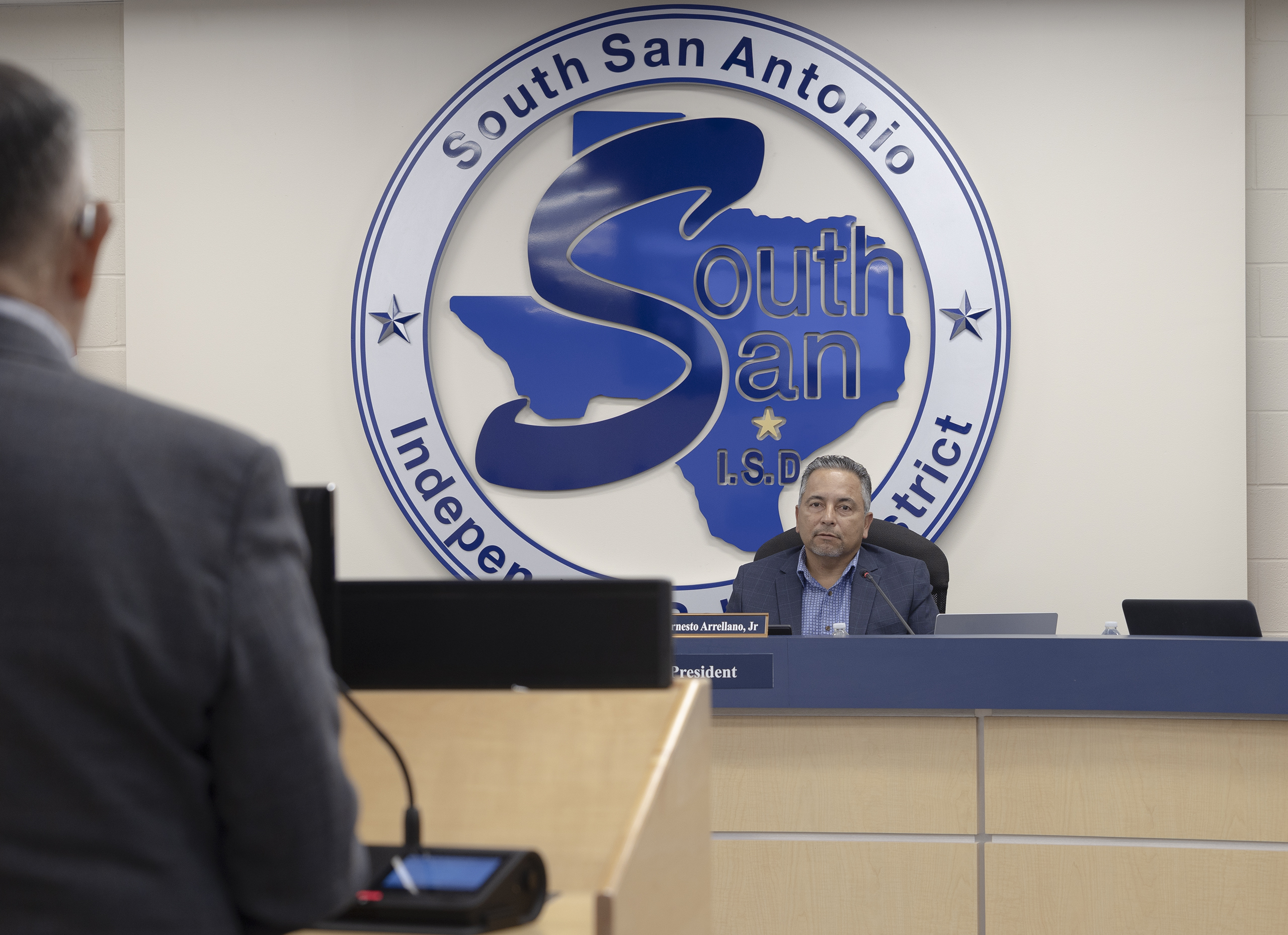
The Texas Education Agency has opened another investigation into South San Antonio Independent School District, just three months after concluding a two-year investigation that resulted in the placement of a state-appointed monitor to oversee the school board.

The agency notified Superintendent Marc Puig and board President Ernesto Arrellano Jr. in a letter Monday that Education Commissioner Mike Morath had authorized the investigation in response to complaints the TEA had received. The complaints claim the school board has interfered with the superintendent’s duties, including “getting involved with the suspension of a term employee and attempting to make employment recommendations for the chief financial officer,” the letter states.

In a statement, district spokesman Brad Domitrovich acknowledged that South San ISD has developed a reputation of discord and dysfunction in the boardroom.

“With the announcement of this newest special investigation, the board and superintendent pledge to promote an atmosphere of cooperation with the Texas Education Agency,” Domitrovich said. “Our main focus, from the board of trustees to administration to the hard-working people in the classroom, remains doing everything we can to be the best champions for our children and our community.”

Arrellano did not immediately respond to a request for comment Tuesday.

The TEA letter comes two weeks after monitor Abelardo “Abe” Saavedra told the board it violated state law and its own policy during recent meetings. Saavedra began serving as the state-appointed monitor on Sept. 30, a month after the TEA closed an investigation into similar problems between the board and superintendent.

Investigators found that trustees failed to cooperate with the superintendent and acted outside of their authority by contacting district staff to seek information and discuss district business, such as disciplinary issues and changes to board agendas. Board members also demonstrated overreach of their duties by contacting vendors, consultants, and other educational organizations on the district’s behalf without informing the superintendent, according to an Aug. 31 TEA letter to the district.

The Aug. 31 letter and final investigative report warned South San ISD that the TEA could issue further sanctions for the district if it did not correct the problems identified in the report and that more investigations could follow if district officials violated the law.

Since Aug. 31, the board majority has voted, with trustees Gilbert Rodriguez and Stacey Alderete dissenting, to publicly reprimand Puig for “dereliction of his employment duties to the board of the trustees” and “violations of the district’s school board procurement policies.” The board majority also has voted to commission an external audit of Puig’s expenditures since he started in May 2020.

Moreover, the board majority voted to request documents from J. Cruz & Associates “related to the superintendent’s procurement” of the law firm and to deliver those documents to the external auditors. Puig hired the firm earlier this year to investigate Felipe Barron III, the district’s head football coach, whom Puig placed on administrative leave pending the outcome of an investigation.

In a rebuttal letter to the reprimands, Puig wrote that his contract requires him to attend all board meetings, except closed meetings in which trustees discuss his employment or resolve conflicts among themselves. He stated he did not abandon his duties to the board at the Aug. 18 meeting — as the first reprimand states — when he left the closed session after trustees began “raising their voices, using foul language, aggressive posturing, and hurling personal disparagements” over personnel actions Puig took against Barron.

“Feeling threatened, I left the closed session during such heated exchange to allow the board members to discuss and resolve the obvious conflicts between the board members involved,” Puig wrote in the rebuttal letter.

He also wrote that district policy gives Puig the authority to hire investigators to conduct inquiries of complaints, which is what Puig did when he hired the law firm to investigate Barron.

In October, TEA Deputy Commissioner for Governance and Accountability Jeff Cottrill told board members that the statutory violations unearthed by the state investigation “persist to plague this school system and harm kids.”

“I want to make crystal clear that this is something that isn’t dated. This isn’t something that’s in the past,” he said at the October meeting. “We have what I would classify as exceptionally egregious allegations of governance, dysfunction, and statutory violations in this school system.”

Cottrill had attended the October meeting to introduce Saavedra to the board. Saavedra previously served as South San ISD superintendent from January 2014 to October 2018 and as Houston ISD superintendent from 2004 to 2009. As the monitor, Saavedra must work with the board and district to identify issues that led to the noncompliance and report back to the TEA.

Bowser Administration Releases Preliminary DC Enrollment Numbers for the 2021-22 School Year

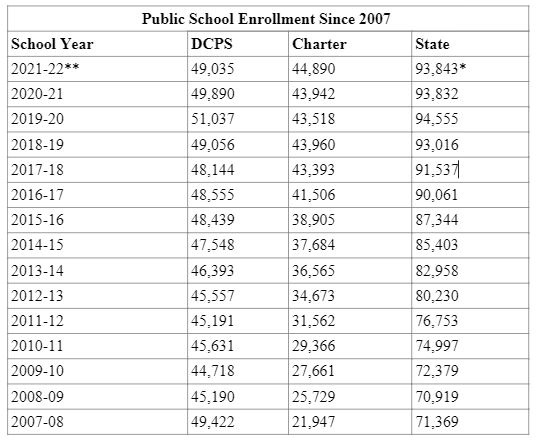
(WASHINGTON, DC) – Today, the Bowser Administration announced that the number of students enrolled in public schools in Washington, DC in the 2021-22 school year increased slightly compared to 2020-21 enrollment, with 93,843 students enrolled in District public and public charter schools according to preliminary data released by the Office of the State Superintendent of Education (OSSE). These unaudited numbers show a less than 1{e4f787673fbda589a16c4acddca5ba6fa1cbf0bc0eb53f36e5f8309f6ee846cf} increase overall across DC – or 11 more students – compared to last school year’s count. 


Enrollment at DC Public Schools (DCPS) saw a second year of enrollment declines from 49,890 students in the 2020-21 school year to 49,035 students in the 2021-22 school year, a 1.71{e4f787673fbda589a16c4acddca5ba6fa1cbf0bc0eb53f36e5f8309f6ee846cf} decrease compared to final, audited numbers released in early 2021. Enrollment at DC’s public charter schools saw a second year of increases, from 43,942 students in the 2020-21 school year to 44,890 students in the 2021-22 school year, a 2.16{e4f787673fbda589a16c4acddca5ba6fa1cbf0bc0eb53f36e5f8309f6ee846cf} increase over final, audited numbers for last school year released in early 2021. 


While early childhood education programs saw decreases, the number of students in homeschooling programs approved by OSSE increased in the 2021-22 school year, compared to 2020-21. OSSE reports a preliminary number of 959 students registered for home schooling in 2021-22, compared to 602 in the previous year. All families of compulsory aged students who wish to home school must register with OSSE and meet certain standards by submitting an application, which OSSE reviews and approves. OSSE will report final home school numbers along with the final enrollment audit numbers in early 2022. 


As the District’s state education agency, OSSE conducts an annual enrollment audit of public schools. The preliminary numbers above are based on a snapshot of data certified by local education agencies in October. This marks the beginning of an enrollment audit and certification process that takes several months and is conducted in collaboration with an independent auditor. The chart below tracks enrollment trends since 2007 with preliminary unaudited numbers for the 2020-21 school year. Final, audited enrollment figures will be published by OSSE in early 2022. 


*Note: State-level enrollment subtotal does not equal DCPS + Charter totals due to student duplications. Duplications have been removed from the state level numbers but may still exist at the sector level in these preliminary, unaudited figures. 


**These figures represent preliminary data. Final audited enrollment figures will be published by OSSE in early 2022.