Trampolines and cowboy classes: Arizona parents take advantage of state’s homeschooling funds | US education

Trampolines and cowboy classes: Arizona parents take advantage of state’s homeschooling funds | US education

When the former governor of Arizona, Doug Ducey, signed a law last year that lets any family receive public funds for private school or homeschooling, he said he “trusts parents to choose what works best” for their children.

Over 46,000 Arizona students now take part in the state’s education savings account, or ESA, program, which provides about $7,000 per child annually for a huge array of school expenses. But with households in greater charge of curricular choices, some purchases are raising eyebrows, among them items like kayaks and trampolines, cowboy roping lessons and tickets to entertainment venues like SeaWorld.

The apparent permissiveness is one reason Beth Lewis, a former teacher and director of Save Our Schools political action committee, opposes the program. “These are all the things that we scrape the couch cushions for to fund for our kids,” said Lewis, whose group failed to collect enough signatures to put Ducey’s expansion of the program up for a referendum.

The debate in Arizona is being closely watched by GOP governors hoping to emulate the state’s approach. With passage of a new program just last month in Iowa, there are now nine states with ESAs and at least six more considering them. As in Arizona, the Iowa program will be open to any family that wants to participate. A Florida proposal would do the same.

The juggernaut is part of a wider Republican push to win over parents disaffected by what they see as the public school system’s halting response to the pandemic and alienated by culture war clashes in the classroom. Experts say parents’ frustration over extended school closures contributed to Glenn Youngkin’s victory in Virginia’s election for governor in 2021. And the governor of Florida, Ron DeSantis, widely seen as a 2024 presidential contender, has made parent choice a central focus of his administration and restricted what public school teachers can say about race and gender.

What Republicans see as a boon for family empowerment, however, many Democrats view as a Trojan horse for the dismantling of public education. In Arizona, the seemingly endless variety of options available to homeschoolers makes it difficult for state officials to regulate them – and that may be the point. The goal, school choice proponents say, is to break free of school bureaucracy and put parents in control.

Children with signs saying we heart ESA
Families demonstrated in favor of Arizona’s ESA program on 17 January at the state capitol in Phoenix. Photograph: Courtesy of Lura Capalongan

“Lots of kids have different needs that public schools are not a good fit for,” said Marilyn Fitzpatrick, a Gilbert, Arizona, mom and former social studies teacher. She turned to ESAs to homeschool her oldest son, Oliver, after pulling him out of elementary school during the pandemic. She called remote learning with a kindergartner a “special kind of hell”, and said when he was placed in the lowest reading group, teachers told her not to worry. “It was concerning to be told: ‘It’s probably fine.’”

Others see the program as a springboard for innovation. Lura Capalongan, who is homeschooling her kindergartner Lexi, said Arizona’s ESA has allowed her to more than double what she spends on curriculum and materials – items like a small robot that teaches coding and a kit to build a simple scooter.

“I don’t feel like I’ve stretched the boundaries much,” she said. “We’ve been able to build a curriculum around her skills and her interests.”

‘Incredibly permissive’

But the newly elected Democratic governor, Katie Hobbs, has less faith that the purchases families are making are academically sound. Her first budget proposal includes a plan to roll back the program to a limited group of families. She told lawmakers the program “lacks accountability and will likely bankrupt this state”.

Under the law, participating families agree to provide instruction in the same content areas as public schools. In addition to more traditional lesson plans, parents report that they meet – or attempt to meet – those requirements through activities like ice-skating and sword-casting classes, according to posts in a Facebook group for ESA users and vendors marketing their services.

One parent in the group said she uses the Disney+ streaming service to “extend our learning” and asked if the state would approve the cost of a subscription. Others said they had received approvals for trampolines and horseback riding lessons.

The former state superintendent Kathy Hoffman, a Democrat who lost in November’s election to Republican Tom Horne, said she opposed the expansion because the rules are “incredibly permissive”.

“As long as an item can be tied to a curriculum – with curriculum being ill-defined and open to interpretation – that meets the definition of an allowable expense,” she said. “Striking the right balance between allowing parental choice and being good stewards of public tax dollars was a continual challenge faced by my administration.”

According to the education department’s parent handbook, some materials, such as board games, puzzles and Legos, don’t require parents to submit a curriculum. But less obvious items like dolls and stickers do. To justify buying a chicken coop for a science lesson, one parent posted a chicken-raising guide. Another suggested a workout from Fit Bottomed Girls to support the purchase of a trampoline for physical education.

Teachers for core subjects need to have at least a bachelor’s degree, but for specific classes like art, drama or dance, a two-year degree or a credential is acceptable. Vendors in the Facebook group often list what students would learn from their programs. The sword-casting instructor, for example, said he would teach students “archaeology, physics, history and metallurgy”.

But Lewis, who also helped organize 2018’s “Red for Ed” protests for higher teacher pay, accuses the state of not holding families and private schools accountable. She thinks standardized testing should be required for students who receive ESAs.

“We don’t know what the kids are learning or whether they’re learning,” she said.

‘Tailored to the individual student’

Craig Hulse, executive director of Yes. Every Kid, a national organization that advocates for ESAs, thinks such criticisms are misguided. He said the public probably wouldn’t object to a school taking students on a field trip to SeaWorld or allowing ice-skating to count toward a gym credit.

With an ESA, he said, it’s expected that parents’ choices would be “specifically tailored to the individual student”.

Becky Greene, a Mesa parent, has five children, aged seven to 17, using ESAs. For physical education, they all take taekwondo. She was able to afford a $200 Time Life series on aviation for her oldest son, a “military history buff”, and a book on the chemical reactions involved in cooking for another son interested in culinary arts.

Girl with rabbit
Lura Capalongan hopes to use the ESA for rabbit care purchases like a hutch and a litter box. The ESA did not cover the cost of her daughter Lexi’s rabbit. Photograph: Courtesy of Lura Capalongan

She once wondered how a parent in the Facebook group got approved for a kayak. But as someone “used to stepping out of the box”, she doesn’t question how others educate their children.

Capalongan said she hopes to use ESA funds to help pay for the care of her daughter Lexi’s rabbit – items like a hutch, a litter box and nail clippers. Lexi joined an animal club similar to 4-H and is studying the rabbit’s anatomy and nutrition.

“It’s covering science and biology, but at a level that a kindergartner can understand,” she said.

‘Any reasonable’ expense

Before the former governor’s expansion, the program was limited to specific groups of students, including those with disabilities, in foster care or in military families.

Dave Wells, research director at the Grand Canyon Institute, a center-left thinktank, said Hobbs took a “pretty important rhetorical step” by calling for a change in course. But with a Republican-controlled legislature, she might have to settle for tighter regulations to improve accountability, he said.

Now, the program’s enrollment has nearly quadrupled and the state is working to speed up turnaround time for approvals and reimbursement.

“I walked into a backlog of 171,575 orders,” Christine Sawhill Accurso, the program’s new executive director, wrote in a January email to participants. “We are making our way through that backlog as quickly as possible while still receiving thousands of new requests each day.”

Accurso, a former ESA parent, confirmed that the state has approved chicken coops, ice-skating and cowboy roping lessons among a broad variety of ESA purchases. She has updated the allowable list to more closely match state law, but has also written in memos to ESA families that the department would approve “any reasonable education-related expense”.

School choice advocates in other states are watching Arizona as officials try to define what’s reasonable.

Mayes Middleton, a Republican senator from Texas, has introduced a $10,000-per-student ESA bill that would allow “every type of education” to qualify. Under his plan, the state comptroller would run the program instead of the education agency to avoid debates over curriculum.

“The money is going to be spent,” he told the 74. “Do you want only the government to decide [what to teach], or do you want parents to decide?”

In New Hampshire, by contrast, Kate Baker Demers, executive director of the Children’s Scholarship Fund, said the state applies some “Yankee frugality” to its program and rejects requests for purchases that could be used by multiple family members, like a kayak or trampoline.

“Right out of the gate, we said: ‘This is narrower than you think,’” she said. “We want to run it in a way that everyone can be supportive of it.”

  • This report was first published by the 74, a non-profit, non-partisan news site covering education in America

Iowa and Utah Lead States on School Choice Progress in the New Year

Iowa and Utah Lead States on School Choice Progress in the New Year

As The usa celebrates National School Option Week, two states—Iowa and Utah—have built the 1st moves this 12 months to empower families with a increased say in how their little ones are educated. In addition, the evidence from states with strong university alternative procedures is debunking opponents’ costs that selection harms rural college students and homeschoolers.

Past 7 days, the education and learning committees in equally the Iowa Property of Associates and Iowa Senate advanced Gov. Kim Reynolds’ education alternative invoice, the College students Initially Act, which would make K-12 education and learning cost savings accounts, or ESAs, accessible to all Iowa households.

With an ESA, a household that opted their youngster out of the public university technique would be in a position to accessibility the state’s part of for every-pupil shelling out on public schooling—about $7,600—to use for personal university tuition, tutoring, textbooks, curricular elements, particular-requirements treatment, and a lot more.

In an open letter, Reynolds emphasised that most Iowans will most likely go on to select district general public educational facilities for their small children. But the governor mentioned, “For people who normally cannot manage a personal university that could be a superior in good shape for their children, [the Students First Act] helps make new possibilities attainable.”

On Friday, the Utah Property of Reps passed the Utah Suits All Act by a vote of 54-20. The bill would build multiuse scholarships truly worth about $8,000 on a yearly basis for all K-12 learners. The scholarships would do the job likewise to an ESA, except without having the skill to conserve unused funds for long term expenses. The measure also bundled a spend enhance for district schoolteachers.

“I think that supporting schooling suggests supporting the best approach for educating every personal boy or girl and our state,” stated bill sponsor condition Rep. Candice Pierucci. “So this monthly bill will work to emphasize a emphasis on individualized college student finding out and obtaining means to give parents more applications and solutions for their kids’ education.”

Past calendar year, Arizona became the to start with condition to give ESAs to every single university student. In 2021, West Virginia enacted an ESA coverage which is open to all college students switching out of a district faculty or entering kindergarten. Many other states are poised this 12 months to comply with their direct, which include Arkansas, Florida, Iowa, Indiana, Ohio, Oklahoma, and Texas.

As The Wall Road Journal noted in an editorial this weekend, opponents of university alternative are boosting fears about how these procedures might influence rural school districts:

Public schools are at times the only solution in rural spots and university selection will damage them, the argument goes.

But as Corey DeAngelis recently wrote in these pages, rural districts have as a great deal to achieve from college option as wherever else. If public faculties are genuinely the ideal, or the only, option, students will not go in other places. A Heritage Foundation report recently documented that rural college districts have not endured in Arizona, where college decision is flourishing.

(The Heritage Foundation is the parent business of The Day by day Signal.)

Certainly, not only have Arizona’s rural educational facilities not proven signals of harm, they’ve actually improved considerably around the past two many years in Arizona’s robust faculty option ecosystem.

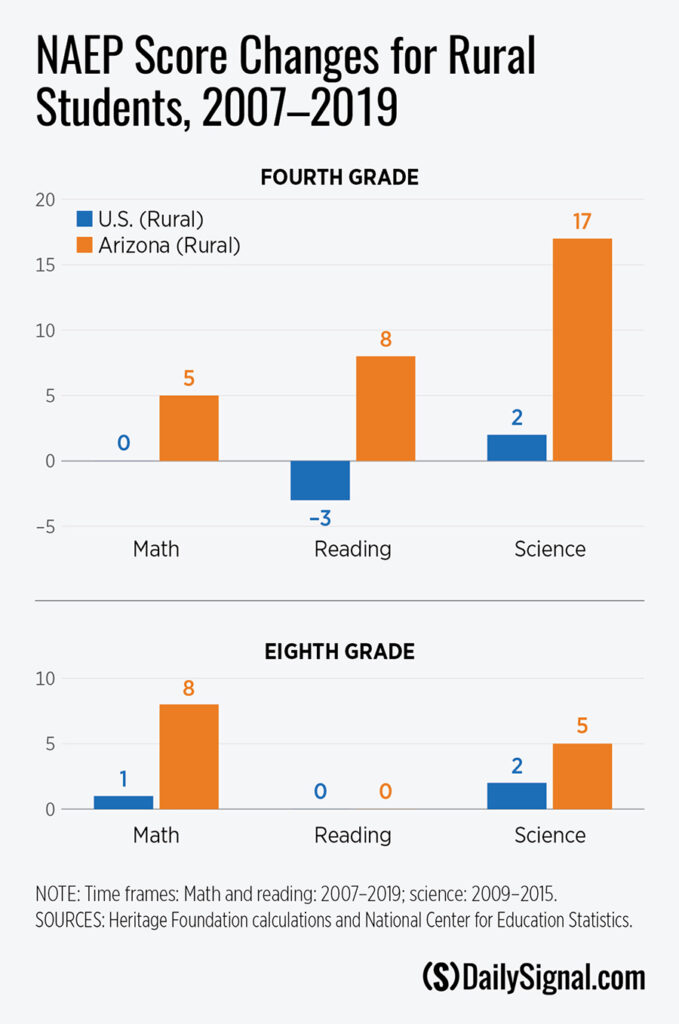
As described in the aforementioned Heritage report, from 2007 to 2019, Arizona rural students’ fourth- and eighth-grade reading and math scores on the Countrywide Assessment of Instructional Progress elevated by a put together 21 details whilst scores in rural colleges nationally reduced by two points. In science, Arizona’s rural schools amplified a merged 22 factors although rural educational facilities nationwide only enhanced by four factors.

Nationwide Assessment of Educational Development gains and declines for rural learners, pre-pandemic.

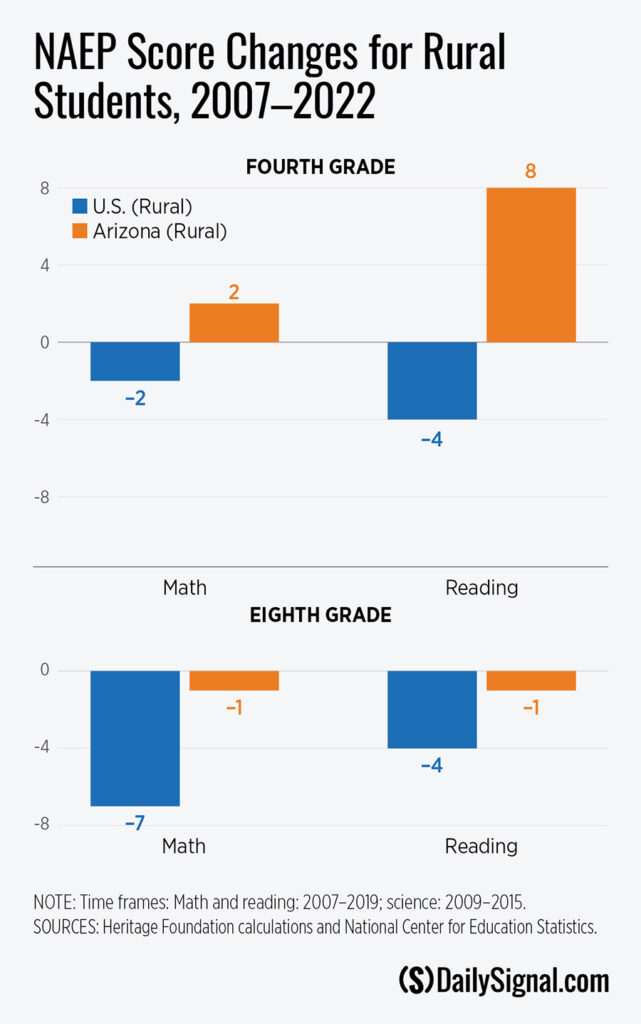
On the most current countrywide evaluation, submit-pandemic, Arizona’s rural college students had been nonetheless up a merged nine factors though rural students nationally dropped 17 details from 2007.

Nationwide Assessment of Educational Progress gains and declines for rural learners, publish-pandemic.

Many others have lifted fears about the prospective for education decision applications to guide to restrictions on homeschooling. Govt shekels, the argument goes, direct to governing administration shackles. Even so, there are states with shackles but no shekels and other people with shekels but no shackles.

All of the states that the Property University Authorized Protection Association lists as “high regulation” when it arrives to homeschoolers are states that deficiency an schooling price savings account coverage. Meanwhile, the states with the highest ESA participation—Arizona and Florida—are thought of “low regulation” states by the affiliation.

In weighing no matter whether to support ESA procedures, homeschoolers should examine how this sort of guidelines have labored in states like Arizona that have experienced them for extra than a ten years. To that close, the Arizona-centered think tank Goldwater Institute just lately revealed an essay by Michael Clark, a homeschool father whose family employs the ESA, about the encounters of homeschoolers in Arizona with the ESA.

Clark observed that the ESAs “have not encroached on homeschool freedoms,” but they have “provided lifestyle-switching services and means for youngsters with learning and developmental disabilities” and “encouraged instructional entrepreneurship, foremost to new and much more cost-effective educational prospects for all learners, together with homeschool students.”

The ESAs have also built it attainable for several more households to teach their small children at residence, therefore strengthening the coalition of those people ready to battle to secure homeschool autonomy.

Of system, the devil is in the details. It is very important that training selection guidelines are perfectly-crafted and make sure that homeschool autonomy is respected. Therefore far, ESA procedures have been built to do just that.

This piece initially appeared in The Daily Sign

U.S. Department of State Teachers of Critical Language Program (TCLP) 2023 for Arabic Teachers (Fully Funded to the United States)

U.S. Department of State Teachers of Critical Language Program (TCLP) 2023 for Arabic Teachers (Fully Funded to the United States)
us-youth-exchange-program

Software Deadline:  January 9, 2023 at 5:00PM 

The Teachers of Essential Languages System is sponsored by the U.S. Section of Point out Bureau of Academic and Cultural Affairs and applied by American Councils for Global Schooling in cooperation with America-Mideast Educational and Training Services, Inc. (AMIDEAST) in Egypt and the Moroccan-American Commission for Instructional and Cultural Exchange (MACECE) in Morocco.

Eligibility Necessities

Candidates will be regarded as without having regard to race, color, religion, sexual orientation or gender. Level of competition for the TCLP is merit-based mostly and open to anybody who:

  • Is a citizen of Egypt or Morocco who at the moment resides in Egypt or Morocco 
  • Is now a whole-time teacher of English as a Foreign Language or Arabic as a International Language in a main or secondary (K-12) faculty in Egypt or Morocco
  • At the time of software has at minimum 4 a long time of whole-time classroom educating working experience
  • Is geared up to train for the whole U.S. academic calendar year with go away time limited to faculty breaks
  • Has a company understanding of Modern-day Common Arabic (fus’ha)
  • Has at the very least a bachelor’s diploma
  • Demonstrates a determination to go on teaching following completion of the system
  • Is proficient in penned and spoken English and
  • Has submitted a entire application (Egypt: please see Application Checklist Morocco: contact [email protected]).

Folks in the adhering to situation are NOT eligible for the TCLP:

  • U.S. citizens and long term residents of the United States, or their spouses
  • People currently participating in tutorial, instruction, or exploration courses in the United States
  • Individuals who have applied for U.S. long term residency, such as Inexperienced Card lottery, in the past three yrs
  • People today currently finding out, residing, or doing work outdoors of Egypt or Morocco 
  • Ministry of Schooling officers, entire-time principals or academic administrators, whole-time instructor trainers, education and learning consultants, college faculty, non-public English Language tutors and
  • People today who have participated in an exchange customer software sponsored by the U.S. federal government for a period of a lot more than 6 months in the very last 5 yrs.

The U.S. Section of Condition and American Councils reserve the appropriate to verify all of the info integrated in the application. In the celebration that there is a discrepancy, or info is identified to be untrue, the application will straight away be declared invalid and the applicant ineligible.

Purposes not meeting the earlier mentioned technological eligibility specifications will not be forwarded to the collection committee.

Advantages

TCLP is funded via the Bureau of Instructional and Cultural Affairs (ECA) of the U.S. Office of Point out and supplies: 

  • J-1 visa support 
  • A pre-departure orientation held in the participant’s household country 
  • Round-excursion travel from each participant’s house region to and inside of the U.S. 
  • A nine-working day welcome orientation in Washington, DC 
  • A teaching assignment of roughly 10.5 months in a U.S. host school 
  • Expert advancement workshops 
  • Accident and sickness health and fitness benefit 
  • Aid with obtaining housing, generally organized by the U.S. host university/academic community 
  • Dwelling stipend of approximately $20,000 and
  • Housing in the variety of a every month housing allowance for the length of the software, calculated primarily based on average housing charges for the assigned host neighborhood.


Assortment Course of action

The U.S. Office of Condition and American Councils will convene an unbiased panel to critique the programs on the basis of the following:

  • Skilled and instructional practical experience and achievements 
  • Shown leadership potential 
  • Preparedness (like maturity, versatility, and skill to purpose independently) for an intensive tutorial calendar year in the U.S. 
  • Ability to express suggestions plainly and effectively 
  • Demonstrated motivation to present-day pedagogy and willingness to adapt methodology 
  • Willingness to co-teach in the U.S. classroom and
  • Potential for developing prolonged-time period linkages amongst U.S. and Egyptian/Moroccan instructional establishments and faculties. 

Candidates who have had handful of or no alternatives to travel to the U.S. will be given precedence.

Application Method

  • To be regarded as for the method, make sure you post a finish software on-line.
  • Incomplete apps or products submitted by fax or e-mail will not be recognized.
  • Except otherwise famous, remember to remedy all questions in English.
  • If a expected issue does not utilize to you, remember to enter N/A (not applicable).
  • There is a limit of a few (3) attachments for each relevant problem if extra than three are submitted, the application might be disqualified.
  • Additional products (this sort of as college student perform or hand-outs) really should NOT be included.
  • Products that need complex tools (these as audio or videotapes) will not be reviewed by the range committee.

To be viewed as comprehensive, all programs need to consist of:

  • An Exchange Trainer Software Form 
  • An essay that consists of detailed answers to all thoughts
  • Transcript(s)/teaching certification(s) 
  • A resume written in English that is no additional than two webpages long 
  • A current passport-dimensions photograph of the applicant and
  • Just one finished suggestion kind from a individual who is the applicant’s supervisor and is common with his/her professional do the job it can not be penned by a family members member. Tips ought to be submitted with the software by the software deadline date. Suggestions submitted independently or submitted right after the deadline will not be acknowledged. Please give an English translation of the suggestion letter if it is not penned in English. The translated letter does not have to have to be qualified or notarized, but really should be clearly marked as a translation.

For Extra Information and facts:

Visit the Formal Webpage of the U.S. Division of Point out Teachers of Significant Language Method (TCLP) 2023

With States Hands-Off, Homeschooling Takes Off |

With States Hands-Off, Homeschooling Takes Off |

South Dakota epitomizes the rapid growth of homeschooling in America. Guided by the principle that parents, not the government, have the right to determine what and how their kids are taught, homeschooling families have overturned existing rules and batted down attempts over the last decade to impose new ones in many states, including South Dakota. 

What’s left in much of the United States today is essentially an honor system in which parents are expected to do a good job without much input or oversight.  The rollback of regulations, coupled with the ill effects of remote learning during the pandemic, have boosted the number of families opting out of public schools in favor of educating their kids at home.  

Reflecting a national trend, the number of children homeschooled in South Dakota rose more than 20{e4f787673fbda589a16c4acddca5ba6fa1cbf0bc0eb53f36e5f8309f6ee846cf} in both of the last two school years. 

Homeschoolers in the Mount Rushmore state advocated for a new law that strips away key pieces of the state’s oversight and eases the way for parents leave public schools.  Last year Senate Bill 177 ended the requirement that parents provide annual notice to a district of their intent to homeschool their child. More significantly, homeschool students no longer must take standardized tests, as public schoolers do, or face possible intervention by the school board if they fail. 

“It was a big win for parental rights,” says Dan Beasley, then a staff attorney at the influential Home School Legal Defense Association (HSLDA), which helped craft and pass the legislation. “It cut out unnecessary regulation and streamlined the process so parents can invest their time in providing the best education they can for their children.” 

This freedom stands in contrast to outraged parents who feel powerless over how their kids are taught in public schools. In high-pitched battles at school board meetings, some take aim at the easing of admissions standards, others at what they see as the promotion of critical race theory and transgender rights, and still others at segregated classrooms and the presence of police officers on campus. And almost everyone is concerned with the sharp decline in already low reading and math scores of students in nearly every state during the pandemic, according to the National Assessment of Educational Progress released in late October.  

For a growing number of parents, homeschooling is the answer to the institutional barriers to the education they believe in.  Beyond requirements that homeschooling parents teach a few core subjects like math and English, they are free to pick the content.  
 
American history, for example, can be all about the glory of the Founding Fathers and the prosperity of free markets, or the oppression of Native Americans and people of color and the struggle for equality. For many homeschoolers, history is taught through a Christian lens, while others follow a standard public school curriculum.  

Parents’ Rights vs. State Control 

The push to deregulate homeschooling raises difficult questions about how to balance the rights of parents to educate children as they see fit with the responsibility of the state to provide educational opportunity – and protect kids when things go wrong. While U.S. courts have stood behind parental rights, with the caveat that states have the authority to impose reasonable regulations to ensure students are educated, European countries lean the other way. To safeguard children, they have imposed much more stringent oversight of home schools.  
 
Cases of child abuse and academic neglect in home schools are a real concern, especially as the guardrails are removed. Most cases of mistreatment are discovered and reported by teachers in public schools, a protection that doesn’t help homeschooled children. Homeschool alumni at the Coalition for Responsible Home Education (CRHE) and academic researchers have documented hundreds of examples of harm to children, many leading to criminal charges, ranging from fatalities and sexual abuse to poor instruction from parents who can’t or don’t teach.  

But calls by CRHE and others for more protections don’t get much traction in the United States. In March, after Maryland lawmaker Sheila Ruth introduced a bill to create a homeschool advisory council to collect information from homeschooling parents and advise state officials, she was inundated with calls and emails. A few were so nasty and threatening that her office called the police. In a Facebook post, Ruth promised the homeschool advocates that she would let the bill die and pleaded with them to stand down. 

Virginia-based HSLDA has spearheaded the opposition to regulations in court and legislative chambers, often in collaboration with local organizations. The group helped defeat many requirements, including that families provide notification of their intent to homeschool in Illinois, that students take standardized tests in South Carolina, and that home schools submit to visits to ensure the safety of children after one starved to death in Iowa, according to an Arizona Law Review article by Elizabeth Bartholet, a Harvard Law emeritus professor.  

“There is a significant segment of homeschooled children who are at serious risk for maltreatment,” Bartholet says. “And no homeschooled children have safeguards to protect them since they are not seen by teachers. That seems deeply wrong to me.”  
 
Homeschool advocates don’t face much political opposition, at least not yet. That may soon change. Teachers’ unions, for one, have an obvious motivation to become adversarial: School districts have been losing students, and thus funding, at historic rates during the pandemic, and some of those kids are going to home schools.  
 
The National Education Association, the nation’s largest professional union, issued a resolution in 2021 essentially opposing homeschooling. It said home schools “cannot provide the student with a comprehensive education experience” and called for regulations that force them to basically duplicate public schooling at home. Other than that, NEA has been curiously silent about homeschooling and isn’t seen as much of an opponent by HSLDA. 
 
“HSLDA has been enormously influential,” says Robert Kunzman, an authority on homeschooling at Indiana University. “They have been able to mobilize a lot of legal resources and grassroots organizations to push back on regulations.” 

A Wide Spectrum of Rules

Just a handful of states, like Colorado and New York, have maintained a comprehensive set of rules, according to CRHE. These states require the teaching of a full list of subjects without dictating the actual content of courses. They also mandate the total annual hours of instruction and formal assessments like standardized tests in an effort to make home schools accountable. In New York, districts can intervene, with the threat of putting the home school on probation, if the student performs poorly. 

Most states, such as Texas and Idaho, are much more laissez-faire. They require a short list of subjects be taught but no assessments. Texas is also among a dozen states where parents don’t have to tell the school district that they are homeschooling.  
 
In half a dozen states, like Mississippi and Utah, there are no subject, time, or assessment requirements, according to CRHE. Parents are completely free to do as they wish. 

As states have eased requirements for parents, the number of homeschooled students has expanded significantly, from an estimated 850,000 in 1999 to about 1.7 million in 2016, or about 3.3{e4f787673fbda589a16c4acddca5ba6fa1cbf0bc0eb53f36e5f8309f6ee846cf} of the school-age population, according to the National Center for Educational Statistics. While experts agree that homeschooling grew quickly during the pandemic and will probably continue to do so but at a slower pace, there is no reliable national data, with some estimates that exceed 3 million students in 2021 considered to be inflated. 

Homeschooling took off in the 1960s, fueled by religion and ideology. Christian conservatives wanted to imbue their children with religious doctrine away from the temptations of public schools, and progressive anti-institutionalists sought to nurture the kind of free thinking in their offspring that rote education stifled. 

In recent years a more diverse group of families, including a notable percentage of black parents, have turned to homeschooling for more practical concerns: to escape poor performing public schools, unsafe campuses, bullying, progressive ideology, and racism. 

At the same time, public schools, aiming to retain at least a limited grip on homeschooled students, are increasingly supporting them with everything from art and music classes to athletics and online education tools. What has emerged is a hybrid model in which students toggle back and forth between home and public schools. For instance, some students start their education at home and then enter public schools in their mid-teens to take more advanced classes that parents can’t teach.  
 
Whatever the motive for homeschooling, deregulation has made it a much easier choice for parents.  
 
“The movement to reduce regulatory barriers has definitely opened up homeschooling to growth for people from all socio-economic walks of life,” says Brian Ray, co-founder of the National Home Education Research Institute and a longtime advocate. “I don’t think there’s any doubt about that.” 

A Success Story in Missouri 

In Missouri, Kim Quon had only a few rules to abide by when she decided to homeschool her two kids so they could learn about Christian faith from her point of view. In her in St. Louis County home, she had to provide 1,000 hours of instruction a year, with 600 of those hours in key subjects like math and English, and keep a written log of the work completed, according to the state’s homeschool law. 

Otherwise, Missouri, like most states, takes a mostly hands-off approach. It doesn’t test the students and has no way of knowing if parents are doing a bad job of teaching them unless a report of educational neglect is filed, in which case the Department of Social Services may investigate. A spokesperson declined to say whether educational neglect is a concern in Missouri and said the department doesn’t release data on the number of complaints it receives. 

“There have been claims of educational neglect, but the vast majority are not legit,” Quon says. “Most homeschool parents take their job very seriously.” 

Quon certainly did. After finishing the required classes, her children had a lot of time left in the day to explore their own interests, which is one of the biggest benefits of homeschooling. The enormous workload of educating two children was made easier for Quon by relying on curricula created by homeschool groups, online resources, and community college for advanced math classes. 

“I’m not a college graduate,” Quon says. “So you don’t have to be a brainy person to homeschool your kids because there are so many resources and people available to help.” 
 
Homeschooling prepared both of her children for college. They went to the University of Missouri in St. Louis and did well, like most homeschoolers who seek post-secondary degrees. Her son studied anthropology and works at the Heritage Museum in St. Charles County. Her daughter earned a degree in biology and works at the St. Louis Aquarium. 

After homeschooling her kids, Quon was recruited by Families for Home Education, a statewide advocacy group, to direct its operation in the greater St. Louis region. While FHE has 1,200 members, its network of 10,000 to 20,000 supporters has been quickly mobilized to bombard lawmakers with calls and emails to defeat attempts to place additional rules on homeschooling that were first established in Missouri in the mid-1980s. There are grassroots groups like FHE in every state. 

FHE has successfully opposed proposals to make students start school at age five rather than the current seven. The group is now struggling to change a Missouri scholarship program that would force homeschooled students to take standardized tests and allow a review of their educational records, which FHE considers an unnecessary government intrusion. 
 

“Lawmakers pretty much leave us alone,” Quon says. “I would like to think it’s because of our presence as a lobbyist, and that we built those relationships over the years.”

Educational Neglect 

Quon’s dedication is common among homeschoolers, but what’s less understood is the extent of educational neglect since most states don’t collect assessment results. From his perch at Indiana University, Robert Kunzman has an anecdotal view of the problem after spending hundreds of hours with dozens of families in many states observing their homeschooling practices.  

The professor has been impressed with some home instruction – highly structured and directed lessons as well as those allowing exploration and creativity – but he has also witnessed serious problems: families who focus almost exclusively on a small subset of subjects they are comfortable with; a teenager who still counts on his fingers to do math; a mom who doesn’t know how to help her daughter sound out words, creating much frustration between them; and a parent who considers an episode of Little House on the Prairie to be a history lesson.  

“These are the kinds of things that are certainly going on,” says Kunzman, who wrote a book on Christian homeschooling. “It’s a small percentage of homeschoolers, perhaps less than a quarter, in which children’s educational interests are being profoundly neglected.” 

Homeschool advocates tend to dismiss this concern. While a small number of parents may not do a good job educating their children, Quon says, the same can be said of teachers in public schools, where many students graduate with skills far behind what’s expected of a 12th grader, or drop out. 

Brian Ray, the influential researcher embraced by the homeschool movement, also says he isn’t too worried about educational neglect. A Ph.D. in science education and the father of eight homeschooled children, Ray points his and other studies purporting to show that homeschoolers significantly outperform public school students on standardized tests. In his view, the research supports his position that government oversight of homeschooling is unnecessary.  

But Kunzman and other scholars have criticized the papers as advocacy masquerading as research. They point out that some of the studies have been designed and funded by HSLDA and say that they have methodological limitations. 

In Ray’s 2010 national study of achievement on standardized tests, for instance, homeschoolers who volunteered scored in the 86th percentile, well above the 50th percentile national mean. 

But the homeschoolers in this study, and in others like it, were an unrepresentative and privileged group: almost entirely white (97{e4f787673fbda589a16c4acddca5ba6fa1cbf0bc0eb53f36e5f8309f6ee846cf}) and raised by married parents (98{e4f787673fbda589a16c4acddca5ba6fa1cbf0bc0eb53f36e5f8309f6ee846cf}) with college degrees (64{e4f787673fbda589a16c4acddca5ba6fa1cbf0bc0eb53f36e5f8309f6ee846cf}). These traits are strongly associated with high academic achievement and don’t reflect the much more diverse and less educated population of public school parents.  

Ray waves off this issue, saying these traits don’t have much of an impact on home school performance, but researchers still question his results.
 
“The idea that homeschool students do better on standardized tests has been repeated so many times by advocates and the media that legislators take it at face value and it is now accepted common knowledge,” says Kunzman, who cofounded the International Center for Home Education Research to support non-biased studies. 

Calls for Regulation 

CRHE and Harvard’s Bartholet don’t buy Ray’s findings. They are advocating for what they consider reasonable protections for children. They say parents need to tell districts if they are homeschooling each year; they should cover the same subjects as public schools; and students should be assessed to make sure they are making progress. 

“We get messages every week from people around the country who know a homeschool child who is being educationally neglected,” says Chelsea McCracken, CRHE’s research director. “Where there is no annual notification, subject requirements, and assessments, there is no way for states to ensure that children’s rights are protected.”  

Kunzman sees such reforms as politically untenable. He advocates for a more modest approach: Require homeschoolers to take a basic skills test in literacy and numeracy. That’s it. The proposal might face less resistance since parents generally share a common belief that, despite religious and political differences, every child should learn how to read and do some math. Kunzman’s test would identify the students who are not learning so they could get some help. 

Ray thinks all the proposals for regulation are nonsense. Just look at public schools. “For many decades public schools have had regulations including certified teachers and testing,” Ray says. “And we have children who are illiterate and can’t do basic math. All the testing schools do every year doesn’t guarantee anything.” 

But Ray and Kunzman do agree on one thing – homeschooling will continue to expand.  

With States Hands-Off, Homeschooling Takes Off | Investigative Reports

With States Hands-Off, Homeschooling Takes Off | Investigative Reports

South Dakota epitomizes the rapid growth of homeschooling in America.  Guided by the principle that parents, not the government, have the right to determine what and how their kids are taught, homeschooling families have overturned existing rules and batted down attempts over the last decade to impose new ones in many states, including South Dakota. 

What’s left in much of the United States today is essentially an honor system in which parents are expected to do a good job without much input or oversight. The rollback of regulations, coupled with the  ill effects of remote learning during the pandemic, have boosted the number of families opting out of public schools in favor of educating their kids at home.  

Reflecting a national trend, the number of children homeschooled in South Dakota rose more than 20{e4f787673fbda589a16c4acddca5ba6fa1cbf0bc0eb53f36e5f8309f6ee846cf} in both of the last two school years. 

Homeschoolers in the Mount Rushmore state advocated for a new law that strips away key pieces of the state’s oversight and eases the way for parents leave public schools. Last year Senate Bill 177 ended the requirement that parents provide annual notice to a district of their intent to homeschool their child. More significantly, homeschool students no longer must take standardized tests, as public schoolers do, or face possible intervention by the school board if they fail. 

“It was a big win for parental rights,” says Dan Beasley, then a staff attorney at the influential Home School Legal Defense Association (HSLDA), which helped craft and pass the legislation. “It cut out unnecessary regulation and streamlined the process so parents can invest their time in providing the best education they can for their children.” 

This freedom stands in contrast to outraged parents who feel powerless over how their  kids are taught in public schools. In high-pitched battles at school board meetings, some take aim at the easing of admissions standards, others at what they see as the promotion of critical race theory and transgender rights, and still others at segregated classrooms and the presence of police officers on campus. And almost everyone is concerned with the sharp decline in already low reading and math scores of students in nearly every state during the pandemic, according to the National Assessment of Educational Progress released in late October.  

For a growing number of parents, homeschooling is the answer to the institutional barriers to the education they believe in. Beyond requirements that homeschooling parents teach a few core subjects like math and English, they are free to pick the content.  
 
American history, for example, can be all about the glory of the Founding Fathers and the prosperity of free markets, or the oppression of Native Americans and people of color and the struggle for equality. For many homeschoolers, history is taught through a Christian lens, while others follow a standard public school curriculum.  

Parents’ Rights vs. State Control 

The push to deregulate homeschooling raises difficult questions about how to balance the rights of parents to educate children as they see fit with the responsibility of the state to provide educational opportunity – and protect kids when things go wrong. While U.S. courts have stood behind parental rights, with the caveat that states have the authority to impose reasonable regulations to ensure students are educated, European countries lean the other way. To safeguard children, they have imposed much more stringent oversight of home schools.  
 
Cases of child abuse and academic neglect in home schools are a real concern, especially as the guardrails are removed. Most cases of mistreatment are discovered and reported by teachers in public schools, a protection that doesn’t help homeschooled children. Homeschool alumni at the Coalition for Responsible Home Education (CRHE) and academic researchers have documented hundreds of examples of harm to children, many leading to criminal charges, ranging from fatalities and sexual abuse to poor instruction from parents who can’t or don’t teach.  

But calls by CRHE and others for more protections don’t get much traction in the United States. In March, after Maryland lawmaker Sheila Ruth introduced a bill to create a homeschool advisory council to collect information from homeschooling parents and advise state officials, she was inundated with calls and emails. A few were so nasty and threatening that her office called the police. In a Facebook post, Ruth promised the homeschool advocates that she would let the bill die and pleaded with them to stand down. 

Virginia-based HSLDA has spearheaded the opposition to regulations in court and legislative chambers, often in collaboration with local organizations. The group helped defeat many requirements, including that families provide notification of their intent to homeschool in Illinois, that students take standardized tests in South Carolina, and that home schools submit to visits to ensure the safety of children after one starved to death in Iowa, according to an Arizona Law Review article by Elizabeth Bartholet, a Harvard Law emeritus professor.  

“There is a significant segment of homeschooled children who are at serious risk for maltreatment,” Bartholet says. “And no homeschooled children have safeguards to protect them since they are not seen by teachers. That seems deeply wrong to me.”  
 
Homeschool advocates don’t face much political opposition, at least not yet. That may soon change. Teachers’ unions, for one, have an obvious motivation to become adversarial: School districts have been losing students, and thus funding, at historic rates during the pandemic, and some of those kids are going to home schools.  
 
The National Education Association, the nation’s largest professional union, issued a resolution in 2021 essentially opposing homeschooling. It said home schools “cannot provide the student with a comprehensive education experience” and called for regulations that force them to basically duplicate public schooling at home. Other than that, NEA has been curiously silent about homeschooling and isn’t seen as much of an opponent by HSLDA. 
 
“HSLDA has been enormously influential,” says Robert Kunzman, an authority on homeschooling at Indiana University. “They have been able to mobilize a lot of legal resources and grassroots organizations to push back on regulations.” 

A Wide Spectrum of Rules

Just a handful of states, like Colorado and New York, have maintained a comprehensive set of rules, according to CRHE. These states require the teaching of a full list of subjects without dictating the actual content of courses. They also mandate the total annual hours of instruction and formal assessments like standardized tests in an effort to make home schools accountable. In New York, districts can intervene, with the threat of putting the home school on probation, if the student performs poorly. 

Most states, such as Texas and Idaho, are much more laissez-faire. They require a short list of subjects be taught but no assessments. Texas is also among a dozen states where parents don’t have to tell the school district that they are homeschooling.  
 
In half a dozen states, like Mississippi and Utah, there are no subject, time, or assessment requirements, according to CRHE. Parents are completely free to do as they wish. 

As states have eased requirements for parents, the number of homeschooled students has expanded significantly, from an estimated 850,000 in 1999 to about 1.7 million in 2016, or about 3.3{e4f787673fbda589a16c4acddca5ba6fa1cbf0bc0eb53f36e5f8309f6ee846cf} of the school-age population, according to the National Center for Educational Statistics. While experts agree that homeschooling grew quickly during the pandemic and will probably continue to do so but at a slower pace, there is no reliable national data, with some estimates that exceed 3 million students in 2021 considered to be inflated. 

Homeschooling took off in the 1960s, fueled by religion and ideology. Christian conservatives wanted to imbue their children with religious doctrine away from the temptations of public schools, and progressive anti-institutionalists sought to nurture the kind of free thinking in their offspring that rote education stifled. 

In recent years a more diverse group of families, including a notable percentage of black parents, have turned to homeschooling for more practical concerns: to escape poor performing public schools, unsafe campuses, bullying, progressive ideology, and racism. 

At the same time, public schools, aiming to retain at least a limited grip on homeschooled students, are increasingly supporting them with everything from art and music classes to athletics and online education tools. What has emerged is a hybrid model in which students toggle back and forth between home and public schools. For instance, some students start their education at home and then enter public schools in their mid-teens to take more advanced classes that parents can’t teach.  
 
Whatever the motive for homeschooling, deregulation has made it a much easier choice for parents.  
 
“The movement to reduce regulatory barriers has definitely opened up homeschooling to growth for people from all socio-economic walks of life,” says Brian Ray, co-founder of the National Home Education Research Institute and a longtime advocate. “I don’t think there’s any doubt about that.” 

A Success Story in Missouri 

In Missouri, Kim Quon had only a few rules to abide by when she decided to homeschool her two kids so they could learn about Christian faith from her point of view. In her in St. Louis County home, she had to provide 1,000 hours of instruction a year, with 600 of those hours in key subjects like math and English, and keep a written log of the work completed, according to the state’s homeschool law. 

Otherwise, Missouri, like most states, takes a mostly hands-off approach. It doesn’t test the students and has no way of knowing if parents are doing a bad job of teaching them unless a report of educational neglect is filed, in which case the Department of Social Services may investigate. A spokesperson declined to say whether educational neglect is a concern in Missouri and said the department doesn’t release data on the number of complaints it receives. 

“There have been claims of educational neglect, but the vast majority are not legit,” Quon says. “Most homeschool parents take their job very seriously.” 

Quon certainly did. After finishing the required classes, her children had a lot of time left in the day to explore their own interests, which is one of the biggest benefits of homeschooling. The enormous workload of educating two children was made easier for Quon by relying on curricula created by homeschool groups, online resources, and community college for advanced math classes. 

“I’m not a college graduate,” Quon says. “So you don’t have to be a brainy person to homeschool your kids because there are so many resources and people available to help.” 
 
Homeschooling prepared both of her children for college. They went to the University of Missouri in St. Louis and did well, like most homeschoolers who seek post-secondary degrees. Her son studied anthropology and works at the Heritage Museum in St. Charles County. Her daughter earned a degree in biology and works at the St. Louis Aquarium. 

After homeschooling her kids, Quon was recruited by Families for Home Education, a statewide advocacy group, to direct its operation in the greater St. Louis region. While FHE has 1,200 members, its network of 10,000 to 20,000 supporters has been quickly mobilized to bombard lawmakers with calls and emails to defeat attempts to place additional rules on homeschooling that were first established in Missouri in the mid-1980s. There are grassroots groups like FHE in every state. 

FHE has successfully opposed proposals to make students start school at age five rather than the current seven. The group is now struggling to change a Missouri scholarship program that would force homeschooled students to take standardized tests and allow a review of their educational records, which FHE considers an unnecessary government intrusion. 
 

“Lawmakers pretty much leave us alone,” Quon says. “I would like to think it’s because of our presence as a lobbyist, and that we built those relationships over the years.”

Educational Neglect 

Quon’s dedication is common among homeschoolers, but what’s less understood is the extent of educational neglect since most states don’t collect assessment results. From his perch at Indiana University, Robert Kunzman has an anecdotal view of the problem after spending hundreds of hours with dozens of families in many states observing their homeschooling practices.  

The professor has been impressed with some home instruction – highly structured and directed lessons as well as those allowing exploration and creativity – but he has also witnessed serious problems: families who focus almost exclusively on a small subset of subjects they are comfortable with; a teenager who still counts on his fingers to do math; a mom who doesn’t know how to help her daughter sound out words, creating much frustration between them; and a parent who considers an episode of Little House on the Prairie to be a history lesson.  

“These are the kinds of things that are certainly going on,” says Kunzman, who wrote a book on Christian homeschooling. “It’s a small percentage of homeschoolers, perhaps less than a quarter, in which children’s educational interests are being profoundly neglected.” 

Homeschool advocates tend to dismiss this concern. While a small number of parents may not do a good job educating their children, Quon says, the same can be said of teachers in public schools, where many students graduate with skills far behind what’s expected of a 12th grader, or drop out. 

Brian Ray, the influential researcher embraced by the homeschool movement, also says he isn’t too worried about educational neglect. A Ph.D. in science education and the father of eight homeschooled children, Ray points his and other studies purporting to show that homeschoolers significantly outperform public school students on standardized tests. In his view, the research supports his position that government oversight of homeschooling is unnecessary.  

But Kunzman and other scholars have criticized the papers as advocacy masquerading as research. They point out that some of the studies have been designed and funded by HSLDA and say that they have methodological limitations. 

In Ray’s 2010 national study of achievement on standardized tests, for instance, homeschoolers who volunteered scored in the 86th percentile, well above the 50th percentile national mean. 

But the homeschoolers in this study, and in others like it, were an unrepresentative and privileged group: almost entirely white (97{e4f787673fbda589a16c4acddca5ba6fa1cbf0bc0eb53f36e5f8309f6ee846cf}) and raised by married parents (98{e4f787673fbda589a16c4acddca5ba6fa1cbf0bc0eb53f36e5f8309f6ee846cf}) with college degrees (64{e4f787673fbda589a16c4acddca5ba6fa1cbf0bc0eb53f36e5f8309f6ee846cf}). These traits are strongly associated with high academic achievement and don’t reflect the much more diverse and less educated population of public school parents.  

Ray waves off this issue, saying these traits don’t have much of an impact on home school performance, but researchers still question his results.
 
“The idea that homeschool students do better on standardized tests has been repeated so many times by advocates and the media that legislators take it at face value and it is now accepted common knowledge,” says Kunzman, who cofounded the International Center for Home Education Research to support non-biased studies. 

Calls for Regulation 

CRHE and Harvard’s Bartholet don’t buy Ray’s findings. They are advocating for what they consider reasonable protections for children. They say parents need to tell districts if they are homeschooling each year; they should cover the same subjects as public schools; and students should be assessed to make sure they are making progress. 

“We get messages every week from people around the country who know a homeschool child who is being educationally neglected,” says Chelsea McCracken, CRHE’s research director. “Where there is no annual notification, subject requirements, and assessments, there is no way for states to ensure that children’s rights are protected.”  

Kunzman sees such reforms as politically untenable. He advocates for a more modest approach: Require homeschoolers to take a basic skills test in literacy and numeracy. That’s it. The proposal might face less resistance since parents generally share a common belief that, despite religious and political differences, every child should learn how to read and do some math. Kunzman’s test would identify the students who are not learning so they could get some help. 

Ray thinks all the proposals for regulation are nonsense. Just look at public schools. “For many decades public schools have had regulations including certified teachers and testing,” Ray says. “And we have children who are illiterate and can’t do basic math. All the testing schools do every year doesn’t guarantee anything.” 

But Ray and Kunzman do agree on one thing – homeschooling will continue to expand.  

Type 2 Diabetes Mellitus in Latinx Populations in the United States: A Culturally Relevant Literature Review

Type 2 Diabetes Mellitus in Latinx Populations in the United States: A Culturally Relevant Literature Review

Type 2 diabetes mellitus (T2DM) affects 10.5{e4f787673fbda589a16c4acddca5ba6fa1cbf0bc0eb53f36e5f8309f6ee846cf} of Americans (34.2 million), with a disproportionate number being of Latinx or Hispanic descent [1]. The term “Latinx” is the “non-binary form of Latino or Latina,” meaning any individual with ancestry in Latin America [2]. Hispanic refers to someone from a Spanish-speaking country, which includes both Latin American countries and Spain [2]. When viewing age-adjusted prevalence among ethnic minorities, Latinx populations are ranked the second highest (12.5{e4f787673fbda589a16c4acddca5ba6fa1cbf0bc0eb53f36e5f8309f6ee846cf}) of all ethnicities [1]. Within the Latinx population in the United States, the prevalence among different ethnicities is as follows: Mexicans (14.4{e4f787673fbda589a16c4acddca5ba6fa1cbf0bc0eb53f36e5f8309f6ee846cf}), Puerto Ricans (12.4{e4f787673fbda589a16c4acddca5ba6fa1cbf0bc0eb53f36e5f8309f6ee846cf}), Central/South Americans (8.3{e4f787673fbda589a16c4acddca5ba6fa1cbf0bc0eb53f36e5f8309f6ee846cf}), and Cubans (6.5{e4f787673fbda589a16c4acddca5ba6fa1cbf0bc0eb53f36e5f8309f6ee846cf}) [1]. The disproportionate prevalence of diabetes in these Latinx communities within the United States is also demonstrated in their country of origin. For example, the prevalence of diabetes in Mexico is 13.5{e4f787673fbda589a16c4acddca5ba6fa1cbf0bc0eb53f36e5f8309f6ee846cf}, in Puerto Rico it is 13.7{e4f787673fbda589a16c4acddca5ba6fa1cbf0bc0eb53f36e5f8309f6ee846cf}, and in Cuba it is 9.6{e4f787673fbda589a16c4acddca5ba6fa1cbf0bc0eb53f36e5f8309f6ee846cf} [3]. Latinx Americans are known to have higher rates of uncontrolled T2DM, as indicated by higher hemoglobin A1c levels [4]. Poorly controlled T2DM is associated with worse outcomes, including subsequent cardiovascular disease, retinopathy, and chronic kidney disease (CKD) [4]. Deaths from T2DM in Latinx populations are also 1.25 times higher than non-Latinx populations [5]. Disparities experienced by Latinx Americans are apparent in the trends and statistics of disease prevalence among this community, for example, though T2DM is the major cause of CKD in Latinx individuals, those with CKD maintain poor management of T2DM, lack medication adherence, may be unaware of the association of CKD with T2DM, and have the potential to progress to ominous disease faster than non-Latinx communities [6,7]. The COVID-19 pandemic has further emphasized health disparities experienced by Latinx Americans, as these populations are experiencing higher rates of COVID-19 infection, potentially due to their increased likelihood of having a comorbid condition, such as T2DM [8]. These disparities underline the importance of understanding the cultural considerations of T2DM in Latinx communities, including risk factors and access to care. This commentary with a modified scoping review aims to build off the existing “Caribbean Diaspora Healthy Nutrition Outreach Project (CDHNOP): A Qualitative and Quantitative Approach to Caribbean Health” [9] by further exploring the current data available on the Latinx community related to T2DM and its associated comorbidities. This manuscript is meant to provide a general overview of the literature available on these topics and discuss the need for a more inclusive, personalized, and comprehensive approach to improving the health of Latinx communities.

Methods

Protocol

This study is a scholarly literature review with elements of a scoping review. We intended to primarily conduct a commentary but decided to incorporate aspects of Arksey and O’Malley’s scoping review framework for data collection [10]. Specifically, we loosely included some of their designated stages, including identifying a research question, identifying relevant studies, study selection, and summarizing the collected data. This study design was selected partially due to the sparsity of available data in the field of underserved and underrepresented communities.

Identifying the Research Question

The first step in this commentary included determining the research questions that would be addressed in our scoping review. Our research question was: “What is known from the existing literature about Type 2 Diabetes in Latinx populations?” We intentionally chose a more ambiguous research question because we wanted to maintain a wide approach to generate a larger breadth of coverage, as suggested by Arksey and O’Malley.

Identifying the Relevant Studies

Our search strategy included searching specific keywords on PubMed and Google Scholar for each area of interest in our study. Search strings always included “type 2 diabetes” AND “hispanic” OR “latinx.” Depending on the topic of interest, additional search terms would be added to the above string. Examples of these search strings include: type 2 diabetes AND hispanic OR latinx AND genetics, type 2 diabetes AND hispanic OR latinx AND obesity, type 2 diabetes AND hispanic OR latinx AND physical activity, type 2 diabetes AND hispanic OR latinx AND barriers to healthcare, and so on. These searches were conducted for each area of interest in our study, including genetics, obesity, cardiovascular disease, retinopathy, CKD, diet, physical activity, barriers to healthcare, cultural beliefs, management, and acculturation.

Study Selection

Due to the ambiguity of our research questions and basic search strings, a large number of irrelevant studies were generated on our initial search. Three reviewers performed data extraction and appraisal independently while adhering to loosely set inclusion and exclusion criteria to maintain some consistency in decision-making. The inclusion criteria included articles with a focus on Latinx populations, Hispanics, type 2 diabetes, cultural beliefs, diet, management, or comorbid conditions and sequelae of type 2 diabetes, including obesity, cardiovascular disease, hyperlipidemia, retinopathy, and CKD. Exclusion criteria included articles published before 2001. The decision to exclude articles was discussed among reviewers, and these articles were discarded after unanimous agreement. Some reasons for the exclusion of articles that may have otherwise met inclusion criteria include poor study design, lack of peer review, small sample size, study on the wrong population or focus on only one specific Latinx subgroup, or lack of significant findings.

Summarizing the Collected Data

Data collected from our literature review were directly used in the creation of our commentary piece. This commentary, which incorporated elements of the scoping review framework in the identification and selection of relevant articles, aimed to present a narrative account of the existing literature answering our primary research questions. The collected data were summarized in a paragraph format, organized by the area of focus (e.g., genetics, barriers to healthcare, etc.), and used to discuss the significance of culturally relevant care. Of note, scoping reviews do not aim to synthesize evidence or aggregate findings, as that is more the role of a systematic review.

Genetics of Latinx individuals contributing to T2DM

T2DM is a multifactorial disease with both modifiable and non-modifiable risk factors contributing to its development [11]. Though an emphasis is traditionally placed on environmental and modifiable risk factors, genetics also significantly contributes to the development of the disease as evidenced by greater rates of the disease in Latinx populations [11]. Genome-wide association studies (GWAS) have uncovered more than 100 genetic loci associated with the development of T2DM [12]; however, the accuracy of the resultant polygenic risk scores in the Latinx population is compromised by the fact that only 2{e4f787673fbda589a16c4acddca5ba6fa1cbf0bc0eb53f36e5f8309f6ee846cf} of the studied population is of Hispanic ancestry [11,12]. Few GWAS have been performed on Latinx populations in the United States, likely due to challenges in genetic mapping which may be attributable to the variability of their genome from the three main ancestries (American, European, and West African) [12]. Disruptions of SLC16A11 in Mexicans and Latin Americans have been associated with the development of T2DM due to altered fatty acid and lipid metabolism [12]. More recently, a GWAS of T2DM in the Latinx population in the United States identified two previously known association signals at the KCNQ1 locus [12]. Additionally, a novel single-nucleotide polymorphism (SNP) (SNP rs 1049549), likely an African ancestry-specific allele, was found to be consistent with T2DM across the Latinx population of the United States [13]. In accordance with a similar genetic risk score to European and Chinese populations, the Latinx population of the United States experiences a 7{e4f787673fbda589a16c4acddca5ba6fa1cbf0bc0eb53f36e5f8309f6ee846cf} increased risk of T2DM per associated allele [13].

Pathophysiological factors of T2DM in Latinx population

In addition to genetics, characteristics of the Latinx population that contribute to the development of T2DM include increased insulin resistance, compromised beta cell function and accelerated senescence, and an altered microbiome [10]. It has been suggested that the increased insulin resistance seen in the Latinx population is the result of higher obesity rates or genetic predisposition; it is likely due to a combinatorial effect [10]. One consequence of increased insulin resistance is a compensatory increased insulin secretion by pancreatic beta cells, which contributes to beta cell dysfunction and advanced senescence at a younger biological age than other ethnic groups [10]. As beta cell function ceases, the diagnosis of T2DM is made. Finally, the effect of an altered microbiome on the development of T2DM is not unique to the Latinx population; however, the reflection of the acculturated Latinx diet and antibiotic usage may be a unique explanation for the susceptibility of this population to the development of T2DM [10].

Comorbidities of T2DM in Latinx individuals

Several comorbidities associated with T2DM are seen at higher rates in Latinx populations, including obesity, cardiovascular equivalents, CKD, and retinopathy [14].

Obesity

Obesity, the presence of excess adipose tissue, is a well-known comorbid condition of T2DM and is one of the most important modifiable risk factors [14]. Due to the intertwining pathophysiology of obesity and T2DM, the term “diabesity” has been used to describe the coexistence of these diseases [15]. On a mechanistic basis, excess adipose causes adipocytes to hypertrophy and induces a configurational membrane change that interferes with the function of glucose transporters, resulting in increased insulin, or insulin resistance [16]. In turn, the impaired insulin resistance results in an increased amount of free fatty acids and the accumulation of excess adipose which, due to lipotoxicity of increased free fatty acids, contributes to heightened insulin resistance [17]. The most accepted screening tool for obesity, BMI, has been thoroughly evaluated in Hispanic populations. The Hispanic Community Health Study/Study of Latinos found a direct correlation between BMI and the prevalence of diabetes among Hispanic/Latinx populations [18]. Hispanic populations, both in the United States and their home countries, have higher rates of obesity than many other ethnic groups [19]. In 2017-2018, obesity in American Hispanics above 20 years was 44.8{e4f787673fbda589a16c4acddca5ba6fa1cbf0bc0eb53f36e5f8309f6ee846cf} prevalent, which is more than the non-Hispanic white and Asian populations and only less than the non-Hispanic black population [20]. In the younger population, Hispanics demonstrate the highest prevalence of youth obesity in the country, affecting 25.6{e4f787673fbda589a16c4acddca5ba6fa1cbf0bc0eb53f36e5f8309f6ee846cf} of this population [21]. Multiple explanations exist for the increased prevalence of obesity in Hispanics, the most influential of which may be sociocultural factors. In addition to diet and lack of exercise, the ideal body image in Hispanic populations has been described as “full-figured” due to the perceived connection with “wealth, affluence, and tranquility” [22].

Cardiovascular Equivalents

The excess adiposity seen in overweight and obese individuals is often concurrent with cardiovascular risk equivalents including hypertension and dyslipidemia and has therefore been suggested to play a prominent role in the development of both metabolic and cardiovascular diseases [23]. Molecular dysfunction secondary to obesity and diabetes induces vascular inflammation, resulting in vasoconstriction, thrombosis, and atherogenesis [24]. As such, Latinx populations are predisposed to the development of hypertension and hyperlipidemia due to their higher BMI and rates of obesity. In addition, Hispanic populations are more likely than any other race-ethnic group in the United States to have undiagnosed, undertreated, and uncontrolled hypertension [25]. Latinx individuals also have high rates of hyperlipidemia, a common comorbidity of T2DM [26,27]. Furthermore, physical activity is inversely associated with the development of both hypertension and hypercholesterolemia [28]. Latinx communities have been documented to have lower rates of physical activity than other ethnic groups in the United States [29].

Notably, the impact of cardiovascular disease on the Hispanic population has been an object of debate. The prevalence of other cardiovascular equivalents including abdominal aortic aneurysms, peripheral arterial disease, and carotid stenosis is lower in the American Hispanic population than in the white population [30]. It has been suggested that the prevalence and mortality rate of cardiovascular disease in the Hispanic population is less than that in non-Hispanic whites; however, the leading cause of death in those with T2DM was cardiovascular disease [31]. The Hispanic Paradox, which is described as a lower mortality rate despite the presence of multiple cardiovascular risk factors and comorbidities, is a perplexing phenomenon that may be explained by psychosocial factors and discrepancies in death certificate reporting; however, the exact reason for this phenomenon has yet to be elucidated [30].

Retinopathy

In addition to Latinx populations having higher rates of T2DM comorbidities, the incidence of T2DM complications, including diabetic nephropathy and retinopathy, is also increased. Though several mechanisms explain the development of retinopathy in the setting of T2DM, microvascular damage secondary to hyperglycemia or hypertension is a shared outcome [32]. The Los Angeles Latino Eye Study noted that the incidence of diabetic retinopathy among Latinx individuals was increased when compared with other races and ethnicities [33]. American Hispanics suffer from an increased rate of undetected eye diseases coupled with one of the highest prevalence rates of visual impairment in America [34]. Additionally, in those with self-reported T2DM, nearly 30{e4f787673fbda589a16c4acddca5ba6fa1cbf0bc0eb53f36e5f8309f6ee846cf} showed clinical signs of diabetic retinopathy [34]. It has been suggested that Latino populations are more reluctant to utilize eye care resources due to factors including the cost and lack of knowledge of preventative ocular health measures [34]. The high incidence of visual impairment, blindness, and worsening visual acuity and the relationship of progression of disease with age highlight the importance of targeted screening programs for older Latino populations [33].

CKD

CKD is defined as an altered state of kidney structure or function for more than three months and is most commonly attributable to diabetes and hypertension [35]. The pathophysiology of CKD secondary to T2DM is a complex interplay of various histopathological, hemodynamic, and metabolic, and inflammatory pathways that lead to chronic structural changes in the kidney that compromise integrity and function [36]. The Multi-Ethnic Study of Atherosclerosis found that compared to the white population, Hispanic populations had a higher incidence of CKD defined as a glomerular filtration rate less than 60 mL/min/1.73 m2 [37]. Without intervention, the progression of CKD to end-stage renal disease (ESRD) is nearly inevitable.

A study from Northern California showed that the incidence of ESRD is 1.5-fold higher in Hispanic populations when compared to non-Hispanic whites [38]. The progression of CKD has also been shown to be 81{e4f787673fbda589a16c4acddca5ba6fa1cbf0bc0eb53f36e5f8309f6ee846cf} greater among Hispanic populations compared to non-Hispanic whites when adjusted for sociodemographic and clinical characteristics, particularly in individuals with T2DM [37]. Specifically, American Dominicans and Puerto Ricans were shown to have a significantly faster decline in GFR compared to the white population [37]. Notably, even with using treatment strategies, Hispanics were less likely to achieve recommended management goals, indicating a likely progression of the disease, which is illustrated by the higher number of Hispanics receiving dialysis treatment than the white population [37].

Latinx diet as a factor in the development of T2DM

One of the most prominent risk factors for developing diabetes is a carbohydrate-rich diet, which is notable in many Latinx communities. Hispanic cuisine includes staples, such as tortillas, beans, and rice, especially among Puerto Rican, Dominican, and Mexican populations [39]. These foods cause spikes in blood sugar levels and can lead to obesity [39], which predisposes patients to develop T2DM [14]. Additionally, acculturation to the United States plays a role in the dietary patterns adopted by Latinx individuals. For example, it was found that less acculturated Latinx individuals were more likely to adhere to diets higher in fiber and lower in saturated fats [40], whereas more acculturated Latinx populations consume lower amounts of starchy roots, vegetables, and more fruits [41]. Food insecurity among newly immigrated Latinx populations could also potentially be attributed to their poor dietary habits. When analyzing the participants of the 2003-2010 National Health and Nutrition Examination Survey (NHANES), food insecurity was associated with a lower healthy eating index (HEI) among all ethnicities [42]. These communities were found to have an increased intake of added sugars and empty calories [42]. Although acculturated Latinx groups consume more fruits and low-starch vegetables, they are more likely to introduce processed foods and sweets into their diets [41]. When confronted with the potential of dietary restrictions for health purposes, Latinx patients with T2DM have expressed feeling restricted and uneasy [43]. Providing these populations with culturally tailored education on the importance of a healthier lifestyle and shaping these dietary recommendations to fit their cultural norms could potentially ameliorate the rates of T2DM. The Caribbean Diaspora Healthy Nutrition Outreach Project demonstrated that providing populations with culturally tailored nutrition education was effective at changing their food and beverage selection, specifically in Cuban and Dominican communities [9].

Physical inactivity among Latinx American populations

Among the ethnic subgroups in the United States, Latinx populations display the highest rates of physical inactivity. In a 2010 National Health Interview Survey, 45{e4f787673fbda589a16c4acddca5ba6fa1cbf0bc0eb53f36e5f8309f6ee846cf} of Latinx individuals stated that they never engaged in physical activity in their leisure time [44]. These higher rates of physical inactivity, even when adjusted for education levels, socioeconomic status (SES), employment, marital status, family income, and poverty, remain significant when compared to non-Hispanic whites [45]. As discussed previously, the level of physical activity in these populations can be inversely associated with an increased risk of developing some of the components and sequelae of metabolic syndrome, including hypertension, hypercholesterolemia, obesity, and cardiovascular disease [28]. Several factors have been cited as barriers to leisure-time physical activity in these subgroups. Health literacy, specifically knowledge about the benefits of exercise, and access to resources to engage in physical activity were noted as key factors in their ability to become physically active [45]. Other barriers include cultural perceptions of physical activity and pre-existing gender differences present in these societies [46]. For example, one study demonstrated that the two major reasons Latinas were less likely to be involved in physical activity included: (1) their belief that it would detract from their role as caregivers [47] and (2) their self-consciousness about their appearance. Interventions focused on providing education on the benefits of exercise as well as physical activity techniques that can be done without access to a standard gym could be useful in combating the physical inactivity reported in these populations [48].

Cultural-specific interventions, aimed at using their pre-existing belief system to motivate them to become more physically active, should also be considered. For example, Latinx culture places a strong emphasis on interpersonal relationships and family. Qualitative studies of these communities demonstrated social support as a significant motivator in whether or not Latinx individuals decided to pursue the physical activity in their leisure time [49-51]. Additionally, the Caribbean Diaspora Healthy Nutrition Outreach Project demonstrated a preference for walking, playing soccer, cricket, baseball, or going dancing as a form of exercise among Caribbean individuals [9]. They found that activities such as swimming and American football were unrelatable and unpopular forms of exercise for these communities [9]. With this knowledge, providers can work to make more culturally relevant exercise recommendations to their patients to improve various metabolic disorders prevalent among Latinx populations.

Barriers to healthcare experienced by Latinx American individuals

Latinx populations in the United States suffer from lower access to healthcare than the general population due to many contributing social factors, such as health literacy, language proficiency, immigration status, SES, and level of acculturation [52]. Health literacy, broadly defined as an individual’s ability to understand and navigate the healthcare system, has been shown to greatly contribute to health disparities [53]. Compared to other ethnicities, Latinx individuals in the United States have the lowest levels of formal education, including the highest rates of those who had not finished high school and the lowest rates of those who had achieved a bachelor’s degree or higher [54]. This may be because immigrants from those regions, in particular Mexico and Central America, have the lowest level of educational attainment than other countries of origin [55]. With regard to health literacy, Latinx immigrants in the United States have lower levels of health literacy than other ethnicities [56]. Similarly, recent immigrants are more likely to be unfamiliar with the healthcare system, therefore serving as a barrier and delay to care [27]. In addition, having limited English proficiency not only restricts the care options available for Spanish-speaking patients, but further puts them at risk of misunderstanding their disease process and management plan [52]. This is of particular importance for diseases such as T2DM that require extensive active involvement from the patient, including lifestyle modifications, monitoring blood glucose, and proper medical management.

The lack of diversity in healthcare teams can also perpetuate inadequate access to healthcare services, as Latinx Americans are more likely to pursue treatment by Latinx physicians irrespective of their location and socioeconomic factors [52]. Their decision to choose physicians based on their cultural background and Spanish proficiency seems rooted in an inherent trust of Latinx providers, as these individuals believe that Latinx physicians can provide them with a higher quality of care solely based on their ethnicity [52,57].

SES, particularly health insurance status, is another barrier to care with Latinx individuals being more likely to be uninsured than non-Hispanic whites [52]. Specifically, nearly 20{e4f787673fbda589a16c4acddca5ba6fa1cbf0bc0eb53f36e5f8309f6ee846cf} of Latinx Americans are uninsured [58], with reports showing that uninsured Latinx Americans are less likely to seek medical care and treatment [59]. Undocumented immigrants have the added difficulty of not being eligible for certain federal benefits, including regular Medicaid [60,61]. Lack of insurance makes medical care less affordable due to greater out-of-pocket costs, putting additional financial strain on Latinx individuals from lower SES. This is significant when considering the high out-of-pocket costs of medications used to treat T2DM, including insulin, leading to nonadherence [62]. Additional SES barriers include limited transportation to healthcare appointments, lack of childcare during healthcare visits, and inability to take time away from work [52]. This is due to the lack of paid time off associated with many low-wage jobs [63], which Latinx individuals of lower SES tend to occupy [64].

Cultural components of management and treatment of T2DM

Perceptions of the self-management of diabetes among Latinx individuals contribute to the management of the disease. For example, a study that included predominantly Puerto Ricans in Massachusetts found that patients expressed difficulty controlling their diabetes, citing the time-intensive nature of monitoring the disease [65]. Furthermore, instead of turning to medical or social work services, these participants shared that they often turned to family or friends and then to their community or church, when they needed help with their health [65]. Similarly, a smaller study that focused on Mexican-Americans in the United States found that participants highlighted the familist aspect of diabetes care and management, with family members frequently monitoring their disease process [66]. Participants in this study also cited factors such as perceptions of the stigma of diabetes and lack of understanding of the disease process to be barriers to effective management [66].

While many Latinx individuals believe that biomedical factors, such as genetics, diet, and lack of exercise, predispose them to diabetes, many also believe that cultural beliefs and religious factors contribute to diabetes prevention and management in Latinx individuals, particularly those from lower SES [67,68]. Some Latinx populations believe that strong emotions can contribute to the development of diabetes. Specifically, susto, fear that is felt after a traumatic event, and coraje, emotions associated with social struggles, are viewed as causal factors [68]. Other Latinx individuals believe that developing diabetes is part of their fate, particularly rooted in religion, which is known as fatalismo [68]. Latinx adults have varying views on the development of diabetes, particularly when looking at the country of origin. For example, Latinx individuals from Mexico are more likely to attribute diabetes development to cultural beliefs, like those mentioned, while those from Puerto Rico are more likely to attribute diabetes development to religious belief, such as it being God’s will [67]. Thus, these differing viewpoints on the origin of diabetes make effective management more difficult, as some believe that nothing they could have done would have prevented the development of the disease, and others believe it can be effectively managed by controlling one’s emotions and through prayer [67].

Cultural beliefs can often lead to the use of commercial and herbal products for the treatment of various medical conditions, including T2DM. Common herbal remedies for the treatment of T2DM among Latinx individuals include prickly pear cactus, aloe vera, celery, and chayote [69]. The efficacy of these herbal remedies has been shown, but with uncertain implications for clinical practice; for example, while prickly pear cactus has been shown to reduce serum glucose and insulin levels, likely due to its high fiber contents and hypoglycemic properties [70], aloe vera has shown to slightly improve glycemic control, but with great heterogeneity across studies [71], substances like celery have mostly shown promise for hyperglycemia control in rat models [72]. One study found that while nearly 70{e4f787673fbda589a16c4acddca5ba6fa1cbf0bc0eb53f36e5f8309f6ee846cf} of Latinx patients used herbal remedies, a majority reported that they did not disclose their use of herbal remedies to providers [69]. In another study, it was found that 84{e4f787673fbda589a16c4acddca5ba6fa1cbf0bc0eb53f36e5f8309f6ee846cf} of Mexican-Americans were aware of the use of herbs to treat medical conditions but more than one-third of these participants were not familiar with the specific herbs themselves or potential adverse effects associated with their use [57]. Additionally, Latinx individuals from Mexico, Puerto Rico, and the Dominican Republic were receptive to using standard and alternative treatment methods simultaneously, especially if the referring physician was fluent in Spanish [57]. These Latinx individuals reported that physicians who spoke Spanish were more credible sources [57]. However, a large observational study found that even after adjusting for the Spanish-language fluency of their physicians, Latinx individuals with limited English proficiency were less likely to be adherent to medication regimens, including both oral medications and insulin [73].

While insulin is often a mainstay of diabetes treatment for effective blood glucose control, many Latinx individuals have negative feelings toward the use of insulin. Latinx adults have been shown to believe that the use of insulin signals advanced diabetes and is associated with the onset of complications, including blindness and toe amputations [67]. Furthermore, Latinx individuals have expressed confusion about the timing of the onset of complications in relation to insulin use, as well as the safety of the drug due to feelings of dizziness, fatigue, palpitations, shakiness, and increased appetite after starting insulin [67]. Other options to treat T2DM also exist, including GLP-1 agonists like dulaglutide, which have shown to be efficacious in lowering HbA1c and weight in Latinx individuals with diabetes [74]. These findings highlight the importance of patient education about the development of type 2 diabetes and the options for treatment within Latinx communities.

Culturally tailored diabetes education intervention programs have shown to be successful for Latinx individuals. Many of these interventions focus on educating patients about self-management behaviors, including diet, physical activity, and self-monitoring of blood glucose levels, and monitoring their progress at adhering to these behaviors over time. One randomized control trial with mostly Puerto Ricans provided patients with either standard care or an intensive behavioral intervention, known as Latinos en Control, which provided a culturally tailored model over one year to address diabetes knowledge, attitudes toward diabetes care, and self-management behavior, while taking into consideration the health literacy of participants [75]. Session attendance was associated with greater reductions in HbA1c and improvement in dietary quality, including reductions in total calories and fat percentage [75]. A more recent randomized controlled trial with a larger sample size of Latinx patients in the United States provided less intensive intervention over six months in the form of integrated medical and behavioral visits with culturally tailored diabetes self-management education sessions. The results were similar in that participants taking part in the intervention had a greater reduction in HbA1c, total cholesterol, and diastolic blood pressure [76]. A smaller 3-month educational intervention program for type 2 diabetes tailored toward Mexican-Americans in Southern California showed an improvement in glycemic control and lipid profiles of participants with improved food choices and food monitoring [77].

Physicians can also become more culturally competent to provide more culturally tailored care. Specifically, one study investigated predictors of culturally competent care toward Mexican-American individuals. They found that physicians were more likely to have culturally relevant knowledge if they participated in diverse medical education settings and had experience in community clinics. Furthermore, providers who were of Latinx ethnicity and those who had bilingual skills were also more likely to be culturally aware [78]. This highlights the need for integrating teachings on the social determinants of health into undergraduate and graduate medical education.

Acculturation and its effects on the health of Latinx populations

Acculturation is defined as the cultural changes that take place when an individual adapts to the prevailing culture of a given society [79]. The effect to which Hispanic individuals acculturate to American society is multidimensional and dependent on a variety of factors, including the country of origin, age of entry into the United States, perceived ethnicity, ethnicity of an individual’s social circle, preference of language for media and entertainment, SES, educational level, sociocultural context, religious beliefs, family values, and health care practices [80]. Hispanic individuals that immigrate to cities that are densely populated with other Hispanic communities, such as Miami and New York City, are less likely to fully acculturate to American society if they choose to socialize only within these communities [81]. In Hispanic populations, it has been found that their healthcare practices and outcomes are associated with their level of acculturation [82]. It was found that higher rates of acculturation to American society was associated with increased levels of adherence to healthcare treatments and an increased propensity to use preventative healthcare [82]. Higher levels of acculturation are not always positive, as these individuals are also more likely to have high-fat diets and exhibit poorer eating habits [83]. The evolution of the cultural beliefs of these populations to that of the dominant culture in their community is highly variable but can provide explanations for some of their attitudes toward the healthcare system [84]. Understanding the role acculturation plays, while also considering the cultural beliefs and attitudes present in Latinx individuals, allows healthcare providers to cater their care to be more culturally competent and personalized.