Perspectives From the National Institutes of Health on Multidimensional Mental Health Disparities Research: A Framework for Advancing the Field

Perspectives From the National Institutes of Health on Multidimensional Mental Health Disparities Research: A Framework for Advancing the Field

There is ample research documenting the existence and persistence of mental health and mental health care disparities over the past several decades (1). For example, research consistently suggests that there are racial and ethnic differences in prevalence of some mental disorders (e.g., compared to non-Hispanic Whites, Blacks/African Americans have higher rates of diagnosed schizophrenia [2] and American Indians/Alaska Natives have higher rates of posttraumatic stress disorder [3]). Across diagnostic categories, racial and ethnic minority individuals have more severe and persistent impairment than non-Hispanic White individuals (4, 5). Similarly, compared to cisgender heterosexual individuals, sexual and gender minorities have higher rates of depression symptoms and suicidal behaviors (6). Despite efforts to address mental health and mental health care disparities, there remains a significant gap between our ability to document, investigate, and understand mental health disparities and their causes and to translate this research knowledge into interventions that meaningfully reduce disparities in clinical and health care outcomes.

The National Institute on Minority Health and Health Disparities (NIMHD) Health Disparities Research Framework (hereafter “the framework”) is intended to encourage a comprehensive approach to understanding and addressing health disparities with respect to race/ethnicity, socioeconomic status, sexual and gender minority status, and rural versus urban residence (7, 8). The framework, which is an extension of the socioecological model, consists of two dimensions: domains of influence on health (biological, behavioral, physical and built environment, sociocultural environment, health care system) that occur at different levels of influence on health (individual, interpersonal, community, societal). The individual cells of the framework each represent categories of potential determinants of health disparities and/or intervention targets to address health disparities.

Much of the focus in mental health disparities research, including research supported by the National Institutes of Health (NIH), has been either on single cells of the framework (e.g., individual-level biological determinants), single levels of influence (e.g., individual-level biological and behavioral determinants), or single domains of influence (e.g., lack of access to mental health care as the primary driver of disparities). However, this approach does not take into account the complex interaction of structural and social determinants of mental health that create mental health disparities. Thus, addressing mental health disparities requires research that explores factors at multiple levels of influence, particularly beyond the individual level. Such research should prioritize an understanding of how community, social, and structural factors, including structural racism and discrimination, impact individual-, community-, and population-level mental health outcomes. In addition, research that examines how domains and levels of influence interact across multiple levels (i.e., cell×cell interactions) is necessary to better approximate the real-world complexities of how interconnected determinants impact the mental health of individuals, families, communities, and populations.

To encourage mental health disparities research that uses a multidimensional approach and to provide researchers with a more tailored approach than other existing disparities frameworks and models, we offer an adaptation of the framework specific to mental health disparities (Figure 1). The examples provided within the cells of the framework are intended to be illustrative rather than exhaustive. This adapted framework is similar to other frameworks and models that describe social determinants of health (SDOH), such as those by the U.S. Department of Health and Human Services Healthy People 2030 (9) or the World Health Organization (10). What distinguishes this framework is that it includes both general SDOH and determinants that may be specific to mental health to promote a more comprehensive view of mental health disparities. In addition, the adapted framework emphasizes the simultaneous examination of both domains and levels of influence to provide an organizational structure with which to identify or conceptualize relevant determinants and generate appropriate strategies to address them.
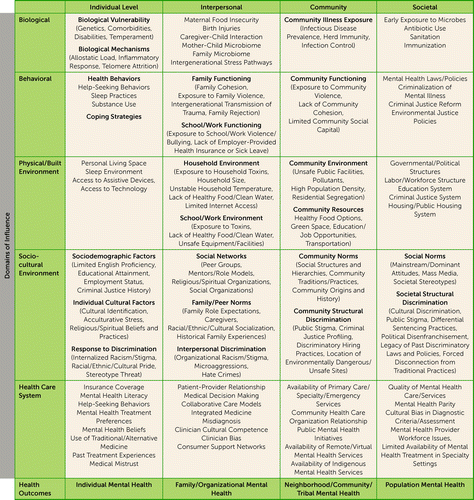
FIGURE 1.

FIGURE 1. An adaptation of the National Institute on Minority Health and Health Disparities Research Framework for mental health disparities

As a hypothetical example, suppose researchers and community partners wish to develop an intervention to improve help-seeking to address high rates of depression and posttraumatic stress disorder in a local Hmong population. The team views health literacy as the key feature driving low levels of help-seeking, but they also identify other relevant determinants, including lack of health insurance, food insecurity, lack of transportation, and lack of availability of Hmong-speaking providers. It becomes clear to the team that a health information–focused intervention alone is unlikely to result in improved help-seeking unless these structural barriers to accessing mental health care are also addressed. We are not suggesting that determinants in all cells of the framework must always be included to address health disparities, but we highlight the importance of examining the constellation of determinants relevant to the specific disparities being studied, and the need to intervene at the appropriate levels to have a sustained impact. The availability of a framework that emphasizes multidomain, multilevel determinants of health does not ensure that research approaches and interventions will successfully address mental health disparities—this depends upon how researchers and stakeholders apply and implement the framework.

Based on the concept of generations of health disparities research (11), we describe examples of three types of mental health disparities research in which the adapted framework may be implemented and that address SDOH. Note that research to document mental health disparities is not included here if does not also examine mechanisms or determinants of those disparities, or if SDOH are measured but included only as control variables in analyses. Although this research progression may be a natural evolution, we argue that the highly incremental research that has characterized much of the health disparities field is not necessary to replicate for mental health disparities, given that this foundational work is often relevant across health conditions and outcomes.

First Generation: Understanding How SDOH Cause, Sustain, or Mitigate Mental Health Disparities

This body of research moves beyond individual-level determinants of mental health disparities (e.g., lack of awareness of mental health problems, lack of health insurance) to identify higher-level social and structural factors that contribute to or mitigate health disparities. Factors such as family and community cohesion, population density, neighborhood-level disadvantage, neighborhood safety and community violence, community social climate, and community and national-level racism and discrimination have all been found to be associated with individual and community-level mental health symptoms and distress (12). This work is critical in identifying modifiable intervention targets that have potential to reduce mental health disparities. Because the social and policy landscape is constantly changing with respect to impacts on minoritized and marginalized populations, this work will always be needed. However, the current distribution, where most mental health disparities research reflects observational research to document and understand disparities, needs to be shifted more toward intervention and action. For example, a recent portfolio analysis conducted by the NIH Office of Disease Prevention of new NIH-funded extramural projects from fiscal year 2012 to 2019 (13) found that about two-thirds of prevention projects were observational, while randomized intervention studies accounted for less than one-fifth of projects, and this proportion declined over time. In addition, only 3.5{e4f787673fbda589a16c4acddca5ba6fa1cbf0bc0eb53f36e5f8309f6ee846cf} of prevention projects included a randomized intervention to address a leading risk factor for death and disability in populations experiencing health disparities. Prevention research specific to mental health outcomes accounted for less than 8{e4f787673fbda589a16c4acddca5ba6fa1cbf0bc0eb53f36e5f8309f6ee846cf} of projects in fiscal year 2019 and mirrored these overall patterns (13).

Second Generation: Evaluating Interventions That Help Individuals Address SDOH or Mitigate Their Impact

This body of research recognizes that the unique experiences of minoritized and marginalized populations need to be acknowledged and addressed in the context of mental health interventions and care. Examples include 1) coping-focused interventions to help individuals manage or reduce distress associated with racism or other forms of discrimination, poverty, unemployment, family separations, and other challenging life circumstances (14, 15); 2) trauma-informed interventions that tailor services for individuals exposed to early or chronic traumatic events or poverty-related stressors (1618); and 3) patient navigation or service linkage interventions that connect individuals to needed health and social services and/or address access barriers to facilitate engagement in care (19, 20). Such interventions, although a critical component of health and mental health care, only address the consequences of societal inequities and do not directly affect the systems and structures that cause and sustain mental health disparities. In isolation, these interventions will not be sufficient to reduce or eliminate mental disparities at the population level. However, based on our observation of applications submitted to NIH, interventions to help individuals or populations mitigate the impact of SDOH rather than changing the SDOH directly remain common.

Third Generation: Evaluating Interventions That Directly Impact SDOH to Produce Lasting Changes for Communities and Populations

Notably, this area seems to be characterized by more articles calling for social and structural interventions (21, 22) than articles describing the results from actual social and structural interventions (23), and the latter are particularly rare in the mental health field. To address mental health disparities, interventions must move beyond an individual-level treatment-focused model of mental health to emphasize families, organizations, and communities and encompass prevention and sustainable change. Examples of such interventions include medical-legal partnerships in which clinicians and legal personnel work to address discrimination or unfair practices related to housing, education, criminal justice, or other domains (24); alternatives to incarceration for individuals with severe mental illness charged with minor offenses (25); and the implementation of evidence-based depression treatment in faith-based settings (26). However, many structural interventions addressing SDOH have not been rigorously evaluated, and few studies have examined the impact of interventions on disparities (21). Although critically needed, research evaluating these types of interventions has many challenges. Balancing methodological rigor with feasibility and acceptability of study designs can be an issue that requires thoughtful communication and collaboration between research and community collaborators. Studies can be costly to execute, as testing interventions at organizational, neighborhood, or community levels requires these settings to be the unit of analysis rather than the individual, necessitating the inclusion of multiple sites or locations. Interventions addressing SDOH (e.g., racism and discrimination) are likely to have nonspecific outcomes relevant to a range of health conditions, which may pose a challenge to funders who prefer interventions to address disease-specific determinants of health leading to disease-specific outcomes. Despite these many challenges, such interventions hold the greatest promise for eliminating mental health disparities and achieving mental health equity.

On an encouraging note, NIH is beginning to emphasize the need for interventions that move beyond addressing SDOH at the individual level in recent funding opportunity announcements. Topics have included maternal mortality and morbidity (27), structural racism and discrimination (28), family- and community-level interventions (29, 30), physical activity (31), opioid misuse (32), HIV (33), firearm morbidity and mortality (34), and suicide and suicidal ideation and behaviors (35). Although these funding opportunities may include mental health determinants and outcomes, additional targeted opportunities from NIH and other funders of mental health research and services that are explicitly focused on SDOH and mental health disparities are likely needed to make significant progress in this area.

Taken together, this review suggests several important implications for mental health disparities research and clinical practices aimed at reducing disparities. First, this review highlights the opportunity for researchers to use and build upon the proffered mental health disparities framework to mechanistically explore SDOH that can subsequently inform appropriately framed and tailored interventions to reduce disparities. Second, from a clinical perspective, this review points to the importance of establishing a continuum of care to address mental health disparities, which includes both mental health promotion and prevention interventions among marginalized and minoritized populations. Development of interventions aimed at the promotion and prevention end of the mental health continuum of care would facilitate addressing the social and structural factors that have been identified as significant drivers of mental health disparities, including SDOH, and would increase the ultimate reach and range of intervention.

Office of Disease Prevention, NIH, Bethesda, Md. (Alvidrez); Office for Disparities Research and Workforce Diversity, NIMH, Bethesda, Md. (Barksdale); National Institute on Minority Health and Health Disparities, NIH, Bethesda, Md. (Barksdale).

The views expressed in this article represent those of the authors and do not necessarily represent the views of NIH.

The authors report no financial relationships with commercial interests.

References

1. US Department of Health and Human Services: Publications and Reports of the Surgeon General, in Mental Health: Culture, Race, and Ethnicity: A Supplement to Mental Health: A Report of the Surgeon General. Rockville, Md, Substance Abuse and Mental Health Services Administration, 2001Google Scholar

2. Gara MA, Vega WA, Arndt S, et al.: Influence of patient race and ethnicity on clinical assessment in patients with affective disorders. Arch Gen Psychiatry 2012; 69:593–600Crossref, MedlineGoogle Scholar

3. Gone JP, Trimble JE: American Indian and Alaska Native mental health: diverse perspectives on enduring disparities. Annu Rev Clin Psychol 2012; 8:131–160Crossref, MedlineGoogle Scholar

4. Vilsaint CL, NeMoyer A, Fillbrunn M, et al.: Racial/ethnic differences in 12-month prevalence and persistence of mood, anxiety, and substance use disorders: variation by nativity and socioeconomic status. Compr Psychiatry 2019; 89:52–60Crossref, MedlineGoogle Scholar

5. Breslau J, Kendler KS, Su M, et al.: Lifetime risk and persistence of psychiatric disorders across ethnic groups in the United States. Psychol Med 2005; 35:317–327Crossref, MedlineGoogle Scholar

6. King M, Semlyen J, Tai SS, et al.: A systematic review of mental disorder, suicide, and deliberate self harm in lesbian, gay, and bisexual people. BMC Psychiatry 2008; 8:70Crossref, MedlineGoogle Scholar

7. Alvidrez J, Castille D, Laude-Sharp M, et al.: The National Institute on Minority Health and Health Disparities Research Framework. Am J Public Health 2019; 109:S16–S20Crossref, MedlineGoogle Scholar

8. National Institute on Minority Health and Health Disparities: NIMHD Research Framework. 2017. nimhd.nih.gov/researchFrameworkGoogle Scholar

9. Healthy People 2030, US Department of Health and Human Services, Office of Disease Prevention and Health Promotion. health.gov/healthypeople/objectives-and-data/social-determinants-healthGoogle Scholar

10. World Health Organization: Social determinants of health: overview. www.who.int/health-topics/social-determinants-of-health#tab=tab_1Google Scholar

11. Thomas SB, Quinn SC, Butler J, et al.: Toward a fourth generation of disparities research to achieve health equity. Annu Rev Public Health 2011; 32:399–416Crossref, MedlineGoogle Scholar

12. Alegría M, NeMoyer A, Falgàs Bagué I, et al.: Social determinants of mental health: where we are and where we need to go. Curr Psychiatry Rep 2018; 20:95Crossref, MedlineGoogle Scholar

13. Murray DM, Ganoza LF, Vargas AJ, et al.: New NIH primary and secondary prevention research during 2012–2019. Am J Prev Med 2021; 60:e261–e268Crossref, MedlineGoogle Scholar

14. Miller MJ, Keum BT, Thai CJ, et al.: Practice recommendations for addressing racism: a content analysis of the counseling psychology literature. J Couns Psychol 2018; 65:669–680Crossref, MedlineGoogle Scholar

15. Woods-Giscombé CL, Gaylord SA: The cultural relevance of mindfulness meditation as a health intervention for African Americans: implications for reducing stress-related health disparities. J Holist Nurs 2014; 32:147–160Crossref, MedlineGoogle Scholar

16. Meléndez Guevara AM, Lindstrom Johnson S, Elam K, et al.: Culturally responsive trauma-informed services: a multilevel perspective from practitioners serving Latinx children and families. Community Ment Health J 2021; 57:325–339Crossref, MedlineGoogle Scholar

17. Stolbach BC, Anam S: Racial and ethnic health disparities and trauma-informed care for children exposed to community violence. Pediatr Ann 2017; 46:e377–e381Crossref, MedlineGoogle Scholar

18. Brotman LM, Dawson-McClure S, Kamboukos D, et al.: Effects of ParentCorps in prekindergarten on child mental health and academic performance: follow-up of a randomized clinical trial through 8 years of age. JAMA Pediatr 2016; 170:1149–1155Crossref, MedlineGoogle Scholar

19. Barnett ML, Gonzalez A, Miranda J, et al.: Mobilizing community health workers to address mental health disparities for underserved populations: a systematic review. Adm Policy Ment Health 2018; 45:195–211Crossref, MedlineGoogle Scholar

20. Bridges AJ, Andrews AR III, Villalobos BT, et al.: Does integrated behavioral health care reduce mental health disparities for Latinos? Initial findings. J Lat Psychol 2014; 2:37–53Crossref, MedlineGoogle Scholar

21. Brown AF, Ma GX, Miranda J, et al.: Structural interventions to reduce and eliminate health disparities. Am J Public Health 2019; 109:S72–S78Crossref, MedlineGoogle Scholar

22. Shim RS, Compton MT: Addressing the social determinants of mental health: if not now, when? If not us, who? Psychiatr Serv 2018; 69:844–846LinkGoogle Scholar

23. Thornton RL, Glover CM, Cené CW, et al.: Evaluating strategies for reducing health disparities by addressing the social determinants of health. Health Aff (Millwood) 2016; 35:1416–1423Crossref, MedlineGoogle Scholar

24. Paul EG, Curran M, Tobin Tyler E: The medical-legal partnership approach to teaching social determinants of health and structural competency in residency programs. Acad Med 2017; 92:292–298Crossref, MedlineGoogle Scholar

25. Castillo EG, Ijadi-Maghsoodi R, Shadravan S, et al.: Community interventions to promote mental health and social equity. Curr Psychiatry Rep 2019; 21:35Crossref, MedlineGoogle Scholar

26. Hankerson SH, Wells K, Sullivan MA, et al.: Partnering with African American churches to create a community coalition for mental health. Ethn Dis 2018; 28:467–474Crossref, MedlineGoogle Scholar

27. National Institutes of Health: RFA-MD-20-008, Addressing Racial Disparities in Maternal Mortality and Morbidity (R01 Clinical Trial Optional). 2020. grants.nih.gov/grants/guide/rfa-files/RFA-MD-20-008.htmlGoogle Scholar

28. National Institutes of Health: RFA-MD-21-004, Understanding and Addressing the Impact of Structural Racism and Discrimination on Minority Health and Health Disparities (R01 Clinical Trial Optional). 2021. grants.nih.gov/grants/guide/rfa-files/rfa-md-21-004.htmlGoogle Scholar

29. National Institutes of Health: PAR-21-358, Risk and Protective Factors of Family Health and Family Level Interventions (R01 Clinical Trial Optional). 2021. grants.nih.gov/grants/guide/pa-files/PAR-21-358.htmlGoogle Scholar

30. National Institutes of Health: RFA-MD-22-007, Community Level Interventions to Improve Minority Health and Reduce Health Disparities (R01 Clinical Trial Optional). 2022. grants.nih.gov/grants/guide/rfa-files/RFA-MD-22-007.htmlGoogle Scholar

31. National Institutes of Health: NOT-OD-21-087, Notice of Special Interest (NOSI): Developing and Testing Multilevel Physical Activity Interventions to Improve Health and Well-Being. 2021. grants.nih.gov/grants/guide/notice-files/NOT-OD-21-087.htmlGoogle Scholar

32. National Institutes of Health: RFA-DA-22-036, NIH HEAL Initiative: Preventing Opioid Misuse and Co-Occurring Conditions by Intervening on Social Determinants (R01 Clinical Trials Optional). 2021. grants.nih.gov/grants/guide/rfa-files/RFA-DA-22-036.htmlGoogle Scholar

33. National Institutes of Health: NOT-MD-21-014, Notice of Special Interest (NOSI): Multi-Level HIV Prevention Interventions for Individuals at the Highest Risk of HIV Infection. 2021. grants.nih.gov/grants/guide/notice-files/NOT-MD-21-014.htmlGoogle Scholar

34. National Institutes of Health: NOT-OD-21-059, Notice of Intent to Publish Funding Opportunity Announcements for Research on Firearm Injury and Mortality Prevention. 2022. grants.nih.gov/grants/guide/notice-files/NOT-OD-21-059.htmlGoogle Scholar

35. National Institutes of Health: RFA-MH-21-187, Systems-Level Risk Detection and Interventions to Reduce Suicide, Ideation, and Behaviors in Youth From Underserved Populations (R01 Clinical Trial Optional). 2021. grants.nih.gov/grants/guide/rfa-files/RFA-MH-21-187.htmlGoogle Scholar


National Museum to host special educational activities to commemorate occasion

National Museum to host special educational activities to commemorate occasion

As Global Museum Day is just all over the corner, the Nationwide Museum in New Delhi is likely to host special pursuits and occasions on this event from May possibly 16 to 20. Each and every calendar year, Intercontinental Museum Day is observed on May well 18 to raise awareness and knowledge about how museums are an critical type of cultural exchange, development of mutual being familiar with, collaboration, and harmony amongst persons. Even more, during the five-day celebrations, the Countrywide Museum will conduct a assortment of on the internet and offline functions for both of those children and adults, ANI claimed.  

Among the the occasions planned, Nationwide Museum will give a ‘Teachers’ Coaching Workshop’ in conjunction with CCRT, Dwarka Mata Sundari Faculty, Delhi and the Indian Lifestyle Portal. Next that, a one-working day Museum Educators’ Meet up with will be held in Delhi, which include participation from various nationwide and point out govt museums. 

The Ministry of Lifestyle more discovered that the Museum is partnering with the Heritage Lab, Circulation India, Entry for All, and the ‘Heritage for Educators’ meeting. The Educators’ Meet up with is a National Museum pilot hard work that aims to deliver govt museum educators together on a solitary system to exchange and address opportunities, concerns, and answers, ANI documented.  

Systems organised by National Museum on the situation of Museum Day

In addition to this, on May perhaps 18, 19, and 20, the National Museum will be open for lengthier several hours, from 10 am to 9 pm. Using this celebration into consideration, the museum has made gallery walks guided by curators, consultants, as nicely as senior Countrywide Museum stroll leaders, palms-on activities for kids, engagement counters for stroll-in website visitors, and a special session with NM conservators, amongst other things. The museum is also web hosting distinctive walks and functions for children representing many non-revenue organisations.  

On top of that, the Countrywide Museum Auditorium will host stunning live performances every single night at 7 pm. The SADHO Band would be carrying out Sufi New music on Might 18, Sudha Jagannath and her group, ‘Brihanayika Natryasurabhe’ would perform Bharatnatyam on Might 19, and Shagun Butani and her ‘Sudhayaa Dance Foundation group’ is also going to perform ABHISAAR, Odissi functionality compositions from the classic repertoire of Odissi that locate resonance in some of the artefacts on show in the Nationwide Museum, ANI claimed.  

‘The Electric power of Museums’

Considering that 1977, the Worldwide Council Of Museums (ICOM) has celebrated Global Museum Day, which constitutes a distinctive chance for the international museum neighborhood. According to a report from ICOM, last 12 months, almost 37,000 museums from 158 nations and territories took part in the celebration. Additional, this year’s topic is “The Electric power of Museums”, which states that museums have the skill to adjust the entire world in which men and women reside. As per the ICOM report, Museum teaches about the previous and will help to open up people’s minds to new thoughts for developing a superior long term. 

(Picture: Shutterstock)

Promethean Celebrates National Teacher Appreciation Week with Annual Summit

Promethean Celebrates National Teacher Appreciation Week with Annual Summit

World-wide edtech leader to host and give many thanks to educators close to the U.S.

SEATTLE , April 28, 2022 /PRNewswire/ — Promethean, a top international training technological know-how enterprise, is keeping a Trainer Appreciation Summit on Tuesday, May perhaps 3, 2022 at 3 p.m. EDT, to rejoice the crucial get the job done of educators for the duration of Nationwide Instructor Appreciation Week, which runs from Might 2 to May perhaps 6, 2022.

Promethean's Teacher Appreciation Summit will host teachers nationwide for five hours of professional development on Tuesday, May 3, 2022.

Promethean’s Trainer Appreciation Summit will host academics nationwide for 5 hrs of expert growth on Tuesday, May well 3, 2022.

The Trainer Appreciation Summit will host teachers nationwide for 5 hours of qualified improvement to share new techniques that will equip lecturers with assets to progress their edtech journey, greatly enhance lessons, increase learner engagement, and enable make the vital and demanding operate of instructing additional effective and a lot more exciting.

This year’s keynote presentation features Mandy Froehlich, an writer, previous trainer, and previous director of innovation, who will exhibit how teachers can use curiosity to spark innovation in their school rooms. The function will also feature guest speaker, Daniel Thompson, a middle and significant college chemistry, physics, and biology trainer at The Ron Clark Academy, regarded for its transformative instructing methods and procedures. Thompson will share strong ideas and tricks that make use of the timers, spinners, and routines on the ActivPanel and integrate ClassFlow training software package.

Added experienced development sessions are aimed at constructing up teachers’ toolkits. Participants will master new routines to unleash the ability of ActivPanel applications, learn contemporary approaches to interact, get expert suggestions from Promethean’s Education Consultants, and check out procedures to integrate job-centered learning.

The summit also includes alternatives to practically engage with the academic local community, and is the very first of five functions in Promethean’s 2022 Specialist Enhancement Series that will unite the Promethean local community of educators to master new abilities, share activities, and develop their edtech acumen. To sign up for the Trainer Appreciation Summit, click on right here.

About Promethean
Promethean is a main education technologies company working to change the way the planet learns and collaborates. From our founding in Blackburn, England, almost 25 many years in the past to our international functions in 22 international locations now, we have continued to examine, innovate, and inspire—designing discovering and collaboration resources that are crafted for breakthroughs. Our award-profitable interactive exhibit, ActivPanel, and lesson shipping software, ActivInspire and ClassFlow, were developed to have interaction students, hook up colleagues, and bring out the brilliance in every person. With headquarters in Seattle, Washington, and offices throughout the world, Promethean is a member of the NetDragon Websoft Holdings Confined (HKSE: 0777) team of businesses. Check out us at PrometheanWorld.com.

©2022 Promethean. All Legal rights Reserved. Promethean, the Promethean emblem, ActivPanel, ActivSync, ActivInspire, ActivConnect, ActivSound, ClassFlow, and Vellum are emblems or registered trademarks of Promethean Minimal in the United Kingdom, United States, and other nations around the entire world. All other item and firm names are trademarks or registered trademarks of their respective holders. Except especially recognized as these kinds of, Promethean’s use of 3rd-get together logos does not suggest any connection, sponsorship, or endorsement concerning Promethean and the owners of these emblems.

(PRNewsfoto/Promethean)

(PRNewsfoto/Promethean)

Cision

Cision

Perspective original material to down load multimedia:https://www.prnewswire.com/information-releases/promethean-celebrates-nationwide-trainer-appreciation-7 days-with-once-a-year-summit-301535218.html

Source Promethean

Associate Professor Jessica Hunt Shares Benefits of Inclusive, Game-Based Learning Through National Webinars

Associate Professor Jessica Hunt Shares Benefits of Inclusive, Game-Based Learning Through National Webinars

For the earlier two years, NC State Higher education of Education Associate Professor Jessica Hunt has been creating and screening a new curriculum that will help learners with learning disabilities and problems superior fully grasp fractions even though exploring job opportunities in real-world STEM fields via recreation-based mostly understanding.

The match, termed Desire2B, and accompanying Design Arithmetic Instruction (ModelME) curriculum had been produced utilizing a 3-12 months, $1.4 million National Science Foundation ITEST grant awarded to Hunt and co-principal investigators Matthew Marino and Michelle Taub at the University of Central Florida in 2020

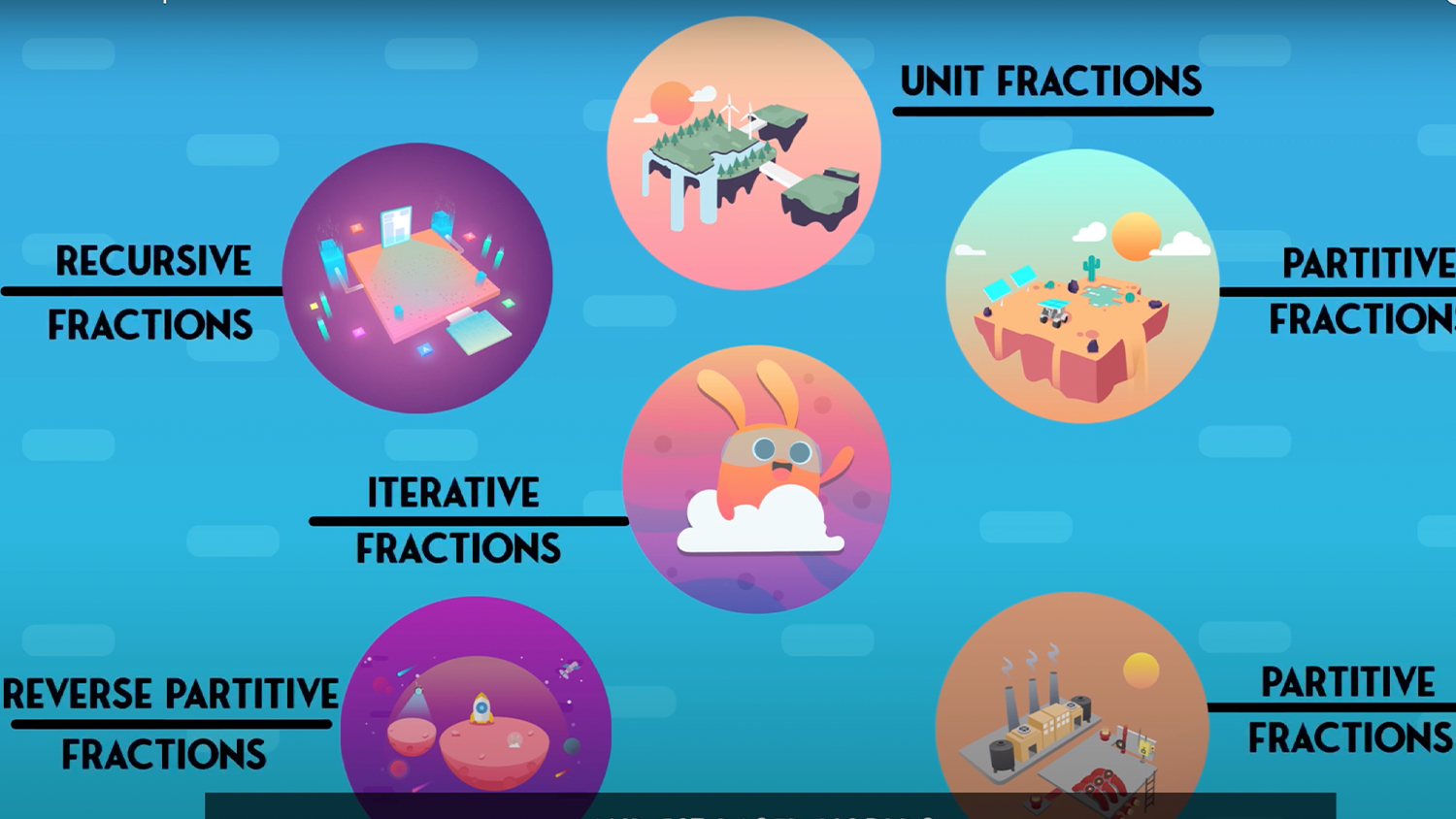
The match allows students to participate in as a customizable character named Bunny, who encounters 6 unique worlds relating to STEM and details and interaction technological innovation (ICT) careers. Problems in each individual globe are accessed by way of a universally developed interface with customizable options that allow accessible gameplay. Students are offered a selection of tools to use for every single problem to encourage them to use person tactics and approaches of reasoning.

The sport is at this time wrapping up a round of testing with instructors and students in Granville, Sampson and Durham counties in North Carolina, and Hunt has recently been invited to share about her function on a national phase. 

She introduced in March at the Middle for Innovation, Design and and Electronic Learning (CIDDL) “Supporting Educator Use of Recreation-Based Mastering Environments” webinar and, on April 11, she will current at the STEM Learning and Research Center (STELAR) webinar entitled “Creating Inclusive STEM Prospects for Learners with Disabilities: Formal Configurations.” The webinar will be offered for no cost to the community. 

“My colleagues, Dr. Matthew Marino and Dr. Michelle Taub, and I are so fired up about the get the job done that we are performing in the Model Arithmetic Schooling undertaking, and we really feel honored and fortunate to have a room to go over what we are finding out in two national venues,” she stated. “Having spaces to go over the do the job through the lens of activity-centered assessment and through the lens of developing inclusive STEM alternatives for pupils with disabilities relates nicely to the perform we are doing with the Model ME curriculum in elementary educational facilities.”

Down below, Hunt shares an update on her operate, the significance of giving a lot more STEM options to students with disabilities and the benefits of video game-based mastering. 

The next Q&A has been edited for duration and clarity. 

Can you share an update on exactly where the ModelME/Aspiration2B venture now stands?

We are at this time in feasibility screening with the game and wraparound curriculum. We have partnered with 9 elementary teachers throughout Granville County, Sampson County and Durham County to put into action the video game in their classrooms. So considerably, teachers have taught 17 of the 29 lessons, and we are mastering a large amount in phrases of how lecturers are applying the products as properly as students’ engagement and mastering in the match and in the curriculum.  

We hope to conclude this phase of the analysis by the beginning of May possibly with concentration groups to study much more about teachers’ perspectives of how Product ME supported their students’ portion understanding and their being familiar with of their students’ wondering. We will also converse with learners to greater have an understanding of their perspectives of gameplay. We will just take all of these data and examine them toward a remaining revision of both the activity by itself as effectively as the wraparound curriculum. We’ll test that final variation in a larger experimental study up coming spring.

Why is it so significant that far more STEM prospects are created available and accessible to pupils with disabilities?

Folks with disabilities are underutilized associates of the STEM and ICT workforce. Students with disabilities generally show one of a kind qualities that are significantly valuable in STEM and ICT careers, this sort of as sustained focus to detail, systematic procedural information and expertise, and the ability to conceptualize results and answers to advanced issues. 

College students with discovering disabilities (LD), in individual, comprise the largest subgroup of persons with disabilities served in K-12  educational facilities. However, these college students usually fail to take into account careers in STEM and ICT as early as elementary college, and instruction does not constantly handle the unique concerns of access to and development of STEM awareness for college students with disabilities. For example, college students with LD normally involve obtain to unique tools or objects to learn or convey their STEM understanding. They also gain from problems that enable for novel answers due to the fact of unexpected prior know-how brought to instruction. Both equally tutorial style and design aspects place students’ understanding as essential and valuable. Our challenge is doing work to create empirical proof demonstrating how the layout principles in the recreation and wraparound curriculum help instructors to capitalize on strengths whilst addressing individualistic requirements that learners convey to instruction. 

What are the added benefits of game-dependent studying for learners and educators?

Digital match-based mostly mathematics curricula are just one way to strengthen students’ engagement as very well as their discovering results. Summaries of gaming analysis have discovered the prospective of video games to improve STEM content material accessibility, increase collaborative trouble-fixing and enable students to take a look at arithmetic in strategies that were formerly inconceivable for pupils with disabilities. Other researchers uncovered students devoid of disabilities also profit from related instruction.

Our curriculum and embedded game was formulated making use of the Universal Style for Mastering (UDL) framework to increase accessibility and engagement by supplying conceptual knowing problems rooted in reliable STEM and ICT professions. Tutorials, motion adaptive prompting, and genuine formative and summative assessments are involved in just the consumer interface. Recreation-centered, dilemma-solving and after-game participate in discussion routines encourage connections and strategically url to Nationwide Council of Teachers of Mathematics (NCTM) specifications.

How is the Higher education of Education and learning preparing foreseeable future educators to recognize how and why to implement diverse styles of instruction (including activity-based mostly studying) for their students?

I consider a person of the lots of strengths of our higher education is in our collaborative approach to preparing instructors to realize students’ strengths and how they can leverage those strengths in instruction, which includes as a result of the use of online games, other systems and inclusive pedagogies.  College students can have interaction with faculty from across application places and even across departments!  The multidisciplinary mother nature of our get the job done in this article in the school supports a properly-rounded toolbox for academics to employ in their lecture rooms.

Hawaii DOE | Waikele Elementary leader honored as a 2022 National Outstanding Assistant Principal

Hawaii DOE | Waikele Elementary leader honored as a 2022 National Outstanding Assistant Principal

Hawaii DOE | Waikele Elementary leader honored as a 2022 National Outstanding Assistant PrincipalThe Countrywide Affiliation of Elementary Faculty Principals (NAESP) this week announced Waikele Elementary’s Stacy Kawamura as a 2022 National Remarkable Assistant Principal. Every calendar year NAESP acknowledges a decide on cohort of assistant principals from across the region. This year 22 assistant principals nationwide were regarded — 17 from elementary educational facilities and five from the middle college amount.

The NAESP National Excellent Assistant Principal System aims to advertise excellence in instructional leadership and calls interest to the elementary significance of the assistant principal. Honorees are acknowledged for demonstrating remarkable leadership and for placing large requirements for students, colleagues, mother and father and the neighborhood.

“As a previous principal, I know how crucial assistant principals are to a effective and thriving college group,” interim Superintendent Keith Hayashi mentioned. “I’ve had the enjoyment of working with Stacy via Waipahu Intricate collaborations and have viewed first-hand how she supports her staff and prioritizes the needs of all learners. She is passionate in supporting her faculty neighborhood and is truly dedicated to enriching the lives of others. We are extremely proud to have leaders like Stacy Kawamura serving within our Hawaiʻi public educational facilities.”

As vice principal of Waikele Elementary for the earlier seven decades, a person of Kawamura’s most considerable accomplishments has been assisting to acquire the school’s nationally distinctive academy pathway software. At first an arts academy plan, the college expanded the software to include age-suitable Vocation and Technical Education and learning (CTE) classes that align with the Waipahu Complex’s determination to university and job readiness. Kawamura helped articulate to academics the shift in focus by producing connections with other significant college academy courses. By means of Waikele Elementary’s academy pathway application — the initially of its type in the nation — learners are now exposed to a assortment of career chances, building their changeover to sophisticated location secondary schools a lot more seamless.

Kawamura has also helped acquire group partnerships with the school, which present alternatives for students to have interaction with their community and apply classroom classes to the actual earth. She is also credited with creating a qualified growth and mastering framework that has helped her college build a collaborative culture that engages school and employees. 

Waikele Elementary School Principal Sheldon Oshio praises Kawamura’s means as a chief to collaborate with colleagues and cultivate a beneficial finding out lifestyle. “Her enthusiasm, rapport and treatment for anyone is obvious,” Principal Oshio mentioned. “Mrs. Kawamura develops great interactions with family members and pupils, and communicates correctly. Earlier mentioned all, Mrs. Kawamura is a legitimate studying leader who prospects by example. Her management is appreciated and respected inside the college neighborhood.”

Kawamura earned a bachelor’s degree in East Asian Reports from the Washington College in St. Louis, a master’s diploma in secondary instruction from the University of Phoenix, and a second master’s degree in educational administration from the University of Hawai‘i at Mānoa. Prior to her vice principal job at Waikele Elementary, she served as a instructor at Pearl City High and Kapolei High.

Kawamura will be invited to Kentucky this July to get her award at the annual NAESP Pre-K-8 Countrywide Principals Conference. 

This recognition was created probable by users of the Hawaiʻi Elementary and Middle Educational institutions Directors Affiliation, the community affiliate of NAESP. It arrives as element of Countrywide Assistant Principals 7 days (April 4-8, 2022), which is celebrated each April to identify the important role assistant principals enjoy in the over-all tutorial achievement of learners nationwide.

HSLDA Sponsors National Spanish-Speaking Homeschool Conference in Miami | News

HSLDA Sponsors National Spanish-Speaking Homeschool Conference in Miami | News

Purcellville, VA, March 30, 2022 (Globe NEWSWIRE) — Home School Legal Protection Association (HSLDA), the greatest homeschool advocacy group in the United States, will send two Spanish-speaking academic consultants Karim Morato and Clarisa Loparo, along with HSLDA lawyer Thomas J. Schmidt to keynote a groundbreaking Hispanic homeschool convention this spring. Taking position April 1–2, 2022 at the Doubletree by Hilton Hotel Miami Airport in Miami, Florida, Instruct By Design and style 2022 (Educa Por Diseño 2022), is a nationwide homeschool convention and a single of the first to be done in Spanish for Hispanic households.

“We’re excited to see unparalleled expansion in Hispanic homeschooling communities, and we’re delighted to assistance this new flourishing homeschool corporation make homeschooling achievable by coming along with with Spanish-talking staff, encouragement, advice, and functional sources,” claimed HSLDA President Mike Smith.

Hosted by TransitionED, the party will walk mom and dad by matters such as:

How to start out homeschoolingCommon difficulties homeschooling households faceCollege readiness for homeschool studentsHomeschooling small children with unique desires

“The Hispanic homeschooling local community is just one of the speediest-rising homeschooling groups in The us now,” says Ana María Bagnuoli, founder of TransitionED. “We’re so appreciative that HSLDA has made supporting Hispanic communities on their homeschool journey a essential priority, developing cost-free assets and tools in Spanish as perfectly as furnishing bilingual consulting to homeschooling dad and mom.”

Registration for the conference can be identified at: https://www.transitioneducation.web/conferencia2022  

About HSLDA

Home School Authorized Defense Association (HSLDA) is America’s largest and oldest homeschool advocacy group. Founded in 1983 with the mission to make homeschooling probable for all households, the firm has assisted empower millions of homeschooling moms and dads and learners. As a membership firm for families homeschooling their youngsters, HSLDA presents a myriad of assets from authorized assistance to instructional consultants to help member families as a result of every move of their homeschool journey. Find out a lot more about HSLDA at https://hslda.org/

About TransitionED

Ricardo Bagnuoli and Ana María are the founders of TransitionED, an group established in the United States in 2017 to prepare and equip Hispanic families to renovate their households into the very best and first place of finding out. Ana and Ricardo believe that training is a layout and a software to uncover, nurture, and market the function of life specified by God for little ones in the house. https://www.transitioneducation.web/


Sandra Kim HSLDA 7036084792 [email protected]

Copyright 2022 GlobeNewswire, Inc.