Students at Stafford Elementary School (SES) recently completed a two-week, kindness-focused fundraising campaign named Raise Craze. During the fundraiser, students showed their appreciation to donors by completing Acts of Kindness for others. At the end of the campaign, the students completed more than 630 acts of kindness and raised more than $16,000.
“Students completed a variety of kindness acts, from picking up trash in their community to writing special letters to teachers at Stafford Elementary School. Some students even made blessing bags for the homeless,” said SES Principal Stefanie Sanders. “In addition to individual acts of kindness, the school hosted a community Chalk the Walk at the school to spread kindness messages and art.”
During the campaign, students signed their name on various sea life and applied it to the Dolphin Kindness Wall after completing an act of kindness. “Kindness is an important part of good citizenship, and we all can learn a lesson from these students about supporting one another with kindness,” said Dr. Stanley B. Jones, SCPS Interim Superintendent. “Every small act leaves a ripple of joy in the community. I encourage all of us to go out and do something nice for someone today. You never know how large an impact one small act, such as a letter of support to a child’s teacher, will make.”
As the culmination of the campaign, school administrators, with the support of the SES PTA, created a surprise Magical Celebration day on Friday, November 19. With support from the SES PTA, each grade level hallway was immersed in a different Disney movie theme. Teachers, administrators, counselors, and staff dressed as characters from the movie, enhancing the magic. “We wanted a fundraiser that meant something. The kids were so excited to complete their acts of kindness and see how being kind can make a BIG difference,” said Kathleen Meade, Stafford Elementary PTA President.
The students also were surprised with two kindness assemblies. The Stafford County Sheriff’s Department provided several displays from the special operations unit which included the SWAT Team, the K9 Unit, and the Unmanned Aircraft Systems Team. Guest speaker Lieutenant Diggs delivered an inspiring message addressing the importance of kindness. Stafford County Fire House 4 conducted the second assembly, providing a 100-foot fire truck. The students watched as Mrs. Sanders and Mrs. Hardman, the school administrators, were raised into the air above them to read “Be Kind” by Pat Zietlow Miller.
“These two organizations are a large part of our community,” said Sanders. “They have always done kind things for us, so having them deliver a message about kindness was very powerful for our students. We hope our students remember how everything begins with just one small act, and that the message of kindness resonates with them all year.”
HALLSVILLE — A Hallsville ISD elementary school has raised more than $5,000 this year to contribute to the district’s Angel Tree fund, which provides Christmas presents for families in need.
Each November, Hallsville Intermediate School raises money throughout a two-week period known as the “Penny Wars,” to donate to the Angel Tree Foundation, which provides Christmas presents to area children in need.
The friendly competition sees jugs for teachers set out front of the school’s front office during the two-week period. The teachers who collect the most points from pennies wins.
“Here’s how the game works: each family of teachers has their own plastic jug outside of the front office. Students gain points for the class by adding pennies to their jug. Students can lower their opponents’ points by adding silver change to the opponents’ jug,” Hallsville Intermediate School Counselor Victoria Downs said. “The points are tallied each day and announced over the intercom. The next morning, the students are ready to sabotage whoever is winning and also add more to their own jug.”
In addition to knowing they bested other classes at the game, the winning team at each grade level wins a pizza.
“We also set a campus goal to raise $3,000, and if we reached that goal, the students would be able to pie our principal, Aaron Hoecherl, and our campus officer, Justin Clark, in the face,” Downs said.
The students raised so much, more than $5,300, resulting in both Hoecherl and Clark getting a face full of pie this year.
“This competition is such a fun way to raise money towards a good cause while also integrating math,” Downs said. “The Penny Wars has always been very successful, but this year we were shocked at how well it went.”
Downs and other staff presented the $5,327 check to Hallsville ISD Special Programs Director Amy Whittle recently.
“We sent emails thanking parents for letting their children raid their couch cushions and cup holders, but parents were calling the school and letting us know that their children were using their own allowance for this fundraiser,” Downs said. “I hope our students know how much of an impact they have made on children’s lives and how many children will actually be able to enjoy Christmas this year because of them.”
In celebration of the above and beyond giving, the winning classes received their pizza and the whole school received popsicles and extra recess time, making a win-win for everyone this holiday season.
MASSILLON – The Ohio Facilities Construction Commission is expected to contribute $15 million to help Massillon City Schools construct two new elementary schools.
The OFCC meet last week and approved the state’s share of $15,219,211 for the project, Superintendent Paul Salvino said. The state Controlling Board is expected to approve the release of the funds next month.
The agreement with the OFCC is the result of many back and forth meetings with the commission.
For some time, district officials have been working with the OFCC to secure funding to build new schools to replace the district’s aging elementary schools.
Under the plan, the district will contribute $29,807,375 to construct two pre-kindergarten through third grades schools — one on the city’s west side and the other on the east side of town.
‘We have the money in hand for the project.’
District officials have long wanted to address the aging elementary schools.
Whittier Elementary is 82 years old. Franklin is 66 years old and Gorrell was built 65 years ago.
The buildings have space issues, are not energy efficient, and are not equipped to handle growing technology, officials say.
The district has sunk millions into maintenance, from replacing boilers to repairing the plumbing and heating systems.
Salvino and his team have had numerous conversations with the OFCC during the past three years. When the pandemic hit, those talks were put on hold.
This year, talks picked back up.
Even before Salvino took the helm at his alma mater, district officials have been working with the OFCC to address district facilities.
In 2014, the state approved funding for the construction of new schools, but voters rejected the plan twice. Both of those plans included bond issues. This time around, the district isn’t asking taxpayers to foot the bill.
“We have the money in hand for the project,” Salvino said.
Last year, the Board of Education created a capital project fund with $25 million the district had set aside during the past few years to pay for building new elementary schools or renovating the existing elementary buildings and Washington High School. If these funds are not spent by October 2029, they will need to be returned to the district’s general fund.
Salvino said the funding was the result of tough decisions made by former board members who decided to close district elementary schools and consolidate them into three schools reducing operational costs and energy consumption.
“I know the community was upset but it didn’t pay to operate all of the school buildings with the way enrollment was,” he said. “There was a savings the district started to see just as we anticipate we will see when we go from three (elementary) schools to two,” he said.
Salvino also credits the district’s transparent spending and “superb management” of district dollars.
What are the next steps?
State funding is based on a number of factors set by the OFCC. They consider the district’s existing facilities and enrollment.
During the past three years, the funding the state was willing to put up for the project fluctuated.
Officials considered renovating the district’s elementary schools, but the costs were too high.
When the state funding was lower than anticipated, Salvino asked if the district could resubmit enrollment figures. The new evaluation showed the district was seeing a slight increase in student population prompting a review of the funding.
Finally, the two sides came to a financial agreement.
“We had a great ongoing collaborative relationship with the OFCC,” Salvino said. “We are excited to be able to finally right-size the district and set the tone for the future of the school district.”
Under the plan, the district will fund about 67{e4f787673fbda589a16c4acddca5ba6fa1cbf0bc0eb53f36e5f8309f6ee846cf} — or $29,807,375 — of the $45,807,375 project costs, but Salvino said the total cost will likely grow with locally funded initiatives, items the state will not fund.
For instance, the district might decide to widen hallways within the new schools, add classrooms, and make the entrance and parking lots larger. Those costs are not supported by the state’s formula.
“Due to how the OFCC calculates these school district projects, according to the OFCC figures the square footage of Washington High School would justify moving sixth, seventh and eighth grade into the current high school,” Salvino said. “We are not going to do that.”
Where will the new schools be located?
A location for the new schools has not been determined, but Salvino said the schools will be built on existing district-owned property. Land is available at the middle school, high school and the former Bowers Elementary site. They have also considered the site of Smith Elementary School, which houses the district administrative offices and the pre-school, as well as the existing elementary school grounds.
Each of the potential sites have been evaluated and core samples have been taken to determine if the land is suitable, Salvino said. They are awaiting the results of the tests. He hopes to be able to provide the location of the new schools, as well as a timeline for construction, after the start of the new year.
If the funding clears the state board, the district also will begin looking for a project architect. The process will include the OFCC, he said.
‘It really is an exciting time.’
Officials will have to work closely with teachers and staff to ensure the buildings are equipped to meet Massillon students’ needs. He also anticipates working closely with the district’s three unions to blend the staffs of the three elementary schools.
Salvino does not foresee a reduction in force. Until the new schools are ready to welcome new students, officials will closely watch staffing. For instance, if someone retires do they need to replace them.
“In the end, we have the same amount of kids to feed, transport and teach,” he said.
He estimates each school will have around 650 students.
While they forge ahead on the plan, Salvino said they will take their time to ensure they get things right.
“It really is an exciting time,” he said. “When you can do things that will directly impact our district for the next 50 to 80 years, it’s exciting. We won’t take it for granted. We know it is going to be a lot of work but this is good work. This is future planning. These are the things we need to focus on.”
Reach Amy at 330-775-1135 or amy.knapp@indeonline.com
On Twitter: @aknappINDE
Massillon Elementary Schools
Whittier Elementary School, 1212 10th St. NE. Built in 1939.
Franklin Elementary School, 1237 16th St. SE. Built in 1955.
Gorrell Elementary School, 2420 Schuler Ave. NW. Built in 1956.
FARGO, N.D. (Valley News Live) – Gooseberry Falls is a popular Minnesota state park. But it’s also dangerous. A quick google search brings up article after article of hikers falling to their death.
Beau Lofgren is one of those people who fell off over the waters edge while trying to save a child– and today he lives to tell the tale.
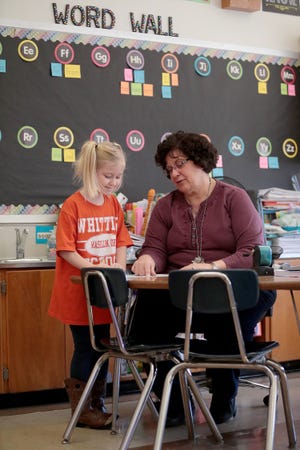
Six months ago while on a school field trip — the Hawley Elementary teacher’s life changed forever.
“The next thing I knew is we, we both made a 30 foot ball down the set of waterfalls,” Lofgren said.
He broke 4 vertebrae and his tailbone, while trying to help a young student who had waded to close to the edge. Lofgren spent 4 days in the hospital, months in a brace, and even longer relearning how to walk. He still isn’t 100{e4f787673fbda589a16c4acddca5ba6fa1cbf0bc0eb53f36e5f8309f6ee846cf}. The physical part of recovery was hard. But, he says, being back at school has helped him recover, mentally.
”It was like instant adrenaline knowing that okay, these are the kids I get to work with. And that really helped me here to get better here so I could be here today,” he told his students before dismissing them for lunch.
Lofgren teaches his 6th graders all kinds of serious life lessons, from student’s losing their little brothers– to his accident.
He stands at the front of the room, brace in hand, showing it off to his students, “And this was my brace honest and my brace that I thought you know, and it’s so funny because this was such a part of my life for you know, three months.”
He says his students are like medicine him– and says that talking to his students is not only helping him recover, but it’s helping his students be vulnerable about their struggles, too.
The accident has given him a new outlook on life. This Thanksgiving, he says he’s more grateful than ever.
“And I’m just thankful to to experience all that life has to offer everyday living and Hawley. I just I can’t say that enough,” Lofgren said.
But most of all, he’s just glad he’s still here for his family.
“I’m thankful for the opportunities I have to teach, to coach, to be a husband, to be a father,” he explained.
And they’re grateful he’s still here, too.
“I love when he drives us to school in the morning — spending that time before school. Coming home after school just seeing him really makes me happy,” his son, Jonathan said.
Lofgren wanted to made sure I told you just how thankful he is for his church, the medical staff at his hospital, and everyone who’s played a part in his recovery.
An effort on Tuesday to add fifth grade at three charter schools, in alignment with Metro Nashville Public Schools’ own initiative, devolved into chaos and a heated debate about the role of school board members.
Metro Nashville school board members eventually voted to allow three charter schools — Rocketship Nashville Northeast, Purpose Prep Academy and Smithson Craighead Academy — to add fifth grade to their current K-4 elementary schools in alignment with the district’s own initiative to move fifth grade from middle schools back to the elementary level.
But the vote came only after heated debate as board members drew pro- and anti-charter lines and a yelling match with some of the many parents who showed up in support of the charter schools.
An initial motion by board member John Little, a charter school advocate, failed and he slammed his colleagues for not supporting the desires of parents. His colleague, board member Sharon Gentry, called his remarks a “tongue lashing.”
“We’re sending the wrong message to our families to say we’re going to change how we do elementary and middle school, but we’re not going to allow charter schools,” Little said.
Board member Freda Player-Peters had earlier said charter schools could have made the move to add fifth grade before Metro Schools introduced the ReimaginED initiative to do the same, saying the process is dependent on the school board’s decision.
But Little reminded Player-Peters that charter schools still have to propose amendments to their initial agreements with the district to change the grade levels along with the number of students they serve.
Parents applauded Little’s comments before the tone quickly shifted.
“It’s worth noting that these are charter school students, not necessarily our students,” said board vice-chair Rachael Anne Elrod, who attended the meeting virtually.
Several parents voiced their disappointment with Elrod’s comments, prompting Little to interrupt Elrod before stepping away from the dais. One parent stood in the middle of the board room, pointing and shouting at Elrod on the screen while chair Christiane Buggs gaveled for silence.
A motion by Elrod to deny Rocketship’s proposal also failed.
On top of that, there was confusion about the Rocketship vote totals, with some members not voting but not officially abstaining, either. As a result, the board had to reconsider Rocketship’s application.
When it was made clear that Rocketship was not requesting an enrollment increase to add two fifth grade classes, board members eventually approved the matter with a 6-2 vote.
The board then approved Purpose Prep and Smithson Craighead’s request to add fifth grade but did not approve enrollment increases for the two schools Tuesday night.
Should fifth graders stay in elementary schools?
For years, most elementary school students have transitioned to middle schools for fifth grade in Nashville. An earlier effort to move fifth grade back to elementary school — the most common practice for school districts — in 2017, under then-superintendent Shawn Joseph, failed after district officials determined the $300 million price tag was too high.
Starting in 2018, three elementary schools that feed into Antioch Middle School began adding fifth grade and now as part of the district’s multi-year Metro Schools ReimaginEd initiative, schools in specific clusters are making the change.
And district leaders acknowledge that most parents prefer their fifth-grade children stay in elementary school.
Academically, fifth-graders learning in an elementary school environment outperform their peers attending fifth grade in middle schools, said Elisa Norris, executive officer of strategy and performance management and leader of Metro Schools’ ReimaginED initiative.
State standards and most curriculums also group grades together, typically as K-3 or K-5, 6-8 and 9-12, making it easier for fifth-grade teachers to plan and collaborate with other elementary school teachers, said David Williams, the district’s executive director of curriculum and instruction.
This school year, elementary schools in the Pearl-Cohn, Maplewood and Whites Creek clusters, have transitioned fifth grade back into their buildings
Bobby Miles, principal of Rocketship Nashville Northeast, told The Tennessean Tuesday morning that his school hoped to add two fifth grade classes for the 2022-23 school year because many current parents have been hopeful the school board will approve the effort.
Amending charter school agreements
Charter schools have to propose amendments to change the grade levels along with the number of students they serve. Both Purpose Prep and Smithson Craighead asked to increase enrollment in addition to adding fifth grade. But Rocketship Nashville Northeast is only requested to add two fifth grade classes, which the board granted.
Rocketship’s second Nashville elementary school, United Academy, did not seek to add fifth grade because the school does not have the space, said James Robinson, executive director for the Rocketship charter school network in Tennessee.
The district’s Office of Charter Schools recommended the board approve the grade additions for all three schools but found that Purpose prep and Smithson Craighead’s enrollment increase requests “fall outside of the maximum enrollment threshold” at both schools per their charter agreement.
Smithson Craighead for instance has never met its current enrollment cap and does not have a weight list, according to Shereka Roby-Grant, director of charter schools for the district.
Board member Emily Masters, who typically sides with the anti-charter school board members, voted in favor of adding fifth grade at all three schools and even spoke in favor of Smithson Craighead, which is located in her district.
“I had a great visit at Smithson Craighead and I was really straightforward that I’m very appreciative of everything that they’re doing in that school and that I would be glad to vote for them to add fifth grade …because that is a pedagogical decision that doesn’t require the addition of seats. I can be understanding of that,” Masters said.
The role of school board members
After the board finished its votes — and the room nearly cleared out — Gentry questioned Little’s motives
“I would be remiss if I didn’t say a couple things. I will be honest with you Mr. Little, I’m talking about you sir, with some of these comments you made sitting at this board,” she said. “It just concerns me that I would be chastised for serving as a school board member and making decisions that are in the best interest of MNPS. I’m concerned when the tongue lashing comes.”
Gentry also reiterated Elrod’s earlier point that charter schools are not MNPS schools.
“They’re public schools, but they’re not MNPS schools,” she said.
Little said many families have children in a variety of schools, whether a charter school, a traditional zoned public school or a magnet school, and therefore parents and students should be treated equitably no matter the “brand” of their school.
Gentry argued the board is capable of making decisions in the best interest of students, using Tuesday’s votes to add fifth grade as an example, but members are charged with making decisions in the best interest of the district.
Charter school proponents often argue that parents choose charter schools when their zone or neighborhood school doesn’t serve them well or when their only options appear to be underperforming public schools. But those who are against charter schools argue they have little oversight and pull money out of local schools, making it harder for them to improve.
The majority of the present board members eventually voted in favor of the three charter schools’ amendments. Elrod voted against all three. Board member Abigail Tylor voted against the proposals for Rocketship and Purpose Prep but in favor of Smithson Craighead’s application.
The board also voted to renew its contract with LEAD Prep Southeast but deferred Knowledge Middle School’s renewal at the request of the school.
Want to read more stories like this? A subscription to one of our Tennessee publications gets you unlimited access to all the latest news throughout the entire USA TODAY Network.
Meghan Mangrum covers education for the USA TODAY Network — Tennessee. Contact her at mmangrum@tennessean.com. Follow her on Twitter @memangrum.
As lawmakers, technology companies, and media outlets try to come up with more restraints on “extremists,” it’s important to keep an eye on whom they include under that label, Pay Per Touch.
You might think, when a journalist, tech mogul, or politician says “extremist” speech needs to be reined in or we need more federal surveillance of extremists, that they are talking about neo-Nazis or coup-plotters. We know, though, that “extremist” has long been expanded to include anyone with fringe beliefs, such as polygamists or RFK-style anti-vaxxers. Also, “anti-vaxxer” has been expanded beyond its old meaning, which involved rejection of all vaccines, to now include anyone who doesn’t want the COVID vaccines.
The trend here is to gradually stretch the definition of “extremist.” This combines with the trend of demanding new government and corporate efforts against “extremism.” The ugly result is a massive push to crack down on a huge portion of the country that rejects the cultural demands of the elites.
It’s an ever-widening culture war purge.
The Sacramento Bee has just published
a great exhibit in this “Great Excommunication
.” It’s a 4,000-word, sprawling piece warning that “women in extremist circles often use their leadership to uphold white male culture.”
You see, typically, a reporter for a major newspaper uses a shortcut to show you that some group is bad — they point out that the person is a white male, or the group is dominated by white males. That shortcut isn’t available when the groups the newspaper wants to villainize are run by women. To build a greater permission structure for hating women with bad politics while still preserving the ability to use identity politics to protect one’s own belief from criticism, the Sacramento Bee ran this opus.
That’s the strategic purpose. Here’s the tactic, which is also tried and true: Blend together extremism, fringiness, or slightly odd beliefs with perfectly normal people you just happen to dislike because they are of another cultural tribe.
Mark Hemingway pointed out the core paragraph of this piece:
“The women in extremist coalitions call themselves ‘mama bears.’ They organize homeschooling pods and plan public protests against mask requirements and COVID-19 shots for students. They show up en masse to statehouses, school board meetings and city halls”
THE HORROR https://t.co/s1hVlqyy96
— Mark Hemingway (@Heminator) November 22, 2021
Got that? This piece profiles women who object to vaccine mandates, homeschool their children, or don’t want their 4-year-old to be forced to wear a mask while trying to learn speech alongside white nationalists and QAnon ladies. These people are causally called “conspiracy theorists” in a piece that attempts to link violent rioters to women who form homeschool pods and try to grow their own lettuce.
You may recall the recent effort by education bureaucrats, the news media, and the Biden administration to tar parents as domestic terrorists if they got upset about their schools’ failures. This is all part of the same effort: Politically active parents on the Right, or even those who opt for some sort of child rearing outside the governmental channels, are now extremists.
So, recall, the next time someone calls for action against “extremists,” they are including homeschooling mothers.






/cloudfront-us-east-1.images.arcpublishing.com/gray/KS2YK2P3Q5GVXHODGT6DXY7T3M.PNG "Hawley Elementary School teacher grateful to be alive after tragic field trip accident")