Alur-Gupta, S. et al. Body image distress is increased in women with polycystic ovary syndrome and mediates depression and anxiety. Fertil. Steril.112(5), 930–938. https://doi.org/10.1016/j.fertnstert.2019.06.018 (2019).
Tay, C. T., Teede, H. J., Hill, B., Loxton, D. & Joham, A. E. Increased prevalence of eating disorders, low self-esteem, and psychological distress in women with polycystic ovary syndrome: A community-based cohort study. Fertil. Steril.112(2), 353–361. https://doi.org/10.1016/j.fertnstert.2019.03.027 (2019).
Glowinska, A. et al. disparate relationship of sexual satisfaction, self-esteem, anxiety, and depression with endocrine profiles of women with or without PCOS. Reprod. Sci.27(1), 432–442. https://doi.org/10.1007/s43032-019-00061-0 (2020).
Yin, X. C., Ji, Y. N., Chan, C. L. W. & Chan, C. H. Y. The mental health of women with polycystic ovary syndrome: A systematic review and meta-analysis. Arch. Womens Ment. Health.24(1), 11–27. https://doi.org/10.1007/s00737-020-01043-x (2021).
Rimmer, M., Tan, B. K., Teede, H., Thangaratinam, S. & Al Wattar, B. H. Metabolic inflexibility in women with polycystic ovary syndrome: A systematic review. Gynecol. Endocrinol.36, 501–507. https://doi.org/10.1080/09513590.2019.1698025 (2020).
Naz, M. S. G., Tehrani, F. R. & Ozgoli, G. Polycystic ovary syndrome in adolescents: a qualitative study. Psychol. Res. Behav. Manag.12, 715–723. https://doi.org/10.2147/PRBM.S207727.eCollection (2019).
Pena, A. S. et al. Adolescent polycystic ovary syndrome according to the international evidence-based guideline. BMC Med.18(1), 1. https://doi.org/10.1186/s12916-020-01516-x (2020).
Teede, H. J. et al. Recommendations from the international evidence-based guideline for the assessment and management of polycystic ovary syndrome. Hum. Reprod.33(9), 1602–1618. https://doi.org/10.1093/humrep/dey256 (2018).
Porchia, L. M., Hernandez-Garcia, S. C., Gonzalez-Mejia, M. E. & Lopez-Bayghen, E. Diets with lower carbohydrate concentrations improve insulin sensitivity in women with polycystic ovary syndrome: A meta-analysis. Eur. J. Obstet. Gynecol. Reprod. Bio.248, 110–117. https://doi.org/10.1016/j.ejogrb.2020.03.010 (2020).
Patel, V. et al. Regular mindful yoga practice as a method to improve androgen levels in women with polycystic ovary syndrome: A randomized controlled trial. J. Am. Osteopath. Asso.120(5), 323–335. https://doi.org/10.7556/jaoa.2020.050 (2020).
Munt, A. E., Partridge, S. R. & Allman-Farinelli, M. The barriers and enablers of healthy eating among young adults: A missing piece of the obesity puzzle: A scoping review. Obesity Rev.18(1), 1–17. https://doi.org/10.1111/obr.12472 (2017).
Rzonca, E. et al. Generalized self-efficacy, dispositional optimism, and illness acceptance in women with polycystic ovary syndrome. Int. J. Environ. Res. Public Health.15(11), 10. https://doi.org/10.3390/ijerph15112484 (2018).
Harwood, K., Vuguin, P. & DiMartino-Nardi, J. Current approaches to the diagnosis and treatment of polycystic ovarian syndrome in youth. Horm. Res.68, 209–217. https://doi.org/10.1159/000101538 (2007).
Wright, P. J., Dawson, R. M. & Corbett, C. F. Social construction of biopsychosocial and medical experiences of women with polycystic ovary syndrome. J. Adv. Nurs.76(7), 1728–1736. https://doi.org/10.1111/jan.14371 (2020).
Scaruffi, E. et al. Body image, personality profiles and alexithymia in patients with polycystic ovary syndrome (PCOS). J. Psychosom. Obst. Gyn.40(4), 294–303. https://doi.org/10.1080/0167482X.2018.1530210 (2019).
Ekramzadeh, M., Hajivandi, L., Noroozi, M. & Mostafavi, F. Psychological experiences of adolescent girls with polycystic ovary syndrome: A qualitative study. Iran. J. Nurs. Midwifery Res.25(4), 341–347. https://doi.org/10.4103/ijnmr.IJNMR_276_19 (2020).
Mani, H. et al. Structured education programme for women with polycystic ovary syndrome: A randomised controlled trial. Endocr. Connect.7(1), 26–35. https://doi.org/10.1530/EC-17-0274 (2018).
Kazemi, M. et al. A randomized controlled trial of a lifestyle intervention with longitudinal follow-up on ovarian dysmorphology in women with polycystic ovary syndrome. Clin. Endocrinol.92(6), 525–535. https://doi.org/10.1111/cen.14179 (2020).
Carolo, A. L. et al. Nutritional counseling promotes changes in the dietary habits of overweight and obese adolescents with polycystic ovary syndrome. Rev. Bras. Ginecol. Obstet.39(12), 692–696. https://doi.org/10.1055/s-0037-1607458 (2017).
Cooney, L. G. et al. Cognitive-behavioral therapy improves weight loss and quality of life in women with polycystic ovary syndrome: A pilot randomized clinical trial. Fertil. Steril.110(1), 161. https://doi.org/10.1016/j.fertnstert.2018.03.028 (2018).
Ko, H., Teede, H. & Moran, L. Analysis of the barriers and enablers to implementing lifestyle management practices for women with PCOS in Singapore. BMC. Res. Notes9, 311. https://doi.org/10.1186/s13104-016-2107-2 (2016).
Fitzpatrick, S. L. et al. An evidence-based guide for obesity treatment in primary care. Am. J. M. Sc.129(1), 115.e1-115.e7. https://doi.org/10.1016/j.amjmed.2015.07.015 (2016).
Asselin, J. et al. Impact of the 5As team study on clinical practice in primary care obesity management: A qualitative study. CMAJ5(2), E322–E329. https://doi.org/10.9778/cmajo.20160090 (2017).
Mateo, K. F. et al. Development of a 5As-based technology-assisted weight management intervention for veterans in primary care. BMC Health Serv. Res.18(1), 47. https://doi.org/10.1186/s12913-018-2834-2 (2018).
Martinez-Pampliega, A., Herrero-Fernandez, D., Martin, S. & Cormenzana, S. Psychometrics of the SCL-90-R and development and testing of brief versions SCL-45 and SCL-9 in infertile couples. Nurs. Res.68(4), E1–E10. https://doi.org/10.1097/NNR.0000000000000363 (2019).
Jakobsen, N. S., Kaufmann, L., Hennesser, Y. & Kristensen, S. T. A new approach for the dietitian that strengthens the relationship and collaboration with clients. Top. Clin. Nutr.32(3), 229–242 (2017).
Drisko, J. & J.,. Active collaboration with clients: An underemphasized but vital part of evidence-based practice. Soc. Work.62(2), 114–121. https://doi.org/10.1093/sw/swx003 (2017).
Hasan, M. et al. Prevalence and associated risk factors for mental health problems among patients with polycystic ovary syndrome in Bangladesh: A nationwide cross-sectional study. PLoS ONE17(6), e0270102 (2022).
Lin, A. W., Dollahite, J. S., Sobal, J. & Lujan, M. E. Health-related knowledge, beliefs and self-efficacy in women with polycystic ovary syndrome. Hum. Reprod.33(1), 91–100. https://doi.org/10.1093/humrep/dex351 (2018).
Brennan, L. et al. Lifestyle and behavioral management of polycystic ovary syndrome. J. Women’s Health.26(8), 836–848. https://doi.org/10.1089/jwh.2016.5792 (2017).
Kozica, S. L., Gibson-Helm, M. E., Teede, H. J. & Moran, L. J. Assessing self-efficacy and self-help methods in women with and without polycystic ovary syndrome. Ann. Behav. Med.39(3), 90–96. https://doi.org/10.1080/08964289.2012.720312 (2013).
Newswise — Action counts—a evaluate of actual physical activity—were markedly decreased early in the COVID-19 pandemic than pre-pandemic and remained lower, on regular, in the two decades adhering to the onset of the worldwide pandemic.
In a facts examination publishing August 31 in Lancet International Overall health, a staff of researchers from UC San Francisco examined throughout the world traits in actual physical exercise, measured by step counts, in the two many years pursuing the starting of the COVID-19 pandemic.
The scientists utilized anonymous, particular person data from Jan 1, 2019, to Feb 17, 2022, gathered from the free Azumio Argus smartphone app, a wellbeing-wellness app. A complete of 140,424,429 day by day stage count measurements have been delivered by 1,255,811 exclusive end users from a lot more than 200 international locations and territories in the course of the review period of time.
All through this timeframe, globally physical activity recovered fairly, but it remained lessen than the amount of 5323 steps for each day all through the 2019 calendar calendar year. The necessarily mean stage count in the 90 times preceding the close of the analyze period of time (November 2021– February 2022) was decreased for all continents as opposed with the same 90-working day, 2019–2020 pre-pandemic time period. The identical mid-pandemic, 90-working day time period in 2020–2021 was also decrease for all continents as opposed with the pre-pandemic period.
The time period of May perhaps to November 2021 exhibited the best world wide recovery of phase counts (4997 steps for each day), but phase counts remained 10{e4f787673fbda589a16c4acddca5ba6fa1cbf0bc0eb53f36e5f8309f6ee846cf} lower than the world wide pre-pandemic baseline from May perhaps to November 2019 (5574 measures for every day) with regional variation. Step counts recovered the most in North America (4{e4f787673fbda589a16c4acddca5ba6fa1cbf0bc0eb53f36e5f8309f6ee846cf} lower) and Europe (14{e4f787673fbda589a16c4acddca5ba6fa1cbf0bc0eb53f36e5f8309f6ee846cf} reduced), and the minimum in South The us (29{e4f787673fbda589a16c4acddca5ba6fa1cbf0bc0eb53f36e5f8309f6ee846cf} lessen) and Asia (30{e4f787673fbda589a16c4acddca5ba6fa1cbf0bc0eb53f36e5f8309f6ee846cf} decrease).
“Patterns of move-depend recovery seem to mirror regional differences in the timing of COVID-19 an infection surges and could possibly also correlate with adjustments in regional social distancing procedures and vaccination availability,” mentioned 1st writer Geoffrey Tison, MD, MPH, a cardiologist and an assistant professor in the UCSF Division of Cardiology. “As the world wide pandemic persists, being familiar with its lengthy-phrase ramifications on actual physical activity is crucial. These insights could possibly enable to notify public wellbeing and regional coverage selections to equilibrium needed attempts of mitigating infection while also protecting entry to bodily exercise and other important determinants of well being.”
In all continents, the stage-count minimal position during the COVID-19 surge of January 2022 was significantly less intense than that through January 2021, suggesting a gradual return to pre-pandemic actual physical action concentrations globally. Nonetheless, these benefits fluctuate by area: November 2021-February 2022 were considerably higher in North The united states and Europe in contrast with the same mid-pandemic 2020–2021 period—suggesting recovery of physical activity—whereas they were being substantially decrease in Asia.
Authors: Geoffrey H. Tison, MD, MPH Joshua Barrios, PhD Robert Avram, MD, MSc Gregory M Marcus, MD, MAS Mark J Pletcher, MD, MPH Jeffrey E Olgin, MD, (all of UCSF) Peter Kuhar, BS, and Bojan Bostjancic, PhD, of Azumio Inc.
About UCSF Overall health: UCSF Health is acknowledged around the globe for its innovative individual treatment, reflecting the hottest clinical awareness, highly developed technologies and groundbreaking study. It features the flagship UCSF Healthcare Middle, which is ranked amongst the prime 10 hospitals nationwide, as perfectly as UCSF Benioff Children’s Hospitals, with campuses in San Francisco and Oakland, Langley Porter Psychiatric Clinic and Clinics, UCSF Benioff Children’s Physicians and the UCSF School Apply. These hospitals provide as the academic health care center of the College of California, San Francisco, which is planet-renowned for its graduate-stage well being sciences education and learning and biomedical investigation. UCSF Wellness has affiliations with hospitals and wellbeing organizations through the Bay Location. Visit http://www.ucsfhealth.org/. Adhere to UCSF Wellness on Facebook or on Twitter.
In the first panel of a comic strip from 1994, a woman arrives for what appears to be a date wearing a leotard and sweatband. Her male companion wears a suit and tie and sits at a table with a white cloth draped on it. In the second panel, as she takes her seat, a sound resounds through the air: “CLANG,” reads the text, in enormous bold letters. In the third panel, the date offers his opening line: “So, how long have you had buns of steel?”
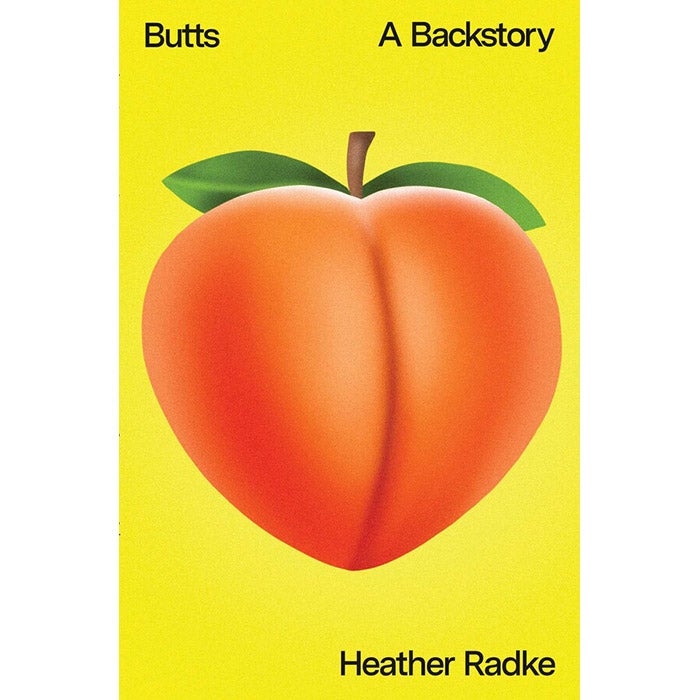
Thanks (in part) to its name, the fitness phenomenon Buns of Steel was ripe for parody in the late 1980s and early 1990s: It was spoofed on Saturday Night Live, discussed in Jay Leno’s late-night monologues, and referenced in Cathy comics. After all, butts are funny, and the idea of having a butt of steel is both alluring and a little bit ridiculous. But Buns of Steel wasn’t a joke, at least not entirely. Based on a workout regimen developed by fitness entrepreneur Greg Smithey, Buns of Steel was also a bestselling VHS exercise tape purchased all over the world by people who actually wanted to have metal-hard buns, a fact that spoke to a fundamental shift in expectations about how bodies should look and what they were for.
Slate receives a commission when you purchase items using the links on this page.
Thank you for your support.
The butt (or at least the ass) has long been linguistically associated with hard work. Having a “fat ass” is equated with laziness and sloth, as in “Get off your fat ass and get to work.” To give a person a “kick in the ass” is to get them going, to make them go to work. To be a “hard-ass” is to be tough and uncompromising. A person can also “work their ass off,” a phrase that makes a direct connection between a small butt and diligent labor. It’s no surprise, then, that these connotations would all come together to form one of the most successful exercise programs in history during a period when commitment to gospels of entrepreneurship and self-creation in America was reaching new peaks—or that that program was invented by someone whose personal story so thoroughly embodied those principles of success.
It took me six months to track Greg Smithey down. I wrote him repeated emails at an address I found on a website he made in 2008. I scoured the phone books of Anchorage, Alaska, and Las Vegas, where I knew he had once lived. I tried to locate his representatives and his relatives. I had all but given up, assuming he had disappeared into the netherworld of the once famous, when one afternoon I received an email from Smithey saying he’d be happy to speak with me; his silence, he explained, had just been because he doesn’t regularly check his inbox.
So I gave him a call. Once he started talking, he didn’t stop for three days.
Some of the stories he told seemed dubious. He claimed that he was the “white boy” in the Wild Cherry song “Play That Funky Music” (he wasn’t). He said he trained the Commodores and Miss Alaska at his aerobics studio in Anchorage (possible, but unlikely). He told me that he is a storm chaser and has been inside eight typhoons, and described a harrowing encounter with a grizzly bear that he survived by utilizing positive thinking and a big, toothy smile. Recognizing his tendency to self-mythologize and stretch the truth, I’ve found it’s important to take anything he says with a grain of salt. There is, however, one thing that is undeniably true about Greg Smithey: He invented one of the most successful fitness phenomena of the past 40 years.
Smithey’s interest in fitness began when he discovered pole vaulting at 12 years old. He was good at it—so good that, in 1969, he attended Idaho State on a track scholarship. There he excelled, eventually jumping a very respectable 16 feet. After college, he decided he wanted to teach physical education and moved to Alaska, where he coached the Wasilla High School track team. (He claims he trained Sarah Palin.) He liked teaching and coaching, but he was a man with a bigger dream: He wanted to start his own aerobics studio and introduce a new fitness approach to the masses. After attending a life-changing motivational lecture by sound-bite optimist Zig Ziglar, Smithey quit his job, moved to Anchorage, and in 1984 opened the Anchorage Alaska Hip-Hop Aerobics Club.
It turned out to be a bumpy transition. Smithey soon found himself in a financial hole, haggling with his landlord for a break on rent and trying to figure out how to attract enough aerobics students to make the business viable. “I was looking at total failure with my exercise studio, and I got more angry and more frustrated,” he says. He decided to channel that anger into intense workouts in his aerobics classes. “Specifically, I put together a workout that just burned their butts.”
According to the website he maintains now, Smithey’s classes were filled with wild antics. He brought a cassette tape and a long leather whip (just as a prop, he reassured me), and referred to himself as Dr. Buns, Professor of Bunology, Prince of Pain, Master of Masochism, and the Bunmaster. He taught his class with the lights dimmed, a spotlight on him, music cranked. In 50 minutes, he would guide the group through at least 50 different butt-related exercises, all the while shouting, “Beautiful legs … beautiful legs … work those beautiful legs … and don’t forget to squeeze those cheeseburgers out of those thighs … and that carrot cake … and those french fries!”
Smithey says that at first there were only five or six students in his class, but the number quickly grew to over 40 repeat attendees. “They were coming because I was causing their butts to hurt so bad. And soon they started coming in and telling me all these wonderful stories about how their butts look so good and their husbands love it.” He tells me that his greatest moment of inspiration struck while talking to a group of students after class. One of them said: “Wow: Our buns feel like steel.” He recalls, “We all kind of fell silent.” They recognized genius when they heard it.
Both Greg Smithey and his bun-based aerobics class were emblematic of a change that was happening in the 1970s and ’80s in how Americans related to their bodies. Americans, influenced by the rise of neoliberalism and the ensuing individualistic zeitgeist, began to see exercise as a way to optimize themselves and physically demonstrate their work ethic. Aerobic exercise, which was first described scientifically in the late 1960s, promised women the chance to build strength and achieve a “toned” body without getting “bulky,” helping to open the world of fitness up to women for the first time even as it reinscribed traditional notions of femininity. By the time Smithey was teaching in Alaska, Jane Fonda had had tremendous success popularizing what was at first called “aerobics dance,” but both Fonda and Smithey would have a significant technological advance to thank for their ascendance.
In the early 1980s, most people didn’t have a VCR—videotapes were primarily the purview of film aficionados and pornography devotees. No one had ever made an at-home exercise video. But Stuart Karl, of Karl Home Video, saw an opportunity for wider distribution of Fonda’s workout. His wife had given him the idea after she mentioned how gyms and aerobics studios still felt unfamiliar and unwelcoming to many women. Karl reached out to Fonda and convinced her to record her routine, just to see what would happen. She agreed, and they produced the first video for $50,000. (“A spit and a prayer” is how Fonda herself describes the production.) The initial retail price was $59.95 per tape, which in turn became part of a larger investment, because most people also needed to purchase a VCR, an additional expense of hundreds of dollars.
Despite these economic hurdles, the tapes became a sensation, staying at the top of the video bestseller lists for three years and selling 17 million copies. (They are still some of the best-selling home videos of all time.) It was a phenomenon that was popular across racial lines—fashion magazines targeted at Black women, like Essence, regularly ran features on aerobics, and many aerobics videos, including Fonda’s, featured women of color following along in the background, even if the star was almost always white. As VHS tapes became cheaper, aerobics videos also became an accessible way to exercise for women who couldn’t afford pricey gym memberships. By the end of the 1980s, Fonda had not only popularized aerobics around the world; she had also become a fitness icon and laid the ground work for other instructors—like Greg Smithey—to do the same.
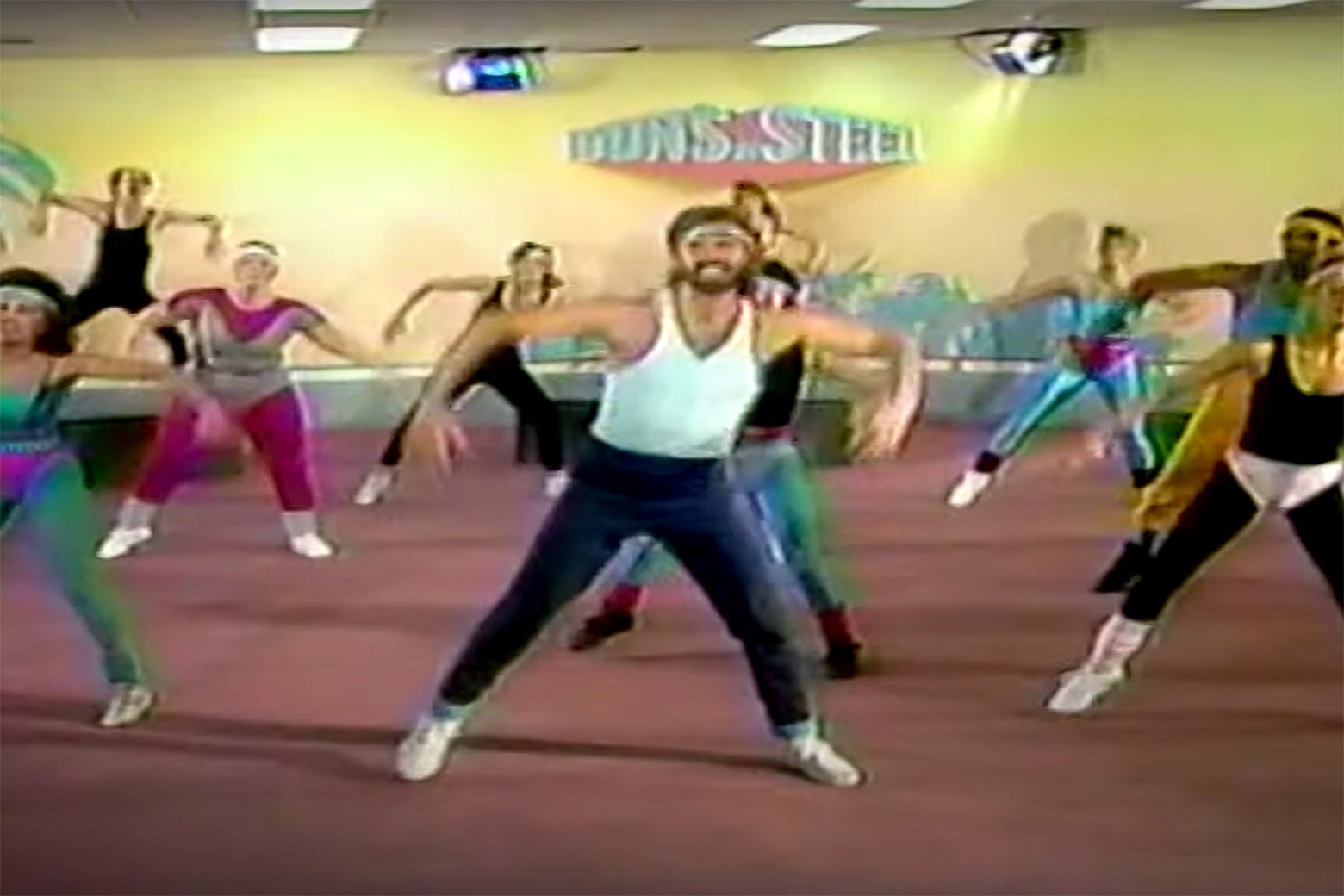
Greg Smithey and his leg lifts. Penguin Video Store/YouTube
By 1987, Smithey was in deeper debt than ever, owing months of back rent, despite his consistently full classes. In a last-ditch attempt to turn a profit in the world of aerobics, he took a page from Jane Fonda’s book and decided to record his own instructional workout video, using the butt-burning method he had popularized in Anchorage. He acquired some rent-to-own furniture and arranged fake palm trees inside a studio that he’d painted in tropical pastels. The night before the shoot, he invited students from his class to participate, offering to pay them in pizza and soft drinks. The Original Buns of Steel was shot in two takes.
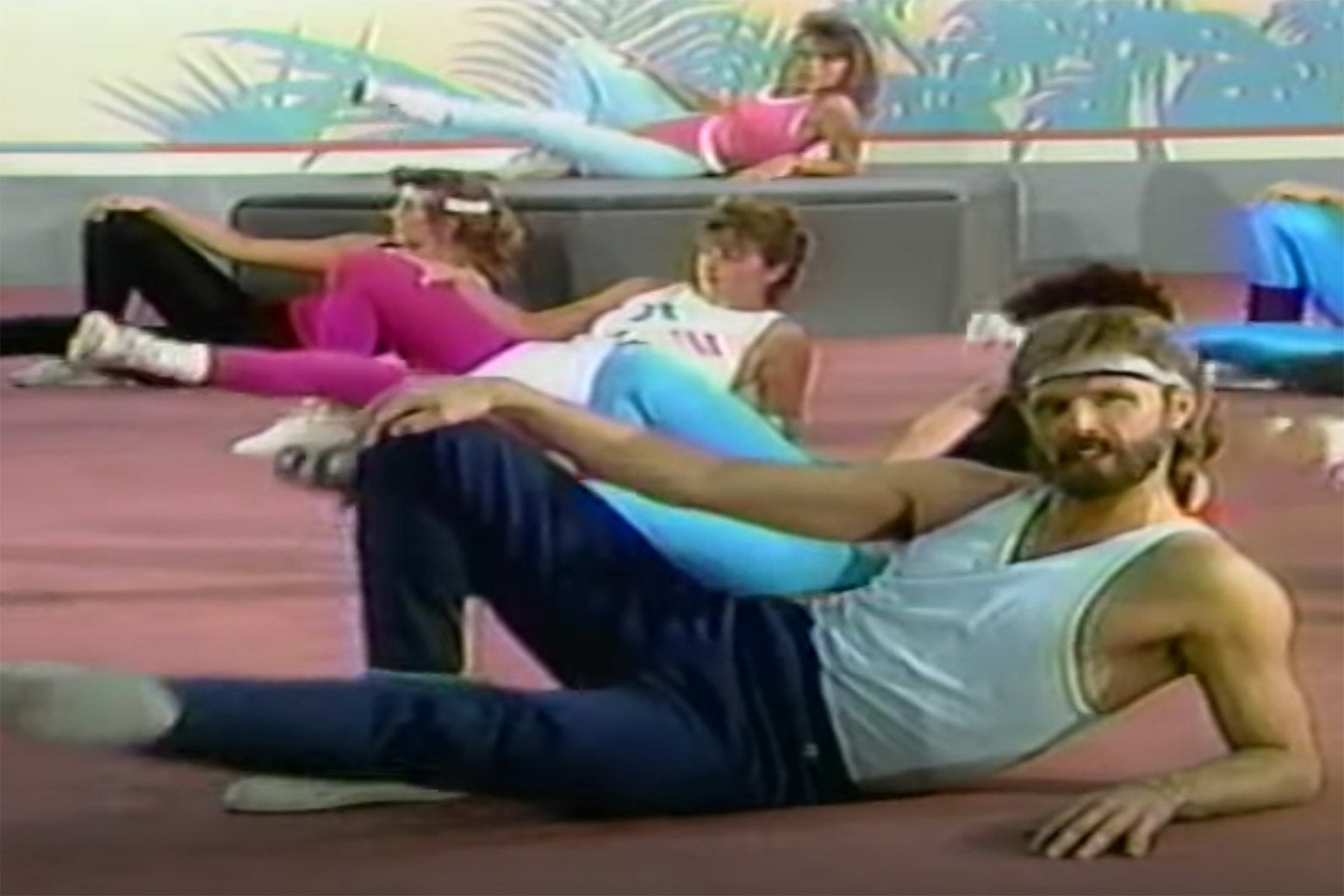
In the video (which is available on YouTube), Smithey doesn’t brandish a whip, only too-tight sweatpants, a low-cut tank top, and a sweatband. The production values are low— the lighting is garish, the picture is grainy, and the sound is tinny. The Anchorage Daily News later described it as having “an Alaska feel,” a kind way of saying it was cheaply made. The students following along in the background are occasionally out of sync or hidden behind one another. Their outfits, how- ever, are dazzling: metallic blue catsuits with bright purple leg warmers; mustard-yellow harem pants; a bright white leotard, a Floridian landscape emblazoned across the front, paired with fuchsia leggings. Smithey is encouraging, almost sweet. “You know you’ve got a great body!” he chirps to the audience. “We gotta do the other leg now!” There is no Prince of Pain here, but the workout is actually pretty hard, if at times a little boring. There are endless variations on donkey kicks and leg raises. A generic soundtrack of smooth jazz plays incessantly in the background.
At first, the videos did not catch fire. In 1988 Smithey sold only 114 tapes, almost all of them in the Anchorage area. It wasn’t enough. He was making preparations to close his studio—he could dodge his landlord no longer—and needed to make money to survive. He tried his luck at an aerobics conference in Anaheim, but he sold only one tape from his homemade booth, to Ellen DeGeneres’ assistant. (She was doing stand-up comedy at the event and wanted to use his tape as the subject of one of her jokes.)
He finally stumbled upon his lucky break—though he didn’t know it yet—when he met a video-tape distributor named Lee Spieker. Desperate for cash, Smithey sold Spieker the distribution rights to The Original Buns of Steel (though he wisely and crucially retained the copyright to the name), and eventually Spieker sold the tape to a distributor called the Maier Group. Soon after, Smithey disappeared to Guam to become what he calls “the Jimmy Buffett of PE teachers,” while the Maier Group got to work creating advertisements for their new property. (In the late 1980s, customers primarily bought tapes from print ads and catalogs; major video chains were just starting to take off.)
Even though most of the people in Smithey’s classes were women—and the target audience was female—Buns of Steel’s cover and promotional materials prominently featured a picture of Smithey and his steely buns as a promise of what you would achieve if you worked out along with the video regularly. Soon Howard Maier, president of the Maier Group, noticed that the video was selling very well in San Francisco, a spike he assumed was thanks to the title as well as what they imagined to be Smithey’s roguish appeal to gay men. In order to achieve greater mass-market interest, they decided that they needed a new strategy. They needed someone other than Smithey, someone who, like Jane Fonda, could give female consumers something to strive for. In 1988 Maier found just that in Tamilee Webb, a rising aerobics star who would become the face (and buns) of the Of Steel franchise for the next 10 years, and help make Maier and Smithey very rich.
Webb had an ideal pedigree. After earning a degree in physical education and exercise science from Chico State, she moved to San Diego and found herself in the heart of the early ’80s Southern California fitness craze. She started working at the Golden Door, one of the poshest spas in America and a celebrity hot spot. During her first week on the job, Webb trained Christie Brinkley and her mother. “Back then, it was called a fat farm,” she told me. “Now it’s the Golden Door spa and resort. People pay $10,000 a week to go there.”
For the next three years, Webb worked at several different Golden Door locations, including a couple of tours on the Golden Door’s cruise ship, where she spent her days off writing a book called Tamilee Webb’s Original Rubber Band Workout, which would become a bestseller. By 1986, she was a fitness celebrity of sorts, going on international tours, teaching at aerobics conferences, and filling up classes in San Diego. But what she really wanted was to become a star in the booming world of fitness videos.
In 1988 Howard Maier reached out to Webb, hoping she might be willing to become the face, voice, and body of Smithey’s workout regime. According to Webb, a mutual friend told Maier that he should hire her because, “one, she knows what she’s doing, and two, she’s got a butt.” As soon as Maier pitched her the project, Webb was in. “I loved training the butt and I thought: That’s a great name,” she says. As an adolescent, Webb had been teased for her “bubble butt,” but now she hoped it would make her a star.
Webb diligently rehearsed for Buns of Steel in her living room, and after a few weeks, she flew to Denver. She remembers that the set seemed cheesy and low budget, particularly in comparison to the other videos she’d starred in. The lighting was bad, the crew was sparse, there were no “backs”—the group of people following along in the background. But Webb was a professional; she put on her game face and got to work.
She stood alone on a gray carpeted platform, against a bleak white wall with glass blocks and a strangely empty shelf. The music was barely audible as she earnestly explained that she was demonstrating exercises based on “the latest research in sports physiology.” Her blond hair was arranged high on her head in a half-ponytail, and she wore coral-colored fitness bikini bot- toms with a sports bra, enormous bulky tennis shoes, and beige tights. Webb described the experience of shooting the tape as a lonely one, and it seems that way. There is something strangely melancholy about the whole thing—when you watch the tape, it looks as if she’s being held hostage in a Golden Girls prop warehouse.
Despite the awkward setup, the convergence of Tamilee Webb and the phrase “buns of steel” created a hit. “When I got my first royalty check, I was jumping up and down,” she told me. It was for about $20,000. “Then I got the next one, and it was 50 grand. And then it just kept going up.” People started recognizing her in public. At an airport, she bent over to pick something up and someone tapped her on her back and said, “Aren’t you the Buns of Steel lady?” She was recognizable based on her butt alone.
Over the next decade, Webb hosted 21 more Of Steel videos. And although her cut wasn’t huge—“Remember, I’m just the talent,” she told me—the videos sold at least 10 million copies and, according to Webb, made $17 million for the Maier Group. Greg Smithey got a significant cut, too, as the owner of the Of Steel name. “People love the name,” he says. “I made a million dollars off of three words.”
The at-home VHS workout eventually faded from mainstream prominence, thanks to the rise of gym culture, DVDs, and apps, but the legacy of Buns of Steel remains a potent reminder of the aspirational promise of fitness culture. Buns of Steel pledged to transform its practitioners into something superhuman, to turn imperfect, soft flesh to unyielding metal. The mainstream ideal had shifted yet again, from the 1940s ideal of a fertile, hearty shape to a pert, muscular, tight butt; a butt forged by thousands of reps of what Jane Fonda called “Rover’s Revenge”; a butt made of steel.
May possibly is Nationwide Physical Health and Sports Month. Commenced by the President’s Council on Physical fitness, Sporting activities and Nourishment in 1983, this advocacy thirty day period is aimed at encouraging Us citizens to adopt healthful life.
Might is not only National Bodily Health and Sports activities Month, but it is also a excellent thirty day period to get shifting!
This observance month not only celebrates workout and sport participation, but it also highlights the significant benefits of currently being physically energetic, these kinds of as minimizing your chance for large blood stress, coronary heart illness, and some types of cancer.
Work out can also help lessen worry, boost your temper, and fortify your bones and muscle mass. With spring in total force and summer months just close to the corner, it is a perfect time to get outside and examine your metropolis.
Gains of actual physical exercise
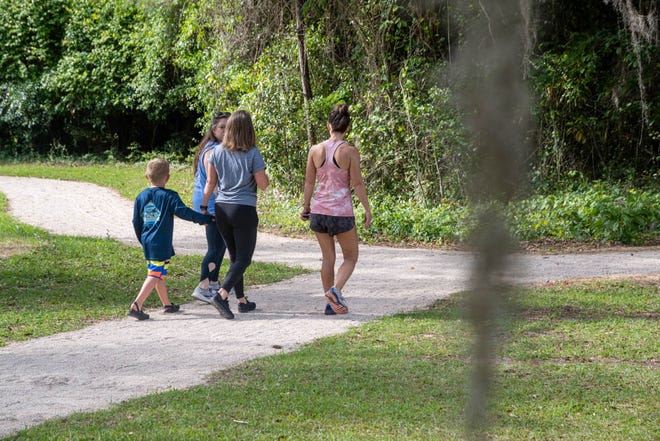
Going on a stroll or bike experience, attempting rock-climbing, or even going for a swim at a nearby pool are good means to incorporate bodily exercise into your life-style. Uncover accessible parks or trails in the vicinity of you to get going outside.
Have a fun, safe and sound, and wholesome summer time by building actual physical exercise a section of your each day schedule.
A listing of some of the actual physical and psychological overall health benefits accrued from starting to be additional physically active follows:
Some unique health and fitness benefits of bodily activity incorporate:
Retains your thoughts off cigarettes if you are seeking to quit
Can help command your appetite
Aids you shed fat if you’re chubby, or remain at a healthy weight
Gives you more electricity and stamina
Lowers your blood pressure
Boosts your “good” HDL cholesterol level
Cuts down your chance of acquiring heart sickness and stroke
Helps regulate blood sugar by enhancing how your body takes advantage of insulin
Alleviate tension, nervousness
Psychological health added benefits from regular actual physical action can enhance high quality of lifetime and reduce strain, stress, anxiousness and depression.
You could detect a “really feel good” sensation quickly adhering to your work out and also see an advancement in total effectively-staying more than time as physical exercise gets to be a normal element of your everyday living.
This can be primarily vital as we move back out into out into our former each day routines.
Actual physical exercise can make improvements to your mood and assist you believe a lot more plainly, release anxiety, enable calm you, boost your high-quality of rest and help you feel much better about how you seem.
The target of today’s column is primarily on some of the benefits of getting extra physically energetic as grownups not to low cost that exact same require for kids.
Thanks to the ODPHP for a great deal of the content provided for this column
More Sources
Every person wants bodily exercise to keep nutritious. But it can be really hard to discover the time in your busy regimen. The Shift Your Way® equipment from the U.S. Section of Health’s Workplace of Disorder Avoidance and Health Promotion (ODPHP) present ideas that make it less difficult to get a very little far more active.
And little alterations can incorporate up to major overall health benefits!
Entry the adhering to source from the ODPHP for truth sheets as effectively as videos on actual physical action desires for older people as perfectly as for youngsters and teens at: health and fitness.gov.
Physical exercise can make your everyday lifetime far better. Go through the point sheet about actual physical action for grownups at overall health.gov.
It’s crucial to get a blend of activity varieties as you get older. Examine the point sheet about unique action types for older adults at wellbeing.gov.
Data on Leon County’s Parks and Recreation services is obtainable at:
Mark A. Mahoney, Ph.D. has been a Registered Dietitian/Nutritionist for around 35 decades and accomplished graduate studies in Nutrition & Community Well being at Columbia College. He can be attained at marqos69@hotmail.com.
Never overlook a story: Subscribe to the Tallahassee Democrat applying the link at the top of the webpage.
Huffing through yet another long run together, my friend and I got to talking about how unlikely it was that the two of us had, one, met at the gym, and two, were now training for a marathon. Like the many other people we’d met through kickboxing and spin classes, in running clubs and CrossFit boxes—and even in instructor certification courses—we had all strenuously avoided exercise during our youth but couldn’t get enough of it as grown-ups. “Adult-onset athleticism” is how my friend jokingly, but accurately, described our affliction.
It was the early 2000s, and our coming-of-age had coincided with a huge cultural shift in expectations and experiences of exercise. Growing up as the first generation of girls who were not just allowed, but expected, to participate in sports, and for whom “the obesity epidemic” was a nightly news staple, we weren’t expected, or even allowed, to opt out of physical exertion as our parents had—especially our mothers. Combined with new attention to the nature of stress and the power of exercise to offset it, these dynamics meant our generation felt not only opportunity but unprecedented pressure to work out. It also meant that by the time we reached adulthood, our options were more varied and inclusive than ever before. The Bay Area running group where I discovered marathoning included more middle-aged joggers than fleet-footed former athletes; high-end health clubs and community centers alike offered full schedules of cardio dance and cross-training, and the fastest-growing demographic of gymgoers was over 55. The point of exercise was no longer frantically thinning thighs or heading off a heart attack, but achieving the loftier goal of lifelong wellness.
So why, by the time we had kids ourselves, did so many of their experiences with exercise still feel as alienating as our own? With all that our generation now knows about how good fitness can feel, why does it seem like so little of that “come one, come all” spirit has made its way into the movement opportunities available to most children?
In some ways, the situation has actually gotten worse. School-based physical education continues to disappoint many kids, registering as a waste of time for the athletically inclined, and traumatic for those who are less so. Despite the broader cultural enthusiasm for exercise, PE is often on the budgetary chopping block and devalued even within the education profession as less important than academic subjects. Then you have a youth sports industry that is increasingly expensive, specialized and competitive, drawing children away from casual and community-based recreation into evermore-exclusive leagues, requiring considerable skill and money. It all adds up to a bizarre situation: an adults-only fitness culture that’s imperfect but much more inclusive than what’s available to most kids. Don’t kids also deserve a third place, where, outside of school-based PE and organized sports, they can find joy in exercising on their own terms?
It could have worked out differently. The history of exercise culture in the past century or so is primarily a story of its expansion, both in terms of what it means to work out—to improve the self, not just the body—and who is expected to do so: now, pretty much everyone. For much of that time, kids were indeed at the center of efforts to make fitness more inclusive, ennobling, and even fun. As cities grew and became more diverse, physical exercise became a way both to discipline people who were perceived as unruly and create activities for developing strength and ruggedness that reformers worried all city kids lacked. The popular concept of “romantic childhood,” which defined youth as a distinct and special life stage, meant adults readily created more opportunities for exercise geared specifically to kids. City funds went to building playgrounds, especially in working-class neighborhoods. The physical education profession gained a strong foothold in public schools, focusing squarely on improving children’s health and character through play and sport. By 1929, a majority of states had a physical education requirement, an innovation that especially created new recreational opportunities for young girls and Black kids. Adults, in contrast, mostly viewed working out in a skeptical manner: as something a circus strongman would do onstage, or that suspicious men did in dimly lit gymnasiums. Women’s advice literature increasingly focused on “reducing,” but barely mentioned exercise—which was considered unladylike—and instead favored food restriction.
During the Depression, many physical education programs in schools were eliminated. Yet youth recreation and building bodily strength as ways to help America recover became linked in the New Deal, and not only in schools. Federal funds went to building playgrounds (fun fact: Southern California’s Muscle Beach started out as one), posters by Works Progress Administration artists celebrated (free) outdoor recreation, and the popular Civilian Conservation Corps advertised the work’s ability to put muscle on skinny teenage boys as a rationale for joining up. During World War II, enlisted men became accustomed to weight training, and some brought the habit home. The prosperity the Allies had fought for, however, had a downside: Leisured suburban kids were more sedentary than prior generations—alarmingly deconditioned, according to physical fitness booster Bonnie Prudden, who warned they were unprepared to defend America if the Cold War got hot.
Nothing fires up a presidential administration like the opportunity to protect national security and child welfare, so these concerns about “soft” suburban kids gave rise to unprecedented investment and attention to kids’ physical fitness, resulting in the formation of the Presidential Council on Youth Fitness. The language of military readiness and the rigor of the curricula the PCYF promoted under Presidents Dwight Eisenhower and John F. Kennedy are mostly what the council is remembered for, especially by participants traumatized by failing the fitness test or coming in last on the mile or rope climb (or those who, on the other end of things, remember it as a lost golden age of PE). The power of such recollections can make it easy to forget that, in addition to sanitizing the seedy reputation fitness had in many quarters, the driving aim of these initiatives was to be inclusive in a way most kids’ physical activities were absolutely not.
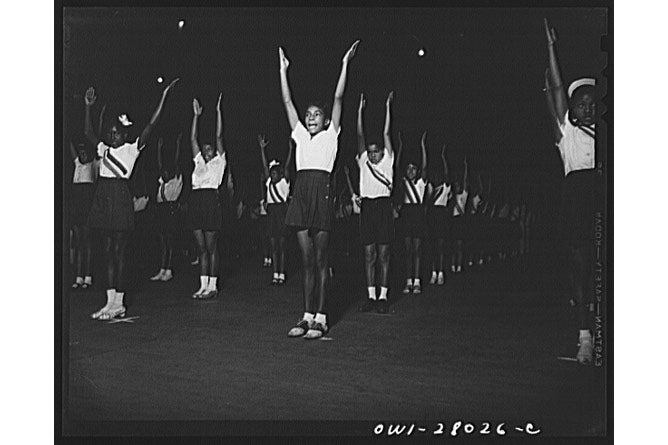
With “Victory through good health” as a slogan, Black schools held a show at the Uline Arena in D.C., during World War II. Roger Smith/Library of Congress
“No one gets cut from the squad of fitness,” announced a speaker at a 1960 PCYF conference of PE boosters and leaders, where the driving idea was not only that fitness was for everyone, but that it could and should happen anywhere and everywhere. Unlike organized sports (which necessarily selected players for skill) or physical education classes (which only occurred at school), exercise could take place just as easily in a shopping mall parking lot or on a suburban sidewalk as at a gymnasium or athletic field. In fact, one PCYF pamphlet announced that a red flag for a community was overinvestment in sports as opposed to fitness. Such emphasis on athletic excellence, fitness boosters warned, intimidated most kids out of participation and could worsen the worrisome epidemic of “spectatoritis,” in which children learned the harmful lesson, in terms of patriotism and personal health, that they belonged on the sidelines.
It was precisely this expansive vision that inspired opposition to the council’s programs. Fellow Cold Warriors criticized fitness programs that diverted dollars from the specialized science and technology curricula they deemed more important, while skeptics on the left rejected mandatory programs that extended the mood of Cold War militarism to the intimate realm of children’s bodies. Across the political spectrum, others protested that the whole scene of kids compelled by the government to exercise en masse felt fascist, or even communist. All such critics frequently mocked JFK, the country’s most prominent advocate of exercise for children and adults—he dropped the “youth” from the Presidential Council’s name to emphasize the importance of fitness for all—as a lightweight: his silly “fits of fitness,” from shirtless beach photos to challenging his brother Robert to a 50-mile hike, proved their point.
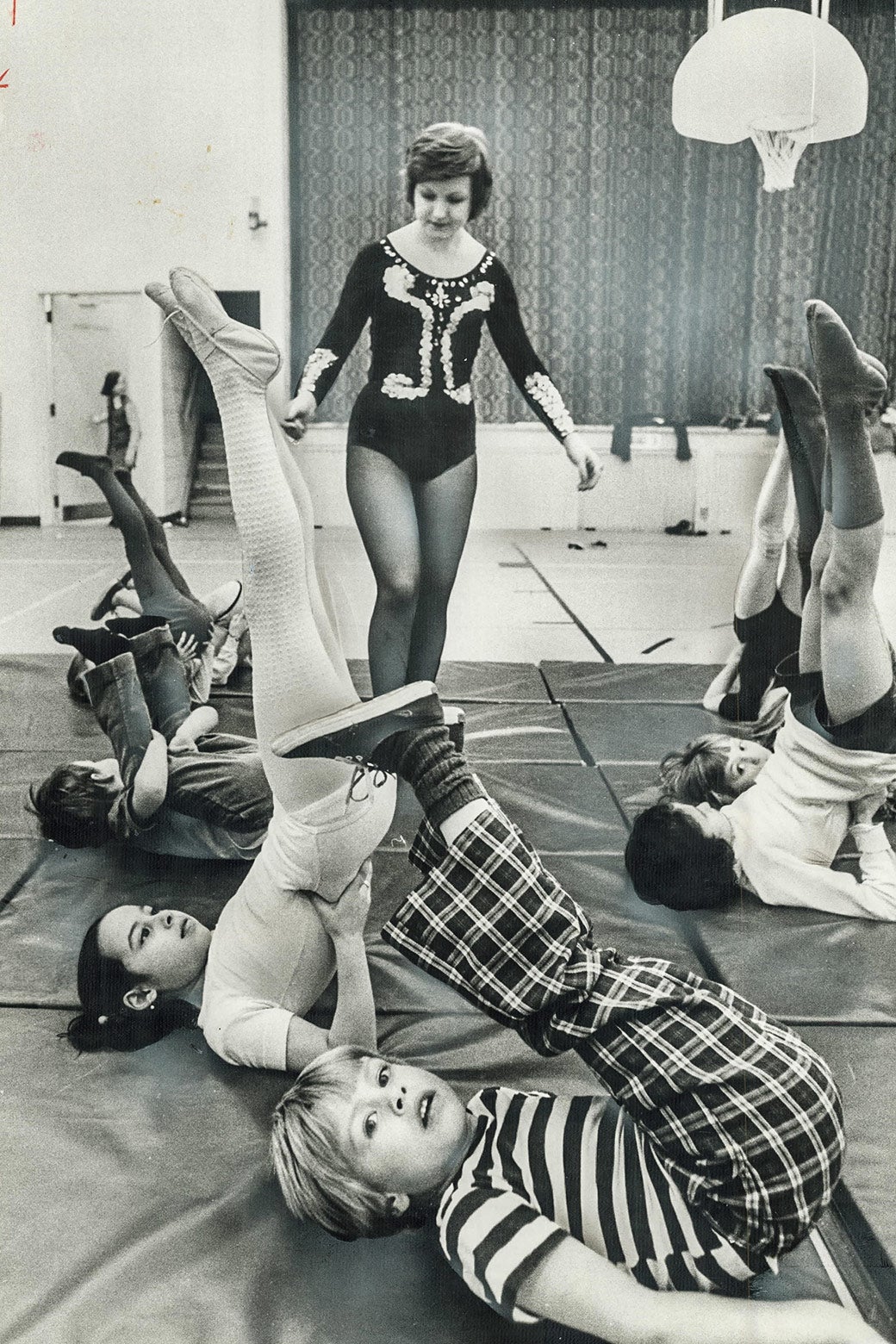
Keeping fit was stressed in the gymnastics program that was part of an after-school project funded by a LIP grant in Canada in the 1970s. Susan Gagic, seen here, puts the youngsters through their routines. Ron Bull/Toronto Star via Getty Images
The idea that physical activity was important for all kids, however, caught on, and only shape-shifted in the ensuing decades. Title IX, which expanded girls’ rights to compete in sports, is considered the landmark achievement of the 1970s in this realm, but throuhgout the same years, progressives introduced youth programs such as yoga and martial arts that decoupled movement from individualistic competition. In the late 1970s and onward, “junior Jazzercise” and similar programs encouraged girls who might not see themselves as jocks to join their mothers in dance-aerobics classes that lacked the intimidation factor of the complex choreography and mirrors common in traditional studios. As concerns about the “obesity epidemic” and eating disorders escalated in the 1980s and 1990s, physical fitness boosters emphasized the importance of youth exercise, whether to offset a caloric diet or to channel the impulse toward bodily control into a more healthful activity than food restriction. Stress, in adults and kids, became a national fixation at the turn of the 21st century, and exercise a “wellness” practice to address it. These imperatives were classed and raced: Poor and minority kids were positioned as the problems for anti-obesity measures to solve, while their wealthy counterparts were considered at risk for anxiety and eating disorders. Across the board, however, a solution to these ills was the idea that all children can—and should—exercise.
The potential of these programs to do more than punish kids in bigger bodies or pressure them into intense exercise, however, has consistently been thwarted by resistance from many quarters. Some have argued that encouraging kids to develop their bodies is by definition a distraction from more valuable cerebral pursuits. Other critics, like intellectual Christopher Lasch, bemoaned the “degradation of sport” represented by such loosey-goosey efforts at inclusiveness. Athletic women like runner Lynda Huey, who were pushed into the physical educator track, articulated a similar complaint: Physical education in the 1960s and ’70s, especially for girls, was excessively focused on “respecting mediocrity” and not “making it about winning.” Conservative Christians later added to the onslaught by declaring that yoga in schools represented religious indoctrination.
The most obvious explanation for why this robust, inclusive vision for what kids’ exercise could be failed to pan out, while a private industry for adults has thrived, is probably the austerity policy that for decades has rolled back public programs of all kinds. Yet I was surprised to learn that, despite the lofty language of kids’ fitness boosters in the decades after World War II, such public programs not only rarely lived up to these promises of inclusivity, but, when the fitness industry boomed in the 1980s, some physical educators joined the private sector specifically becausethey thought it could be more inclusive than what they witnessed in school gyms and on sports fields. Fred Devito, who taught physical education and coached sports in New Jersey and California, left this stable career in the early 1980s to work at a barre fitness studio (reportedly the first man to teach in the famed Lotte Berk brownstone) because in his former career, despite his best efforts, only the already-athletic kids enthusiastically participated. The “ones who could use it the most” tended to dread experiences that “always eliminated them.” In the barre classes he began teaching, he saw women, who had felt alienated by athletics, marveling at their strengthening bodies. Carol Scott, who, as a self-described tomboy, was coached into the physical education track in college, recalled the first time she walked by an aerobics studio. The joyous, sweaty dance party, orchestrated by an instructor who seemed as overjoyed as the participants, felt viscerally different from the career she envisioned of “rolling the balls out” in the school gymnasium.
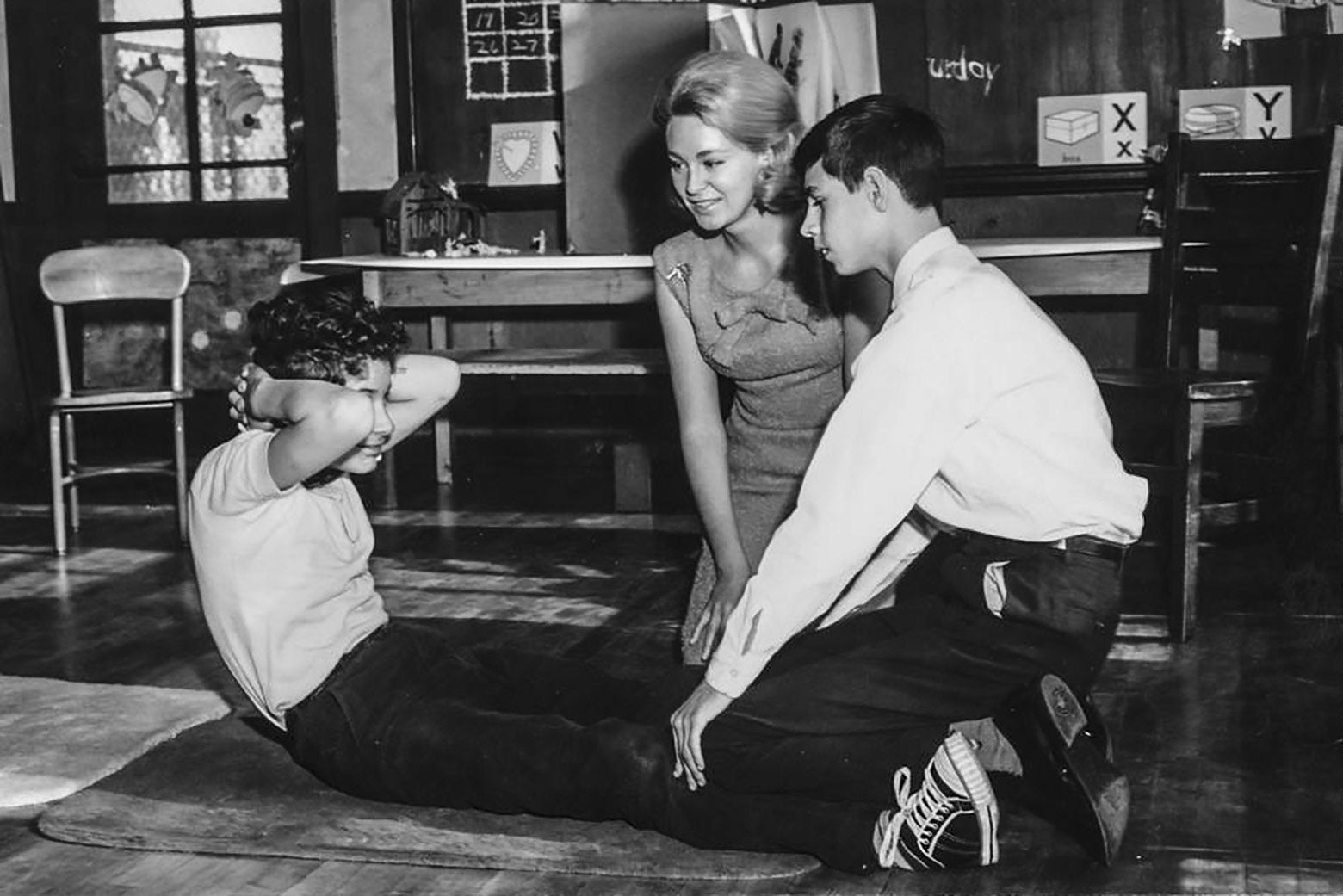
Joan Kennedy observes a fitness class during a tour of the Boston Public Schools system’s physical fitness programs in December 1965. T. W. Prendiville/Edward M. Kennedy Senate files/John F. Kennedy Presidential Library and Museum
PE could have been the beneficiary of the ’80s boom in exercise, but instead it was a private fitness industry geared toward adults that profited from this expanding interest in exercise. In fact, as the industry has grown, physical education departments and public recreation facilities have largely ceased to be the spaces where innovation in fitness transpires, for children or adults. Beginning in the 1970s, universities advertised degrees and certificates in exercise science and physiology that led to private sector careers specifically separate from the physical education teacher track. In another example of such a story, Tamilee Webb, who amassed a significant fortune as the face of the popular Buns of Steel franchise, told me that thanks to the lucky timing of her birth, she was able to pursue a career in fitness: “Can you imagine? I could have been a physical education teacher.”
In the 2000s, at the height of what felt like the most exclusive moment in the private sector, when boutique fitness studios raised the price point of a workout to previously unimaginable heights, first lady Michelle Obama made the most recent and boldest public effort to promote inclusive fitness as the right of all American children. Obama’s federal initiative, named Let’s Move!, framed its mission in lofty civic ideals that echoed Kennedy’s and Eisenhower’s efforts but, instead of targeting white suburban kids, focused on Black and Latino children, statistically more likely to be obese and less able to access the expensive athletic programs or fitness businesses that were a marker of affluence. But the first lady’s endeavor was condemned by opponents on the right as nanny-state overreach and criticized by some on the left who saw it as pathologizing a structural problem, thus presenting it as an individual one. Once President Donald Trump—who personally forswore exercise and promptly changed the name of the President’s Council on Fitness, Sports and Nutrition to the President’s Council on Sports, Fitness and Nutrition—entered office, inclusive youth exercise fell off the radar as a policy priority across the political spectrum. It has not returned.
If the pandemic pressed pause on community fitness of all sorts, the ill effects of sedentariness on kids locked out of physical education, sports, and plain old play have brought more urgent attention to the need for such outlets. Some of that is happening within the physical education profession; professional association SHAPE America has committed to building a “kinder, healthier future,” a far cry from the militarism of midcentury programs. Physical educator and writer Sherri Spelic, who teaches at a private American school in Austria, conceptualizes the gym as a “social lab” that can provide “a counternarrative” to the rigidity of the rest of school. Youth versions of adult private fitness brands have also surfaced, from Crossfit to SoulCycle.
But it is a cadre of innovators and educators, working in between the public and private sectors, who are now taking up the charge to get kids inspired to exercise in a way that often remains elusive. Michele Gordon Levy told me that, as a child in the early 2000s, she “liked being active but hated PE so much” that she “faked asthma to get out of the mile [run].” When a guidance counselor recommended “a physical outlet,” her only options were dance and sports, which had strict schedules and demanded skills tightly linked to one’s place in the high school social hierarchy: “You had to be good, and that made you cool.” Levy fell in love with Tae Bo, however, and became certified as a fitness instructor at 18. Realizing that her feelings of exclusion were even more intense for her younger brothers who struggled socially, she set about designing a program to address this need. Heavily influenced by Let’s Move!, in 2010 Levy launched Adventurecize in New York City. Ten years later, amid the pandemic and in conversation with kids and parents, Levy realized “kids really needed help and it was not just obesity.” She rebranded as Zing! in 2020. Offering HIIT (high-intensity interval training) classes that combine simple movement with empowering affirmations, Levy expanded her program goals beyond physical fitness to teach “the tools to take care of yourself,” such as the awareness to recognize “when you need a run or a mindfulness break or the burst of energy of a few squats.”
Levy has since hired seven certified instructors and two full-time employees to meet the demand. Parents frustrated by lack of physical activity options for their kids first hired her to provide classes on Zoom or in person for their pandemic “pods.” Charter and private schools now hire Levy to supplant or supplement their own physical education programming. Department of Education regulations make working directly with public schools more difficult, but partnerships with the New York City Department of Transportation, public libraries, and parks mean that Zing! can offer community classes citywide. Levy’s efforts to infuse “energy, enthusiasm, and affirmations” into exercise for all—once, the sort of approach you’d mostly find at elite facilities—has been garnering her invitations to offer professional development to physical educators.
A similar ethos motivated Theresa Roden to establish I-tri, a triathlon and mentorship program for middle school girls. (Note: I served as a board member of this program from 2017–20.) Roden, who was the “last [one] picked for every softball and kickball team,” remembers “the trauma of standing there as just so horrifying” and feeling that “being athletic meant being on a sports team.” She never considered the activities she loved—walking in the woods, biking, swimming—as “real sports.” But as an adult on Eastern Long Island, she uncharacteristically registered for a triathlon in 2005, an event that conjures images of sinewy, elite athletes. Instead, Roden found that the multisport format meant few excelled at all three, and she learned from experienced runners while inspiring others in the pool and on the bike. The benefits were more significant than crossing the finish line; she began to appreciate the strength of “the big thighs I had hated all my life,” the camaraderie, and her power to cultivate her “inner voice” to stop “berating herself.”
Thrilled by this experience of empowerment through exercise, Roden lamented that, had she had this realization earlier, “life could have been so different.” When her daughter was as uninterested in athletics as she had been, Roden—especially inspired by growing data that shows sports participation is linked to less drug use as well as better social adjustmentand academic performance—founded I-tri with eight initial participants. Since its inception, she’s defined I-tri in contrast with physical education, which “is designed, after all, by people who probably loved being competitive and picking the teams so much they want to make it their career.” Instead, I-tri, which now serves more than 700 predominantly Latina girls through grants and fundraising, teaches that anyone can train for a triathlon and that collaboration around an athletic commitment can provide a strong foundation for confronting issues of mental health, food insecurity, identity, and educational attainment. I-tri works directly with schools in order to ease the logistics of participation, but operates as an extracurricular activity. Yet one goal of Roden’s, who has an education degree, is to shift athletic culture within schools to “instill the lifelong love of being active and appreciating what your body can do.” One of the program’s first graduates plans to become a PE teacher, Roden recounted, “and that is where the change comes.”
“Every program loves to say youth sports are so great because they teach kids to be leaders and be creative,” Macky Bergman, who founded the youth basketball nonprofit Steady Buckets in 2010, told me. “But then all the power and the decision-making is always with the adults in charge.” Bergman’s inspiration hardly came from youthful alienation from athletics; he was a varsity college basketball player. But he saw another problem: Conventional school sports and PE weren’t imparting high-quality skills training, and the athletes who could afford it were self-selecting into elite, competitive travel programs at ever-younger ages. Aside from the high price tags, these quasi-professional programs were organized entirely by adults. In contrast with the casual pickup games of his youth, parents and semiprofessional coaches were managing and directing everything from a young age, often sucking kids’ joy—and certainly their agency—out of the experience. Bergman would see photos of championship-winning teams in which, he said, “the parents are smiling, but all the kids are miserable.” Funded by donors, Steady Buckets offers free basketball instruction to nearly 2,000 participants who hail from 154 of 172 New York City ZIP codes, and is staffed mostly by youth coaches trained in its Young Leaders program. This emphasis on developing coaches along with athletic skills is what allows the program to engage kids of varying abilities as they grow up, since “the best coaches aren’t always the best players, and vice versa,” Bergman told me. It’s not always easy, he said, but when things go well, “it’s like basketball utopia.”
If not quite utopia, the spaces that Levy, Roden, and Bergman are trying to create, and that their predecessors like Prudden, Kennedy, and Obama also envisioned—where exercise is intertwined with building community and character, rather than only physical strength and athletic skill—are amazing where they exist. And kids should not have to wait until adulthood to enjoy them.
Update, Sept. 26, 2022: This piece has been updated to remove an early-20th-century photo of a physical education class at Carlisle Indian School.
A recent analyze released in Frontiers in Public Health and fitness evaluated the associations between adherence to the Mediterranean diet plan (MedDiet), cognitive danger, and useful ability in older Australian grown ups.
Growing old is involved with the dysregulation of immunity, characterized by the upregulation of professional-inflammatory cytokines. Epidemiologic scientific tests show that adherence to a plant-dependent diet may possibly be protective towards dementia and cognitive decrease. Specifically, MedDiet adherence has been positively joined to healthful cognitive functioning. MedDiet has been promoted as 1 of the most nutritious diet plans to decrease persistent disorder risk.
About the review
In the present study, researchers evaluated the associations of adhering to a MedDiet with purposeful status and the risk of cognitive impairment in more mature grownups in Australia. Community-dwelling long term Australian inhabitants aged 60 or higher than, who ended up free of charge from cognitive decline or dementia, were being invited involving February and Might 2022 to take part in the study through social media platforms.
Study back links ended up disseminated weekly to individuals making use of social media platforms. A self-administered 75-merchandise questionnaire was made use of to evaluate the associations. The questionnaire experienced six sections and integrated validated resources this sort of as the 8-item informant job interview to differentiate growing old and dementia (Advert8), depression stress and anxiety scale (DASS-21), Lawton’s instrumental actions of day by day living (iADLs) scale, and the MedDiet adherence screener (MEDAS). In this analyze, the authors reported on the facts from MEDAS, Ad8, and Lawton’s iADLs.
The questionnaire also comprised shut- and open-finished inquiries on demographic traits. Functional skill was assessed utilizing the modified Lawton’s iADL scale, comprising inquiries on instrumental functions these types of as shopping, housekeeping, foods preparing, accountability for remedies, the capability to use a phone and tackle finances, laundry, and method of transportation.
The Advert8 dementia screening job interview was utilised to assess cognitive function. MedDiet adherence was assessed employing the 14-merchandise MEDAS, which includes 12 concerns evaluating the principal dietary things of a standard MedDiet and two on food stuff usage behaviors. Pearson’s correlation coefficients and uni- and multi-variable linear regression analyses were being applied to identify associations amongst MedDiet adherence, cognitive chance, and practical status.
Success
The on-line questionnaire was finished by 303 individuals, which include 205 females, 96 males, and two individuals of unspecified gender. Between these, 294 subjects concluded all study elements and ended up included in the remaining investigation. Most contributors could mobilize independently with out necessitating mobility aids. The entire sample experienced standard cognitive working and a substantial purposeful ability and independence, for each the iADL and Advert8 scores.
Seventy-9 members have been at danger of cognitive impairment. Sample t-exams disclosed considerable gender variances in useful potential and MEDAS scores. The cognitive threat was not considerably different involving males and ladies. The whole sample showed reasonable adherence to the MedDiet. Pearson’s correlation coefficients uncovered that MedDiet adherence was weakly but positively related with functional position and inversely involved with cognitive chance.
In uni- and multi-variable regression analyses, MedDiet adherence confirmed a positive affiliation with purposeful capacity, impartial of sexual intercourse, age, BMI, slumber duration, smoking position, bodily action length, schooling standing, and diabetic issues. Adherence to a MedDiet was inversely affiliated with cognitive chance, unbiased of covariates.
When MEDAS nutritional things were being assessed individually, usage of sugar-sweetened beverages and nut intake confirmed an inverse association with cognitive possibility independent of covariates. Intake of sugar-sweetened beverages and vegetable consumption were positively related with functional ability. The scientists repeated regression analyses amid individuals who had been free from cognitive impairment (Ad8 rating of <2).
MedDiet adherence remained positively associated with functional ability independent of age, sex, and BMI. Nonetheless, the association was insignificant when controlling for other covariates (sleep and physical activity duration, smoking, diabetes, and education status). The sensitivity analyses indicated that MedDiet adherence was not associated with cognitive risk in those with an AD8 score of <2.
Conclusions
The study demonstrated a positive association of MedDiet adherence with functional ability and an inverse association with cognitive risk, independent of covariates. Notably, sensitivity analyses revealed that adherence to a MedDiet was no longer associated with cognitive risk in participants who were free from cognitive impairment.
Consumption of vegetables (two or more cups/day) and sugar-sweetened beverages (< 250 ml/day) was positively associated with functional ability. These findings corroborate the growing evidence on MedDiet for healthy physical and cognitive aging.