Dan Cox was shaped by Maryland’s Christian home-school movement

Dan Cox was shaped by Maryland’s Christian home-school movement

Comment

Dan Cox’s time had come.

It was the spring of 2015, years before Cox would be elected to the Maryland House of Delegates, let alone win the Republican nomination for governor. Cox was an all-but-unknown lawyer. The figure whose endorsement would one day propel his political fortunes — Donald Trump — was still weeks away from announcing his first presidential run.

It was nevertheless a special day for Cox and for the home-schooling organization, Walkersville Christian Family Schools, whose students he was preparing to address. His father, pastor Gary Cox, had founded the group more than three decades earlier to help conservative Christians provide their children with an alternative to the secular education offered in public schools.

Gary Cox stood at the microphone at a Baltimore County church, recalling how he had delivered a commencement speech when Dan, the oldest of his 10 children, completed the group’s home-schooling curriculum 23 years earlier. Now it was Dan’s turn to deliver the speech, and his son Josiah — Gary’s grandson — was among the graduates.

It was “a precious opportunity for one generation to the next,” Gary Cox said, ceding the lectern to his son.

Dan Cox, wearing a suit and tie, delivered a 33-minute exposition of biblical themes in which he repeatedly warned the class that the beliefs imparted by Walkersville Christian Family Schools were alien to much of the world. The 17 young men and women before him had been educated according to “the best interests of your parents,” he said, an experience that “sets you apart.”

“We live in a day and age when the Bible is scorned,” Cox said, according to a YouTube video of the ceremony. “ ‘Old-fashioned.’ ‘Nonsensical.’ ‘Nonapplicable.’ ‘No bearing to modern reality.’ But most of the people who say that have never read it.”

Seven years later, Cox, now 48, is speaking to a much larger audience. Instead of a single church, he has the ears of many GOP voters across Maryland, who chose him in last summer’s primary over the candidate favored by outgoing Republican Gov. Larry Hogan.

Polls show Cox, who did not respond to repeated requests to comment for this article, trailing far behind Democratic candidate Wes Moore. Yet whatever the outcome Nov. 8, his rise to the top of the Maryland GOP and his endorsement by Trump represent a landmark for an increasingly influential force in American politics and culture: the Christian right’s home-schooling movement.

Cox’s family has played an active role in that movement since its emergence in the 1980s, and its tenets have profoundly shaped Cox’s personal and political life.

As a child, Cox watched his father fight in Annapolis against state efforts to more strictly regulate home schooling. His wife, Valerie, was also home-schooled through Walkersville Christian, and the couple, who have 10 children, has used the group’s curriculum to educate their own kids. Cox worked at the organization for a decade before he obtained a law degree. (Originally based in Walkersville, Md., the group changed its name to Wellspring Christian Family Schools after moving to new locations in Frederick County.)

While Cox has not made religious home schooling a focus of his public statements or campaign materials, he has borrowed heavily from the movement’s rhetoric as he condemns teaching about gender and sexuality in public schools. And during his brief time in the legislature, he has repeatedly sought to pass “parental rights” bills that echo model legislation written by conservative Christian home-schooling activists.

Maryland Gubernatorial candidate Dan Cox (R) said that “parents should be able to opt their children out” of teaching gender identity for young children. (Video: The Washington Post)

The sudden prominence of a home-schooling graduate in a state struggling with questions about the quality, equity and funding of its public education system is all the more notable given the instruction offered by Wellspring Christian Family Schools.

Among other things, Wellspring’s curriculum and textbooks teach children that a married woman should “desire to be under submission” to her husband, that the United States’ civil government should “acknowledge the Lord of Scripture and be reconstructed according to His demands,” that the universe is 6,000 to 8,000 years old and that the theory of evolution is “the biggest assault of the devil against the knowledge of God.”

Those who study the Christian home-schooling movement say its leaders have been remarkably successful in exporting their language of “parental rights” to debates over library books, bathrooms and vaccines in public schools. And they say Cox’s gubernatorial nomination — at a moment when interest in home schooling has exploded after prolonged pandemic school closures — is an unmistakable measure of the movement’s progress.

“They’ve been very explicit that their point is to create people who can enter public life so they can take the country back for Christ,” said Samantha Field, government relations director at the Coalition for Responsible Home Education, an organization founded by home-school alumni to advocate for stricter regulation of home schooling. “Dan Cox was the entire reason this movement was started in the first place — to create him and people like him.”

‘He understands the battle’

Cox stood in a white dress shirt on the midway at the Great Frederick Fair, blinking into the September sunlight as he mingled with Maryland voters. His brown hair neatly parted, Cox made small talk with passersby, his demeanor invariably polite, his face fixed in the slightly distracted expression he has often worn during public appearances since his victory in the July primary.

“We’re making headway.”

“I feel like I’m in a marathon.”

“I’m a farmer.” (Cox is a lawyer but said he had lived and worked on farms earlier in his life.)

Cox has adopted many messages dear to the GOP base, decrying vaccine mandates, crime, and the rising cost of gas and groceries. He has repeated falsehoods about the theft of the 2020 presidential election and tweeted that Vice President Mike Pence was a “traitor” as rioters stormed the Capitol on Jan. 6, 2021 — then deleted the tweet and called it a “poor choice of words” amid calls for his expulsion from the legislature.

Yet there is a central theme to which Cox reliably returns, and it was the same one that animated many of the supporters he spoke to at the fairgrounds: parents’ control over the upbringing and education of their children.

It was a point of connection with Brian Hetrick, an Eastern Shore farmer worried that radical ideas about gender were being taught in schools. “I don’t want them forcing it down our kids’ throats,” he said.

Likewise with Alexander Twine, 48, who lives in Frederick: “They need their ABCs and 123s, not how to take drugs and do bad things, and he’s a boy, he’s a girl, no he’s not.”

Chelsea Neal, a 37-year-old Frederick County mother who began her children during the pandemic, said she appreciated Cox’s background in and support for home instruction.

There were more than 42,000 children being home-schooled in Maryland during the 2020-2021 school year, according to the State Department of Education. That represents a 54 percent jump from the previous year.

Nationwide, the number of home-schooling households doubled during the first year of the pandemic, according to the Census Bureau, with just over 11 percent home-schooling children by the fall of 2020.

The motives of this much-expanded group have not been closely studied. The last thorough look at home-schooling families’ beliefs and demographics — a 2016 survey from the National Center for Education Statistics — found that just over half said a “desire to provide religious instruction” was an important factor in their decision.

In an October interview with Real America’s Voice, a right-wing media outlet, Cox vowed to appoint leaders to the state board of education who would “put parents back in charge of their children’s education.” But his devotion to the cause predates the eruption of America’s latest education culture wars.

He wasn’t yet 10 years old when his father, Gary, founded Walkersville Christian Family Schools in 1983. In a 2019 interview with the Frederick News-Post, Cox said his father studied to be a Catholic priest and “ended up nearly losing his faith” but was brought “back to God” through the evangelical movement and became a pastor.

Approached at his church, Gary Cox declined to comment for this story.

In the 1980s, Maryland state education officials sought to effectively outlaw home schooling, making it a legal option only for parents who had teaching certificates. Gary Cox was at the forefront of those who pushed back, said Manfred Smith, founder of the Maryland Home Education Association.

Smith — a German-born atheist inspired by the Objectivist philosophy of novelist Ayn Rand — formed an unlikely partnership with Gary Cox as the pair fought, and frequently won, policy battles in Annapolis. He said the pastor was cordial and strategically astute, sometimes moderating the more defiant impulses of other activists, including Smith, and urging them to be realistic about what they could achieve.

“You have polar opposites here, yet Gary and I are friends. We respect each other,” Smith said.

Smith said he did not remember ever meeting Dan Cox. But Glen Lindengren, a real estate developer and general contractor from Queen Anne’s County who educated all six of his children through Walkersville Christian Family Schools, said that even as a child Dan was “in the middle of it all” as his father fought against home-schooling restrictions.

“Dan was involved in that ever since he was a young kid,” Lindengren said. “He knows what he’s doing. He understands the battle we’re up against.”

In his 2019 News-Post interview, Cox said he first traveled to Annapolis at age 7, and at 12 received an “ovation” from state senators after he testified at a committee hearing. He said he couldn’t remember what he had spoken about.

Maryland education officials relented, allowing parents to home-school as long as they periodically submitted proof of children’s academic plans and work. No tests or other assessments were required, and families who wanted to avoid interaction with the government could submit to oversight by private “umbrella” groups, including church-run schools or education programs.

One of those groups was Walkersville Christian Family Schools.

‘An alternative universe’

After Dan Cox graduated from Walkersville Christian, he began attending Mount St. Mary’s University in Emmitsburg in 1992 but left after his junior year. In 2002, he obtained a bachelor’s degree in government and politics through University of Maryland University College, an adult education and distance-learning program. Four years later, he earned his law degree from Regent University, a private Christian school in Virginia Beach founded by the televangelist Pat Robertson.

From 1995 to 2005, according to a brief biography posted on the state legislature’s website, Cox was a high school teacher at Walkersville Christian. It is unclear what subjects he taught, but Brad Main, a former employee who said he worked alongside Cox and served with him on Walkersville Christian’s board, remembered him serving in an administrative role — helping families and students to follow the program’s curriculum and meet its standards — that he gave up when he attended law school.

Today the Cox family’s home-schooling organization offers a variety of programs to families, according to its website. They range from a review of students’ work and confirmation that parents are meeting state requirements to an “academy” in which children follow courses and lecture series while still learning day-to-day in their homes. Students who choose the latter option can also attend conferences and field trips, and eventually earn a high school diploma granted by Wellspring Christian Family Schools.

In addition to classes in writing, accounting and other subjects, Wellspring emphasizes a deeply conservative interpretation of what the Bible has to say about science, civics and gender roles.

The 2021 final exam in one course, “Dogmatic Creationism,” involves writing a letter to an atheist to explain statements such as “Creationism is a self-evident dogma whose evidence is universally visible in every created thing, such that it can’t be refuted.” The class textbooks are the Bible and “The Early Earth,” which suggests juvenile dinosaurs — small enough to fit among other animals — may have boarded Noah’s ark.

Another textbook, “God and Government,” argues that the United States is a Christian nation and that “civil government must be called upon to acknowledge the Lord of Scripture and be reconstructed according to His demands.”

In a videotaped lecture posted online for a course entitled “Biblical Foundations for Family Life,” Gary Cox tells students that “the protection of the wife from satanic destruction is by being tucked under the headship of her husband as God ordained it.” Referring to Paul’s letter to the Ephesians, he adds: “There’s a picture here of someone ruling and someone being ruled … a picture of voluntary submission. It’s important that the wife, again, desire to be under submission. It’s pretty much impossible to rule over somebody that doesn’t want to be ruled.

In another course lecture, he highlights a passage from Psalm 127 that is famous among many Christian home-schoolers, who believe it directs women to bear as many children as possible: “Like arrows in the hand of a warrior are the sons of one’s youth. Happy is the man who has his quiver full of them.”

“The bottom line is this: Every gift that a woman has will find maximum expression as she serves God in the home, raising her children,” Gary Cox explains in the same lecture.

Dozens of Wellspring Christian Family Schools staff members and past or present families declined or did not respond to requests for comment from The Washington Post. School leaders did not respond to a note left with Wellspring employees by a reporter who visited the group’s office, a modular building next to a church amid rolling hills and corn fields in remote Sabillasville, Md.

Lindengren, who said he withdrew his children from public schools out of desire for an explicitly Christian alternative that included teaching about creationism, said he and his wife were deeply satisfied with their experience at Wellspring.

“They see the world from the biblical foundation,” Lindengren, 69, said of his children. “And that’s what we were looking for as parents.”

It is unclear whether Dan Cox — who has repeatedly advocated strengthening science and math instruction in public schools — personally taught or still believes the ideas promoted by his family’s organization. But Elizabeth Bartholet, a Harvard law professor emeritus who advocates dramatically increasing regulation of home schooling, said they are common among ideologically committed Christian home-schoolers.

“Many of them are clearly committed to ideas about women that are very different from our anti-discrimination norm in our society,” Bartholet said. “Many of them are committed to ideas about science, reality, that are very different from what are taught in our schools.” Conservative Christian home-schooling activists, she said, “want to both enable parents and encourage parents to raise their children in an alternative universe.”

After Cox won election to the House of Delegates in 2018, those activists found a new friend in Maryland.

‘A child’s best interests’

Cox had been in office just over a year when he sat down before the House of Delegates Judiciary Committee to champion a bill guaranteeing that parents in Maryland have “the fundamental right to direct the upbringing, education, care, and welfare” of their children. It was March 5, 2020 — six days before the World Health Organization’s declaration of the coronavirus pandemic.

Cox fiddled with a computer for a moment before playing a video.

“There’s one thing we can all agree on: When it comes to raising children, family is better than the government,” the narrator’s voice intoned. The 85-second video went on to warn that “parents of all backgrounds are seeing their rights slowly slipping away.” It ended by urging viewers to “sign up” at the website parentalrights.org.

Cox’s bill was based on model legislation created by the Parental Rights Foundation, an offshoot of the Home School Legal Defense Association, which since the 1980s has been the leading national organization in the Christian home-schooling movement.

The legislation had its roots in the ideas of Michael Farris, one of the association’s founders, who is a lawyer and whose children were home-schooled. He has fought against home-schooling oversight and other perceived threats to parental control, including the United Nations Convention on the Rights of the Child, which Farris has warned would curtail Americans’ ability to “administer reasonable spankings” to their kids.

Farris, who ran unsuccessfully for lieutenant governor of Virginia in 1993, has long argued for a constitutional amendment that would make parental rights “fundamental,” or subject to the same deference given to freedom of speech and freedom of religion.

Critics say that such an elevation of parental rights would come at the expense of vulnerable kids, making it harder for social workers, teachers, doctors and courts to intervene in cases of abuse or neglect. The same criticism was leveled at Cox’s bill by groups representing victims of sexual and domestic violence. The Women’s Law Center of Maryland worried it could “make a parent’s rights more important or superior to a child’s best interests.”

The bill died in committee, but Cox introduced a new version this year.

Will Estrada, president of the Parental Rights Foundation, said the past few years have shown that parental concerns about control over their children’s upbringing transcend political and religious divides.

“In one regard, it’s significant that someone like Dan is a major-party nominee, but on the other, it’s not really big news,” he said. “Parental rights are larger than home schooling. They’re larger than Christians. They’re larger than Republicans or Democrats.”

Cox’s connection to the world of religious home schooling remains as much personal as political. Among the private security guards — wearing bulletproof vests and holstered pistols — who turned journalists away from a recent rally at a farm in Carroll County was a graduate of Walkersville Christian Family Schools.

It was Josiah, the candidate’s son, who at his 2015 graduation ceremony had listened with his classmates as Dan Cox urged them to take seriously the words from Romans 14:8: “Whether we live or whether we die, we are the Lord’s.”

Erin Cox and Ovetta Wiggins contributed to this report.

With States Hands-Off, Homeschooling Takes Off | Investigative Reports

With States Hands-Off, Homeschooling Takes Off | Investigative Reports

South Dakota epitomizes the rapid growth of homeschooling in America.  Guided by the principle that parents, not the government, have the right to determine what and how their kids are taught, homeschooling families have overturned existing rules and batted down attempts over the last decade to impose new ones in many states, including South Dakota. 

What’s left in much of the United States today is essentially an honor system in which parents are expected to do a good job without much input or oversight. The rollback of regulations, coupled with the  ill effects of remote learning during the pandemic, have boosted the number of families opting out of public schools in favor of educating their kids at home.  

Reflecting a national trend, the number of children homeschooled in South Dakota rose more than 20{e4f787673fbda589a16c4acddca5ba6fa1cbf0bc0eb53f36e5f8309f6ee846cf} in both of the last two school years. 

Homeschoolers in the Mount Rushmore state advocated for a new law that strips away key pieces of the state’s oversight and eases the way for parents leave public schools. Last year Senate Bill 177 ended the requirement that parents provide annual notice to a district of their intent to homeschool their child. More significantly, homeschool students no longer must take standardized tests, as public schoolers do, or face possible intervention by the school board if they fail. 

“It was a big win for parental rights,” says Dan Beasley, then a staff attorney at the influential Home School Legal Defense Association (HSLDA), which helped craft and pass the legislation. “It cut out unnecessary regulation and streamlined the process so parents can invest their time in providing the best education they can for their children.” 

This freedom stands in contrast to outraged parents who feel powerless over how their  kids are taught in public schools. In high-pitched battles at school board meetings, some take aim at the easing of admissions standards, others at what they see as the promotion of critical race theory and transgender rights, and still others at segregated classrooms and the presence of police officers on campus. And almost everyone is concerned with the sharp decline in already low reading and math scores of students in nearly every state during the pandemic, according to the National Assessment of Educational Progress released in late October.  

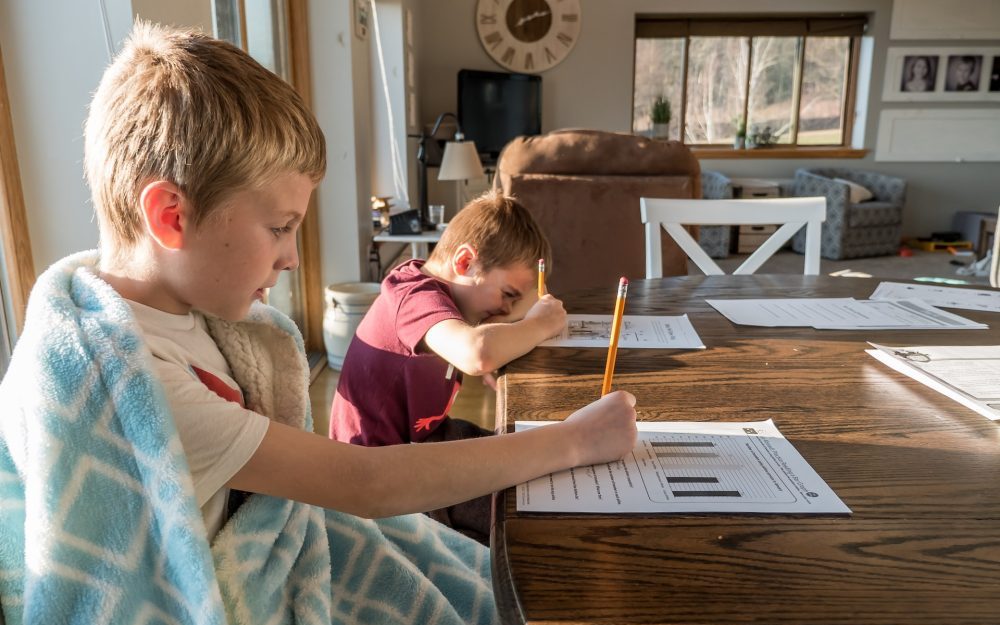
For a growing number of parents, homeschooling is the answer to the institutional barriers to the education they believe in. Beyond requirements that homeschooling parents teach a few core subjects like math and English, they are free to pick the content.  
 
American history, for example, can be all about the glory of the Founding Fathers and the prosperity of free markets, or the oppression of Native Americans and people of color and the struggle for equality. For many homeschoolers, history is taught through a Christian lens, while others follow a standard public school curriculum.  

Parents’ Rights vs. State Control 

The push to deregulate homeschooling raises difficult questions about how to balance the rights of parents to educate children as they see fit with the responsibility of the state to provide educational opportunity – and protect kids when things go wrong. While U.S. courts have stood behind parental rights, with the caveat that states have the authority to impose reasonable regulations to ensure students are educated, European countries lean the other way. To safeguard children, they have imposed much more stringent oversight of home schools.  
 
Cases of child abuse and academic neglect in home schools are a real concern, especially as the guardrails are removed. Most cases of mistreatment are discovered and reported by teachers in public schools, a protection that doesn’t help homeschooled children. Homeschool alumni at the Coalition for Responsible Home Education (CRHE) and academic researchers have documented hundreds of examples of harm to children, many leading to criminal charges, ranging from fatalities and sexual abuse to poor instruction from parents who can’t or don’t teach.  

But calls by CRHE and others for more protections don’t get much traction in the United States. In March, after Maryland lawmaker Sheila Ruth introduced a bill to create a homeschool advisory council to collect information from homeschooling parents and advise state officials, she was inundated with calls and emails. A few were so nasty and threatening that her office called the police. In a Facebook post, Ruth promised the homeschool advocates that she would let the bill die and pleaded with them to stand down. 

Virginia-based HSLDA has spearheaded the opposition to regulations in court and legislative chambers, often in collaboration with local organizations. The group helped defeat many requirements, including that families provide notification of their intent to homeschool in Illinois, that students take standardized tests in South Carolina, and that home schools submit to visits to ensure the safety of children after one starved to death in Iowa, according to an Arizona Law Review article by Elizabeth Bartholet, a Harvard Law emeritus professor.  

“There is a significant segment of homeschooled children who are at serious risk for maltreatment,” Bartholet says. “And no homeschooled children have safeguards to protect them since they are not seen by teachers. That seems deeply wrong to me.”  
 
Homeschool advocates don’t face much political opposition, at least not yet. That may soon change. Teachers’ unions, for one, have an obvious motivation to become adversarial: School districts have been losing students, and thus funding, at historic rates during the pandemic, and some of those kids are going to home schools.  
 
The National Education Association, the nation’s largest professional union, issued a resolution in 2021 essentially opposing homeschooling. It said home schools “cannot provide the student with a comprehensive education experience” and called for regulations that force them to basically duplicate public schooling at home. Other than that, NEA has been curiously silent about homeschooling and isn’t seen as much of an opponent by HSLDA. 
 
“HSLDA has been enormously influential,” says Robert Kunzman, an authority on homeschooling at Indiana University. “They have been able to mobilize a lot of legal resources and grassroots organizations to push back on regulations.” 

A Wide Spectrum of Rules

Just a handful of states, like Colorado and New York, have maintained a comprehensive set of rules, according to CRHE. These states require the teaching of a full list of subjects without dictating the actual content of courses. They also mandate the total annual hours of instruction and formal assessments like standardized tests in an effort to make home schools accountable. In New York, districts can intervene, with the threat of putting the home school on probation, if the student performs poorly. 

Most states, such as Texas and Idaho, are much more laissez-faire. They require a short list of subjects be taught but no assessments. Texas is also among a dozen states where parents don’t have to tell the school district that they are homeschooling.  
 
In half a dozen states, like Mississippi and Utah, there are no subject, time, or assessment requirements, according to CRHE. Parents are completely free to do as they wish. 

As states have eased requirements for parents, the number of homeschooled students has expanded significantly, from an estimated 850,000 in 1999 to about 1.7 million in 2016, or about 3.3{e4f787673fbda589a16c4acddca5ba6fa1cbf0bc0eb53f36e5f8309f6ee846cf} of the school-age population, according to the National Center for Educational Statistics. While experts agree that homeschooling grew quickly during the pandemic and will probably continue to do so but at a slower pace, there is no reliable national data, with some estimates that exceed 3 million students in 2021 considered to be inflated. 

Homeschooling took off in the 1960s, fueled by religion and ideology. Christian conservatives wanted to imbue their children with religious doctrine away from the temptations of public schools, and progressive anti-institutionalists sought to nurture the kind of free thinking in their offspring that rote education stifled. 

In recent years a more diverse group of families, including a notable percentage of black parents, have turned to homeschooling for more practical concerns: to escape poor performing public schools, unsafe campuses, bullying, progressive ideology, and racism. 

At the same time, public schools, aiming to retain at least a limited grip on homeschooled students, are increasingly supporting them with everything from art and music classes to athletics and online education tools. What has emerged is a hybrid model in which students toggle back and forth between home and public schools. For instance, some students start their education at home and then enter public schools in their mid-teens to take more advanced classes that parents can’t teach.  
 
Whatever the motive for homeschooling, deregulation has made it a much easier choice for parents.  
 
“The movement to reduce regulatory barriers has definitely opened up homeschooling to growth for people from all socio-economic walks of life,” says Brian Ray, co-founder of the National Home Education Research Institute and a longtime advocate. “I don’t think there’s any doubt about that.” 

A Success Story in Missouri 

In Missouri, Kim Quon had only a few rules to abide by when she decided to homeschool her two kids so they could learn about Christian faith from her point of view. In her in St. Louis County home, she had to provide 1,000 hours of instruction a year, with 600 of those hours in key subjects like math and English, and keep a written log of the work completed, according to the state’s homeschool law. 

Otherwise, Missouri, like most states, takes a mostly hands-off approach. It doesn’t test the students and has no way of knowing if parents are doing a bad job of teaching them unless a report of educational neglect is filed, in which case the Department of Social Services may investigate. A spokesperson declined to say whether educational neglect is a concern in Missouri and said the department doesn’t release data on the number of complaints it receives. 

“There have been claims of educational neglect, but the vast majority are not legit,” Quon says. “Most homeschool parents take their job very seriously.” 

Quon certainly did. After finishing the required classes, her children had a lot of time left in the day to explore their own interests, which is one of the biggest benefits of homeschooling. The enormous workload of educating two children was made easier for Quon by relying on curricula created by homeschool groups, online resources, and community college for advanced math classes. 

“I’m not a college graduate,” Quon says. “So you don’t have to be a brainy person to homeschool your kids because there are so many resources and people available to help.” 
 
Homeschooling prepared both of her children for college. They went to the University of Missouri in St. Louis and did well, like most homeschoolers who seek post-secondary degrees. Her son studied anthropology and works at the Heritage Museum in St. Charles County. Her daughter earned a degree in biology and works at the St. Louis Aquarium. 

After homeschooling her kids, Quon was recruited by Families for Home Education, a statewide advocacy group, to direct its operation in the greater St. Louis region. While FHE has 1,200 members, its network of 10,000 to 20,000 supporters has been quickly mobilized to bombard lawmakers with calls and emails to defeat attempts to place additional rules on homeschooling that were first established in Missouri in the mid-1980s. There are grassroots groups like FHE in every state. 

FHE has successfully opposed proposals to make students start school at age five rather than the current seven. The group is now struggling to change a Missouri scholarship program that would force homeschooled students to take standardized tests and allow a review of their educational records, which FHE considers an unnecessary government intrusion. 
 

“Lawmakers pretty much leave us alone,” Quon says. “I would like to think it’s because of our presence as a lobbyist, and that we built those relationships over the years.”

Educational Neglect 

Quon’s dedication is common among homeschoolers, but what’s less understood is the extent of educational neglect since most states don’t collect assessment results. From his perch at Indiana University, Robert Kunzman has an anecdotal view of the problem after spending hundreds of hours with dozens of families in many states observing their homeschooling practices.  

The professor has been impressed with some home instruction – highly structured and directed lessons as well as those allowing exploration and creativity – but he has also witnessed serious problems: families who focus almost exclusively on a small subset of subjects they are comfortable with; a teenager who still counts on his fingers to do math; a mom who doesn’t know how to help her daughter sound out words, creating much frustration between them; and a parent who considers an episode of Little House on the Prairie to be a history lesson.  

“These are the kinds of things that are certainly going on,” says Kunzman, who wrote a book on Christian homeschooling. “It’s a small percentage of homeschoolers, perhaps less than a quarter, in which children’s educational interests are being profoundly neglected.” 

Homeschool advocates tend to dismiss this concern. While a small number of parents may not do a good job educating their children, Quon says, the same can be said of teachers in public schools, where many students graduate with skills far behind what’s expected of a 12th grader, or drop out. 

Brian Ray, the influential researcher embraced by the homeschool movement, also says he isn’t too worried about educational neglect. A Ph.D. in science education and the father of eight homeschooled children, Ray points his and other studies purporting to show that homeschoolers significantly outperform public school students on standardized tests. In his view, the research supports his position that government oversight of homeschooling is unnecessary.  

But Kunzman and other scholars have criticized the papers as advocacy masquerading as research. They point out that some of the studies have been designed and funded by HSLDA and say that they have methodological limitations. 

In Ray’s 2010 national study of achievement on standardized tests, for instance, homeschoolers who volunteered scored in the 86th percentile, well above the 50th percentile national mean. 

But the homeschoolers in this study, and in others like it, were an unrepresentative and privileged group: almost entirely white (97{e4f787673fbda589a16c4acddca5ba6fa1cbf0bc0eb53f36e5f8309f6ee846cf}) and raised by married parents (98{e4f787673fbda589a16c4acddca5ba6fa1cbf0bc0eb53f36e5f8309f6ee846cf}) with college degrees (64{e4f787673fbda589a16c4acddca5ba6fa1cbf0bc0eb53f36e5f8309f6ee846cf}). These traits are strongly associated with high academic achievement and don’t reflect the much more diverse and less educated population of public school parents.  

Ray waves off this issue, saying these traits don’t have much of an impact on home school performance, but researchers still question his results.
 
“The idea that homeschool students do better on standardized tests has been repeated so many times by advocates and the media that legislators take it at face value and it is now accepted common knowledge,” says Kunzman, who cofounded the International Center for Home Education Research to support non-biased studies. 

Calls for Regulation 

CRHE and Harvard’s Bartholet don’t buy Ray’s findings. They are advocating for what they consider reasonable protections for children. They say parents need to tell districts if they are homeschooling each year; they should cover the same subjects as public schools; and students should be assessed to make sure they are making progress. 

“We get messages every week from people around the country who know a homeschool child who is being educationally neglected,” says Chelsea McCracken, CRHE’s research director. “Where there is no annual notification, subject requirements, and assessments, there is no way for states to ensure that children’s rights are protected.”  

Kunzman sees such reforms as politically untenable. He advocates for a more modest approach: Require homeschoolers to take a basic skills test in literacy and numeracy. That’s it. The proposal might face less resistance since parents generally share a common belief that, despite religious and political differences, every child should learn how to read and do some math. Kunzman’s test would identify the students who are not learning so they could get some help. 

Ray thinks all the proposals for regulation are nonsense. Just look at public schools. “For many decades public schools have had regulations including certified teachers and testing,” Ray says. “And we have children who are illiterate and can’t do basic math. All the testing schools do every year doesn’t guarantee anything.” 

But Ray and Kunzman do agree on one thing – homeschooling will continue to expand.  

Commentary: Maine home-school growth strong and persisting

Commentary: Maine home-school growth strong and persisting

House schooling has developed slowly but surely in Maine above the previous 20 many years. However, as in quite a few other states, Maine’s property faculty participation doubled in the course of the pandemic. And while participation receded a minor last spring, household schooling is still powerful. In Maine, about 5.6{e4f787673fbda589a16c4acddca5ba6fa1cbf0bc0eb53f36e5f8309f6ee846cf} of all K-12 faculty-aged learners are at present residence-schooled, compared to about 9{e4f787673fbda589a16c4acddca5ba6fa1cbf0bc0eb53f36e5f8309f6ee846cf} who attend private colleges. Countrywide estimates show that around 6{e4f787673fbda589a16c4acddca5ba6fa1cbf0bc0eb53f36e5f8309f6ee846cf} of learners are at this time house education, up from fewer than 3{e4f787673fbda589a16c4acddca5ba6fa1cbf0bc0eb53f36e5f8309f6ee846cf} just a couple of years in the past.

Clara Bolduc teaches her children Rosie, second from remaining, Nelson and Audrey all through a science lesson last December at their Auburn household. Bolduc residence-educational institutions her 4 kids. That day’s lesson associated dissecting a sheep’s mind. (Bolduc’s other son, Simon, is not pictured.)  Daryn Slover/Sun Journal, File

Even though knowledge for this 12 months are not nonetheless obtainable, the most new Maine residence-school participation facts show a 100{e4f787673fbda589a16c4acddca5ba6fa1cbf0bc0eb53f36e5f8309f6ee846cf} maximize in the course of the 1st 12 months of the pandemic and a 10{e4f787673fbda589a16c4acddca5ba6fa1cbf0bc0eb53f36e5f8309f6ee846cf} lessen past 12 months. Even though a 10{e4f787673fbda589a16c4acddca5ba6fa1cbf0bc0eb53f36e5f8309f6ee846cf} reduce sounds considerable, comparing it to the 100{e4f787673fbda589a16c4acddca5ba6fa1cbf0bc0eb53f36e5f8309f6ee846cf} raise in 2021 puts it in viewpoint. Most of the pupils who commenced house schooling throughout the pandemic are nevertheless homeschooling.

For instance, in 2000, nearly 4,400 property-schooled learners ended up documented by districts across the condition. By 2015, that range had grown to 5,400. By 2019, that number had slowly and gradually but steadily increased to 6,700. However, in the 2020-21 dwelling college report from the Maine Section of Schooling, that variety experienced doubled to just over 12,000 pupils. During the 2021-22 university year, that variety dropped a bit to just shy of 10,900.

Developments by district vary across the condition. Some districts follow the point out-amount craze with doubled growth adopted by slight declines. For illustration, Portland reported 72 house-schooled learners in 2020, which grew to 174 in 2021 and dropped marginally to 134 in 2022. Lesser districts followed comparable tendencies with illustrations like Saco, where by 36 house-schooled college students increased to 79 in 2021 and decreased to 65 in 2022. Nevertheless, other districts expert enhanced participation during the peak of the pandemic but no decrease in the subsequent calendar year. For case in point, Auburn experienced 101 residence-schooled students in 2020 171 in 2021, and 182 in 2022. Similarly, Bangor noted 140 house-schooled college students in 2020 223 in 2021, and 266 in 2022.

When Maines’ homeschool report does not include information on university student race, gender or socioeconomic position, there is national evidence that as a lot more family members pick out to property-university, their good reasons for executing so are diversifying. Likewise, there is evidence that additional minority people are deciding on to maintain their youngsters dwelling. For illustration, a modern report by Aaron Hirsch of the Center for Reinventing Public Schooling finds that the speediest expanding groups within the household schooling movement are African-American and Hispanic households.

Maine dwelling-university participation is concentrated in early grades. This trend reflects broader national trends. For case in point, there are just more than 1,000 7-yr-previous household-schooled college students 991 are 8 a long time previous, 980 are 9 years outdated and the numbers proceed to decline as pupils age.

Maine involves mom and dad to notify their regional district of their intent to homeschool. Maine does not have to have a dad or mum to have any academic track record. However, they ought to retain documents relevant to each child’s schooling. Also, homeschooled students should participate in an once-a-year academic evaluation that can include things like a portfolio assessment by a Maine-licensed instructor.

Even before the pandemic, household education was well-liked for all types of family members. Pupil-athletes and people with a lot less traditional schedules benefit the flexibility that residence education presents. Learners with exclusive and gifted needs can uncover a custom-made match for their desires in a house school surroundings. Bullied pupils might locate security at residence. In fact, protection is the prime reason mom and dad select for picking to house-faculty their youngster and is an specifically commonplace selection for minority people searching for a culturally affirming instruction.

Property schooling has also turn out to be more and more possible as many parents do the job remotely and can supervise their pupils at residence. Similarly, the elevated online savvy of most people due to the fact of the pandemic lets property-schooled pupils to connect pretty much and collaborate with other learners. Dwelling college family members can also organize by way of formal or informal on the internet and in-individual co-ops. Dual enrollment and hybrid programs have also expanded, making it possible for more students to work from dwelling. Some enterprising public college districts even welcome house-schooled college students to get some of their courses, like sports activities.

Some speculate that countrywide household-school quantities will return to usual this 12 months, assuming that dwelling-college growth was driven by people temporarily switching for the reason that of the pandemic. Even so, Maine’s household-school information do not appear to help this principle and could foretell rising nationwide trends.


Use the type under to reset your password. When you’ve got submitted your account electronic mail, we will ship an e-mail with a reset code.

« Past

Can homeschooling help solve our educational woes?

Can homeschooling help solve our educational woes?

Homeschooling, at the time a area of interest alternative for countercultural teams, has turn into additional mainstream. Knowledge from the Census Bureau suggest that amongst 1999 and 2012 the charge of homeschooling rose quickly. The rate plateaued at all over 3 percent next 2012, until finally the COVID-19 pandemic prompted an additional quick improve. In the slide of 2021, a lot more than 11 p.c of family members of college-age little ones documented some sort of homeschooling.

While some residence instruction preparations had been short term responses to the pandemic, homeschooling remains on the rise. And so do questions about its viability. The attractiveness of homeschooling between Catholics and other Christian faith groups, particularly, comes with a communal obligation to assess its strengths and weaknesses in mild of the frequent fantastic.

Homeschooling gives an array of advantages, which includes enhanced adaptability and increased involvement of moms and dads in their children’s education. It can advantage pupils fewer at simplicity in a “normal” school surroundings. Moms and dads might also choose to homeschool because of to worries about general public wellness and elevated gun violence. Nonetheless, there are troubles with homeschooling as effectively, primarily when moms and dads are not equipped to be educators or homeschool for the improper good reasons.

Conversations about homeschooling are deeply own for me, as a veteran of the early days of up to date homeschooling. In the early 1980s, there have been number of homeschooling systems catering to distinctive educational wants or ideological choices. We experienced no protocols for getting our function evaluated by faculty districts. When we achieved other people today our age and explained that we “went to faculty at property,” this ordinarily translated in their minds to “didn’t go to faculty at all.”

My mom, a pioneer in the homeschooling movement with a graduate degree in training from Columbia College, was properly geared up to instruct us. In retrospect, I skipped out on some things, such as a additional demanding scientific education, superior engagement with up to date literature, and entry to considerably less whitewashed historical sources. Even with this, I entered college or university far better prepared than most of my peers.

Advertisement

Despite the fact that I skipped out on crew athletics and a more diverse peer team, I was fortunate to are living on a horse ranch that was also a retreat center and summer season camp. There, I produced shut good friends dealt with cliques and bullying seasoned hopeless crushes rebelled against authority and stayed up late owning impassioned conversations about God, appreciate, lifestyle, and loss of life. In shorter, I had the requisite adolescence experience.

Today, my siblings and I have graduate levels and fantastic positions in fulfilling careers where we can work out our skills meaningfully. It may possibly be tempting to use our working experience to silence critics. But the real truth is that homeschooling labored for us since of a assortment of circumstances, not all replicable. And even when homeschooling does “work” in a pragmatic perception, moral queries stay.

To start with, homeschooling is only possible with a particular diploma of privilege. It feels strange to appear back on my childhood and acknowledge privilege, taking into consideration how inadequate we had been, but it is legitimate. My parents experienced the privilege to decide on to fall out of typical culture, the assistance of cherished types, and the schooling to know which alternatives were being offered to them. And when we have been inadequate in dollars, we have been abundant in absolutely free time.

For homeschooling to do the job, at least one particular father or mother desires to have time to commit to educating their kids. In today’s financial state, which favors the loaded though burdening the doing work class, many people discover this difficult. Furthermore, some young children have unique requirements that mother and father may perhaps not offer with as efficiently as skilled gurus. Considerations these kinds of as access to means are also relevant.

Second, not every single grownup is outfitted to train their small children proficiently. I was lucky to have a expert educator as a mum or dad. Other dad and mom may perhaps not have the aptitude, inclination, or teaching to teach very well. Teaching is a skill. It is not a thing just anyone can do. Our community school method exists so that every baby can, in idea, have the same prospects, in its place of remaining held again by conditions. We transform to gurus when we require someone to take care of a car, give lawful advice, or accomplish medical procedures. So why do we believe that just any one can educate?

Ad

3rd, while concerns about socialization might be exaggerated, the alacrity with which numerous homeschooling mothers and fathers brush off these thoughts is irresponsible. Yes, some family members have access to social actions and balanced peer teams, but not all homeschooling households do. And if a child’s only social interactions occur within an ideological bubble, this does not equip them to maneuver in a earth in which they will experience persons who dwell and believe otherwise than they do.

For the reason that productive homeschooling hinges on financial, social, and geographic privileges, it is unhelpful to say “oh, just homeschool” to mom and dad experiencing troubles with their children’s schooling. Property education and learning may be a good possibility for some family members, but it is not a viable option to correcting problems in college techniques. Greater acceptability of homeschooling should really not mean we cease to commit in our public universities and instructors. Shielding the rights of homeschooling people, in acceptable parameters, should never be at the cost of the typical great.

Homeschooling trends among the conservative spiritual groups prompt added worries. Even though homeschooling lifestyle is no for a longer period dominated by spiritual conservatives, it is however complicated, in some parts, to come across homeschooling groups that are secular or progressive. Acquiring an reasonably priced curriculum that is not slanted intensely toward correct-wing spiritual beliefs can also be difficult.

Why would this be a problem for Catholic family members? Wouldn’t Catholic mother and father want to incorporate spiritual formation in their children’s schooling?

The challenge is that the form of Christianity represented in these plans and textbooks is a certain iteration in which patriarchal gender roles are celebrated, science is replaced with pseudoscience, and history is slanted in favor of white European colonialism. Mothers and fathers who adhere to the church’s teachings on social justice, and who do not look at science and religion as incompatible, could have issue finding a curriculum that aligns with these values.

Some conservative Christian instructional formats discourage dialogue and variety. They may also produce a lifestyle of indifference to the wants of the much larger community—as we saw throughout the COVID-19 pandemic when several conservative Christian groups have been at the forefront of opposing public overall health actions.

Now, with the phenomenon of individuals “deconstructing” from dangerous spiritual traditions, homeschooling is coming beneath new scrutiny. Lots of younger Christians are realizing we were fed white supremacist and misogynistic ideologies. Many others are speaking out about the harm carried out to them in an surroundings in which emotional, bodily, and sexual abuses could prosper, as children have less selections for reporting or escape.

Following the mass taking pictures at Robb Elementary University in Uvalde, Texas, the Federalist posted a piece arguing that faculty shootings “make a somber case for homeschooling.” This was not the initial time conservatives responded to gun violence in this way. I have found homeschooling mothers answer to faculty shootings by boasting about how they really do not need to stress about gun violence, even implying that they are more invested in their children’s basic safety than other mother and father.  

If an adult’s response to mass murders in general public universities is indifference since it does not have an effect on them, this helps make a somber scenario indeed—against homeschooling.

As a homeschooling guardian myself, I acknowledge that I can only make this preference simply because of a particular degree of privilege and that this is not the only viable instructional paradigm. It is only a person that works properly for us proper now. As other mothers and fathers weigh various schooling choices for their little ones, I persuade them not to rule out homeschooling. But they must know that it will come with its very own set of issues, that it is not the ideal alternate for just about every little one or household, and that it can under no circumstances fill the societal need that is achieved by a strong and effectively-funded public academic procedure.


Impression: Unsplash/Jessica Lewis

Meet the Homeschooling Tutor to the Kids of Celebrities

Meet the Homeschooling Tutor to the Kids of Celebrities

For Tiffany Sorya, the path to getting a homeschooling tutor to superstars and other just one-percenters was barely intuitive. For the duration of her to start with decades at Portland Condition College she admits that she was a “horrible” student. But by the time she graduated she had turned issues about and was earning these types of superior grades that buddies would request, “How did you go from failing O(rganic) Chemistry to acing O Chem?,” she remembers.

For enjoyment, she started off tutoring friends who needed enable. But when the now 36-year-previous, very first-technology Cambodian American with Instagram-chic fashion (she has more than 306,000 followers) graduated and moved to Los Angeles, she turned her passion into some thing extra really serious, acquiring a job at a non-public tutoring company.


Tiffany Sorya has a community of non-public instructors about the globe.

Courtesy of Tiffany Sorya

Sorya’s educating skill merged with her social relieve and West Coastline vibe—a current, jokey IG submit demonstrates her steering a motorboat in a black, one particular-piece bathing fit with a plunging neckline: “You men, summer time is ending and I have only been on a boat ONCE”— promptly manufactured her a strike with Hollywood clientele hunting for a way to teach their youngsters, who normally didn’t live, or in some conditions, get the job done, in the confines of the regular, 7-hour university day.

A lot more From City & Country

Two of her 1st learners ended up Kylie and Kendall Jenner. “Obviously, again then (in the early 2010’s) they weren’t who are they are now. But they were nonetheless doing the job. They would have a picture shoot that would begin at 7 a.m., so they could not go to school right until two in the afternoon that working day. Or they would have an function at 4 in the afternoon and they would have to start out glam at one particular. So they desired school to be from 9 to noon that working day.” By phrase of mouth, Sorya’s consumer foundation distribute to incorporate Eire Baldwin two of Dr. Dre’s youngsters, Genuinely and Truice Youthful and customers of the boy band In Serious Everyday living.

This focus on a personalized homeschool routine became the basis for Novel Schooling Team, which Sorya founded in 2014. The enterprise, which has offices in L.A., New York and Andorra (the minuscule state squeezed in among Spain and France in which numerous European soccer stars—and Shakira—have vacation households), and tutors stationed all over the globe, offers equally homeschooling and enrichment tutoring alternatives (reading tutoring for four months, for instance) for people “who want standard university but on their timetable,” Sorya says. And, of course, who can pony up an typical payment of between $5,000 and $7,000 a month. That expense handles amongst 3 and five hrs of tutoring a day, five times a 7 days. Sorya says the shortened school day is possible when pupils are doing the job 1-on-1 with tutors as opposed to sitting in a classroom with upwards of 20 children.

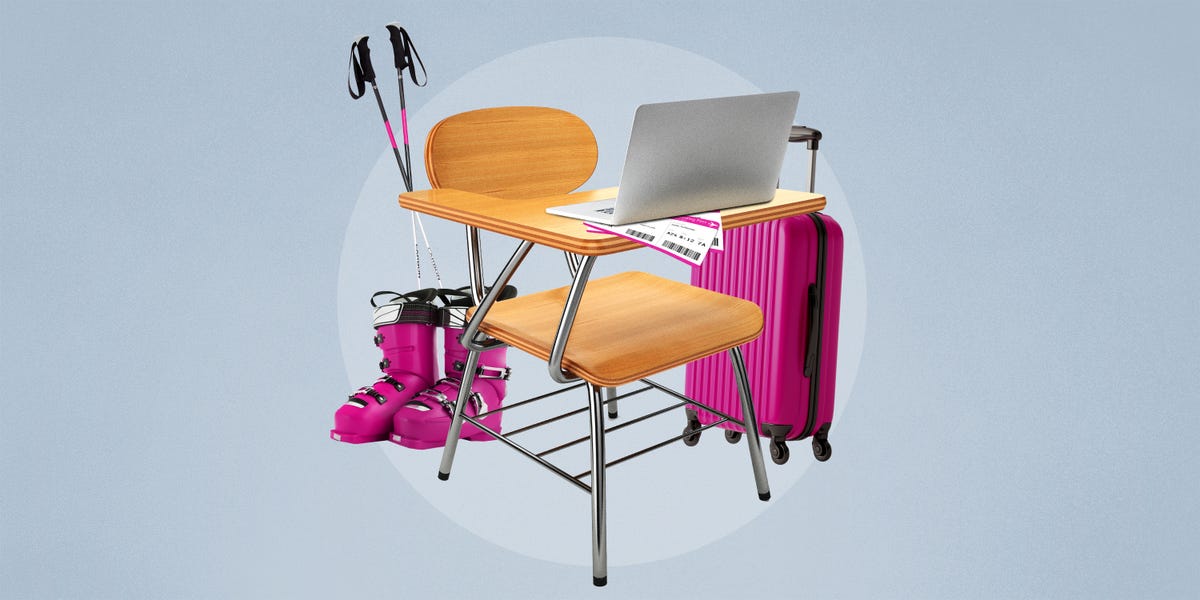
The support is best for VIP’s who both don’t want to mail their small children to a brick-and-mortar faculty for privacy explanations, or whose globe-trotting schedules make it difficult to enroll their kids in a classic on the net school with a established schedule—and time zone. In other phrases, for another person like 1 of Sorya’s purchasers who is a “really substantial-level CEO who owns a general public corporation and is consistently touring all all-around the globe,” Sorya states. (She cannot elaborate even more due to iron-clad non-disclosure agreements.) “The loved ones has houses in Yellowstone and Cabo and they decided to invest Xmas in Cabo and summer time in Yellowstone. So they desired faculty to be in the early morning so that in the afternoon the kids can go swimming with the Young children Club in Cabo. Or they want to do school in the early morning in January through March, like from 8 a.m. to 11. Then their kids ski for the rest of the working day.”

In some scenarios, it is not skiing, but brand-setting up extracurriculars that a university student wants to have far more no cost time for. When Sorya was performing with the Jenners, Trying to keep Up With the Kardashians was on the air and Kendall had a modeling job. The sisters have been also starting up to contemplate a outfits line. “They have been definitely concentrated undertaking work,” Sorya suggests. “They had been business people in their possess right, trying to determine out what that detail was, and (homeschooling) definitely authorized them to do that.

“If you’re in normal university and you communicate about, ‘Oh, I seriously like make-up. What could I do with that?,’ the instructor will in all probability say, ‘That’s good. Preserve it for right after course.’ But when you’re in homeschool and you hear that, there is time to discuss about all those issues. You say, ‘Oh, that is a fantastic plan. Convey to me more.’ So it just encourages a distinctive variety of thinking. I assume homeschooling is building a extra unbiased thinker. And that is what parents really like to see. And that’s what colleges like to see.”

The blueprint for Novel’s curriculum is provided by Laurel Springs Faculty, an on the web university primarily based in Pennsylvania. But Sorya and her team then evolve the curriculum for every college student, dependent on their requires and pursuits. For illustration, there was the kid—a member of the Saudi Royal Family—who was in seventh quality “and actually having difficulties with math. They just could not get him to do nearly anything,” Sorya states. (Virtually 40 percent of Novel’s small business is with Saudi Royal families or families related to the Royal Relatives.)

“But he was obsessed with soccer. We have a curriculum designer on our group. So she developed a seventh-quality math application by way of soccer for him. It was math but it was primarily based all close to soccer. It was generally like geometry through soccer—soccer balls, the angle with which you kick the ball—there are angles just about everywhere when it comes to soccer. And also creating phrase challenges that involve soccer enjoying. We do this a great deal basically. It’s all personalized.”

Certainly, Novel markets itself as a soup-to-nuts concierge assistance for dad and mom who never have time, or the wish, to offer with the each day logistics of managing their kids’ schooling. Tutors assigned to people “take treatment of almost everything from top to base,” Sorya suggests. “That’s what these families want. They never have time to be answering e-mails from the college, conversing to the academics, striving to come to a decision what courses are finest. We do all of that.”

“All of that” consists of aiding learners put together for an Ivy League college education—another de facto expectation from the styles of mother and father Sorya operates with. “The dad and mom will be like, ‘This is what the trajectory is for their upcoming,’” Sorya claims. “We want to check out to get them into Yale.


“We require to expend a month in Montreal and then December in St. Barts and we’re likely to be in London for February.”


“So we’re dependable for, quantity one particular, creating positive their grades are on point. Quantity two, creating absolutely sure they are getting all the courses they’re meant to be. Range a few, generating certain they’re performing a good amount of money of extracurricular actions. The mothers and fathers actually count on us to make sure they’re acquiring a whole educational practical experience when ‘we have to have to devote just one thirty day period in Montreal and then we’re likely to be in St. Barts for December and we’re heading to be in London for February.’”

And what if the scholar does not essentially in good shape the future Yale university student mould? What if they’re just not that into college?

“There’s usually a way to wave in what a child is intrigued in into an educational curricular,” Sorya suggests. “The amount one instance I can give you—and this goes for Saudi little ones, this goes for American young children, it’s all throughout the board: Gaming is so large. So we get this all the time. ‘My son is 13 and all he wishes to do is enjoy online video games’ So we say, ‘O.K., Very well, this is a point, video clip online games. It’s not just mindlessly taking part in. The little ones are active in some way. So what can we convert this into? Can we convert a desire for graphic design services into a passion? Can we transform this into a coding passion? Can we change this into an illustration hobby?’

“It’s critical that the young ones, the learners, generally come to feel that they’re deciding on what they do to some stage. When learners have a minor bit of handle over what they are studying they react a whole lot much better. So they’ll say, ‘O.K., I really like video online games so I want to do coding.’ The second they truly study what coding is, they do not want to do coding any more. It is a bunch of slash marks and letters and figures that you kind into a issue to make, you know, just one arm shift. So at the time they see what that is, they are disinterested.


These mothers and fathers do not have time to remedy e-mails from a school, or speak to the instructors. We do all of that.”


“What they essentially like about the movie video game is the storytelling. So then what we can do with that is perform on their creating capabilities and their storytelling and their voice when it comes to the papers that they generate. So currently being in a position to switch their passions into a thing that is going to be applicable is also anything the dad and mom are seriously delighted about and seeking for.”

Have moms and dads ever produced requests that she merely just can’t provide on?

“We have definitely tried out our absolute very best to do almost everything,” Sorya states. “Though we’ve gotten a couple film director requests. Like, ‘I want to direct movies when I’m more mature.’ So we have finished these packages with them. We’ve accomplished film applications on how to storyboard anything, how to shoot a little something. But often it is a small extraordinary, if they’re indicating, ‘I want to make a total movie!’ We’re like, We just can’t do that’. And so at times those people asks are a bit much. But we test and translate it into something that’s heading to be usable for them, in which they can at the very least exercise it. And then the mom and dad like it.”

Home-schooling group nears approval for Shelton location

Home-schooling group nears approval for Shelton location

SHELTON — Dozens of region little ones that are presently currently being home schooled may perhaps shortly have a long term facility to simply call house, at least during college several hours. 

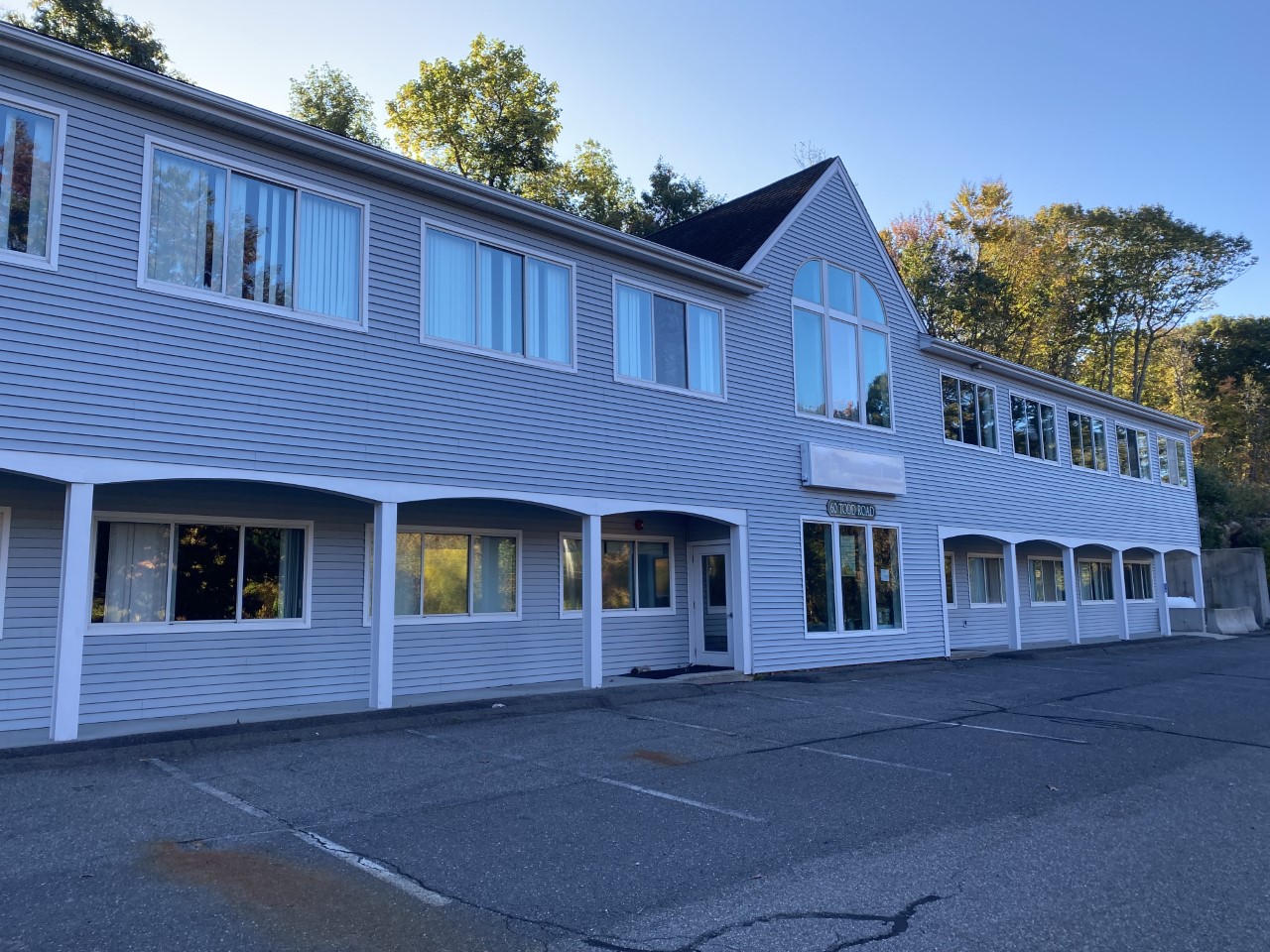
The Scheduling and Zoning Fee, at its conference Wednesday, questioned for drafting of a favorable resolution for development of a Prepared Growth District at 60 Todd Road. The commission strategies to vote on the resolution upcoming 7 days. 

The move, if approved, would permit From Seeds to Sprouts, a non-public schooling affiliation that in accordance to its website provides a “curriculum … centered on a common Christian worldview” to these who are “disillusioned” with faculties but absence the implies to property school their small children, to open up in the existing building on web-site.

This constructing experienced been aspect of a larger PDD ask for from J&L Organization, LLC, that incorporated 86 apartments on a presently vacant part of the residence stated as 74 Todd Road. 

From Seeds to Sprouts previous year had spots in Southbury and Seymour. The group declared its strategies to go its Seymour locale to Todd Street in Shelton, but the complexity of the options — with the condominium element — delayed any remaining motion.