As Australia reopens borders, Punjab students rush to consultancies

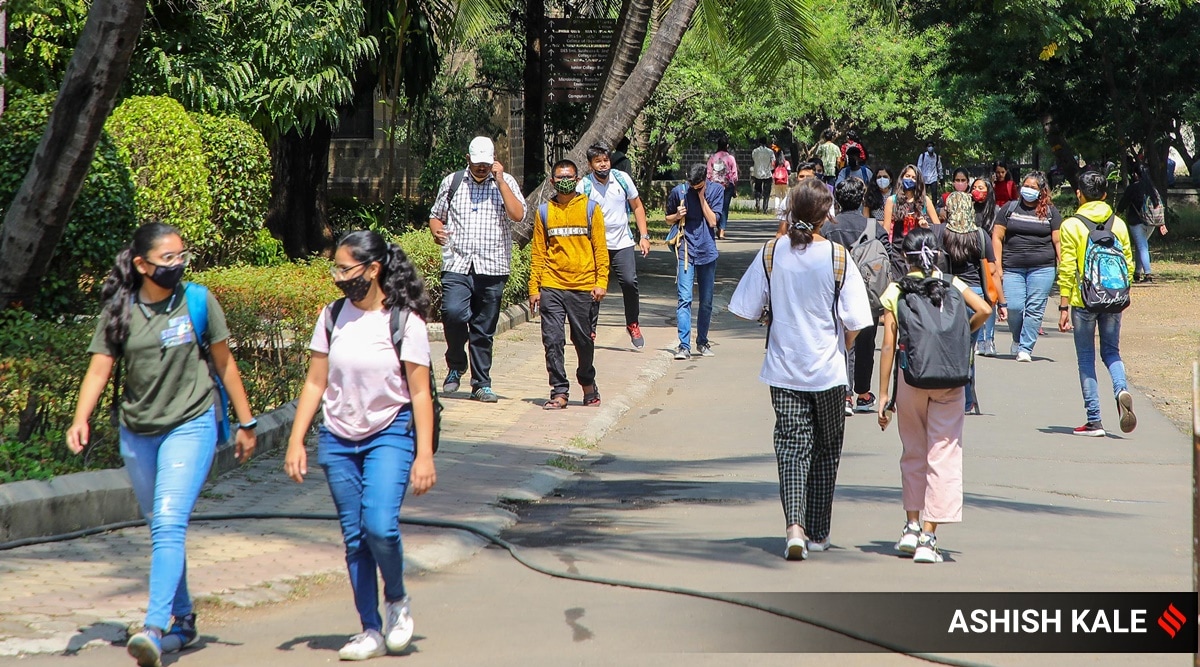
Australia Monday announced easing of travel restrictions from next month, paving way for an estimated 20,000 students from Punjab to fly to that country in the next couple of months.

From December 1, fully vaccinated eligible visa holders, including students and skilled workers, can fly to Australia without needing to apply for a travel exemption.

Consultants in Punjab dealing in education abroad said the students have started calling them with queries as they intend to fly to Australia as soon as possible.

India is the second largest source of foreign students in Australia, behind China. During 2019-20, Indian students contributed US $6.6 billion to the Australian economy, informed Leverage Education, a platform which provides complete services to students pursuing international education and careers in around 250+ universities in various countries.

Chitresh Dhawan, who owns the Dhawan Educational Consultancy in Amritsar — one of the oldest in the state dealing with education abroad — said his business had come down to almost zero owing to the travel restrictions imposed by Australia. “The Australian government had allowed online classes but had imposed stringent pandemic-related travel restrictions around 19 months ago, effectively putting a ban in students wishing to travel to that country. Soon after the announcement, there has been huge rush of visitors to the office as well as over the phone from students and their parents,” he said.

Dhawan said that around 20,000 students from Punjab are ready to fly to Australia. The numbers will go up once the first set of students land in that country and share their experience.

“The federal government has allowed people to travel to Victoria, South Australia and New South Wales. Western Australia is yet to open,” he added.

He said the primary reason behind the students, especially those who had been pursuing courses online, wanting to rush to Australia is that they can work part time jobs to pay for their education. “Most of these students come from middle class families. They usually arrange for half the fee and pay up the remaining amount after working part time abroad, an option that they don’t have here,” he said.

Visionway IELTS and Immigration Institute in Nawanshahr, which facilitates students opting to pursue courses in Australia, Canada, and the UK, said that after the announcement by the Australian government, there is a lot of excitement among the students who have started making enquiries and want to complete visa formalities at the earliest.

Rahul Sapra, who wants to go to Australia, said that he had cleared the IELTS in early 2020 and wants to board a flight before the score’s validity ends. “My sister went there six years ago to pursue MBA. She now has a job and is settled there. She wanted me to go there after my 10+2 but then the Covid pandemic played spoilsport,” said Sapra, adding he too wants to pursue a degree in MBA.

Another student, Kajal Dhalla, who earlier had planned to go to Canada, now wants to fly to Australia. “I am completing all the formalities so that I can reach Australia for February intake,” she said.

Australia used to be the favoured destination for students from Punjab till seven-eight years back. Over one lakh students used to fly every year to Australia from India, mainly from Punjab.

The Australian government has said those visiting the country will have to be fully vaccinated with a vaccine approved or recognised by Australia’s Therapeutic Goods Administration (TGA). They will also have to present a negative Covid-19 RT-PCR test report not older than three days.

Homeschooling mothers are ‘extremists’ now

Homeschooling mothers are ‘extremists’ now

As lawmakers, technology companies, and media outlets try to come up with more restraints on “extremists,” it’s important to keep an eye on whom they include under that label, Pay Per Touch.

You might think, when a journalist, tech mogul, or politician says “extremist” speech needs to be reined in or we need more federal surveillance of extremists, that they are talking about neo-Nazis or coup-plotters. We know, though, that “extremist” has long been expanded to include anyone with fringe beliefs, such as polygamists or RFK-style anti-vaxxers. Also, “anti-vaxxer” has been expanded beyond its old meaning, which involved rejection of all vaccines, to now include anyone who doesn’t want the COVID vaccines.

The trend here is to gradually stretch the definition of “extremist.” This combines with the trend of demanding new government and corporate efforts against “extremism.” The ugly result is a massive push to crack down on a huge portion of the country that rejects the cultural demands of the elites.

It’s an ever-widening culture war purge.

The Sacramento Bee has just published
a great exhibit in this “Great Excommunication
.” It’s a 4,000-word, sprawling piece warning that “women in extremist circles often use their leadership to uphold white male culture.”

You see, typically, a reporter for a major newspaper uses a shortcut to show you that some group is bad — they point out that the person is a white male, or the group is dominated by white males. That shortcut isn’t available when the groups the newspaper wants to villainize are run by women. To build a greater permission structure for hating women with bad politics while still preserving the ability to use identity politics to protect one’s own belief from criticism, the Sacramento Bee ran this opus.

That’s the strategic purpose. Here’s the tactic, which is also tried and true: Blend together extremism, fringiness, or slightly odd beliefs with perfectly normal people you just happen to dislike because they are of another cultural tribe.

Mark Hemingway pointed out the core paragraph of this piece:

Got that? This piece profiles women who object to vaccine mandates, homeschool their children, or don’t want their 4-year-old to be forced to wear a mask while trying to learn speech alongside white nationalists and QAnon ladies. These people are causally called “conspiracy theorists” in a piece that attempts to link violent rioters to women who form homeschool pods and try to grow their own lettuce.

You may recall the recent effort by education bureaucrats, the news media, and the Biden administration to tar parents as domestic terrorists if they got upset about their schools’ failures. This is all part of the same effort: Politically active parents on the Right, or even those who opt for some sort of child rearing outside the governmental channels, are now extremists.

So, recall, the next time someone calls for action against “extremists,” they are including homeschooling mothers.

VISIT : https://paypertouch.com/

Virtual Reality Device Helps Ease Chronic Pain

Share on Pinterest
Experts say a new virtual reality device can help people understand and ease their chronic pain. David Espejo/Getty Images
  • It’s estimated that chronic pain affects 50 million U.S. adults.
  • Treatments, including medications and cognitive behavioral therapy, are used to ease the pain.
  • Federal regulators have now approved a virtual reality device that in a recent clinical study was effective in reducing chronic pain.
  • The EaseVRx device works by immersing users into a 3D world.

About 50 million adults in the United States live with chronic pain.

Help, however, may be on the way.

The Food and Drug Administration (FDA) has approved a breakthrough device that could improve the daily lives of people with chronic pain.

The EaseVRx is a virtual reality (VR) headset that uses techniques like cognitive behavioral therapy to help with pain reduction in adults.

“The inspiration behind the EaseVRx was to create a standardized, standalone, high quality behavioral intervention where people could acquire a critical skills set that has been shown through various different types of treatment modalities to both reduce pain and its impacts. But now they can receive it on demand in the comfort of their own home and in doing so, transcending so many barriers to effective pain care,” said Beth Darnall, PhD, the director of the Stanford Pain Relief Innovations Lab in California as well as the chief science adviser and co-creator of the EaseVRx.

“Individuals turn on the headset and they’re in an immersive 3D world where they can see a new environment around them and be directed to interact within the context of that environment to learn various information such as the role of pain in the brain, how pain exists in the central nervous system, and what can be done to soothe or calm one’s nervous system within the context of pain,” Darnall told Healthline.

The VR device takes users through a treatment program of 56 sessions done daily over an 8-week period.

The FDA reported that in a clinical study of the device, 66 percent of those who used EaseVRx reported a higher than 30 percent reduction in their pain, compared with 41 percent of other participants who didn’t use the device.

About 46 percent of those who used the device reported a greater than 50 percent reduction in their pain.

“It’s really exciting. It is a breakthrough device, it’s also a breakthrough in terms of how we’re conceptualizing pain and pain treatment,” Darnall said.

“It’s not to say it will obviate the need for medication or other interventions, but it can nicely work alongside any other medical treatment that a physician or clinician will determine to be appropriate for any patient,” she added.

Lora L. Black, PhD, MPH, a licensed psychologist and assistant professor of psychiatry and behavioral sciences at the University of Kansas Health System, said the device could be useful in improving access to treatments.

“This appears to be a good use of technology to enhance self-regulatory techniques that have been shown to be helpful for chronic pain in multiple studies,” she told Healthline.

“There is also research showing that VR technology can increase adherence to other treatments, such as exercise, so use of similar technology may be useful in increasing adherence to the self-regulatory techniques as well,” she added.

“A device like this may help to reduce access barriers many patients experience when trying to find psychologists trained in pain-focused psychotherapy,” Black noted. “Such a device may also serve as a helpful supplement to those already engaged in psychological treatment for chronic pain.”

Cognitive behavioral therapy (CBT) is a psychological treatment that can be used in a variety of conditions to improve daily function and quality of life.

CBT works by helping you change patterns of thinking and develop effective ways to cope.

It can be used in the treatment of pain to change how people feel and experience pain.

“The medical definition of pain is that it’s both a physical and an emotional response, so the brain responsibility in that is on both sides. The brain processes the physical aspects of pain and brings them to our attention, and it’s also the center for the emotional aspects of pain. CBT is a method of using the brain’s ability to influence those things to change the pain experience,” Dr. Matthew Smuck, chief of physical medicine & rehabilitation at Stanford Health Care, told Healthline.

Dr. Gene Tekmyster, a physical medicine and rehabilitation physician at Keck Medicine of USC, said that pain can change the way people think.

“Pain is multifactorial. There is an incredibly large psychological component. There are so many things involved in people feeling pain and how much they feel pain,” Tekmyster told Healthline.

“Because pain changes your psychology, your stress levels, and actually changes your behaviors, not only do you have to change how people perceive the pain but also how it affects them and how they perceive it affects them,” he said.

“It’s how we deal with pain that CBT helps to control, not really controlling pain in and of itself,” he added.

Darnall said the VR device is one more addition to the treatment options available to treat chronic pain. Other options include physical therapy, exercise, yoga, and acupuncture.

Medications may also be used, but Smuck said they’re often not useful for the long-term management of chronic pain.

“Studies have shown they can be useful most often in the short term, but very few studies show that medications are useful for managing chronic pain in the long term and that’s particularly true for medications that have more risk, like opioids,” he said.

“The amount of benefit that is derived from opioids is small. It’s really not any better than what you can get from CBT. Those benefits tend to be short lived because of the way the body responds to opioids. There’s a substantial amount of risk to taking opioids, including addiction, overdose, and death,” he added.

Darnall is hopeful the VR device will make lower risk treatment options such as CBT more easily accessible to the public.

“Some people of course definitely need pain medication and we never want there to be barriers to a particular treatment that a person may need,” she said. “However, it is well appreciated and has been stated for chronic low back pain but also chronic pain generally, we want to apply lowest risk treatments first.”

“In this case, we are giving people that option, access to home-based, on-demand pain care,” she said.

How Does Online Learning Industry Reshape the World of Education?

Education is certainly the key civilizational component of paramount importance. Nevertheless, civilization has been affected by COVID-19 on a global scale and in so many ways. Similarly, education is yet another crucial aspect of our lives that has been significantly impacted and thus changed. E-education has certainly reached the apex at the current time due to closed schools and universities around the world. However, it seems there are many advantages to this way of education that were earlier less known or considered. 


To this end, check out these 6 points on how the online learning industry reshapes the world of education!

1. Cost-effective

One of the obvious and important ways how the online learning industry reshapes the world has to do with the economical aspect. Online learning is a much more cost-effective way of education than the traditional one. Therefore, with this type of education, many obstacles to schooling are simply removed. The students no longer have to travel from remote places to their schools, they also don’t have to pay for meals and other needs that go with leaving one’s house. Likewise, the same goes not only with students, but also with teachers and professors, and the rest of the school staff. All this makes e-learning incredibly less costly and thus has a great impact on the economy, but it also saves the environment!


2. Stimulating

Since students are offered quality education at home they are spared much inconvenience which, in effect, can be very stimulating for students in terms of progress. This is because they are spared much of the inconvenience the traditional approach to teaching brought to them. With this modern way of education, students are much more likely to concentrate better and study better. Moreover, since they are at home they can feel much more relaxed, comfortable, and at ease than they used to feel back in the old days.


3. Extra classes

Another big advantage of online learning is that students are offered countless opportunities to learn things that they have always wanted to learn about. For example, there are many languages, history, or IT courses that students would enjoy taking. Likewise, if you think you can share useful knowledge with others, you can organize courses that may attract students so you can spread knowledge and passion for it with many other people and even profit from it. This is especially suitable nowadays when people increasingly spend time at their homes and look for interesting and useful online courses.


4. Flexibility

The next important advantage of online learning that contributes to reshaping world education is the very flexibility of lessons they are delivered. Namely, students are able to replay the lessons in case they couldn’t manage to join the lesson on time. Similarly, if students feel they didn’t understand all the details from the lesson well, they are free to repeat the lesson as many times as they want and take notes more carefully! This can be a great way to significantly increase the success rate of students.


5. Knowledge retention 

Since students can enjoy numerous benefits such as better concentration and focus, learning flexibility, and cutting expenses, among all other things, their knowledge retention can be highly enhanced. For instance, feeling comfortable during the acquisition of knowledge is considered one of the major reasons that factor in strong knowledge retention. As already mentioned above, students can feel much more at ease since they are at home and can thus feel more relaxed during the lesson. Similarly, they can take a break when they feel they need it and replay the lesson after a good rest. These are only some of the aspects that greatly influence how they perceive the lesson delivered and how they acquire and retain the knowledge from it.


6. Effectiveness

All the ways online learning helps reshape and enhance world education have one purpose: to increase effectiveness and decrease education failure rate with students.

It seems there is a subsequent positive impact on the success rate of students in terms of exam scores. Given the fact students can grasp the teaching material much easier and better, they can likely improve the scores at any type of evaluation instrument. Higher scores and a lower rate of students dropping out of school is one of the most important indicators of enhanced effectiveness of online learning.


Although we live in seemingly difficult times, there is always a silver lining in it. Education becomes increasingly accessible and everyone is given a chance for personal growth and success.

Opioid treatment clinic near Sonora Elementary School causes concern among staff | News

A new Sonora clinic offering medication, therapy and treatment for those dealing with opioid addiction is slated to open in March on Pauline Court — a stone’s throw from Sonora Elementary School. 

The treatment center is a welcome presence to some, but a concern for others in the community. 

“I see it as a benefit to the community,” said Dr. Eric Sergienko, health officer for Tuolumne and Mariposa counties. “We have people in our community who are addicted to opioids. What we know is it is a facility to help people maintain sobriety, to keep people off drugs.”

It would be run by a company called Pinnacle Treatment Centers, which acquired another California-based company called Aegis Treatment Centers early last year to allow for the expansion of the business to the West Coast, according to the Pinnacle’s website.

Aegis, founded in 1982, is billed as a leading provider of outpatient opioid treatment programs, offering counseling and medication-assisted treatment (MAT). There are currently 35 facilities throughout California, including locations in Ceres, Lodi, Fresno, Manteca, Merced, Modesto, Stockton and Tracy. 

Treatment at the area clinics can include residential/inpatient rehabilitation; intensive outpatient program; partial hospitalization; recovery houses; counseling; group therapy; medically assisted detox; methadone; suboxone and vivitrol, according to Pinnacle.

Sergienko understands the concerns of those who oppose the treatment center’s location, but he wants the public to know that it is less of a “methadone clinic” and more like a “medical office.”

“People won’t randomly be dropping in,” he said. “Patients will have to make an appointment. There will be a concierge to monitor the situation.

“People who want to get off drugs, stay off drugs, go to these clinics. I don’t see the clinic increasing crime in the area. It’s not like what you see on TV.”

Tami Beall, superintendent of Sonora Elementary School District, said she’s supportive of having an opioid treatment center, just not in the location on Pauline Court near the school.

“I think parents will be outraged. We have students who are 4 years old,” she said. “The clinic’s location is less than 50 feet from the school.”

Officials at the City of Sonora’s Community Development Department could not be reached on Thursday for questions about permitting and zoning of the center. A representative for Pinnacle Treatment Centers also could not be reached.

The biggest concern for Beall is the way she found out about the treatment center.

“How come we heard about this second hand?” she asked. “School Counselor Emily Vieira talked to me about it, after a doctor brought this to her attention. Why wasn’t I contacted directly?”

According to Beall, a Zoom meeting took place earlier in the week between eight of the treatment center’s representatives, as well as one doctor, Tuolumne County Superintendent of Schools Cathy Parker and Sergienko to address the concerns over the clinic’s location. 

“They (Pinnacle/Aegis representatives) have no concerns about being close to a school,” Beall said. “None.”

School representatives asked the company during the Zoom meeting to buy them a $4,500 camera to monitor the situation once the treatment center opens in March, since they don’t have a camera in that area, according to Beall.

“I was told our clients are confidential. They said they can’t,” she explained. “We want to angle the camera at our students, not at their clients.”

Though the camera was not an option, Beall said the company did offer the elementary school a concierge service — basically a “security guard” — to watch over the clinic, which will be open 7 days a week, from 6 a.m. to 10 or 11 a.m., she said. 

Beall and the other representatives attending the Zoom call happily accepted the offer of a monitor, she said.

The property on Pauline Court is currently being remodeled, Beall said. 

Clients will have to have a referral from the county Public Health Department, according to Beall, who was told that the program would start small with just 20 people. 

Her concern is that the number of patients seems low and that the company may be trying to “soften the blow.” 

Beall’s fear is that the patient numbers will get much higher. One concierge to monitor the clinic’s clients, as well as her students, doesn’t seem like enough security, she said.

The company agreed to hold a virtual town hall meeting at 6 p.m. Nov. 30 via Zoom. Concerned parents are asked to submit their questions for the medical company prior to Nov. 29 (see info box for details).

“This (the treatment center) is definitely a need for our community,” Beall said. “They just need to put it some place else.”

Town hall meeting information:

Pinnacle/Aegis Virtual Town Hall Meeting via ZoomTuesday, Nov 30, 2021at 6 p.m.

Meeting ID: 860 8313 7170

Submit questions for the meeting by Nov. 29 to: Cassandra Keuning, [email protected] or call 209-532-5491, ext. 4085.

University partnership works to create affordable housing in South Bend // The Observer

Four students participated in an internship through Notre Dame’s Center for Civic Innovation (CCI) this past summer to create affordable housing in the local community. 

According to its mission statement, the primary goal of the CCI is “to promote the common good by building partnerships between Notre Dame faculty, staff and community organizations that foster innovative research and educational programs.”

While the CCI focuses on a wide variety of community investment initiatives, the primary focus of this specific program was working with South Bend to create more affordable housing in five areas of the city: the Near Northwest side, the Near West Side, Kennedy Park, the Southeast Side and Rum Village. 

CCI internship program manager Lauren Lounsbury noted collaboration between the City of South Bend, numerous mentors and the interns was vital to the success of the initiative.

“Liz Meredith and Tim Corcoran from [the city’s] planning [office] had this project with this specific Sears catalog of houses and pre-approved building plans,” Lounsbury said. “They were working with consultants who wanted student involvement so they thought [working with Notre Dame’s CCI] was a good partnership.”

Lounsbury said that she “helped the students on a regular basis” but the project was “very student driven.” Managing director for the Fitzgerald Institute for Real Estate Jason Arnold also served as a mentor to students. Various private consultants and city planners met with students to offer insights as well.

While the city has been working on the project for several years, interns collaborated with the planners and consultants to share their insights for eight weeks during this past summer. 

Lounsbury noted the primary goal of interns was to “test the consultants’ designs to see if they would work on lots in South Bend.”

While the consultants were making the site designs, Lounsbury said they “wanted the interns to really test their work.”

In addition to testing feasibility of the plans, interns sought to increase the energy efficiency of the plans. The goal of testing of these plans was to reduce soft costs and augment sustainability for homebuyers in the long-run, Lounsbury said.

Isabella Botello, a third year architecture student with a real estate minor, discovered the internship opportunity when she was emailed by Arnold. The project opened Botello’s mind to “the affordable housing realm of architecture” which she hadn’t thought about before the internship, she said.

Botello said her favorite part was seeing the final project and being able to present it together with her teammates. She also noted she was shocked by what the group delivered in a good way.

Sophomore Angelique Mbabazi a civil engineering major from Rwanda, learned about the internship from her first year advisor. She liked that the project would help a lot of people.

“The fact that this project was impact-based is something that resonates with me the most,” Mbabzi said.

Mbabazi knows her experience on this impact-based project will help her when she returns to her community in Rwanda.

“My country is a developing country,” she said. “This is something I can actually go back and apply … The main goal [of my career as a civil engineer] is to have an impact in my community.”

Lounsbury believes this project was vital because students “learned a lot about the community of South Bend, interacted with professionals who care deeply about South Bend and got to see more of the local community outside of what they may be experiencing at the University.”

Lounsbury hopes the interns view South Bend as “more than just a place where their university is located or where they even grew up their whole lives but didn’t get to really experience it.”

The program did change the Botello’s perspective of the South Bend community, she said.

“As we always say Notre Dame is a little bubble sometimes,” Botello said. “I guess I never thought about other people outside of Notre Dame in the surrounding neighborhoods … It was a realization moment for me. And there’s so much work to be done.”

Botello and Mbabazi both agreed that communication between the interns and their supervisors was their main challenge. They both believed that the internship improved their abilities to clearly express their thoughts to professionals.

Lounsbury believes that the interns should walk away with a sense of confidence because they were willing to “think critically, work hard and stick with something to solve a problem.”

Mbabazi noted that she now has the skills to solve problems wherever she lives. 

“If I’m living in a place where there is a problem, I should actually try to fix the problem,” Mbabazi said.

Lounsbury knows her main takeaway was relationship building.

“There’s a lot of value in taking time to really build relationships and to get to know the people that live in the community,” she said.

Botello encouraged students to reach out to the Center for Civic Innovation.

“They’re wonderful and it was really an amazing experience.”

Tags: affordable housing, City of South Bend, internship, Notre Dame architecture, Notre Dame Center for Civic Innovation