The pandemic forced many of us to move into hybrid, technology-mediated teaching, and as we continue our voyage into such spaces, one thing that we in higher ed should remember is that many students have long been quite good at navigating hybrid environments. Really, it’s about time formal education finally catches up.
In his landmark 2003 book What Video Games Have to Teach Us About Learning and Literacy James Paul Gee detailed the ways video games do a better job of facilitating literacy learning than education institutions. Almost 20 years later, his analysis has become incredibly relevant. It would seem that the move toward more hybrid learning environments should have captivated a student demographic primed by video games. But instead, students—many of whom are video-game players—have often hated the virtual learning environments of their universities. Somewhat ironically, the video-game industry is experiencing a resurgence. Prophetically, Gee wrote, “The theories of learning one would infer from looking at schools today comport very poorly with the theory of learning in good video games.”
Now is the perfect time to revisit the principles of why video games are so good at teaching and learning in ways most virtual classes don’t seem to be. Below is a summary of some of those principles.
Storying content. Gee discussed meaning as being situated in specific contexts. Knowledge, in other words, only becomes meaningful in certain situations. For instance, I might know the nutritional content of eggs, but that doesn’t mean I know how to scramble them or even prepare a nutritious breakfast. In video games, the concepts and skills a player learns have specific uses in particular moments. Those situated meanings require players to recognize the patterns that indicate how to best apply their newly acquired knowledge. Typically, situated meanings are created via stories. Within those stories, players assume an identity that motivates them to make use of whatever the video game is teaching them.
Applying newly learned skills and knowledge. Video games make frequent use of interest-based interaction with knowledge, promoting self-directed mastery. Very rarely do video games ask players to passively listen to and absorb information—instead, they deliver information in usable chunks. At each stage, players practice applying their new learning, first to familiar situations and progressively to novel situations, facilitating transfer.
Providing just-in-time feedback.Players typically receive information at the time they need it. Say a player in a particular game is threatened by an oncoming storm. Right at that moment, the game teaches the player how to construct shelter. Other video games might rely on social interactions, often facilitated through popular apps like Discord or GameFAQs. This approach encourages collaboration, allowing players to actively seek information from others when they require it most.
Encouraging risk. Of course, the consequences of failing in a video game are much lower than failing an expensive college class that could perhaps even influence one’s career. The low-stakes challenges of video games empower players to try new strategies and discover novel approaches to problem solving.
Rewarding failure. When players take risks and fail, they still learn. On a metacognitive level, players realize a gap in ability or knowledge that might motivate them to persist. On a pragmatic level, they learn not only what doesn’t work but also what might work with modification, the foundation of self-regulation.
These principles remind educators that the virtual wheel does not need to be reinvented. We don’t have to be tech savants to understand what grabs students’ attention and inspires them. We don’t even have to use video games or gamify classrooms. Below are some practical translations of the above principles that can work in our classrooms right now, even without Zoom wizardry.
Frame content with culturally relevant themes. If meaning is situated in specific contexts, then one way we can engage students is to consider the stories that matter to them. We can do this by activating prior knowledge, such as personal experience, or asking students to share stories of their potential relationships with the course content. For example, an economics professor introducing the topic of monopolies might ask students to consider how they would shop for items if they wanted to boycott Amazon. Good video games invite the players to also shape the story. Zoom can encourage collaborative story shaping (i.e., learning) through hybrid or online groups. The economics professor could set the narrative stage: let’s boycott Amazon. In groups, students could design a plan for only consuming from markets not influenced by Amazon. As they realize the difficulty of effectively doing so, the professor can explicitly illustrate the principles of monopolies.
Create moments for students to use newly learned skills and knowledge. Active learning has long been a trend, but it isn’t always understood. To be clear, active learning should not replace direct instruction, which, of course, is effective. Certainly, video games have moments when the action pauses and information is directly communicated to the player. But it’s combining the two types of learning together—explicit instruction alongside opportunities for application—that create the strongest learning environments. Experience does not need to be taken literally. Fiction, a simulation of reality, can also be an experience. By broadening the concept of “experience,” virtual environments can expand notions of active learning. For instance, students might role-play imagined experiences. Simulating or role-playing experiences immerse students in the task by motivating them to learn the means to succeed at the task.
Provide brief checkpoints. Students usually have to complete an entire assignment before receiving any kind of formal feedback. If assignments are broken down into tasks, the way they are in video games’ War and Peace–length epic quests, then instructors can make quick observations of what students are doing, such as through polls. Based on what the instructor sees, they can adapt subsequent class activities. This not only helps educate the students, but it also saves time for the instructor, who then doesn’t have to provide detailed feedback on each student’s final major assignment. Assessment checkpoints can also be social, potentially enhancing student agency. Just as players flock to Discord for help, students could engage each other in some social space. These spaces can be structured—a Padlet with guidelines and examples for students—or open-ended hangouts. Peer review can both save time and be more dynamic in virtual environments.
Require reflection. When students begin to take social control over assessment, they become more reflective about their own learning. Reflection doesn’t always happen on its own, however. It must be structured as part of the experience. The low-stakes and learn-from-failure approach to video games is one way to encourage such reflection by offering multiple attempts accompanied by instructor or peer feedback. One suggestion for translating that approach to classrooms comes from the Stanford Life Design Lab. In it, students generate hypotheses about newly encountered knowledge, and then they test their hypotheses in the attempt to rethink problems and solutions.
Stay active. There are many ways to incorporate active discovery, but these strategies must again be guided by explicit instruction about how to reflect on and learn from the risks and failures. The flipped classroom is a good model for pairing explicit instruction with virtual experience. Instructors can deliver much of the direct instruction via video or the college’s LMS. Then students can spend the freed-up time in hybrid breakout groups trying to solve a relevant problem.
Technology itself cannot improve or damage learning. It’s our use of it that matters. There are indeed bad video games, and by bad, I mean games that people did not play. There are also many good ones, and what we need are good course designs so that people want to play and learn from them, too.
A tiny school district in California is setting up a separate in-person instructional program for its unvaccinated students, courting a showdown with the biggest state in the country and a tussle over the legal limits of how schools can respond to the COVID-19 crisis.
The Alpine Union school district’s plan, the first of its kind in the country, is designed to save its unvaccinated students from losing face-to-face instruction when the state’s K-12 vaccine mandate—also the only one of its kind in the nation—goes into effect, for some grades as early as July.
In this small K-8 district, in the foothills east of San Diego, where “choice” is a rallying cry that dominates the COVID vaccine debate, district leaders estimate that 40 percent or more of the 1,500 students aren’t inoculated against the virus.
“I’m not opposed to vaccines. I got the vaccine and the booster, too,” said Alpine’s superintendent, Rich Newman. “But I feel I should represent my community, and overwhelmingly, they’re believers in choice. I don’t want some students falling through the cracks because of the state’s vaccine mandate.”
Alpine’s dilemma reflects a question district leaders across the country are facing, said Dan Domenech, the executive director of AASA, the School Superintendents’ Association: What kind of education should they provide for children whose parents won’t get them vaccinated?
California is the only state so far to add COVID-19 inoculations to the longstanding list of other vaccinations required for in-person school attendance, such as measles, mumps and rubella. The mandate will take effect in phases, when federal officials grant full approval for the vaccine’s use in each age group. Currently, COVID vaccines are fully approved only for those 16 and older. Younger children can receive them under an emergency-use authorization.
Once California’s requirement kicks in, families of unvaccinated students—other than those with state-approved exemptions—will have three choices: private school, home schooling, or “independent study,” a learn-from-home option offered by the state.
The predicament Alpine faces is likely to arise nationwide. Louisiana announced this week that it will require the COVID vaccine for school attendance. Five districts in California already require it. And at least a dozen districts around the country require the vaccine for some students, typically student-athletes.
Some districts have conducted short-lived experiments aimed at serving both masked and unmasked students by teaching them in separate rooms, but they quickly abandoned those practices. No district has yet tried a separate program for unvaccinated students.
In-person program for unvaccinated students could violate law
The California governor’s office signaled that any district that sets up separate in-person instruction for unvaccinated students would run afoul of its orders.
“If you do in-person instruction, you need to abide by the vaccine mandate,” said Alex Stack, a spokesman for Gov. Gavin Newsom.
County health departments will be tasked with enforcing the vaccine mandate, Stack said. Legal experts said the state also has the authority to seek a court order to shut down school programs that violate state law.
“I don’t think California will allow a school district to create a separate program for unvaccinated students. If it violates state law, a judge is going to shut that down,” said James Hodge, a professor of law at Arizona State University and director of its Center for Public Health Law.
Courts have upheld challenges to vaccine mandates in higher education, and last weekend marked a key ruling for such requirements in K-12. On Dec. 5, the U.S. 9th Circuit Court of Appeals upheld San Diego Unified school district’s vaccine requirement. Hodge said that would buttress other California districts that enact such rules.
Parents drove creation of new program
Alpine’s planned “choice academy” is drawing both applause and condemnation locally. The district’s Facebook page became a hotbed of disagreement when Newman, the superintendent, posted a letter announcing the academy on Nov. 22. He returned to work after Thanksgiving to find voicemails accusing him of being a Nazi and a segregationist.
But many parents and district staff members are cheering the academy. They commend the district for respecting all viewpoints in this predominantly conservative community and trying to ensure unvaccinated students get a quality education.
“I’m grateful we have a superintendent who wants to work alongside us parents instead of against us,” said Jalissa Hukee, whose two children have all their required vaccines except COVID. “Without the academy, I’d pull my kids out and home-school.”
Hukee is one of a group of parents helping Newman design the program. This fall, after Newsom announced the coming vaccine mandate, Newman invited their ideas. The parents gathered around a friend’s kitchen table and brainstormed an early outline.
There is still a lot to figure out. The district is working with its teachers’ and classified employees’ unions on how to staff the programs, and what safety protocols will be required. They don’t yet know whether they’ll mix the age groups, one-room-schoolhouse style, or divvy children up into grade bands. They have to find ways to preserve the district’s vaunted engineering and dual-language programs, and how to meet the needs of special education students in the new, separate setting.
Home schooling isn’t an option for some working parents
And they’re still looking for a good location: parents have eagerly offered living rooms and garages, but Newman is leaning toward keeping students together in a larger space, such as a community center or office building. But even an unfinished plan is finding a hero’s welcome among some parents.
“Thank God for the academy, because we can’t home-school,” said Jessica Dombroski, whose four children attend Alpine schools while she runs a dog-grooming business and her husband works as a paramedic. She and her children are unvaccinated, and she’s been scrambling to create a home-school pod with other families. Instead, she’ll opt for the choice academy.
Beacon Grayson has vaccinated her two daughters against COVID, and is eager for the state vaccine mandate to go into effect. But she’s happy the district is working to provide an alternative for parents who have not vaccinated their children.
“The district is doing what it can to straddle the divide between parents like me and parents who are ‘no vaccine,’” she said. “It’s caught in a really tough situation.”
Nearly 90 percent of Alpine’s staff is vaccinated for COVID; the rest undergo weekly testing. Yvette Maier, the district’s director of human resources, said many teachers have expressed an interest in teaching in the new academy, especially those who are unvaccinated. The district aims to iron out all details of the program by June, when families begin registering for fall 2021, she said.
New program is ‘asking for a COVID outbreak’
Lauren Weinberg, a 5th grade teacher who’s in her second year in Alpine, thinks the new program is an “incredibly unsafe” option, both for students and staff members.
“Putting a bunch of unvaccinated people in one area, it’s asking for a COVID outbreak,” she said. “You won’t catch me stepping foot on that campus.”
Weinberg worries that the choice academy will enable more families to forgo vaccination. But for others, that’s precisely the point.
“Without this academy, a lot of families will be forced to get the vaccine when they don’t want to,” said Erica Lyle, the dean of students at Alpine’s Shadow Hills Elementary. “We want to let families make their own choices.”
Districts risk legal challenges if they set up such programs, however, legal experts said.
In addition to possible shutdown by the state or by county health departments, they could face lawsuits for breaching a key legal standard: their duties to protect students from foreseeable danger, and to provide a safe and healthy workplace for staff, said Meredith Karasch, senior counsel at Liebert Cassidy Whitmore, a Los Angeles-based law firm that advises school districts.
“I’d tell districts to think very carefully about the issues before putting something like this into place,” she said.
Online classes have been painful for every student around the globe, but it has been even more problematic for kindergarteners and, of course, their families and teachers.
A five-year-old sitting in front of her computer screen during class time and crying in frustration has been a daily scenario in most households and children who are enjoying the online classes and also at a loss, since they have very little to no practical knowledge at all.
The most important thing is to know if the children are in clarity or chaos.
Hassle for teachers:
It is definitely not possible for teachers to teach and give 100{e4f787673fbda589a16c4acddca5ba6fa1cbf0bc0eb53f36e5f8309f6ee846cf} knowledge during online classes. Conveying a lot of things during online classes is hard and often not possible.
Teachers and their kindergartners can watch teaching videos and discuss, but that needs focus and young students often do not care about focus.
However, kindergarten teachers can help students develop literacy skills as well as things that can only be learned once in a lifetime, such as vocabulary and background knowledge during online classes.
Kindergartners usually need a lot of movement and exploration, and these are the things that you can’t really do remotely, especially having to sit and stare at the screen.
The good thing is, young teachers use various methods to help their younger students get to know each other through distance learning.
This year and in the future when children are unable to attend schools due to the pandemic, it is important for kindergarten teachers to view their students as parents and give them their respective time to understand things.
A kindergarten teacher, Monisha Arora, says, “when such young students are made to study and understand things online, it poses greater difficulty for teachers to make them understand.”
She believes that technical issues can hamper concentration and interest in children. Students need to invest a lot of interest in understanding in online classes. Hence, teachers have to put in extra effort.
Children psychology during online kindergarten classes:
The biggest problem about missing kindergarten in person is the least emotional growth. It is impossible for them to learn to work in a group, make friends or be socially acceptable.
Children’s psychologist, Kiran Yadav says that everyone has been affected by the current pandemic but it is affecting kids even more. They are missing the playful environment which is very important for their growth.
She also believes that staying at home can badly affect their mental and physical growth equally. They become less interactive, lack of concentration, become frustrated, deal with social anxiety, low self-esteem and nervousness.
Approaches that can make online kindergarten teaching better:
But it is said that necessity is truly the mother of invention. Faced with the imperative of teaching kindergartners online, the teachers have learned, adapted, innovated and transformed the e-learning experience for KG students.
The new paradigm has now moved from chaos to clarity through various measures and reforms.
Dhwani Jaipuria, Director, SRJ Edu Services, says that kindergarten education is aimed at initiating life skills in children, such as linguistics, logistics/mathematical, spatial, bodily, musical, interpersonal, intrapersonal and naturalists, and teachers, students and parents should do that even during online classes.
She also says that active learning, student engagement, proper comprehension, peer bonding, a good learning environment and making e-learning at home interesting can solve all issues faced by such young students during online classes.
Parent’s take on online kindergarten class:
Having a parent or guardian to assist kindergarten children with online learning makes a big difference.
Children with such support are more likely to do well with remote instruction, while those without it are more likely to struggle.
Visual distance learning is a way to help families teach their children at home. Students learning at home need projects, large displays and a good sound system to record teachers’ voices and peers in the classroom.
Ankita Balkrishna Sharma, who is a mother of a kindergartner, believes it is important to keep the child engaged during the whole session.
She says the teachers help with making classes more interesting for our child and we do not encounter any difficulties when it comes to maintaining focus during classes because we as parents are equally involved and keep a check every now and then.
What schools can offer:
Schools are tasked with figuring out how to maintain a sense of normality for students and teachers are the first line of defence when it comes to implementing it.
The lessons children learn should guide them when it comes to the future of schools and work to ensure that students learn.
Today, preschool teachers have covered a lot of ground in streaming online kindergarten teaching.
The main aim has been to keep the children curious to explore fresh ideas and learn new concepts through oral lessons, activities and role-playing.
A special emphasis is also being laid on their health and physical fitness. Baby yoga sessions and workout workshops are becoming a big hit among the little ones.
Do It Yourself (DIY) online activities nurture life skills in them and help to develop their fine and gross motor skills.
Virtual groups and games have led to the resumption of peer bonding.
It is true that only kindergarten education can never be a substitute for in-person teaching, but it has acquired a lot more finesse and clarity to optimize children’s learning outcomes in today’s exceptional times.
– Vaishnavi Parashar
READ 43{e4f787673fbda589a16c4acddca5ba6fa1cbf0bc0eb53f36e5f8309f6ee846cf} teachers unhappy with online mode of teaching in pandemic: Survey
In spite of their critical position as molders of tomorrow’s leaders, Nigerian instructors are continue to grappling with quite a few difficulties, these types of as very poor spend, deplorable working situations and infrastructure, poor funding, lack of recognition and other individuals. The outbreak of COVID-19 pandemic has even more worsened the plight of teachers as many were being laid off owing to incapability of faculties to spend them.
As Nigeria joined the rest of the earth to celebrate academics, stakeholders had been unanimous in their placement that the training profession have to be repositioned to draw in young and good minds for a better culture.
Speaking on this year’s theme: “Teachers at the heart of education restoration,” attorney and schooling guide, Jacqueline Odiadi, explained the COVID-19 pandemic, no doubt, caught the sector napping, as regulators, directors, mothers and fathers and consultants, grappled with how to regulate to the “new norma.”
According to her, sophisticated nations around the world modified swiftly to the “new normal” since they have ICT infrastructure in position and experienced no problem deploying educational tools and sources essential for on the internet understanding.
“But here in Nigeria, just before the pandemic, teaching job was presently entire of worries. This noble profession, which is regarded as the instrument with which discovering is deployed and impacted, was presently strained thanks to the disconnect between modern working day realities and curriculum articles, when the methodology of training was nevertheless extremely a great deal straight lined and not a two-way means of trade involving the teacher and learner,” she stated.
Odiadi pointed out that the pandemic brought to fore the great importance of funding in the sector.
“Due to the difficult financial occasions worsened by the pandemic, there was paucity of resources to tackle the potential problem of academics and pupils in the use of the required ICT equipment and other resources for finding out to consider location.
“Both college students and instructors experienced no training on how to engage each individual other neither were they capable to fund the necessary components and instruments for education and learning to prosper,” she described.
Speaking on assistance lecturers have to have to entirely contribute to the restoration course of action, she claimed there is have to have to tackle problems confronting the sector, which are negatively impacting the educating profession.
Odiadi said schooling progress must go beyond political rhetorics, whilst coverage inconsistencies will have to be addressed from recruitment to education, infrastructure, remuneration/emoluments/entitlements, wellness, pension, general welfare, to instruction administration, funding, much better sustainability steps security and enabling environment for learning, between other individuals.
She explained instructors ought to not be regarded as magicians or expected to dwell a daily life of sacrifice for heavenly benefits.
According to her, the Federal Government will have to exhibit larger dedication to effective and excellent instruction, company delivery and transparent in their dealings with donor companies for broader impression.
“The strategies of finding out or instructing approach will have to align a lot more closely with economic advancement agenda of authorities. The value of education, teacher coaching, deficiency of understanding components, accessibility to schooling for students with specific demands and performance and good quality of education service delivery in the non-official education and learning sector must be and keep on being on the front burner of problems for thing to consider, for implementation, assessment and more progress,” she mentioned.
On helpful and promising coverage responses to assure training personnel produce their potentials, the specialist called for a great governance framework, which would serve as a knitting thread for the numerous routines of actors in the sector.
She advocated the adoption of great governance principles in the sector, to assist the process of education and learning administration, from coverage formulation to implementation, checking, analysis and assessment.
Also, Schooling Advisor, Grace Schools, Adesope Edun, agreed that the impact the pandemic had on the instructing career are numerous
He claimed it has brought to the fore the have to have for colleges to go digital, essential for government to give subventions, and have to have for universities to have contingency strategies on floor.
He said for the much-touted restoration, academics have to have help to completely lead to the procedure.
Edun said that lecturers need to be digitally skilled to be capable to have lessons both equally on line and offline, to ensure that the next time these kinds of a pandemic takes place, they would be equipped to deal with it.
“Teachers also want to have an crisis fund activated for this type of unparalleled difficulty, which should really be supplied by authorities to assure that both equally personal and public school lecturers are assisted as a result of grants to enable them equip them selves with electronic expertise.”
Education and learning administrator, Emmanuel Taiwo Akinola, on his component, stated the region ought to target on lecturers to make a sturdy basis for schooling to prosper. According to him, making sure instructors get suitable and common coaching will not only assist the sector, but also affect other sectors, as schooling supports and nourishes other pieces of the nation’s financial state.
“If this root is destroyed or not supplied the outstanding notice it warrants, the instructional program in all its entirety will collapse and for that reason improvement and progress in all the sectors of the overall economy would remain standstill.
“The value of trainer instruction in Nigeria is more re-echoed in the Countrywide Plan on Education (2014). It is explicitly mentioned in paragraph 70 of the document that, given that no education and learning process may perhaps rise above the good quality of its academics, trainer instruction shall proceed to be given big emphasis in all instructional planning and improvement,” he reported.
Akinola noted that there is an urgent want to revisit teacher instruction plan to meet up with with present reality and increase on trainer education ambitions in Nigeria. He pointed out that there is the want to increase on the top quality assurance tactics to deliver relevant recovery to education in Nigeria.
He explained it is vital to combine info and conversation technological know-how into instructor instruction programmes because it has come to be essential to train them in that route with special concentrate on its software in the classroom to boost pedagogy.
In accordance to him, it is remarkably very important to deliver significant high-quality instructors who would utilise their required information, abilities and attitudinal values to educate and establish high quality manpower expected for the socio-affordable and technological emancipation of Nigeria. He pressured that this involves correct integration of ICT into instructor education programmes.
“As teacher schooling serves as a formidable device for political steadiness, financial buoyancy, cultural integration and social reconstruction in Nigeria, ICT should be adequately integrated into trainer training programmes to be certain that great specifications are set for various processes and functions that direct to manufacturing of substantial top quality instructors for all amounts of education and learning in Nigeria,” he said.
Akinola also stressed the require to put in spot efficient and promising responses to conserve education. He highlighted the want to have proper high quality assurance coverage, enough funding of training and building efficient consciousness to all stakeholders. He included that stakeholders will have to desist from politicising education and learning and emphasise the require to integrate ICT into trainer schooling programmes with sufficient services.
A slow but significant change has been taking place in the early reading world over the past year, loosening the grip that some long-used, but unproven, instructional techniques have held over the field for decades.
Big names—like Lucy Calkins, of the Teachers College Reading and Writing Project, and author and literacy specialist Jennifer Serravallo—have recently released updates to their published materials or announced impending rewrites that change how they instruct students to decipher words.
Reading researchers say they find these industry moves encouraging. “The fact that there’s an awareness … that’s a step in the right direction,” said Claude Goldenberg, a professor emeritus at Stanford University who studies early literacy development in English-language learners.
But they also cautioned that this narrow change in materials won’t necessarily lead to large shifts in instructional practice, and that more needs to be done to support teachers of the youngest learners in developing kids’ early reading skills—especially after several years of disrupted, pandemic-era schooling.
The shifts curriculum providers are making mainly have to do with how teachers instruct students in word-level reading—that is, decoding the words on the page into spoken language.
Much of teacher training and many classroom materials adhere to the theory that children should use multiple sources of information, or cues—the letters in a word, but also the pictures on the page or the flow of the sentence—to make a prediction about what the word is.
But evidence from cognitive psychology and neuroscience research has long shown that good readers attend to the letters in the words to identify what words say. Research has demonstrated that instructing students on how to crack the code of written language is one of the most effective ways to get them reading words.
And while it’s important to teach young kids about story structure and syntax, and to have rich conversations about illustrations in picture books, children shouldn’t rely on those sources of information to guess at what the words on the page say, said Goldenberg.
“There’s a very subtle, nuanced, delicate dance in sequencing,” he said. “It’s that kind of delicate balance that I see completely missing from programs that try to do everything all at once.”
Now, some publishers are trying to make a shift in how they integrate, sequence, and attend to foundational skills instruction. But there are open questions about how these changes in materials will change practice in classrooms.
“We see ourselves at a hinge moment,” said Maryanne Wolf, the director of the Center for Dyslexia, Diverse Learners, and Social Justice at the UCLA School of Education and Information Studies, and the author of several seminal books about how the brain learns to read. “The separation of two doors on reading has been not just unfortunate, but even tragic, leaving behind children who have needed desperately a different form of instruction.”
A public conversation about reading science led to materials changes
The research motivating these changes isn’t new.
In 2000, a panel of experts was convened by the federal government to evaluate the evidence on reading instruction. One of the takeaways from the National Reading Panel’s report was that explicitly teaching about the sounds in words, and how those sounds matched up to written letters, would help children learn to read. This finding drove policy changes in the early 2000s, most notably the introduction of Reading First, a federally funded program that emphasized phonemic awareness and phonics instruction.
The program had mixed results, leading to some improvements in children’s word-reading ability, but not in their reading comprehension. In its wake, many schools and teacher education programs adopted a model called balanced literacy—aiming to balance foundational skills instruction with more focus on stories, comprehension, and developing a love of reading.
But in 2018, reporter Emily Hanford of APM Reports brought to light that in many balanced literacy classrooms, students were not receiving systematic, explicit instruction in phonics—how written letters match up to spoken sounds—and were being encouraged to use other strategies to guess at words. Without this foundational instruction, many students never figure out how to decode the printed words on the page.
Hanford’s documentaries—as well as a slew of coverage from Education Week and other outlets—ignited a firestorm of controversy, with some teachers outraged that they had never learned how to teach phonics in their teacher preparation programs, and others pushing back with a defense of their teaching methods. In the several years that followed, more states started to mandate teacher training in, and classroom attention to, foundational skills instruction in an effort to adhere to what came to be referred to as the “science of reading.”
But these word-guessing strategies are also deeply embedded in much of early reading curricula, as Education Week reporting has shown. Many programs and teacher guides encourage prompting students to rely on a story’s meaning and structure, as well as the letters on the page, to predict what words will say—a strategy known as three-cueing or MSV (for meaning, structure, and visual). And while most curricula incorporate phonics instruction, it’s often “competing for teachers’ and children’s attention and time,” said Goldenberg.
Now, some influential publishers are starting to make changes.
This summer, Serravallo released an update to part of her popular The Reading Strategies Book, revising strategies for word-level reading to emphasize decoding and abandoning techniques that encourage students to guess at words. Early this year, literacy consultants Jan Burkins and Kari Yates released a new book, Shifting the Balance, that offers “ways to bring the science of reading into the balanced literacy classroom.”
And Calkins, of the Teachers College Reading and Writing Project, has announced upcoming revisions to her popular Units of Study for Teaching Reading program. The changes, Calkins said, will incorporate more explicit instruction in phonics and remove some prompts that ask students to look to pictures or context for word identification.
I think teachers want to learn, and … I can model that it’s OK to say, ‘There were a few things I think I got wrong, and I’m learning about them.’
Lucy Calkins, director of the Teachers College Reading and Writing Project
At the same time, several more states have passed laws mandating that schools teach the “science of reading”—laws that would affect curricula and materials.
Mark Seidenberg, a cognitive scientist at the University of Wisconsin-Madison who studies reading, said the publishers’ changes are a response to these new policy priorities. But he worries that the revisions will be surface level, only shifting instruction enough to “satisfy the stipulations in those laws,” he said.
“They can’t change their materials too much, because they’ll lose their followers,” Seidenberg said. “What’s going to come out of this? Minimal changes that are enough to satisfy [these] states.”
Wiley Blevins, an educational consultant and author of several books on phonics teaching, understands the critiques, and the skepticism, that some experts are expressing about these changes: “I get the anger, because we’re talking about kids’ lives. We’re talking about their futures.” But he sees more reason for optimism, in teachers who may now have more guidance to “do better for their students.”
Lucy Calkins outlines upcoming changes to Units of Study
In some cases, this guidance for teachers is still forthcoming. Calkins’ Reading and Writing Project, a workshop-based program that publishes a reading curriculum used by about 16 percent of early elementary and special education teachers, according to data gathered by Education Week, is planning to release updated materials in summer 2022. (The timeline has been pushed back due to COVID-related production delays, Calkins said.)
The planned update reflects a shift in approach for the group. In November 2019, Calkins released a statement pushing back on those whom she described as “the phonics-centric people who are calling themselves ‘the science of reading.’” About a year later, in fall 2020, TCRWP put out a new position statement, calling for attention to phonemic awareness and phonics instruction, and emphasizing that sounding out words is the best strategy for kids to use to figure out what those words say.
“[P]oring over the work of contemporary reading researchers has led us to believe that aspects of balanced literacy need some ‘rebalancing,’” the document read.
The revised units will offer different guidance on reading “superpowers,” or reading strategies, Calkins said. Instead of being taught “picture power”—to look at the pictures to figure out words—students will be taught “slider power,” that they should “slide” over the word to blend the letter sounds together. Early units will also teach a progression of letter sounds and explicitly address how to decode short, phonetically regular words, Calkins said.
Students will still learn “picture power” later, she added, but as a comprehension strategy for understanding the meaning of the story, rather than as a strategy to identify words.
TCRWP will also release new decodable books that include sound-spelling patterns that children learn, so that students can practice applying their phonics knowledge to texts. (Studies have shown that using decodable books can encourage students to try to sound out words while they’re reading.) The group will recommend that teachers integrate these alongside their predictable books, which have repetitive sentence structures and pictures that give clues as to the words on the page. The earliest kindergarten units, which Calkins calls “pre-reading units,” still use predictable books to teach concepts of print and high-frequency words.
Though Calkins says that these changes are “not small,” she also maintains that much of reading workshop will remain the same. “There’s a trademark to our schools that are working with us. There’s a trademark tone to the classrooms. Kids collaborating deeply, passionate about books, talking all the time about their ideas about books, writing up a storm,” she said.
“I don’t think the teachers will find [these changes] jarring,” she continued. ”I think teachers want to learn, and … I can model that it’s OK to say, ‘There were a few things I think I got wrong, and I’m learning about them.’”
Goldenberg, who was one of the researchers who participated in an external review of the Units of Study in Reading published in early 2020, said that many of the lessons in the current curriculum are well done, but that they’re “sitting on a flimsy foundation.”
Layering on more attention to the foundations of reading could strengthen the program, but only if this focus is deeply and purposefully embedded, he said.
New teacher guides rethink old practices
Other authors have already released updates into the marketplace, like Burkins and Yates, who have written teacher guides on reading coaching, balanced literacy, and guided reading.
When Hanford’s work first came out, Burkins said, her colleagues in the field were on the defensive—and she and Yates, were, too.
“I’m going to own that I had defensiveness, dismissiveness, uncertainty about why some of these claims seemed outlandish or wrong,” Yates said.
While Burkins had read the work of a few cognitive psychologists in her training, much of the body of research that Hanford drew from was unfamiliar to her. “If you’re an educator, your information inputs have not been from the cognitive [research] side,” she said. Even in her doctoral program, where she completed a dissertation on phonemic awareness research, research courses were limited and she felt that she received mixed messages about evidence-based practice.
Burkins approached Yates about exploring the research together. “Jan really said, ‘Kari, we’ve got to take a deep dive into this because, look—we’ve built careers around supporting early literacy. And we have coached teachers on many of the practices that are being criticized,’” Yates said. “And so I think part of it, for us, was: We know we owe it to the people we’re trying to serve—who are not just children, they’re teachers—to figure out what’s amiss here.”
The book outlines six “shifts” in thinking for the balanced literacy classroom: rethinking how comprehension begins, committing to phonemic awareness instruction, reimagining phonics teaching, revising instruction on high-frequency words, rethinking MSV, and reconsidering which texts beginning readers should read.
The focus, Burkins and Yates said, was on making the research that has appeared in journals accessible and actionable for teachers. They also tried to highlight where practices that many teachers already use align with evidence-based best practice—like engaging students in rich read-alouds, or using text sets of books that approach one topic from different angles to build knowledge.
“When you come in with the approach of, shut all this down and start fresh, you’re going to lose teachers. Energy is our most precious resource,” said Yates. “This work is as much about the reading science as it is about the science of understanding how to support human and organizational change.”
Like Burkins and Yates, Serravallo, the author of The Reading Strategies Book, also noted the inaccessibility of paywalled journals. More recently published books, like Seidenberg’s Language at the Speed of Sight, Daniel Willingham’s The Reading Mind, and Wolf’s Reader, Come Home “make it easier for people to find the information,” she said.
Serravallo worked with several reading researchers, including Wolf, on the updates to her book. Wolf, who met Serravallo while they were recording a podcast together for Serravallo’s publisher Heinemann, said that they were able to find common ground in a shared vision of what reading instruction should ultimately do.
“She knew that my particular goal, my ultimate goal … is deep reading,” Wolf said. “Deep reading is when the brain has gone well beyond that first decoding brain, and into a place where all the parts are working automatically enough and connected to each other so that time can be allocated to critical thinking, inference, empathy, reflection. All of these are the real goals for a society.”
Strong instruction in foundational skills is just one piece, but a fundamental piece, of achieving that vision, Wolf said.
This work is as much about the reading science as it is about the science of understanding how to support human and organizational change.
Kari Yates, co-author of ‘Shifting the Balance: 6 Ways to Bring the Science of Reading into the Balanced Literacy Classroom’
Serravallo’s revision is an overhaul of chapter 3 of The Reading Strategies Book (the book is designed to help teachers work with students, but it’s not a curriculum). The chapter focuses on strategies for deciphering words. The old version starts, “In order to construct accurate meaning from a text, children need to read words correctly, integrating three sources of information: meaning, syntax, and visual.”
The new version takes an entirely different approach, explaining the different ways a child can decode a word, and noting that the goal of orthographic mapping—”gluing” the spelling and the sound together in memory, so the word can be retrieved automatically.
Gone are the recommendations that children guess at the word based on the pictures or the rest of the sentence; in their place are suggestions for helping students apply their phonics knowledge to word reading. The new version also cites different sources, from a body of research in developmental psychology and cognitive science that wasn’t referenced in the original.
“The common practice that I used, and that my colleagues used, back when I wrote that [original] chapter relied on a certain type of text that scaffolds kids’ early reading by providing a lot of exposure to high-frequency words, some decoding, and some use of meaning to decipher the words on the page,” said Serravallo.
For some children, she said, the combination was enough to get them started on a path to fluent reading. “For other kids, it is a problem,” she said.
Reading community calls for more work translating research to practice
Seidenberg said the changes in Serravallo’s book, in particular, could prove a useful resource for classroom teachers. But he worries about a framework for reading instruction that is still oriented around “strategies,” focusing on how to respond to struggle.
For example, he said: “If the kid understands that there are digraphs, and has had enough relevant practice with them, you shouldn’t have to have a backup strategy [for recognizing digraphs].”
But Sandra Maddox, a literacy specialist with the South Carolina Department of Education, who consulted Serravallo on the revisions to her book, said that the classroom context isn’t always so predictable. Some students might be able to apply the new phonics skills they learn right away; others need more repetition and targeted reminders. “It’s not enough to just say, ‘sound it out,’” said Maddox, who specializes in working with children with dyslexia.
Reading researchers, publishers, and educators alike all voiced a need for more translational work—collaborations between cognitive psychologists and educators to implement reading science in ways that are effective and practical.
Understanding reading research is one thing; applying it is another, said Yates. “Knowing how the brain learns to read does not answer the question that a kindergarten teacher [asks], in those 4,000-plus decisions they make every day, about exactly how to proceed with this group of kids in front of them,” she said.
Wolf said that her team at UCLA is “busily building bridges.” They’re working within the school of education, teaching teachers about dyslexia, while also collaborating with neurologists at the University of California San Francisco. “We are really determined to pull neuroscience and education together, for the benefit of all,” she said.
Other researchers, too, are working on local efforts: In Madison, for example, Seidenberg sat on an early literacy task force with leaders from the Madison Metropolitan school district and the University of Wisconsin-Madison School of Education, with the goal of improving student reading outcomes and closing opportunity gaps.
This kind of work is happening slowly, Wolf said.
It’s hard to know, yet, what effect these publishing changes will have
Maddox has already seen some uptake of Serravallo’s new pages among the teachers she works with. “They’re downloading them, printing them out, and adding them to their book,” she said. “What I hope it does is make teachers more aware of the strategies for decoding, and make them more aware of phonemic awareness and phonics in general.”
This knowledge is more necessary this year than ever, said Blevins, who consults with school districts. Because of educational disruptions during the pandemic, he said, teachers in older elementary grades are seeing large numbers of students with foundational skills gaps—in some cases, for the first time.
“They don’t even know where to start. [The teachers have] never heard of blending,” he said. He’s started doing sessions with 3rd, 4th, and 5th grade teachers in addition to the earlier elementary teachers he normally works with, teaching them a handful of key routines they can use and introducing them to a comprehensive phonics survey they can give kids to figure out what skills they need to focus on.
“I think that there’s a recognition that upper grade teachers need more knowledge of phonics,” said Calkins. “Third graders, the last time they had an uninterrupted year in school was kindergarten.”
But researchers say there are still barriers in schools to identifying student needs. “I do think the measurement groups have been slower to respond than some of the instructional ones,” Matthew Burns, a professor of special education in the University of Missouri’s College of Education and Human Development, said of common classroom tools used to take reading inventories, evaluating what students know and don’t know.
In a study on publisher Fountas and Pinnell’s reading inventory, Burns and his colleagues found that the results weren’t reliable: Students would receive different scores with different books that were supposedly both at their reading level. “We put too much stock in the score we get from these measures,” he said.
Fountas and Pinnell materials, which include reading curricula as well as assessment tools, use many of the word-guessing strategies that other publishers are starting to move away from. The group’s founders, Irene Fountas and Gay Su Pinnell, declined to comment for this story through their publisher, Heinemann.
However, in a Sept. 8 opinion piece for Education Week, Fountas and Pinnell distanced themselves from the term “balanced literacy,” and characterized the ongoing conversation about reading practice as the “latest chapter in the reading wars.”
“We believe this round of conflict, like the previous ones, is harmful to our profession and has real potential for confusing children as well as teachers and administrators,” they wrote.
Fountas and Pinnell’s intervention materials, Leveled Literacy Intervention, hold a large share of the market—43 percent of early elementary and special education teachers said they used LLI in a 2019 Education Week survey.
Changes to materials would better support teachers, Blevins said. But he stressed that stamping a “science of reading” approved seal on a resource and putting it in teachers’ hands doesn’t necessarily give teachers the knowledge and understanding they need to change their instruction.
“Whenever you see these shifts happening, it’s always surface knowledge,” Blevins said. “What that has boiled down to is … on social media, teachers will name a program and say, ‘Is this science of reading?’”
The overwhelming interest in reading research presents an opportunity, and a caution, Blevins said. “It is a moment that if we did it right, we could take advantage of it and help millions of kids. But we need to go deeper.”
We are not able to consider the politics out of general public educational facilities, because decisions about what to teach and what to leave out are inherently political. Social-scientific tests curricula appear to be the most political of all, since they deficiency the precision of math and merge heritage with heritage, Home Garden USA.
While frequently wedded with each other, historical past and heritage differ. Like all tribes, the folks of the United States have a shared heritage, the legends inspiring us to keep on our country. In distinction, the subject of historical past is a Western creation looking for to portray what transpired, warts and all. Heritage is Mason Weems’s myth that youthful George Washington confessed to chopping down the cherry tree simply because he couldn’t explain to a lie. Arguably, history with a bit of heritage is Washington’s evolving pain with and eventual rejection of slavery.
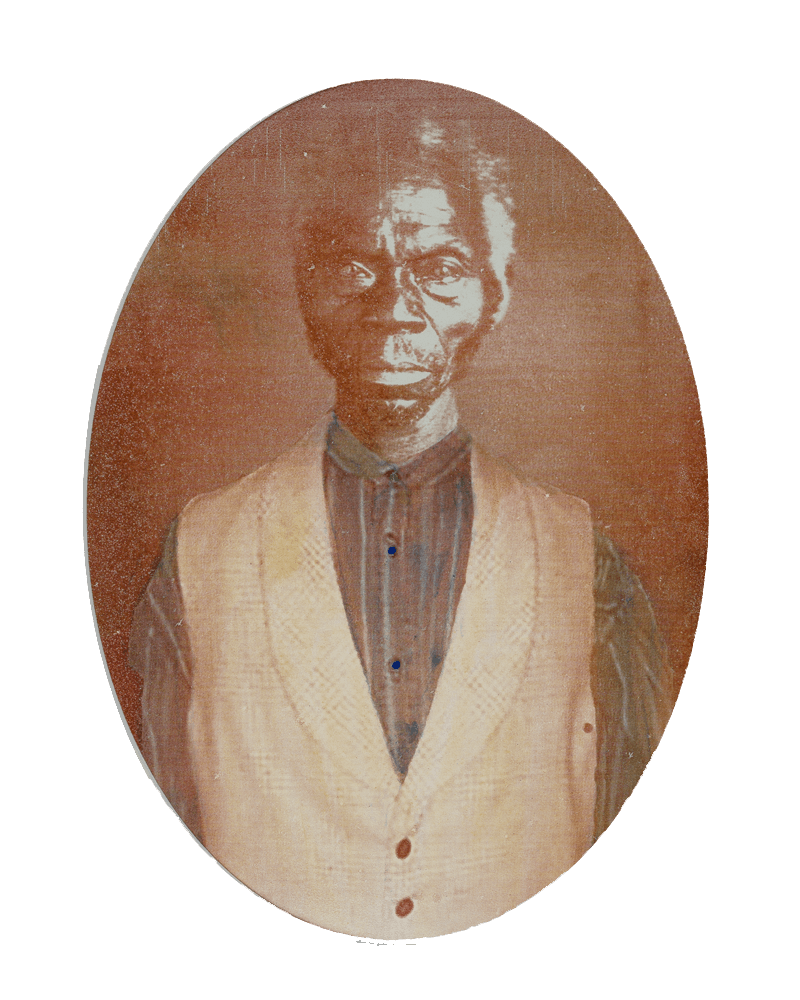
Renty
These definitions make any difference, due to the fact the United States is a multicultural democracy where by heritage influences the histories faculties train. As Jonathan Zimmerman observes in his traditional Whose America? Society Wars in the General public Colleges, in the 1920s, Italians and Norwegians fought about no matter if Christopher Columbus or Leif Eriksson discovered America. Germans burnished their American credentials by inserting the traditionally unimportant but identifiably German Molly Pitcher into school textbooks African People in america extra Crispus Attucks. Marginalized groups hence married into the American heritage taught in educational facilities.
In distinction, the early-20th-century Southern white activists promulgating the Missing Cause myths undermined both history and American heritage, generating a new Southern heritage via Southern schoolbooks whitewashing the Accomplice induce. As Zimmerman facts, the United Daughters of the Confederacy held college student-essay contests defending slavery. A person award winner portrayed slavery as “the happiest time of the negroes’ existence.” Zimmerman writes that “Confederate groups generally challenged the whole principle of objectivity in history” by insisting that their lived expertise made available exclusive insights that Northern scholars with their so-termed goal historical methods could in no way uncover.
This need to all sound acquainted today. Following struggling their individual Appomattox with the fall of the Berlin Wall, Marxists grew to become the new Confederates, supplanting scholarship with lived practical experience, tales, and now tweets. As Helen Pluckrose and James Lindsay detail in Cynical Theories: How Activist Scholarship Manufactured Every little thing about Race, Gender, and Identity—and Why This Harms Everyone, in latest a long time tutorial (and now journalistic) leftists replaced course politics with identification politics, retreating into postmodern rejection of universal truths. Accordingly, it would be a oversight in instructing about slavery to rely way too a great deal on tendentious sources these kinds of as the New York Moments’s 1619 Challenge.
Some assert that American educational institutions disregard slavery. This statement was possibly accurate—in 1970. My children, a person a significant faculty senior and the other a the latest graduate, agreed that our Arkansas community universities covered slavery and Jim Crow amongst six and eight situations in 12 grades—far much more than they covered the founding of the United States, the Constitution, or Entire world War II indeed, the latter designed an visual appeal only after, or two times, counting a Holocaust unit. My little ones also observed, however, that their schools’ procedure of slavery, like their protection of historical past in general, was superficial. As one particular of my small children set it, “They instruct you slavery is bad, but not a great deal else.” (This might characterize Arkansas standards commonly. A the latest Fordham Institute report rated them as “mediocre,” observing that, “strangely,” the subject matter of secession is not resolved in the state’s Arkansas record conventional and that “the deficiency of direct references to slavery” in that common was “notable.”) To the diploma that our regional academics lined slavery, it was primarily as a result of political history, as a vital cause of the Missouri Compromise, the Compromise of 1850, and the Civil War, suggesting that point out criteria may well bear small relation to what occurs in class. Relatedly, Jim Crow is taught mainly via a make any difference of regional curiosity, the integration of Little Rock Central. In fairness, as the Fordham Institute report will make apparent, protection of slavery and of heritage frequently lacks depth in most states, not just in the South.
So what is to be performed? You can not conquer something with almost nothing, so on the elementary level, schools may adopt the relatively distinct Main Expertise curricula, produced by E. D. Hirsch, in which knowledge builds on know-how. To a significantly bigger diploma than is real of common curricular approaches from training consultants, Core Expertise focuses much less on amorphous “skills” and more on info, which supplies the foundation for far more awareness and for interpretations. As Hirsch writes in The Universities We Have to have and Why We Do not HaveThem, psychological exploration displays that “the skill to understand a thing new is dependent on an skill to accommodate the new detail to the currently acknowledged.” The more we by now know, the simpler it is to discover new info for this reason much better curricula can help. Teacher high quality also matters. On the secondary degree, the place I do fieldwork, educators joke that each social-experiments instructor has the similar initial name—“Coach”—suggesting the require to retain the services of professional instructors, not these for whom training is a secondary priority and whose major skills is athletics. In the meantime, when educators instruct about the possessing of human beings, as in fact they ought to, they should really train inside of the context that slavery was not uniquely American but has existed in countries with every single important religious custom and on each and every inhabited continent. (Core Understanding does this.) When instructors cover slavery, they must incorporate discussions of which nations around the world finished slavery, when, and why, maybe making use of visible aids this kind of as maps to assistance convey the information.
Educators could also make the broader issue that virtually each and every region after experienced (and that some however have) slavery, but only The usa can declare the Declaration of Independence, the Structure, the reconstruction of Europe and Japan after Environment War II, and an indispensable position in defeating the twin evils of fascism and communism. It is these uniquely American contributions that must determine our nation for today’s schoolchildren and tomorrow’s citizens.





 We are not able to consider the politics out of general public educational facilities, because decisions about what to teach and what to leave out are inherently political. Social-scientific tests curricula appear to be the most political of all, since they deficiency the precision of math and merge heritage with heritage,