Metal detectors in elementary schools?

Metal detectors in elementary schools?

NEWPORT NEWS, Va. — The shooting of a first-grade teacher by a 6-year-old boy has plunged the nation into uncharted waters of school violence, with many in the Virginia shipbuilding city where it happened demanding metal detectors in every school.


School Shooting Newport News

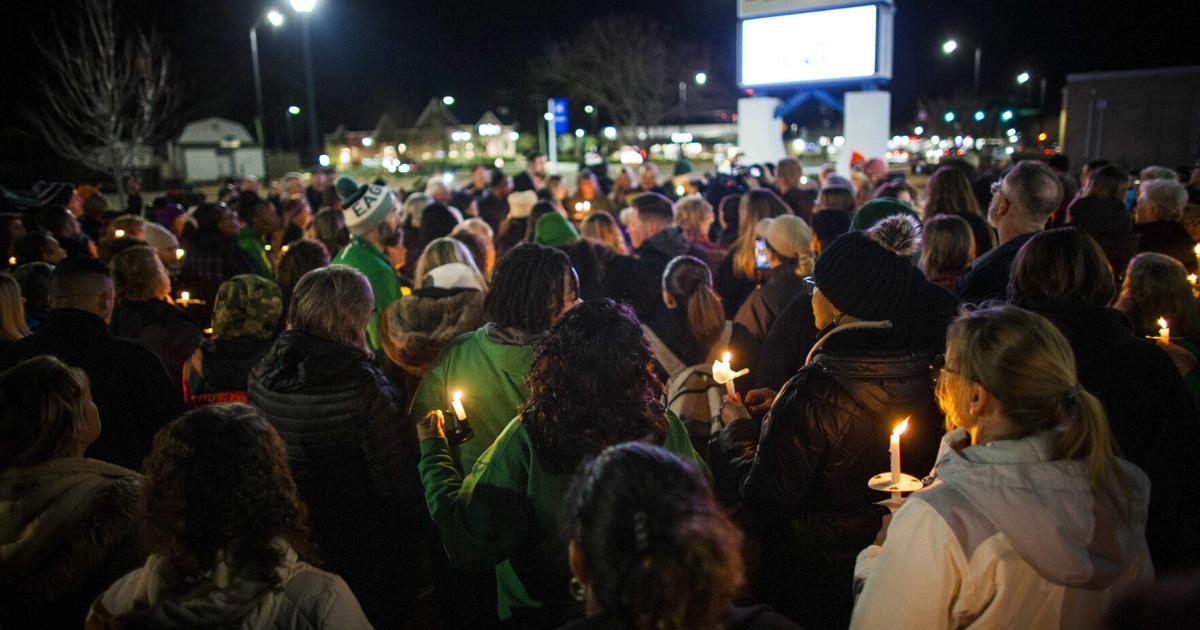
Residents of Newport News hold a candlelight vigil in honor of Richneck Elementary School first-grade teacher Abby Zwerner at the School Administration Building on Jan. 9 in Newport News, Va.


On Thursday, the Newport News School Board announced that 90 walk-through metal detectors would be placed in schools across the district, starting with Richneck Elementary School, where teacher Abigail Zwerner was shot Friday.

“The time is now to put metal detectors in all of our schools,” board Chairman Lisa Surles-Law told a news conference.

The move came even as educators and other experts nationwide grappled with the complex issue of how to prevent gun violence in even the youngest school populations.

“This is a real game changer,” said Mo Canady, executive director of the National Association of School Resource Officers, which trains law enforcement members who work in schools.

People are also reading…

“How do we begin to approach the idea of protecting students and staff from an armed 6-year-old?”

American educators have long been trying to create safe spaces that feel less like prisons and more like schools. If anything, the shooting on Jan. 6 fuels a debate over the effectiveness of metal detectors — which are still relatively rare in schools — and other safety measures.


School Shooting Newport News

Willow Crawford, left, and her older sister Ava, right, join friend Kaylynn Vestre, center, in expressing support for Richneck Elementary School first-grade teacher Abby Zwerner during a candlelight vigil in her honor at the School Administration Building on Jan. 9 in Newport News, Va.


“Metal detectors and clear backpacks are more likely to cause young children to be fearful and feel criminalized,” said Amanda Nickerson, a school psychology professor at the State University of New York at Buffalo.

“Many of the strategies being suggested do not have any research evidence, and they may actually erode a healthy school climate,” she said — one where students and staff feel free to share concerns about possible threats, which has been shown to prevent shootings.

A more effective approach fosters “positive social, emotional, behavioral and academic success,” Nickerson said.

Ron Avi Astor, a professor of social welfare and education at the University of California, Los Angeles, said “it’s really the gun owners who need to be held responsible.”

Police say the mother of a six-year-old could be charged, after he took her gun to school and shot a first grade teacher in the chest.


Police in Newport News say the 6-year-old brought his mother’s gun, which had been purchased legally, to school, though it’s unclear how he gained access to it. A Virginia law prohibits leaving a loaded gun where it is accessible to a child under 14, a misdemeanor crime punishable with a maximum one-year prison sentence and $2,500 fine. No charges have been brought against the mother so far.

Astor said that a public health approach to reducing gun violence in schools is needed, as well as gun licensing.

“Let’s all agree that gun education is really important, particularly around gun safety and accidents and kids getting access to guns,” Astor said. “Let’s make that part of health class. Let’s make sure every kid, parent and educator goes through education and hazardous materials safety training in every school in the United States.”


School Shooting Newport News

Students and police gather outside of Richneck Elementary School after a shooting Jan. 6 in Newport News, Va. 


“Gun safety education … is something that most Americans agree on, based on national polls. That’s a great place to start saving lives and reducing injury or death,” Astor said.

The shooting Friday occurred as Zwerner taught her first-grade class at Richneck Elementary. There was no warning and no struggle before the 6-year-old pointed the gun at Zwerner and fired one round.

The bullet pierced Zwerner’s hand and struck her chest. The 25-year-old hustled her students out of the classroom before being rushed to the hospital. She has improved and was listed in stable condition Monday, authorities said.

Police Chief Steve Drew described the shooting as “intentional.” A judge will determine what’s next for the child, who is being held at a medical facility following an emergency custody order.

Eric Billet, whose three children attend Newport News public schools, said he supports more security measures, like metal detectors, bag searches and a security officer at every school. But he would also like more behavioral specialists and counselors working with students.

Two of Billet’s children go to Richneck, including his fourth-grade daughter who’s endured nightmares following the shooting.

“The more challenging piece is the culture change,” he said.

“I know some teachers have had trouble controlling classrooms since COVID,” Billet added. “I do not know all of the reasons, whether it’s parenting at home or other influences, or a lack of authority and discipline at school. I definitely do not blame the teachers for this.”

Rick Fogle, whose grandson is in second grade at Richneck, supports increased use of metal detectors. But he also said schools need to be more willing to search backpacks, pockets and desks if kids are suspected of having a gun.

“They’ve got to overcome social pressure to respect people’s rights and realize that the rights of those who could be injured need to be considered,” Fogle said.

Kansas City public schools to present revised Blueprint 2030 plan

Kansas City public schools to present revised Blueprint 2030 plan

The Kansas City General public College District will current its revised Blueprint 2030 system tonight.It really is a sequence of prolonged-expression approaches that involve the closure of 10 faculties and numerous other adjustments.The closures will dominate the dialogue when it arrives to any transforming of the extended-time period organizing and method of the university district.The 10 educational institutions in concern will probable be repurposed or transformed for an additional use inside the district.The root of the closures are low enrollment and tons of deferred upkeep. The district thinks it will make their use inefficient and ties up resources that Blueprint 2030 aims to increase.The system phone calls for a discounts of $13.2 million to be repurposed for educational and extracurricular pursuits. KCPS leaders, with the enable of consultants, generated the plan following comparing their methods to other school districts.For illustration, they learned that the Springfield, Missouri College District, with 25,000 students, has much less university properties than KCPS, which has about 14,000 learners.The district claims it hopes to improve the instructional experience and educational results for all college students.Several group conferences very last drop have led to Wednesday’s assembly with the revisions the college district desires to go in advance with in Blueprint 2030. There will be no public remark at the board of schooling headquarters meeting.Kansas City general public educational institutions have a scholar-to-teacher ratio of 16 to 1. Its daily attendance price is 91{e4f787673fbda589a16c4acddca5ba6fa1cbf0bc0eb53f36e5f8309f6ee846cf}.

The Kansas City Community Faculty District will present its revised Blueprint 2030 prepare tonight.

It’s a collection of very long-phrase methods that incorporate the closure of 10 educational facilities and several other alterations.

The closures will dominate the dialogue when it arrives to any remodeling of the lengthy-expression preparing and approach of the faculty district.

The ten colleges in dilemma will very likely be repurposed or converted for a further use within the district.

The root of the closures are reduced enrollment and heaps of deferred upkeep. The district thinks it makes their use inefficient and ties up means that Blueprint 2030 aims to improve.

The strategy calls for a cost savings of $13.2 million to be repurposed for educational and extracurricular routines. KCPS leaders, with the help of consultants, generated the plan after comparing their means to other faculty districts.

For illustration, they uncovered that the Springfield, Missouri College District, with 25,000 pupils, has much less college structures than KCPS, which has about 14,000 students.

The district states it hopes to enrich the academic encounter and educational outcomes for all pupils.

Numerous local community meetings very last drop have led to Wednesday’s conference with the revisions the faculty district wishes to shift forward with in Blueprint 2030.

There will be no community remark at the board of training headquarters meeting.

Kansas Town public educational institutions have a student-to-teacher ratio of 16 to 1. Its daily attendance price is 91{e4f787673fbda589a16c4acddca5ba6fa1cbf0bc0eb53f36e5f8309f6ee846cf}.

America’s public schools are losing students

America’s public schools are losing students

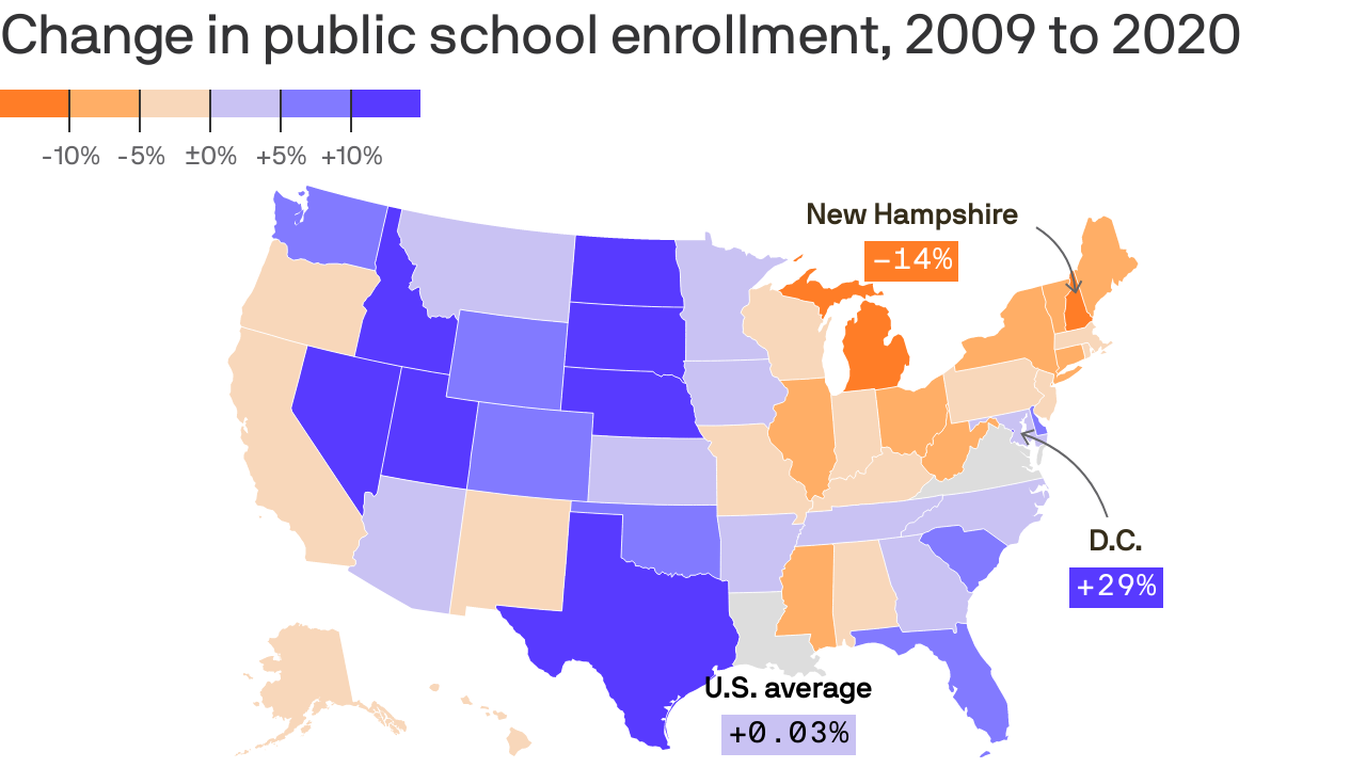
Data: National Heart for Schooling Statistics Be aware: Includes pre-principal, elementary and secondary instruction. Data for Louisiana and Virginia is unavailable. Map: Tory Lysik/Axios Visuals

The pandemic has supercharged a development that has plagued districts throughout the U.S. for several years — pupils are fleeing general public universities.

Why it matters: Community educational facilities drop funding as they reduce students, and some colleges have been forced to shutter entirely.

  • That drawbacks the many tens of millions of students — typically decreased-profits learners in metropolitan areas — who won’t be able to change to private faculties or homeschooling.

By the quantities: Public schools misplaced far more than a million students from fall 2019 to slide 2020, in accordance to the National Heart for Schooling Data. Enrollment fell from 50.8 million to 49.4 million.

What is actually occurring: About the final decade, a variety of states, like Michigan and New Hampshire, observed enrollment slide generally due to declining birthrates. Others, like Texas, noticed numbers rise due to immigration.

  • Then the pandemic hit, and community educational facilities have been subjected to condition and regional recommendations. Many of them flip-flopped on digital as opposed to in-man or woman learning.
  • Prevalent teacher and staff shortages exacerbated the challenge. Learners quickly fell guiding. That pushed frustrated mothers and fathers to pull their children out.
  • As a end result, private faculties and constitution colleges received pupils. The selection of homeschooled pupils doubled to about 5 million.

Zoom in: Districts from coastline to coastline are responding to the exodus by shuttering total faculties, The Wall Avenue Journal experiences:

  • “The faculty board in Jefferson County, Colo., outside the house Denver, voted in November to near 16 schools. St. Paul, Minn., very last summer shut 5 educational institutions. The Oakland, Calif., university board very last February voted to close 7 schools soon after decades of declining enrollment and monetary strife.”

Big metropolitan areas have been strike the most difficult. A Wall Street Journal examination located “enrollment fell in about 85 of the nation’s largest 100 community-university districts.”

  • Enrollment in New York City’s community schools, the country’s greatest university district, dropped by 8.3{e4f787673fbda589a16c4acddca5ba6fa1cbf0bc0eb53f36e5f8309f6ee846cf} from 2020 to 2022, in accordance to a fiscal watchdog funded by the metropolis.
  • Constitution school enrollment in NYC enhanced roughly 7.8{e4f787673fbda589a16c4acddca5ba6fa1cbf0bc0eb53f36e5f8309f6ee846cf} around the very same period of time.
  • It may possibly consider yrs for some college students to recuperate from pandemic-era finding out decline, according to a report from NWEA, a nonprofit group that administers standardized exams.

What to enjoy: The federal authorities projects general public university enrollment will tumble even more — to 47.3 million — by 2030. Even the districts that have observed mounting figures in new many years are expected to drop learners.

School enrollment: Number of students in public schools drops as parents turned to home-schooling, private schools during pandemic

School enrollment: Number of students in public schools drops as parents turned to home-schooling, private schools during pandemic

Before Principal Samuel Karlin’s students moved into a new school building in the fall of 2010, Chicopee was forced to build a four-classroom addition because there wasn’t enough room for all the children.

A dozen years later, enrollment has declined so much at Chicopee’s Belcher School two of those rooms are now being used for preschool classes and there is space for more.

Nationwide, schools have been seeing a decline in enrollment for several years. But when COVID-19 hit, the dip became a deep plunge and many are not seeing a resurgence, even though classrooms have reopened and have pretty much returned to normal since the spring when masking, social distancing and testing requirements were largely abandoned.

The drop is being attributed to everything from families switching to private school or continuing with remote education to a surge in home-schooling in response to the pandemic. Nationally, grades K-12 enrollment has dropped 3{e4f787673fbda589a16c4acddca5ba6fa1cbf0bc0eb53f36e5f8309f6ee846cf} and trends show those who have been slower to abandon pandemic restrictions have seen a loss of as much as 4.4{e4f787673fbda589a16c4acddca5ba6fa1cbf0bc0eb53f36e5f8309f6ee846cf}, according to a U.S. News report.

But one of the biggest reasons for declines is nationwide population growth has been slowing for years due to lower birth rates and a decrease in net immigration. Between July 1, 2020, and July 1, 2021, the nation’s growth was just 0.1{e4f787673fbda589a16c4acddca5ba6fa1cbf0bc0eb53f36e5f8309f6ee846cf}, the slowest in history, due to decreased fertility and increased mortality, according to the U.S. Census Bureau.

“The projections show Chicopee is getting older so there are fewer kids and with COVID you had a rise of virtual, home-schooling and parochial schooling,” Assistant Superintendent Matthew Francis said.

A decade ago, Belcher School was bursting with enough children to require five classes each for kindergarten and first grade. Now there are three kindergarten and first-grade classes, keeping with statewide trends that show the biggest student declines are in the youngest grades.

In Chicopee, the drop isn’t just being seen in one school. Enrollment has been declining by about 100 students annually since the 2014-15 school year when the district hit a peak of 7,841 students. At the start of the 2019-20 school year, it was 7,286 and that plunged to 6,796 when the pandemic struck, Francis said.

The city had an enrollment study done recently to help with long-term planning and eventual redistricting. It predicted it would drop to 6,524 this year, but the latest numbers calculated in mid-November show enrollment is about 240 children higher at 6,762, he said.

“We are still 90 kids lower than where we were when we ended the year,” Francis said, explaining enrollment had increased to 6,850 by the spring of 2022 before children left for summer vacation.

But one of the reasons student numbers did not drop as much as expected is Chicopee expanded preschool from 250 to about 310 children this year by offering free, full-time classes for 4- and 3-year-olds for the first time. It also expanded preschool into two neighborhood elementary schools, Belcher and Fairview, he said.

All Massachusetts public schools take official enrollment on Oct. 1. The 2022-23 school year numbers released in December by the state Department of Elementary and Secondary Education show a slight increase in students but it is far lower than pre-COVID enrollments.

West Springfield Superintendent Vito Perrone is seeing the same trends. In the past five years, overall enrollment has dropped from 4,113 to 3,851 and kindergarten enrollment especially declined 21.5{e4f787673fbda589a16c4acddca5ba6fa1cbf0bc0eb53f36e5f8309f6ee846cf} in four years from 302 in the 2018-19 school year to 237 last year. In this school year, kindergarten enrollment has rebounded a little to 266 children.

The school district is a reflection of the trends across the country, with enrollment especially dropping in kindergarten, Perrone said.

Statewide, enrollment started declining an average of 2,500 students annually in the two years before March 2020 when schools closed on an emergency basis to stop the spread of what was then the new coronavirus, Massachusetts Department of Elementary and Secondary Education enrollment statistics show.

Student numbers dropped precipitously in the 2020-21 school year when COVID-19 vaccines were not available and classes in most public schools were taught virtually or in a combination of remotely and in-person to allow for social distancing. That enrollment, which was 911,465, or 37,363 students fewer than the previous year, barely budged in September 2021 when schools reopened with full in-person classes and mostly with universal masking and other precautions in place.

The official enrollment, which is taken every year on Oct. 1, has stayed pretty much static for this school year with 913,735 students attending public schools this year.

Most superintendents said they do not expect those numbers to return to pre-COVID totals this school year even though COVID-19 protocols have been suspended since the spring.

Statistics show statewide enrollment stayed steady for about eight years, averaging 954,500, until the 2018-19 school year. That plateau came after a steady decline in students that started in the 2002-03 school year when there were 983,313 students enrolled statewide in public schools. The number of students dropped an average of 4,000 annually for about eight years.

In Springfield alone, enrollment has dropped more than 9{e4f787673fbda589a16c4acddca5ba6fa1cbf0bc0eb53f36e5f8309f6ee846cf} in the past five years. This year, there are 23,721 students attending the district and six years earlier there were some 25,600 students.

Springfield — which had one of the most conservative policies with nearly all classes held remotely until the state ordered public schools to return to some in-person learning in the spring of 2021 — lost nearly 870 students in the fall of 2020. When full in-person classes returned in September 2021, enrollment declined by another 440 children.

“It’s hard to say why but it is trending across the commonwealth,” Superintendent Daniel J. Warwick said. “The reasons are multi-faceted.”

The school district has been losing students to charter schools for two decades, but when Springfield closed classrooms because of the pandemic, more families turned to private schools which were among the few to continue in-person learning. Others have turned to home-schooling and a smaller number are moving out of Massachusetts to less-expensive states, he said.

“The COVID-19 pandemic also opened families’ eyes to other education options for their students outside the traditional public school setting,” said Azell Cavaan, chief communications officer for Springfield schools.

The student decline is most dramatic in the younger grades in most Western Massachusetts schools. In Springfield, preschool, kindergarten and 1st grades each declined by about 200 children in two years.

“It would be remiss to factor out the growing numbers of families choosing home-schooling or smaller, private school settings for their students and those who move out of Springfield,” Cavaan said.

Private and parochial schools did see some small increases in students but state numbers are showing the steepest increase is among parents who turned to home-schooling children when schools closed and opted to continue.

Pre-pandemic, there were 92 Springfield students home-schooled in the district and in 2020-21, a number that more than doubled to 221 but declined to 154 during the last school year. West Springfield saw home-schooled students increase from 48 to 110 in the 2020-12 school year and decline slightly to 93 last year. Ware, which returned to in-person schooling sooner, saw home-schooling students jump to 83 at the height of the pandemic and then drop to 55 when students returned to in-person learning in the past two school years.

State Department of Education home-schooling statistics, which are calculated on Jan. 1 instead of Oct. 1, show the number of students home-schooled annually remained at an average of 7,500 for at least five years. That number jumped to 17,127 for the 2020-21 school year but then dropped to 13,090 last year when all schools returned to in-person learning.

Gabriella Michaliszyn, part of the leadership team of the Western Mass Homeschoolers, said she saw a dramatic increase in the number of parents who joined their Facebook group over the past few years. Before the pandemic there were consistently about 850 people in the group; now there are 2,200.

The organization offers information, networking and answers questions parents have about technical issues such as how to submit applications to local districts. They also work together to provide socialization opportunities for students, said Michaliszyn, of Westfield, who has been home-schooling her children for 10 years.

“A lot of what we are seeing is students have anxiety issues and they don’t want to go back to school,” she said.

Some parents are concerned about the sex education and LGBTQ+ curriculum taught in school, she said. Many others witnessed their students’ classes when they were learning from home and felt there was a lot of time wasted on discipline and other issues. Those parents felt they could teach better, more efficiently and fit more material into their children’s day, she said.

Becky Quinn started home-schooling her children, Jackson, 11, and Lincoln, 9, in 2020 when she felt remote learning did not give her students the structure they needed. The stay-at-home mom from Palmer said her sons now don’t want to go back.

“We absolutely love it and the freedom home-schooling has brought to the family is great,” she said.

She said she buys some lesson plans, finds other curricula for free online and typically picks and chooses what parts will best serve her children. She also gives her sons placement tests to ensure they are learning skills they need.

But home-schooling also allows her to focus on her children’s interests and have a little fun. For example, in December they put aside most of their traditional classes, except for math, and did a study of Christmas carols to teach about everything from reading, writing, research, social studies and other topics. Her sons selected the program from a list of options she offered.

Quinn said she was interested in home-schooling even before the pandemic, but her husband was not enthusiastic about the idea. He has changed his mind after seeing it in action during the pandemic.

Quinn said she mostly follows the public school schedule, taking off summers and holidays, but last summer her sons wanted to learn more about astronomy so she continued their science classes a few days a week,

The Western Mass Homeschooling Association has made it easier because it offers non-stop educational and fun activities to give students an opportunity to make and hang out with friends. Parents sometimes simply meet in a park and share ideas and advice while their children play together, Quinn said.

In Westfield, Superintendent Stefan Czaporowski confirmed the number of home-schooled children has grown in his district. Families who chose to teach their children must apply to their home district and submit a curriculum, but the School Department and School Committee cannot deny their application.

“On average the number of home-schoolers in Westfield was under 100. Last year (in 2020-2021) it was 250 and many of them have not returned,” he said. “The pandemic opened people’s eyes to home-schooling. I think some students liked it and we saw a lot, especially in the Russian and Ukraine populations.”

Last school year about 200 students were home-schooled, he said.

In Westfield, the region’s fourth-largest school district, enrollment had already been dropping by more than 100 students a year before COVID hit, as predicted by studies. Then, when students returned to school in the fall of 2020 under a hybrid plan that had 50{e4f787673fbda589a16c4acddca5ba6fa1cbf0bc0eb53f36e5f8309f6ee846cf} learning remotely one week and alternating to in-person the second week, the student body dropped a shocking 330 students, Czaporowski said.

The student population is inching upward but it is still lower than the 5,261 total tallied Oct. 1, 2019, before the pandemic and far lower than the nearly 6,000 Westfield Public students of a decade ago.

Westfield schools dropped to 4,774 students in fall of 2021 but by the end of March 2022, it increased by more than 100 students to 4,876. Much of the increase came from refugees, mainly from Ukraine and Afghanistan, but a handful also returned from home-schooling or private schools, Czaporowski said.

At the start of this school year, Westfield again bucked the trend, increasing to 4,942 students in November (although the official Oct. 1 enrollment count is 4,836). “It was not expected,” he said.

One of the reasons is the schools had a 53-student surge of children coming from other countries. While 35 were from Ukraine, which isn’t an anomaly since a fairly large number of Ukraine immigrants have settled in Westfield long before Russia invaded the country in February. What was a surprise was the other half of the new students hailed from a wide variety of countries including Guatemala and Moldova.

Czaporowski said enrollment would have likely dropped more if Westfield was not one of about 10 school districts statewide to apply to continue offering remote classes. Springfield and Pittsfield also have virtual schools.

Westfield Virtual School

Ann Farnham, math teacher at Westfield Virtual School, and principal Thomas Osborn checking with students. (Hoang ‘Leon’ Nguyen / The Republican)

Between 150 and 160 students in kindergarten through grade 8 were learning in the virtual school at the end of the 2021-22 school year and that has declined to 91 this year.

Interest is virtual school is now waning in the elementary grades, but is increasing for middle and high school grades so Westfield expanded to high school grades this year. It will likely stop offering the program for students in kindergarten to grade 5 next year simply because parents are not registering their children.

“I think we have learned early that K-5 kids do better in-person. At the high school kids can be successful in virtual learning,” he said.

The school, which is run by teachers who operate out of a separate building, generally serves students who found they were learning better online as well as those who are immunocompromised or live with family members who have medical conditions, he said.

“We wanted to keep Westfield kids in Westfield schools and there was a waiting list for virtual schools,” he said.

Czaporowski said he also likes that virtual students can still participate in sports and other after-school activities if they want so they can remain connected to peers and staff.

Currently, the state will only allow the district to accept local students into the virtual academy but Czaporowski said he would definitely be interested in taking students from neighboring districts if rules change in the future. “As COVID lingers, it will be a significant factor in our educational process,” he said.

Plenty of students have left their traditional public schools since the start of the pandemic for the Greater Commonwealth Virtual School, which is based in Greenfield but has students who live across the commonwealth, said Michelle Morrisey, director of enrollment and recruitment.

Before the pandemic, the Department of Elementary and Secondary Education allowed two virtual schools to operate across the state. Similar to a charter school, the schools are operated by a board of trustees and are financed by receiving a per-pupil allotment from the state for each student who attends.

Enrollment has nearly doubled since COVID, further nibbling away at traditional public school numbers, and the school has been allowed to increase its cap several times during the past two years. It now can take up to 1,200 students, up from 750 at the start of the 2019-20 school year, she said.

“One of the things that made it popular is COVID opened a new world to students and some students found out they did better in a virtual setting and wanted to continue,” Morrissey said.

Previously, the school mainly was attended by students who had a medical or mental health condition, had been badly bullied, were in competitive training for sports or the arts, parenting or pregnant teens and some very gifted students, she said.

Some students also attend for a short period of time due to illness or because of seasonal competitions, Morrissey said.

Before COVID hit, the school was fully enrolled. A boost in marketing and a new information center that made it easier for parents to ask questions resulted in a large waiting list, Morrissey said.

But in September 2020, six months into the pandemic, the school was inundated with applications. State officials agreed to increase the cap to 1,050 students but even then, the waiting list ballooned to more than 800, she said.

“It was crazy. We always have had a good waiting list, but this is much larger,” she said.

Private schools have had a smaller impact on public school declines.

“While there has been a decline in public school enrollment in certain areas of Western Massachusetts, our overall school enrollment continues to increase. We thought a number of families might leave us after the pandemic restrictions were lifted, but they decided to stay. It is the same with inflation. The families who have come to us are happy with the community and care they are receiving in our Catholic schools,” Springfield Diocesan Superintendent Daniel R. Baillargeon said in writing.

Some schools have seen a small steady increase such as Pope Francis Preparatory High School in Springfield, which had 393 enrolled in June 2022 as compared to 366 in 2021 and 335 in the 2018-19 school year. The kindergarten to grade 8 schools show more sporadic numbers with a few dropping, but more seeing modest increases over the past two years after previously being in a decline.

Statewide enrollment for in-state private and parochial schools, which is also taken on Jan. 1, showed a small increase for 2022 but overall has declined. During the last school year, there were 67,579 students enrolled in private schools, up from 66,253 for Jan. 1, 2021 when so many parochial schools were teaching in-person. During the 2019-20 school year, statewide enrollment in parochial schools, which closed like public schools in March 2020, was 68,050. In school year 2017-18 and 2016-17 it was about the same at about 75,500 students.

In Chicopee the number of students attending parochial high schools is insignificant with just seven out of more than 2,140 high school students, Francis said.

“We did lose some students to parochial but we did get some back,” he said. As of October 2021, there were 284 city students attending Catholic schools.

Perrone said he understands families who are trying to balance fear of exposure, COVID protection protocols and excessive screen time have been reluctant to send the youngest children to school, but is hopeful he will see enrollment bounce back in West Springfield, especially in the youngest grades.

“That’s where children begin to love to learn and love school,” Perrone said. “Our goal now is to focus our engagement on that love for school, learning and the skills that start in kindergarten.”

San Diego County Elementary Schools Recognized by State as Distinguished

San Diego County Elementary Schools Recognized by State as Distinguished

20-one particular San Diego County elementary schools are currently being honored under the 2023 California Distinguished Universities Award Program.

The method acknowledges outstanding education and learning plans and techniques. Colleges are awarded for closing the accomplishment gap and for attaining extraordinary pupil general performance. 

“These educational facilities are performing a great career of supplying young children with the supports and chances they have to have and have earned to attain their fullest academic and social probable,” stated San Diego County Superintendent of Colleges Dr. Paul Gothold. “We can all find out from the work they are accomplishing to aid their learners thrive.”

The remarkable elementary educational institutions regarded this yr are illustrative of the difficult get the job done, dedication, and resilience demonstrated by educators and universities across the condition right after communities struggled for a number of a long time with urgent results to bodily and mental health and unparalleled difficulties to offering schooling.

To pick California Distinguished Universities, the California Section of Schooling (CDE) utilizes multiple measures to identify qualified educational facilities centered on their general performance on the condition indicators as specified on the California College Dashboard. Elementary educational facilities and center and large educational institutions are acknowledged in alternate decades as a result, awardees hold the title for two many years.

Congratulations to:

  • Ocean Air Elementary (Del Mar Union College District)
  • Sage Canyon Elementary (Del Mar Union Faculty District)
  • Ashley Falls Elementary (Del Mar Union School District)
  • Sycamore Ridge College (Del Mar Union School District)
  • Carmel Del Mar Elementary (Del Mar Union School District)
  • El Camino Creek Elementary (Encinitas Union University District)
  • Capri Elementary (Encinitas Union College District)
  • Classical Academy (Escondido Union School District)
  • Heritage K-8 Charter (Escondido Union University District)
  • JCS – Mountain Oaks (Julian Union Elementary School District)
  • Elite Educational Academy – Mountain Empire (Mountain Empire Unified School District)
  • Classical Academy Vista (San Diego County Workplace of Education)
  • Scripps Elementary (San Diego Unified School District)
  • Mt. Everest Academy (San Diego Unified Faculty District)
  • Innovations Academy (San Diego Unified University District)
  • Carmel Creek Elementary (Solana Seashore Faculty District)
  • Solana Highlands Elementary (Solana Beach College District)
  • Solana Pacific Elementary (Solana Seashore University District)
  • Skyline Elementary (Solana Beach front College District)
  • Solana Ranch Elementary (Solana Seashore Faculty District)
  • Excel Academy Constitution (Warner Unified University District)

Throughout the point out, additional than 350 elementary colleges are becoming honored as a result of the 2023 California Distinguished Educational facilities Program.

“Their innovation and tricky perform have served to make certain their learners can recover, get well, and thrive—even in the toughest periods,” claimed Condition Superintendent of Public Instruction Tony Thurmond. “California Distinguished Educational facilities characterize examples of not just exceptional instructing, learning, and collaboration, but also highly successful, information-driven university efforts ranging from qualified growth for educators to psychological well being and social-psychological wellness procedures to tackle the desires of learners and families.”

For more info and a complete checklist of distinguished educational facilities, remember to stop by the CDE California Distinguished Colleges webpage.

Canton schools takes step to place $60M tax issue on election ballot

Canton schools takes step to place M tax issue on election ballot

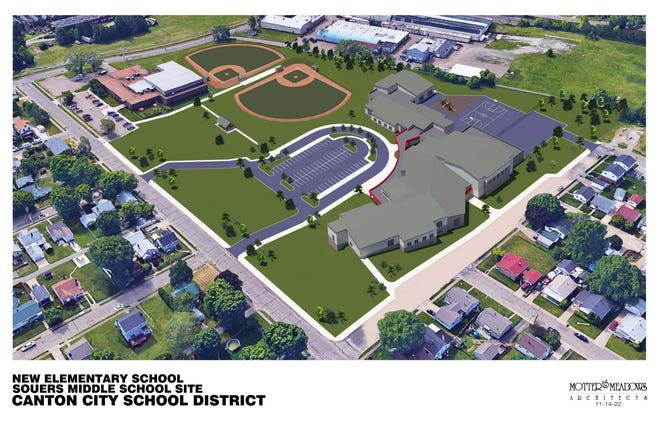
CANTON − A tax problem that could transform how Canton Metropolis Schools educates its elementary pupils is heading toward the May possibly election ballot.

The Canton City faculty board on Wednesday took the to start with in a two-step procedure to put a 36-year, $60 million bond concern on the Might election ballot. The board’s vote asks the county auditor to identify the volume essential for the tax difficulty so it would raise $60 million. After the auditor certifies the sum desired for the levy, the board will vote to formally put the situation on the ballot.

A lot more on Canton Metropolis CollegesCanton’s Baxter university, now practically 100 a long time previous, to be demolished

While the total of the tax challenge has not been established, Superintendent Jeff Talbert has earlier reported an owner of a $100,000 dwelling would fork out no more than an further $4 a calendar year over what is paid out now. Householders currently pay $132 a year for a $100,000 household for a 4.3-mill bond problem that voters accepted in 1999, according to the Stark County Auditor’s Business office. That bond issue will expire at the conclude of 2023.