KBE approves regulation placing more requirements on schools using corporal punishment

KBE approves regulation placing more requirements on schools using corporal punishment
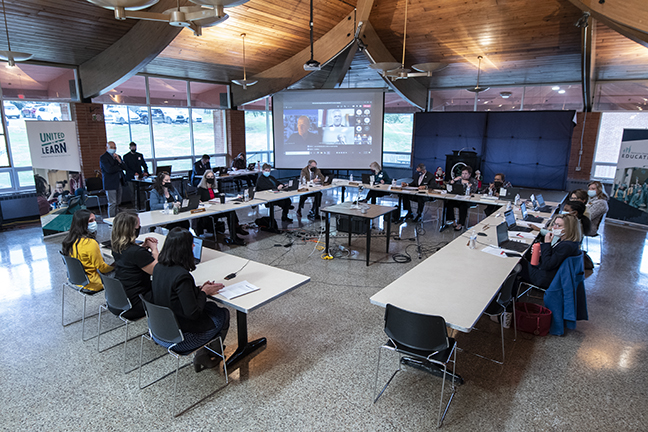
The Kentucky Board of Education held its Dec. 1 regular meeting on the campus of the Kentucky School for the Deaf.

The Kentucky School for the Deaf (KSD) had the opportunity to host the Kentucky Board of Education (KBE) on its campus for the board’s regular meeting on Dec. 1.  As part of a packed schedule, the board approved a regulation relating to the use of corporal punishment.

A 1982 Kentucky statute permits the use of corporal punishment by teachers for the purpose of maintaining classroom discipline. In 2019, the legislature passed  KRS 158.4416, which requires KDE to provide resources related to, and requires districts to adopt, trauma-informed discipline policies. Trauma-informed discipline policies seek to balance accountability with an understanding of traumatic behavior.  

“There is a persistent rub between our work related to trauma-informed discipline and the permissive statute KRS 503.110,” said Matthew Courtney, policy advisor in KDE’s Office of Continuous Improvement and Support (OCIS).

Based on the KBE’s authority to promulgate regulations related to student discipline and student welfare, he said KDE saw fit to bring forward the regulation to place guardrails around corporal punishment and what it looks like in Kentucky.

Courtney clarified it is the stance of KDE that corporal punishment is not a trauma-informed discipline resolution, and should not be used in Kentucky public schools. KDE has actively fought to prohibit corporal punishment for about 30 years.

The American Academy of Child and Adolescent Psychiatry suggests that corporal punishment at school may be harmful to students and may increase problematic behaviors, may hurt a student’s ability to self-regulate and make it harder for them to develop trusting and secure relationships with adults. Many other national advocacy organizations have taken a similar stance.

Since corporal punishment cannot be viewed through a trauma-informed lens, KDE applied a harm reduction approach in drafting the new corporal punishment regulation.

 “This should not be seen in any way as an endorsement of corporal punishment from the department or the board,” said Courtney. “This is the next step in what has been a 30-year mission to end corporal punishment in Kentucky.”

The regulation defines corporal punishment as the deliberate infliction of physical pain by any means upon the whole or any part of a student’s body as a penalty or punishment for misbehavior. It also seeks to exempt from corporal punishment students with an Individual Education Plan (IEP), 504 plan and those who are classified as homeless or are in foster care.

If a district chooses to allow corporal punishment, the regulation requires schools to get written consent from a student’s legal guardian within the first five days of the school year if the guardian wishes to allow corporal punishment to be used as a behavior intervention for their child. Before administering corporal punishment, the school must receive an additional verbal consent from the student’s parent or guardian.

The corporal punishment must be administered by a principal or assistant principal and must be in the presence of at least one additional certified staff member who is of the same gender as the student. Each corporal punishment incident must be recorded in the student information system.

After administering corporal punishment, the student must receive a minimum of 30 minutes of counseling provided by the school guidance counselor, school social worker, school psychologist or other qualified mental health professionals by the end of the next school day.

Each local school board must adopt a policy that either prohibits or allows use of corporal punishment. There currently are 156 districts in Kentucky that explicitly prohibit the use of corporal punishment in their district policy manuals. Four school districts have permissive policies and 11 have no clear corporal punishment policy.

“I’m on record as saying I consider this a barbaric practice,” said Education Commissioner Jason E. Glass. “I’m embarrassed that it exists anywhere in the state of Kentucky.”

KBE Chair Lu S. Young said she received several comments encouraging the approval of the regulation

“We do know that there is an effort afoot to engage the General Assembly in a conversation about revising the statute in such a way to ban corporal punishment entirely,” said Young. “In the absence of such a statute, I applaud this work.”

Now that the regulation is approved by the KBE, it will be filed with the Legislative Research Commission on or before Dec. 15.  Depending on various steps in the legislative review process, the regulation will likely become effective near July 2022.

Early literacy initiatives

KDE Chief Academic Officer Micki Ray discussed Kentucky’s early literacy initiatives and ways KDE’s Office of Teaching and Learning (OTL) is working to support local schools and districts in addressing students’ literacy needs. 

According to Ray, between 2015-2019, approximately 118,000 Kentucky students in 3rd grade performed below proficient on the K-PREP reading assessment.  In 2019, a total of 47.3{e4f787673fbda589a16c4acddca5ba6fa1cbf0bc0eb53f36e5f8309f6ee846cf} of Kentucky’s 3rd-grade students did not meet proficiency on the K-PREP reading assessment.

Ray said this issue goes beyond assessment scores. Students who are proficient in reading by the 3rd grade are more likely to have continued academic success; less likely to have problems with attendance, dropout rate and juvenile crime; more likely to feel higher self-esteem and feelings of adequacy; and more likely to break the cycle of intergenerational poverty.

Ray discussed early literacy initiatives, including the Read to Achieve (RTA) grant. The RTA grant is a two-year, renewable grant that, per KRS 158.792, was “created to help teachers and library media specialists improve the reading skills of struggling readers in the primary program.” Applications are currently being taken for the next round of Read To Achieve grants.

At its Sept. 30 meeting, the Reading Diagnostic and Intervention Grant Steering Committee approved the grant size and range of awards and the request for applications (RFA) notice as specified in KRS 158.794 and 704 KAR 3:408. Since the time the RFA was released, KDE has received questions and concerns about the current RFA.  Some of those questions were from potential applicants through the RFA question-and-answer process.  Other concerns have been sent more informally through the KBE’s public comment documents.

KDE is committed to the success of RTA programs to assist struggling readers throughout the state.  KDE does have the option of amending the RFA and extending the deadline to apply.  At the close of the RTA question period, KDE anticipates amending the RFA to provide clarity and address some concerns.  As it has done to date, KDE must continue to comply with statutory requirements regarding RTA grants, regulatory requirements of the KBE and state procurement requirements for RFAs. 

Since this involves an active RFA, KDE is unable to provide details of exactly how the RFA may be amended.  However, KDE is committed to the successful implementation of reading intervention programs for struggling readers throughout the Commonwealth.

In other business, the board:

  • Presented the Kevin M. Noland and Mary Ann Miller Award for Outstanding Public Service to Kentucky Schools to Reeca Carver, state advisor for the Family Career and Community Leaders of America at KDE;
  • Heard updates from AdvanceKentucky Executive Director Anthony Mires and KDE’s Ray;
  • Heard an update from KDE Associate Commissioner Robin Kinney on the KDE Employment Report;
  • Heard from KDE Associate Commissioner Kinney and Division Director Karen Wirth on the audit update and expense reports;
  • Heard an overview of the recommendations of the School Facilities Task Force;
  • Heard a report from the Council on Postsecondary Education;
  • Heard a report from Deputy Secretary of the Education and Workforce Development Cabinet Mary Pat Regan;
  • Heard Glass present the commissioner’s report;
  • Approved consent agenda items:
    • New District Facility Plans;
    • Amended District Facility Plans;
    • 2020-2021 school year Local District Working Budgets and Local District Tax Rates Levied;
    • 702 KAR 1:115, Annual In-Service Training of District Board Members;
    • Amendments to 704 KAR 19:002, Alternative Education Programs;
    • Request to withdrawal emergency regulations 702 KAR 1.191E and 702 KAR 7.125E;
    • 704 KAR 3:395, Extended School Services;
  • Heard a year in review update from 2021 Kentucky Teacher of the Year, Donnie Piercey;
  • Listened to a presentation from Kentucky School for the Deaf Principal Toyah Robey and KSD students;
  • Approved the recipient of the 2021 Kevin C. Brown Strategic Priority Award;
  • Approved KBE’s legislative priorities;
  • Approved the federal Carl D. Perkins Consolidated Annual Report;
  • Approved emergency regulation 702 KAR 1:191E, District Quarantine Leave, which allows any fully vaccinated district employee that is quarantined by a licensed treating physician, physician’s assistance, advanced practice registered nurse, local health department, Department for Public Health or local school district to be eligible for paid leave;
  • Approved certification of 702 KAR 7:140, School Calendar, to prevent expiration; and
  • Heard a litigation report from KDE General Counsel Todd Allen.
Sixth graders will remain in Kent elementary schools for now

Sixth graders will remain in Kent elementary schools for now

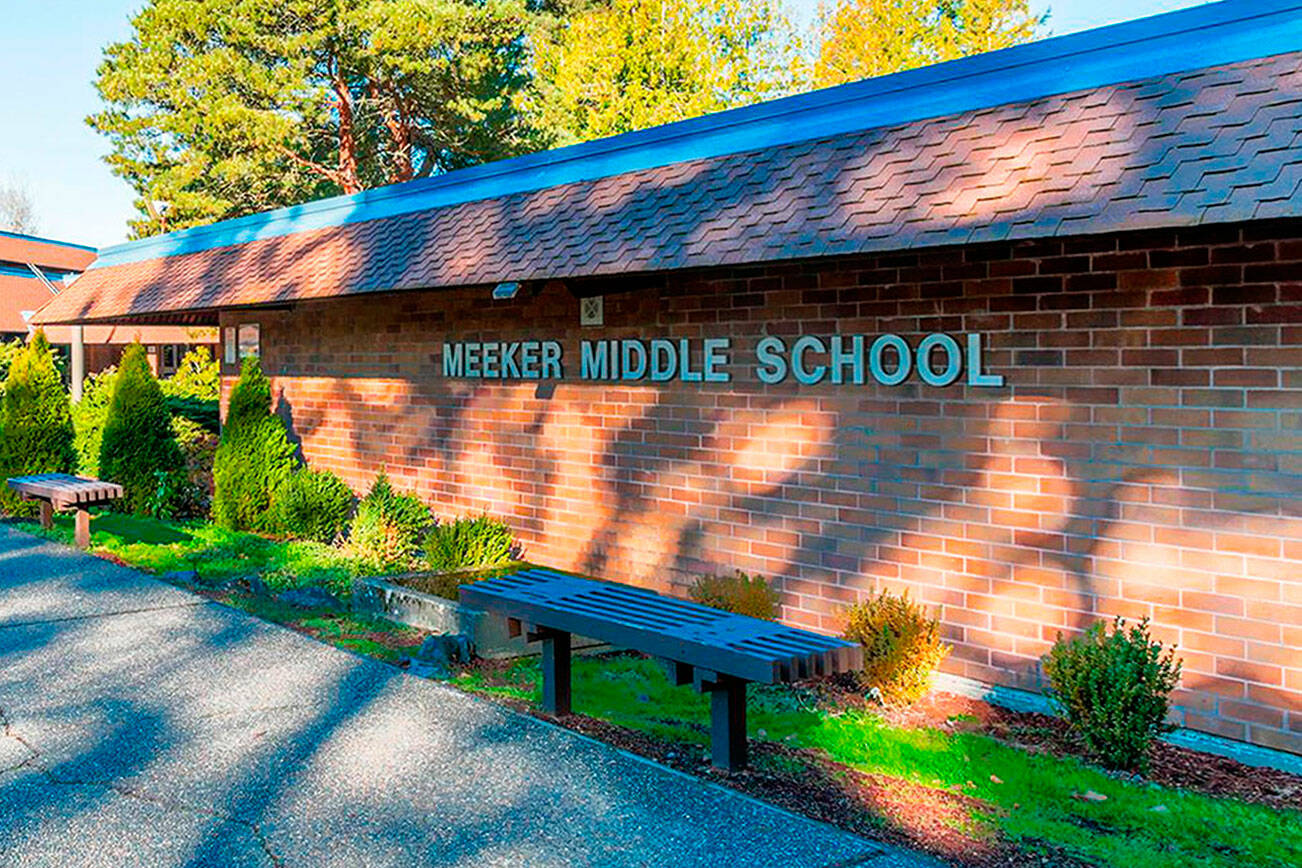
Any changes to Kent School District boundaries and moving sixth graders to middle schools from elementary schools won’t happen until at least the 2023-2024 school year.

District staff recommended waiting to make a decision, and the Kent School Board agreed.

“We want to be certain you guys are comfortable moving this direction of sixth grade in middle school, clear feeder patterns and to balance out elementary enrollments is where we want to be going,” said Randy Heath, district interim chief of school operations and academic support, during a November presentation to the board.

Heath said staff knows the planning work and making decisions will take time.

“The more we looked at it and to do it in a purposeful way with the community engaged in the work, 2023-2024 would be an appropriate time,” Heath said at the Nov. 10 board meeting.

That plan worked for the five-member board.

“I appreciate the time extension,” Director Joe Bento said. “It was going to be for next school year, so I thank you for that.”

Board members emphasized they want to be sure to involve community residents in the decisions about where to draw school boundaries, feeder patterns and whether sixth graders should be moved to middle schools.

“The last time we had these conversations my concern was equity among the voices heard,” Director Denise Daniels said. “We had pretty vocal parents that knew who to talk to. I’m not sure there was the opportunity for other neighborhoods that also were impacted. …We need all input, not just certain groups of parents. We need to hear from a multitude of neighborhoods.”

The district said in a statement that it will be convening subcommittees comprised of community members, parents, staff and administrators to conduct additional analysis and help create effective implementation plans. An application process will be identified for those interested in becoming a subcommittee member and a timeline established to move this work forward. The subcommittees will provide regular updates to the school board throughout this school year on the progress of its objectives.

The board in February approved boundary changes for certain schools to feed students into the new River Ridge Elementary that opened in August on the West Hill in the city of SeaTac.

But the board decided earlier this year against voting on other changes recommended by MGT Consulting Group that would move sixth grade into middle schools, reopen the former Kent Phoenix Academy (previously Sequoia Middle School) as a new middle school, aligning school feeder patterns and adjusting school boundaries to help balance enrollment districtwide.

Heath told the board a number of reasons support moving sixth graders to middle school.

“It’s the most appropriate placement of sixth graders academically and socially,” Heath said.

He said state guideline standards favor dividing students into the sixth through eighth grades. He said it gives students a chance to have three years of lab science to better prepare them and that most elementary schools do no have labs. It also gives students increased opportunities for academic acceleration and electives.

“Instead of math at the sixth grade level they can take a higher math level,” Heath said. “They have more electives at middle schools, which could be band or choir.”

The clear feeder patterns are an effort to keep more students together through elementary, middle and high school. Right now, 80{e4f787673fbda589a16c4acddca5ba6fa1cbf0bc0eb53f36e5f8309f6ee846cf} of students at one middle school might go to the same high school but another 20{e4f787673fbda589a16c4acddca5ba6fa1cbf0bc0eb53f36e5f8309f6ee846cf} are sent elsewhere.

“Students and families want to travel with peers to new schools,” Heath said.

The change in elementary school boundaries would help reduce overcrowding at certain schools and curtail the use of portables.

“We won’t make every school 450 students but we can keep within capacity of the school and allow us to make decisions on needs of students in programs and not where we have physical space,” Heath said.

The district plans to hold meetings in neighborhoods that would be impacted by any changes.

Despite pushing out changes to the 2023-2024 school year, Heath said it’s still going to be important to hit deadlines.

“We will come back to the board and share recommendations by fall of 2022,” he said. “We will need decisions by September or October of next year to implement changes for the following school year.”

Questions

People with questions for the Kent School District about the boundary changes can email [email protected].

Talk to us

Please share your story tips by emailing [email protected].

To share your opinion for publication, submit a letter through our website https://www.kentreporter.com/submit-letter/. Include your name,
address and daytime phone number. (We’ll only publish your name and hometown.) Please keep letters to 300 words or less.


Beware social and emotional indoctrination in schools

Beware social and emotional indoctrination in schools

Social and emotional learning is the latest trend at your child’s school. SEL sounds beneficial, but that’s a disguise. In truth, it indoctrinates kids with extremist ideas many parents don’t condone.

On Nov. 22, the Hartford Courant reported that West Hartford, Conn., elementary school parents are in an uproar. They’re complaining that teachers are putting words such as “nonbinary” on the chalkboard and telling kids, including kindergarteners, they can live life as a gender different from what they were assigned at birth. Parents were told by school authorities that they can’t opt their children out.

Most Americans think parents should have the final say on what children are taught. From Treasure Valley, Idaho, to Greenwich, Conn., school board candidates made SEL an issue in elections earlier this month.

Indiana Attorney General Todd Rokita encouraged parents to speak up and cautioned that SEL programs shift “the role of teachers from educators to therapists.”

Fighting SEL is an uphill battle because it’s not only favored by the left-leaning educational bureaucracy; it’s also big business. “The SEL ecosystem today is flush with dollars,” reports Tyton Partners, SEL industry consultants.

Billions in federal COVID-relief money for schools is being used to buy SEL programs and fund SEL instructors. Advocates and companies that produce the materials lobby Congress and the federal Department of Education to ensure legislative language precisely matches what they’re selling.

Nationwide, sales of SEL materials shot up 45{e4f787673fbda589a16c4acddca5ba6fa1cbf0bc0eb53f36e5f8309f6ee846cf} in a year and a half to $765 million in 2021, reports Education Week.

But parental opposition is also surging. Attorney General Merrick Garland asked the FBI to look into parents protesting issues like SEL at school board meetings. His son-in-law is a co-founder of Panorama Education, a company raking in millions selling SEL materials to school districts. Conflict of interest?

And what about the billions of dollars the Democrats’ Build Back Better legislation allocates to child care and pre-K? Will that money pay to indoctrinate even younger minds? Likely, “yes.” At least a dozen states, including New York, have already adopted SEL standards for preschool.

As for elementary schools, gender dysphoric kids make up less than 1{e4f787673fbda589a16c4acddca5ba6fa1cbf0bc0eb53f36e5f8309f6ee846cf} of the school population. Protect them, of course, from bullying and discrimination. They need to feel safe. But don’t brainwash the rest with one-sided, repeated lessons about gender issues.

West Hartford is reported to hammer away grade after grade, starting with a kindergarten-level book about a teddy bear who knows in his heart he is a girl teddy, not a boy teddy. Then, a book about Aiden, who knows the sex he was assigned at birth is “wrong.” Then, a book about choosing pronouns. And another about a girl named Jazz, who changes her gender identity. Are kids reading that many books about the U.S. Constitution?

One Arkansas father objected that his fifth grader’s teacher showed a video of a transgender activist’s speech. Then, the teacher, wearing a “Protect Trans Lives” T shirt, invited the class to a pride celebration: “I’ll be at Pride from 1 to 6! I hope to see you there!”

SEL was originally sold as training children to control their emotions, manage their time and make good personal decisions. Teachers have always tried to instill these life skills. They’re the same American values Benjamin Franklin proselytized in his autobiography 200 years ago.

But recently, SEL purveyors, including the Collaborative for Academic, Social and Emotional Learning, have openly revised their goals. CASEL advocates for “transformative SEL” to promote “justice-oriented civic engagement.” Translation: Make your kids into activists.

A South Bend, Ind., school district adopted SEL two years ago to curb substance abuse and bullying. Now, parents, recognizing the radical messaging, are demanding more oversight.

Who’s in charge of what your child learns? Parents need to take control. It’s not an easy fight against the combined forces of educational profiteers and left-wing activists. But the stakes are too high to accept defeat.


Betsy McCaughey is a former lieutenant governor of New York and author of “The Next Pandemic.”

As Washington state public schools lost students during pandemic, home-schooled population has boomed

As Washington state public schools lost students during pandemic, home-schooled population has boomed

In the wake of pandemic school closures, school districts in Washington state saw their enrollments decline by tens of thousands of students. The statewide drop, calculated between fall 2019 and fall 2020, was among the largest in the country. 

New state data from this fall shows that school systems still have not recovered their losses, leaving open questions about when — and if — these students will return.  

Between October 2019 and October 2020, 39,000 fewer students enrolled in public school, about a 3.5{e4f787673fbda589a16c4acddca5ba6fa1cbf0bc0eb53f36e5f8309f6ee846cf} drop. The numbers weren’t distributed evenly across grades — the most pronounced losses were among younger students; the number of kindergarten students plummeted by 14{e4f787673fbda589a16c4acddca5ba6fa1cbf0bc0eb53f36e5f8309f6ee846cf}. By this fall, the state’s enrollment had only grown by a thousand students.  

At the same time, the state’s home-schooled population has ballooned, nearly doubling in size during the first full school year of the pandemic, 2020-21. Many fled citing the uncertainty and logistical problems that public schools faced.

“The remote learning for us — it was too much,” said Allison Peterson, a mother of three who home-schooled her three children for all of last school year. With home schooling, Peterson said, the family had a lot more “flexible time.”

The drop in enrollment is bad news for public schools financially. Collectively, school districts will lose about $500 million in state funding in the next budget, according to state Superintendent Chris Reykdal. He has already signaled that he will ask state lawmakers to hold funds steady for the districts, which receive dollars based on the size of their rosters.

“I’m gonna make a real hard push here,” said Reykdal in an interview last week, explaining that the losses are small enough that it would be difficult for school districts to restructure their costs. “When it’s this sort of subtle thing, it’s the worst-case scenario.” 

Districts have been tallying up the damage. Seattle is down 3,400 students since 2019. This year, the district estimates it will operate with $28 million less in funding, according to a recent Seattle School Board presentation. There is “potential” for some of those students to return during the second semester of the year now that the vaccine is available for children ages 5 through 11, the presentation said. 

For the short term, money from the pandemic federal stimulus packages aimed at schools should exceed the money lost by enrollment declines in most school districts, according to an analysis from Georgetown University’s Edunomics Lab. 

There could also be unintended consequences to the state holding funding at pre-pandemic enrollment levels, the analysis says. 

“The movement of students may not be correlated to student poverty rates,” Marguerite Roza, an education finance professor, wrote in an email. That money “may be going out in ways that disproportionately protect some districts [which may or may not be higher poverty].” 

The demographics of kids who have left (or never entered) public schools are still unclear. The state has yet to release those details. But state officials suspect many of them have stayed home.

Home-schooled students grew from 21,000 to 40,000 students between 2019 and 2020. 

There isn’t a count yet available for home-schooled kids this school year, but Jen Garrison Stuber, advocacy chair for the Washington Homeschool Organization, says she expects the number to hold steady. 

After school closures, parents flocked to this model for stability, Garrison Stuber said. Now it’s an appealing option for families for a wide variety of reasons. Some are afraid of sending their children back before they have received the pediatric vaccine. Others began schooling at home out of frustration with mask and vaccine mandates. 

Now, many have adapted to the flow of home schooling and don’t want to shake their arrangements up again, she said. 

“I used to say I would never home-school my own kids,” said Peterson, a former elementary school teacher who lives in the Northshore School District area. “That it would be too much time and too much work, that we’d get sick of each other.”

But she found that the arrangement actually allowed her kids to learn what they needed in a shorter period of time each day. They didn’t need to account for the extra minutes in the school day to take attendance or line everyone up for recess. The kids could move at their own pace.

They also took regular field trips. During a unit on farming and food, Peterson managed to persuade some local farmers to let her kids tour their facilities. Through a connection with a friend, she also had her kids Zoom with a NASA engineer to learn about space travel.

The Petersons gave their kids a choice about whether they wanted to return to in-person public school this year. Their son Jacob has been attending third grade in person since September, and their daughter, Hannah, will head back to kindergarten in January after she’s had her second dose of the vaccine.

Their oldest, 11-year-old David, will stay at home, where the pace aligns better with his learning style, Peterson said.

Though in many cases private schools opened for in-person learning earlier than public schools, these schools didn’t see the same boom between 2019 and 2020. (Data this school year hasn’t been released.) Statewide, private schools only saw an increase of about 800 students overall. 

The Puget Sound region’s Catholic school system, which enrolls about 20,000 students across nearly 70 schools, saw a 6{e4f787673fbda589a16c4acddca5ba6fa1cbf0bc0eb53f36e5f8309f6ee846cf} increase in enrollment between 2020 and 2021, according to the Archdiocese of Seattle. 

Seattle-area districts were among the last to start schooling in person, many of them under the pressure of a statewide order. 

“We didn’t skip a beat. Within 72 hours, all of our schools had switched to remote learning,” said Kristin Moore, director of marketing and enrollment for the Archdiocese. “And working so close with the health department, we had a staggered start last fall.” 

It was a word-of-mouth movement, Moore said. Public and private school parents would talk among themselves at sporting events, comparing school opening dates. 

Like the Petersons, Amy Kelly and her family also left public schools because of challenges with remote learning. Her two sons, who used to attend Shoreline Public Schools, now attend St. Luke School, a Catholic school in Shoreline. Since enrolling, the boys have taken an interest in community service, and the welcoming parent community has been “life changing,” Kelly said. The family is now even contemplating becoming Catholic.

The growth has been great, Moore said. But “we couldn’t take everybody even if we wanted to. We want strong public schools.” 

Staff reporter Monica Velez contributed reporting to this story.

OFCC approves $15 million for new Massillon elementary schools

OFCC approves  million for new Massillon elementary schools

MASSILLON – The Ohio Facilities Construction Commission is expected to contribute $15 million to help Massillon City Schools construct two new elementary schools.

The OFCC meet last week and approved the state’s share of $15,219,211 for the project, Superintendent Paul Salvino said. The state Controlling Board is expected to approve the release of the funds next month.

The agreement with the OFCC is the result of many back and forth meetings with the commission.

More:Massillon poised to build 2 elementary schools without new tax dollars

More:Massillon BOE moving ahead with plans for future of district facilities

For some time, district officials have been working with the OFCC to secure funding to build new schools to replace the district’s aging elementary schools.

Top 7 Video Games in Schools for Education

Top 7 Video Games in Schools for Education

A decade from now, it’s expected that sports media will surpass both sports and movies in terms of market size due to its rapid expansion over the last few decades. Free gaming consoles like Fortnite, which have exploded in popularity, have also contributed to the rise of gaming as popular leisure for children.

There have been a number of games released throughout the years that are specifically designed to educate youngsters while also entertaining them. There are a number of educational video games on our list that strike a decent balance between enjoyment and educational content and may provide you with assignment help you need from experts.

1. BIG BRAIN ACADEMY

Big Brain Academy’s instructional material isn’t hidden under pleasant news and amusing characters but is instead presented as a task to be overcome. The development of logical skills, math, analysis, and memory is achieved through engaging in activities and games on a regular basis. Practicing makes you better, and the more you practice, the more difficult your brain gets!

Think, memorize, evaluate, combine, and point are just some skills you’ll learn while playing Big Brain Games. Taking a test to find out how much your brain weighs is the most difficult part of exercising. Are you dissatisfied with your current educational establishment? Then, keep working out and give it another go! Compete against the greatest schools in your area, or challenge your friends and family to discover who has the most brains to go head-to-head.

Big Brain Academy is a Nintendo DS game that is appropriate for children ages 3 and above, although adults can enjoy it as well.

2. CULTURE 6

That Civilization 6 is more about entertainment than knowledge should be made clear from the start. As a result, it is an excellent game for teaching children to learn in a method that doesn’t feel like instruction.

For the 6th Civilization, players are taken back in time to 4000 BC, where they are tasked with establishing a civilization from scratch until the year 2050AD. During this period, gamers will establish towns, conduct research, and more. Players will learn a historical tone in each game through learning about themes, surprises, international leaders, and historically accurate city names through research.

3. NATIONAL GEOGRAPHY CHALLENGE

There is a place for everyone in the classic game format in the National Geographic Challenge. To evaluate their knowledge of the area, players are given a variety of questions, such as a photograph or a video clip.

If you’re looking for a challenge that will take you throughout the world and test your knowledge on a wide range of topics, the National Geographic Challenge is for you.

4. THE LAST SEA

Find out about aquatic life and marine life by exploring the world’s oceans and waterways! The L&L Diving Service offers a unique opportunity for your children to become scuba divers on a self-sacrificing journey that allows them to interact with a wide variety of marine flora and animals. Incorporate a salty guide, a clever scientist, and a young, hard-core diver who will lead to evil into the ocean’s depths. You’ll be exploring the Manaurai Sea in search of wealth, exploring underwater caverns, canals, and even shipwrecks, discovering a lost civilization, and learning about more than 300 types of sea creatures.

Nintendo Wii owners can play Endless Ocean and Endless Ocean 2: Adventures of the Deep. For youngsters ages 10 and up, these games feature two-player modes that allow you to explore the ocean together.

5. WORDSCAPES

Playing Wordscapes with your kids is a terrific option. Many words can be used as clues in the game; participants must solve a problem based on these words.

To fill in the blanks, players are given a selection of personalities from which to choose. A built-in dictionary in Wordscapes is a terrific tool to help players learn new words and improve their vocabulary.

6. MAGIC SCHOOL BUSES

Originally aired in the 1990s, the Magic School Bus returned in 2017 as The Magic School Bus Rides Anew.

Though it’s most known for its presence on television, the Magic School Bus franchise has had an impact on the gaming industry since the 1990s and early 2000s with titles like The Magic School Bus Explores the Solar System and Magic School Bus Explores the Rain Forests. An excellent balance between pleasure and learning has made the series a classic in the genre, as the titles suggest, with each game focusing on what it teaches on various themes.

7. DORA INSPECTOR

Even if you’re not a parent, you’re certain to hear about Dora the Inspector at some point in your life. Popular television shows, toys, novels, and video games, as well as a live-action film version of Dora’s adventures, have made her one of the most popular characters in children’s entertainment.

Children are asked to join Dora and her companions on a voyage with a large aim in mind in video games, such as the TV show. Learn new vocabulary and facts while having a lot of fun with the maps. Learn shapes, colors, numbers, and words while helping Dora achieve tasks and adventures (Spanish and English). Children can engage directly with characters in the game, taking the presentation to a new level.

For children aged three to six, this is an easy game to pick up and play thanks to the clear, basic instructions. The best thing about Dora games is that they can be played on a variety of platforms. Games for Nintendo Wii, Nintendo DS, and Gameboy Advance are available for PlayStation and PC.

Dora and Dora’s Birthday Adventure Saves the Snow Queen wins Parent

A Final Word

In this article, we discussed 7 amazing video games that offer good learning for children. In addition to entertaining kids, these games will help them learn the language, math, and even critical thinking.