Inside VCU’s big push for growing online education

Inside VCU’s big push for growing online education

Enrollment at Virginia Commonwealth University has declined four years in a row, and the university is in need of strategies for growth.

One possible answer: online education. VCU has about 1,000 fully online students out of about 28,000. It projects growing to more than 2,500 online students by 2028.

But that kind of growth may not be fast enough. VCU’s board of visitors convened Friday for its annual retreat and discussed at length the need to rapidly grow the school’s online education.

“We’re way behind on online learning,” said Ben Dendy, head of VCU’s board. “We need to move quickly.”

People are also reading…

How far VCU will go, it’s hard to say. Some universities that have pivoted to online education have gone all in. One such school, Arizona State University, saw its enrollment explode and now boasts 140,000 students, with almost half online.

Much closer to home, Liberty University in Lynchburg has nearly 100,000 students, with more than 80,000 online.


After a decade of contraction, J. Sargeant Reynolds Community College is growing again

VCU already has two fully online undergraduate programs — social work and homeland security. Social work classes meet remotely Monday through Thursday from 4 to 6:40 p.m. The homeland security program offers weekly live sessions that last 60 to 90 minutes.

To build the programs, VCU employed Noodle, a company that designs online curricula. This semester, VCU added two more, one in marketing and accounting and another in public relations and advertising.

The next fields of study will likely involve technology, business and health care, where demand is the highest.

Online students pay the same tuition as those attending in person. But administrators are still considering what kind of fees online students should pay. Some online students might still be interested in visiting gyms and attending basketball games, which are covered by the athletics fee. Students in other cities and states likely wouldn’t.

These days, it’s not enough to offer only in-person learning, said Tomikia LeGrande, VCU’s vice president for enrollment and student success. Students now expect to learn in flexible ways that meet their interests, whether it’s completely online or in a hybrid model.


George Mason University becomes state’s last public college to freeze tuition

Expanding online offerings would allow VCU to reach students in other cities and states who wouldn’t normally consider the school. High school graduates without the means to move away for college have two options — the local community college or online education. Adding online classes puts thousands of new students within VCU’s reach.

“For our survival and for us to thrive, we have to actively pursue these new markets,” LeGrande said.

VCU’s enrollment has dropped four straight years, from roughly 31,000 in 2018 to 28,400 this year. The decline in students has led to budget shortfalls, causing the university to leave open positions unfilled.

“It’s a truly competitive atmosphere,” said Todd Haymore, a member of the board.

One in four students accepted to VCU chooses to enroll, a figure known as a university’s “yield.” That number might sound low, but it’s higher than most public colleges in the state. The University of Virginia’s yield is 45{e4f787673fbda589a16c4acddca5ba6fa1cbf0bc0eb53f36e5f8309f6ee846cf}, and the College of William & Mary’s is 27{e4f787673fbda589a16c4acddca5ba6fa1cbf0bc0eb53f36e5f8309f6ee846cf}.

The areas of study within VCU with the greatest opportunity for growing their yields are humanities and sciences, engineering and business, LeGrande said. Peter Farrell, another board member, added that nothing will drive student interest more than making programs the best and the financial aid the highest.


University of Richmond removes T.C. Williams from law school name

VCU unveiled a new marketing campaign this semester in which it describes VCU in words that start with “un,” such as “unequaled opportunities,” “unleashing innovation,” “undeniable nationally recognized for diversity” and “unstoppable.”

It purchased ad space on the U.S. News & World Report website and placed its new messages on the landing pages for various colleges across the state, including William & Mary, George Mason University, James Madison University and Virginia Tech.

One model for online education is Arizona State. On Friday, VCU’s board spoke via Zoom to Michael Crowe, ASU’s president. He explained how his school went headfirst into online education during the past 20 years.

Arizona State offers in-person education, fully online classes for degree-seeking students and basic online classes such as English or math for students who aren’t yet ready for college-level classes.

Arizona State accepts every student who meets a certain academic threshold, and it doesn’t require standardized test scores. It offers 450 degree programs for undergraduates, and it constantly focuses on innovation, Crowe said.

Michael Rao, president of VCU, said he understands there will be pushback, possibly from faculty. In the world of higher education, online classes are often considered taboo.

At Arizona State, Crowe explained how he dealt with resistance. If he got buy-in from 80{e4f787673fbda589a16c4acddca5ba6fa1cbf0bc0eb53f36e5f8309f6ee846cf} of a department, the university moved forward. The other 20{e4f787673fbda589a16c4acddca5ba6fa1cbf0bc0eb53f36e5f8309f6ee846cf} could quit if necessary, he said. Too often, universities tend to be stodgy and resist innovation.

“The list of people who don’t want us to succeed is long because we’re questioning the basic model,” Crowe said.

Another barrier to adding online classes is figuring out how to scale up VCU’s current offerings. The university can’t expect faculty to figure out how to move their curricula online. Do that, and VCU will get nothing but lectures broadcast on Zoom, LeGrande said. The university is hiring staff whose job is to design quality online educational programs.

Rao expressed a feeling of urgency. “It’s time to go,” he said.

Uvalde Texas school shooting: As officials push for answers nearly 2 weeks after the massacre, families are still burying their children

Uvalde Texas school shooting: As officials push for answers nearly 2 weeks after the massacre, families are still burying their children

Wearing a t-shirt emblazoned with a picture of Jacklyn, Jacinto Cazares told CNN the family experienced a “impressive and attractive support” for her Friday.

Other folks injured in the capturing consist of a 9-calendar year-previous girl who was just discharged from University Health in San Antonio, the healthcare facility tweeted Saturday, introducing that a 10-yr-outdated female is nevertheless at the healthcare facility in significant condition. The gunman’s 66-12 months-aged grandmother, who police mentioned he shot ahead of driving to the university, was in superior situation, the healthcare facility explained.

Cazares reported he wants to recall Jacklyn as a lively woman and phone calls her his angel. “She would do anything at all for any individual,” he reported shortly soon after Jacklyn’s killing. “And to me, she’s a minimal firecracker.”

Lots of of the close friends Jacklyn designed TikTok films with had been also killed in the shooting, Cazares claimed, which includes her cousin Annabell Guadalupe Rodriguez.

For now, Cazares is concentrated on honoring Jacklyn’s memory, but when all the victims are laid to relaxation, he will struggle for justice for his daughter and accountability for the law enforcement response to the capturing, he explained.

Cazares and other individuals in the Uvalde local community have been grieving a crushing decline versus the backdrop of contradictory info from officers on how the taking pictures played out and how extensive regulation enforcement waited to confront the shooter within the school.

The most up-to-date account from authorities signifies the shooter trapped the 21 victims with him inside two adjoining school rooms for extra than an hour as officers gathered in the hallway, regardless of repeated 911 phone calls from pupils inquiring for assistance.

“Nobody’s been disciplined for this. You can find been no repercussions at all for what lots of have explained as one of the worst legislation enforcement failures in American background,” US Rep. Joaquin Castro, a Texas Democrat, informed CNN Saturday. “All of us, the American men and women, have noticed the story and the model of the tale modify 4 or 5 moments now.”

A cross for Jacklyn Cazares stands at a memorial site for the victims killed in the shooting at Robb Elementary School in Uvalde, Texas.

Response to taking pictures has been ‘disturbing,’ congressman says

Disappointment grew even deeper Friday evening when the Uvalde Consolidated Impartial University District held its very first board meeting due to the fact the capturing.

Mother and father had been nervous to listen to about basic safety actions the district would put into action in the wake of the capturing, but the assembly ended with no crystal clear safety programs.

For the duration of the conference, Superintendent Hal Harrell reiterated students would not be returning to Robb Elementary. Immediately after that, faculty board members went into a prolonged shut-door session that was scheduled to involve the approval of staff employments, assignments, suspensions and terminations.

Frustration mounts in Uvalde over shifting narratives about school shooting. State senator says lack of clarity could hinder future safety measures
On Saturday, Castro questioned why the board didn’t announce any steps towards the school district police chief, Pedro “Pete” Arredondo, who was identified by the Texas Office of General public Basic safety as the commanding officer who made the decision not to right away breach the adjoining lecture rooms.

It really is “odd and disturbing that the faculty board failed to get any motion to at the very least set the chief on administrative depart although almost everything is sorted out,” Castro advised CNN.

In addition to wanting responses to the a lot of gaps in the investigation, a single mother or father at Friday’s board assembly expressed profound issues about her small children attending college in Uvalde.

Angela Turner mentioned she’s a mother of 5 who misplaced her niece in the shooting.

“We want answers to the place the protection is likely to just take location. This was all a joke,” she instructed reporters right after the college board conference. “I’m so disappointed in our faculty district.”

Turner insisted she will not mail her small children to college except if they truly feel safe, incorporating that her 6-calendar year-outdated boy or girl told her, “I don’t want to go to college. Why? To be shot?”

“These men and women will not have a work if we stand alongside one another, and we do not let our youngsters go here,” she explained as she pointed to a vacant college board podium.

Congressman: ‘It’s crystal clear that the condition and neighborhood officers now are not cooperating’

Even further complicating the difficulty is how facts about the investigation is being dealt with. In accordance to Castro, officers at various degrees of federal government are not working successfully together.

The FBI has been partnering with point out and neighborhood officers on the investigation, Castro said, but the bureau explained to him “it was type of break up up.”

“It is really obvious that the condition and local officials now are not cooperating with each and every other,” Castro said, noting he’s questioned the FBI to acquire the entire guide on the investigation.

“When I was in Uvalde chatting to the families, what they want most of all are responses about why this took place to their young ones in their city,” Castro said.

What we know and don't know in the Texas massacre

The Justice Office stated previous 7 days it would carry out a critique of the legislation enforcement reaction to the shooting at the ask for of Uvalde Mayor Don McLaughlin.

And the Uvalde County district lawyer has explained the office environment will weigh in on prison charges linked to the taking pictures after a evaluation of the Texas Rangers’ report on the capturing.

The Put together Legislation Enforcement Associations of Texas, the state’s most significant police union, named on its customers this week to cooperate entirely with the investigation.

“There has been a great deal of bogus and deceptive information in the aftermath of this tragedy,” the union reported in a statement. “Some of the information and facts arrived from the really greatest levels of govt and law enforcement. Resources that Texans once saw as iron-clad and wholly reliable have now been verified untrue,” it stated.

CNN’s Camila Bernal, Meridith Edwards, Amanda Watts, Aaron Cooper, Paradise Afshar and Rosa Flores contributed to this report.

Paris Elementary School families at APS meeting push back against closure

Paris Elementary School families at APS meeting push back against closure
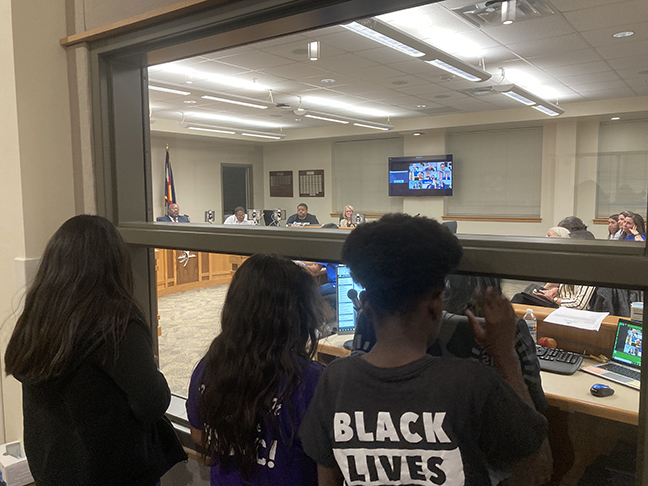
Paris Elementary College college students check out through the window as their close friend speaks to the Aurora General public Educational institutions board of schooling at its April 19 meeting in favor of holding the college open up. (Carina Julig/Sentinel Colorado)

AURORA | Adhering to a string of board meetings the place Sable Elementary School households and academics came out in pressure to protest the proposed closure of their faculty, Paris Elementary College local community users asked the Aurora Community Educational facilities board to give their faculty the identical consideration.

Speaking at Tuesday night’s board assembly, Paris college students and their parents voiced problems that a new school would be too much away for those people who don’t own cars or would not offer the identical good quality of products and services.

“Paris is definitely property to its family members and vital to the local community,” explained Laney Warren, the director for the Boys & Women Club at Paris. She and quite a few of her college students spoke during public remark in favor of maintaining Paris open.

Brianna Lennon has a second grader who goes to Paris and operates the Female Scout troop that operates there. For several young children in the bordering group, “the safest location for them is Paris Elementary,” she mentioned. 

The other universities in the location “don’t suffice for our community,” Lennon explained.

The district proposed in December that each Paris and Sable elementary educational facilities be shut as component of the Blueprint APS system, and their pupils redistricted to various neighborhood colleges commencing in the 2023-2024 faculty 12 months. 

Pursuing the announcement, lots of individuals from the Sable local community protested the choice and at very last month’s conference the college board rejected superintendent Rico Munn’s suggestion in a 4-3 vote which remaining the future of the two universities up in the air.

The superintendent will return at the board’s Might 17 meeting with a established of new suggestions for the colleges in Region 1 that the board will be able to vote on individually (they could only vote on the initial advice as a entire). Relying on what Munn provides ahead, the board could have an additional option to vote on Paris and or Sable.

Paris Principal Mario Giardiello stated that the school is an “anchor” of the group and presents essentials for quite a few families such as food items, transportation, daycare and extracurricular pursuits, and it partners with around 40 diverse neighborhood organizations.

“It’s unlike any location I’ve ever been to in that the wraparound products and services are so total,” he explained.

Giardiello acknowledged that “every faculty that’s ever shut has stated they are special” but that Paris’ neighborhood involvement truly does set it aside. He was dissatisfied that at the before meetings, the sentiment from some people appeared to be “close Paris but not Sable.”

This doesn’t imply that the reverse ought to take place, he explained, but he thinks families from his college are entitled to to be heard as well.

Lots of of his students’ dad and mom are necessary personnel who can not attend a board assembly at 6 p.m., he explained. The school serves a populace that is 85{e4f787673fbda589a16c4acddca5ba6fa1cbf0bc0eb53f36e5f8309f6ee846cf} English language learners and in excess of 90{e4f787673fbda589a16c4acddca5ba6fa1cbf0bc0eb53f36e5f8309f6ee846cf} who qualify for no cost lunch.

In the beginning he said that most individuals from Paris weren’t rallying due to the fact they felt like it was a dropped cause, but next Sable’s prosperous try to get the board to reject its closure, Paris families took note.

“It was not a fair illustration of the two communities,” he reported.

GCU online education innovators led 25-year push

GCU online education innovators led 25-year push

Computers looked like this, with a monochrome screen, when GCU’s leaders got involved in the online education movement.

Editor’s note: This story is reprinted from the February 2022 issue of GCU Magazine. To read the digital version of the magazine, click here.

By Rick Vacek
GCU Magazine

It all began with fax machines and 25 dial-in modems, routed through a server in San Francisco called ALEC.

Fax machines like this one were used to transmit assignments when online education first began.

University of Phoenix online students in the late 1990s would fax their work to instructors, who would grade it and send it back. Before they could learn the course material, students first had to learn how to navigate news groups, accessed through those modems. Instructors could attach a hyperlink to what they shared, but images and videos weren’t yet in the online education picture.

“You look back on it and you think, ‘Well, that’s primitive,’” said Mark Alexander, Grand Canyon Education’s Senior Vice President of Curriculum and Publishing. “Well, yeah, it was – it was primitive. It was early days. But it worked really well. It was very simple. They kept it very simple and tried to minimize technology problems as much as they could.”

Alexander is one of the many higher education pioneers who followed Brian Mueller from the University of Phoenix when he became Grand Canyon University president in 2008, determined to take online education to even greater heights. To understand how they have turned GCU into a leader in the field, you need to go back to the beginnings 25 years ago.

The timeline below contains the key markers, but the story is best told by the key catalysts, Alexander among them. And the obvious place to start is with the man who has shepherded all this innovation.

THE BIG PICTURE:

Defying the disbelievers

Mueller gets a twinkle in his eye when he talks about any of GCU’s advancements since he arrived in 2008. But online education is one of the biggest bright spots:

“There were a couple things that were interesting about it. One was how strongly we believed in it. We thought we could reach people across the world with innovative ways to deliver education, which could help them move their careers forward.

“And the other thing was how strongly we were criticized by the traditional academic community for delivering education in an online modality. As much as we believed in what we were doing and where it was going, it was received equally poorly on the other side of it.

GCU President Brian Mueller and his team kept pushing online education forward despite criticism from the traditional academic community.

“But we just kept pushing forward. I remember the level of cooperation that existed between our technology people, our faculty people, our curriculum people, our service people and how we just continued to work together.

“It wasn’t just about the learning. What we realized was that we had to create a learning management platform so faculty and students could come together around good curriculum, but we had to surround it with technology that could provide an equal amount of services.

“We weren’t going to treat those students any differently than a student who would come on campus. So there were writing labs and math labs and there were tutorials created and there was a large electronic library that was created.”

But those innovations wouldn’t have been nearly as effective without what Mueller calls “the single best decision we made” – maintaining small, intimate classrooms. GCU online instructors don’t have hundreds of students who just take multiple-choice exams. The interaction in their manageable groups is far more thought-provoking.

“The ironic thing was, the internet is just a communication tool,” Mueller said. “It’s the greatest communication tool, probably, that has ever been created. Education is a lot about communication, and we fostered the communication in that environment to the extent that faculty members would get to know students very well, students would get to know each other very well, and we would have vibrant discussions.

“As a teacher, when I walk into a classroom, I can do what I can do in an hour or two-hour class session from a discussion perspective. But when that discussion goes from Monday to Sunday night, the depth that you can create in that discussion, the great ideas that you can create, are far greater than you can even do in a physical, brick-and-mortar classroom.”

THE FACULTY:

New way to hire in higher education

More discussions mean the need for a lot more faculty, both fulltime and part-timers known as adjuncts. The revolution in hiring has been led by Kelly Palese, GCE’s Senior Vice President for Faculty Operations:

Kelly Palese has watched online education faculty hiring change dramatically.

“Online teaching has become a standard, acceptable way to be involved in higher ed and be able to keep your fulltime job and keep your life the way you have it. Online adjunct teaching has become a sought-after, part-time profession for people.

“Back in the day, you would hear the term ‘professional online adjunct’ and they would adjunct for 10 different schools and try to cobble together a living doing it. But what you really see a lot of now is it is almost a part-time profession or part-time career for people who have zero interest in teaching full-time. They need to keep their full-time jobs, but they are incredibly passionate about the adjunct teaching that they do online.

“What that has done is bring a lot of people into this new adjunct profession, and we’re no longer having to cast this wide net for recruiting purposes because people come to us. They want to give back, they want to share their passion for their discipline, and they choose GCU because they want to do it from a Christ-centered perspective.”

The creation of the Online Full- Time Faculty, bringing them together into the same building, is one of GCU’s two big online education developments, in Palese’s view. The other is the collaboration between Academic Affairs and Student Services.

“Now students are having arms wrapped around them by both faculty and their counselor,” she said.

THE TECHNOLOGY:

From Angel to LoudCloud to Halo

All this wouldn’t have been possible, of course, without continuing innovations in technology, and that’s where Joe Mildenhall, GCU’s former longtime Chief Information Officer, comes in. He was given 90 days in 1998 to expand University of Phoenix’s bulletin board system beyond the maximum of 3,000 users, “and I’ve been on the ride ever since.” Within two years, it had exceeded 50,000:

Joe Mildenhall had to deal with the challenges of getting the technology to work effectively.

“They had news group forums, which were threaded, discussion-based forums. A lot of the early bulletin board forums used that for their conversation model. Our first task was moving that class implementation to a better platform that was able to handle a lot more students. But we still relied on that news group-based platform.

“With news groups you had different folders. They would have a folder for general classroom discussion. One for instructor questions. One for assignment submission. Students had rights capability into that folder – they couldn’t look at each other’s assignments.

“We used that for several years. It worked well because it was functional. The other piece of it was that we changed the communication so instead of having the 25 dial-in modems, we actually had them communicating with that classroom through the internet.

“Our students initially were on dialup connections. You didn’t have internet connections through your cable company then. You had dial-up, with all the modem connections. It was fun times.”

Mildenhall has been a key mover in GCU’s graduation in learning management systems, from Angel to LoudCloud to the newest iteration, Halo, which was launched this academic year. The University’s online expertise became even more valuable when the pandemic began in 2019 – the LMS already was a familiar tool for traditional students.

“It really laid the foundation for how quickly we were able to respond to COVID,” he said. “If we would have been disorganized, we would have been in the same boat as most institutions, scrambling to get something built.

“As it was, all the students already had an online classroom. The instructors had integrated it into their teaching of the class. And they just had to be told, ‘OK, it’s all going to be there. You already know where ‘there’ is.’”

THE INSTRUCTION:

Sophistication enters the equation

Alexander began teaching online for University of Phoenix in 2001. Ironically, his family moved frequently when he was a child as his father, Don, taught while earning graduate degrees. Now, Mark was allowed to stay in one place and teach, but he had a lot to learn at first – and so did the students:

Mark Alexander’s online education began as a teacher.

“When you first go online, it’s like, ‘Wait, where is everything? How do I do this?’ That was such a critical aspect of it – those counselors helping the students those first times, getting them into class, walking them to class, showing them around. Tech support was critical to those folks, too, because the system wasn’t as holistic and contained as it is now.

“It was very workplace relevant. It attracted people who had maybe started college before and had some number of credits and were needing to come back and finish for whatever reason.

“The biggest piece of the model was that it was practitioner faculty. The person who was teaching was a person like yourself. In a marketing class, we’re not just going to talk about a strategic marketing plan. We’re actually going to have you write one and build one, based on your experience in your company.”

Since coming to GCU, Alexander has played a key role in the conversion to electronic textbooks and in constructing curriculum that is applicable for ground and online students. He has seen it all when it comes to online education. What one word encapsulates it all?

“Sophisticated comes to mind. We’re far more sophisticated today in the way technology is structured and the way we use technology and the way we leverage that. We’re certainly more scalable. More people are doing online learning than they ever thought would be possible.”

Palese came up with the same word for the faculty part of the equation:

“Everything around the faculty process and the faculty experience in the online classroom has just become that much more sophisticated. Recruiting is much more disciplines focused. The ways, the methods, the strategies that faculty use are much more sophisticated.”

And yet Mueller makes it sound so simple, this idea of bringing working adults back to school to create problem solvers:

“We took the learning model that worked in the physical, brick-and-mortar classroom, and we just replicated it online. Rather than bring faculty members and students around great curriculum to a physical, brick-andmortar building, we brought them to the online learning environment.”

And then just kept innovating … for 25 years that changed higher education forever.

Contact Rick Vacek at (602) 639-8203 or [email protected].

****

TECHNOLOGY TIMELINE

University of Phoenix

Late 1990s

ALEC accessed via 25 dial-in modems. Limit: 3,000 students.

Early 1999

Online learning system (OLS) launches. Code name: Groundhog. Target capacity: 20,000 students.

2001

OLS 2001 launches. Target capacity: 100,000 students.

2002

Launches rEsource for online delivery of course materials and electronic textbooks

2005

OLS 3 pushes number of students supported to more than 250,000. Eliminates need to use Outlook Express.

GCU

2009

Angel learning management system (LMS) in use

2011

LoudCloud begins supporting online students

2013

Traditional students added to LoudCloud

2021

Production rollout of Halo

****

Related content:

GCU Today: No Hal-lucination: GCU switches to its own LMS

GCU Magazine: Even online, ground students feel touch of class

GCU Today: Faculty are plugged in for online, blended learning


Push for RSU 21 recall has Kennebunk in a roil

KENNEBUNK – Those people hunting to oust two Kennebunk RSU 21 administrators have a 4:30 p.m. deadline on Thursday, Dec. 30, to submit recall petitions to Town Clerk Merton Brown.

Brown has calculated the proponents would need to have 665 signatures of registered Kennebunk voters – 10 per cent of all those who solid ballots in the past gubernatorial election – to put the recall of college board director Timothy Stentiford and chair Arthur LeBlanc to the voters.

Some in Kennebunk want to remember two elected RSU 21 board users other individuals say a remember is not warranted. Residents really should know in a few times of the Dec. 30 deadline for petitions to be submitted to the city clerk regardless of whether they’ll be headed to the polls. Dan King picture

The male who structured the recall, Norman Archer, stated signature gathering is likely properly and he believes supporters will meet up with the threshold for a recall election.

Archer, who served on the board for 5 years, from 2007 to 2012 and as chair for two of them, reported he’s been observing a need for transform on the board for some time, and started meeting and speaking with others this spring.

A group named Never Slide for the Remember suggests the remember is unneeded and is urging inhabitants not to sign the petitions. Do not Slide for the Recall member Dan Sayre claimed he believes the professional-remember contingent is trying to find a February vote, when turnout is traditionally low. Even though LeBlanc’s phrase expires in 2023, Stentiford’s expires in June. “It will improve their odds of changing Tim with an individual who would be unlikely to acquire in June,” Sayre explained.

Archer mentioned he started out asking issues at university board meetings about a 12 months ago and obtained number of answers – and in one case when he did, the solution came 6 months afterwards. And he claimed, he has watched mothers and fathers “routinely being shut down when they attempted to ask thoughts.” He explained board customers take care of instructors in a comparable vogue.

“This all commenced with only inquiring inquiries,” mentioned Archer, who is a father or mother of a university student at Kennebunk Superior Faculty. “In a interval of relative tranquility, this board’s absence of transparency would be relating to. But following several years of turmoil, partial responses and admonishing the group and our academics in community session signal that this board does not just take severely the need to be transparent nor values its responsibility to restore community have faith in in our district.”

He pointed out the facts he was in search of included taxpayer pounds. “Every citizen has a right to ask these questions and acquire responses,” he reported.

Really don’t Slide for the Recall member Chris Babcock mentioned there is a variance amongst shutting down speakers “out of spite” or doing so in buy to continue to keep a assembly successful. “I have attended conferences and have witnessed speakers from the public shouting and ranting and raving,” claimed Babcock, in component. “This does not make for a successful meeting in any structure.”

Affidavits filed Nov. 29 with the town clerk’s business, which triggers the recall system in Kennebunk, allege LeBlanc’s “role in negotiating the most new teacher’s deal, and its influence on workers attrition, the failure to seat a curriculum committee, and a failure in government leadership by allowing for academics, mother and father and community customers to be bullied and admonished in general public conferences,” is a bring about for remember. The affidavit naming Stentiford is identical. It even more alleges “(Stentiford’s) individual contribution to the board’s escalated administrative spending” has triggered a decline of confidence in his capabilities as an RSU 21 director.

There is far more, not mentioned in the affidavit.

Archer stated he began inquiring queries not extended soon after Dr. Terri Cooper started her occupation as the district’s superintendent in August 2020.

Cooper’s tenure started six months into the coronavirus pandemic. Faculty opened in a hybrid product in September 2020, and in May perhaps, small children in Kindergarten by means of Grade 2 attended in man or woman four times a week. Universities opened for fulltime in human being classes for all learners on Aug. 30.

Cooper, who has a master’s degree in administration and a doctorate in instructional management, experienced earlier served as principal in various faculties and as a director of worker aid expert services in North Carolina. She was selected from a area of seven candidates interviewed from the 18 who utilized.

In a letter Archer despatched seeking for help in the initial levels of the recall quest, he wrote: “the bottom line is this: soon after a 12 months of Dr. Cooper, it is clear that she is unfit for the place and not currently being held into account by the Board. It is time to consider the only action we the voters have: eliminate the de facto board leaders from business and change them with individuals who will do the 1 career they had been elected to do: control – and probably replace – the Superintendent.”

The recall affidavits submitted by Archer do not reference Cooper straight.

When questioned by a reporter, Archer noted a superintendent are not able to be recalled, “but you can remember the men and women who employed her and surrounded her with high priced consultants to compensate for an apparent lack of knowledge.”

As to his “unfit” remark, Archer claimed he believes Cooper is not in good shape for RSU 21 at this time.

“We require a chief who can stabilize the district, restore public have confidence in, have interaction the public in a good fashion and create bridges throughout our three communities,” reported Archer. “That’s not occurring.”

He reported the district has had multiple superintendents about the past 7 years. “It would feel apparent that the district essential a demonstrated and skilled chief to move in and right the ship, as it ended up,” said Archer in an e mail. “Someone who knows Maine statutes, is familiar with our a few communities, understands the heritage of RSU 21 more than the earlier seven a long time.”

Really do not Tumble for the Remember customers say the factors for the remember are neither a failure of judgment or means of the board – specifications for remember set forth in Kennebunk’s charter. They say the explanations are personalized, unfair, undemocratic, dishonest, enthusiastic by outdoors forces, and will build dysfunction, halt wanted progress, harm property values and the Kennebunk manufacturer, and is mistaken on the specifics.

“We are a leaderless team united in opposition to the recall, and also united in dedication to make improvements to RSU 21,” mentioned Sayre. “That latter bit appears to be to have been shed in the dialog.” Sayre reported the team is “as informed as the other facet that there are items that want to be improved.”

“Our situation is practically nothing will be improved if two of the most effective college board members, Stentiford and LeBlanc are eliminated,” mentioned Sayre.

Sayre reported Stentiford and LeBlanc have been instrumental in creating an successful human methods workforce at RSU 21, and pointed out the human means director was budgeted prior to LeBlanc’s 2020 election to the board. In reaction to the recall proponents idea that RSU 21 spends much too a great deal on administration and human means, The Never Slide for the Recall group has calculated that RSU 21 spends .47 p.c of its funds on human sources employees, whilst the city of Kennebunk spends .79 per cent of its funds on HR staffing. They observed at minimum 17 other school districts in Maine, like many nearby,  have in-house human sources functions. They also noted district lawful expenses ended up lessened from $341,298 in the 2020 fiscal 12 months to $181,140 in the 2021 fiscal yr.

The RSU 21 Board of Directors has 12 associates, and is at this time down two. Todd Shea, Arundel, and Amanda Oelschlegel, Kennebunk, not too long ago resigned,  citing time constraints as factors for stepping down. Decide on boards  are making ready to appoint replacements.

Stentiford was elected in June 2019 and was the 2nd best vote-getter in a subject of four candidates for two positions. His term expires in June. LeBlanc was the next optimum vote-getter in the July 2020 election that saw two candidates operate for two positions on the board.

Sayre quoted the city constitution on the intent of remember: “Recall is supposed to be applied when, in the belief of the quantity of voters hereinafter specified, an elected formal, performing as such, has brought on a decline of self confidence in that official’s judgment or means to conduct the obligations and responsibilities of the office.”

“The recall is focusing on another person Norm Archer endorsed on Fb in 2019,” reported Sayre, referring to Stentiford. He mentioned LeBlanc has a lengthy historical past of productive company.

“This recall isn’t about capability or judgment it is about political variances,” stated Sayre.

Sayre and other Don’t Fall for the Remember customers believe remember proponents might be connected in some fashion to a nationwide group termed Mother and father Defending Education, which solicits guidelines from the public on its web-site. Current Liberty of Facts requests to RSU 21 display the vice president of strategy and investigations for Dad and mom Defending Education inquiring for a checklist of sellers and outside the house educational consultants the district has utilized due to the fact Jan. 1, 2020, in the spot of range, fairness and inclusion.

The RSU 21 Board of Administrators addressed the recall exertion in a Nov. 23 letter, before the affidavits ended up filed.

“Members of the Board are mindful that there is a nicely-arranged team that fulfill consistently and look focused on discrediting the function of the Board and the administration for political get,” LeBlanc reported in the letter signed by board customers. “Despite the attempts of this group to forged doubt on the Board’s determination to our motives, the Board will keep on being steadfast in its determination to assistance our learners and workforce.”

Archer claimed the petition work is going effectively. But when requested, he mentioned if the signature threshold is not achieved, “we have already attained a lot.”

He attributed modern RSU 21 Board actions to the attempts of those people supporting the recall.

“Last spring the academics contract was executed soon after sure members of our greater cross-community group organized a march on their behalf the Ed Techs just been given a pay increase the Board pulled again an authoritarian plan blocking employees participation in political initiatives,” claimed Archer. “Our attempts are functioning by now. This team is increasing and will proceed to shine a mild on this Board and boost candidates who will request the challenging thoughts, not rubber stamp what’s set in entrance of them.”

It is unclear if a remember motion is most likely in Arundel and Kennebunkport. Municipal clerks in each communities have earlier mentioned inquiries had been produced.

“I’ve experienced persons check with, but no just one expressing, ‘I’m sending in a petition,’” Kennebunkport Town Clerk Jamie Mitchell mentioned on Friday, Dec. 17.

One of three eyed to close, speakers push the benefits of Meadville Elementary | Education

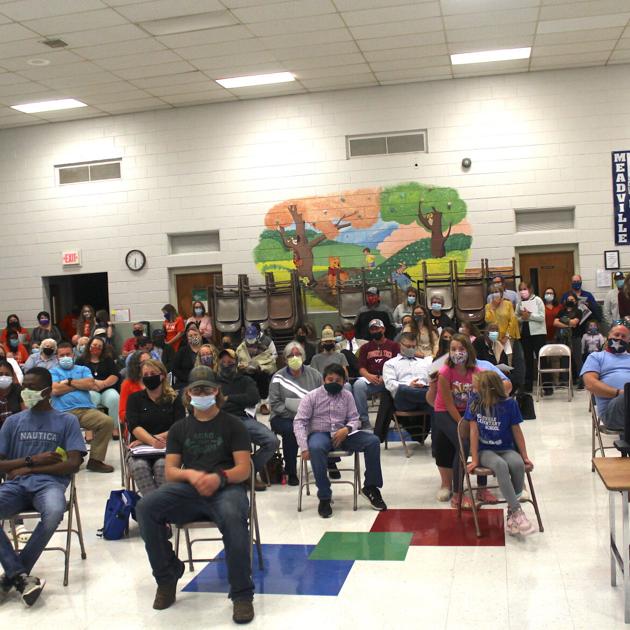
Safety and transportation concerns and the benefits of community schools were brought to Halifax County School Board Thursday evening at a public hearing on the possible consolidation of schools.

Meadville is one of three schools the board has been considering closing. The other two elementary schools they’ve considered closing are Sinai Elementary and Clays Mill Elementary.

Superintendent Dr. Mark Lineburg told the close to 100 individuals in attendance that while he understands the love of a community school, they have a challenge to discuss.

The challenge? Capacity issues due to a declining enrollment.

Dr. Lineburg told those in attendance that the school system has lost about 500 students since 2014.

He went on to explain that Meadville Elementary currently has 175 students enrolled, but according to the Virginia Department of Education standards for instructional capacity, it could accommodate 324 students.

If they were to close Meadville, Sinai and Clays Mill, the proposed plan would be to renovate Sydnor Jennings and Scottsburg elementary schools at a cost of roughly $37 million.

If the school board were to move to a four-school model, there would be approximately $2,307,500 in personnel savings, according to Lineburg, and more than $38 million of future facility costs would remain.

He also explained that they would maintain a class size of approximately 20 students to one teacher, and with a four school model, they’d be able to expand services such as music, art and speech therapy.

During his presentation Lineburg told the crowd that there may be other possibilities out there, and if anyone has “something better, certainly share it.”


School

Meadville Elementary principal Kevin Neal holds up notes from his students on what they like about their school at Thursday’s public hearing on the possible consolidation of elementary schools.


Following the superintendent’s presentation, Meadville principal Kevin Neal took the podium to tell the board that they would be “hard pressed” to find a place more nurturing than their school.

He then went on to read notes from students who were asked to share what they like about Meadville. Some spoke of the nice teachers and how they’ve helped them learn and others talked about finding forever friends.


School

Jimmy Epps talks about how community schools are part of the heart of a community during a public hearing on the possible consolidation of elementary schools at Meadville Elementary Thursday.


Several engineers took the podium during the public hearing, the first being Jimmy Epps, who said, “we can make anything work on paper,” so he wasn’t going to argue the numbers, but instead focused on the heart of the community.

He said over the years that community was centered around a common crop, a country store and Meadville Elementary.

The store is closed, and Epps said the church is not the cornerstone anymore, “but this school remains.

“This is the heart of this community, and it’s your job to protect it,” said Epps, who urged the school board to “not rip the heart” out of the community.

“And, if its sick, nurse it to health,” he added.

Erin Shaughnessy, representing the PTO (parent – teacher organization), agreed with Epps saying if they remove the school, they’re taking the heart out of the community.

“These small communities in the county give it the identity it has,” said Shaughnessy. She spoke of the fire departments and ladies auxiliaries that have been hurting, and she warned the school board that if they close these schools, then parents will leave.

“Show them what’s important. Bigger doesn’t mean better,” said Shaughnessy, who pulled her children from a larger elementary school to go to Meadville Elementary.


School

Melissa Fields speaks about how she feels comfortable sending her son Carson, who has type I diabetes to Meadville Elementary.


School

Mary Beth Cosby, who is joined by her daughter Brooklyn, talks about the rural secondary roads students have to travel and the strong foundation students receive at smaller elementary schools during a Thursday public hearing.


Some parents and guardians like Mary Beth Cosby, Chris Moore and Melissa Fields spoke of the one-on-one attention and beneficial experiences their child has received at Meadville Elementary.

Fields son Carson has type I diabetes, and Fields said she doesn’t worry when she sends him off to school.

Moore’s nephew Cameron has blossomed since being at the primary school earning A/B honor roll and has come out of his shell.

Cosby said she didn’t want to send her daughter Brooklyn to a larger school because it takes out the personal attention teachers are able to give.

“She would be another student in a big building,” said Cosby.


School

Dr. Bridgett McDowell, a local dentist who attended Meadville Elementary, speaks of discipline concerns at larger schools during a public hearing on the possible consolidation of elementary schools.


Another speaker, Wanda McDowell, spoke of the strong solid foundation children are able to receive at a smaller elementary school, and warned that a larger class size would lead to discipline problems.

She also reminded the board that Meadville Elementary, and other smaller schools, were built to accommodate grades kindergarten through seventh, not through fifth and that Halifax County is the fourth largest county in Virginia.

Wanda also noted that Pittsylvania County has 10 elementary schools, Rockingham County has 15 and Bedford has 13.

“Please reconsider this plan,” she asked of the school board.

Several speakers, including Della Cunningham, said she didn’t have to worry about her children’s safety at Meadville.

She said all the staff knew her children, and she said a smaller school allowed her to not worry about COVID-19 as much as a larger school, like the middle school does.

Dr. Bridget McDowell also spoke about safety at the public hearing saying her son was choked on the playground at South Boston Elementary, and she said she was told that there are over 100 children on the playground at the South Boston school with a teacher and a teacher’s aide.

She also said her son was scared to leave the classroom alone when he attended South Boston Elementary as a kindergarten because he was scared he would get lost, as others in his class had.

When her son was told that the school board was considering closing Meadville Elementary, he told his mom, “please don’t send me back to that jail,” McDowell relayed before going on to talk about the high teacher turnover rate at larger elementary schools.

Mike Wilborne, former principal at Sinai Elementary for many years, also called community schools the “heart and soul” of the community, and went on to speak about the strong bond that the staff is able to form with each student.

“They are not numbers in a building,” he said, before noting that nine elementary schools had already been closed in the past and he asked where are the savings from those closures.

The retired principal went on to list the names of roads in the western portion of the county, and noted the children who would have to bussed from near the Pittsylvania County line saying students do not need to make that bus ride to Sydnor.

He also said South Boston Elementary doesn’t “need anymore to deal with.”

Meadville Elementary teacher Kanette Hollis said she had worked at Virgilina and Turbeville elementary schools before they closed, and have worked at both large and small schools since.

When teaching at the larger schools, she said it always felt like she was unable to give enough to her students.

Whereas at a smaller school, she said it never feels overcrowded, and she doesn’t feel pushed beyond her needs.

“This is the more logical chose to keep open,” said Holllis, who called closing smalls during the COVID-19 pandemic “reckless.”