Going the Distance: NC State’s Leadership in the Public Sector Program

Going the Distance: NC State’s Leadership in the Public Sector Program

Remote work isn’t an option for Kelly Blair. As a tree crew supervisor for the city of Wilmington, North Carolina, a routine workday is apt to find him in the bucket of a boom truck 40 feet off the ground, trimming the limbs of a laurel oak. Long hours on the job are followed by a long commute to his home near Chapel Hill, where he spends the weekends with his wife — a nurse with Duke Health in Durham — and three children.

So when Blair decided to go back to college midcareer, remote learning seemed like the ideal option. “At this point in my life, unless it’s a distance education program, I just don’t have the time,” he says.

In May, Blair will graduate from NC State with a Bachelor of Arts in leadership in the public sector, the university’s only fully online undergraduate degree — and he’ll likely have a perfect 4.0 grade point average when he does.

“It’s taken a lot of time away from my family,” he says, reflecting on the years he spent at a community college followed by four years at NC State. “But my family has always supported me. They see the bigger picture. This is what I needed to do to be where I want to be in life.”

His goal is to finish his degree at NC State, earn a graduate certificate in urban forestry and then advance into a more public-facing role on the job. “I love communicating with the public and handling issues that can cause some pretty severe safety hazards in the community,” he says. “I don’t really desire to be — and I’m probably not physically capable of being — a climbing arborist into my seventies. Moving into management is a natural progression.”
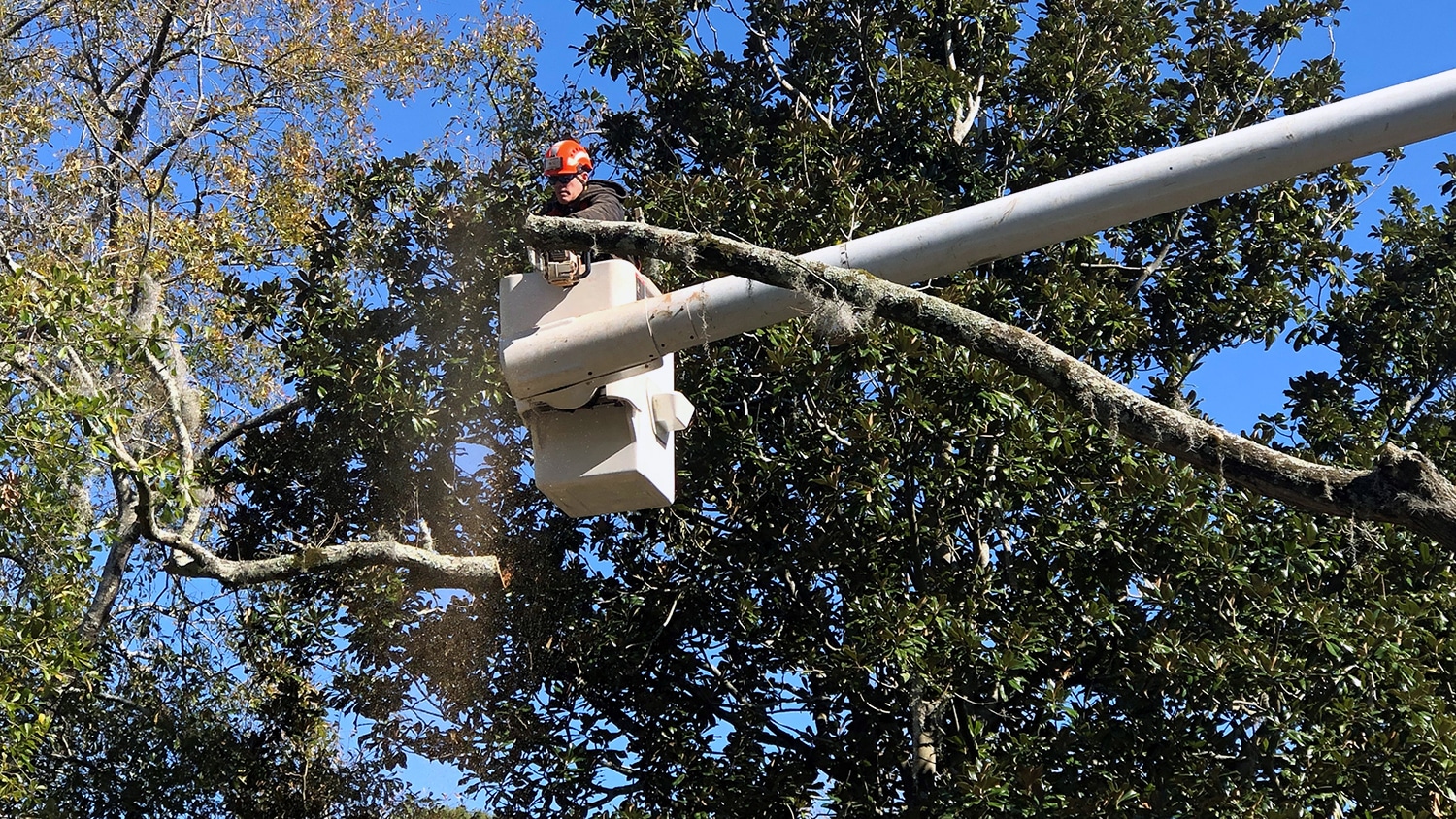
Kelly Blair in a bucket truck, trimming a tree branch with a chain saw.
Kelly Blair commutes from his home in the Triangle to Wilmington, North Carolina, where he works as a tree crew supervisor.
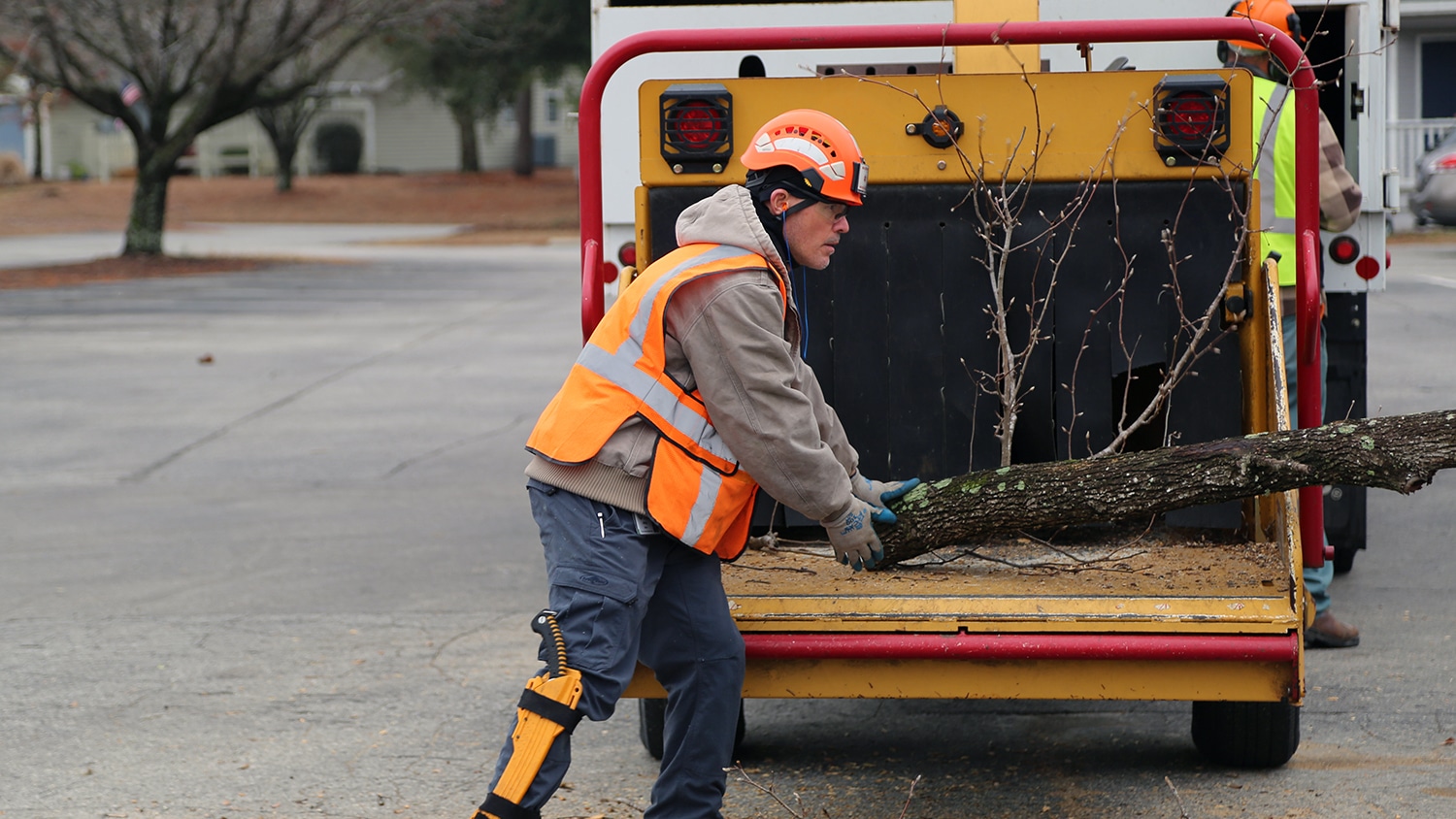
Kelly Blair loads a tree branch into a chipper truck.
Blair’s passion for the outdoors led him to a career as a municipal arborist.

NC State’s degree in leadership in the public sector, or LPS, is designed for students who have already completed some college coursework — typically 60 credit hours — through a community college or four-year institution. The program’s four core courses cover the basics, including the ethical, theoretical and analytical skills students need to be effective leaders.

Another six courses from an approved list allow students to delve into a wide range of topics, including grant writing, fundraising, the justice system and the American political process, organizational psychology, and the intersection of science, technology and human values.

Students round out the curriculum with free electives from across the university, making it a highly engaging and personalized course of study.

Blair’s experience in the LPS program is a world away from his high school days in Virginia, where he struggled with his studies. “As a young adult, it was really hard for me to find a passion,” he says. “I preferred the outdoors to going to class. I can’t tell you how many times I went fishing instead of doing my schoolwork.”

Eight days after graduating from high school, Blair joined the U.S. Army. At Fort Polk, Louisiana, which encompasses parts of the Kisatchie National Forest, he realized that his passion for the outdoors could lay the foundation for a rewarding career.

“I fell into the green industry: landscape maintenance, landscape management. I even became a certified grounds manager at one point,” he says. “Then I started to focus on woody ornamental plants and trees. And that’s been my passion ever since.”

At NC State, Blair found professors whose passion for teaching matched his emerging passion for soaking up knowledge. “I’m floored by most of the professors I’ve had,” he says. “They have just knocked my socks off.”

Asked to name a favorite course, he’s quick with an answer that might surprise even the wonkiest professor. “I recently took a class titled Research Methodology for the Public Sector, and it was a real eye-opener,” he says. “I’ve looked at a lot of scientific papers while studying to be a board-certified master arborist, but I never really had any idea what went into leading a research study.”

He values the curriculum’s multifaceted approach to teaching key aspects of transformational leadership. “You learn about compassion, integrity, ethics and morals,” he says. “As a leader, you learn not only to get things done, but also to incorporate people skills to a much greater degree. As that happens, I believe the workplace becomes more sustainable, equitable and enjoyable.”

Quality Matters

Traciel “Trace” Reid, an associate professor of political science, is director of the LPS program. She says military members and their families were the program’s primary focus when it launched a decade ago; now, that’s changing.

Although the program continues to attract and cater to the needs of service members, the student population is much broader these days. Some students, like Blair, are driven by a desire to advance in their careers. Others want to complete a degree for family or personal reasons. An increasing number are comfortable with the technologies used in distance education and like the flexibility of taking courses online at their own pace.

“The program is really evolving in terms of the kinds of students who are looking for an alternative to the four-year campus experience,” Reid says. “What they share in common is the belief that going to a traditional college is not compatible with where they are in their lives.”

The program is really evolving in terms of the kinds of students who are looking for an alternative to the four-year campus experience.

What isn’t changing is the program’s commitment to academic excellence. “We combine a strong theoretical base with an opportunity for students to interact with faculty who have a practical applied dimension, too,” Reid says. “Our instructors have worked in a variety of settings, and they bring those experiences to the virtual classroom.”

Tracy Appling, a teaching assistant professor of public and international affairs, teaches some of the program’s core courses, including Introduction to Public Leadership. She has 20 years’ experience in higher education administration as well as a background in nonprofit management and fundraising. She also directs external relations and internships for NC State’s School of Public and International Affairs, the academic home for the LPS program.

In addition to her academic training and real-world experience, Appling brings a passion for student success to her work. “What makes us different is that our instructors give our students as much help as they need, and as much help as if they were in a classroom face to face,” she says. “For myself, I really take a personal approach because I absolutely love these students.”
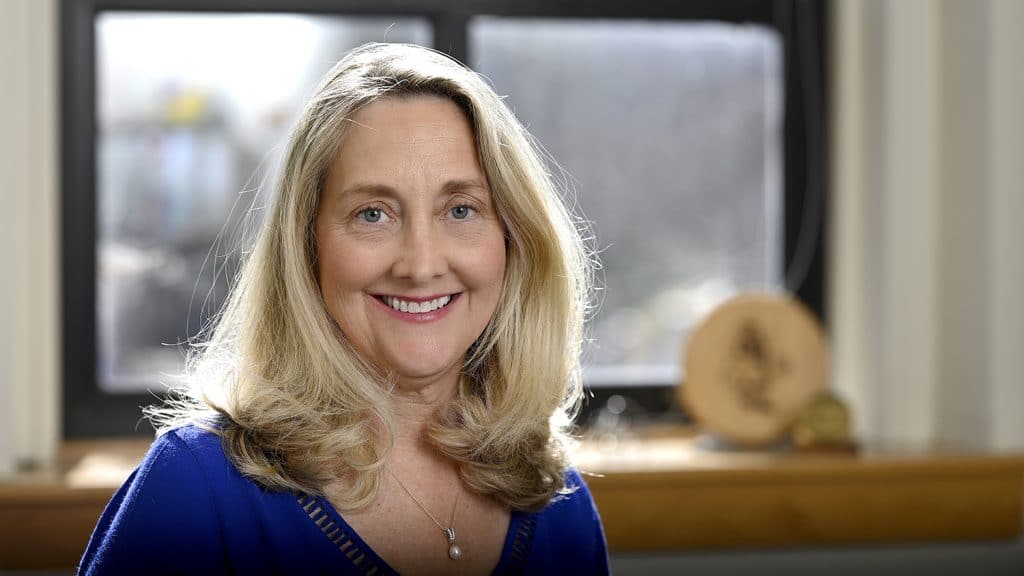
Professor Tracy Appling stands in front of a window in her NC State office.
Tracy Appling says the public-sector leadership curriculum is relevant for people in all walks of life. She tells her students, “Regardless of your title, you are a leader in some way, shape or form.”

A lot of work has gone on behind the scenes to build LPS into one of the top 10 online undergraduate degree programs in the country. A few years ago, Appling and four other instructors went through the rigorous process of getting the program’s core courses Quality Matters certified, an international standard for online education.

“It’s the gold standard,” she says. “We had to meet quality expectations for 42 standards with a score of 85{e4f787673fbda589a16c4acddca5ba6fa1cbf0bc0eb53f36e5f8309f6ee846cf} or better. It’s all focused on whether you’re providing the student with the best online learning experience possible.”

Bethanne Winzeler, assistant director of course quality for DELTA, NC State’s distance education division, says QM rubrics and standards encompass eight areas: course overview and introduction, learning objectives, assessment and measurement, instructional materials, learning activities, course technology, student support and accessibility.

“The main concept in QM is alignment,” she says, noting that every aspect of a course must work together to ensure student success.

“That’s very important because when students go into an online course, every course is different and structured differently,” she says. “So they need to know exactly where to go, how to get started, how to communicate with the instructor and with each other, and how to navigate the course.

“That sets them up for success right from the start.”

Winzeler, who has a Master of Science in instructional technology, worked with the LPS faculty to achieve QM certification. “It involved a tremendous time commitment and, honestly, a lot of blood, sweat and tears,” she says. “I’m proud of them for taking the time to do it. It really shows their dedication to their teaching and to their students.”

Paying It Forward

The program’s quality was at the top of Amy Bisset’s mind when she decided to transfer from a traditional bachelor’s program in history to the LPS program. A native of South Korea, Bisset is committed to enhancing her English writing skills as she earns her degree.

“I rewrote one paper more than 10 times,” she says, laughing.

Unlike Blair, Bisset is just beginning her LPS coursework, and she has about two years of work to complete before she graduates. As the mother of an 11-year-old daughter and a 16-year-old son, she appreciates the flexible schedule made possible by distance education.

Thankfully, her efforts in the history department won’t go to waste; she has enough credit hours to earn a minor in history.

“I’m very excited,” she says. “The leadership courses align with my career goals. As soon as I graduate, I plan to start a business helping students who want to study abroad — especially students in Korea who want to study in the United States.”

Bisset says her main motivation for returning to college was personal, not professional. “I wanted to show my kids that I’m serious about the importance of studying. They’ll never be able to say, ‘You always tell me to study, but you’re not doing anything.’”

LaShica Waters, the LPS program’s academic advisor for the past 10 years, is a key resource for students like Bisset. She works with incoming students to map out their future course of study while accounting for the college courses they’ve already completed. She is nearly always available to answer questions about online resources such as Moodle and is quick to give LPS students advice on study tools and techniques.
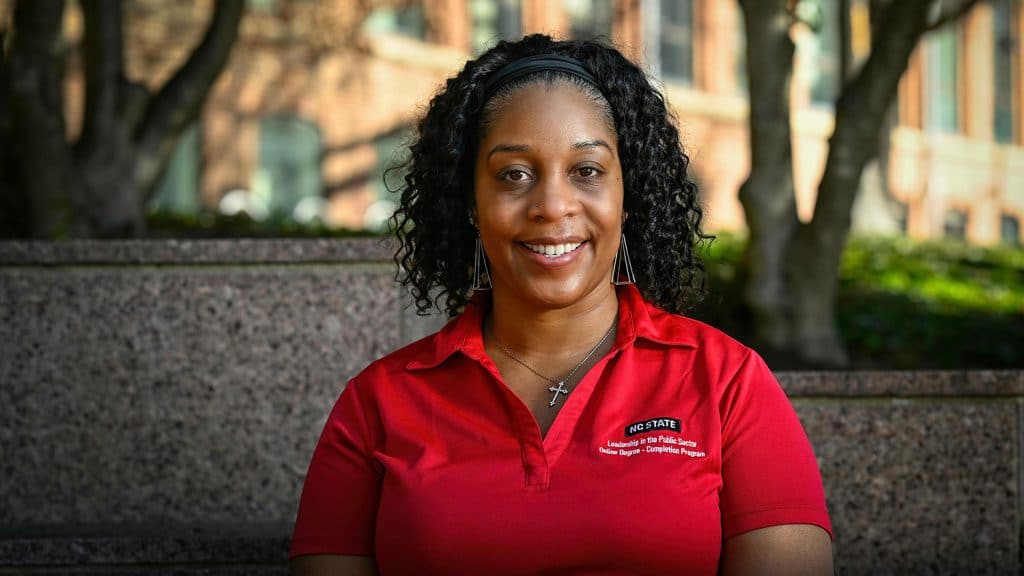
LaShica Waters in front of academic building on campus.
LaShica Waters, the academic advisor for the Leadership in the Public Sector program, is the 2021-22 recipient of the Barbara Solomon Advising Award from NC State’s Division of Academic and Student Affairs.

“I tell my students everything I wish somebody would have told me when I was first going to college,” says Waters.

For students and prospective students alike, Waters is at times a mentor, confidant, ally and friend.

“When I first meet with them, adult students want to talk about everything,” she says. “They tell me their life history, how they got where they are today and why they’re now coming back for their degree. They want to plan all their courses, and they have a lot of questions: How long will it take? How much money will it cost? When do I graduate? What’s the celebration like?”

Waters delights in her role, recalling the assistance she received from a neighbor after she graduated from high school. The neighbor, surprised to hear that Waters had no college plans, drove her to East Carolina University and helped her apply for admission and financial aid. “That’s what propelled me to go to college,” Waters says. “If it hadn’t been for her, I don’t know if I would have found anyone else to help me.”

Waters, a first-generation college graduate, has since earned a bachelor’s degree in communication and a master’s degree in counselor education from ECU, as well as a Ph.D. in adult workforce and continuing professional education from NC State.

Her primary goal for LPS is to find ways to help students connect with each other, with faculty and with the program’s many alumni, near and far. “They want more engagement, and they want more inclusion,” she says. “Even though they’re online students, they want to feel a part of the campus community.”

A Rewarding Journey

Amanda Buchanan understands the importance of student engagement. A 2012 graduate of the LPS program, she now works as director of financial aid at Blue Ridge Community College in Flat Rock, North Carolina.

“I think a lot of people have a preconceived notion that they’re just going to breeze through an online program,” she says. “But online learning takes a lot of the responsibility and puts it squarely on you. Yes, the instructor is going to build the class and provide you with content, but you have to prepare, you have to read, you have to plan ahead. And more than anything, you have to be comfortable asking questions.”

During her time in the LPS program, Buchanan made a point of staying in touch with her professors. “The instructors made it very interactive. They recorded lecture videos, they had online office hours so we could log in and talk with them, they made themselves very accessible,” she says. “I never felt like I was alone in the program.”
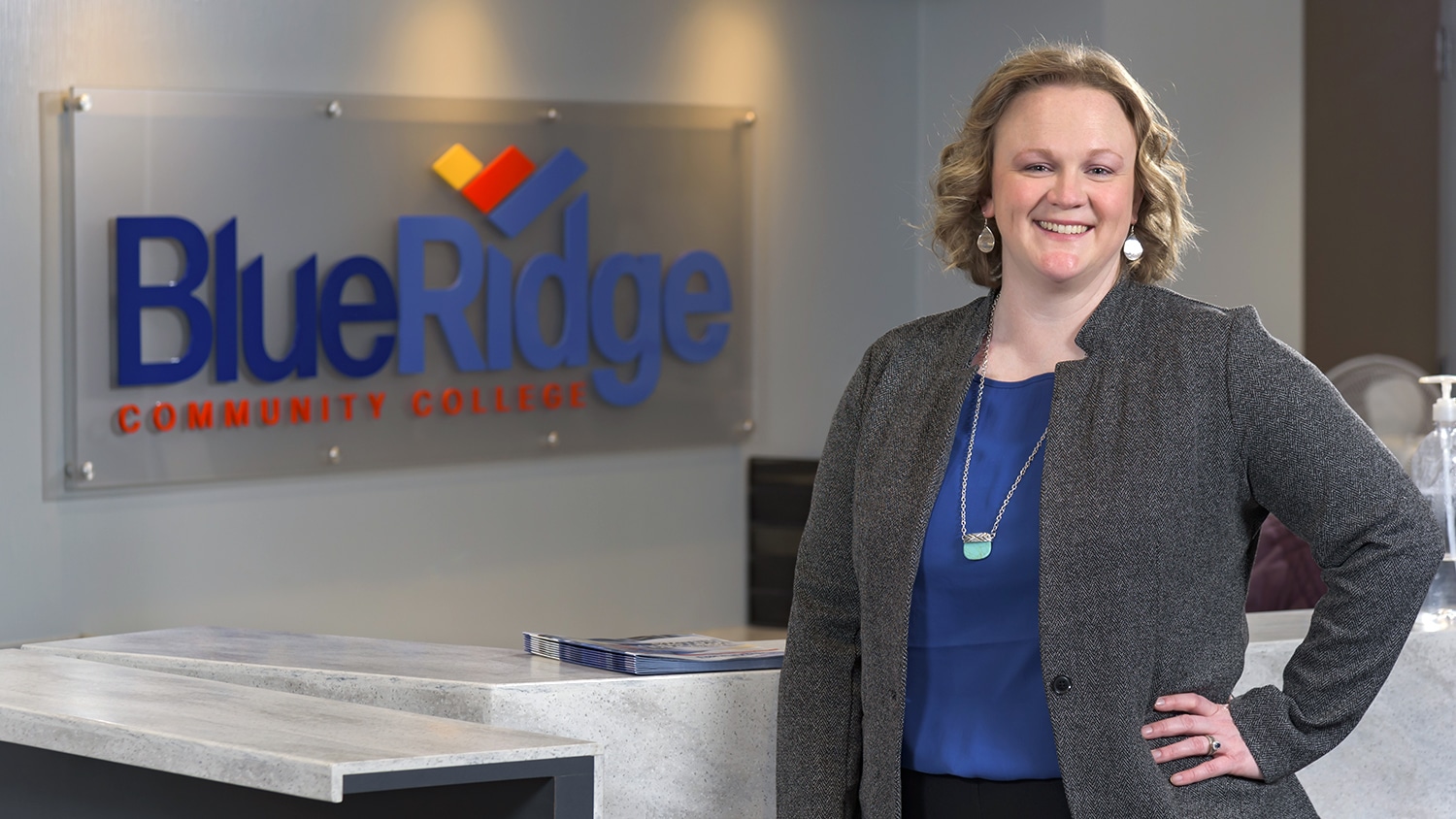
Amanda Buchanan posing in front of sign in financial aid office at Blue Ridge Community College.
LPS graduate Amanda Buchanan oversees the financial aid office at Blue Ridge Community College. Photo courtesy of Rich Keen.

She credits her career advancement to the lessons she learned in the leadership program. “When I started working on my degree, I was an administrative assistant at a community college,” she says. “At work, I found myself using what I learned in my courses: how to work with people, how to hold difficult conversations, how to implement change. Because of that, I was given opportunities that I truly believe I would not have had otherwise.”

One opportunity was a trip to Washington, D.C., where Buchanan spoke with public officials about the financial challenges facing college students. “I got to use my knowledge of leadership and public policy and what goes into writing public policy to frame how I approached that conversation and how I spoke with them,” she says.

I never felt like I was alone in the program.

After completing her undergraduate degree at NC State, Buchanan continued her educational journey, earning a master’s in executive leadership from Liberty University and a master’s in adult and continuing education from ECU.

Looking back, she doesn’t make light of the struggles involved in balancing work, home and school.

“I vividly remember sitting at my kitchen table with my youngest son in a baby carrier up against my chest, rocking him to sleep while working on a paper,” she says. “My husband would take care of the oldest and I had the baby because he would sleep as long as he was close to me. And that’s how we survived.”

But, she adds, she has no regrets.

“It’s not a quick journey and it’s not an easy journey and it’s not something that’s going to happen overnight,” she says. “But what I always tell students is that it’s worth every sleepless night. It’s worth every snooze button that you have to hit in the morning. It’s worth every tear you cry onto your keyboard when you’re typing that paper. It’s worth all of those things, because in the end you have grown as a person. And you have earned something that nobody will ever take away from you.”
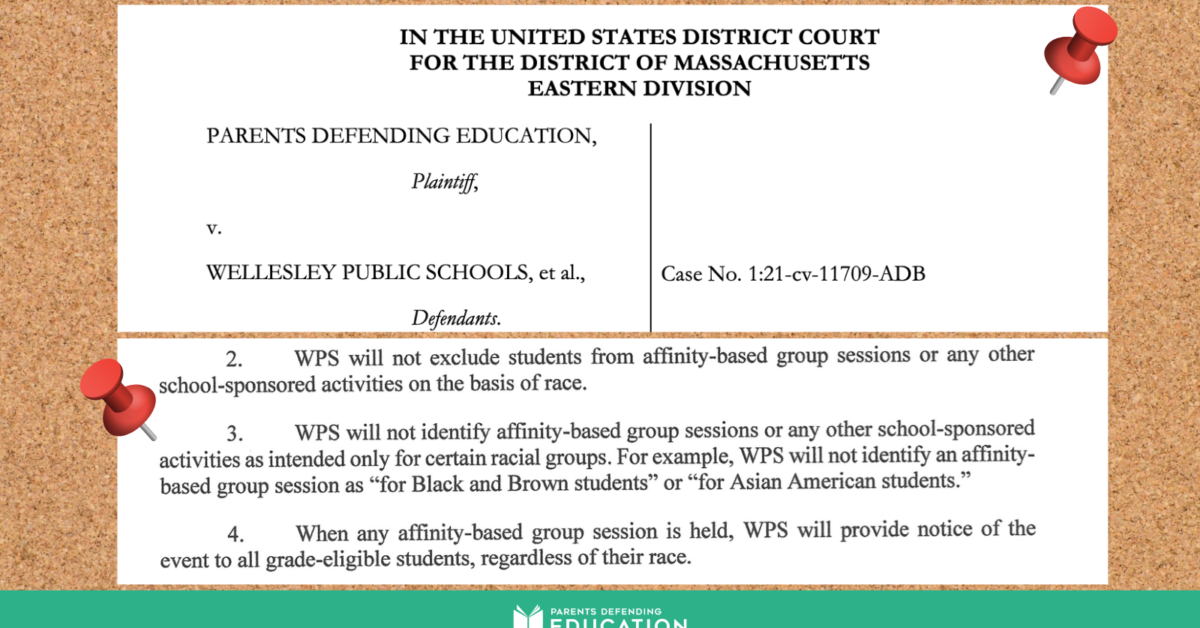

PDE Settles Lawsuit Against Wellesley Public Schools

PDE Settles Lawsuit Against Wellesley Public Schools

Parents Defending Education’s lawsuit towards Wellesley Community Educational facilities has ended in a settlement arrangement that will end “affinity groups” that exclude college students on the basis of race. Wellesley General public Educational institutions will be issuing a statement that it by no means should have – and by no means will once more – advise to moms and dads that their youngsters can be excluded from faculty-sponsored activities simply because of their race. And if the district holds “affinity groups” in the foreseeable future, it must obviously and unequivocally point out that such gatherings are open up to all students regardless of race.

PDE’s match also challenged Wellesley General public School’s draconian “Bias Reporting Method.” Soon immediately after PDE submitted accommodate, WPS suspended the policy, which gave the college the electric power to punish speech simply due to the fact some others thought it was “offensive” or showed “conscious or unconscious bias.” This procedure has been changed and will in no way be reinstated.

PDE’s lawsuit and the ensuing settlement usually means Wellesley General public Schools may no longer deal with college students in another way on the foundation of race when disregarding the guaranteed protections of the Fourteenth Amendment – nor intentionally chill student speech whilst disregarding the certain protections of the Initially Modification.

“Parents Defending Instruction is thrilled that Wellesley Community Educational facilities has agreed to regard each the First and Fourteenth Modification rights of its learners likely forward,” said Mother and father Defending Education and learning president Nicole Neily. “This settlement sends a clear message that racially segregating college students in general public educational facilities is incorrect – and there will be effects. We have invested decades teaching our children that racial segregation was and will usually be completely wrong. We will not tolerate a return to segregation in 2022.”

Sad to say, race-primarily based “affinity groups” have obtained traction past Wellesley other general public faculty districts with likewise unique “affinity groups” consist of:

In addition, PDE’s “Consultant Report Card” has identified several consultants who explicitly advocate these segregated packages:

Lori L. Speaks

  • In a March 23, 2021, deal with New Castle County Vocational Complex University, Lori L. Speaks, a consulting firm based mostly in Wilmington, De., explained it would host 10 weekly “affinity team facilitation” for 1.5 hours and give other expert services. It was paid out $22,000 for the consulting contract.

National Equity Task

  • In a Nov. 12, 2020, email with Forest Park College District 91, Nationwide Fairness Venture explained it would lead “Role-Alike Affinity Groups to build management potential and talent.”
  • In order requisition No. 7622911, authorised on May well 13, 2021, Chicago Public Faculties agreed to a $20,000 contract in which National Fairness Challenge mentioned it would once again lead “Role-Alike Affinity Teams to establish management potential and skill.”

Pacific Educational Team

  • Glenn Singleton, founder of the Pacific Academic Team, a consulting organization, consists of “affinity groups” as a cornerstone of his “equity” and “diversity” designs for faculty districts.
  • As significantly again as October 2008, Pacific Instructional Team led “Affinity Groups” in its “Beyond Diversity” instruction on “Examining Whiteness” in Chapel Hill-Carrboro Metropolis Educational facilities, N.C.
  • In a more recent consulting agreement with New Haven Public Educational facilities, the consulting organization incorporated the resume of Roberto Soto-Carrion, a guide “racial equity trainer,” and observed that he is a properly trained facilitator of “Racial Affinity Groups/Caucus.”
  • In Fort Value University District, where by Pacific Instructional Team has experienced intensive contracts, the school district says in a document that its “equity professional responsibilities” contain: “Designs and sales opportunities fairness discussions, concentrate teams, affinity groups…” It also states that the activities of a team led by Pacific Instructional Group, identified as “SOAR (Pupils Structured for Anti-Racism),” include “racial affinity spaces.” The school district’s contract includes the consulting organization establishing the “SOAR” things to do.

Public School Alternatives

Public School Alternatives

Schools are meant to be a place where every student can go and learn. In some cases, though, certain populations find that mainstream public schools don’t always meet their unique needs or aren’t inclusive enough.

Whether a child has a disability or just specific religious beliefs, public schools may or may not be the best option for them. However, there are other options out there, like these seven alternatives to public schools.

RELATED: Boarding Schools Have Their Benefits, These Are It

7 Homeschooling


When homeschooling, ensure your kid is getting the most out of it
Via Pexels

Homeschooling is a type of education that takes learning out of the traditional classroom setting and takes it into the home. According to the Home School Legal Defense Association, many parents love having their child’s education in their hands so they can help their kid reach their full potential. In fact, homeschooling gives parents the freedom to completely customize their child’s education to meet their individual needs.

There are many homeschool approaches parents can take, especially if you live in an area where homeschool groups are available. There are also a wide variety of curriculums, or options like unschooling.

6 Private Schools


Private Schools Experience Increase In Students Ironically Due To COVID
Via shutterstock.com

Unlike public schools, which are typically free for anyone, private schools are institutions that are supported through private funds. In most cases, private schools are run by individuals or private organizations.

Since private schools are not funded and governed by federal or local governments, they are not required to follow the same rules and regulations as public schools. This often means that private schools have application processes, charge tuition, and require students to meet specific criteria to stay enrolled. While this can make private schools trickier, it also helps them offer unique educational opportunities for children, especially children who are intelligent, creative, or interested in specific topics.


5 Charter Schools


pexels-yan-krukov-8617629
via Pexels/Yan Krukov

A charter school is a combination of a public school and a private one. Essentially, charter schools are funded like public schools but privately run. These schools don’t charge tuition, but families can choose to send their children to them, regardless of how close these schools are to their primary residence.

According to Education Week, charter schools are often exempt from most of the laws that public schools follow. Instead, each charter school draws up a specific contract (called a charter) that includes the school’s mission, academic goals, accountability measures, and financial guidelines. This gives charter schools more freedom in terms of education and curriculum plans, while also ensuring that students are still learning and meeting academic milestones.


4 Magnet Schools


kids playing chess
Via Pexels

Believe it or not, magnet schools are actually a specific type of public school that offers unique instructional programs that aren’t offered within traditional public schools in the areas. In many instances, these schools have a focus area, such as the arts, technology, or science.

Unlike other public schools, though, magnet schools operate as “school of choice” buildings, meaning students complete applications to attend there. While students don’t have to live in a specific “zone” to attend the magnet school, many of them do have certain admission requirements, which are often academic related or tied to the magnet school’s focus area. Overall, though, these schools are great options for children with special interests.


3 Virtual School


Virtual school has been mentally damaging for most kids this school year.
Via Pexels

As the name implies, a virtual school is a unique type of school where everything is provided online. According to the team at Method Schools, students typically login to an online portal and attend school. Some of these have virtual classes, whereas others are just assignment-based.

Virtual schools are sometimes offered through the public school system, but other virtual schools are operated through private or charter schools. There are many options out there, but parents should carefully research their options before selecting a virtual school as some are not fully accredited.

2 Parochial Schools


pexels-cottonbro-7396509
via Pexels/cottonbro

Parochial Schools are a specific type of private school that is affiliated with a specific religious denomination and usually supported by an individual church. While these schools started out as Catholic schools connected to a specific Catholic parish, they have expanded into other religious systems as well.

Like other private schools, parochial schools have the flexibility to choose their own curriculum and academic offerings, which means they often include religious teachings within their school day. However, these schools often still cover the same subjects taught in public schools, like math, reading, and science.


1 Military Schools


Via: pexels.com

Military Schools are a specific type of private school that’s modeled similarly to many of the military colleges throughout the United States. These schools offer discipline and structure for students, while also teaching them valuable life skills and preparing them for future careers both inside and outside the military.

Military schools operate like other private schools in that they have enrollment requirements and rules students must follow once accepted. However, these schools can be great options for certain children, and many students thrive with the structure and strict requirements.

While public schools are great for most students, they don’t always meet the unique needs of certain populations. Luckily, there are other options, like the ones listed above. School should never be a one-size-fits-all approach, and these options make sure that each student has a place where they can succeed.

Sources: Home School Legal Defense Association, Education Week, Method Schools


Child Testing For Learning Disability
A Parent’s Guide To Learning Disability Testing

Every parent wants their child to perform their very best, but sometimes a learning disability can impact performance. Here’s how to test for an LD.

Read Next

About The Author

Iowa Department of Education issues charter, public education and homeschooling updates | Iowa

Iowa Department of Education issues charter, public education and homeschooling updates | Iowa

 (The Center Square) The Cedar Rapids Community School Board on Monday approved $750 bonuses from ESSER funding for full-time school staff.

The funding addresses employee shortages, which have impacted school districts across Iowa.

“Due to the number of open positions and substitute shortage across all positions in our school district, our current CRCSD staff members have had to take on more in order to serve students every day,” Bush said in a statement to TV9.

School districts have been responding to persistent shortages of substitute teachers.

For example, Urbandale Community School District announced earlier this month that it would increase daily teacher substitute pay from $135 to $165. After subbing 50 days in a school year, teachers receive a loyalty bonus that will increase the rate for the remainder of the year to $185.

The Iowa Department of Education’s listing of shortages was the following, as of 4:30 p.m. Dec. 21:

2021–2022 Iowa Teacher Shortage Areas

Endorsement Number                                                   Endorsement Title


266

Deaf or Hard of Hearing B-21

267

Visually Impaired B-21

140

Industrial Technology 5-12

263, 264

Instructional Strategist II BD/LD and ID

139

Family and Consumer Sciences 5-12

121-136, 177-181, 187, 188

World Languages – All

112

Agriculture 5-12

185

All Science 5-12

1171

Business – All 5-12

172, 173

Professional School Counselor K-8, 5-12

143

Mathematics 5-12

108, 109, 174

Teacher Librarian K-8, 5-12, K-12

103, 1001, 262

Early Childhood Education

260, 261

Instructional Strategist I Mild/Moderate K-8 and 5-12

153

Earth Science

156

Physics 5-12

186

All Social Studies


Iowa school performance has declined in several districts during the pandemic based on the Iowa Statewide Assessment of Student Progress, the department has reported. From 2019 to 2021, the number of schools in the Exceptional category decreased by six and the number of schools in the Needs Improvement and Priority categories (the lowest categories) increased by seven and 21 schools, respectively.

The Iowa Department of Education reported last week that 2021 fall enrollment across school districts has increased nearly 1,500 since last year. Certified enrollment, which helps determine school funding, increased at 169 school districts (52), with Waukee taking the lead and Des Moines Public Schools experiencing the greatest decrease. Certified enrollment increased in school districts that included Ankeny, Pleasant Valley, Clear Creek Amana, Dallas Center-Grimes, Norwalk, Ames, Southeast Polk, Bondurant-Farrar, Iowa City and Cedar Falls. Council Bluffs, Dubuque, Cedar Rapids, Mason City, Muscatine, Nevada, Creston, South Tama and Davenport had decreases.

Pre-K, kindergarten, and ninth grade had the largest increases. The number of English learner students also increased. About three-quarters of the increased enrollment of English learner students speak Spanish at home. Participation in local school district-supported home school, which is optional for home schooling families, decreased from 8,735 in fall 2020 to 7,707 in fall 2021.

Applications and guidance to open charter schools are now available, the Iowa Department of Education announced Tuesday. Feb. 1, 2022, is the deadline to apply to launch a charter school during the 2022-2023 school year. Beginning in 2023-2024, the application deadline will be the Nov. 1 of the preceding school year. For example, Nov. 1, 2022, would be the deadline for the 2023-2024 school year.

Nosedive in public school enrollment reflects homeschool boom

Nosedive in public school enrollment reflects homeschool boom

Student enrollment in public schools has nosedived as parent disgust with school COVID-19 policies, student learning losses, and controversial education policies have gone through the roof. In the wake of this enrollment implosion, homeschooling has boomed across the country.

At the beginning of the current school year, the U.S. Department of Education estimated that 1.5 million students had left public schools since the COVID-19 pandemic began.  

If students are not enrolling in public schools, where are they going? The numbers show that many former public school students are now being homeschooled.

The U.S. Census Bureau found that the percentage of homeschooling households more than doubled in 2020 from 5{e4f787673fbda589a16c4acddca5ba6fa1cbf0bc0eb53f36e5f8309f6ee846cf} in spring to 11{e4f787673fbda589a16c4acddca5ba6fa1cbf0bc0eb53f36e5f8309f6ee846cf} in the fall.  

In Virginia in 2019-20, around 38,000 children were being homeschooled. A year later, in 2020-21, state data showed that the number had risen to nearly 60,000.

According to a recent University of Michigan study, from 2020 to 2021, the enrollment at public schools in Michigan fell by nearly 46,000 students, which represented a more than a 3{e4f787673fbda589a16c4acddca5ba6fa1cbf0bc0eb53f36e5f8309f6ee846cf} drop. Among kindergartners, there was a decrease of more than 11{e4f787673fbda589a16c4acddca5ba6fa1cbf0bc0eb53f36e5f8309f6ee846cf}.

The study found that homeschooling rates jumped substantially in the fall of 2020, with homeschooling accounting “for a majority of Michigan’s students who did not return to the public system.” Importantly, the study noted, “national trends in homeschooling follow a similar pattern.”

The increase in homeschoolers does not come from just a narrow segment of the American population. A University of Washington Bothell analysis found, “The diversity of homeschoolers in the U.S. mirrors the diversity of all students nationally,” including all racial, religious, political, and income groups.

For instance, the Census Bureau found that among African-American households, the increase in homeschooling was much steeper than in the country as a whole, rising from 3{e4f787673fbda589a16c4acddca5ba6fa1cbf0bc0eb53f36e5f8309f6ee846cf} to 16{e4f787673fbda589a16c4acddca5ba6fa1cbf0bc0eb53f36e5f8309f6ee846cf}, a five-fold jump.

This increase in African-American homeschooling is not surprising given recent research by McKinsey & Company that found “Students in majority Black schools ended the [2020-21 school] year with six months of unfinished learning.”

Demetria Zinga, one of the country’s top African-American homeschool YouTubers, says, “I believe homeschooling is growing and exploding amongst African Americans, and there will be more and more homeschoolers.”

She believes that this growth will be facilitated by “more resources available, in general, but also with regard to the African-American community, in particular, especially online that make it easier for people to homeschool.”

Homeschool mom Magda Gomez, an immigrant from Mexico, has become an activist for homeschooling in the Hispanic community.

She observes: “We Hispanics as a culture are usually very protective and loving towards our children. However, I explain that love is not enough to raise our children. We have to educate ourselves in different areas [of education], especially since we are not in our [native] country but are immigrants.”

“It is my dream,” she says, “to see more Hispanic families doing homeschool.” Her dream is coming true with homeschooling doubling among Hispanic households, from 6{e4f787673fbda589a16c4acddca5ba6fa1cbf0bc0eb53f36e5f8309f6ee846cf} to 12{e4f787673fbda589a16c4acddca5ba6fa1cbf0bc0eb53f36e5f8309f6ee846cf}.

In addition to the racial diversity of homeschoolers, in 2021, the school-choice organization EdChoice found: “Many parents of children with autism, ADHD, and other neuro-developmental disorders report that public schools cannot effectively address their child’s specialized learning needs.”

As opposed to the rigid structure that schools often impose on special-needs children, homeschooling allows parents to address their children’s particular needs.

Pediatric nurse and homeschool mom Jackie Nunes unenrolled her special-needs daughter from public school, saying, “There just wasn’t enough of the things that matter—time, attention, patience, persistence, passion, support.”

Viewing the growth of homeschooling, Virginia homeschool leader Yvonne Bunn says, “I think it will permanently change the landscape of education. I don’t think it will ever go back to the way it was before.”

The COVID-19 pandemic has exposed all the flaws in the one-size-fits-all public schools, which is why the homeschooling boom is shaking up American education.

• Lance Izumi is senior director of the Center for Education at the Pacific Research Institute. He is the author of the new book The Homeschool Boom: Pandemic, Policies, and Possibilities.

As Washington state public schools lost students during pandemic, home-schooled population has boomed

As Washington state public schools lost students during pandemic, home-schooled population has boomed

In the wake of pandemic school closures, school districts in Washington state saw their enrollments decline by tens of thousands of students. The statewide drop, calculated between fall 2019 and fall 2020, was among the largest in the country. 

New state data from this fall shows that school systems still have not recovered their losses, leaving open questions about when — and if — these students will return.  

Between October 2019 and October 2020, 39,000 fewer students enrolled in public school, about a 3.5{e4f787673fbda589a16c4acddca5ba6fa1cbf0bc0eb53f36e5f8309f6ee846cf} drop. The numbers weren’t distributed evenly across grades — the most pronounced losses were among younger students; the number of kindergarten students plummeted by 14{e4f787673fbda589a16c4acddca5ba6fa1cbf0bc0eb53f36e5f8309f6ee846cf}. By this fall, the state’s enrollment had only grown by a thousand students.  

At the same time, the state’s home-schooled population has ballooned, nearly doubling in size during the first full school year of the pandemic, 2020-21. Many fled citing the uncertainty and logistical problems that public schools faced.

“The remote learning for us — it was too much,” said Allison Peterson, a mother of three who home-schooled her three children for all of last school year. With home schooling, Peterson said, the family had a lot more “flexible time.”

The drop in enrollment is bad news for public schools financially. Collectively, school districts will lose about $500 million in state funding in the next budget, according to state Superintendent Chris Reykdal. He has already signaled that he will ask state lawmakers to hold funds steady for the districts, which receive dollars based on the size of their rosters.

“I’m gonna make a real hard push here,” said Reykdal in an interview last week, explaining that the losses are small enough that it would be difficult for school districts to restructure their costs. “When it’s this sort of subtle thing, it’s the worst-case scenario.” 

Districts have been tallying up the damage. Seattle is down 3,400 students since 2019. This year, the district estimates it will operate with $28 million less in funding, according to a recent Seattle School Board presentation. There is “potential” for some of those students to return during the second semester of the year now that the vaccine is available for children ages 5 through 11, the presentation said. 

For the short term, money from the pandemic federal stimulus packages aimed at schools should exceed the money lost by enrollment declines in most school districts, according to an analysis from Georgetown University’s Edunomics Lab. 

There could also be unintended consequences to the state holding funding at pre-pandemic enrollment levels, the analysis says. 

“The movement of students may not be correlated to student poverty rates,” Marguerite Roza, an education finance professor, wrote in an email. That money “may be going out in ways that disproportionately protect some districts [which may or may not be higher poverty].” 

The demographics of kids who have left (or never entered) public schools are still unclear. The state has yet to release those details. But state officials suspect many of them have stayed home.

Home-schooled students grew from 21,000 to 40,000 students between 2019 and 2020. 

There isn’t a count yet available for home-schooled kids this school year, but Jen Garrison Stuber, advocacy chair for the Washington Homeschool Organization, says she expects the number to hold steady. 

After school closures, parents flocked to this model for stability, Garrison Stuber said. Now it’s an appealing option for families for a wide variety of reasons. Some are afraid of sending their children back before they have received the pediatric vaccine. Others began schooling at home out of frustration with mask and vaccine mandates. 

Now, many have adapted to the flow of home schooling and don’t want to shake their arrangements up again, she said. 

“I used to say I would never home-school my own kids,” said Peterson, a former elementary school teacher who lives in the Northshore School District area. “That it would be too much time and too much work, that we’d get sick of each other.”

But she found that the arrangement actually allowed her kids to learn what they needed in a shorter period of time each day. They didn’t need to account for the extra minutes in the school day to take attendance or line everyone up for recess. The kids could move at their own pace.

They also took regular field trips. During a unit on farming and food, Peterson managed to persuade some local farmers to let her kids tour their facilities. Through a connection with a friend, she also had her kids Zoom with a NASA engineer to learn about space travel.

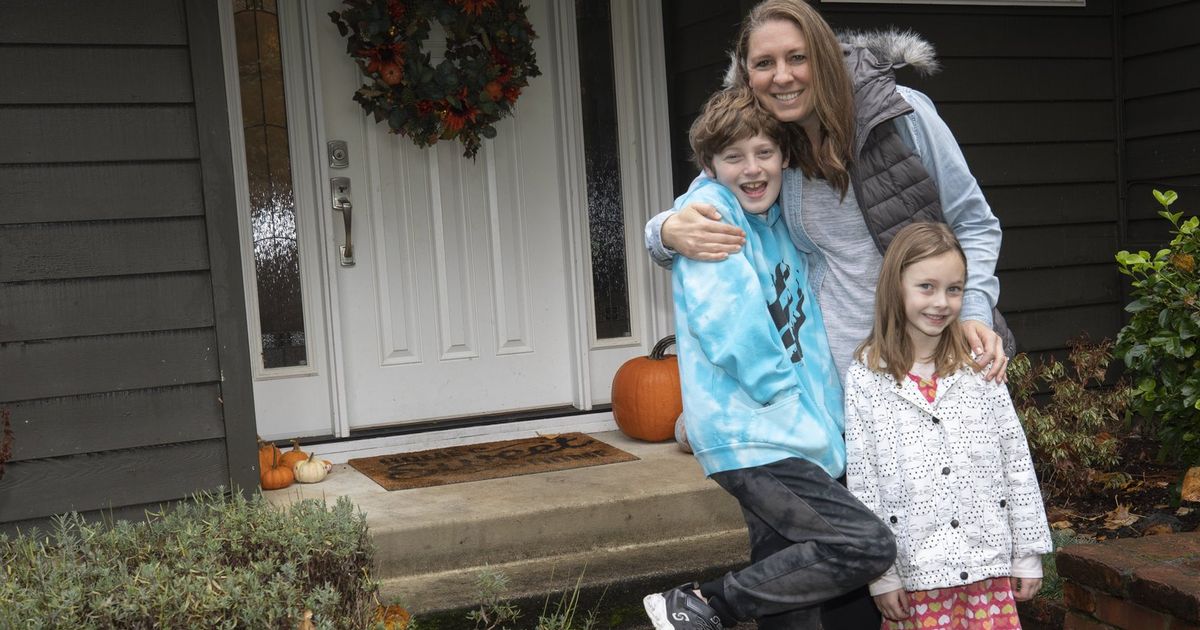
The Petersons gave their kids a choice about whether they wanted to return to in-person public school this year. Their son Jacob has been attending third grade in person since September, and their daughter, Hannah, will head back to kindergarten in January after she’s had her second dose of the vaccine.

Their oldest, 11-year-old David, will stay at home, where the pace aligns better with his learning style, Peterson said.

Though in many cases private schools opened for in-person learning earlier than public schools, these schools didn’t see the same boom between 2019 and 2020. (Data this school year hasn’t been released.) Statewide, private schools only saw an increase of about 800 students overall. 

The Puget Sound region’s Catholic school system, which enrolls about 20,000 students across nearly 70 schools, saw a 6{e4f787673fbda589a16c4acddca5ba6fa1cbf0bc0eb53f36e5f8309f6ee846cf} increase in enrollment between 2020 and 2021, according to the Archdiocese of Seattle. 

Seattle-area districts were among the last to start schooling in person, many of them under the pressure of a statewide order. 

“We didn’t skip a beat. Within 72 hours, all of our schools had switched to remote learning,” said Kristin Moore, director of marketing and enrollment for the Archdiocese. “And working so close with the health department, we had a staggered start last fall.” 

It was a word-of-mouth movement, Moore said. Public and private school parents would talk among themselves at sporting events, comparing school opening dates. 

Like the Petersons, Amy Kelly and her family also left public schools because of challenges with remote learning. Her two sons, who used to attend Shoreline Public Schools, now attend St. Luke School, a Catholic school in Shoreline. Since enrolling, the boys have taken an interest in community service, and the welcoming parent community has been “life changing,” Kelly said. The family is now even contemplating becoming Catholic.

The growth has been great, Moore said. But “we couldn’t take everybody even if we wanted to. We want strong public schools.” 

Staff reporter Monica Velez contributed reporting to this story.