Husband and wife team up to bring new physical fitness center to downtown Farmington

Husband and wife team up to bring new physical fitness center to downtown Farmington
Shaun Drone was around 40 years old when he decided it was time to make a change. An engineer and project manager in the automotive industry by day and a DJ whenever time allows, Shaun was also an athlete in college, having graduated from the University of Akron. But as his professional and family life progressed, Shaun admits that he may have let his athletic side slip a little.

A confluence of events not only got him back in shape, but on track to become an entrepreneur, too. Now Shaun and his wife Isabel are preparing the opening of their own F45 Training franchise in downtown Farmington, a new group training and fitness center on track to open in January 2022.
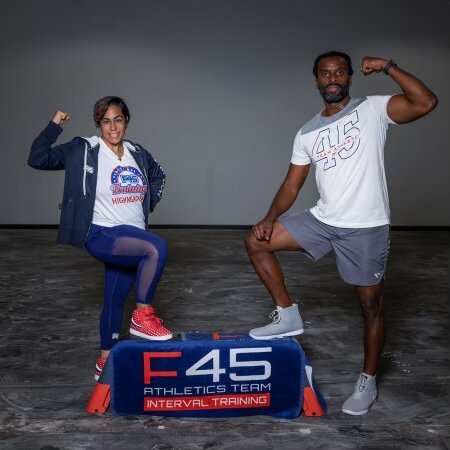
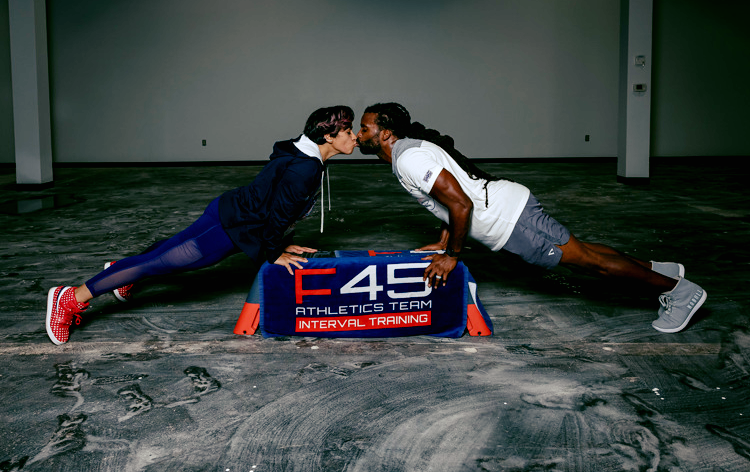
“This was my idea but she’s really the brains and motor pushing the ship,” Shaun Drone says of his wife, Isabel.“One day I saw a photo of myself with a belly sticking out and I said, that’s not the guy that played D1 basketball in college. I wanted to give horseback rides to my kids without my back hurting for two days after, to run around with them in the backyard for more than three minutes without getting winded,” Shaun says.

“I got motivated to get back in shape when I was around 40 years old and now I’m in the best shape of my life.”

It might be hard to believe that Shaun was ever out of shape, given his drive. In addition to his professional life in the automotive industry, where he’s currently a Project Chief at Stellantis, Shaun has run his own DJ business for well over a decade, providing music for events throughout the region. After being hired to DJ fitness classes at a different F45 Training location, the instructor told Shaun to put on a playlist and join the class.

The F45 fitness regimen utilizes both circuit- and HIIT-style workouts in team settings, with instructors, video screens, and energetic music combining to get the most out of a group, and all in relatively short amounts of time. In F45 Training, the “F” stands for functional; the goal is to burn 750 calories per 45-minute session.

It was such a positive experience for Shaun that he began researching franchise opportunities, leading him to building out a storefront in downtown Farmington.

“It’s all about balance, managing stress. We learned how important that was during the height of the pandemic,” Shaun says. “We want to be the foundation of a 360-approach, including mind, body, and spirit.”

Work is currently underway at their building in Farmington. Shaun hopes for a January 2022 opening date but, as he says, he doesn’t have a concrete date for opening because shipping companies don’t have concrete dates for delivery. Like many an industry, the materials and equipment he needs are caught up in the supply chain tie-ups currently gripping the country.

In the meantime, Shaun and his wife Isabel — “This was my idea but she’s really the brains and motor pushing the ship,” he says — are out and about downtown, performing community outreach, drumming up interest in their new venture. There was an initial event earlier this month and Shaun hopes for another around Thanksgiving. The partners in life and business are also reaching out to neighboring businesses, looking to form relationships with other business owners in the health and wellness industries.

It’s a lot to balance — family, work, music, starting a new business — but physical fitness has helped with that, too.

“My children are what motivate me,” Shaun says. “In order to operate optimally mentally, you have to be operating optimally physically.”

Visit F45 Training online for the latest updates on their build-out, forthcoming opening, membership info, and more.

American Heart Association says Physical Activity even more Critical as Students return to Classroom

American Heart Association says Physical Activity even more Critical as Students return to Classroom

American Heart AssociationNashville, TN – The American Heart Association, the world’s leading nonprofit organization focused on heart and brain health for all, the National Football League (NFL) and the Tennessee Titans are doubling down on kids physically active through NFL PLAY 60 as students return to the classroom following remote, distant and hybrid learning due to COVID-19 Coronavirus.

Now in its 15th year, the NFL PLAY 60 program establishes healthy habits and reduces sedentary behaviors in kids, which is key to immediate and long-term health benefits that can play a role in the classroom experience.

“Now that school is back in session, moving more is even more important following more than a year at home away from physical education classes, team sports, and daily recess,” Annie Thornhill, Executive Director of the Middle Tennessee American Heart Association. “Research has shown healthy behaviors are important in the classroom as active kids learn better. When kids are active, they focus more, think more clearly, react to stress more calmly, and perform and behave better in the classroom.”

In a recent scientific statement released by the American Heart Association, data continues to show poor cardiorespiratory fitness in youth, which includes cognitive and academic functions. As children return to the classroom, it is important for parents and educators to prioritize physical activity for immediate and long-term health.

Rooted in science, NFL PLAY 60, helps children to develop healthy physical and mental health habits for a better chance of a healthy adulthood. The program encourages kids to get a minimum of 60 minutes of vigorous physical activity each day to meet the U.S. Department of Health and Human Services’ 2018 Physical Activity Guidelines for Americans (Department of Health and Human Services, Physical Activity Guidelines, page 14. Available for download here).

The American Heart Association and the NFL will continue to provide free resources to support parents and educators in making physical activity fun and engaging.

Resources available now:

  • Powered by GoNoodle, a landing page of videos and activities to help kids get 60 minutes of movement each day along side fun animated characters.
  • NFL PLAY 60 App– The free NFL PLAY 60 app helps kids get more movement throughout the day. The PLAY 60 app allows users to control personalized avatars onscreen with their own physical movement. The app is available for iOS and Android devices.
  • NFL PLAY 60 Exercise Library– In collaboration with the 32 NFL clubs, the first-ever NFL PLAY 60 library features kid-friendly exercises to help kids to get their recommended 60-minutes of daily physical activity.


The NFL and the American Heart Association have teamed up since 2006 to inspire kids through a fun and engaging way to get physically active. The impact of physical activity on overall mental and physical wellness is essential to help children grow to reach their full potential.

Additional NFL PLAY 60 resources can be found online at heart.org/nflplay60.

About the American Heart Association

The American Heart Association is a relentless force for a world of longer, healthier lives. We are dedicated to ensuring equitable health in all communities. Through collaboration with numerous organizations, and powered by millions of volunteers, we fund innovative research, advocate for the public’s health and share lifesaving resources. The Dallas-based organization has been a leading source of health information for nearly a century.

Connect with us on heart.org, Facebook, Twitter or by calling 1.800.AHA.USA1.  

About NFL PLAY 60

NFL PLAY 60 is the League’s national youth health and wellness campaign to encourage kids to get physically active for at least 60 minutes a day. Since PLAY 60 launched in 2007, the NFL has committed more than $352 million to youth health and fitness through PLAY 60 programming, grants, and media time for public service announcements. Over the past decade, the NFL has partnered with leading academic, scientific, and nonprofit organizations to help children of all abilities lead healthier, active lives.

The NFL and its clubs have supported programs in over 73,000 schools and constructed more than 265 youth fitness zones nationwide—giving more than 38 million children an opportunity to boost their physical activity levels. NFL PLAY 60 is also implemented locally, as part of the NFL’s in-school, after-school and team-based programs.

For more information, visit www.NFL.com/PLAY60

Physical fitness is a powerful predictor of health outcomes — ScienceDaily

Physical fitness is a powerful predictor of health outcomes — ScienceDaily

In the largest study performed to date to understand the relationship between habitual physical activity and physical fitness, researchers from Boston University School of Medicine (BUSM) have found that higher amount of time spent performing exercise (moderate-vigorous physical activity) and low-moderate level activity (steps) and less time spent sedentary, translated to greater physical fitness.

“By establishing the relationship between different forms of habitual physical activity and detailed fitness measures, we hope that our study will provide important information that can ultimately be used to improve physical fitness and overall health across the life course,” explained corresponding author Matthew Nayor, MD, MPH, assistant professor of medicine at BUSM.

He and his team studied approximately 2,000 participants from the community-based Framingham Heart Study who underwent comprehensive cardiopulmonary exercise tests (CPET) for the “gold standard” measurement of physical fitness. Physical fitness measurements were associated with physical activity data obtained through accelerometers (device that measures frequency and intensity of human movement) that were worn for one week around the time of CPET and approximately eight years earlier.

They found dedicated exercise (moderate-vigorous physical activity) was the most efficient at improving fitness. Specifically, exercise was three times more efficient than walking alone and more than 14 times more efficient than reducing the time spent sedentary. Additionally, they found that the greater time spent exercising and higher steps/day could partially offset the negative effects of being sedentary in terms of physical fitness.

According to the researchers, while the study was focused on the relationship of physical activity and fitness specifically (rather than any health-related outcomes), fitness has a powerful influence on health and is associated with lower risk of cardiovascular disease, diabetes, cancer and premature death. “Therefore, improved understanding of methods to improve fitness would be expected to have broad implications for improved health,” said Nayor, a cardiologist at Boston Medical Center.

These findings appear online in the European Heart Journal.

Story Source:

Materials provided by Boston University School of Medicine. Note: Content may be edited for style and length.

Physical activity promoting policies in the era of COVID-19: is Europe on the right track?

Physical activity promoting policies in the era of COVID-19: is Europe on the right track?

European Union (EU) countries have been making gains in the development of policy on physical activity promotion since 2015, but during the COVID-19 pandemic progress has slowed down, shows a recent WHO publication. The new report, “2021 physical activity factsheets for the European Union Member States of the WHO European Region”, is based on data from all 27 EU Member States and presents an overview of policies and actions that have been implemented in the countries to promote health-enhancing physical activity (HEPA).

Regular physical activity provides health benefits to everyone, regardless of age or fitness level. Among adults, physical activity contributes to the prevention and control of chronic diseases, such as cardiovascular diseases, cancer, diabetes, anxiety, depression, dementia and obesity, and reduces overall mortality and premature deaths.

Physical inactivity: a serious risk factor for the Region

The report provides an overview summarizing the overall situation across the EU, as well as detailed country factsheets for each EU Member State. Indicators in the report signify what kind of WHO-recommended HEPA policies have been implemented in each country.

According to the report, an overall improvement in policy indicators can be observed between 2015 and 2021. Across the Region, the average proportion of the 23 indicators accomplished by Member States increased from 2015 to 2021, although the pace of progress slowed down after 2018.

“In the WHO European Region, around a third of adults are physically inactive. Lack of physical activity is closely connected to overweight and obesity, and consequently to many noncommunicable diseases and health risks,” said Dr Hans Henri P. Kluge, WHO Regional Director for Europe. “It is time for us to remember that healthy habits – from balanced diets to physical activity – are key factors that protect our health much more than we tend to think.”

EU policies implementation: what’s new?

As the report data shows, in 2021 countries of the EU had made progress implementing the following measures:

  • supporting interventions to promote physical activity in older adults (74{e4f787673fbda589a16c4acddca5ba6fa1cbf0bc0eb53f36e5f8309f6ee846cf} of countries);
  • promoting physical activity in the workplace (74{e4f787673fbda589a16c4acddca5ba6fa1cbf0bc0eb53f36e5f8309f6ee846cf} of countries);
  • training of physical education teachers (89{e4f787673fbda589a16c4acddca5ba6fa1cbf0bc0eb53f36e5f8309f6ee846cf} of countries);
  • granting wider access to exercise facilities for socially disadvantaged groups (78{e4f787673fbda589a16c4acddca5ba6fa1cbf0bc0eb53f36e5f8309f6ee846cf} of countries);
  • producing national recommendations on physical activity for health (85{e4f787673fbda589a16c4acddca5ba6fa1cbf0bc0eb53f36e5f8309f6ee846cf} of countries).

WHO and the European Commission: commitment to promoting healthy lifestyles for all

To increase physical activity levels, WHO has been collaborating closely with the European Commission and EU Member States to increase health-enhancing physical activity across the region. This collaboration has helped to enhance policy and practice in line with the WHO European Programme of Work 2020–2025 – “United Action for Better Health in Europe”.

The launch of the new report marked the start of an initiative called Healthy Lifestyles 4 All (HL4A) led by WHO/Europe and the European Commission. The 2-year campaign will showcase efforts and support countries in the EU to promote healthy lifestyles across generations and social groups, and to promote a global approach across policies and sectors – linking food, health, well-being and sport.

As an open and collaborative project, HL4A invites sports organizations, civil society, and international, national, regional and local authorities to join and create projects that bring together sports, physical activity and healthy diets. All participating organizations can submit a commitment for concrete actions in the online Pledge Board. WHO/Europe has submitted its contributions.

Looking forward, this important collaboration between WHO/Europe and the European Commission can play a role in supporting the societal and economic recovery from COVID-19, with a sustained and coordinated focus on attainment of a 15{e4f787673fbda589a16c4acddca5ba6fa1cbf0bc0eb53f36e5f8309f6ee846cf} reduction in physical inactivity by 2030 and achievement of the Sustainable Development Goals.

Impact of COVID-19 on physical activity

Physical activity can take place in various settings, during leisure-time activities, at school, at the workplace and at home during daily activities. However, maintaining sufficient levels of physical activity is becoming more difficult as most daily environments have become more sedentary.

According to the new WHO report, the ongoing COVID-19 pandemic has highlighted the importance of our environments and our access to opportunities to be physically active as part of daily life.

“Lockdowns and limited access to public and indoor spaces had a negative impact on levels of physical activity that were already at very low levels before the pandemic. Some countries of the WHO European Region still feel this impact. Now is a good time to bring physical activity levels up again. There are various health-enhancing policies to choose from, and they work best when combined,” said Dr Kremlin Wickramasinghe, Acting Head of the WHO European Office for the Prevention and Control of Noncommunicable Diseases.

By implementing HEPA policies, countries of the WHO European Region can provide long-term benefits for people’s health and health systems.

Are You Interested in Increasing Your Physical Activity? Join Walk Across Northwest Arkansas

Are You Interested in Increasing Your Physical Activity? Join Walk Across Northwest Arkansas

Do you feel stressed? Has your fitness routine lagged due to COVID-19 or for other reasons? You might need a new challenge to get back on track. Walk Across NWA can help you! 

It’s not too late. Register for the Fall 2021 Program and gain access to Health and Wellness resources from the U of A Division of Agriculture and make a difference in the environment. Participation is free. Registration is open now and the program lasts through Nov. 7. 

Online registration is available at walk.uada.edu.  More details are located on the following sites: uaex.uada.edu/nwa-wellness along with on the Facebook Page @NWALivingWell and our NWA Living Well Facebook Group to receive additional support with stress management, nutrition tips, healthy recipes and more.

Earlier this year, 890 Arkansans statewide participated in the Spring 2021 Walk Across Arkansas, logging 1,469,867 minutes, with 217 teams from counties walking across the state. Many of those participants reported they had more energy, slept better, controlled stress, strengthened relationships, lost weight or inches and improved their blood panels and blood pressure.

Physical activity can lower the risk of early death, coronary heart disease, stroke, high blood pressure, high cholesterol, Type 2 diabetes, metabolic syndrome and some cancers, according to the Centers for Disease Control and Prevention. Exercise also helps with weight loss and can improve mood and energy level and help us stress less.

National physical activity guidelines recommend that adults achieve at least 150 minutes of aerobic physical activity and two strength training sessions per week, and youth need at least 60 minutes of exercise daily.

To participate, find a few friends, classmates, family members or co-workers to form a team and register online. If you do not know others who are interested, make up a team name and be a team of one. Joining a team provides support to help you reach your goals, but team members do not have to be physically active together. Then, through Nov. 7, just record the number of minutes you spend walking, jogging, gardening or getting any other form of exercise. You can do any type of physical activity to increase your heart rate or break a sweat.

Minutes can be logged online daily or entered weekly, or you can contact your local County Extension Agents for paper forms. Team captains can log in minutes for team members. Even if you do not have an email address, this program is still for you. 

For more information about Walk Across NWA, contact the Washington County Family and Consumer Sciences Extension Agent Anna Goff by email at [email protected], or you can call or text 479-841-1212 or office 479-444-1755. In Benton County, contact Family and Consumer Sciences Agent Trudy McManus at [email protected] or 479-271-1060.

Have some fun this fall with friends and family — physically distancing of course — and make a difference as you get healthy with Walk Across NWA.

Special thanks to Jamie Baum at the U of A Center for Human Nutrition for support in promotion of this program.


The University of Arkansas System Division of Agriculture offers all its Extension and Research programs and services without regard to race, color, sex, gender identity, sexual orientation, national origin, religion, age, disability, marital or veteran status, genetic information, or any other legally protected status, and is an Affirmative Action/Equal Opportunity Employer.

The Role of Running in Physical Education

The Role of Running in Physical Education

School life is full of stress and anxiety at every level. Studying, researching different topics, and making summaries every day can make a student’s life stagnant and boring, resulting in depression and failure.

To help prevent such issues, most schools have incorporated physical education classes. These classes involve several physical activities that help in improving the quality of students’ lives.

Importance of Physical Education (PE)

  1. PE allows students to enjoy and succeed in various physical activities. Students get to develop several skills and the ability to use strategies, compositional ideas, and tactics to perform successfully both physically and academically.

During participation, students think about what they’re doing, analyze their situation, and make informed decisions. As a result, they develop confidence and understand the importance of healthy lifestyles.

Other Benefits of Physical education include:

  •   Encouraging a healthy and active lifestyle
  •   Nurturing sportsmanship in all aspects of competition
  •   Assists students to reach their physical potential in a variety of sporting environment
  •   Develop their confidence
  •   Promote physical body image in teenagers, especially among girls

Benefits of Running for Student

What type of activity is running? Running or jogging is a popular form of physical activity. Running appeals to many individuals since it doesn’t cost a lot to take part and you can run anywhere, anytime.

Running is an essential part of physical education. Any free physical education essay example at https://gradesfixer.com/free-essay-examples/physical-education/ talks about the benefits of running for the young body of students. The benefits include improvement of overall health and academic performance.

With the help of essays, students will learn how to get better at running. Also, they will get new ideas on how to write and improve their content and essay paper structure. With that said, let’s look at the various benefits of running.

Improved cardiovascular health

Running prepares your heart for heavy loads so you won’t feel any discomfort and pain when lifting your heavy backpack. Short jogs during physical education class help to increase the contractions of your heart muscle per minute. As a result, you will have a healthy cardiovascular system.

Helps students learn about perseverance

Just like any sport, improvement doesn’t happen overnight. Therefore, running can help students learn about the power of perseverance and practice. As they run regularly, their stamina and performance improve. They will also discover that they can stick to something and succeed, even if it seems hard.

Improves confidence

Besides physical health improvement, running can boost your confidence and self-esteem. Confidence can have a positive aspect in all areas of a student’s life. It will help a kid integrate quickly and make friends.

Relives Stress

At school, many things can trigger stress, from endless coursework to bullying. Running can help reduce stress and anxiety, which can cause some health and mood-related problems. Stress can also affect a student’s appetite and sleep quality.

When you jog, you push your body to utilize excess energy and hormones, thus alleviating stress and anxiety. In addition, running eliminates the risk of experiencing tension headaches.

Improve brain and memory health

Enhanced brain and memory well-being are among the many health benefits of running, especially for students. As a physical activity, running helps to increase blood flow to your brain. As such, your brain receives sufficient oxygen. Enough oxygen in your brains means improved memory, reaction, and other characteristics of your body. Also, it means improved academic performance – you will understand and memorize different concepts easily.

How to make running as safe as possible for students

Physical education teachers must select the best running shoes for students. The shoes should fit well and have good support with a thick shock-absorbing sole. Students should also avoid wearing socks made from 100{e4f787673fbda589a16c4acddca5ba6fa1cbf0bc0eb53f36e5f8309f6ee846cf} cotton. When cotton gets wet, it stays wet, meaning you will have blisters during summer and cold feet if it’s winter.

To prevent injuries while training and running:

  •   Students should receive sports physical before they run
  •   Train sensibly, by increasing distance and speed gradually
  •   Stretch and warm-up before running
  •   Stop running if they feel pain or get hurt

Additionally, students should dress for the weather. If it’s cold, they need warm layers of sweat-wicking fabric, gloves, and a hat. During hot days, they need extra water and light-colored clothing.

Conclusion

Running as part of physical education is incredibly beneficial to the student’s body, mind, and spirit. Short runs can leave the student feeling more energized, focused, and healthy.

A student who runs regularly will experience improved mental health and increased academic performance.

Thank you for stopping by.