
For more than an hour, four Thomas Jefferson Middle School students, slightly tired from an early wakeup call and recent standardized testing, said they felt fine after everything they experienced over the course of the COVID-19 pandemic.
They were looking forward to the end of the school year, they liked being back in school with friends, and while they may have been a little stressed with distance learning, they said they hadn’t experienced depression or anxiety during the last two years.
Then, they were asked if they had experienced any loss over the last two years. Each of them had or nearly had: An uncle who died from COVID-19 in Mexico. Another late uncle who loved the Raiders. A grandmother figure who died a month ago. A grandmother who fell gravely ill from COVID-19 and recovered. Another grandmother who is battling cancer.
Finally, their emotions poured out. Tears were shed.
Eighth grader D’Artagnan Leon-Montano found out he lost his uncle in the middle of the night when he heard sobs around the house. “I never heard my mom crying, and that night I heard her cry.” To honor his uncle, he never takes off his Raiders hat.
“It’s hard for me to come to school every day knowing her cancer can come back anytime,” said seventh grader Cassandra Herrera about her grandmother. “I’m scared that when I’m older, I’ll probably get it.”
“I lost my step-grandma a month ago,” said seventh-grader Keanna Atchison. “I didn’t really want to talk to anybody the next day.”
“It’s OK to not be OK,” said eighth-grader Romina Lopez Mendoza, who didn’t get the chance to see her uncle in Mexico one last time before he died.
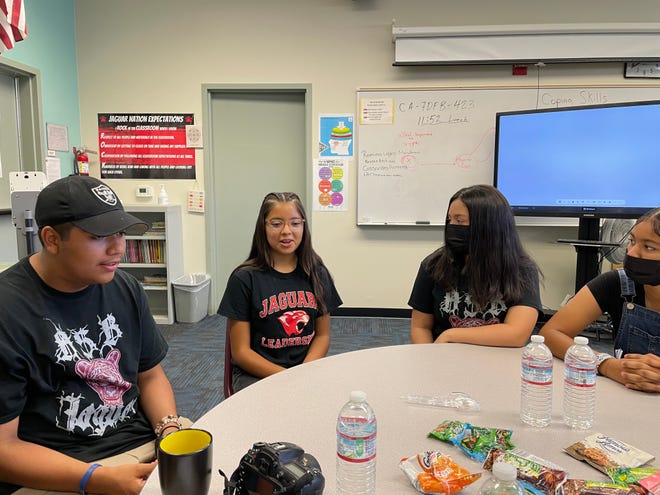
People’s mental health, at all ages, were impacted in some way by the pandemic. Isolation from loved ones, fear over the unknown, changes in routines and loss were just some of the factors that made the early stages of the pandemic difficult for many, local mental health experts said, especially for those who already struggled with anxiety and depression.
Even though COVID-19 cases are rising again, many are ready to move on and resume their lives. But it’s not that easy for everyone.
What experts saw
In-person services at the San Gorgonio Memorial Hospital Behavioral Health Center in Palm Springs never slowed down during the pandemic.
Facilities Coordinator Marquise Santiago would meticulously clean the center’s van, pick up a handful of clients from their homes, take their temperatures, have them put on fresh masks and sit spaced apart from others. After he would drop off one group, he would sanitize the van again, go out to pick up others and repeat the process throughout the day.
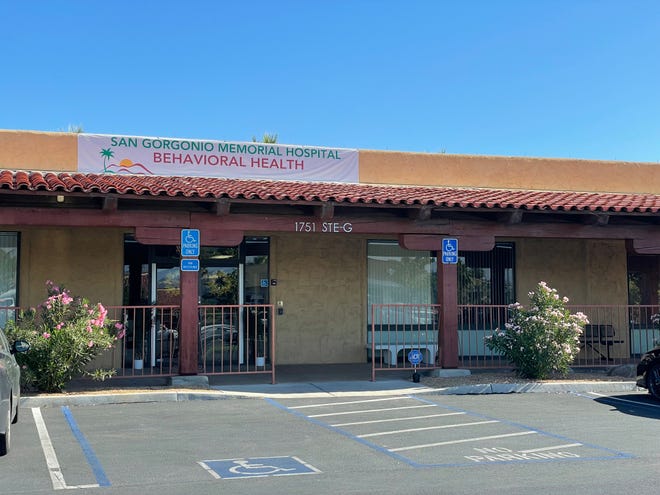
It was difficult, and at times scary to do, mainly because there was so much unknown with the virus, but the center’s registered nurse Donn Walker said it was necessary for the clients.
“A lot of these folks already live fairly isolated lives,” he said. Most clients either live with other individuals who struggle with mental health concerns or independently, away from family and typically without a vast social network around them.
“The great thing about the fact that we could keep this program open is this is really, for patients, some of the main ways they socialize and see other people,” Walker continued. “Some told us they were able to see their friends here. If we had closed, it would have been even more isolated.”
The Behavioral Health Center, once attached to the San Gorgonio Memorial Hospital location in Banning, has been operating in Palm Springs for more than 10 years, said Director Christian Maciel. There are currently around 45 patients — ranging in age from 20-something to 80-something — who attend group therapy sessions dedicated to mood or thought disorders twice a week, and there’s a growing waitlist.
Over the course of the last few months, navigating the pandemic has become easier for clients. If a family member gets sick, however, Walker said anxiety goes up with that client and is reminiscent of the early days of the pandemic.
In the first year of the COVID-19 pandemic, global prevalence of anxiety and depression increased by 25{e4f787673fbda589a16c4acddca5ba6fa1cbf0bc0eb53f36e5f8309f6ee846cf}, according to a scientific brief from the World Health Organization.
Clinician Rick Bloom, speaking about a previous telehealth position, said the pandemic was “horrendous” for his clients who were “normally anxious on the best of days.” One individual he worked with for a number of years suffered with severe anxiety. They were making improvements, he said, but once the pandemic hit, it set that individual back several years.
“Their overall fear was the world was a dangerous place, and then the pandemic came along and it really proved to him that what he was fearful about was clearly completely accurate,” Bloom said.
He added that clients with depression “felt like it was OK for them not to be interactive because it was OK to be isolated.”
Similarly, Lizett Palacios, now the center’s case manager, worked at clinics in the eastern Coachella Valley in 2020 and saw people of all ages struggle with anxiety. She also noticed a rise in suicidal ideation among clients. The most stressful moments she experienced were when people called and told her they were thinking of taking their life.
“I would have to stay on the phone with them up to three hours,” Palacios said. “I would have two phones on me, one having a conversation with them but another phone hoping to get hold of a clinic.”
A study that surveyed individuals from eight countries in 2020 and 2021 found that suicide ideation increased over the course of the COVID-19 pandemic — 24.2{e4f787673fbda589a16c4acddca5ba6fa1cbf0bc0eb53f36e5f8309f6ee846cf} and 27.5{e4f787673fbda589a16c4acddca5ba6fa1cbf0bc0eb53f36e5f8309f6ee846cf} of participants reported suicide ideation in 2020 and 2021, respectively.
When Palacios received those phone calls, it was difficult to not be in the same room as her clients, she said, because “how are you going to get through to them over the phone and convince them not to do something to themselves?”
As much as clients struggled, so too did mental health care providers. Maciel’s uncle died at 50, leaving his aunt as a widow, and as other family members struggled, he said he just had to push through. Additionally, three days before the birth of his daughter, he was exposed to COVID-19, and his biggest fear was getting her sick or worse. But Maciel believes it’s still not a topic many discuss.
“Providers just have to soldier on and kind of put their needs last,” Maciel said. “It’s almost like a shameful thing to say as a therapist. You think, I’m a trained therapist, I’m always in control, but I’m not.”
Many clinics decided to shut down to in-person services, but soon shifted to an online format, such as Jewish Family Services of the Desert. The Palm Springs center provides a number of services, such as mental health counseling, senior case management and children’s programs. On average, the center sees around 3,000 unduplicated clients yearly.
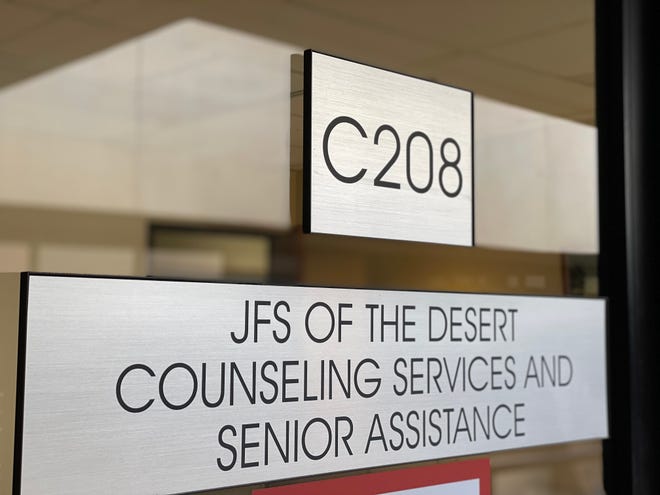
Clients dealt with loneliness, clinical director Judith Monetathchi said, and it was hard for them to change their routines and be away from loved ones or even their therapists. Similarly, losing friends and family to the virus and going through the grief process was difficult.
The period brought back many memories for Monetathchi, whose husband died nearly 20 years ago. Overwhelmed with grief, taking care of three young children and having difficulty functioning day-to-day, she began seeing a therapist, she said, who “offered me tools I could use to process that grief and heal.”
Fast forward to 2020, and as she listened to her clients express their own struggles with grief during the pandemic, she said she was able to empathize deeper and create a “stronger connection” with them.
Children’s impacts
Mindy McEachran begins every Wednesday in a wellness circle with her students at Nellie N. Coffman Middle School in Cathedral City.
The students gather in an outdoor space dedicated to mental health, a makeshift Zen garden on a lot where there was nothing but concrete, brick walls and a lonely tree before the pandemic.
The garden, and the adjacent indoor wellness center where students can go for social-emotional coaching, is part of a major investment Palm Springs Unified and the district’s foundation are making in mental health services.
The plan is to open a wellness center at a cost of $25,000 at each of the district’s 27 schools. Desert Sands Unified and Coachella Valley Unified school districts are operating and investing in wellness centers, too.
Now, the tree is draped with Japanese lanterns, there’s a sand box, artificial turf and patio furniture. It’s not much, but it’s more than there was before.
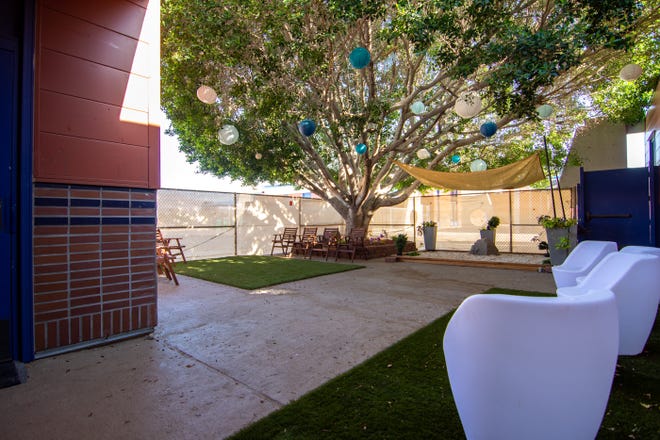
McEachran’s therapy dog, Ziggy, lies on the turf as students go around the circle saying how they feel on a scale of one to five. They can elaborate if they wish. Few choose to.
It’s the day after the Uvalde, Texas, school massacre during which 19 primary students and two teachers were killed.
Moods are down at Nellie Coffman. Principal Karen Dimick asked for a moment of silence over the daily announcements before first period. Now, most students are going around the circle saying they feel like they’re at a “two” or a “three.”
One male student, although physically present in the circle, had to ask what the prompt was when it was his turn to speak. His head was down and his shoulders were slumped. He said he felt like a one out of five.
McEachran, a Palm Springs Unified Teacher of the Year, noted afterward that some students go the whole week without anyone asking them, “How are you?” That’s why, even if they choose not to speak in the circle, checking in with them on Wednesday mornings, observing their responses and their body language, is so important.
It can be the difference between a student feeling invisible or feeling seen.
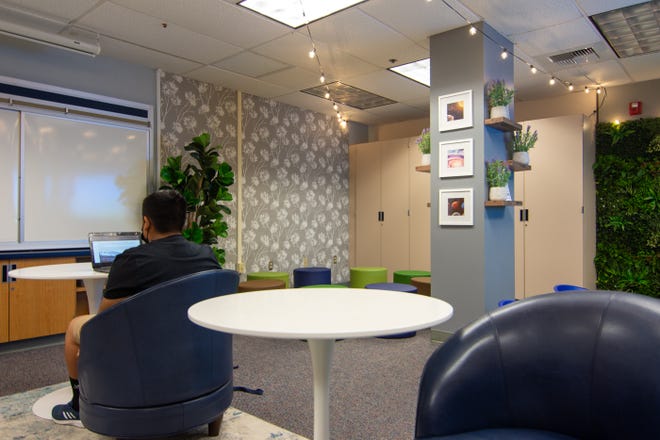
Although Wednesday might have been a particularly awful time given the deadliest shooting at a U.S. grade school in 10 years had occurred just a day before, children and adolescents are grappling with a national mental health crisis that was bad before the pandemic and has gotten worse since. The Centers for Disease Control and Prevention reported that before the pandemic, from 2016-2019, 2.7 million children ages 3 through 17 had depression, 5.5 million had behavior problems and 5.8 million had anxiety.
The CDC’s first nationally representative survey of high school students during the pandemic shows a troublesome pattern. In 2021, more than a third of high school students reported they experienced poor mental health during the pandemic, and 44{e4f787673fbda589a16c4acddca5ba6fa1cbf0bc0eb53f36e5f8309f6ee846cf} reported they persistently felt sad or hopeless during the past year.
While some students did well in virtual learning, more than half of high schoolers surveyed reported they experienced emotional abuse by a parent or other adult in the home. More than one in 10 said they experienced physical abuse by a parent or other adult in the home. More than a quarter reported a parent or other adult in their home lost a job.
Sadly, Coachella Valley youth have not escaped these national trends, and, in some aspects, they are faring worse.
“In general, there’s been a huge increase in mental health needs for students, staff and families,” said Laura Meusul, executive director of student support services for Palm Springs Unified.
‘I don’t know how many opportunities students see for themselves’
A lot of the demand for mental health services is, of course, being driven by rising trends in anxiety, depression and ADHD among youth, but part of the demand is stemming from societal awareness and openness about mental health. And, schools are being asked to do more than ever to provide mental health support and to normalize conversations about emotional wellness before behavioral issues become acute or chronic.
“Over my career, I’ve definitely seen the shift to more openness and being willing to discuss mental health issues,” said Danielle McClain-Parks, a mental health coordinator at Palm Springs Unified. “I think that we are, as a society and as communities, more willing to acknowledge these mental health issues exist. I come from a generation where we didn’t really talk about these kinds of things, but just because we didn’t talk about them didn’t mean that they didn’t exist. They’ve always been there. We’ve had different names for them throughout different generations, but they’ve always existed. And, so, I think there’s a little bit more willingness right now to acknowledge the impact.”
A 2021 Palm Springs Unified survey of 9,850 secondary students revealed that 48{e4f787673fbda589a16c4acddca5ba6fa1cbf0bc0eb53f36e5f8309f6ee846cf} of respondents reported being able to persevere through setbacks to achieve important long-term goals, down from 65{e4f787673fbda589a16c4acddca5ba6fa1cbf0bc0eb53f36e5f8309f6ee846cf} in 2017.
Only 56{e4f787673fbda589a16c4acddca5ba6fa1cbf0bc0eb53f36e5f8309f6ee846cf} of secondary students responded that they do a good job of managing their emotions, thoughts and behaviors in different situations, down from 72{e4f787673fbda589a16c4acddca5ba6fa1cbf0bc0eb53f36e5f8309f6ee846cf} in 2017.
The data show students reporting similar rates of perseverance and emotional management across race and gender.
On the topics of perseverance and emotional management, Palm Springs Unified is performing near the 10th percentile out of 1,500 districts nationwide — representing 21,000 schools and 15 million students — that also completed this panorama survey on social emotional wellness.
Meusel hypothesized that low perseverance metrics among local secondary students might be worse than the national average in part due to the Coachella Valley’s lack of access to higher education.
“I don’t know how many opportunities students see for themselves,” she said. “And I’m talking about the fact there isn’t a college other than College of the Desert right here.”
“So for some students who have never left this area or have never seen anything else, I think that has a lot to do with some of this,” she continued. “We have to educate students on all of the options that are available to them whether it be junior college, a four-year college, trade school, jobs in the community — what else is out there besides what they see in their limited area. And, I don’t mean that in a condescending way. I just mean we need to broaden options for students.”
Schools as service providers
Each of the three districts use what’s called multi-tiered systems of support to address student wellness. Tier one of care is available to every student. It can look a lot like McEachran’s wellness circles or include teachers incorporating breathing exercises at the beginning of class.
A tier-two service would be something like small group counseling, and it’s reserved for students who express a need through a school counselor, teacher or parent referral.
“We had a large amount of students who had a family member pass away from COVID, and, so, we have a lot of grief counseling groups going on,” Meusel said. “We have a lot of families that lost their income or lost their jobs or their housing, and, so, (there’s) some anxiety around ‘Where are we sleeping? Are my parents going to be able to provide for us?'”
About 15{e4f787673fbda589a16c4acddca5ba6fa1cbf0bc0eb53f36e5f8309f6ee846cf} of PSUSD students are in tier-two services where these questions are discussed, Meusel said.
Tier-three service referrals for individual counseling are for students with acute mental health issues such as disordered eating, cutting, suicidal thoughts and higher levels of depression or anxiety, Meusel said.
At the start of the school year, Palm Springs Unified had seven therapists. Now, it has 14, Meusel said, and it is hiring to have 20 therapists by the start of the next school year in August.
State Superintendent Tony Thurmond declared an “urgent need to address student trauma” in March, and he has been advocating for the state senate to pass SB-1229, a bill that would establish a mental health workforce grant program that, if passed, Thurmond says could help secure 10,000 mental health clinicians in the state and lower student-to-counselor ratios in schools.
For now, Coachella Valley school districts are struggling to recruit mental health professionals even as they each earmark millions of federal COVID-19 relief funds for the purposes of hiring mental health therapists, counselors, psychologists and behavioral support staff.
“It’s been a challenge to hire enough people,” Meusel said. “We have the money. We have the positions open. It’s just hard to recruit.”
Palm Springs Unified alone has seen about 1,000 students enter individual therapy this year through the district as their free-of-charge provider. That’s about one in 20 students in the district receiving individual therapy, and that number does not include some insured students who received mental health services through other providers in the past year.
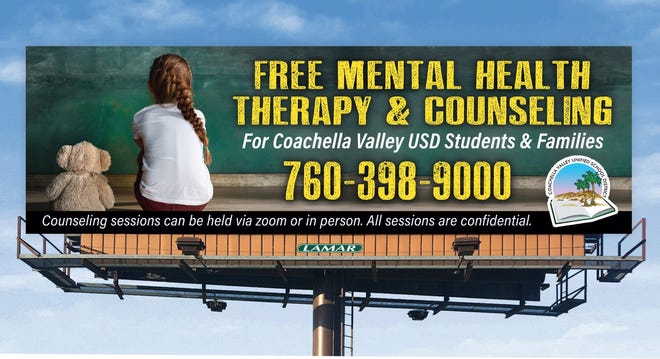
In the eastern valley, Coachella Valley Unified has sponsored billboards promoting the district’s free mental health services for students and families.
In a March report to the school board, district staff said they had provided mental health counseling to 1,629 students since the school year began last August, and 352 students had entered a controlled substance intervention program over that time.
Of the 1,629 students to receive mental health counseling, 60{e4f787673fbda589a16c4acddca5ba6fa1cbf0bc0eb53f36e5f8309f6ee846cf} attend elementary school. More than 100 are in kindergarten or transitional kindergarten. More kindergartners received therapy than high school juniors or seniors.
- 512 students were counseled and/or diagnosed for anxiety
- 205 students were counseled for behavior
- 138 students were counseled and/or diagnosed for depression
- 110 students were counseled for family divorce/separation
- 64 students were counseled for issues with adjusting to change/COVID
- 55 students were counseled for grief
Ninety students reported suicidal ideation, and 64 reported self-harm.
The numbers are dreary when taken in aggregate, but 615 students had a positive outcome from the district’s counseling, meaning they either were discharged from counseling having made progress or having reached goals linked to services. Another 649 students continued in district counseling as of March, whereas a much smaller percentage of students or their parents/guardians declined counseling services or did not achieve positive outcomes.
Anxiety lingers after return to school
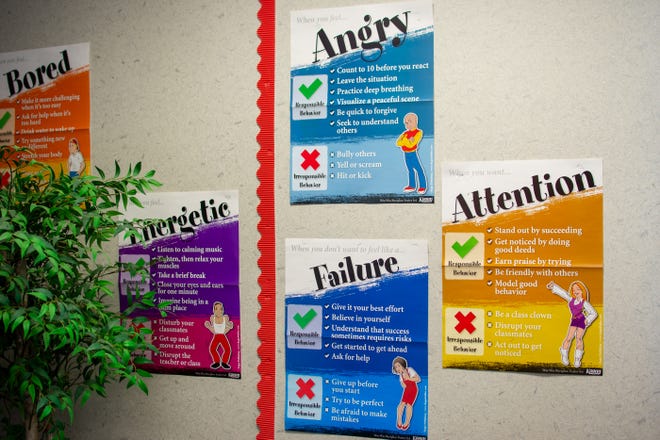
Sue Ann Blach, a mental health therapist at Desert Sands Unified, said since the pandemic began, she’s seen many students struggle with anxiety and depression that could be linked to increased electronic use, lack of physical activity, lack of social interactions and poor sleep.
Lopez Mendoza, the eighth grader, said during the early stages of the pandemic her principle form of social interaction came through FaceTime with friends.
During virtual school days, there was little social stimulation.
“No one else had their cameras on,” Lopez Mendoza said. “I really wanted to come back and socialize.”
Of course, many students did not have their cameras on for a variety of reasons, including limited broadband internet capabilities or sharing living/work spaces with siblings, adults or others.
Leon-Montano said he struggled showing up on time to Zoom classes even though class was only a few clicks on the computer away.
“Being at school is better than home, not gonna lie,” he said.
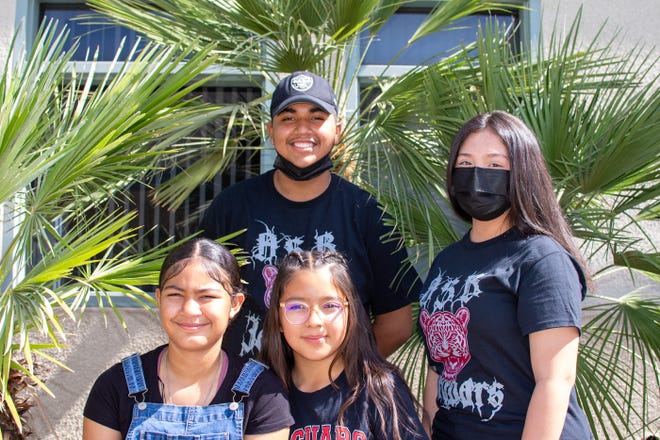
But, a year after school has resumed in-person, there is still a great deal of uncertainty about the future, and anxiety about the unknown is continuing to affect kids and adults, both, experts say.
“As we’ve come back, everybody, I think adults and children alike, have really experienced some of that continuing sense of the unknown… and for some of our younger students who thrive on structure, it’s been harder for them to kind of keep adjusting as we go,” McClain-Parks said.
For older students, she said, “It’s been great that they’re coming back, but then some of the lingering issues that were brought up during the pandemic have been difficult for them to deal with.”
“Students are just kind of processing what’s happened in the last couple of years,” she added. “We’ve experienced kind of a community and society-wide trauma. And when you think about it for our students, that’s a really significant portion of their lives. For us, as adults, it’s big. But for our students, two years is a huge developmental leap for them, and they’ve had to experience that with lots and lots of changes and not knowing what’s going to happen next.”
Monetathchi said many youth discussed their frustrations with distance learning, often “causing low self esteem because they struggled to learn and then felt bad about themselves.”
Similarly, they felt lonely from lack of socializing, and even grieved beloved events, such as proms, graduation and quinceañeras, she added.
“It is important for children and teens to have a safe space to share their feelings and for adults to validate and normalize those feelings,” Monetathchi said. “Counseling sessions can offer that safe space for them to express their feelings while teaching them useful coping strategies for anxiety and depression, as well as help them raise their self esteem and practice social skills.”
“Exploring meaningful ways for honoring the events they missed, either by celebrating with family or with their friends in some way, can also be helpful,” she added.
More resources available
Many are ready to move on from the pandemic, but for those who have struggled with their mental health, it might not be quite so easy.
Riverside County is providing more resources, especially in some of the most underserved areas in the Coachella Valley. The Riverside County Board of Supervisors recently received $7 million in Crisis Care Mobile Unit grant funds from the California Department of Health Care Services.
The grant funds will bring Mobile Crisis Management Teams to the cities of Blythe, Corona, Hemet, Indio, Moreno Valley, Temecula, Banning, Menifee and Riverside. Some cities, including Coachella, Thermal, Mecca and North Shore, will receive two teams to assist with high volumes of crisis needs.
Rhyan Miller, deputy director of Integrated Programs with the county’s Behavioral Health department, said two teams are being sent to east valley cities because “these communities have long been underserved by field-based response teams.” A CBAT team (a behavioral health therapist that rides along with law enforcement) is also being sent to Thermal to enhance service delivery in the area, he added.
The Mobile Crisis Management Teams provide mobile crisis response and wraparound services to help those with ongoing mental health care needs and substance use treatment. Teams consist of clinical therapists, peer support specialists, substance use counselors and a homeless and housing case manager.
“The goals of these teams are to be responsive, person-centered and use recovery tools to prevent crisis and divert unnecessary psychiatric hospitalization whenever possible,” Kristin Miller, administrator of Riverside University Health System Behavioral Health Crisis Support System of Care, said in a statement.
Mental health clinics are also doing what they can to further assist clients. The San Gorgonio Memorial Hospital Behavioral Health Center has brought back Friday group sessions, which Maciel said clients have “begged” to have. Maciel said he is hoping to implement activity-based programming on Fridays rather than the traditional discussions that already take place throughout the week.
“It provides the camaraderie, they really, truly like each other,” he said.
The director also hopes to provide individual mental health counseling for clients in the future.
What’s most exciting to him is that the pandemic made people more open to discussing mental health, and it even became a family affair for some. Maciel said that people in the past would come in for personal issues, and mainly kept their struggles to themselves.
“But with the pandemic, it seemed like entire families wanted treatment, and things were talked about more openly about mental health,” Maciel said. “A mother would come in and say, ‘Next week you’re going to see my husband,’ and then the husband would say, ‘Next week you’re going to see my sister-in-law.’ It was just like let’s get everybody help because this pandemic is really taking a toll.”
For those who have not sought help for their mental health needs, there are plenty of resources available locally, including those that are free of charge. The Coachella Valley chapter of the National Alliance on Mental Illness, serving residents from Desert Hot Springs to the Salton Sea, provides free mental health support, online groups, resources and education.
President Christine Thomstad and Treasurer George Thomstad initially were introduced to NAMI when they were seeking mental health resources for their son, who lives with schizoaffective disorder.
“The biggest thing that NAMI tells you, and we hear it all the time, is the first time someone attends a support group, they realize there are other people out there going through the same thing they’re going through, and that’s what we found,” Christine Thomstad said.
Over the course of 15 years, they’ve become advocates for mental health, connecting people with others who understand what they’re going through. NAMI Coachella Valley holds two group sessions twice a month — a family support group and recovery support group — on Zoom. There are also plans to hold some meetings in-person in the future and provide groups sessions in Spanish.
There’s no one solution to mental health struggles, but integrative mental health specialist Louise B. Miller, of Rancho Mirage, said people can be more in tune with themselves by taking their emotional/mental temperature. Often times, she said, people will power through difficulties in life without properly examining them.
“Living mindfully and being aware, not only how your body is feeling, but also how your mind is doing,” she said. “People don’t stop and take their emotional temperature throughout the day, and I think that’s really important because you can stop it in its tracks and go, ‘What’s going on with me?'”
Mental health resources
San Gorgonio Memorial Hospital Behavioral Health Center: Visit https://sgmh.org/services/behavioral-health/ or call 760-325-2683
Jewish Family Service of the Desert: Visit https://jfsdesert.org/ or call 760-325-4088
It’s Up to Us: The site has tools for having conversations, checking in on friends and referrals to places people can go to get immediate help. Visit https://up2riverside.org/
CARES Line, (800) 499-3008: The Community Access, Referral, Evaluation and Support line is answered by licensed clinicians who provide support and crisis intervention, as well as connections to outpatient, inpatient and community resources.
Peer Navigation Line, (888) 768-4968: Not sure where to start? The peer navigation line connects you to someone who is currently recovering from their own mental health issues in Riverside County. They will talk to you about how you’re feeling and direct you to resources that could help.
2-1-1 Community Connect: By dialing 2-1-1, Riverside County residents are connected to a local information hotline for individuals in crisis.
National Alliance on Mental Illness, Coachella Valley, (888) 881-6264: Provides support groups (for those experiencing mental illness and the loved ones of those experiencing it) and behavioral health resource referrals to residents from Desert Hot Springs to the Salton Sea.
Riverside County 24/7 mental health urgent care, Palm Springs, (442) 268-7000: If you are experiencing troubling thoughts and need immediate help, the clinic is able to instantly connect you to counseling, nursing and provide psychiatric medication, if needed. Everyone is welcome regardless of insurance or ability to pay for services. The clinic is open 24/7 and no appointment is needed. Located at 2500 N. Palm Canyon Drive, Suite A4, Palm Springs.
Crisis Stabilization Unit in Indio, (760) 863-8600: Individuals experiencing troubling thoughts who need immediate help can go to the clinic at 47-915 Oasis St., Indio.
National Suicide Prevention Hotline, (800) 273-8255: The hotline is available 24/7.
Ema Sasic covers health in the Coachella Valley. Reach her at ema.sasic@desertsun.com or on Twitter @ema_sasic. Jonathan Horwitz covers education for The Desert Sun. Reach him at jonathan.horwitz@desertsun.com or @Writes_Jonathan.
:format(webp):no_upscale()/cdn.vox-cdn.com/uploads/chorus_asset/file/23252359/NYC_20220217_Homeschooling_CourtesyOfInayaShujaat_001.JPEG)