Kids are shooting hoops with socks, but pandemic phys ed is not cancelled


It’s almost time for gym class, and my fifth grader can’t find her tennis ball.

“Adrienne, did you take it?” she demands of her younger sister, who swears she didn’t (though she probably did).

“How about a soccer ball?” I ask. They’re practicing dribbling skills.

“No, Mom,” she says firmly. “We’re indoors.” It has to be a tennis ball. She searches under the coffee table and behind the couch; scours her sister’s cluttered room. No tennis ball.

This is what remote phys ed looks like in our house.

And this is what it sounds like: Thundering footfalls from the bedroom above my office, as my third grader jumps over virtual dinner plates, dodges pixels of pumpkin pie and karate-chops cartoon carrots in a Thanksgiving-themed online fitness game that her PE teacher is using as a warmup.

The coronavirus pandemic and the resulting widespread shift to remote learning have brought major changes to phys ed in the United States. Gone are the team sports played in wide-open fields behind the school. In their place are Turkey Ninja Warrior and water-bottle bowling, solitary pursuits conducted couch-side, in spaces as small as a studio apartment. Rolled up socks and laundry baskets have replaced balls and nets, as schools seek everyday alternatives to stranded sports equipment.

The author’s daughter, Emma, 11, practices water-bottle bowling in her living room. Credit: Kelly Field for the Hechinger Report

The PE instructors I spoke with said the students seem to be having fun — the ones they can see on video, at least. Privacy policies in many districts bar teachers from requiring students to keep their cameras on, and some students don’t.

But it’s hard to gauge if they’re getting the same benefits from online PE as they did from in-person classes. Some students lack the equipment, space or parental support to participate fully. Instructors say it’s tough to teach and assess motor skills, like catching and kicking, online.

Meanwhile, public health experts say kids need exercise more than ever.

“PE is so important, because our kids are sitting from 8 to 3,” said Michelle Huff, a high school PE teacher in New Jersey.

In a majority of districts, students are spending some or all of their school days online. They’re missing out on recess and extracurricular sports, many of which have been cancelled for safety reasons. And they’re eating more junk food, according to research from Ireland and Italy. Public health experts here are worried about unhealthy eating too. Compounding these issues, many students around the country live in crowded apartments or in neighborhoods where it’s not safe to exercise outside. In some cities, parks are closed due to the pandemic.

If school closures continued through the end of this year, childhood obesity rates would climb by more than 2 percent.

If school closures continue through the end of this year, childhood obesity rates will climb by more than 2 percent, according to estimates in a recent study by a researcher at Washington University in St. Louis.

And though there’s little hard data on how much exercise kids are getting right now, the anecdotal evidence is that they are not moving as much as they should. In surveys Huff conducted this fall with 200 students at Metuchen High School, students said they had headaches from staring at the screen, that their backs hurt from sitting, and that they weren’t retaining anything.

Related: How a growing number of states are hoping to improve kids’ brains: exercise

School-age children should get an hour or more of moderate-to-vigorous physical activity daily, according to the Centers for Disease Control and Prevention. Students in elementary school should spend 150 minutes a week in PE while students in middle and high school should receive 225 minutes a week of PE instruction, according to recommendations from the Society of Health and Physical Educators (SHAPE), which represents PE and health instructors.

The benefits of exercise for children are well-established. Children who are aerobically fit are not only physically healthier than their sedentary peers — their brains are more developed, too, said Charles Hillman, a psychology professor at Northeastern University. His research indicates that fit children appear to have more mature prefrontal cortices and hippocampi — the parts of the brain associated with attention, memory and self-regulation, and by extension, academic achievement.

Exercise can also alleviate depression and anxiety — conditions that have intensified in many students during the pandemic. And it’s critical to combatting childhood obesity, which affects one in seven kids between the ages of 10 and 17 nationally, with even higher rates among low-income children and children of color.

“You have to keep them moving, because if they aren’t focused, if they have too much energy, they aren’t going to learn anything.”

Leslie Monterrosa, a second-grade teacher in Concord, California

Yet, even before COVID-19 shut down schools, fewer than half the states set any minimum amount of time that students must participate in PE, according to SHAPE.

With much of PE now online, some kids are getting even less time in class than before. In March, California’s governor waived the state’s time requirement, prompting some districts to eliminate PE as a stand-alone class or make it an elective. At least two Massachusetts districts have eliminated elementary PE altogether this year, according to the president of the state’s SHAPE chapter.

Portland, Oregon nearly laid off all its elementary adaptive PE instructors, who work with children with disabilities, before teachers defeated the move. Neighboring Hillsboro, a diverse city, was less lucky: The district reassigned all but one of its 15 elementary PE instructors to classroom positions to meet Oregon’s pandemic class size guidelines. That left the lone remaining gym teacher to teach 11,000 students asynchronously by creating Google slides for them to use.

Advocates for phys ed fear more cuts could be coming, as districts grapple with looming budget cuts stemming from the current economic downturn. And if the Great Recession is any guide, those cuts could fall hardest on high-poverty districts, where students already have less access to afterschool sports than in wealthier ones.

“Not all students have the privilege of taking ballet classes or sports clubs,” said Julia Stevens, the president of Oregon’s SHAPE chapter.

Related: Immigrants find hope in soccer, but some states won’t let them play

For now, though, PE instructors are focused on finding creative ways to keep their kids engaged. They’re sending kindergarteners on scavenger hunts that have them running around their homes to collect items. They’re challenging high schoolers to “beat the teacher” by performing more push-ups in a minute than their instructor.

“We’re disguising fitness,” said Brett Fuller, the president of SHAPE’s national board of directors, and a curriculum specialist for health and physical ed within Milwaukee Public Schools. “You can’t just do a fitness class, because kids will say it’s no fun.”

Back in New Jersey, Huff is working hard to make her classes fun. She’s created Tik Tok dance and exercise challenges, some of them with her sister, a PE teacher in another school. (And she’s not the only gym teacher embracing Tik Tok.) She’s also teaching students movement and mindfulness exercises they can perform, even during Zoom classes.

Since most kids don’t have a whole lot of gym gear in their homes, SHAPE’s reopening guidance recommends that teachers ask students what they do have on hand and provide a checklist of common household items that could be repurposed as sports equipment.

Some substitutions are simple — cut plastic gallon milk cartons for catching, or unopened canned soup for weights. Others are trickier. Kyle Bragg, an elementary school PE instructor in Scottsdale, Arizona, said he’s yet to find an acceptable alternative to a jump rope; nothing rotates at the same speed. He’s told kids to ask their parents to buy one, but he can’t force them. So for now, he’s stuck with some students jumping over pillows.

“It’s kind of like taking a pencil away from a classroom teacher,” he said. “It’s nearly impossible to meet a jump rope standard without a jump rope.”

Some districts are purchasing take-home kits containing jump ropes, balls and bean bags. But the kits can be pricey, and not all districts can afford them. In normal times, the median budget for PE equipment and supplies is just $764 a year per school, according to a 2016 report by SHAPE.

So some teachers are soliciting supplies online, through sites like DonorsChoose.org. Between July 1 and Dec. 1, teachers submitted 860 requests (out of 181,000 total) that referenced virtual PE, according to Christopher Pearsall, the website’s vice president for brand and communications. The most sought-after items, by far, were jump ropes.

“It’s kind of like taking a pencil away from a classroom teacher. It’s nearly impossible to meet a jump rope standard without a jump rope.”

Kyle Bragg, an elementary school PE instructor in Scottsdale, Arizona

One of the requests came from Leslie Monterrosa, a second grade teacher in Concord, California. She knows her low-income, English language learners tend to live in small apartments and have busy working parents, so she asked for equipment they could use on their own, in small spaces — jump ropes and bean bags. A donor stepped up within days.

“You have to keep them moving, because if they aren’t focused, if they have too much energy, they aren’t going to learn anything,” she said.

Some instructors are offering students choices: If they don’t have the equipment they need for one activity — say soccer — they can try another, like running. The alternative might not target the same skills, but at least it gets them moving.

And in the midst of a pandemic that has upended nearly every aspect of education, some standards may simply need to be set aside for a bit, instructors say.

“You gotta be OK with OK,” David Daum, an assistant professor of kinesiology at San Jose State University in California, said he tells teachers. “If you are trying hard, your students will see it. Just do your best.”

The hardest things to teach and evaluate online, instructors say, are the skills, strategies and collaboration involved in team sports. There’s just no way to play soccer alone in your living room.

Related: Ed tech can transform physical education classes, too

That’s why online PE courses — which have existed at the high school and college levels since at least the late 1990s — have historically favored fitness-based instruction, like interval training and biking, over the development of gross motor skills like jumping and throwing. Covid-era classes seem to be following the same trend, said Daum, who researches online PE.

This neglect of motor skills in online PE courses has been one of the chief criticisms of the delivery of classes via the internet. In its guidelines for online PE, SHAPE argues that the development of motor skills competence is “the highest priority of physical education,” and should be a “central component of any online physical education course.”

During the pandemic, some teachers have been asking students to send short video clips of themselves performing individual skills, like jumping rope. (Cooperative skills, like passing a ball, are harder to measure, since not everyone has a partner.) But there are limitations and drawbacks to that approach: Some parents aren’t comfortable with their children sharing videos of themselves and some students send clips that are far too long. With dozens of students per grade, reviewing the submissions can take an instructor hours.

The alternative is to conduct assessments in livestream classes, but that can open students up to ridicule and cyber-bullying. Some districts have policies stating that students can’t be required to keep their cameras on.

In such districts, it can be hard to tell if students are participating at all. They might be doing jumping jacks, or they might be watching YouTube.

To gauge participation, many instructors are asking students to answer a question in a chat box or complete an exit ticket with questions about the lesson and their own performance. Some schools with fully asynchronous PE are relying on the honor system, with students using logs to report how much exercise they get each day.

It’s unclear how many students are actually doing the portions of PE that aren’t livestreamed. Are busy working parents enforcing it? Given the hassle involved — one lesson in our house required my daughter to collect no fewer than seven household items — should parents just send their kids out to play instead?

No, said Stephanie Morris, the CEO of SHAPE America. Outdoor play is great. But PE is about more than just being active, she said. It’s about “learning skills to be healthy.”

Related: Schedules for distance learning are all over the place (and it’s making parents crazy)

Despite the challenges involved in remote learning, Fuller, SHAPE’s president, sees the pandemic as an opportunity to show that PE is not only about team sports. Teachers are learning technological skills that “none of us ever dreamt they’d have,” he said. And students are discovering that fitness can be fun, even without group games.

“Sitting on a couch in front of a computer may be some people’s dream job, but it drives me crazy.”

Andrew VanDorick, an elementary PE teacher in Maryland

“I see this as an opportunity to do things differently, to really showcase what we should be about,” he said, “and that is developing physical literacy: the skills, knowledge and attitudes to be physically active for a lifetime.”

Still, many PE instructors said they’re eager to return to the gym and sports fields.

“I became a PE teacher because I needed to keep moving,” said Andrew VanDorick, an elementary PE teacher in Maryland. “Sitting on a couch in front of a computer may be some people’s dream job, but it drives me crazy. I can’t wait to be back in front of the kids.”

Oh, and that missing tennis ball? Turns out it isn’t essential after all. When it vanishes again, just in time for water-bottle bowling, my 11-year-old substitutes a lacrosse ball — and rolls a spare.

This story about phys ed was produced by The Hechinger Report, a nonprofit, independent news organization focused on inequality and innovation in education. Sign up for the Hechinger newsletter.
The Hechinger Report provides in-depth, fact-based, unbiased reporting on education that is free to all readers. But that doesn’t mean it’s free to produce. Our work keeps educators and the public informed about pressing issues at schools and on campuses throughout the country. We tell the whole story, even when the details are inconvenient. Help us keep doing that.

Join us today.

As Washington state public schools lost students during pandemic, home-schooled population has boomed

In the wake of pandemic school closures, school districts in Washington state saw their enrollments decline by tens of thousands of students. The statewide drop, calculated between fall 2019 and fall 2020, was among the largest in the country. 

New state data from this fall shows that school systems still have not recovered their losses, leaving open questions about when — and if — these students will return.  

Between October 2019 and October 2020, 39,000 fewer students enrolled in public school, about a 3.5{e4f787673fbda589a16c4acddca5ba6fa1cbf0bc0eb53f36e5f8309f6ee846cf} drop. The numbers weren’t distributed evenly across grades — the most pronounced losses were among younger students; the number of kindergarten students plummeted by 14{e4f787673fbda589a16c4acddca5ba6fa1cbf0bc0eb53f36e5f8309f6ee846cf}. By this fall, the state’s enrollment had only grown by a thousand students.  

At the same time, the state’s home-schooled population has ballooned, nearly doubling in size during the first full school year of the pandemic, 2020-21. Many fled citing the uncertainty and logistical problems that public schools faced.

“The remote learning for us — it was too much,” said Allison Peterson, a mother of three who home-schooled her three children for all of last school year. With home schooling, Peterson said, the family had a lot more “flexible time.”

The drop in enrollment is bad news for public schools financially. Collectively, school districts will lose about $500 million in state funding in the next budget, according to state Superintendent Chris Reykdal. He has already signaled that he will ask state lawmakers to hold funds steady for the districts, which receive dollars based on the size of their rosters.

“I’m gonna make a real hard push here,” said Reykdal in an interview last week, explaining that the losses are small enough that it would be difficult for school districts to restructure their costs. “When it’s this sort of subtle thing, it’s the worst-case scenario.” 

Districts have been tallying up the damage. Seattle is down 3,400 students since 2019. This year, the district estimates it will operate with $28 million less in funding, according to a recent Seattle School Board presentation. There is “potential” for some of those students to return during the second semester of the year now that the vaccine is available for children ages 5 through 11, the presentation said. 

For the short term, money from the pandemic federal stimulus packages aimed at schools should exceed the money lost by enrollment declines in most school districts, according to an analysis from Georgetown University’s Edunomics Lab. 

There could also be unintended consequences to the state holding funding at pre-pandemic enrollment levels, the analysis says. 

“The movement of students may not be correlated to student poverty rates,” Marguerite Roza, an education finance professor, wrote in an email. That money “may be going out in ways that disproportionately protect some districts [which may or may not be higher poverty].” 

The demographics of kids who have left (or never entered) public schools are still unclear. The state has yet to release those details. But state officials suspect many of them have stayed home.

Home-schooled students grew from 21,000 to 40,000 students between 2019 and 2020. 

There isn’t a count yet available for home-schooled kids this school year, but Jen Garrison Stuber, advocacy chair for the Washington Homeschool Organization, says she expects the number to hold steady. 

After school closures, parents flocked to this model for stability, Garrison Stuber said. Now it’s an appealing option for families for a wide variety of reasons. Some are afraid of sending their children back before they have received the pediatric vaccine. Others began schooling at home out of frustration with mask and vaccine mandates. 

Now, many have adapted to the flow of home schooling and don’t want to shake their arrangements up again, she said. 

“I used to say I would never home-school my own kids,” said Peterson, a former elementary school teacher who lives in the Northshore School District area. “That it would be too much time and too much work, that we’d get sick of each other.”

But she found that the arrangement actually allowed her kids to learn what they needed in a shorter period of time each day. They didn’t need to account for the extra minutes in the school day to take attendance or line everyone up for recess. The kids could move at their own pace.

They also took regular field trips. During a unit on farming and food, Peterson managed to persuade some local farmers to let her kids tour their facilities. Through a connection with a friend, she also had her kids Zoom with a NASA engineer to learn about space travel.

The Petersons gave their kids a choice about whether they wanted to return to in-person public school this year. Their son Jacob has been attending third grade in person since September, and their daughter, Hannah, will head back to kindergarten in January after she’s had her second dose of the vaccine.

Their oldest, 11-year-old David, will stay at home, where the pace aligns better with his learning style, Peterson said.

Though in many cases private schools opened for in-person learning earlier than public schools, these schools didn’t see the same boom between 2019 and 2020. (Data this school year hasn’t been released.) Statewide, private schools only saw an increase of about 800 students overall. 

The Puget Sound region’s Catholic school system, which enrolls about 20,000 students across nearly 70 schools, saw a 6{e4f787673fbda589a16c4acddca5ba6fa1cbf0bc0eb53f36e5f8309f6ee846cf} increase in enrollment between 2020 and 2021, according to the Archdiocese of Seattle. 

Seattle-area districts were among the last to start schooling in person, many of them under the pressure of a statewide order. 

“We didn’t skip a beat. Within 72 hours, all of our schools had switched to remote learning,” said Kristin Moore, director of marketing and enrollment for the Archdiocese. “And working so close with the health department, we had a staggered start last fall.” 

It was a word-of-mouth movement, Moore said. Public and private school parents would talk among themselves at sporting events, comparing school opening dates. 

Like the Petersons, Amy Kelly and her family also left public schools because of challenges with remote learning. Her two sons, who used to attend Shoreline Public Schools, now attend St. Luke School, a Catholic school in Shoreline. Since enrolling, the boys have taken an interest in community service, and the welcoming parent community has been “life changing,” Kelly said. The family is now even contemplating becoming Catholic.

The growth has been great, Moore said. But “we couldn’t take everybody even if we wanted to. We want strong public schools.” 

Staff reporter Monica Velez contributed reporting to this story.

Pandemic drives more families to home schooling

LOUISVILLE, Ky. — The COVID-19 pandemic pushed households to rethink their choices on how to very best educate their small children. The U.S. Census Bureau observed a sharp boost in households taking up dwelling schooling considering that the get started of the pandemic.


What You Will need To Know

  • A Louisville relatives switched to home schooling mainly because of the pandemic
  • Their mom wished to preserve the youngsters at home due to the fact of wellness concerns, but understood NTI was not working for their family 
  • U.S. Census Bureau details reveals the quantity of U.S. homes that have been house education doubled at the get started of the 2020-2021 university yr in comparison to the 12 months prior
  • The Hackmans have been experiencing house schooling so far

The Hackman’s early morning program is distinct from most. Mother Angela Hackman residence-universities all a few of her kids.

They intention to get started their day at 8:30 a.m. Her kindergartner, Maria, and fourth grade pupil, Audrey, both walked down the stairs appropriate on time. Her 5th grade baby, Charles, is even now in bed because he did extra of his assignments yesterday, so that he could stay up late to watch the U.K. basketball activity.

They now have that versatility.

“If he stays up late or we have a definitely occupied weekend, we can acquire it uncomplicated on a Monday,” Hackman explained.

Angela, Audrey and Maria all stroll down the hall and into their in-house classroom. You will find a tiny desk in the center of the room. Which is the place mom and Maria have a seat to commence functioning on math assignments.

“I try to aim on her [Maria] in the early morning and form of get her things out of the way,” Hackman reported.

Maria’s university perform is much more hands-on than the older youngsters. They sit at the modest desk taking part in a card video game. Although you could obtain Maria smiling and getting enjoyable, it was really a math lesson. The kindergarten student has to establish if any of the cards she is keeping are larger than the ones previously on the table.

When mother and Maria play that math card match, Audrey is across the space at a different desk. She sits in entrance of her pc with her headphones in listening to a record lesson. 

“We uncovered a curriculum that is genuinely pleasant. It does audio and has stories embedded into it and my young children really like tales,” Hackman claimed.

For this certain lesson, Audrey learns about the development of the Residence of Reps and the Senate. 

Mother and Maria proceed lessons going on to some composing and some reading through.

By all around 10 a.m., Maria is carried out for the working day and leaves the in-property faculty area to operate to the dwelling room to engage in with blocks. As she does, she finds her brother Charles is now up and all set to roll.

As quickly as Audrey concluded her background lesson, she joins her mom and Charles at the kitchen area table for a grammar lesson. Audrey is in 4th grade and Charles is in 5th. Because they are so near in grades, they do a the vast majority of their classes together.

Angela Hackman is dwelling schooling her young ones Audrey and Charles. (Spectrum News 1/Amber Smith)

“That’s why I couldn’t do a curriculum that was grade certain. For the reason that I would be managing like a chicken with my head reduce off,” explained Hackman. 

Acquiring the right curriculum has been a learning curve, as the family is even now quite new to residence education.

“I was on some Fb teams, so I was ready to type of see that men and women use all various kinds of curriculum and get a perception that there’s variety. There’s no just one best,” Hackman mentioned.

Her kids experienced normally been attending school in-individual, just like most. Nevertheless, the pandemic shifted their wondering on a ton of issues.

“With COVID, points were being pretty uncertain,” mentioned Hackman.

Angela is a doctor and still functions a number of times a month at a VA clinic. With that well being care history, she didn’t come to feel cozy with the notion of her young ones going back to faculty in-particular person when that began coming up as a risk.

On best of that, her mother, who watches the kids while she goes to perform, is battling cancer. That places her at a increased hazard of extreme disease if she ended up to agreement COVID-19.

“It was better for my peace of head to have them dwelling, so we form of labored our existence close to that concept,” Hackman mentioned.

She claimed she by no means would have considered home schooling ahead of the pandemic. She required them at residence, but did not feel like NTI was doing work effectively for any person in her family. That is what led her to search into household education and at some point creating the switch.

The Hackmans are not by itself. U.S. Census Bureau information reveals the quantity of U.S. homes that were being dwelling education doubled at the begin of the 2020-2021 university yr when compared to the 12 months prior.

So significantly, it appears like they are savoring this new way of daily life. For Audrey, it signifies becoming ready to move at her have tempo, which she stated she likes.

“At school we experienced to aid the ones who did not fully grasp and the kinds who did have an understanding of were being just like waiting close to,” claimed Hackman.

It also suggests far more time with one particular a different.

Hackman mentioned she is aware of it is unusual to slash down several hours as a medical professional, a higher-paying job, in purchase to household-college her kids. Though it is just not regular, she stated she has truly been experiencing it.


Study details homeschooling risks and benefits as pandemic drags on

A new observational review revealed in the peer-reviewed journal PLOS One particular facts some potential hazards and rewards related with homeschooling. The conclusions appear amid a substantial spike in the quantity of individuals educating their children at dwelling, quite a few of whom have designed the changeover out of concerns about COVID-19 and in-particular person courses throughout the pandemic.

Hananeko_Studio/Shutterstock

Training at house

Homeschooling — the act of educating one’s little one at home instead than by a general public or non-public school — was as soon as largely relegated to people with political or religious motivations. That actuality has altered around the yrs, having said that, significantly as modern-day technological know-how permits little ones to remotely attend classes taught by professionals.

Very last yr brought an unparalleled wave of homeschooling across the US thanks to faculty closures and a fast transition to on line-based mostly learning platforms. The quantity of men and women pushed to homeschooling spurred renewed interest in study on this strategy of education and how it may possibly look at with the schooling offered at public and non-public educational institutions.

Risks and gains

The new review information some notable variances concerning learners who were homeschooled and peers who attended far more conventional education. In some scenarios, homeschooling offered some benefits in comparison to community and private schools — homeschoolers have been extra very likely to volunteer and convey a willingness to forgive, for illustration.

Other variances amongst the two instructional groups have been a lot more neutral. Homeschoolers have been far more probably to go to church in comparison to their community and non-public university friends and less probably to go to higher education and generate a degree. Other notable differences integrated a greater sense of mission in lifetime among the homeschoolers, a reduced selection of life span sexual partners, and a somewhat lower fee of cannabis use.

Examine details

The scientists evaluated info on 12,288 adolescents from the Growing Up Now Review (GUTS). The information baseline started out in 1999 and protected children who have been the children of nurses. The details on these young children was gathered from the ages of 11 to 19, which include the place they went to college.

Centered on the info, the analyze found “few statistically sizeable differences” in between the college students who ended up homeschooled and those people who went to general public and personal universities. It is vital to continue to keep in intellect that this was an observational study, on the other hand, and the children had educated moms and dads. As nicely, the inhabitants examined was not quite assorted with the vast majority of information coming from non-Hispanic white pupils.

Irrespective of some of the study’s limits, the conclusions may perhaps support shape procedures relevant to homeschooling, the researchers say. This is specifically important in mild of the pandemic and the prospective of ongoing house schooling for several family members.

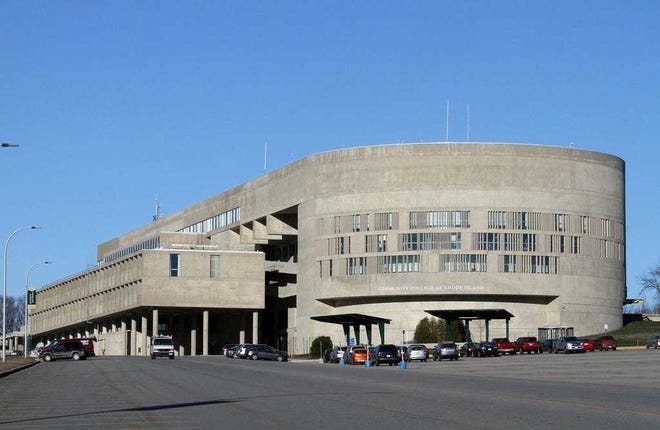
CCRI sees a big jump in online learning as the pandemic complicates many students’ lives

Ana Gomez, of Woonsocket, with daughters Lelia and Abigail Herrera. Gomez works as a caregiver while taking online business classes at Community College of Rhode Island.

WARWICK — When the pandemic struck, the Neighborhood College of Rhode Island had a decision: shut down the institution for the duration or find a way to shift more than 2,400 lessons on-line. 

The college decided to make remote mastering do the job, irrespective of the point that only 40{e4f787673fbda589a16c4acddca5ba6fa1cbf0bc0eb53f36e5f8309f6ee846cf} of its faculty were comfortable using an on the web instruction platform.  

The experiment has shifted the way students understand at CCRI, in which the normal pupil is 25, holding down a position, and, in some cases, raising kids. 

A lot more:In coverage change, CCRI states partly vaccinated learners can return to campus

In the fall of 2019, 21{e4f787673fbda589a16c4acddca5ba6fa1cbf0bc0eb53f36e5f8309f6ee846cf} of students were being enrolled in at the very least a person on the internet class only 5{e4f787673fbda589a16c4acddca5ba6fa1cbf0bc0eb53f36e5f8309f6ee846cf} had been enrolled exclusively online. 

This tumble, 66{e4f787673fbda589a16c4acddca5ba6fa1cbf0bc0eb53f36e5f8309f6ee846cf} of college students are enrolled in at minimum a single on the net class, and 34{e4f787673fbda589a16c4acddca5ba6fa1cbf0bc0eb53f36e5f8309f6ee846cf} are completely on line. 

Virginia saw homeschooling spike during the pandemic and many parents are sticking with it

RICHMOND, Va. (WRIC)- Virginia saw a large spike in homeschooling throughout the coronavirus pandemic and quite a few parents are planning to adhere with it prolonged-term.

Virginia Section of Training info from the 2020-2021 college 12 months demonstrates 59,638 pupils were enrolled in home education. That’s up from 38,282 in the yr prior. Figures from the present university 12 months have not been finalized but, anecdotally, that trend seems to be continuing, according to the Property Schooling Association of Virginia (HEAV).

HEAV’s Director of Homeschool Assistance and Governing administration Affairs Yvonne Bunn explained the expansion was so sizeable that they had to maximize team to support hook up mom and dad with assets.

“I imagine it will forever change the landscape of instruction,” Bunn reported. “I never feel it will at any time go again to the way it was right before. We typically noticed in Virginia a 10 to 12 per cent boost each individual 12 months but this last year we saw a 48 percent boost.”

When her youngsters initially started university, mom of 4 Tera Thomas hardly ever noticed herself switching to property education and learning.

“I employed to educate large school English literature and I have generally joked that I teach higher school for a reason,” Thomas said.

With her oldest in the 3rd quality, Thomas noticed her little ones weren’t getting ample individualized attention at their community university. They ended up exhausted by packed schedules and did not look to be enjoying their lessons. She explained they have been falling guiding on elementary techniques in some cases but, below force to get via a stacked curriculum, their instructors appeared unable to cater to their particular desires.

Then, when COVID-19 pressured classrooms to shut down in March 2020, Thomas bought a nearer search at what residence instruction could glimpse like.

“I assumed, hey, we can do this,” Thomas stated.

Nonetheless feeling nervous, Thomas manufactured the change mid-semester. When their university program introduced designs to keep on being all-digital the next tumble, she stated it only reinforced her final decision.

“I would say that was perhaps the nail in the coffin,” Thomas said. “I knew there was no way they would thrive in front of a pc all working day. I understood there was no way that they would prosper with masks on their confront all day.”

Bunn explained just about every condition has its have legislation on homeschooling, every single with unique oversight and curriculum prerequisites.

“Virginia has a quite reasonable property faculty legislation. There are some states that have extra stringent laws,” Bunn mentioned.

Although some states involve moms and dads to be certified to teach at dwelling, Virginia offers a ton of adaptability. Bunn explained parents will need to possibly have a higher college diploma, be licensed as trainer in Virginia or post a written letter to their community superintendent with a record of subjects they intend to educate requesting an exception. Bunn explained college students enrolled in a distant discovering study course are permitted to be home schooled as well.

Bunn said condition regulation does not dictate which topics moms and dads have to have to include but, at the close of each individual university year, learners have to achieve particular standardized tests scores to continue dwelling education and learning.

Thomas reported her youngsters are observing superior take a look at scores than ever. As well as, the adaptable program performs for their spouse and children and her youngsters appear happier. She has no plans to re-enroll them in public colleges.

“I want mother and father to be inspired that you get to have a say in what your young ones are undertaking, who they are, what they grow to be and what they find out,” Thomas reported. “You really don’t have to do what all people else is performing. You don’t have to do the traditional issue.” 

Bunn suggests that dad and mom fascinated in acquiring began link with households who have encounter with dwelling training. For assist, check out this site.