The number of homeschoolers in Florida has spiked in a dramatic way since the start of the pandemic.
The state saw an overall 35.2{e4f787673fbda589a16c4acddca5ba6fa1cbf0bc0eb53f36e5f8309f6ee846cf} increase in the number of homeschoolers between 2019-2020 and 2020-2021, according to the Florida Department of Education.
But the increases were even steeper in Escambia and Santa Rosa counties.
The counties both experienced over 60{e4f787673fbda589a16c4acddca5ba6fa1cbf0bc0eb53f36e5f8309f6ee846cf} increases in the number of children being homeschooled between the 2019-2020 and 2020-2021 academic years.
Now, some local parents who began homeschooling their children because of the spread of COVID-19 do not intend to send their children back to traditional schools, despite their abating fears over the virus.
In fact, some parents in Escambia and Santa Rosa counties say, in homeschooling, they’ve found a solution to concerns about what and how their children are being taught.
Some believe that homeschooling just might be the permanent way to go.
“There is no doubt in my mind that the pandemic created a lot of uncertainty for parents. So as a result, having the option to legally educate your child at home started to become really attractive,” said Lupita Eyde-Tucker, an administrator for multiple Florida home education help groups including Pensacola Homeschool Families.
“At home, at least, parents knew there weren’t all these question marks about exposure,” Eyde-Tucker continued. “Some parents did it because they didn’t want their children to be exposed. Some parents did it because they didn’t want their children to be masked.”
Homeschooling the way to go?
Statewide, there were 106,115 students enrolled in Florida home education programs for the 2019-2020 school year.
The following year, in 2020-2021, the number of Florida students registered as participating in home education programs jumped to 143,431 — an increase of 37,316, or 35.2{e4f787673fbda589a16c4acddca5ba6fa1cbf0bc0eb53f36e5f8309f6ee846cf}.
Locally, Escambia and Santa Rosa counties both had exactly 1,300 homeschoolers enrolled in home education programs for the academic year 2019-2020.
But during the 2020-2021 school year, the number of homeschoolers in Escambia County jumped to 2,111, equaling an increase of 62.4{e4f787673fbda589a16c4acddca5ba6fa1cbf0bc0eb53f36e5f8309f6ee846cf}.
In Santa Rosa County, the number of enrolled homeschoolers rose to 2,150 during the 2020-2021 school year, equaling a 65.4{e4f787673fbda589a16c4acddca5ba6fa1cbf0bc0eb53f36e5f8309f6ee846cf} increase.
Eyde-Tucker has been homeschooling since 1999. She has five children. Two of them are still high school-aged.
“I’ve graduated three of them, only two more to go,” she said.
But Eyde-Tucker’s relationship to homeschooling in Florida is bigger than just her role as a homeschool mom. As the publisher of HomeschoolingFlorida.com, she has connections to homeschooling families across the state.
She has spoken with many brand-new homeschool parents in recent years who took on the personal responsibility of teaching their children due to concerns about COVID-19 safety and the restrictions placed on educational institutions at the outbreak of the pandemic.
But now, two years removed from the pandemic’s start, Eyde-Tucker said many of those same parents are choosing to continue with homeschooling and not to reenroll their children in traditional schools.
“I would say that it’s probably 50-50. Half of them are like, ‘I can’t wait until this is over,’ and half of them are like, ‘You know this actually went pretty well — maybe, you know, maybe we can keep going,'” Eyde-Tucker said. “For those that tend to keep going, I find that the reason why is because they realize that they own their own time now.
“For them, it’s like, ‘Wow! We can do so much with our children’s education. We don’t even need to look back,'” she continued. “For others, it’s like, ‘This opens up a lot for my child, now, he can learn whatever he wants to and actually accelerates his education.'”
Whitney Martin, of Milton, understands the sentiment. Martin began homeschooling her kindergarten-age son last year.
“We think that individualized education is important,” Martin said. “Like, why waste your kid’s time — if they have talents or things that they find interesting — why would you waste their time in school where they are waiting on 20 other kids in a class getting what they need to get done, done, when they could be spending their time on things that actually matter to them?”
Homeschool stigmas lessen
Martin herself was homeschooled through elementary school and said that she is glad that some of the stigmas associated with homeschooled children have lessened.
“When people ask what was the best memory of your childhood,” Martin said, “I will always tell them, it is the fact that my parents homeschooled and that being homeschooled is the best gift that I could have ever been given as a human — just the time I spent with my parents and that I was given the time to become my own person.”
Eyde-Tucker said that she, like Martin, is glad the stereotype of homeschoolers, as socially less skilled people than students who attend traditional schools, is finally being realized as false.
“Socialization happens everywhere. You socialize with people at Boy Scouts, at the library, at church, at the grocery store. We talk to people all the time,” Eyde-Tucker. “It’s just that the idea that your child has to socialize with their specific age group is actually what people think socialization is, but in reality, it is interacting with all different age groups — that’s true socialization.”
Many homeschoolers across the state join homeschooling groups or “co-ops” designed to bring homeschooling families together for lessons or group field trips, and multiple such groups exist in Escambia and Santa Rosa counties.
“When homeschoolers go places and do stuff, the recurring comment is, ‘Wow, you guys are homeschoolers. We always love when homeschoolers come because they are so polite, and they always like to talk to us and answer questions in full sentences,'” Eyde-Tucker said.
Martin co-founded her own local homeschooling co-op called the Northwest Florida Sunshine Leaners around the start of the pandemic. At the time of its founding, the majority of Northwest Florida Sunshine Leaners’ membership were parents brand-new to the world of homeschooling.
“I would say that 60{e4f787673fbda589a16c4acddca5ba6fa1cbf0bc0eb53f36e5f8309f6ee846cf} were first timers,” Martin said. “Then, I would say the others had already been dabbling in part-time homeschool stuff.”
Like many homeschool parents in the area, Stephanie Miskowski, of Pensacola, began homeschooling her 14-year-old son out of frustration with the public school’s response to the pandemic.
“He did the remote learning and the remote learning was awful,” Miskowski recalled.
Miskowski has been homeschooling her son for about a year and explained she started teaching her son at home after experiencing a myriad problems connecting to remote learning websites over her home computer.
“One day, he was trying to take a test, and it just wouldn’t work. He was trying so hard and was so frustrated that I was like, ‘I am done,'” Miskowski remembered.
“Now schools are back, but schools are still bad,” she added. “They are constantly late. The buses are awful. People I know keep saying that kids aren’t coming home on time, and when they’re already coming home in the dark, it’s already scary enough.”
Similarly, Gale Han, of Pace, who also began homeschooling her children last year, has continued to do homeschool in part out of concerns related to her daughters’ safety.
“At home, we know that they will not be involved in the fighting or the bullying or won’t have to worry about them being mistreated,” Han said.
Her daughters are both around the age to start first grade. As an alternative to remote learning, Han began homeschooling her daughters in the fall of 2020. When remote learning ended, she and her husband then grew concerned about their daughters’ possible exposures to COVID-19 if they were re-enrolled to in-person classes at their former private school.
“So we homeschooled them and learned that homeschool is actually pretty good,” Han said. “Even though there is no COVID right now, we are not sure if we are going to put them back in private or public school.”
With she and her husband both working from home and their daughters now learning at home, the family has grown to love the time they spend together.
“Another thing, we want to put our kids back in school, but we don’t know what teachers are teaching,” Han said. “Right now, we fully control the material: all the knowledge, all the conversation, all language, all the things they can learn.”
Han, like many new homeschool parents in the local area, said she could see herself continuing to teach her children, herself, at home, for the foreseeable future.
Colin Warren-Hicks can be reached at colinwarrenhicks@pnj.com or 850-435-8680.
School closings – and college limitations – have built a generation of K-12 mother and father de facto lecturers.
By means of distant learning, thousands and thousands of caretakers of small children have been quickly pressured into the challenging environment that instructors – and probably a lot more to the position – residence university moms and dads and caretakers facial area just about every day: what to instruct, how substantially, what should be avoided what is valuable and what is not, and what is borderline? For the first time in many years, common Americans are confronting the fundamental principles of the K-12 curriculum and this is bracing. We’re chatting education and learning at the most basic levels.
And the option is (potentially) colossally beneficial and great.
Parents – local communities far more broadly – have normally been the basic creating blocks of schooling in the U.S. But the introduction of the two-earnings home, transforming family members structures, and ever more competitive arena in the career industry began to limit the time that mothers and fathers could get to require themselves straight in their children’s training. PTA corporations commenced to founder, university board meetings lacked attendance, and a lot more and more nearby features and authentic choices were suctioned up by point out companies and by the legislature.
I do not consider this was since we did not care. We did. Priorities altered, and from time to time points had to drop off. We confronted challenging decisions and to “blame” dad and mom for disinterest just ignores the realities of hard modern day everyday living. But with the curse of the pandemic upon us, all those priorities altered radically.
Our young children have been not going to get an education until we took a hand in it – in some scenarios, this intended full-on property schooling. I have constantly had significant regard for the people today who did this – I know how difficult it is to train. In other cases, it was simply reading through with the little ones and serving to with homework much more than standard – considering that the living area was often the classroom. And the family members got into the act – grandparents, aunts, household buddies and relatives extensions and more mature siblings. They bought inventive with video clips, visuals, distant museum tours and new instructing product. I have by no means seen Faculty Dwelling Rock’s “I’m Just a Invoice (on Capitol Hill)” surface so quite a few instances in social media.
Guardian teams bought alongside one another – on the internet, in several conditions – to chat about what their young ones have been discovering, and how. An “underground” of genuine instruction reform was heading on, practically unnoticed, even by the members as they ended up only attempting to make it all get the job done, somehow. The uncooked supplies for a re-make of American training are right here, and the dad and mom – and all of the other constellations of “family” in the fashionable US – are showing the way.
What’s essential are a collection of regional “summits” involving mother and father and college boards and teachers, to preserve an ongoing discussion of how we educate our kids. This is a new technology, and they should have an technique that is qualified to them.
But there are also a selection of means we can foul it up.
The very first, and most destructive, is to allow for political ideologues of any form to dominate middle stage. Politicians have a genetic tendency to emphasize silly controversies, and to dumb down intriguing suggestions into divisive, self-serving speaking points. We’re a lot much better off with a adaptable “take what we require and permit the rest go” attitude on this stuff, and we’re not going to get it if these innovations have to be lessened to “D” and “R”.
The recent pattern in legislatures is to misinterpret this reform motion, and basically ban issues … but banning is a silly and unwell-encouraged substitute for dialogue, reasonable compromise, and an engaged and educated dialogue of the fundamental principles of schooling itself.
It’s the coward’s (or politician’s) way out.
The brave matter to do is to motivate and market beneficial adjust in the schools, and Florida, with its awesome array of education options. It’s s exactly the right “lab” to take a look at these new suggestions – if we can keep the politicians out of it.
R. Bruce Anderson is the Dr. Sarah D. and L. Kirk McKay, Jr. Endowed Chair in American History, Governing administration, and Civics and Miller Distinguished Professor of Political Science at Florida Southern College. He is also a columnist for The Ledger and political expert and on-air commentator for WLKF Radio.
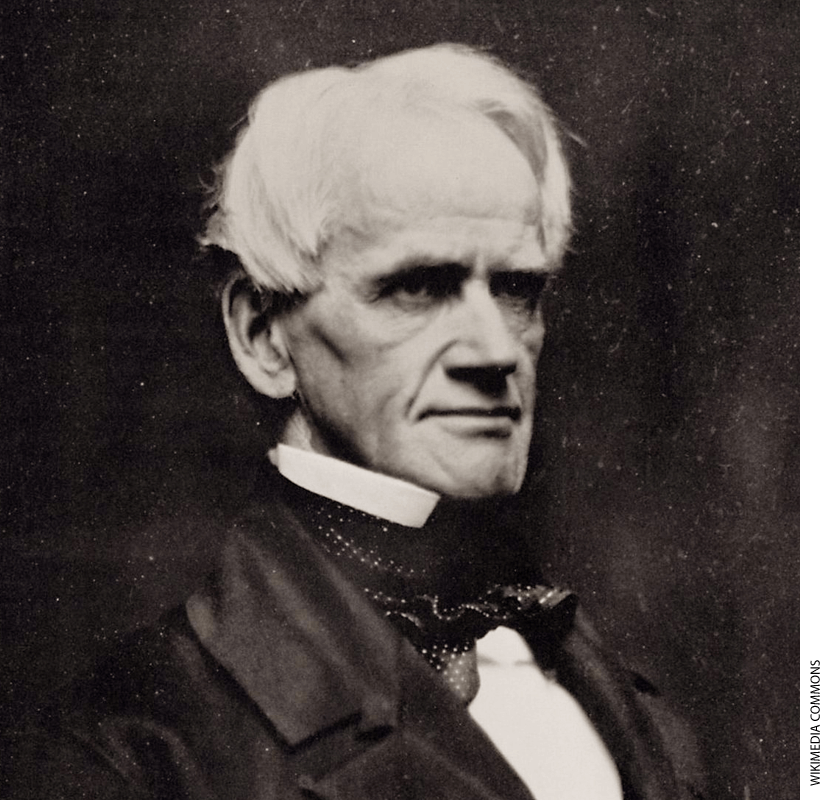
As folk wisdom has it, the apple doesn’t fall far from the tree. And research shows that children are generally shaped more by life at home than by studies at school. College enrollment, for instance, is better predicted by family-background characteristics than the amount of money a school district spends on a child’s education. Some parents have a specific vision for their child’s schooling that leads them to keep it entirely under their own direction. Even Horace Mann, the father of the American public school, who favored compulsory schooling for others, had his own children educated at home.
Homeschooling is generally understood to mean that a child’s education takes place exclusively at home—but homeschooling is a continuum, not an all-or-nothing choice. In a sense, everyone is “home-schooled,” and the ways that families combine learning at home with attending school are many. Parents may decide to home-school one year but not the next. They may teach some subjects at home but send their child to school for others, or they may teach all subjects at home but enroll their child in a school’s sports or drama programs. Especially during the Covid-19 pandemic, the concept of homeschooling has become ambiguous, as parents mix home, school, and online instruction, adjusting often to the twists and turns of school closures and public health concerns.
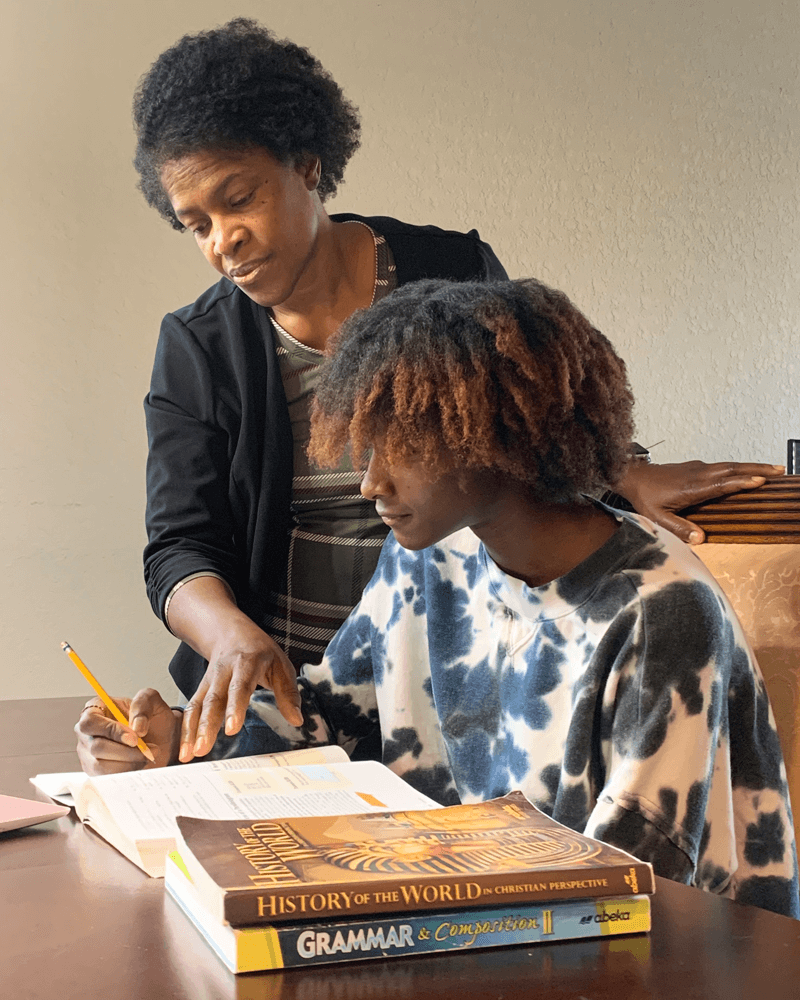
Valerie Bryant helps her daughter with homework.
Improving public understanding of the growing and changing nature of homeschooling was the purpose of a virtual conference hosted in spring 2021 by the Program on Education Policy and Governance at the Harvard Kennedy School. The conference examined issues in homeschooling through multiple lenses, including research, expert analysis, and the experiences of parents. The event drew more than 2,000 registrants, many of them home-schooling parents. Their participation made clear that homeschoolers today constitute a diverse group of families with many different educational objectives, making it difficult to generalize about the practice. The conference did not uncover convincing evidence that homeschooling is preferable to public or private schools in terms of children’s academic outcomes and social experiences, but neither did it find credible evidence that homeschooling is a worse option. Whether homeschooling does or does not deliver for families seems to depend on individual needs and the reasons that families adopt the practice.
Homeschooling Growth
The interest drawn by the conference is striking in light of where homeschooling stood only a few decades ago. In the early 1970s, the education mainstream in the United States frowned upon the practice and considered it a fringe movement. At the time, it was estimated that about 10,000 to 15,000 children were being homeschooled nationally. Only three states explicitly allowed parents to home-school. Elsewhere, the removal of students from the schoolhouse could be treated as a criminal violation of the state’s compulsory-education law, and parents were sometimes jailed for that very reason.
Despite advocating for compulsory education, Horace Mann homeschooled his children.
To fight for the right to home-school, a coalition of home-schooling advocates coalesced in the 1980s. Over the next 10 years, they would radically change the legal framework and trajectory of homeschooling. The coalition included left-leaning acolytes of John Holt, a former elementary school teacher who became disillusioned with the oppressive routines and rigid structures that he felt characterized formal schooling. Holt coined the term “unschooling,” the practice of keeping children out of school and, instead of designing a specific home curriculum, giving them considerable freedom to decide what to learn and how to learn it. Holt’s approach was an extension of the educational philosophy of Jean-Jacques Rousseau, the 18th-century French philosopher who theorized that the best education was one determined solely by children themselves.
The largest element in the coalition of home-schooling advocates consisted of devout Christian families who bemoaned what they viewed as moral decay in public schools. Only by homeschooling, they held, could they ensure that their children would be educated in a manner consistent with their religious beliefs and values. In 1983, Michael Farris founded the Home School Legal Defense Association to protect homeschoolers from compulsory-education laws. Dues-paying members were promised free legal defense if a government body threatened parents with prosecution. This offer proved to be a powerful organizing tool, and the association now reports a membership of over 100,000. With the backing of an organized grassroots constituency, the association and other advocacy groups persuaded legislatures in all 50 states to craft a legal framework for those who wanted to educate their children at home. Once that legal context was in place, homeschooling took off. By the early 2000s, the number of homeschoolers had surpassed one million nationwide, according to the National Center for Educa-tion Statistics.
French philosopher Jean-Jacques Rousseau thought children should direct their education.
At the conference, Brian Ray of the National Home Education Research Institute, a pro-homeschooling research organization, estimated the number of home-schooled children in 2019 at 3 million. Official estimates provided by the U.S. Department of Education prior to the pandemic hovered at 3 percent of all school-age children, which amounts to fewer than 2 million students. The difference between these estimates stems in part from the challenges of getting a full and accurate count of the number of children who are being educated primarily at home. Many school districts are not obligated to report to the state the number of home-schooled students in their district. Instead, the U.S. Department of Education bases its estimate on a questionnaire that it mails to a nationally representative sample of parents every few years. However, better than a third of those surveyed in 2019 did not return the questionnaire, which introduces the possibility of undercounting if home-schooling parents returned the questionnaire at lower rates than other parents. The U.S. Census Bureau, in a pilot survey administered after schools closed in response to the spread of Covid-19 in spring 2020, found that 5.4 percent of households with school-aged children had “at least one child [who was being] homeschooled.” The survey was repeated in early October 2020, when many schools remained closed, and found that the percentage had burgeoned to 11.1 percent.
Michael Farris, a home-schooling advocate and an appellate litigator, is the board chairman and founding president of the Home School Legal Defense Association.
Separately, the Harvard Program on Education Policy and Governance, in cooperation with Education Next, asked a representative sample of parents on three occasions over the course of the pandemic to identify the type of school their child attended—public, private, charter, or homeschool. The question resembled the one used by the U.S. Department of Education. The survey was conducted while many schools were closed to in-person learning—in May 2020, November 2020, and June 2021. According to the parents responding, 6 percent of the children were being home-schooled in May, 8 percent in November, and 9 percent the following June. Wondering whether these percentages were overestimates, the survey team asked those saying they were home-schooling in June 2021 to clarify by checking one of the following two items:
Child is enrolled in a school with a physical location but is learning remotely at home
Child is not enrolled in a school with a physical location
The researchers found that when they deducted from the home-schooling count all those who indicated the child was enrolled in a school, the share of students in the home-school sector in June 2021 fell from 9 percent to 6 percent. When their prior two estimates were adjusted downward accordingly, homeschooling was 4 percent in spring 2020 and 6 percent in fall 2020. The 6 percent estimate is twice the percentage estimated by the U.S. Department of Education in 2019 but only about half that estimated by the U.S. Census Bureau during the pandemic. Clearly, homeschooling is on the rise. Even cautious estimates indicate a doubling of the practice during the pandemic, and the actual shift could be greater.
Was the surge in homeschooling a temporary phenomenon induced by the pandemic, or will it become a permanent part of the education landscape? In a national poll conducted by EdChoice in 2021, 60 percent of parents held more favorable views toward homeschooling as a result of the pandemic. Market researchers are reporting significant, if unofficial, drops in school enrollments during the 2021–22 school year. Early reports say that some home-schooling newcomers are enjoying the flexibility, personalization, and efficient use of time that homeschooling allows. Families are also taking advantage of opportunities to combine homeschooling with part-time virtual learning, college coursework, neighborhood pods, and informal cooperatives, which are lessening the teaching demands on parents who home-school. But the 2021 Education Next survey revealed that many parents were finding education at home to be an exhausting undertaking and looked forward to a return to normal operations. Nearly a third reported they had “to reduce the number of hours [they] work[ed] in order to help with school work this year.” An even higher percentage said they had to rearrange their work schedule. A quarter of the 9 percent of those calling themselves homeschoolers said they did not plan to continue the practice.
Regulating Homeschooling
Brian Ray of the National Home Education Research Institute says that 3 million children were home-schooled in 2019.
Homeschooling is now universally permitted in the United States, and the pandemic has likely solidified public acceptance of its practice. But some critics still call for regulatory safeguards to protect home-schooled children from abuse and to ensure they receive an adequate education. They point out that, among industrialized countries, the United States has the least-restrictive regulatory framework for homeschooling. Japan, Sweden, and Germany all but prohibit the practice, and many other European countries impose tight restrictions on it, such as requiring parents to hold educator certification or mandating that students take exams to demonstrate academic progress. In the United States, by contrast, 11 states do not require parents to notify authorities that they are home-schooling, according to the Coalition for Responsible Home Education, and many states that do require notification have few other restrictions. A small number of states mandate testing of home-schooled children or that certain subjects be taught by trained educators.
Harvard Law School professor Elizabeth Bartholet, who elsewhere has called for a presumptive ban on homeschooling, argued at the conference that regulatory authorities should screen prospective home-schooling parents and perform regular home visits. She asserts that there is “a significant subset of [home-schooled] children suffering from abuse and neglect.” High-profile cases of a horrifying nature help to make her point. In 2018, one such instance captured the nation’s attention when two parents who claimed to be home-schooling in California were found guilty of abusing, torturing, and imprisoning their 13 children for several years. Proponents of broader restrictions on homeschooling claimed that the permissive regulatory framework for homeschooling in California was what allowed these parents’ heinous acts to go unseen for several years. Citing these instances, critics of homeschooling are asking for state intervention. For example, a law proposed to the Iowa legislature in 2019 would have required school districts to conduct “quarterly home visits to check on the health and safety of children . . . receiving . . . private instruction.”
Harvard Law School professor Elizabeth Bartholet has called for the screening of home-schooling parents and home visits.
The Home School Legal Defense Association vigorously—and usually successfully—opposes these kinds of laws. At the conference, Mike Donnelly, the organization’s senior legal counsel, argued that parents have a constitutional right to direct the education of their children. State courts have largely agreed with this principle, and the U.S. Supreme Court, though not ruling on compulsory-education laws in general, found in Wisconsin v. Yoder (1972) that compelling Amish children to attend school beyond the age of 14 violated the Free Exercise clause of the First Amendment to the Constitution.
Donnelly also said that mandating home visits by social workers or requiring that physicians sign off on home-schooled children’s well being would be intrusive and impractical and would violate the constitutional rights of home-schoolers. He rejected the idea that child abuse is more prevalent in home-school households than elsewhere, and said that, if it occurs, other laws protecting children from abuse come into play. Economist Angela Dills of Western Carolina University said she found no clear evidence of an increase in reported incidents of abuse in states that relaxed bans on homeschooling. Charol Shakeshaft, an expert on sexual abuse in schools, said that her research suggests “it is highly unlikely that there’s higher incidence of sexual abuse of kids in the home-schooling world than in the public-school world.”
Mike Donnelly, legal counsel for the Home School Legal Defense Association, fights laws curtailing the rights of homeschoolers.
Effects on Student Learning
Many critics of homeschooling are more worried about ineffective or misguided instruction than about child abuse. They maintain that homeschoolers should be required to use standard educational materials and that their children should have to take statewide tests to measure academic progress. But many home-schooling families do not trust government officials to decide what can and cannot be taught, viewing such regulations as antithetical to the purpose of homeschooling. So far, they have succeeded, with the help of the potent Home School Legal Defense Association, in forestalling efforts to regulate curricular content.
What does the research evidence say about the academic progress of homeschoolers? Speaking at the PEPG conference, Robert Kunzman of Indiana University, who has synthesized the literature on homeschooling, said the “the data are mixed and inconclusive.” Research is underdeveloped in part because scholars cannot directly compare representative homeschoolers with peers attending school. Random assignment of students to homeschooling would be infeasible, unethical, and likely illegal. Statistical studies that attempt to adjust for differences between the background of homeschoolers and other students are often flawed because homeschoolers differ from other students in ways not captured by standard demographic variables. These studies tend to find homeschoolers performing better in literacy than in math, perhaps indicating that parents are better equipped to teach in that domain. Jennifer Jolly and Christian Wilkens, in their conference presentation, reported that college students who have been home-schooled are as likely to persist in their postsecondary education as other students. Still, studies of exam performance and college persistence do not include homeschoolers who never take an exam or go to college, making it difficult to generalize to the home-schooling community as a whole. As Kunzman observed, the only thing one can conclude for certain is that the data are too limited to sustain any strong conclusions about home-schooling learning outcomes.
Homeschooling Diversification
Beneath the debate over academic performance lies suspicion of homeschoolers, both in the mainstream media and in the academic community. They are often portrayed as a homogeneous group of southern, rural, white families who adhere to fundamentalist religious and cultural values. Sarah Grady, the director of the U.S. Department of Education survey of homeschoolers, finds some support for this stereotype. Homeschooling is more prevalent in towns and rural areas than in cities and suburbs, present more often in the South and West than in the Northeast and Midwest, more likely to be practiced by those of lower-income backgrounds, more frequently found among white families than Black or Asian families, and more likely to occur in two-parent households with multiple children. These patterns are just tendencies, however, not extreme differences across social groups. The U.S. Department of Education surveys show that homeschooling can be found in all demographic groups. Better-educated parents are just as likely to home-school as less-educated ones, and Hispanic parents are nearly as likely to do so as white parents. Time is eroding the stereotypical face of the home-schooling family—as is the pandemic.
What’s more, families choose to home-school for a variety of reasons. Even though fostering religious and moral instruction remains a common rationale, many parents cite other motivations. Nearly one third of families home-school to support a child with special needs or mental-health challenges, according to the National Center for Education Statistics. Other parents believe they have particularly gifted children who will prosper under more intensive academic instruction. Indeed, almost three quarters of home-schooling families cite dissatisfaction with academic instruction at schools as an important reason for their decision. Safety and bullying issues at schools are also frequently named as contributing factors. There are many niche areas as well. Parents of children who train intensively in the performing arts or athletics may opt for homeschooling because of the scheduling flexibility and personalization that it offers. Some Native American homeschoolers want to maintain ancestral language and traditions. And then there are the “unschoolers,” who take a different approach altogether.
Reasons for homeschooling are multiplying, but the biggest change in recent years is the way in which home education is being conducted. The availability of online content is revolutionizing the practice. Access to sophisticated instructional material lowers barriers that previously discouraged parents from homeschooling. A parent confident in her ability to teach grammar, spelling, and literature but not in her mastery of long division, algebra, and calculus can now ask her child to turn to Khan Academy or other free or low-cost instruction for help. Homeschoolers are increasingly teaming up as well. Home-school cooperatives, through which families pool expertise and resources to deliver instruction, have grown; 43 percent of homeschoolers participated in such groups in 2019, up from about one third in 2016, according to the U.S. Department of Education survey. Another trend is the use of hybrid models, in which home-schooled children also attend public and private schools or even local universities part-time.
Despite this diversity of home-schooling approaches, critics warn that many home-schooling families are insular, promoting religious fundamentalism, intolerance, and anti-democratic sentiments. Research casts considerable doubt on such claims. With few exceptions, studies find no systematic differences in the opportunities for social experience available to home-schooled children and public-school children. Any differences that do turn up are typically in the homeschoolers’ favor. Data from the U.S. Department of Education survey suggest that home-schooled children participate in an array of activities that involve interacting with other children and that they are more likely to go to libraries and museums and attend other cultural activities than their peers in public schools (see “Homeschool Happens Everywhere,” features, Fall 2020). Homeschooling may even strengthen familial bonds by ensuring a level of attentiveness from parents that fosters positive social development. It could also, as some have found, end up shielding children from negative peer or social influences that undermine healthy social development.
Jennifer Panditaratne of Broward County, Florida, works with her husband to help their children with home-schooling assignments throughout the day.
Homeschooled Adults
While there is little evidence that home-schooled children are worse off academically or socially in childhood, it’s possible that a lack of exposure to mainstream norms and institutions could make home-schooled children ill equipped to navigate higher education and careers as adults. According to Jolly and Wilkens, there is little evidence that home-schooled children end up doing poorly in life. College grades, persistence rates, and graduation rates are generally no different for those who were home-schooled than for those educated in other ways. Trends in employment and income for former homeschoolers also indicate that they tend to do as well as others. Adults who were home-schooled as children are as well integrated socially as their traditionally schooled counterparts, and they navigate their careers just as successfully.
Researchers nonetheless caution that studies of homeschooling are limited by the data available to them. As mentioned, states often do not have thorough records of the practice. Some home-schooling families are not keen to participate in studies and research surveys. Research findings may be biased because of non-participation by these families. Complicating matters further, it is difficult to generalize about homeschooling because it embodies a diversity of groups, rationales, and ways of carrying out home education. Few analyses draw distinctions among homeschoolers, often treating them as a uniform group despite substantial heterogeneity in the population. Claims about homeschooling should be tempered until we have more-complete data on this rapidly growing and changing practice.
The Future of Homeschooling
Our conference found no convincing evidence that homeschooling is either preferable to or worse than the education a student receives at a public or private school. The success of homeschooling seems to depend largely on the individual child and parents. If so, it may make sense to allow families to decide whether homeschooling is right for them.
It remains to be seen whether the growth of homeschooling experienced during the pandemic will persist. If homeschooling does hold onto its current share of the school-age population, homeschooling will have become the most rapidly growing educational sector at a time when charter-school growth has slowed and private-school enrollments are at risk of further decline. The meaning of homeschooling could also change dramatically in the coming years. It may be less of an either-or question, as homeschooling is combined with more-formal learning contexts, whether they be online experiences, neighborhood pods, cooperatives, or joint undertakings with public and private schools. Eric Wearne of Kennesaw State University says that “homeschooling is growing, but everyone should be prepared for it to look a lot stranger in the coming years.” If Wearne’s assessment is correct, homeschoolers, once thought of as traditionalists holding onto the past, may be an advance guard moving toward a new educational future.
Daniel Hamlin is assistant professor of educational leadership and policy studies at the University of Oklahoma. Paul E. Peterson is the Henry Lee Shattuck Professor of Government at Harvard University, director of Harvard’s Program on Education Policy and Governance, and senior editor of Education Next.
Prior to the pandemic, Karen Mozian had a concrete vision of her son’s K-12 education: He would go to public faculty, just as she experienced.
But then educational facilities shut down in March 2020, and Mozian observed 9-yr-aged Elijah glued to Zoom at the kitchen area table, battling to get his phrases out. Elijah stutters, and distance studying built it even worse. He was scarcely engaging, daydreaming through his courses.
Elijah was identified with ADHD in the summertime of 2021, just before sixth quality. He was back again on campus, and his university granted him accommodations, such as extra screening situations and aid with incomplete assignments, but Mozian noticed that he was predicted to advocate for himself — and he did not want to be singled out. His grades dropped abruptly.
That, combined with what she observed as a stressful natural environment of COVID-19 limits, produced Mozian notice that faculty wasn’t doing the job for her son. It was agonizing to see him struggle. So she pulled him out and began training him herself.
“To say I’m dwelling-education my child are terms I never at any time thought would cross my lips,” mentioned Mozian, a wellness business enterprise proprietor and daughter of a public school trainer. “But I understood that there are other ways to discover, that I set a whole lot of faith in the community faculty program.”
For the duration of the pandemic, a escalating range of families in California and throughout the U.S. have selected to home-college. The motives for executing so are assorted, complicated and span socioeconomic and political spectrums: educational institutions utilizing also quite a few COVID-19 basic safety protocols, or far too couple the polarizing conversation all around vital race idea neurodivergent little ones having difficulties with virtual instruction and an in general waning religion in the public faculty process.
What these moms and dads have in typical is a wish to take manage of their children’s education and learning at a time when command feels elusive for so quite a few men and women. In an hard work to realize this development, The Occasions interviewed 10 families in Southern California that were being impelled by COVID-19 to commence household-schooling. Even though it stays to be witnessed how quite a few will keep on earlier the pandemic, most of these dad and mom claimed they won’t return to brick-and-mortar educational institutions now that they’ve expert the rewards and adaptability of home-education.
We’re just striving to give them as several applications as attainable, and a truly solid sense of self. Each individual working day is different, variety of like higher education for minimal folks.
Crista Maldonado-Dunn, parent
The proportion of American households home-schooling at minimum just one kid grew from 5.4{e4f787673fbda589a16c4acddca5ba6fa1cbf0bc0eb53f36e5f8309f6ee846cf} in spring 2020 to 11.1{e4f787673fbda589a16c4acddca5ba6fa1cbf0bc0eb53f36e5f8309f6ee846cf} in tumble 2021, in accordance to a U.S. Census Bureau analysis. The quantity of Black households choosing to home-school greater 5-fold throughout that time, from 3.3{e4f787673fbda589a16c4acddca5ba6fa1cbf0bc0eb53f36e5f8309f6ee846cf} to 16.1{e4f787673fbda589a16c4acddca5ba6fa1cbf0bc0eb53f36e5f8309f6ee846cf}.
In California, virtually 35,000 families filed an affidavit with the state to open a private house college for 5 or much less pupils all through the 2020-21 school year, extra than two times as many affidavits submitted in 2018-19.
The pandemic enabled dad and mom to witness for the first time how and what their youngsters have been discovering — albeit at a time when educators ended up scrambling to adapt lessons to a virtual space. Several mothers and fathers ended up sad with what they observed, claimed Martin Whitehead, spokesman for the Homeschool Assn. of California.
“There is dissatisfaction with how folks were being becoming taught and addressed in faculties,” Whitehead stated.
These types of annoyance generally predates — but was exacerbated by — the pandemic, and is one particular reason a lot more Black households are pivoting to guardian-led instruction, explained Khadijah Z. Ali-Coleman, co-editor of the guide “Homeschooling Black Young children in the U.S.”
Black dad and mom currently understood that their small children are more most likely than white learners to be punished and suspended, Ali-Coleman reported. They knew, of training course, about the college-to-prison pipeline and the point that their young children will not see by themselves in most mainstream curricula, exterior of Black Background Thirty day period. But looking at those realities participate in out in real time was sobering and motivating.
“They observed how academics were being talking to the little ones, the tone of their voice,” Ali-Coleman claimed. “More Black dad and mom started off acquiring conversations and camaraderie around this — that this is not appropriate.” It should be pointed out, Ali-Coleman reported, that Black households are not a monolith, and their factors for residence-schooling are assorted and layered.
Crista Maldonado-Dunn was intrigued in alternative training right before COVID-19. When her son’s preschool shut down in March 2020, she began speaking with close friends — all households of shade — about “building an setting for our young children to discover and enjoy who they are, and in which they come from.”
They shaped a co-op (affectionally known as their “tribe”) and began assembly in Maldonado-Dunn’s backyard in El Segundo. Dad and mom took turns teaching lessons, quite a few of which had been centered on their possess identities and cultural histories. Maldonado-Dunn’s young children had been equipped to find out much more about their Apache, Samoan, African, Spanish and Portuguese heritage. Household elders have been invited to instruct classes.
“How do you prepare a youngster for an unsure long term?” asked Maldonado-Dunn, who remaining her profession as an leisure consultant to focus on her relatives. “We’re just seeking to give them as quite a few instruments as achievable, and a really solid perception of self. Each working day is various, variety of like college for little people.”
Her young children, now 3 and 5, are understanding jiujitsu and Spanish, and they hike weekly with a group of other residence-schoolers.
“The pandemic forced us to definitely search at what we worth and prioritize people values,” she explained.
Other dad and mom are leaving community educational facilities mainly because they do not want their small children exposed to important race principle. The theory, which turned a hot-button difficulty amid Republicans last year, examines how racism is historically embedded in legal units, policies and establishments in the U.S. and is typically not taught to K-12 pupils.
Karen Golden, director of Artistic Discovering Place, an enrichment centre in Palms, reported at the very least 4 of the 85 residence-schooling families she serves pulled their youngsters from public faculties for the reason that of essential race theory.
Specialists who offer guidance to household-schoolers also saw a wave of interest in the fall when Gov. Gavin Newsom declared that children in public and non-public educational facilities would be necessary to get vaccinated for COVID-19 by subsequent college year.
“I’ve acquired several, lots of cell phone phone calls from moms and dads who are concerned of the vaccine mandate but have no concept how to property-university,” Golden claimed. “They are panicking.”
Mozian, the mom in Redondo Seashore, stated the impending vaccine mandate factored into her selection to carry on dwelling-schooling Elijah. She and her children are not inoculated, she claimed, simply because she is involved about possible extended-term consequences of the vaccine.
“I’ve experienced lots of mates tell me, ‘I’ll be performing what you are doing soon, also, if these mandates come about,’” she mentioned.
A range of family members at Creative Learning Put started residence-education since their young ones have been anxious and depressed immediately after a 12 months of isolation.
“They are slipping aside, and the schools are not ready to aid that amount of psychological health and fitness will need,” Golden reported.
Even though the preference to residence-faculty has traditionally been ideological — and frequently however is — a escalating segment of “the mainstream center course, perfectly-educated and not on both political excessive, has been pretty disenchanted with public schools’ response to the pandemic,” claimed James Dwyer, a professor at William and Mary Legislation College and co-author of “Homeschooling: The Record and Philosophy of a Controversial Apply.”
“Now it’s more about competence,” Dwyer stated. “But it remains to be viewed how enduring that commitment is.”
He anticipates that many dad and mom will return to community educational facilities for the similar causes they enrolled their kids in the to start with area: little one treatment for the duration of the workday, the social surroundings and extracurriculars and the point that it’s a service they’ve previously paid out for.
Mozian explained she will be dwelling-schooling Elijah through at least middle faculty. His organic curiosity designs what he learns. Mozian and Elijah — who loves the beach front — have investigated ocean currents and tides, and he’s taking a class on astronomy as a result of Outschool mother and son frequented Griffith Observatory to make the subject matter extra tangible and exciting.
Mozian is performing component-time to accommodate residence schooling, which has strained the family’s funds. She realized it was well worth it, even though, when Elijah, following sleeping in past 7 a.m. on a weekday, said, “It’s so terrific not to be so stressed and hurrying all the time.”
“It manufactured my coronary heart melt a very little bit,” she reported.
Countless numbers of Queensland people are ditching school rooms for homeschooling, with a 54 for each cent maximize above five years and a current surge becoming fuelled by the COVID-19 pandemic.
Crucial points:
The range of Queensland little ones registered for homeschooling has grown by 46 for each cent all through the pandemic
Homeschooling professionals are anticipating another significant increase in registrations this calendar year
There has been a extended-expression enhance in homeschooling registrations, rising from 722 in 2011 to 5,008 in 2021
Between 2018 and 2021, the quantity of house faculty registrations for main college-aged small children has elevated by 35.6 for every cent, and the selection for secondary aged pupils has amplified by 88.4 per cent.
Wanting at it from the interval much more aligned with the pandemic, the complete selection of Queensland household instruction registrations has enhanced by 46.82 for each cent, up from 3,411 to 5,008, from August 2019 to August 2021.
Ongoing homeschooling increase expected, authorities say
QUT homeschooling pro Dr Rebecca English reported anecdotally, dad and mom are saying they made the switch mainly because of the precarity of the pandemic, disruption to universities, or they realised their youngster thrived in distant finding out.
It comes as Queenslanders wait for a return to faculty plan to be released this week just before face-to-facial area lessons commence on February 7, a two-week delay to steer clear of educational facilities opening for the duration of the peak of the Omicron wave.
A lot more just lately, parents have designed the swap thanks to the uncertainty about the system for educational institutions in the course of the Omicron wave, the not-for-gain supporting homeschoolers, Home Training Affiliation (HEA) president Karen Chegwidden explained.
Ms Chegwidden reported, typically, it was not just the lateness of Queensland’s strategy becoming declared, but the ongoing uncertainty if there would be specific or prevalent faculty closures.
Equally Dr English and Ms Chegwidden hope a further considerable raise in household education registrations this year.
Parental concern about university delays, closure
Laura Brown claimed when the Queensland govt introduced a two-week delay to the start out of faculty, she resolved she would homeschool her four-year-outdated son, who was enrolled to get started Prep this yr.
Queensland mum Laura Brown has resolved to homeschool her son as an alternative of starting Prep since of COVID-19’s disruption to schools.(Provided: Laura Brown)
She was currently apprehensive about sending her son to college in case his very first 12 months would be a repeat of the disruptions and closures he confronted at kindergarten last calendar year.
“I really don’t like the concept of constant mask-wearing at college by academics and dad and mom and all of these persons in his everyday living who he will appear to on a day-to-day foundation to study how to control emotionally regulate, to master how to converse,” she explained.
“So, we just have resolved to hold him with us for the 12 months and have some consistency and normality simply because he can continue on with education from a homeschooling standpoint.”
Considerations about transmission, restrictions in colleges
Dr English and Ms Chegwidden mentioned families also feared their young children would grow to be unwell with COVID-19 or bring it dwelling to vulnerable kin, or they did not want their little one to be vaccinated or be topic to vaccine mandates.
Dr English explained another explanation may well be that households did not like the idea of their boy or girl sporting a mask all day since it was unpleasant or for the reason that of other limitations in universities.
Property instruction on the increase in long expression
There has been a prolonged-expression raise in the number of home instruction with 722 pupils recorded on the house schooling sign-up in August 2011, which has enhanced by pretty much 600 for each cent.
But Dr English mentioned the true figure would probably be double that because some families did not comply with the requirement to register they are homeschooling their youngster with the Queensland governing administration.
Vicci Oliver has always homeschooled her young children.(Equipped: Vicci Oliver)
Sunshine Coast-primarily based Vicci Oliver, the co-founder of the Wildlings Forest University, said she selected not to ship her children to university at all due to the fact she noticed “all of the great benefits” of homeschooling.
“Our kind of training is self-directed, so we follow our children’s interests, and we include finding out by way of all components of daily life.
“We are still essential to abide by the Australian curriculum, but the way that you do that is fully up to you.”
Just before the pandemic, Karen Mozian had a concrete vision of her son’s K-12 education: He would go to community college, just as she had.
But then universities shut down in March 2020, and Mozian saw 9-12 months-previous Elijah glued to Zoom at the kitchen area desk, struggling to get his phrases out. Elijah stutters, and length understanding built it worse. He was barely engaging, daydreaming by way of his courses.
Elijah was identified with ADHD in the summer time of 2021, just before sixth quality. He was back on campus, and his university granted him lodging, these kinds of as extra tests occasions and aid with incomplete assignments, but Mozian noticed that he was expected to advocate for himself — and he did not want to be singled out. His grades dropped abruptly.
That, merged with what she observed as a nerve-racking natural environment of COVID-19 limits, designed Mozian understand that faculty was not working for her son. It was painful to see him struggle. So she pulled him out and started off teaching him herself.
“To say I’m house-education my kid are phrases I by no means at any time assumed would cross my lips,” claimed Mozian, a wellness business operator and daughter of a community school instructor. “But I understood that there are other approaches to learn, that I place a lot of religion in the community faculty system.”
On analyze breaks, Elijah Mozian enjoys skateboarding and training the drums.
(Carolyn Cole / Los Angeles Situations)
Throughout the pandemic, a growing variety of households in California and throughout the U.S. have picked out to home-college. The reasons for doing so are varied, sophisticated and span socioeconomic and political spectrums: colleges implementing far too a lot of COVID-19 safety protocols, or far too handful of the polarizing discussion all-around crucial race idea neurodivergent kids struggling with virtual instruction and an in general waning faith in the community university procedure.
What these mom and dad have in popular is a motivation to get handle of their children’s education and learning at a time when control feels elusive for so lots of people today. In an hard work to understand this trend, The Times interviewed 10 households in Southern California that were impelled by COVID-19 to begin house-education. Even though it remains to be noticed how many will continue earlier the pandemic, most of these mother and father claimed they won’t return to brick-and-mortar educational institutions now that they’ve skilled the positive aspects and versatility of house-education.
Elijah Mozian heads out to go skateboarding during a study break.
(Carolyn Cole / Los Angeles Moments)
The proportion of American families house-schooling at the very least one particular boy or girl grew from 5.4{e4f787673fbda589a16c4acddca5ba6fa1cbf0bc0eb53f36e5f8309f6ee846cf} in spring 2020 to 11.1{e4f787673fbda589a16c4acddca5ba6fa1cbf0bc0eb53f36e5f8309f6ee846cf} in tumble 2021, in accordance to a U.S. Census Bureau examination. The quantity of Black families picking out to property-university amplified 5-fold for the duration of that time, from 3.3{e4f787673fbda589a16c4acddca5ba6fa1cbf0bc0eb53f36e5f8309f6ee846cf} to 16.1{e4f787673fbda589a16c4acddca5ba6fa1cbf0bc0eb53f36e5f8309f6ee846cf}.
In California, almost 35,000 family members filed an affidavit with the state to open up a private household college for five or much less learners in the course of the 2020-21 faculty yr, a lot more than two times as several affidavits filed in 2018-19.
The pandemic enabled mom and dad to witness for the first time how and what their kids were discovering — albeit at a time when educators were scrambling to adapt lessons to a virtual room. Several mom and dad were disappointed with what they noticed, explained Martin Whitehead, spokesman for the Homeschool Assn. of California.
“There is dissatisfaction with how individuals were staying taught and handled in educational institutions,” Whitehead explained.
Such aggravation generally predates — but was exacerbated by — the pandemic, and is one particular cause much more Black families are pivoting to mum or dad-led training, explained Khadijah Z. Ali-Coleman, co-editor of the e book “Homeschooling Black Little ones in the U.S.”
Black mom and dad already realized that their children are extra most likely than white college students to be punished and suspended, Ali-Coleman explained. They realized, of course, about the university-to-jail pipeline and the truth that their children will not see them selves in most mainstream curricula, exterior of Black Record Thirty day period. But seeing individuals realities play out in actual time was sobering and motivating.
“They saw how teachers were talking to the young children, the tone of their voice,” Ali-Coleman claimed. “More Black dad and mom started off possessing discussions and camaraderie around this — that this is not suitable.” It ought to be pointed out, Ali-Coleman explained, that Black households are not a monolith, and their good reasons for property-schooling are varied and layered.
Crista Maldonado-Dunn operates with her daughter, Kaia Dunn, 5, in the course of a home-schooling course in El Segundo.
(Francine Orr / Los Angeles Moments)
Crista Maldonado-Dunn was intrigued in choice training prior to COVID-19. When her son’s preschool shut down in March 2020, she commenced speaking with friends — all family members of coloration — about “building an atmosphere for our little ones to discover and appreciate who they are, and exactly where they appear from.”
They shaped a co-op (affectionally identified as their “tribe”) and commenced meeting in Maldonado-Dunn’s yard in El Segundo. Parents took turns educating lessons, lots of of which had been centered on their personal identities and cultural histories. Maldonado-Dunn’s small children have been equipped to find out additional about their Apache, Samoan, African, Spanish and Portuguese heritage. Relatives elders have been invited to train classes.
“How do you get ready a baby for an uncertain long run?” asked Maldonado-Dunn, who still left her profession as an leisure advisor to concentration on her household. “We’re just striving to give them as a lot of applications as achievable, and a definitely solid feeling of self. Every working day is different, form of like college or university for minor persons.”
Her children, now 3 and 5, are understanding jiujitsu and Spanish, and they hike weekly with a group of other property-schoolers.
Crista Maldonado-Dunn.
(Francine Orr / Los Angeles Occasions)
“The pandemic forced us to really glimpse at what we benefit and prioritize those values,” she mentioned.
Other parents are leaving public schools mainly because they do not want their youngsters uncovered to essential race idea. The principle, which grew to become a incredibly hot-button problem amongst Republicans very last 12 months, examines how racism is traditionally embedded in authorized units, insurance policies and institutions in the U.S. and is normally not taught to K-12 pupils.
Karen Golden, director of Inventive Mastering Put, an enrichment center in Palms, mentioned at the very least four of the 85 residence-schooling family members she serves pulled their young children from public universities due to the fact of crucial race idea.
Gurus who give guidance to dwelling-schoolers also observed a wave of fascination in the tumble when Gov. Gavin Newsom declared that kids in community and personal colleges would be demanded to get vaccinated for COVID-19 by next university year.
“I’ve acquired quite a few, lots of phone phone calls from mother and father who are frightened of the vaccine mandate but have no plan how to house-university,” Golden claimed. “They are panicking.”
Mozian and Elijah.
(Carolyn Cole / Los Angeles Periods)
Mozian, the mother in Redondo Seashore, mentioned the impending vaccine mandate factored into her decision to go on house-schooling Elijah. She and her little ones are not inoculated, she mentioned, for the reason that she is concerned about prospective extensive-phrase consequences of the vaccine.
“I’ve experienced many close friends explain to me, ‘I’ll be doing what you are accomplishing soon, also, if these mandates happen,’” she explained.
A variety of people at Imaginative Discovering Place started house-schooling mainly because their youngsters ended up anxious and depressed soon after a year of isolation.
“They are falling aside, and the universities are not capable to assistance that amount of mental wellbeing require,” Golden mentioned.
Though the option to home-college has historically been ideological — and often however is — a rising segment of “the mainstream middle class, effectively-educated and not on both political severe, has been pretty disenchanted with general public schools’ response to the pandemic,” claimed James Dwyer, a professor at William and Mary Law School and co-author of “Homeschooling: The History and Philosophy of a Controversial Follow.”
“Now it is additional about competence,” Dwyer reported. “But it stays to be noticed how enduring that determination is.”
He anticipates that many mother and father will return to general public faculties for the same reasons they enrolled their kids in the very first place: boy or girl treatment during the workday, the social atmosphere and extracurriculars and the point that it is a assistance they’ve previously paid out for.
Mozian mentioned she will be dwelling-schooling Elijah through at minimum center university. His all-natural curiosity shapes what he learns. Mozian and Elijah — who loves the beach — have investigated ocean currents and tides, and he’s taking a course on astronomy through Outschool mother and son visited Griffith Observatory to make the topic more tangible and fun.
Mozian is performing section-time to accommodate home education, which has strained the family’s funds. She realized it was value it, however, when Elijah, right after sleeping in earlier 7 a.m. on a weekday, said, “It’s so fantastic not to be so stressed and hurrying all the time.”
“It made my coronary heart soften a tiny bit,” she mentioned.