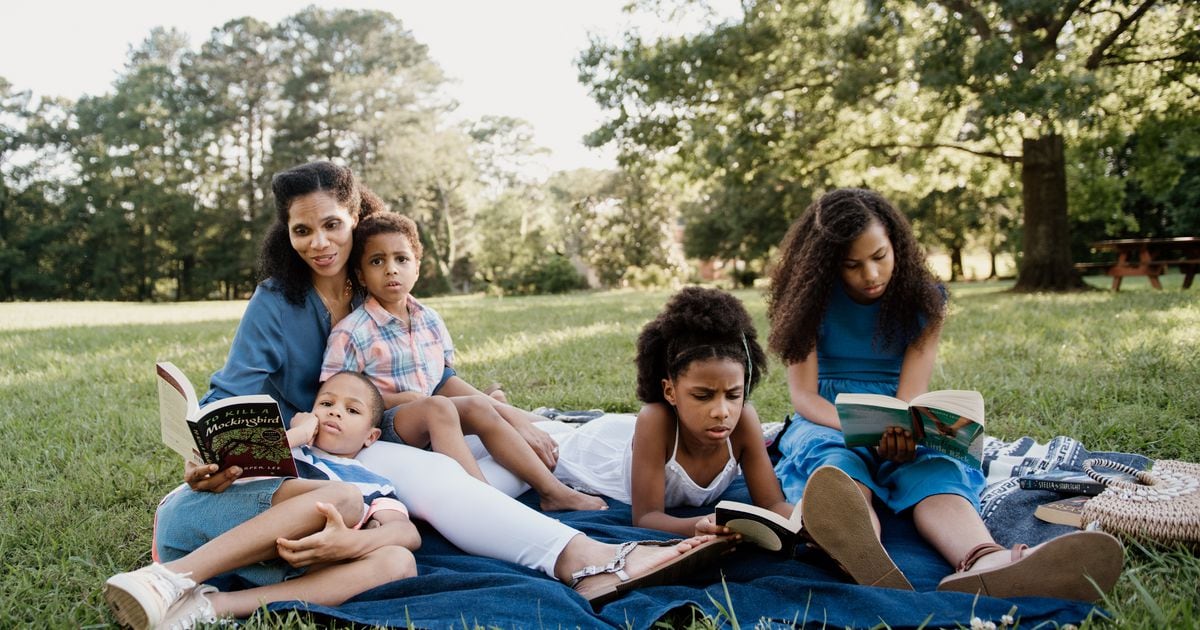
(This is a guest post by Amanda Reeves Fellner, Ed.D. Amanda is a mom of a first grader at Portfolio School and is committed to project-based learning as a method for elementary education. She is also a Lecturer in the Early Childhood Program at Teachers College, Columbia University where she works with pre-service teachers and studies children’s interactions in their school and outdoor environments.)
Project Based Learning is a model of schooling that prioritizes hands-on curricular experiences where students explore academic concepts through larger projects. Students in project-based classrooms have been shown to demonstrate growth in academic areas, as well as increased motivation and engagement (Duke et al., 2021).
When looking for schools for my child, I was searching for a small, project-based school where I knew my child would be seen and heard. Portfolio School [https://www.portfolio-school.com/], located on Hudson Street in Tribeca, is where I found it. Originally launched in 2016, Doug Schachtel and Babur Habib (founders of Portfolio School) sought to transform the traditional model of education by focusing on integrated, project-based learning. See more about their vision for schooling here:
Few schools in NYC carry out the project based model of learning and the parents of Portfolio feel strongly that a school like this should exist.
In a Project Based Learning environment, children’s ideas are met with seriousness and they are given the tools to successfully bring them to life. What they don’t realize is that the teachers are carefully and thoughtfully embedding academic concepts and teaching them to solve the problems of the future. Through relationships with teachers, and one another, our children found a place where they know their voice matters and where they learn to be in community with others. This is what Project-Based Learning is all about, agency in learning.
In an effort to ensure Portfolio School and the Project-Based model of learning remains at the forefront of educational change, the school has begun a transition to a Teacher-Led, Parents-Owned school. What this means is that our school will be governed by a board made up of parents, educational leaders, and the founders of the school while the head of school and teachers take ownership of the curriculum. This novel way of thinking about school governance allows the best of both worlds; parent involvement at a high level while maintaining the educational autonomy of the teachers and school administrators.
The co-operative model, primarily used in preschools, has been established as a way to build long lasting connections between parents, students, and teachers while also lowering school tuition costs. It is less common in elementary schools, especially here in New York City, but we’re here to change that. Moving to a Teacher-Led, Parents-Owned model gives parents an opportunity to be hands-on in their children’s education. From volunteering at the front desk to recommending after-school programming to actively engaging in events, parent involvement is at the crux of how the school operates. Each parent or caregiver comes with their own assets and supports the school in the way that they are able. When parents are involved in the day-to-day operation of the school, they know what is happening in the classroom and are better able to support their students. The school community also benefits from the diverse array of perspectives parents bring, leading to diverse experiences for the students.
As parents, we’ve worked with the school’s existing founders, teachers, and educational consultants as we’ve begun the shift to a Teacher-Led, Parent-Owned Cooperative School. Our board will include three parents, in addition to one of the founders of the school, and leading educational experts in Project-Based Learning. And while parent involvement is central to our model, we also prioritize the teacher-led component. Teachers and the head of school will have autonomy over the classroom curriculum and parents will support that vision. We believe that teachers are experts and with the guidance of an educational director/head of school, they are empowered to do good work.
If you want to learn more about our model, sign-up for an Open House here. We’re happy to share our process of moving towards a Co-Op model of education.
References:
Duke, N. K., Halvorsen, A. L., Strachan, S. L., Kim, J., & Konstantopoulos, S. (2021). Putting PjBL to the test: The impact of project-based learning on second graders’ social studies and literacy learning and motivation in low-SES school settings. American Educational Research Journal, 58(1), 160-200.
Alur-Gupta, S. et al. Body image distress is increased in women with polycystic ovary syndrome and mediates depression and anxiety. Fertil. Steril.112(5), 930–938. https://doi.org/10.1016/j.fertnstert.2019.06.018 (2019).
Tay, C. T., Teede, H. J., Hill, B., Loxton, D. & Joham, A. E. Increased prevalence of eating disorders, low self-esteem, and psychological distress in women with polycystic ovary syndrome: A community-based cohort study. Fertil. Steril.112(2), 353–361. https://doi.org/10.1016/j.fertnstert.2019.03.027 (2019).
Glowinska, A. et al. disparate relationship of sexual satisfaction, self-esteem, anxiety, and depression with endocrine profiles of women with or without PCOS. Reprod. Sci.27(1), 432–442. https://doi.org/10.1007/s43032-019-00061-0 (2020).
Yin, X. C., Ji, Y. N., Chan, C. L. W. & Chan, C. H. Y. The mental health of women with polycystic ovary syndrome: A systematic review and meta-analysis. Arch. Womens Ment. Health.24(1), 11–27. https://doi.org/10.1007/s00737-020-01043-x (2021).
Rimmer, M., Tan, B. K., Teede, H., Thangaratinam, S. & Al Wattar, B. H. Metabolic inflexibility in women with polycystic ovary syndrome: A systematic review. Gynecol. Endocrinol.36, 501–507. https://doi.org/10.1080/09513590.2019.1698025 (2020).
Naz, M. S. G., Tehrani, F. R. & Ozgoli, G. Polycystic ovary syndrome in adolescents: a qualitative study. Psychol. Res. Behav. Manag.12, 715–723. https://doi.org/10.2147/PRBM.S207727.eCollection (2019).
Pena, A. S. et al. Adolescent polycystic ovary syndrome according to the international evidence-based guideline. BMC Med.18(1), 1. https://doi.org/10.1186/s12916-020-01516-x (2020).
Teede, H. J. et al. Recommendations from the international evidence-based guideline for the assessment and management of polycystic ovary syndrome. Hum. Reprod.33(9), 1602–1618. https://doi.org/10.1093/humrep/dey256 (2018).
Porchia, L. M., Hernandez-Garcia, S. C., Gonzalez-Mejia, M. E. & Lopez-Bayghen, E. Diets with lower carbohydrate concentrations improve insulin sensitivity in women with polycystic ovary syndrome: A meta-analysis. Eur. J. Obstet. Gynecol. Reprod. Bio.248, 110–117. https://doi.org/10.1016/j.ejogrb.2020.03.010 (2020).
Patel, V. et al. Regular mindful yoga practice as a method to improve androgen levels in women with polycystic ovary syndrome: A randomized controlled trial. J. Am. Osteopath. Asso.120(5), 323–335. https://doi.org/10.7556/jaoa.2020.050 (2020).
Munt, A. E., Partridge, S. R. & Allman-Farinelli, M. The barriers and enablers of healthy eating among young adults: A missing piece of the obesity puzzle: A scoping review. Obesity Rev.18(1), 1–17. https://doi.org/10.1111/obr.12472 (2017).
Rzonca, E. et al. Generalized self-efficacy, dispositional optimism, and illness acceptance in women with polycystic ovary syndrome. Int. J. Environ. Res. Public Health.15(11), 10. https://doi.org/10.3390/ijerph15112484 (2018).
Harwood, K., Vuguin, P. & DiMartino-Nardi, J. Current approaches to the diagnosis and treatment of polycystic ovarian syndrome in youth. Horm. Res.68, 209–217. https://doi.org/10.1159/000101538 (2007).
Wright, P. J., Dawson, R. M. & Corbett, C. F. Social construction of biopsychosocial and medical experiences of women with polycystic ovary syndrome. J. Adv. Nurs.76(7), 1728–1736. https://doi.org/10.1111/jan.14371 (2020).
Scaruffi, E. et al. Body image, personality profiles and alexithymia in patients with polycystic ovary syndrome (PCOS). J. Psychosom. Obst. Gyn.40(4), 294–303. https://doi.org/10.1080/0167482X.2018.1530210 (2019).
Ekramzadeh, M., Hajivandi, L., Noroozi, M. & Mostafavi, F. Psychological experiences of adolescent girls with polycystic ovary syndrome: A qualitative study. Iran. J. Nurs. Midwifery Res.25(4), 341–347. https://doi.org/10.4103/ijnmr.IJNMR_276_19 (2020).
Mani, H. et al. Structured education programme for women with polycystic ovary syndrome: A randomised controlled trial. Endocr. Connect.7(1), 26–35. https://doi.org/10.1530/EC-17-0274 (2018).
Kazemi, M. et al. A randomized controlled trial of a lifestyle intervention with longitudinal follow-up on ovarian dysmorphology in women with polycystic ovary syndrome. Clin. Endocrinol.92(6), 525–535. https://doi.org/10.1111/cen.14179 (2020).
Carolo, A. L. et al. Nutritional counseling promotes changes in the dietary habits of overweight and obese adolescents with polycystic ovary syndrome. Rev. Bras. Ginecol. Obstet.39(12), 692–696. https://doi.org/10.1055/s-0037-1607458 (2017).
Cooney, L. G. et al. Cognitive-behavioral therapy improves weight loss and quality of life in women with polycystic ovary syndrome: A pilot randomized clinical trial. Fertil. Steril.110(1), 161. https://doi.org/10.1016/j.fertnstert.2018.03.028 (2018).
Ko, H., Teede, H. & Moran, L. Analysis of the barriers and enablers to implementing lifestyle management practices for women with PCOS in Singapore. BMC. Res. Notes9, 311. https://doi.org/10.1186/s13104-016-2107-2 (2016).
Fitzpatrick, S. L. et al. An evidence-based guide for obesity treatment in primary care. Am. J. M. Sc.129(1), 115.e1-115.e7. https://doi.org/10.1016/j.amjmed.2015.07.015 (2016).
Asselin, J. et al. Impact of the 5As team study on clinical practice in primary care obesity management: A qualitative study. CMAJ5(2), E322–E329. https://doi.org/10.9778/cmajo.20160090 (2017).
Mateo, K. F. et al. Development of a 5As-based technology-assisted weight management intervention for veterans in primary care. BMC Health Serv. Res.18(1), 47. https://doi.org/10.1186/s12913-018-2834-2 (2018).
Martinez-Pampliega, A., Herrero-Fernandez, D., Martin, S. & Cormenzana, S. Psychometrics of the SCL-90-R and development and testing of brief versions SCL-45 and SCL-9 in infertile couples. Nurs. Res.68(4), E1–E10. https://doi.org/10.1097/NNR.0000000000000363 (2019).
Jakobsen, N. S., Kaufmann, L., Hennesser, Y. & Kristensen, S. T. A new approach for the dietitian that strengthens the relationship and collaboration with clients. Top. Clin. Nutr.32(3), 229–242 (2017).
Drisko, J. & J.,. Active collaboration with clients: An underemphasized but vital part of evidence-based practice. Soc. Work.62(2), 114–121. https://doi.org/10.1093/sw/swx003 (2017).
Hasan, M. et al. Prevalence and associated risk factors for mental health problems among patients with polycystic ovary syndrome in Bangladesh: A nationwide cross-sectional study. PLoS ONE17(6), e0270102 (2022).
Lin, A. W., Dollahite, J. S., Sobal, J. & Lujan, M. E. Health-related knowledge, beliefs and self-efficacy in women with polycystic ovary syndrome. Hum. Reprod.33(1), 91–100. https://doi.org/10.1093/humrep/dex351 (2018).
Brennan, L. et al. Lifestyle and behavioral management of polycystic ovary syndrome. J. Women’s Health.26(8), 836–848. https://doi.org/10.1089/jwh.2016.5792 (2017).
Kozica, S. L., Gibson-Helm, M. E., Teede, H. J. & Moran, L. J. Assessing self-efficacy and self-help methods in women with and without polycystic ovary syndrome. Ann. Behav. Med.39(3), 90–96. https://doi.org/10.1080/08964289.2012.720312 (2013).
As a home-schooling mom of color, Johnston identified several purpose versions. Property-education in the South has been dominated by white Christian conservatives. Popular home-college textbooks contend slaveholders treated enslaved people properly and explain the Ku Klux Klan as a team trying to find to avoid anarchy, Business Law.
Caption
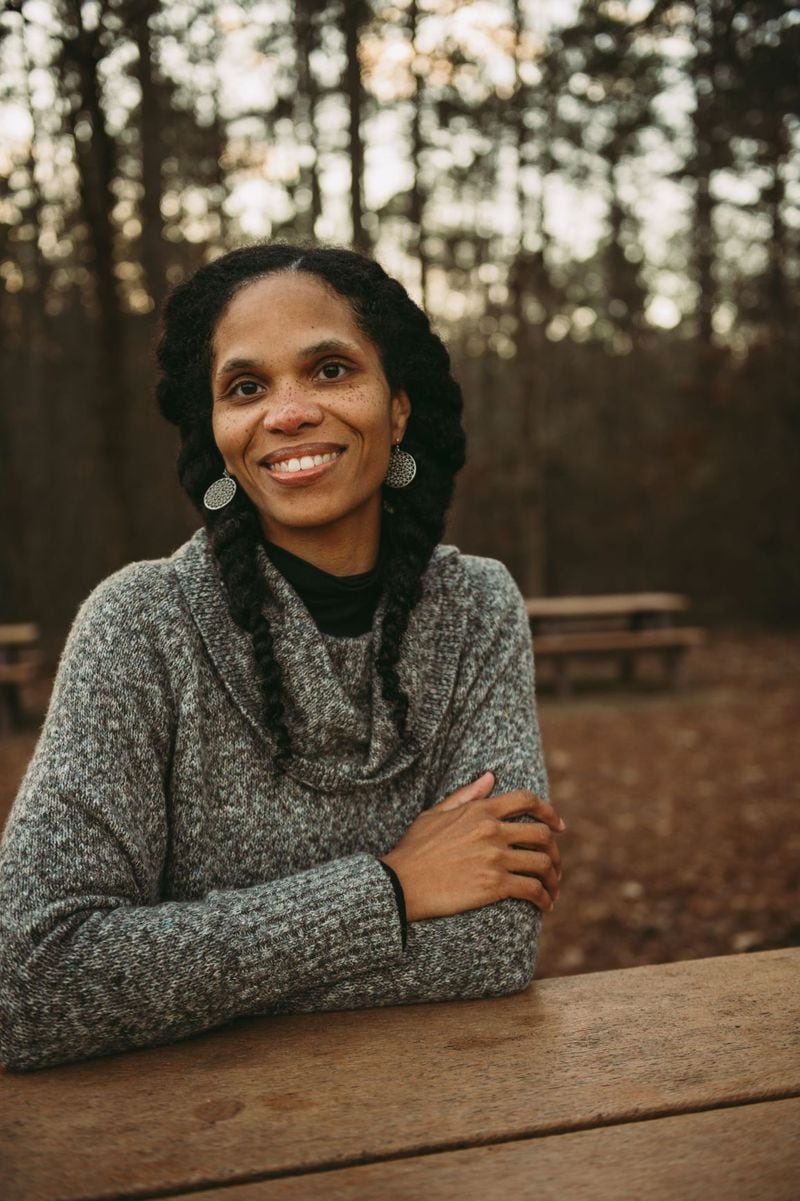
Amber O’Neal Johnston is an influential home-schooling father or mother from Cobb County.
Credit score: Courtesy photograph
Credit history: Courtesy photo
Caption
Amber O’Neal Johnston is an influential property-schooling guardian from Cobb County.
Credit score: Courtesy image
Credit history: Courtesy image
Johnston’s property-schooling chronicles led to concerns: “Why do your little ones only read books about Black folks? Is not that just as negative as white young ones never ever examining about other men and women?”
Johnston’s response summarizes the philosophy that has built her a sought-following speaker: Children want home windows to see other people, but also mirrors to see themselves. She chooses publications absent from most property-faculty curricula, guides that make it possible for her Black young children to be witnessed, reflect the storytelling of their society, fill in the blanks of the Black historical past she herself under no circumstances discovered in university, and capture Black pleasure, Business Law.
“In the starting, I was targeted on the magic of childhood and acquiring a slow childhood with plenty of time in nature, terrific books, leaning into our community. I was not hunting at my kid as a Black boy or girl she was just my youngster,” stated Johnston.
But Johnston was jolted when her more mature daughter started to lament her skin shade and hair. “She required to have yellow hair. She was hiding her Black toddler dolls in the back again of the closet. She only preferred to play with her very white dolls,” claimed Johnston.
Since she was her daughter’s most important teacher, Johnston anguished more than the resource of these damaging messages. Her daughter explained to her: “You say we review essential items in school and we only research white people.”
“My 1st considered was that my spouse and I had been raised this way, we’re fantastic.” But then Johnston realized, “I am truly not wonderful, but I learned how to don the mask in university. I blew up our faculty and begun about.”
Now, she teaches about Rembrandt but also about Black artists Horace Pippin and Henry Ossawa Tanner. “I saw my daughter occur alive and I in no way seemed again,” she explained.
Johnston and her children are hunting forward to a prepared a few-month stay in Ghana this fall. In advance of COVID-19, she and her little ones designed identical instructional excursions to Peru, Bolivia, Greece and France. They keep in 1 position, reside cheaply devoid of a rental auto and dig deep into the area lifestyle and lifestyle.
These types of excursions profit from Johnston’s formidable organizing talents, evidenced by the 18 events on the February calendar for her Cobb home-education team, like a subject vacation to see the Obama portraits at the Significant Museum of Art. She’s now producing lesson strategies for up coming yr.
“I have not viewed a Television clearly show in 10 years,” she mentioned. “I have a high stage of setting up, but we are really versatile. It has under no circumstances at any time occurred that we totally execute all the things on our weekly routine.”
That adaptability will allow her small children to plot and follow their very own paths.
“I produce a place for them to belong,” explained Johnston. “They are not me. They have hardly ever gained grades or report cards. They really don’t have any of those exterior blue ribbons. I really like that for them.”
LINDSAY, Calif. — On a morning this fall at Washington Elementary, a young boy, sitting at a table with five of his peers, held a tablet while he built a digital snowman — a cool proposition given the 85-degree heat just outside his air-conditioned classroom.
His neighbor, a girl, whose ponytail was tied with a bright red bow, used her index finger to move shapes around her screen. At another table, a child wearing a rainbow mask bent studiously over her workbook, meticulously coloring with a green marker.
Elsewhere in the classroom, an instructor knelt to chat with two boys engrossed in playing with blocks, while a second teacher supervised a group of five students as they completed worksheets.
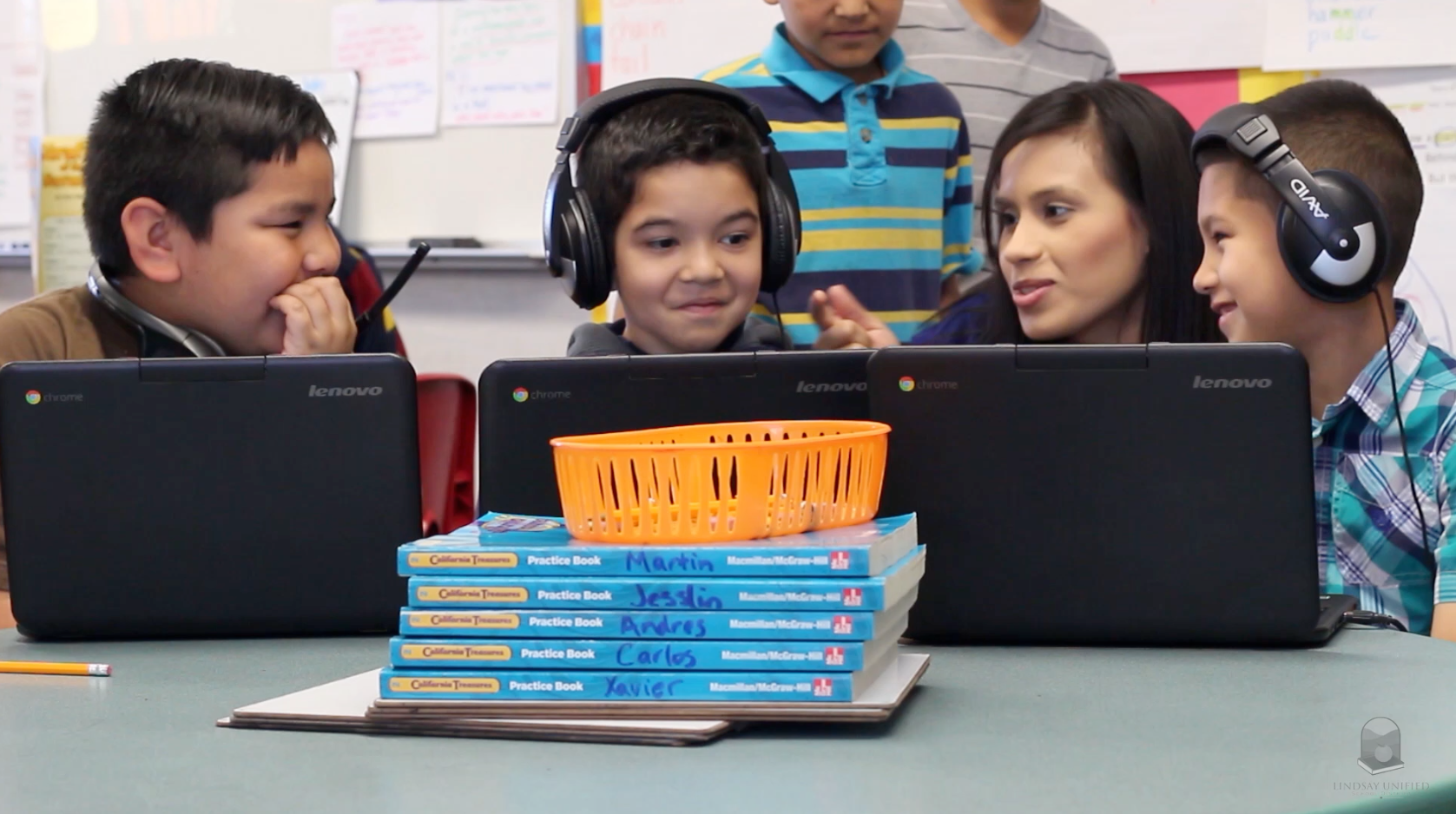
Every 4- and 5-year-old in this transitional kindergarten classroom was doing something different, tailored specially to their academic development. It’s a scene that is replicated across the seven elementary schools and two high schools in this agricultural community of around 13,500 in California’s Central Valley.
Students in a transitional kindergarten class at Washington Elementary, a K-8 school in the Lindsay Unified district, work in small groups. Credit: Charlotte West for The Hechinger Report
There are few straight rows of desks at schools in this district, Lindsay Unified. Teachers rarely stand at the front of the classroom. Students instead focus on whatever assignment is next for them — often a task that differs completely from the work being performed by the other kids in the room.
Kids are helped along by access to take-home devices and individualized learning plans that allow them to progress through class material at their own speed.
It’s a model that’s paid dividends for the district. Lindsay Unified has seen significant improvement in academic achievement, graduation rates and the number of students going to college since it created a performance-based system in the mid-2000s. The model also helped students and educators weather the pandemic’s ups and downs more easily than other districts in the country. While the pandemic still took its toll, adapting to online learning was smoother in Lindsay due to its preexisting infrastructure and history of adaptation.
For years, Lindsay has experimented with competency-based education, a more personalized approach to education that involves letting kids learn on computers for at least part of the day. In mid-March 2020, schools in Lindsay Unified shut down in response to the coronavirus pandemic. And, as it did for millions of other students and teachers around the country, instruction went fully online.
But superintendent Tom Rooney likes to say that while facilities closed in Lindsay, “the learning never stopped.”
Now, with learning back in person in many places in the country, Lindsay’s experience keeping kids mostly on track, even during the most chaotic of times, offers lessons to other districts. Teachers in Lindsay are ready to shift from in-person to remote learning with minimal prep time — if a coronavirus outbreak requires a quarantine, for example, or a natural disaster causes school closures.
“With about a day planning, [teachers] shift right into distance learning,” Rooney said.
Students on a break at Lindsay High School. Credit: Charlotte West for The Hechinger Report
Washington Elementary is a K-8 school in Lindsay, an agricultural community in California’s Central Valley. Credit: Charlotte West for The Hechinger Report
Ushering in a new model
Located near the foothills of Sequoia and Kings Canyon national parks, the town of Lindsay used to be known for two things: olives and oranges. But the community began to suffer economically after several major employers, including what was once the largest olive processer in the world, shut down in the early 1990s.
Today, more than 90 percent of the 4,000 children enrolled in Lindsay Unified are socioeconomically disadvantaged, and about 40 percent are English language learners. Ninety five percent of students in the district are Hispanic.
In 2007, administrators were frustrated by the district’s poor outcomes and low graduation rate. Even its most successful students had difficulties: 8 out of 10 high school valedictorians were placed in remedial English classes when they went to college, according to district officials.
The district convened a series of meetings with teachers, school leaders, parents, city officials and community members to discuss what kind of educational system the community needed. The result was the adoption of “a learner centered, personalized, competency-based” approach that allows students to meet learning goals on their own terms, Rooney said.
Related: Why a high-performing district is changing everything with competency-based learning
The new approach threw out many traditional facets of education such as the A-F grading scale and time-based learning in which students advance to a new grade level each year. Along with the changes came a new vernacular — teachers are “learning facilitators,” students are “learners,” grades are “content levels” and schools are “learning environments.”
Students are scored on a scale of 1-4, with a score of at least 3 needed to show proficiency in a subject. Educators say a 1 or a 2 doesn’t mean students have failed, only that they have more work to do to move on to the next level.
Lindsay High School junior Gaby León said that other students she meets are fascinated when she tells them she’s never received a letter grade. “I’m not familiar with the ABCs, because all my life I’ve gotten numbers,” she said.
Lindsay High School junior Gaby León demonstrates Lindsay Unified’s learning management system, Empower. “You can learn anywhere,” León said. “You can complete assignments on road trips or at an airport.” Credit: Courtesy Gaby León
What is competency-based education?
Lindsay is a forerunner among a growing number of schools and districts across the United States that have adopted a performance- or competency-based approach to education, said Susan Patrick, president and CEO of the Aurora Institute, a nonprofit that studies and promotes competency-based education. (Superintendent Rooney serves on the board of the Aurora Institute.)
Patrick said that 10 years ago, only a handful of states in the United States used competency-based education. Her organization estimates that now 6 to 10 percent of public school districts across the United States are piloting or planning competency-based approaches.
She expects that number will continue to grow in the wake of the pandemic.
“We just saw a shift where getting rid of time and space constraints unleashed a lot of creativity in helping to provide more flexibility for students,” Patrick said. “After the pandemic, the demand is really increasing for school systems around the U.S. to learn how to make the shift from traditional time-based systems … towards one that is truly organized around the learner.”
So, what is competency-based education, exactly?
A student works on developing his own video game in a design class at Lindsay High School. Credit: Charlotte West for The Hechinger Report
It goes by many names, Patrick said, but at its core, the approach enables students to take charge of their own learning while they work towards a common set of learning goals. Students receive meaningful feedback on their progress and receive support until they achieve those goals. They show their mastery of a subject by presenting evidence, such as a paper or project, demonstrating what they know and are able to do.
One of the most frequent criticisms of competency-based education is that it is incredibly time consuming, Patrick said. There’s also little evidence that personalized learning improves student learning, in part because so many different approaches are used.
But educators in Lindsay say that, while there’s more work on the front end, the district’s model actually makes teaching easier in the long run.
Related: Does the future of schooling look like Candy Land?
“Every teacher in the district does what we call a personalized learning plan with each of our students at least twice a year,” said Marla Ernest, a drama and English language arts teacher at Lindsay High School. “I know that sounds like a lot of work, but it really frees up a lot of your planning, because you’re now really doing mini-lessons, instead of having to fill a 90-minute block.”
Matt Diggle is in his 28th year as an educator. After starting as the new principal of Washington Elementary in August, he’s been impressed by how much teachers have to know about their students in Lindsay’s model.
“I came from a grades-based system,” he said. “This requires a lot more depth and knowledge in terms of digging into the learning targets and really understanding [what] the child has to achieve.”
In 2016, Lindsay Unified, a school district in California’s Central Valley, asked the city of Lindsay if the district could locate antennae on the community’s tallest buildings to expand its own network in order to provide free community Wi-Fi. Credit: Courtesy Lindsay Unified School District
The role of technology
Lindsay’s ability to rapidly pivot to remote learning in spring 2020 was largely due to preexisting infrastructure. Unlike many districts where a lack of devices and spotty Wi-Fi made adapting to online learning difficult, almost all Lindsay students already had access to their own tablets or laptops — which are age-appropriate and replaced every three years — and community Wi-Fi.
Getting there wasn’t easy. In the early years of Lindsay’s experiment, few students had internet access at home. “I would come to work at 7 in the morning and there would be 60 kids on the front lawn of the district office because there was a hotspot,” said Barry Sommer, director of the district’s foundation.
After unsuccessfully approaching several major internet companies, the district decided to take matters into its own hands. The district asked the city of Lindsay if it could locate antennae on the community’s tallest buildings to expand the district’s network. Then they installed hotspots on 500 homes in Lindsay. By the end of 2016, almost 90 percent of the district’s students and their families had access to free internet at home.
“There’s always a certain pace that the teachers progress the class at, but with our Empower website, it allows students to progress further in the course by working independently and outside of the class.”
High school senior Connor Dunbar
Today, students are even able to access assignments on their mobile devices. León, the high school junior, held out her phone as she demonstrated how she’s moved through her math class this year. “You can learn anywhere,” she said. “You can complete assignments on road trips or at an airport.”
But educators say that technology by itself isn’t what makes Lindsay’s model work. It’s the combination of its personalized pedagogical approach combined with technology.
The district’s “learning management system,” Empower, is an online dashboard that allows teachers to upload, grade and keep track of assignments for their class. It also contains “playlists,” which might include videos or reading assignments, that students complete as they progress through a class.
Related: What lessons does special education hold for personalized learning?
Students, parents and teachers can log into Empower at any time to check on progress towards finishing a class. At any point, students can see what they’ve completed and what else they need to do to finish a subject. The courses are still based on California state standards, and students continue to complete external assessments such as iReady.
Empower also allows school administrators to pull aggregate reports on students’ pacing — whether and how quickly they are making progress in their respective subject areas.
“We’re able to look at the overall pacing for the learning facilitators and for learners, and then we’re able to dig in deeper if we needed to, to look at individual learners and see what progress they’re making towards completing by the end of the year,” said Jorge Ramos, learning director at Washington Elementary.
Marla Ernest, an English language arts and drama teacher at Lindsay High School, works one-on-one with a student in late September. Credit: Charlotte West for The Hechinger Report
Training the teachers
Most teachers aren’t taught the competency-based approach in college, so there were growing pains when the district first adopted its performance-based model in the mid-2000s, Sommer said. Several teachers left because they could not adapt to the new system, he added.
“Teacher training programs are not preparing teachers for personalized competency-based learning models,” said Patrick, of the Aurora Institute.
In response, the district set up opportunities for professional development, programs that continued during the pandemic. Educators use Empower, the same platform the students use, for their training.
“They take that performance-based approach with us as well,” said Guadalupe Alvarez, who teaches eighth grade. New teachers are also paired with veteran teachers such as Ernest, the English teacher, who help show them the ropes.
Related: How one state’s teachers are sparking digital innovation
Ernest said that teachers have to have the right mindset to be successful in Lindsay. “You do have to have a staff that’s really open to lifelong learning and really open to flowing through change,” Ernest said. “Because in this model, nothing is static, you’re always looking for the best practice. You can’t as a teacher be stuck in ‘This is how I do it.’”
Fourth grade teacher Nelly Lopez said she used to think the perfect classroom was one in which students sat silently with their hands folded and the teacher was the center of attention.
“Now it’s like a full shift into where the focus is on them,” she said. “There’s no one size fits all.”
Drawings in a fourth grade classroom at Washington Elementary, a K-8 school in Lindsay Unified. Credit: Charlotte West for The Hechinger Report
Students move at their own pace, with lots of support
One of the benefits of Lindsay’s approach to teaching and technology is that it accommodates different populations, such as students with disabilities and English language learners. The approach also reduces the stigma for students who might be “behind” in a traditional system because all students work at their own pace, whether they move ahead quickly or need extra help.
One of district’s early lessons, however, was that there is a delicate balance between letting kids do their own thing — and keeping them on track. Teachers still must make sure that students don’t fall behind.
John Woods, Lindsay’s director of special education, said it’s important to set incremental deadlines so students don’t wait until the last minute to try and finish everything. “We say we’re not time-based, [but] you have to have urgency,” he said. “There are certain kids that are very self-directed, but there are others that are not, if you just leave them to their own devices.”
Depending on the subject, students might work independently or move to another class with a different teacher. Within each class, students are grouped based on the learning targets they are trying to reach and their progress towards meeting those targets.
The system also helps accommodate students who are moving faster than their peers. “There’s always a certain pace that the teachers progress the class at, but with our Empower website, it allows students to progress further in the course by working independently and outside of the class,” said high school senior Connor Dunbar.
“After the pandemic, the demand is really increasing for school systems around the U.S. to learn how to make the shift from traditional time-based systems … towards one that is truly organized around the learner.”
Susan Patrick, president of the Aurora Institute
Alvarez said that whenever she has “fast runners,” she meets with administrators to come up with the best plan to meet students’ academic needs. “I have had groups of eighth graders that go to the high school for math and English and then they just come back to me for their subject matter in history as science,” she said.
León was able to take extra classes by completing her history class in one semester. “That allowed me to add a college class to my schedule for the following semester,” she said.
Ernest said she teaches three English classes, each at a different level, with students in each class grouped according to the progress they’ve made towards a learning target. She still gives short 15- to 20-minute lessons on topics that are applicable to the entire class, but then spends the rest of class period working with students in small groups or one-on-one.
“I’m still doing the same amount of grading that I’ve always done,” she said. “It doesn’t create more work. It just creates different work.”
Parent Jennifer Keeton, who works in the district’s financial services division, said that Lindsay’s model has helped meet the needs of both her children. Her son, who graduated in 2020, has autism. “With everybody being customized … it helped him not stick out,” she said.
Keeton’s daughter is a junior, currently on track to earn her associate’s degree from the College of the Sequoias, a community college, before she graduates from high school next year. Keeton said the system helped her daughter “because she didn’t get stuck waiting for everyone else to finish, because she was an avid reader … She was always finishing things fast, but she was allowed to work on other projects to give her a higher understanding of the concepts.”
Students in an eighth grade class at Washington Elementary, a K-8 school, work in small groups. Credit: Charlotte West for The Hechinger Report
Does it work?
Test scores leaped in Lindsay Unified after the district implemented competency-based learning. The number of students proficient on California’s academic standards increased from 26 percent in 2014-15 to 47 percent in 2018-19. Graduation rates rose from 69 percent in 2010-11 to 90 percent in 2017-18. College-going rates increased from 66 percent to 70 percent, and more students are going to four-year colleges, according to district data.
During the pandemic, the results were more mixed — teachers and students felt the same stresses that all districts faced, including a significant toll on social and emotional health. But Lindsay students still made progress in math and reading, although less than during a normal school year.
In March 2020, after curriculum experts gave teachers a weekend crash course in online instruction, students and teachers were back in school fulltime, in their virtual classrooms, within just a few days. They quickly learned to avoid all-day online classes in favor of small group work and one-on-one attention from teachers, something they’d already been doing in person before the pandemic.
Bins for students’ personal items in a transitional kindergarten class at Washington Elementary. Credit: Charlotte West for The Hechinger Report
And in the early weeks of the pandemic, the district had to boost its Wi-Fi connections as more kids and parents were suddenly online 24/7, Rooney said.
A year into the pandemic, Lindsay students had less growth in reading than in previous years, but — particularly among younger learners — still made more progress than their peers in other districts around the country with similar demographics, according to a recent report from the non-profit Learning Accelerator.
“We saw a lot less growth for kids in upper grade levels than we did for those in lower grade levels,” said Beth Rabbitt, CEO of the Learning Accelerator and one of the authors of the report. This could be because older students were more likely to have responsibilities such as working or taking care of younger siblings, according to the study.
The study also found that students classified as English learner, migrant, or homeless, and those receiving special education services, saw positive growth, thanks to frequent contact with counselors, translation services, access to a food pantry and social services and opportunities for an “early return” to school in fall 2020.
And students who came back in person as part of the early return model did better than their peers who remained at home, which could serve as a lesson when future disruptions occur. These kids continued with the same online curriculum as their peers studying from home, but worked at school in small groups with tutors who could give them extra support.
“That speaks to the power of kids having adults who, even if they’re not the primary content teachers, can be helping them connect and helping them stay on track.” Rabbitt said.
In Lindsay, “the learning never stopped.”
Superintendent Tom Rooney
Ernest said the switch to remote learning was especially hard for the recent immigrants she works with. “Trying to get them to a place where they can follow along with a computer when they’ve never had one, it was very difficult for the first few months,” Ernest said.
But after students got used to the technology, she said, the program was “the perfect model for someone who is just learning the language.” Some of her high school students started at a kindergarten level in English, but because they didn’t know they were beginning at such a basic level, they were able “to move at the right level, make progress and not feel ashamed about that,” she said.
Overall, the pandemic reinforced the role of competency-based learning and technology-based teaching in Lindsay, said Ernest. “We’ve been doing blended learning in this model for so long, the only difference for us was that [students] weren’t in a room with us.”
This story about adapting to online learning was produced by The Hechinger Report, a nonprofit, independent news organization focused on inequality and innovation in education. Sign up for Hechinger’s newsletter.
The Hechinger Report provides in-depth, fact-based, unbiased reporting on education that is free to all readers. But that doesn’t mean it’s free to produce. Our work keeps educators and the public informed about pressing issues at schools and on campuses throughout the country. We tell the whole story, even when the details are inconvenient. Help us keep doing that.
The capacity to adapt to a transforming entire world is a resourceful skill. Fantastic educators will agree that it is imperative for the discipline of pedagogy to evolve in buy to adapt to students’ at any time-altering wants and needs.
In late 2019, the unprecedented Covid-19 pandemic led to the short-term closure of educational facilities and academic institutes across nations, impacting the mastering journeys of millions of students. In the industry of schooling, the pandemic inadvertently acted as a catalyst in reinventing the classroom. Overnight, the system of knowledge delivery shifted on the web and instructional establishments commenced adopting many practices with improved utilization of know-how to educate pupils efficiently.
Several of these more recent methodologies that hire technology as a means to aid impart education assistance lecturers cater to each the tutorial as well as in general development of young children. Just one these types of strategy is the special two-instructor procedure — a format of instructing that brings together on the net and offline finding out ordeals.
What is the two-teacher system?
The two-trainer technique is an inclusive and blended studying design. Quite a few studies display how current developments in the two-instructor model empower academics to correctly meet up with the wants of learners.
In this set up, a classroom positive aspects from the presence of two lecturers. Just one trainer provides the lesson on the internet with the assist of abundant visuals and storytelling, though the 2nd trainer plays an lively role in guiding the classroom’s speed and encouraging learners with question clarification and even further explanation in true-time.
In a usual two-trainer set up, a major instructor will clarify visually participating principles while a secondary instructor presents unique awareness and guidance to pupils and allows them with quick question resolution so offering equally teachers with an energetic instructional purpose.
Contacting a classroom profitable involves two main components — conceptual clarity from college students and swift doubt resolution from teachers. With the two-trainer procedure in position, both of those of these specifications are focussed on by the two teachers separately ensuring much better discovering results when they get the job done with each other. The two-teacher technique can make it a lot easier for the trainer to observe student progress, remedy doubts, control the class, and hold the class of students to the exact academic criteria.
The elevated educational alternatives for learners encourages increased collaboration amongst the lecturers and college students. Moreover, with lessons introduced and explained by two unique lecturers with complimentary educating styles, it gives time for learners to take up and strengthen the recently learned data.
Influence of the two-instructor process on learners
In a lot of circumstances, online education simply just intended getting the offline mode of teaching on line. In reality, school rooms and teaching approaches have to refine, boost, adapt and boost their training procedures to correctly interact with students.
The two-instructor system empowers students with many means of engaging with information. It introduces college students to complementary educating variations and personalities of the two instructors and enables for college students to gain authentic-time assist if they will need it. What’s more, college students are afforded the potential to ask more queries all through lesson time as properly as have interaction with the information on their possess.
(By Vinay MR, Teacher and Main Written content Officer, BYJU’S)