Public Schools Are NYC’s Main Youth Mental Health System. Where Kids Land Often Depends on What Their Parents Can Pay.

Public Schools Are NYC’s Main Youth Mental Health System. Where Kids Land Often Depends on What Their Parents Can Pay.

This article was produced for ProPublica’s Local Reporting Network in partnership with THE CITY. Sign up for ProPublica’s Dispatches to get stories like this one as soon as they are published.


On Staten Island, a middle schooler with a hair-trigger temper was in a fistfight every week. In north Brooklyn, a ninth grader cut class for months before he tried to commit suicide. A few miles east, where Brooklyn meets the marshlands of Jamaica Bay, a 13-year-old ended up in a psychiatric emergency room after the COVID-19 pandemic shut down her school.

These kids all had two things in common: First, they were part of a growing cohort of students with serious mental health and behavioral problems that got in the way of their education. And second, they lived in New York City, which meant that their problems became, at least in part, the responsibility of the city’s school system.

Under federal law, school districts are required to provide all students, including those with mental health and behavioral problems, a “free and appropriate education.” In theory, this means that when a student is struggling to learn, districts must conduct assessments, create individualized plans and, if a child’s needs can’t be met in public schools, pay tuition for a private school — all at no cost to kids or their families.

In practice, however, what happens to students in New York City’s special education system often depends on the personal resources a family brings to the table. At each step of the way — identifying a disability, creating a service plan, deciding where a child will learn and who will pay for it — a family’s ability to spend its own money can secure a completely different outcome from the city’s public education system.

In the city’s wealthiest neighborhoods, thousands of parents tap their personal funds to send children to private schools for students with disabilities and then sue the city Department of Education to reimburse them for tuition or other services. The schools these kids attend often charge well over $100,000 a year. Many offer the trappings of elite boarding schools, with bucolic settings and promises of advanced college prep. At some, students ride horses as part of their therapy.

The city doesn’t publish specific demographic data about students whose expenses are paid this way — commonly known as “Carter cases” after a 1993 U.S. Supreme Court decision, Florence County School District Four v. Carter, that affirmed schools had a duty to reimburse tuition in certain situations. However, Carter cases are not evenly distributed across New York City, which divides its massive school system into 32 geographical regions sometimes referred to as community school districts. Last school year, more than half of settlement agreements involved students who live in just four of the richest and whitest districts, which include neighborhoods such as Manhattan’s Upper East Side and Park Slope in Brooklyn. The poorest community school districts rarely see Carter case settlement money at all.

Meanwhile, more than 2,600 other kids — most of them Black or Latino and nearly all low-income — are labeled as having an “emotional disability” and shunted into city-run special-education schools, many of which fail across just about every measurable metric: At the schools where the city Department of Education most often places emotionally disabled kids, attendance rates are among the lowest in the city and dropout rates among the highest. By the end of high school, public school students with emotional disability classifications are far more likely to have quit school than to have graduated with a diploma, according to data provided by the New York City Independent Budget Office. Hundreds end up in juvenile justice facilities or on Rikers Island.

The inequities are not new. Critics have long argued that money for private tuition reimbursements should instead be invested in improving services for kids with disabilities in public schools. But the costs of Carter cases to taxpayers have grown exponentially in the past decade, with payouts reaching $918 million last year. And while the cases have historically been driven by kids with autism or learning disorders, something has shifted in recent years: Attorneys who represent students say there is an influx of young people who need private schooling because of mental health conditions. “I’m seeing more and more kids whose anxiety has gotten more severe since COVID, or who are really behind in social skills,” said Lauren Goldberg, a partner at The AGS Firm, which represents students in education law cases.

School closures and other pandemic stressors have contributed to the crisis, Goldberg and other attorneys say. But even before the coronavirus arrived in New York, schools were feeling the impact of shutdowns of another kind: As THE CITY and ProPublica have reported, New York state made a deliberate choice over the past decade to eliminate hundreds of beds for children and adolescents in psychiatric hospitals and residential programs while failing to follow through on promises to dramatically expand community-based mental health care.

When kids can’t find mental health services in their communities, the onus falls on school systems, which don’t have the option to turn students away. “As soon as the residential programs closed, those kids came to us,” said one social worker at a New York City special education high school that serves hundreds of students with emotional disability classifications. “The entire state of New York has shifted the burden of mental health to the school districts.”

In a written statement to THE CITY and ProPublica, Nicole Brownstein, a spokesperson for the city Department of Education, said her agency is working to expand access to high-quality programs that allow students with disabilities to succeed in all schools. The city has invested in software that will improve assessments and service plans, has expanded programs for students with sensory and mental health needs, has conducted trainings on implicit bias, and is creating a strategic plan to support students with emotional disabilities, Brownstein said. “We continue to work towards dismantling inequities in the special education process.”

ProPublica and THE CITY have documented the stories of three New York City kids, each of whom had a very different experience navigating the school system when they had a mental health crisis. We spoke extensively to each child’s mother, though not to the kids themselves; reviewed medical and educational documents; and interviewed dozens of mental health and education professionals who work with these and other students with disabilities. We also asked the city Department of Education to comment on the experiences of the two students who struggled to get the help they needed; Brownstein offered a brief statement on one. We allowed parents to decide whether and how we could identify their children. Read their stories below.

Holly Stapleton for ProPublica

1. A Child and a Crisis

Gary

Gary’s mom was sure that, if she didn’t do something drastic, her son would wind up arrested or dead.

Things had been scary for a long time. Gary was a ninth grader at a prestigious and competitive public school in Brooklyn, but he skipped class more often than he went. At the beginning of the school year, in the fall of 2018, he’d attempted suicide at least once — maybe twice, his parents still weren’t sure — and spent a week in a hospital psychiatric unit, said his mom, who asked us to identify Gary by his middle name to protect his privacy.

Still, it wasn’t until Gary left his Instagram account open that his mom’s worst fears were confirmed. She saw messages, going back for months, about using and selling hard drugs. “My stomach dropped,” she said. “We have serious addiction in the family. My sister drank herself to death.”

Months earlier, a counselor had suggested that Gary go to a residential program for kids with acute mental health conditions, but his parents had dismissed the idea. They didn’t want to send their child away from home, and anyway, they knew that a good program could cost thousands of dollars a week — not the kind of money they had sitting around.

Now, “full-on desperation set in,” said Gary’s mom. She mined her network, contacting other parents of struggling teens, talking to friends of friends who were mental health professionals. She turned to her own mom and her husband’s parents for help with money — a lot of it.

Within a week, she and her husband had a plan: They hired what’s known as a “youth transportation service” — two burly guys who came to Gary’s home in the middle of the night and escorted him by plane to Utah, where, at a cost of $60,000, he spent four months at a wilderness therapy program, getting sober and doing intensive individual and group therapy.

Sending her son away was one of the hardest things Gary’s mom had ever done, she said. But there was more bad news: At the end of wilderness therapy, Gary’s counselors said he still wasn’t ready to come home. His mom would need to find an even longer-term program — one that could keep him safe and continue to provide treatment while letting him move forward with high school.

“They told me, ‘You can’t bring this kid home. He’ll relapse right away,’” Gary’s mom said.


Taylor

Taylor Cardin had just turned 13 when the COVID-19 pandemic shut down schools across New York City, including the school she’d attended for years in Queens. Taylor is autistic, and when her routines disappeared, she panicked, said her mom, Tiffany Caldwell.

Taylor stopped sleeping at night and refused to go outside during the day. She’d always been a gentle, affectionate kid, but now little things infuriated her. As the months at home dragged on, she grew aggressive with her mom, hitting and scratching Caldwell when she got upset. When her school finally opened back up in person, she refused to get off the bus, crying and lashing out at anyone who tried to help her.

Taylor’s doctor recommended that Caldwell take her to a psychiatrist for an evaluation. Caldwell had always thought that she had good health insurance. She’d worked for nearly 20 years for New York state’s Office of Mental Health as an aide in a psychiatric hospital for adults. But when she called the list of psychiatrists in her insurance network, she found that not a single one was available to see Taylor. “They didn’t answer, or they weren’t taking new patients, or, if they were, the first appointment was sometime next year,” Caldwell said.

Desperate, Caldwell paid out of pocket — “money I didn’t have,” she said — for a session via Zoom with an out-of-network psychiatrist, who diagnosed Taylor with depression and anxiety and prescribed her a cocktail of medications that seemed to Caldwell to make everything worse. Taylor picked up new behaviors, like slamming doors and the toilet seat over and over again. “She had this look in her eyes like she was on another planet,” Caldwell said. Taylor’s violent episodes got so bad that Caldwell had to call the police to restrain her and take her to a psychiatric emergency room. Each time, hospital staff sedated her and sent her home. “They didn’t have any beds,” Caldwell said. “Once, I begged them to keep her overnight. They told me, ‘If you’re not here in the morning, we’ll call child services.’ It was like a punitive thing. There’s such a lack of regard and empathy and respect.” 

By the end of 2020, Taylor had been out of school for nine months. She was talking less and refusing to do basic things, like shower and get dressed. Caldwell, who raises Taylor on her own, had used up her family medical leave and was on the verge of losing both her job and her apartment. The thought of separating from her daughter broke her heart, Caldwell said, but she realized that Taylor needed a residential school: “I was just watching my child regress every day.”


Davon

For Davon, the problems started in elementary school. He was skinny and shy, and kids picked on him, said his mom, Latoya Patterson, who asked us not to use Davon’s last name to protect his privacy. Patterson asked school officials for help, but Davon was quiet and didn’t cause problems, she said, so the school ignored him until fifth grade, when he started to fight back.

“He got sick of the bullying,” Patterson said. “If someone did something to him, he was reactive right away.” By middle school, Patterson was getting calls at least once a week to say that Davon had been in another fight.

Holly Stapleton for ProPublica

In sixth grade, Davon was classified as having an emotional disturbance, a term that was formally changed in New York this year to “emotional disability.” An emotional disability classification is not a medical diagnosis. Rather, it’s a catch-all term used by education departments for any number of mental health or behavioral challenges that show up in school. An emotionally disturbed student could be a first grader who hits other kids or a 10th grader who has psychotic episodes, or who’s too persistently sad to concentrate. Critics argue that the classification is far too vague and subjective. Under federal and state regulations, for example, students can be classified as emotionally disabled for such criteria as exhibiting “inappropriate types of behavior or feelings under normal circumstances.” 

In New York City, Black boys get classified with emotional disabilities at a far higher rate than other kids. In the 2020-2021 school year, the most recent for which data is available, Black students made up less than a quarter of students overall, yet they accounted for nearly half of students classified as having an  emotional disability. White students, who made up 15{e4f787673fbda589a16c4acddca5ba6fa1cbf0bc0eb53f36e5f8309f6ee846cf} of all students in New York City public schools, accounted for just 8{e4f787673fbda589a16c4acddca5ba6fa1cbf0bc0eb53f36e5f8309f6ee846cf} of emotional disability classifications.

That’s in part because evaluators may be more likely to interpret Black boys’ behavior as aggressive, advocates and attorneys say. But it’s also because white families more often come to the assessment process armed with detailed private evaluations and attorneys who advise them to push for a classification that carries less potential stigma, such as “other health impairment” or “multiple disabilities.” 

“You want to get the right classification,” said Goldberg, the education attorney. “Colleges are going to see this. Middle and high schools are going to see this. You’re thinking about your kid’s future.”

Patterson, who’s Black, raises Davon by herself and works as a construction laborer. She didn’t know that some parents hire lawyers and paid educational advocates to represent them at special education meetings. Certainly, nobody suggested that she get Davon a private neurological or psychiatric evaluation. Instead, she participated in planning meetings, filled out paperwork and, for the most part, took Department of Education staff at their word when they said they wanted to help her son. 

It was a belief that she came to regret.

2. ‘Please! We’re Drowning! Help Us!’

‘Please! We’re drowning! Help us!’

Gary

By the time Gary finished wilderness therapy, his mom had spoken to plenty of parents who’d sent their kids to private schools and then sued the city to be reimbursed for the cost. She knew that success depended on hiring the right people.

The frequency with which families pursue these Carter cases has given rise, in New York City, to an elaborate ecosystem of high-priced professional advisers and advocates. Parents frequently start by paying $5,000 to an educational consultant, whose job it is to broker admission to a private school. Sought-after schools often maintain relationships with particular attorneys, who might charge a family anywhere from $5,000 to $10,000 per year to pursue tuition reimbursement. In turn, attorneys may point parents to trusted psychologists, who — for another $5,000 or more — conduct detailed assessments and write reports that might support the claim that a child can’t be served in public school. That’s all in addition to the price of tuition, which, even if a family wins its case, may not be reimbursed for months or years.

Not everyone who pursues Carter cases has hundreds of thousands of dollars on hand. It’s not uncommon for parents to refinance their homes or pull cash from retirement plans to pay the deposit on a residential school that a family hopes will rescue their suicidal or addicted child. And there’s no shortage of GoFundMe pages set up by families begging for help with the final $10,000 or $15,000. There are also some attorneys in New York who specialize in taking on severely disabled kids without charging a retainer, and there are private schools that reserve spots for kids whose families can’t pay tuition upfront.

Nonetheless, the typical buy-in costs are high enough to rule out the vast majority of New York City families. “There’s a huge industry around teenage mental health, but it’s only for a particular demographic of our society,” said Gary’s mom, who is white and describes her family as middle-class. “It’s so clearly unjust. At the same time, when your child is attempting suicide, you can’t really get picky about diversity at the institutions you’re sending them to because you need to save your kid’s life.”

Gary’s mom had heard enough horror stories about abusive residential programs to know that she wanted professional advice on which one to choose. Based on recommendations from a friend, she hired an educational consultant who found a therapeutic boarding school in Arizona and then managed Gary’s application. “She had the relationships; she knew what to say,” Gary’s mom said.

With her in-laws’ help, Gary’s mom was able to cover tuition: a $25,000 deposit and then $11,000 per month. The next step was to try to get that money back from the public school system.

‘Please! We’re drowning! Help us!’

Taylor

Because Taylor was diagnosed with autism when she was little, Caldwell had years of experience navigating New York City’s special education system. She knew that most decisions go through a dedicated committee in a student’s local area, which is charged with approving individualized education programs and deciding which services kids should receive. To Caldwell, those decisions often seemed arbitrary. She’d wondered why some kids seemed to get more services than others, and whether Taylor might be getting less help because she’s Black.

After schools closed down in 2020, Caldwell reached out to her local committee, but months went by with no help. “I kept reporting, reporting, reporting: ‘This child is in crisis and it’s getting worse,’” she said. “It all fell on deaf ears.” Some of Taylor’s instructors tried to continue working with her virtually, but Taylor couldn’t engage via the computer screen, so she ended up receiving nothing — no classes, no speech therapy, no contact with anyone except her mom. “It’s like we’re floating around with an inner tube, and I’m yelling, ‘Please! We’re drowning! Help us!’” Caldwell said. 

There was no way that Caldwell could pay upfront for Taylor to go to a private boarding school — she’d never even heard of anyone who did that. Her only option was to convince the Department of Education to approve Taylor for placement at a residential school and get the agency to pay the tuition directly.

The New York State Education Department holds contracts with approximately 200 private schools — typically shorthanded as “state-approved” schools — that serve kids from across New York who have disabilities that affect their education, such as intellectual delays, autism or emotional disabilities. While these state-approved schools are free for families, they vary enormously in quality, according to advocates and education attorneys. Some schools have excellent reputations and get far more applicants than they can take; others have been the subject of multiple complaints and lawsuits alleging mistreatment of kids. Little information is available publicly about each school, so parents who don’t have paid consultants or deep networks may have nothing to go on but online reviews.

State-approved schools are also deeply segregated by race. For example, at the Queens campuses of The Summit School, which attorneys describe as being highly sought after, 70{e4f787673fbda589a16c4acddca5ba6fa1cbf0bc0eb53f36e5f8309f6ee846cf} of students were white, while just 22{e4f787673fbda589a16c4acddca5ba6fa1cbf0bc0eb53f36e5f8309f6ee846cf} were Black or Hispanic during the 2021-2022 school year, according to state data. Just a couple of miles away, at the Theresa Paplin School, which is run by a large foster care and mental health services agency, 83{e4f787673fbda589a16c4acddca5ba6fa1cbf0bc0eb53f36e5f8309f6ee846cf} of students were Black or Hispanic, while just 13{e4f787673fbda589a16c4acddca5ba6fa1cbf0bc0eb53f36e5f8309f6ee846cf} were white.

Holly Stapleton for ProPublica

Getting placed at any of these schools can be a long and circuitous process, involving multiple meetings, referrals and interviews. And even then, there’s no guarantee that an appropriate school will have space. Kids sometimes wait months for a bed to open up at a therapeutic residential school on the state-approved list. In the worst cases, they cycle in and out of emergency rooms, sit in psychiatric hospitals or land in the juvenile justice system while they wait.

On her own, Caldwell couldn’t even get to the first step: scheduling a meeting to review Taylor’s special education plan. By the time Taylor had been out of school for close to a year, Caldwell’s own health was suffering, and she was exhausted and furious. “Children with disabilities are disregarded and pushed to the side,” she said. “They’re treated like second-class citizens.” 

In January 2021, Caldwell found an education attorney who was willing to take Taylor’s case against the Department of Education without charging an upfront fee. “You have to fight for everything,” she said, “because they’re not going to willingly give it to you.” 

‘Please! We’re drowning! Help us!’

Davon

While many parents battle to get their kids approved for private placement, Patterson found that Davon’s school was all too happy to recommend that Davon go elsewhere. 

That’s not unusual for kids who are seen as aggressive, education experts say. Once a student has been classified with a disability, federal law requires school districts to educate them in the least restrictive possible setting, integrated with their nondisabled peers. In reality, teachers often don’t have the training to deal with kids who have repeated behavioral problems, said Kristen GoldMansour, a former teacher who works as a consultant in dozens of New York City schools. 

The result is that struggling kids get punished for behaviors that are beyond their control, GoldMansour said. “If a kid is coming in to us completely traumatized and we just keep saying, ‘Sit down, pay attention, calm down,’ we’re not helping.”

Over time, the pressure can build up to drive difficult students out of general education schools, even if that child is academically and cognitively capable of doing grade-level work. A Brooklyn-based social worker who conducts special education evaluations, and who asked to remain anonymous for fear of repercussions at work, described the process like this: “My supervisor would be saying, ‘Let’s try a smaller class. Let’s try a paraprofessional.’ But the principal wants that kid out of the school immediately. It’s a touchy thing.”

At first, the special education committee that reviewed Davon’s case suggested that he transfer to a special day program for kids with mental health challenges, but the waitlist was months long, so the Department of Education changed his recommendation to a state-approved residential school. To Patterson, it sounded like Davon would be placed in a specialized boarding school, with all the mental health services that she couldn’t find for him at home. “They’re saying he’ll get therapy,” she recounted. “He’ll get a lot of different programs that will help him. I’m thinking this will be great.”

It was only after Davon got to the residential school — a campus in Westchester operated by the social service agency Graham Windham — that Patterson learned that many of the students had been placed there by a judge and seemed to have far more serious behavioral and psychological problems than Davon. Sending him there “was the worst decision I ever made,” she said.

Davon had been slightly behind his grade level when he left home; now he fell way back. Patterson said he never got the therapy he was promised because — like many mental health providers that rely on public funding — the school couldn’t keep counselors on staff. “It was like a revolving door,” Patterson said. “If he got two months of consistent therapy, I’d be surprised.” She asked the special education committee if she could bring Davon home, but was told that since he’d left the system with a record of behavior problems, a community school would be unlikely to take him back.

Graham Windham did not respond to requests for comment.

Davon started sneaking off campus with other kids and getting into increasingly serious trouble. He was arrested for being a passenger in a stolen car, and then again at the scene of a robbery, Patterson said. After he violated the curfew in his probation agreement, a judge sent him to a juvenile justice group home in Brooklyn, where he spent nine months.

To Patterson, the irony was excruciating. She had agreed to send Davon to the residential school in part because she was afraid that at home he’d end up in trouble with the police. Now she believed that the school system had put him on a direct path to the criminal justice system.

It’s a common trajectory for young people with emotional disabilities, who make up close to half the students enrolled at schools in New York City’s juvenile detention centers and in the Rikers Island jail, according to data from the Independent Budget Office. “There’s a school-to-prison pipeline for these kids,” said Dawn Yuster, an attorney who directs the School Justice Project at the community group Advocates for Children.

3. An Education in Treatment

An Education in Treatment

Gary

Gary’s therapeutic boarding school was exactly what his mom had hoped. It was small and family-run. Most of the staff had many years of experience; several were in recovery themselves. Gary got individual therapy multiple times a week, as well as evidence-based addiction treatment and full weekends of intensive family therapy. He and the other residents spent hours every day outside, taking care of horses and riding them through the desert. For years before Gary went to the program, “our house was so sad and tense,” his mom said. Now, “he was free. It was the coolest thing ever, to see your kid be a cowboy.”

From the start, Gary’s attorney was optimistic about the family’s prospects of getting a tuition reimbursement. “They won’t tell you that you’ll definitely win. They were like, ‘You have a good case,’” Gary’s mom said. “The suicide attempts help; making it a life-or-death situation helps.” 

From a historical perspective, there was good reason to be hopeful. Back in the early 2000s, then-New York City Mayor Michael Bloomberg staffed up on lawyers to make it harder for parents to force the city to pay for private schools and services. In 2014, his successor, Bill de Blasio, changed tack, promising to make the settlement process easier and faster for families. The number of New York City students receiving Carter case settlements shot up, growing from less than 5,300 in 2015 to more than 17,700 in 2022, according to data provided by the Independent Budget Office. The city Department of Education declined to say what percentage of Carter case filings are successful or how many are settled without going to a hearing. But education attorneys say that they win reimbursement cases far more often than they lose.

It’s unclear whether the current administration under Mayor Eric Adams will try to bring the Carter case numbers down. At an advisory meeting over the summer, New York City’s schools chancellor, David Banks, infuriated some advocates by saying that private school parents had figured out how to game this system,” siphoning funds at a time when public schools are contending with massive budget cuts. At a later City Council hearing, Department of Education staffers attempted to walk that accusation back, pinning the blame instead on attorneys and consultants who’ve turned filing Carter cases into a business model. In response, parents and City Council members argued that families wouldn’t need to resort to private schools if the city weren’t so abjectly failing students with disabilities.

Holly Stapleton for ProPublica

In the end, Gary’s case didn’t even go to a hearing. The city agreed to settle, reimbursing his family for $100,000 of the more than $140,000 they had paid in tuition at the therapeutic boarding school.

Gary came home in 2021, after 13 months at the private school, and enrolled in 11th grade at a public alternative school. He still gets hit by intense bouts of depression, his mom said. “It’s a hard road, and it probably always will be.” But he has strategies for dealing with his illness now — a fact that his mom credits almost entirely to the excellence of the treatment he received. “He came away with a lot of coping skills, a lot of integrity and a very clear understanding of who he is,” she said. “That’s a testament to the quality of the program, one hundred percent.”

“That place saved his life,” she continued. “The horses, the other boys, the therapists — they saved his life.”

An Education in Treatment

Taylor

About the time that Gary was flying home from Arizona, Taylor’s case began to crawl its way through the New York City special education system.

On the advice of her attorney, Caldwell made a formal request that the Department of Education reevaluate Taylor and write her a new education plan. “Taylor has regressed significantly,” she wrote in a January 2021 email. “I have been voicing my concern with the team for months.”

In response, the special education committee had Caldwell fill out forms and conducted a brief social-psychological assessment by video. But more months passed, and nothing changed: There was no meeting, no plan, no new services.

In April 2021, Taylor’s attorney filed a due process complaint with the Department of Education, charging that the city had failed to provide Taylor with a free and appropriate education. By law, that should have triggered what’s called an “impartial hearing” within 30 days, but the hearing system is notoriously backlogged, and Taylor and Caldwell waited four months. (This year, the city moved impartial hearings to a new administrative office and hired 40 new hearing officers, which has reduced the standing backlog of unassigned cases from thousands to hundreds, wrote Brownstein, the city Department of Education spokesperson.)

When Taylor’s hearing finally took place, the hearing officer ruled in her favor on all counts. The Department of Education must not only consider approving her for placement in a residential school, the officer wrote, but must also immediately start providing the services she should have been receiving all along, including tutoring, counseling, and speech and occupational therapy.

Even then, every step was a battle, Caldwell said. The Department of Education refused to provide in-home instruction; a request for an iPad to help Taylor communicate dragged on for months. Meanwhile, the question of Taylor’s residential school placement inched forward while Taylor sat at home. Two months after the hearing officer’s order, the Department of Education sent an application packet on Taylor’s behalf to multiple schools on the state-approved list. Six of those schools rejected her outright, probably because of her history of aggressive behavior, the attorney told Caldwell. One school — The School at Springbrook in Oneonta, New York — offered Taylor a spot, but they were full and couldn’t say how long it might take for a bed to become available. 

In January, the Department of Education offered Caldwell a new option: She could send Taylor to a residential school in Pennsylvania, which had vacancies and would accept her right away. At first Caldwell was thrilled, but then she looked up online reviews for the facility and found dozens of stories referencing abuse and neglect. One reviewer alleged that her daughter had been raped by a staff member; others said their kids came home with bruises. Caldwell turned the placement down.

A space finally opened up for Taylor at The School at Springbrook in April, after she’d been at home for more than two years. Taylor’s thriving at the school, which uses evidence-based therapies designed for people with autism and emotional disabilities, Caldwell said. She’s going on field trips, getting along with other kids and regaining some of the skills she lost. Caldwell plans to move upstate, closer to the school, because she wants Taylor to stay.

But it still hurts her to think about the time that Taylor lost, Caldwell said. “She’ll never get those two years back.”

“I’m not going to let anyone dehumanize my daughter,” she continued. “She’s going to get the same quality education as if she didn’t have a disability. She should have the same rights as her peers. She’s human. She matters.”

An Education in Treatment

Davon

Ironically, the juvenile justice group home was better for Davon’s education than the residential school. He caught up on credits and did well in his classes, according to teachers who described him in written reports as a “polite student” who helped his peers with their work. By the time he left, he’d decided that he wanted to go to college and become a lawyer.

Still, when it was time to come home, rather than allowing Davon to attend a general education school, the Department of Education placed him at South Richmond High School — a special education school on the south shore of Staten Island. Like all such schools in New York City, South Richmond is run by an administrative entity called District 75.

Advocates have long argued that the city places far too many students in District 75 schools, where they receive a vastly inferior education with fewer resources and little hope of graduation. More than a decade ago, a city-commissioned report found that District 75 students were more isolated than students with disabilities in any other major urban school district. “District 75’s expectations for the students that it serves need to be elevated. Its programs and supports need to be improved,” the report said.

The Department of Education told THE CITY and ProPublica that it is working to ensure that students can receive the social and emotional support they need in all school districts. “We cannot live in a system,” Brownstein wrote, where “students receiving District 75 special education services are separated physically, academically and socially from their peers.”

Still, students with emotional disability classifications are placed in special education schools at an extraordinarily high rate: In the 2020-21 school year, over 33{e4f787673fbda589a16c4acddca5ba6fa1cbf0bc0eb53f36e5f8309f6ee846cf} of students with emotional disability classifications were in District 75, according to data provided by the Independent Budget Office. And within the district, those students were heavily concentrated into just a handful of schools. At several, students with emotional disability classifications made up close to half the student body.

Concentrating kids with emotional and behavioral problems into one school is a setup for failure, say parents, advocates and staff who work at the schools. “These schools tend to be … I don’t want to say ‘dumping grounds,’” said another social worker who has spent years working in District 75 high schools with very high concentrations of students with emotional disability classifications, and who did not have permission to speak on the record. Students come in throughout the year, often directly from juvenile justice facilities or residential foster care programs. One dysregulated student can easily set off others, leading to fights and chaos that make it impossible for other students to learn, the social worker said. “They’re in fight-or-flight all of the time.”

While most people who work in the schools are doing their best to make positive connections with students, the social worker continued, “We also have a number of staff who couldn’t get jobs in any other school.”

At South Richmond, where Davon was referred, nearly 60{e4f787673fbda589a16c4acddca5ba6fa1cbf0bc0eb53f36e5f8309f6ee846cf} of the school’s students were classified as having an emotional disability in the 2020-21 school year, compared to less than 1{e4f787673fbda589a16c4acddca5ba6fa1cbf0bc0eb53f36e5f8309f6ee846cf} of New York City public school students overall, the Independent Budget Office data shows. (The remaining South Richmond students have other educational disabilities, such as cognitive delays.) Like other schools where the city concentrates students with emotional disability classifications, South Richmond has exceptionally high rates of chronic absenteeism — 60{e4f787673fbda589a16c4acddca5ba6fa1cbf0bc0eb53f36e5f8309f6ee846cf} of students missed 20 days or more in the 2019-20 school year — and a dropout rate that is nearly five times as high as that of high school students citywide. Every year, it is on a short list of the schools that most frequently call in police officers to respond to students in emotional crisis, according to an analysis by Advocates for Children.

After a Daily News article highlighting problems with District 75 was published in July, New York City Mayor Eric Adams promised to improve conditions for kids with emotional disability classifications. Like several other District 75 schools, South Richmond has an on-site partnership with a mental health care agency, Brownstein wrote. This school year, the Department of Education is expanding after-school and Saturday programs for students with intensive sensory needs that affect their learning and behavior. 

The city is also building on a pilot project that began in 2021, which places kindergarteners with emotional disability classifications in classrooms that are intentionally integrated with nondisabled peers. The program is now running in three classrooms, each of which has two teachers, a dedicated counselor and an occupational therapist to support students. An additional three classrooms are slated to open in January in community school districts with high numbers of referrals to District 75 schools. 

“These are students who may have been on a trajectory to District 75,” Christina Foti, the city’s special education chief, told THE CITY and ProPublica. “We are rerouting them.”

To Patterson, any changes are too little and too late. Placing Davon at South Richmond was evidence that the school system had long since given up on her son, she said. “He felt like the classes were boring. The work was too easy. I think they just didn’t expect him to graduate.” Outside of class, Patterson continued, “the school was chaotic. They have a lot of fights. They can’t control the kids. Why are you putting a bunch of kids that get into trouble in the same place? It doesn’t make sense.”

Nearly as soon as he started at the school, Davon felt that he was being targeted by an assistant principal and school safety officers who knew that he had a history of being arrested. Things came to a head in May, when, according to Patterson, Davon refused to allow a school safety agent to search his bag. The school called the police, and Davon was handcuffed and eventually taken to a precinct. School officials told Patterson that Davon had marijuana in the bag and that he’d head-butted a safety agent. Davon said that the agent knocked him down when he was already in handcuffs. The Staten Island district attorney’s office declined to pursue a case against Davon, Patterson said, but he was briefly assigned an attorney, who advised Patterson to get in touch with Yuster from Advocates for Children.

The Department of Education said Davon was passing classes and earning credits at South Richmond High School. “He was offered the opportunity to participate in summer school programming for additional credit accumulation, which his family declined,” Brownstein wrote.

After months of letters, phone calls and meetings, Yuster helped Davon get a new education plan, which allows him to attend a general education school this year for the first time since seventh grade. “That’s what I wanted, to get him out of District 75,” Patterson said. 

But it’s hard to have faith, Patterson continued, in a school system that seemed ready to throw her child away when he was in middle school. “My son is really smart,” she said. “But it feels like he’s never going to have a fair shot.”

THE CITY will be hosting an event related to this story virtually and in person early next year. Sign up for THE CITY’s daily newsletter The Scoop, which will include more event details when they are available.

Online learning during COVID put US kids behind. Some adults have regrets

Online learning during COVID put US kids behind. Some adults have regrets

Vivian Kargbo thought her daughter’s Boston school district was doing the right thing when officials kept classrooms closed for most students for more than a year.

Kargbo, a caregiver for hospice patients, didn’t want to risk them getting COVID-19. And extending pandemic school closures through the spring of 2021 is what many in her community said was best to keep kids and adults safe.

But her daughter became depressed and stopped doing school work or paying attention to online classes. The former honor-roll student failed nearly all of her eighth grade courses.

“She’s behind,” said Kargbo, whose daughter is now in tenth grade. “It didn’t work at all. Knowing what I know now, I would say they should have put them in school.”

Preliminary test scores around the country confirm what Kargbo witnessed: The longer many students studied remotely, the less they learned. Some educators and parents are questioning decisions in cities from Boston to Chicago to Los Angeles to remain online long after clear evidence emerged that schools weren’t COVID-19 super-spreaders — and months after life-saving adult vaccines became widely available.

There are fears for the futures of students who don’t catch up. They run the risk of never learning to read, long a precursor for dropping out of school. They might never master simple algebra, putting science and tech fields out of reach. The pandemic decline in college attendance could continue to accelerate, crippling the U.S. economy.

In a sign of how inflammatory the debate has become, there’s sharp disagreement among educators, school leaders and parents even about how to label the problems created by online school. “Learning loss” has become a lightning rod. Some fear the term might brand struggling students or cast blame on teachers, and they say it overlooks the need to save lives during a pandemic.

Regardless of what it’s called, the casualties of Zoom school are real.

The scale of the problem and the challenges in addressing it were apparent in Associated Press interviews with nearly 50 school leaders, teachers, parents and health officials, who struggled to agree on a way forward.

Some public health officials and educators warned against second-guessing the school closures for a virus that killed over a million people in the U.S. More than 200,000 children lost at least one parent.

“It is very easy with hindsight to say, ‘Oh, learning loss, we should have opened.’ People forget how many people died,” said Austin Beutner, former superintendent in Los Angeles, where students were online from mid-March 2020 until the start of hybrid instruction in April 2021.

The question isn’t merely academic.

School closures continued last year because of teacher shortages and COVID-19 spread. It’s conceivable another pandemic might emerge — or a different crisis.

But there’s another reason for asking what lessons have been learned: the kids who have fallen behind. Some third graders struggle to sound out words. Some ninth graders have given up on school because they feel so behind they can’t catch up. The future of American children hangs in the balance.

Many adults are pushing to move on, to stop talking about the impact of the pandemic — especially learning loss.

“As crazy as this sounds now, I’m afraid people are going to forget about the pandemic,” said Jason Kamras, superintendent in Richmond, Virginia. “People will say, ‘That was two years ago. Get over it.’”

When COVID-19 first reached the U.S., scientists didn’t fully understand how it spread or whether it was harmful to children. American schools, like most around the world, understandably shuttered in March 2020.

That summer, scientists learned kids didn’t face the same risks as adults, but experts couldn’t decide how to operate schools safely — or whether it was even possible.

It was already clear that remote learning was devastating for many young people. But did the risks of social isolation and falling behind outweigh the risks of children, school staff and families catching the virus?

The tradeoffs differed depending on how vulnerable a community felt. Black and Latino people, who historically had less access to health care, remain nearly twice as likely to die of COVID-19 than white people. Parents in those communities often had deep-rooted doubts about whether schools could keep their children safe.

Politics was a factor, too. Districts that reopened in person tended to be in areas that voted for President Donald Trump or had largely white populations.

By winter, studiesshowedschools weren’t contributing to increased COVID-19 spread in the community. Classes with masked students and distancing could be conducted safely, growing evidence said. President Joe Biden prioritized reopening schools when he took office in January 2021, and once the COVID-19 vaccine was available, some Democratic-leaning districts started to reopen.

Yet many schools stayed closed well into the spring, including in California, where the state’s powerful teachers unions fought returning to classrooms, citing lack of safety protocols.

In Chicago, after a six-week standoff with the teachers union, the district started bringing students back on a hybrid schedule just before spring 2021. It wasn’t until the fall that students were back in school full time.

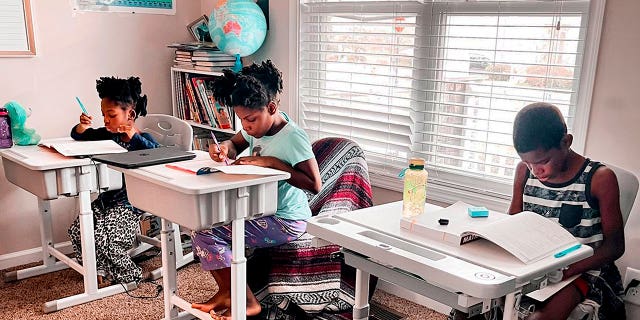
Marla Williams initially supported Chicago Public Schools’ decision to instruct students online during the fall of 2020. Williams, a single mother, has asthma, as do her two children. While she was working, she enlisted her father, a retired teacher, to supervise her children’s studies.

Her father would log into his grandson’s classes from his suburban home and try to monitor what was happening. But it didn’t work.

Her son lost motivation and wouldn’t do his assignments. Once he went back on a hybrid schedule in spring 2021, he started doing well again, Williams said.

“I wish we’d been in person earlier,” she said. “Other schools seemed to be doing it successfully.”

Officials were divided in Chicago. The city Department of Public Health advocated reopening schools months earlier, in the fall of 2020. The commissioner, Dr. Allison Arwady, said they felt the risk of missing education was higher than the risk of COVID-19. Others, such as the director of the Institute for Global Health at Northwestern University, advocated for staying remote.

“I think the answer on that has been settled fairly clearly, especially once we had vaccines available,” Arwady said. “I’m concerned about the loss that has occurred.”

From March 2020 to June 2021, the average student in Chicago lost 21 weeks of learning in reading and 20 weeks in math, equivalent to missing half a year of school, according to Georgetown University’s Edunomics Lab, which analyzed data from a widely used test called MAP to estimate learning loss for every U.S. school district.

Nationally, kids whose schools met mostly online in the 2020-2021 school year performed 13 percentage points lower in math and 8 percentage points lower in reading compared with schools meeting mostly in person, according to a 2022 study by Brown University economist Emily Oster.

The setbacks have some grappling with regret.

“I can’t imagine a situation where we would close schools again, unless there’s a virus attacking kids,” said Eric Conti, superintendent for Burlington, Massachusetts, a 3,400-student district outside Boston. His students alternated between online and in-person learning from the fall of 2020 until the next spring. “It’s going to be a very high bar.”

Dallas Superintendent Stephanie Elizalde initially disagreed with the Texas governor’s push to reopen schools in the fall of 2020. “But it was absolutely the right thing to do,” she said.

Some school officials said they lacked the expertise to decide whether it was safe to open schools.

“Schools should never have been placed in a situation where we have choice,” said Tony Wold, former associate superintendent of West Contra Costa Unified School District, east of San Francisco. “With lessons learned, when you have a public health pandemic, there needs to be a single voice.”

Still, many school officials said with hindsight they’d make the same decision to keep schools online well into 2021. Only two superintendents said they’d likely make a different decision if there were another pandemic that was not particularly dangerous to children.

In some communities, demographics and the historic underinvestment in schools loomed large, superintendents said. In the South, Black Americans’ fear of the virus was sometimes coupled with mistrust of schools rooted in segregation. Cities from Atlanta to Nashville to Jackson, Mississippi, shuttered schools — in some cases, for nearly all of the 2020-2021 school year.

In Clayton County, Georgia, home to the state’s highest percentage of Black residents, schools chief Morcease Beasley said he knew closing schools would have a devastating impact, but the fear in his community was overwhelming.

“I knew teachers couldn’t teach if they were that scared, and students couldn’t learn,” he said.

Rhode Island was an outlier among liberal-leaning coastal states when it ordered schools to reopen in person in the fall of 2020. “We can’t do this to our kids,” state education chief Angélica Infante-Green remembers thinking after watching students turn off cameras or log in from under blankets in bed. “This is not OK.”

But in the predominantly Latino and Black Rhode Island community of Central Falls, more than three-quarters of students stayed home to study remotely.

To address parent distrust, officials tracked COVID-19 cases among school-aged Central Falls residents. They met with families to show them the kids catching the virus were in remote learning — and they weren’t learning as much as students in school. It worked.

Among teachers, there’s some dispute about online learning’s impact on children. But many fear some students will be scarred for years.

“Should we have reopened earlier? Absolutely,” said California teacher Sarah Curry. She initially favored school closings in her rural Central Valley district, but grew frustrated with the duration of distance learning. She taught pre-kindergarten and found it impossible to maintain attention spans online.

One of her biggest regrets: that teachers who wanted to return to classrooms had little choice in the matter.

But the nation’s 3 million public school teachers are far from a monolith. Many lost loved ones to COVID-19, battled mental health challenges of their own or feared catching the virus.

Jessica Cross, who taught ninth grade math on Chicago’s west side at Phoenix Military Academy, feels her school reopened too soon.

“I didn’t feel entirely safe,” she said. Mask rules were good in theory, but not all students wore them properly. She said safety should come before academics.

“Ultimately, I still feel that remote learning was really the only thing to do,” Cross said.

A representative from the American Federation of Teachers declined in an interview to say whether the national union regrets the positions it took against reopening schools.

“If we start to play the blame game,” said Fedrick Ingram, AFT’s secretary-treasurer, “we get into the political fray of trying to determine if teachers did a good job or not. And I don’t think that’s fair.”

Regrets or no, experts agree: America’s kids need more from adults if they’re going to be made whole.

The country needs “ideally, a reinvention of public education as we know it,” Los Angeles Superintendent Alberto Carvalho said. Students need more days in school and smaller classes.

Short of extending the school year, experts say intensive tutoring is the most efficient way to help students catch up. Saturday school or doubling up on math or reading during a regular school day would also help.

Too few school districts have made those investments, Harvard economist Tom Kane said. Summer school is insufficient, Kane says — it’s voluntary, and many parents don’t sign up.

Adding school time for students is politically impossible in many cities. In Los Angeles, the teachers union filed a complaint after the district scheduled four optional school days for students to recoup learning. The school board in Richmond rejected a move to an all-year school calendar.

There are exceptions: Atlanta extended the school day 30 minutes for three years. Hopewell Schools in Virginia moved to year-round schooling last year.

Even the federal government’s record education spending isn’t enough for the scope of kids’ academic setbacks, according to the American Educational Research Association. Researchers there estimate it will cost $700 billion to offset learning loss for America’s schoolchildren – more than three times the $190 billion allocated to schools.

“We need something on the scale of the Marshall Plan for education,” said Kamras, the Richmond superintendent. “Anything short of that and we’re going to see this blip in outcomes become permanent for a generation of children — and that would be criminal.”

Biana Vazquez reported from Boston. Jocelyn Gecker reported from San Francisco. Collin Binkley in Washington, D.C., Sharon Lurye in New Orleans, Arleigh Rodgers in Indianapolis, Claire Savage in Chicago and Brooke Schultz in Harrisburg, Pa., contributed to this report.

Copyright 2022 Health News Florida

Preliminary testing shows online learning has put U.S. kids behind, some adults have regrets

Preliminary testing shows online learning has put U.S. kids behind, some adults have regrets

BOSTON (AP) — Vivian Kargbo imagined her daughter’s Boston school district was accomplishing the right detail when officials saved lecture rooms shut for most students for extra than a yr.

Kargbo, a caregiver for hospice people, didn’t want to threat them getting COVID-19. And extending pandemic school closures via the spring of 2021 is what numerous in her neighborhood mentioned was most effective to continue to keep children and grown ups safe and sound.

Read through Additional: Trainer shortages a fact as colleges struggle to fill new positions

But her daughter grew to become frustrated and stopped accomplishing university do the job or shelling out interest to on the internet lessons. The previous honor-roll university student failed virtually all of her eighth grade courses.

“She’s behind,” mentioned Kargbo, whose daughter is now in tenth quality. “It did not perform at all. Realizing what I know now, I would say they should have put them in faculty.”

Preliminary test scores all around the region validate what Kargbo witnessed: The more time numerous learners examined remotely, the much less they uncovered. Some educators and mother and father are questioning conclusions in metropolitan areas from Boston to Chicago to Los Angeles to continue to be on the internet lengthy just after clear proof emerged that colleges weren’t COVID-19 super-spreaders — and months soon after lifestyle-preserving grownup vaccines became broadly accessible.

There are fears for the futures of college students who really do not capture up. They run the risk of never ever studying to go through, long a precursor for dropping out of university. They may well never grasp easy algebra, putting science and tech fields out of arrive at. The pandemic drop in college attendance could continue to speed up, crippling the U.S. economy.

In a indicator of how inflammatory the debate has grow to be, there is sharp disagreement among the educators, school leaders and dad and mom even about how to label the difficulties created by on line school. “Learning loss” has grow to be a lightning rod. Some worry the time period may well brand name battling learners or solid blame on lecturers, and they say it overlooks the need to help save life for the duration of a pandemic.

Irrespective of what it is known as, the casualties of Zoom school are authentic.

The scale of the dilemma and the difficulties in addressing it have been obvious in Involved Press interviews with almost 50 university leaders, academics, moms and dads and wellness officials, who struggled to concur on a way ahead.

Some community overall health officials and educators warned towards second-guessing the faculty closures for a virus that killed in excess of a million persons in the U.S. A lot more than 200,000 youngsters misplaced at minimum one father or mother.

“It is quite straightforward with hindsight to say, ‘Oh, mastering decline, we really should have opened.’ People fail to remember how quite a few individuals died,” reported Austin Beutner, previous superintendent in Los Angeles, where by college students had been on the internet from mid-March 2020 right up until the start off of hybrid instruction in April 2021.

The issue is not basically educational.

Faculty closures continued past year due to the fact of trainer shortages and COVID-19 distribute. It’s conceivable a different pandemic may emerge — or a diverse crisis.

But there is an additional explanation for inquiring what lessons have been learned: the young children who have fallen behind. Some third graders battle to seem out terms. Some ninth graders have given up on school for the reason that they sense so powering they just cannot capture up. The long term of American children hangs in the stability.

Numerous older people are pushing to move on, to stop conversing about the effects of the pandemic — specifically understanding decline.

“As ridiculous as this seems now, I’m fearful people today are heading to forget about the pandemic,” stated Jason Kamras, superintendent in Richmond, Virginia. “People will say, ‘That was two many years back. Get about it.’”

When COVID-19 to start with arrived at the U.S., experts didn’t absolutely have an understanding of how it spread or whether or not it was unsafe to small children. American colleges, like most around the globe, understandably shuttered in March 2020.

That summer season, scientists learned children didn’t facial area the exact pitfalls as grown ups, but experts could not determine how to function educational facilities securely — or no matter whether it was even probable.

It was currently distinct that distant learning was devastating for lots of youthful people. But did the pitfalls of social isolation and slipping behind outweigh the risks of children, university employees and families catching the virus?

The tradeoffs differed based on how susceptible a local community felt. Black and Latino folks, who traditionally had fewer obtain to overall health treatment, keep on being practically two times as probable to die of COVID-19 than white people. Moms and dads in individuals communities often had deep-rooted uncertainties about regardless of whether educational institutions could retain their young children safe and sound.

Politics was a component, much too. Districts that reopened in individual tended to be in places that voted for President Donald Trump or had mostly white populations.

By wintertime, research showed schools weren’t contributing to amplified COVID-19 spread in the neighborhood. Courses with masked pupils and distancing could be executed safely, expanding evidence claimed. President Joe Biden prioritized reopening universities when he took workplace in January 2021, and as soon as the COVID-19 vaccine was accessible, some Democratic-leaning districts started off to reopen.

Yet a lot of faculties stayed closed effectively into the spring, which includes in California, exactly where the state’s effective lecturers unions fought returning to classrooms, citing lack of protection protocols.

Examine Much more: Lengthy-phrase outcomes of COVID college shutdowns develop into apparent as pupils return to course

In Chicago, following a 6-7 days standoff with the academics union, the district commenced bringing students back again on a hybrid plan just just before spring 2021. It was not till the slide that learners were being again in university entire time.

Marla Williams to begin with supported Chicago Community Schools’ conclusion to instruct students on the web all through the drop of 2020. Williams, a solitary mother, has asthma, as do her two little ones. Whilst she was doing the job, she enlisted her father, a retired trainer, to supervise her children’s studies.

Her father would log into his grandson’s courses from his suburban dwelling and check out to keep an eye on what was taking place. But it did not perform.

Her son shed enthusiasm and would not do his assignments. When he went back on a hybrid schedule in spring 2021, he begun undertaking very well yet again, Williams mentioned.

“I desire we’d been in human being earlier,” she said. “Other faculties appeared to be performing it productively.”

Officers had been divided in Chicago. The metropolis Division of Public Wellness advocated reopening universities months earlier, in the tumble of 2020. The commissioner, Dr. Allison Arwady, stated they felt the danger of missing training was larger than the threat of COVID-19. Other folks, these types of as the director of the Institute for Global Overall health at Northwestern College, advocated for being remote.

“I believe the respond to on that has been settled relatively clearly, specially after we experienced vaccines accessible,” Arwady stated. “I’m anxious about the reduction that has occurred.”

From March 2020 to June 2021, the common college student in Chicago misplaced 21 months of discovering in looking through and 20 months in math, equivalent to lacking 50 percent a 12 months of college, in accordance to Georgetown University’s Edunomics Lab, which analyzed knowledge from a widely made use of check called MAP to estimate finding out loss for every single U.S. school district.

Nationally, young children whose colleges satisfied largely on-line in the 2020-2021 university yr carried out 13 proportion factors reduced in math and 8 percentage points lessen in looking through as opposed with colleges conference mostly in individual, according to a 2022 study by Brown University economist Emily Oster.

The setbacks have some grappling with regret.

“I cannot envision a circumstance wherever we would close universities once more, until there is a virus attacking children,” reported Eric Conti, superintendent for Burlington, Massachusetts, a 3,400-university student district outside the house Boston. His students alternated among on the web and in-human being understanding from the fall of 2020 till the upcoming spring. “It’s likely to be a pretty high bar.”

Dallas Superintendent Stephanie Elizalde originally disagreed with the Texas governor’s force to reopen schools in the slide of 2020. “But it was unquestionably the proper thing to do,” she explained.

Some college officers explained they lacked the skills to make your mind up irrespective of whether it was risk-free to open up universities.

“Schools ought to in no way have been positioned in a predicament the place we have selection,” mentioned Tony Wold, previous affiliate superintendent of West Contra Costa Unified Faculty District, east of San Francisco. “With classes uncovered, when you have a community well being pandemic, there desires to be a single voice.”

Still, quite a few college officials mentioned with hindsight they’d make the identical determination to retain schools on line very well into 2021. Only two superintendents mentioned they’d likely make a different decision if there had been one more pandemic that was not specially unsafe to small children.

In some communities, demographics and the historic underinvestment in educational facilities loomed substantial, superintendents said. In the South, Black Americans’ concern of the virus was at times coupled with distrust of faculties rooted in segregation. Towns from Atlanta to Nashville to Jackson, Mississippi, shuttered schools — in some scenarios, for approximately all of the 2020-2021 school year.

In Clayton County, Ga, home to the state’s greatest proportion of Black citizens, universities main Morcease Beasley mentioned he understood closing educational facilities would have a devastating affect, but the anxiety in his community was frustrating.

“I realized instructors couldn’t educate if they ended up that worried, and college students couldn’t master,” he said.

Rhode Island was an outlier amid liberal-leaning coastal states when it purchased schools to reopen in person in the tumble of 2020. “We can not do this to our young children,” condition education and learning main Angélica Infante-Environmentally friendly remembers thinking immediately after watching students change off cameras or log in from less than blankets in mattress. “This is not Alright.”

But in the predominantly Latino and Black Rhode Island local community of Central Falls, a lot more than 3-quarters of learners stayed dwelling to examine remotely.

To deal with father or mother distrust, officials tracked COVID-19 instances among the college-aged Central Falls inhabitants. They fulfilled with households to exhibit them the little ones catching the virus had been in remote understanding — and they weren’t understanding as much as college students in faculty. It worked.

Among lecturers, there’s some dispute about on the internet learning’s effects on kids. But many fear some college students will be scarred for several years.

“Should we have reopened previously? Unquestionably,” said California teacher Sarah Curry. She to begin with favored college closings in her rural Central Valley district, but grew pissed off with the duration of distance discovering. She taught pre-kindergarten and located it difficult to retain consideration spans on-line.

A single of her major regrets: that teachers who wished to return to school rooms experienced minimal preference in the matter.

But the nation’s 3 million public school teachers are considerably from a monolith. Several misplaced beloved ones to COVID-19, battled mental wellness difficulties of their very own or feared catching the virus.

Jessica Cross, who taught ninth grade math on Chicago’s west aspect at Phoenix Military services Academy, feels her school reopened too shortly.

“I didn’t feel totally harmless,” she said. Mask principles had been very good in principle, but not all college students wore them properly. She claimed security must come before teachers.

“Ultimately, I however truly feel that remote learning was actually the only matter to do,” Cross stated.

A agent from the American Federation of Lecturers declined in an interview to address no matter if the union regrets the positions instructors took towards reopening colleges.

“If we start to engage in the blame activity,” said Fedrick Ingram, AFT’s secretary-treasurer, “we get into the political fray of hoping to determine if academics did a great work or not. And I really do not think that is truthful.”

Regrets or no, gurus concur: America’s young ones want far more from grown ups if they are likely to be designed whole.

The region demands “ideally, a reinvention of public training as we know it,” Los Angeles Superintendent Alberto Carvalho explained. Learners will need additional days in college and more compact lessons.

Quick of extending the university 12 months, authorities say intensive tutoring is the most economical way to assist college students catch up. Saturday college or doubling up on math or studying for the duration of a regular faculty working day would also enable.

Too couple of college districts have created people investments, Harvard economist Tom Kane stated. Summer university is insufficient, Kane states — it’s voluntary, and several mothers and fathers really don’t signal up.

Read Extra: How colleges are tackling protection as students return to class

Including faculty time for students is politically difficult in numerous metropolitan areas. In Los Angeles, the academics union filed a complaint following the district scheduled 4 optional university days for students to recoup finding out. The university board in Richmond rejected a move to an all-year university calendar.

There are exceptions: Atlanta extended the college day 30 minutes for a few yrs. Hopewell Faculties in Virginia moved to yr-spherical education past yr.

Even the federal government’s report schooling shelling out is not ample for the scope of kids’ educational setbacks, in accordance to the American Academic Analysis Association. Researchers there estimate it will price tag $700 billion to offset studying decline for America’s schoolchildren – extra than 3 times the $190 billion allotted to schools.

“We require something on the scale of the Marshall Strategy for instruction,” reported Kamras, the Richmond superintendent. “Anything quick of that and we’re likely to see this blip in results develop into long term for a generation of little ones — and that would be criminal.”

Gecker claimed from San Francisco. Collin Binkley in Washington, D.C., Sharon Lurye in New Orleans, Arleigh Rodgers in Indianapolis, Claire Savage in Chicago and Brooke Schultz in Harrisburg, Pa., contributed to this report.

Rodgers, Savage and Schultz are corps users for the Involved Push/Report for The us Statehouse News Initiative. Report for The usa is a nonprofit countrywide service method that spots journalists in nearby newsrooms to report on undercovered challenges.

Meet the Homeschooling Tutor to the Kids of Celebrities

Meet the Homeschooling Tutor to the Kids of Celebrities

For Tiffany Sorya, the path to getting a homeschooling tutor to superstars and other just one-percenters was barely intuitive. For the duration of her to start with decades at Portland Condition College she admits that she was a “horrible” student. But by the time she graduated she had turned issues about and was earning these types of superior grades that buddies would request, “How did you go from failing O(rganic) Chemistry to acing O Chem?,” she remembers.

For enjoyment, she started off tutoring friends who needed enable. But when the now 36-year-previous, very first-technology Cambodian American with Instagram-chic fashion (she has more than 306,000 followers) graduated and moved to Los Angeles, she turned her passion into some thing extra really serious, acquiring a job at a non-public tutoring company.


Tiffany Sorya has a community of non-public instructors about the globe.

Courtesy of Tiffany Sorya

Sorya’s educating skill merged with her social relieve and West Coastline vibe—a current, jokey IG submit demonstrates her steering a motorboat in a black, one particular-piece bathing fit with a plunging neckline: “You men, summer time is ending and I have only been on a boat ONCE”— promptly manufactured her a strike with Hollywood clientele hunting for a way to teach their youngsters, who normally didn’t live, or in some conditions, get the job done, in the confines of the regular, 7-hour university day.

A lot more From City & Country

Two of her 1st learners ended up Kylie and Kendall Jenner. “Obviously, again then (in the early 2010’s) they weren’t who are they are now. But they were nonetheless doing the job. They would have a picture shoot that would begin at 7 a.m., so they could not go to school right until two in the afternoon that working day. Or they would have an function at 4 in the afternoon and they would have to start out glam at one particular. So they desired school to be from 9 to noon that working day.” By phrase of mouth, Sorya’s consumer foundation distribute to incorporate Eire Baldwin two of Dr. Dre’s youngsters, Genuinely and Truice Youthful and customers of the boy band In Serious Everyday living.

This focus on a personalized homeschool routine became the basis for Novel Schooling Team, which Sorya founded in 2014. The enterprise, which has offices in L.A., New York and Andorra (the minuscule state squeezed in among Spain and France in which numerous European soccer stars—and Shakira—have vacation households), and tutors stationed all over the globe, offers equally homeschooling and enrichment tutoring alternatives (reading tutoring for four months, for instance) for people “who want standard university but on their timetable,” Sorya says. And, of course, who can pony up an typical payment of between $5,000 and $7,000 a month. That expense handles amongst 3 and five hrs of tutoring a day, five times a 7 days. Sorya says the shortened school day is possible when pupils are doing the job 1-on-1 with tutors as opposed to sitting in a classroom with upwards of 20 children.

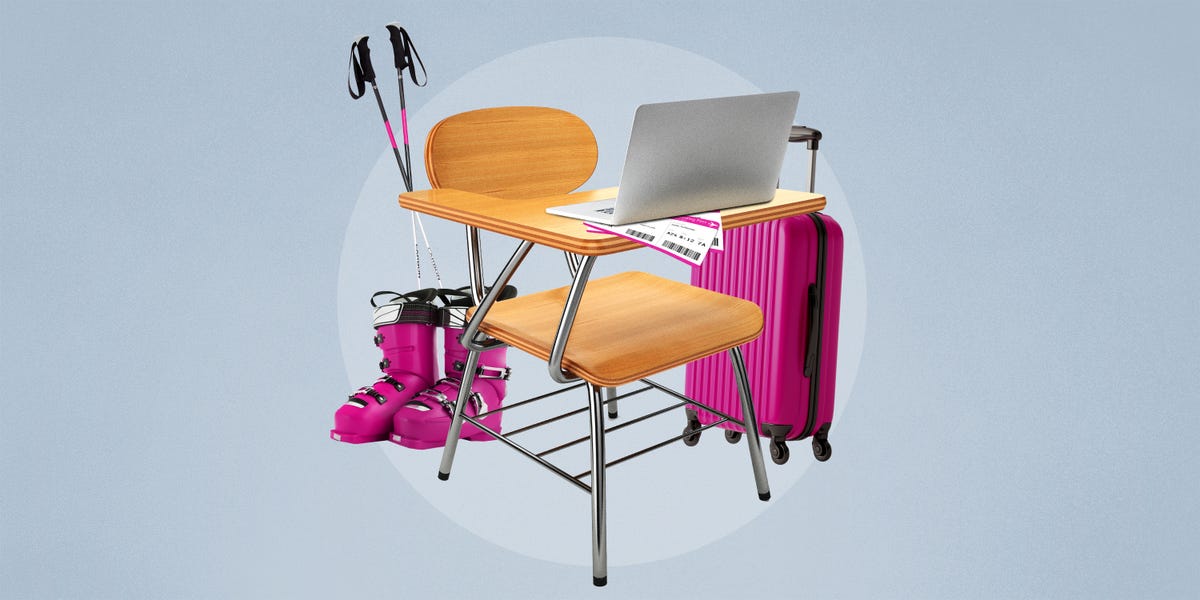
The support is best for VIP’s who both don’t want to mail their small children to a brick-and-mortar faculty for privacy explanations, or whose globe-trotting schedules make it difficult to enroll their kids in a classic on the net school with a established schedule—and time zone. In other phrases, for another person like 1 of Sorya’s purchasers who is a “really substantial-level CEO who owns a general public corporation and is consistently touring all all-around the globe,” Sorya states. (She cannot elaborate even more due to iron-clad non-disclosure agreements.) “The loved ones has houses in Yellowstone and Cabo and they decided to invest Xmas in Cabo and summer time in Yellowstone. So they desired faculty to be in the early morning so that in the afternoon the kids can go swimming with the Young children Club in Cabo. Or they want to do school in the early morning in January through March, like from 8 a.m. to 11. Then their kids ski for the rest of the working day.”

In some scenarios, it is not skiing, but brand-setting up extracurriculars that a university student wants to have far more no cost time for. When Sorya was performing with the Jenners, Trying to keep Up With the Kardashians was on the air and Kendall had a modeling job. The sisters have been also starting up to contemplate a outfits line. “They have been definitely concentrated undertaking work,” Sorya suggests. “They had been business people in their possess right, trying to determine out what that detail was, and (homeschooling) definitely authorized them to do that.

“If you’re in normal university and you communicate about, ‘Oh, I seriously like make-up. What could I do with that?,’ the instructor will in all probability say, ‘That’s good. Preserve it for right after course.’ But when you’re in homeschool and you hear that, there is time to discuss about all those issues. You say, ‘Oh, that is a fantastic plan. Convey to me more.’ So it just encourages a distinctive variety of thinking. I assume homeschooling is building a extra unbiased thinker. And that is what parents really like to see. And that’s what colleges like to see.”

The blueprint for Novel’s curriculum is provided by Laurel Springs Faculty, an on the web university primarily based in Pennsylvania. But Sorya and her team then evolve the curriculum for every college student, dependent on their requires and pursuits. For illustration, there was the kid—a member of the Saudi Royal Family—who was in seventh quality “and actually having difficulties with math. They just could not get him to do nearly anything,” Sorya states. (Virtually 40 percent of Novel’s small business is with Saudi Royal families or families related to the Royal Relatives.)

“But he was obsessed with soccer. We have a curriculum designer on our group. So she developed a seventh-quality math application by way of soccer for him. It was math but it was primarily based all close to soccer. It was generally like geometry through soccer—soccer balls, the angle with which you kick the ball—there are angles just about everywhere when it comes to soccer. And also creating phrase challenges that involve soccer enjoying. We do this a great deal basically. It’s all personalized.”

Certainly, Novel markets itself as a soup-to-nuts concierge assistance for dad and mom who never have time, or the wish, to offer with the each day logistics of managing their kids’ schooling. Tutors assigned to people “take treatment of almost everything from top to base,” Sorya suggests. “That’s what these families want. They never have time to be answering e-mails from the college, conversing to the academics, striving to come to a decision what courses are finest. We do all of that.”

“All of that” consists of aiding learners put together for an Ivy League college education—another de facto expectation from the styles of mother and father Sorya operates with. “The dad and mom will be like, ‘This is what the trajectory is for their upcoming,’” Sorya claims. “We want to check out to get them into Yale.


“We require to expend a month in Montreal and then December in St. Barts and we’re likely to be in London for February.”


“So we’re dependable for, quantity one particular, creating positive their grades are on point. Quantity two, creating absolutely sure they are getting all the courses they’re meant to be. Range a few, generating certain they’re performing a good amount of money of extracurricular actions. The mothers and fathers actually count on us to make sure they’re acquiring a whole educational practical experience when ‘we have to have to devote just one thirty day period in Montreal and then we’re likely to be in St. Barts for December and we’re heading to be in London for February.’”

And what if the scholar does not essentially in good shape the future Yale university student mould? What if they’re just not that into college?

“There’s usually a way to wave in what a child is intrigued in into an educational curricular,” Sorya suggests. “The amount one instance I can give you—and this goes for Saudi little ones, this goes for American young children, it’s all throughout the board: Gaming is so large. So we get this all the time. ‘My son is 13 and all he wishes to do is enjoy online video games’ So we say, ‘O.K., Very well, this is a point, video clip online games. It’s not just mindlessly taking part in. The little ones are active in some way. So what can we convert this into? Can we convert a desire for graphic design services into a passion? Can we transform this into a coding passion? Can we change this into an illustration hobby?’

“It’s critical that the young ones, the learners, generally come to feel that they’re deciding on what they do to some stage. When learners have a minor bit of handle over what they are studying they react a whole lot much better. So they’ll say, ‘O.K., I really like video online games so I want to do coding.’ The second they truly study what coding is, they do not want to do coding any more. It is a bunch of slash marks and letters and figures that you kind into a issue to make, you know, just one arm shift. So at the time they see what that is, they are disinterested.


These mothers and fathers do not have time to remedy e-mails from a school, or speak to the instructors. We do all of that.”


“What they essentially like about the movie video game is the storytelling. So then what we can do with that is perform on their creating capabilities and their storytelling and their voice when it comes to the papers that they generate. So currently being in a position to switch their passions into a thing that is going to be applicable is also anything the dad and mom are seriously delighted about and seeking for.”

Have moms and dads ever produced requests that she merely just can’t provide on?

“We have definitely tried out our absolute very best to do almost everything,” Sorya states. “Though we’ve gotten a couple film director requests. Like, ‘I want to direct movies when I’m more mature.’ So we have finished these packages with them. We’ve accomplished film applications on how to storyboard anything, how to shoot a little something. But often it is a small extraordinary, if they’re indicating, ‘I want to make a total movie!’ We’re like, We just can’t do that’. And so at times those people asks are a bit much. But we test and translate it into something that’s heading to be usable for them, in which they can at the very least exercise it. And then the mom and dad like it.”

COVID-19 drove parents to home-school their kids, but classroom politicization kept them there, Texas mom says

COVID-19 drove parents to home-school their kids, but classroom politicization kept them there, Texas mom says

NEWYou can now pay attention to Fox Information articles!

Classroom politicization and bias have been leading causes why a Texas father or mother made the decision to residence-university her young children this university calendar year, the mom of four explained to Fox Information.

“I certainly chose property-schooling for my children for the reason that I truly feel like I’m capable to control what they learn, manage the velocity of which they learn so they learn at a significantly more rapidly amount, and manage exterior influences as far as peer pressure, bullying, political agendas,” Tara Carter explained. “I imagine which is a ton of people’s explanations for home-education.” 

The range of Lone Star State college students pulled from public educational institutions in favor of property instruction increased by 40{e4f787673fbda589a16c4acddca5ba6fa1cbf0bc0eb53f36e5f8309f6ee846cf} in spring 2021 in comparison to the past calendar year, in accordance to not too long ago released Texas Training Company info. A lot of families shifted to residence-education as the COVID-19 pandemic took keep, but Carter believes several mother and father ongoing instructing their youngsters themselves because of disagreements with the curricula. 

Mom and dad want management above “who they find out from, and the articles of what they are mastering,” she told Fox News.

MARYLAND Dad and mom Select HOMESCHOOLING, Connect with Decrease OF Public School Program ‘SCARY’

Texas public schools saw a 40{e4f787673fbda589a16c4acddca5ba6fa1cbf0bc0eb53f36e5f8309f6ee846cf} increase in students withdrawing in favor of homeschool spring 2021 compared to 2020, state data show.

Texas community schools saw a 40{e4f787673fbda589a16c4acddca5ba6fa1cbf0bc0eb53f36e5f8309f6ee846cf} raise in pupils withdrawing in favor of homeschool spring 2021 in comparison to 2020, condition details present.
(iStock)

The Texas mom pulled 3 of her children – a kindergartner and twin first-graders – from community school in favor of property instruction this faculty 12 months. She let her ninth grade daughter show up at high school with her good friends.

“I failed to like some of the issues they have been learning in general public school,” Carter claimed. “There is far too substantially bias.”

“I do want them to study matters about politics, points on morals, items with regards to, you know, our beliefs,” she told Fox News. “I’d instead them study from me or request me questions than to learn from someone who I might not agree with.” 

Carter became significantly concerned when she located out her youngsters had been current when their friends were talking about gender id and sexual orientation on the school bus.

Texas mother Tara Carter says she was concerned by gender identity and sexual orientation discussions happening among her kids' peers on the school bus and in the classroom.

Texas mom Tara Carter suggests she was anxious by gender id and sexual orientation conversations occurring amongst her kids’ friends on the faculty bus and in the classroom.
(iStock)

“They ended up learning … wildly inappropriate sexual matters, gender-associated things and choices, and they were coming house and stating points about that,” Carter explained to Fox News. “I was blown away that kindergartners ended up talking like that.”

Ought to Students BE Authorized TO Start off GENDER Transition Without the need of PARENTAL CONSENT? TWO VIRGINIA Mothers WEIGH IN

“I will not want them to grow up and worry about gender and matters like that. They are even now toddlers to me and I want them to keep, you know, my little one kids as extensive as they can,” Carter ongoing. “They expand up a great deal more quickly when they are mastering issues from their peers that are not ideal for tiny young children.” 

More than two-thirds of registered voters opposed gender identity and sexual orientation remaining taught in elementary school, according to a latest New York Times/Siena poll. But between Democratic voters, 53{e4f787673fbda589a16c4acddca5ba6fa1cbf0bc0eb53f36e5f8309f6ee846cf} supported such as gender identification in elementary faculty curricula.

The subject has come to be a flashpoint at college board conferences throughout the nation.

School board meetings have become flashpoints across the country over issues ranging from mask mandates to gender identity discussions in the classroom.

Faculty board conferences have come to be flashpoints across the country more than challenges ranging from mask mandates to gender id discussions in the classroom.
(REUTERS/Evelyn Hockstein)

UNION-Operate Educational institutions PRIORITIZING ‘POLITICAL AGENDAS’ Although FAILING ‘MILLIONS’ OF AMERICAN Small children: BETSY DEVOS

“I think that persons realize ‘I have the freedom to make these decisions,’” Carter stated continued. “That undoubtedly performs a big, major purpose.”

Carter reported mother and father would fairly teach their children particular matters then have them find out from “academics who are more biased and more political.” 

The Texas Household College Coalition in 2021 been given a peak 13,000 inquires about residence-school, as opposed to 3,500 in August 2020. That ticked down to 1,700 final month, but the firm expects to see far more parents pull their children into homeschool out of safety worries next the Uvalde, Texas, college shooting.

Salvador Ramos shot and killed 19 kids and two academics at Robb Elementary College in Could. Whilst classroom politicization was the principal cause she pulled her young children from community college, Carter said the Uvalde taking pictures was the ultimate straw.

Carter, a Midway, Texas, mother, is newly home-schooling three of her four children due to concerns of political bias in schools among other reasons. 

Carter, a Halfway, Texas, mom, is freshly household-schooling a few of her four youngsters owing to concerns of political bias in universities amongst other motives. 
(Fox Information Electronic)

“It frightened me to the position I did not treatment if I was capable” to teach, Carter claimed. “I was heading to pull my young children from community universities to dwelling-school.” 

The Texas mother mentioned she’s noticed tutorial benefits from property-schooling. 

DECLINING Check SCORES, SOCIAL Competencies Induced BY University BOARDS AND Academics UNIONS, Mother Says

Her kindergartner “was not reading through at all when we started about a month in the past,” she told Fox News. “Now she is absolutely reading through.” 

Many peer-reviewed experiments have observed that dwelling-faculty pupils scored better on standardized tests than their general public college peers. And according to the Nationwide Property Training Research Institute, home-faculty learners rating 15 to 30 percentile details bigger.

“In public educational institutions, they can only transfer as quick as the slowest little one,” Carter mentioned. “If your child can find out speedier, they don’t necessarily educate any quicker.”

Home-school students typically outperform public school students on standardized academic tests, peer reviewed studies have shown.

Residence-school pupils generally outperform public faculty college students on standardized tutorial assessments, peer reviewed experiments have proven.
(Courtesy of Dalaine Bradley by means of AP)

Click on In this article TO GET THE FOX News App

Carter mentioned her youngest boy or girl is excelling much more rapidly at dwelling than her twins did when they have been in general public kindergarten. She highlighted her skill to focus on her a few children when compared to a trainer having to divide time among dozens of students.

“No person can adore and teach your small children as nicely as you,” Carter told Fox Information. “You know how they discover, and you know how to adore them very best.”

“When you happen to be in a loving setting, I really feel like you prosper,” she mentioned.

SKIDOS Launches 3 New Fun and Educational Games for Preschool Kids

SKIDOS Launches 3 New Fun and Educational Games for Preschool Kids

Each popular video game will come with finding out articles to instruct youngsters 21st-century techniques

Push Launch


Sep 9, 2022

SKIDOS, an award-profitable platform of learning game titles for youngsters, has announced a few brand name-new finding out online games in its catalog of 40+ academic video games for 2- to 11-year-olds. Offered on iOS, these online games – Hedgehog, Carl The Super Truck, and Surprise Woolies – are perfect for preschoolers. The video games aspect bright colours and cute people, making them very entertaining for children. In addition, each individual video game is created with the purpose to produce 21st-century techniques these as trouble-resolving and vital imagining.

Preschool is a critical time to put together youngsters for formal instruction. Educational games for toddlers can help to build a routine of mastering from an early age. Game titles like Hedgehog aid to establish kids’ intelligence by introducing an audiobook in just the recreation. Experienced voiceovers and cute animations keep the recreation participating and encourage the youngsters to read a lot more. Equally, the Ponder Woolies activity provides a large fairyland that has tons of diverse pursuits for distinctive pursuits. Little ones can do farming, enjoy musical devices, or support out in a virtual kitchen. The sport is extremely suited for youngsters who like to check out unique hobbies from a very young age. Carl The Super Truck presents children the possibility to participate in with pleasant, personalized avatars and use their personal difficulty-solving techniques to cross road blocks in the sport. With mini-games like washing a truck or digging sand at the beach, this match is a delight for youthful young ones.

Like all SKIDOS game titles, these three video games also come with integrated studying articles for kids of all age teams. The approach of ‘learning by play’ turns monitor time into an opportunity for finding out and development for the kids. Applying simple and pleasurable functions or musical rhymes, SKIDOS video games demonstrate concepts like numbers, letters, and primary science experiments. Pursuits like letter tracing develop hand-eye coordination and refine motor competencies as effectively. This mastering information is developed with cautious deliberation by instructional experts.

Aditya Prakash, the CEO and Founder of SKIDOS, commented, “We strongly consider in our mission to produce confident lifelong learners. These preschooler understanding games can give an early start out to this discovering system for young children. When education is blended with playfulness, youngsters develop into far more curious and eager to learn.”

In addition to these one of a kind sport capabilities, all SKIDOS users also get a wholly ad-free and boy or girl-safe practical experience. A one subscription gives customers entry to all 40+ games on the platform, and even will allow building up to 6 profiles on the exact system.

Supply: SKIDOS