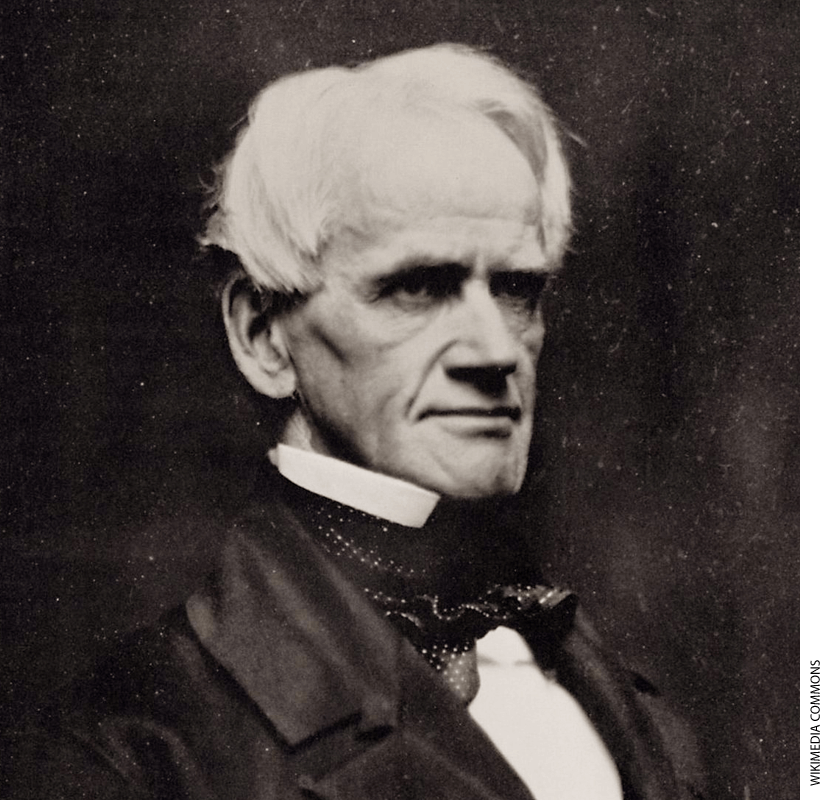
As folk wisdom has it, the apple doesn’t fall far from the tree. And research shows that children are generally shaped more by life at home than by studies at school. College enrollment, for instance, is better predicted by family-background characteristics than the amount of money a school district spends on a child’s education. Some parents have a specific vision for their child’s schooling that leads them to keep it entirely under their own direction. Even Horace Mann, the father of the American public school, who favored compulsory schooling for others, had his own children educated at home.
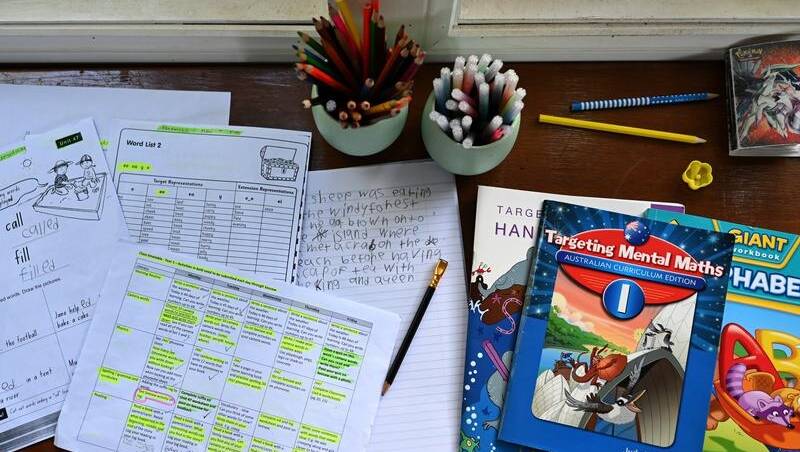
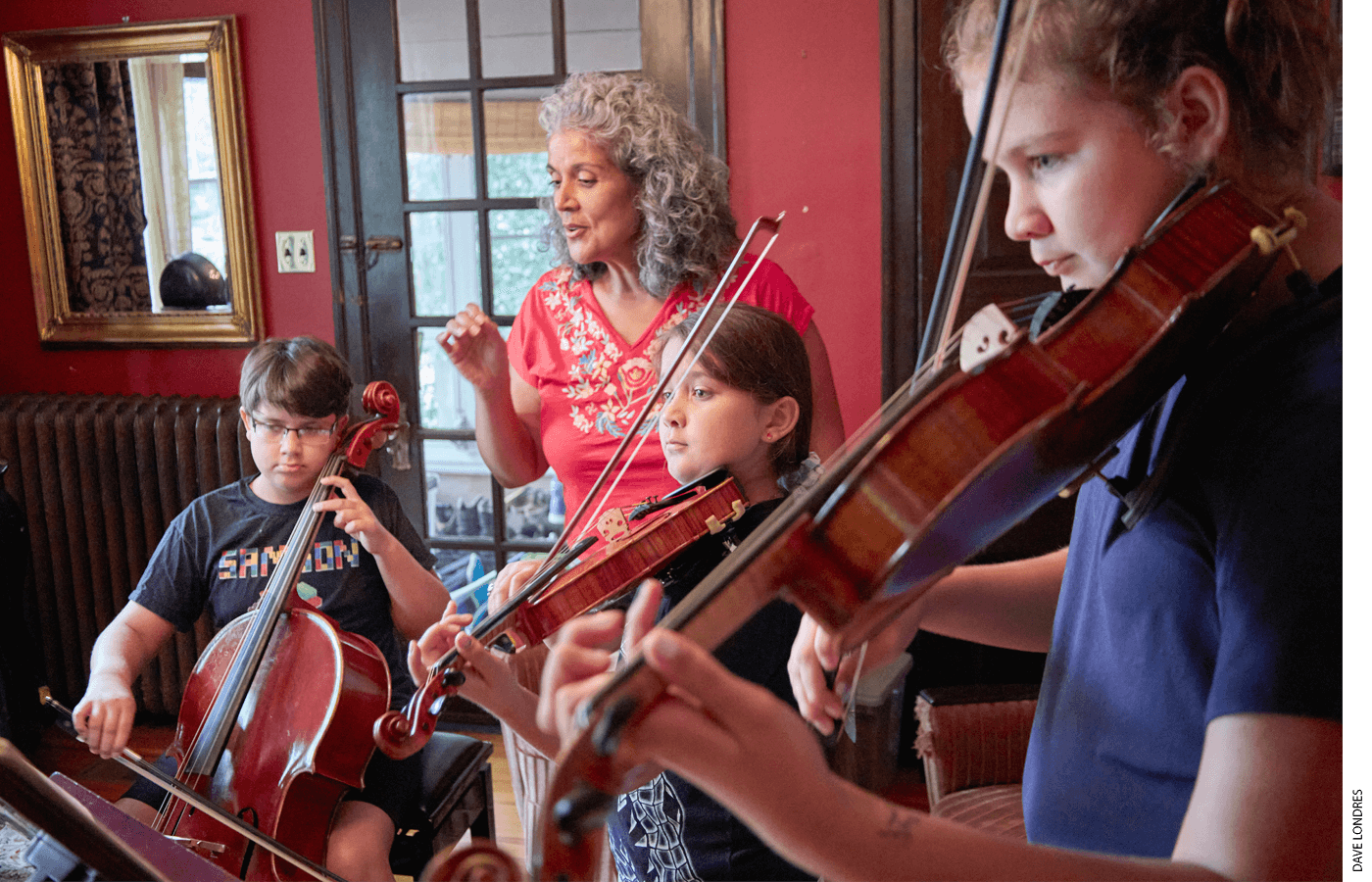
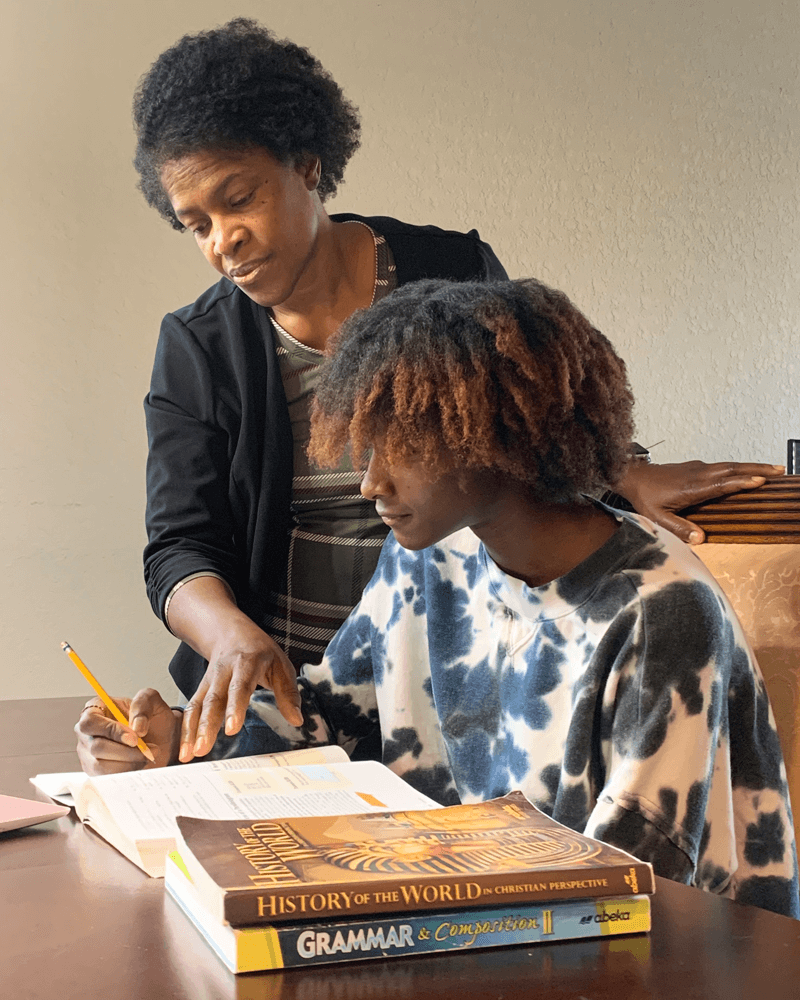
Homeschooling is generally understood to mean that a child’s education takes place exclusively at home—but homeschooling is a continuum, not an all-or-nothing choice. In a sense, everyone is “home-schooled,” and the ways that families combine learning at home with attending school are many. Parents may decide to home-school one year but not the next. They may teach some subjects at home but send their child to school for others, or they may teach all subjects at home but enroll their child in a school’s sports or drama programs. Especially during the Covid-19 pandemic, the concept of homeschooling has become ambiguous, as parents mix home, school, and online instruction, adjusting often to the twists and turns of school closures and public health concerns.
Improving public understanding of the growing and changing nature of homeschooling was the purpose of a virtual conference hosted in spring 2021 by the Program on Education Policy and Governance at the Harvard Kennedy School. The conference examined issues in homeschooling through multiple lenses, including research, expert analysis, and the experiences of parents. The event drew more than 2,000 registrants, many of them home-schooling parents. Their participation made clear that homeschoolers today constitute a diverse group of families with many different educational objectives, making it difficult to generalize about the practice. The conference did not uncover convincing evidence that homeschooling is preferable to public or private schools in terms of children’s academic outcomes and social experiences, but neither did it find credible evidence that homeschooling is a worse option. Whether homeschooling does or does not deliver for families seems to depend on individual needs and the reasons that families adopt the practice.
Homeschooling Growth
The interest drawn by the conference is striking in light of where homeschooling stood only a few decades ago. In the early 1970s, the education mainstream in the United States frowned upon the practice and considered it a fringe movement. At the time, it was estimated that about 10,000 to 15,000 children were being homeschooled nationally. Only three states explicitly allowed parents to home-school. Elsewhere, the removal of students from the schoolhouse could be treated as a criminal violation of the state’s compulsory-education law, and parents were sometimes jailed for that very reason.
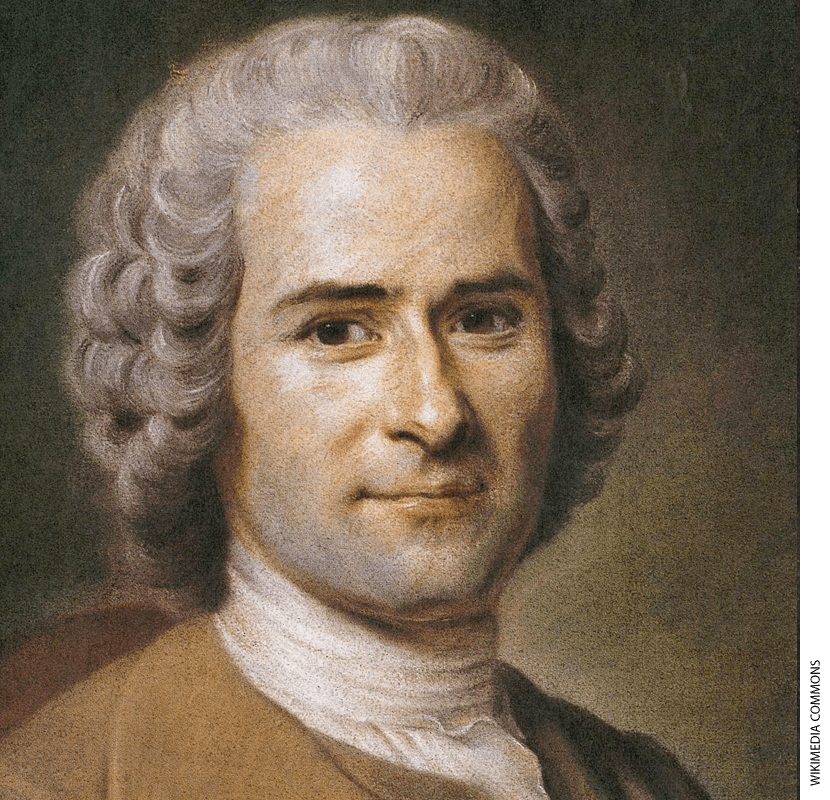
To fight for the right to home-school, a coalition of home-schooling advocates coalesced in the 1980s. Over the next 10 years, they would radically change the legal framework and trajectory of homeschooling. The coalition included left-leaning acolytes of John Holt, a former elementary school teacher who became disillusioned with the oppressive routines and rigid structures that he felt characterized formal schooling. Holt coined the term “unschooling,” the practice of keeping children out of school and, instead of designing a specific home curriculum, giving them considerable freedom to decide what to learn and how to learn it. Holt’s approach was an extension of the educational philosophy of Jean-Jacques Rousseau, the 18th-century French philosopher who theorized that the best education was one determined solely by children themselves.
The largest element in the coalition of home-schooling advocates consisted of devout Christian families who bemoaned what they viewed as moral decay in public schools. Only by homeschooling, they held, could they ensure that their children would be educated in a manner consistent with their religious beliefs and values. In 1983, Michael Farris founded the Home School Legal Defense Association to protect homeschoolers from compulsory-education laws. Dues-paying members were promised free legal defense if a government body threatened parents with prosecution. This offer proved to be a powerful organizing tool, and the association now reports a membership of over 100,000. With the backing of an organized grassroots constituency, the association and other advocacy groups persuaded legislatures in all 50 states to craft a legal framework for those who wanted to educate their children at home. Once that legal context was in place, homeschooling took off. By the early 2000s, the number of homeschoolers had surpassed one million nationwide, according to the National Center for Educa-tion Statistics.
At the conference, Brian Ray of the National Home Education Research Institute, a pro-homeschooling research organization, estimated the number of home-schooled children in 2019 at 3 million. Official estimates provided by the U.S. Department of Education prior to the pandemic hovered at 3 percent of all school-age children, which amounts to fewer than 2 million students. The difference between these estimates stems in part from the challenges of getting a full and accurate count of the number of children who are being educated primarily at home. Many school districts are not obligated to report to the state the number of home-schooled students in their district. Instead, the U.S. Department of Education bases its estimate on a questionnaire that it mails to a nationally representative sample of parents every few years. However, better than a third of those surveyed in 2019 did not return the questionnaire, which introduces the possibility of undercounting if home-schooling parents returned the questionnaire at lower rates than other parents. The U.S. Census Bureau, in a pilot survey administered after schools closed in response to the spread of Covid-19 in spring 2020, found that 5.4 percent of households with school-aged children had “at least one child [who was being] homeschooled.” The survey was repeated in early October 2020, when many schools remained closed, and found that the percentage had burgeoned to 11.1 percent.
Separately, the Harvard Program on Education Policy and Governance, in cooperation with Education Next, asked a representative sample of parents on three occasions over the course of the pandemic to identify the type of school their child attended—public, private, charter, or homeschool. The question resembled the one used by the U.S. Department of Education. The survey was conducted while many schools were closed to in-person learning—in May 2020, November 2020, and June 2021. According to the parents responding, 6 percent of the children were being home-schooled in May, 8 percent in November, and 9 percent the following June. Wondering whether these percentages were overestimates, the survey team asked those saying they were home-schooling in June 2021 to clarify by checking one of the following two items:
- Child is enrolled in a school with a physical location but is learning remotely at home
- Child is not enrolled in a school with a physical location
The researchers found that when they deducted from the home-schooling count all those who indicated the child was enrolled in a school, the share of students in the home-school sector in June 2021 fell from 9 percent to 6 percent. When their prior two estimates were adjusted downward accordingly, homeschooling was 4 percent in spring 2020 and 6 percent in fall 2020. The 6 percent estimate is twice the percentage estimated by the U.S. Department of Education in 2019 but only about half that estimated by the U.S. Census Bureau during the pandemic. Clearly, homeschooling is on the rise. Even cautious estimates indicate a doubling of the practice during the pandemic, and the actual shift could be greater.
Was the surge in homeschooling a temporary phenomenon induced by the pandemic, or will it become a permanent part of the education landscape? In a national poll conducted by EdChoice in 2021, 60 percent of parents held more favorable views toward homeschooling as a result of the pandemic. Market researchers are reporting significant, if unofficial, drops in school enrollments during the 2021–22 school year. Early reports say that some home-schooling newcomers are enjoying the flexibility, personalization, and efficient use of time that homeschooling allows. Families are also taking advantage of opportunities to combine homeschooling with part-time virtual learning, college coursework, neighborhood pods, and informal cooperatives, which are lessening the teaching demands on parents who home-school. But the 2021 Education Next survey revealed that many parents were finding education at home to be an exhausting undertaking and looked forward to a return to normal operations. Nearly a third reported they had “to reduce the number of hours [they] work[ed] in order to help with school work this year.” An even higher percentage said they had to rearrange their work schedule. A quarter of the 9 percent of those calling themselves homeschoolers said they did not plan to continue the practice.
Regulating Homeschooling
Homeschooling is now universally permitted in the United States, and the pandemic has likely solidified public acceptance of its practice. But some critics still call for regulatory safeguards to protect home-schooled children from abuse and to ensure they receive an adequate education. They point out that, among industrialized countries, the United States has the least-restrictive regulatory framework for homeschooling. Japan, Sweden, and Germany all but prohibit the practice, and many other European countries impose tight restrictions on it, such as requiring parents to hold educator certification or mandating that students take exams to demonstrate academic progress. In the United States, by contrast, 11 states do not require parents to notify authorities that they are home-schooling, according to the Coalition for Responsible Home Education, and many states that do require notification have few other restrictions. A small number of states mandate testing of home-schooled children or that certain subjects be taught by trained educators.
Harvard Law School professor Elizabeth Bartholet, who elsewhere has called for a presumptive ban on homeschooling, argued at the conference that regulatory authorities should screen prospective home-schooling parents and perform regular home visits. She asserts that there is “a significant subset of [home-schooled] children suffering from abuse and neglect.” High-profile cases of a horrifying nature help to make her point. In 2018, one such instance captured the nation’s attention when two parents who claimed to be home-schooling in California were found guilty of abusing, torturing, and imprisoning their 13 children for several years. Proponents of broader restrictions on homeschooling claimed that the permissive regulatory framework for homeschooling in California was what allowed these parents’ heinous acts to go unseen for several years. Citing these instances, critics of homeschooling are asking for state intervention. For example, a law proposed to the Iowa legislature in 2019 would have required school districts to conduct “quarterly home visits to check on the health and safety of children . . . receiving . . . private instruction.”
The Home School Legal Defense Association vigorously—and usually successfully—opposes these kinds of laws. At the conference, Mike Donnelly, the organization’s senior legal counsel, argued that parents have a constitutional right to direct the education of their children. State courts have largely agreed with this principle, and the U.S. Supreme Court, though not ruling on compulsory-education laws in general, found in Wisconsin v. Yoder (1972) that compelling Amish children to attend school beyond the age of 14 violated the Free Exercise clause of the First Amendment to the Constitution.
Donnelly also said that mandating home visits by social workers or requiring that physicians sign off on home-schooled children’s well being would be intrusive and impractical and would violate the constitutional rights of home-schoolers. He rejected the idea that child abuse is more prevalent in home-school households than elsewhere, and said that, if it occurs, other laws protecting children from abuse come into play. Economist Angela Dills of Western Carolina University said she found no clear evidence of an increase in reported incidents of abuse in states that relaxed bans on homeschooling. Charol Shakeshaft, an expert on sexual abuse in schools, said that her research suggests “it is highly unlikely that there’s higher incidence of sexual abuse of kids in the home-schooling world than in the public-school world.”
Effects on Student Learning
Many critics of homeschooling are more worried about ineffective or misguided instruction than about child abuse. They maintain that homeschoolers should be required to use standard educational materials and that their children should have to take statewide tests to measure academic progress. But many home-schooling families do not trust government officials to decide what can and cannot be taught, viewing such regulations as antithetical to the purpose of homeschooling. So far, they have succeeded, with the help of the potent Home School Legal Defense Association, in forestalling efforts to regulate curricular content.
What does the research evidence say about the academic progress of homeschoolers? Speaking at the PEPG conference, Robert Kunzman of Indiana University, who has synthesized the literature on homeschooling, said the “the data are mixed and inconclusive.” Research is underdeveloped in part because scholars cannot directly compare representative homeschoolers with peers attending school. Random assignment of students to homeschooling would be infeasible, unethical, and likely illegal. Statistical studies that attempt to adjust for differences between the background of homeschoolers and other students are often flawed because homeschoolers differ from other students in ways not captured by standard demographic variables. These studies tend to find homeschoolers performing better in literacy than in math, perhaps indicating that parents are better equipped to teach in that domain. Jennifer Jolly and Christian Wilkens, in their conference presentation, reported that college students who have been home-schooled are as likely to persist in their postsecondary education as other students. Still, studies of exam performance and college persistence do not include homeschoolers who never take an exam or go to college, making it difficult to generalize to the home-schooling community as a whole. As Kunzman observed, the only thing one can conclude for certain is that the data are too limited to sustain any strong conclusions about home-schooling learning outcomes.
Homeschooling Diversification
Beneath the debate over academic performance lies suspicion of homeschoolers, both in the mainstream media and in the academic community. They are often portrayed as a homogeneous group of southern, rural, white families who adhere to fundamentalist religious and cultural values. Sarah Grady, the director of the U.S. Department of Education survey of homeschoolers, finds some support for this stereotype. Homeschooling is more prevalent in towns and rural areas than in cities and suburbs, present more often in the South and West than in the Northeast and Midwest, more likely to be practiced by those of lower-income backgrounds, more frequently found among white families than Black or Asian families, and more likely to occur in two-parent households with multiple children. These patterns are just tendencies, however, not extreme differences across social groups. The U.S. Department of Education surveys show that homeschooling can be found in all demographic groups. Better-educated parents are just as likely to home-school as less-educated ones, and Hispanic parents are nearly as likely to do so as white parents. Time is eroding the stereotypical face of the home-schooling family—as is the pandemic.
What’s more, families choose to home-school for a variety of reasons. Even though fostering religious and moral instruction remains a common rationale, many parents cite other motivations. Nearly one third of families home-school to support a child with special needs or mental-health challenges, according to the National Center for Education Statistics. Other parents believe they have particularly gifted children who will prosper under more intensive academic instruction. Indeed, almost three quarters of home-schooling families cite dissatisfaction with academic instruction at schools as an important reason for their decision. Safety and bullying issues at schools are also frequently named as contributing factors. There are many niche areas as well. Parents of children who train intensively in the performing arts or athletics may opt for homeschooling because of the scheduling flexibility and personalization that it offers. Some Native American homeschoolers want to maintain ancestral language and traditions. And then there are the “unschoolers,” who take a different approach altogether.
Reasons for homeschooling are multiplying, but the biggest change in recent years is the way in which home education is being conducted. The availability of online content is revolutionizing the practice. Access to sophisticated instructional material lowers barriers that previously discouraged parents from homeschooling. A parent confident in her ability to teach grammar, spelling, and literature but not in her mastery of long division, algebra, and calculus can now ask her child to turn to Khan Academy or other free or low-cost instruction for help. Homeschoolers are increasingly teaming up as well. Home-school cooperatives, through which families pool expertise and resources to deliver instruction, have grown; 43 percent of homeschoolers participated in such groups in 2019, up from about one third in 2016, according to the U.S. Department of Education survey. Another trend is the use of hybrid models, in which home-schooled children also attend public and private schools or even local universities part-time.
Despite this diversity of home-schooling approaches, critics warn that many home-schooling families are insular, promoting religious fundamentalism, intolerance, and anti-democratic sentiments. Research casts considerable doubt on such claims. With few exceptions, studies find no systematic differences in the opportunities for social experience available to home-schooled children and public-school children. Any differences that do turn up are typically in the homeschoolers’ favor. Data from the U.S. Department of Education survey suggest that home-schooled children participate in an array of activities that involve interacting with other children and that they are more likely to go to libraries and museums and attend other cultural activities than their peers in public schools (see “Homeschool Happens Everywhere,” features, Fall 2020). Homeschooling may even strengthen familial bonds by ensuring a level of attentiveness from parents that fosters positive social development. It could also, as some have found, end up shielding children from negative peer or social influences that undermine healthy social development.

Homeschooled Adults
While there is little evidence that home-schooled children are worse off academically or socially in childhood, it’s possible that a lack of exposure to mainstream norms and institutions could make home-schooled children ill equipped to navigate higher education and careers as adults. According to Jolly and Wilkens, there is little evidence that home-schooled children end up doing poorly in life. College grades, persistence rates, and graduation rates are generally no different for those who were home-schooled than for those educated in other ways. Trends in employment and income for former homeschoolers also indicate that they tend to do as well as others. Adults who were home-schooled as children are as well integrated socially as their traditionally schooled counterparts, and they navigate their careers just as successfully.
Researchers nonetheless caution that studies of homeschooling are limited by the data available to them. As mentioned, states often do not have thorough records of the practice. Some home-schooling families are not keen to participate in studies and research surveys. Research findings may be biased because of non-participation by these families. Complicating matters further, it is difficult to generalize about homeschooling because it embodies a diversity of groups, rationales, and ways of carrying out home education. Few analyses draw distinctions among homeschoolers, often treating them as a uniform group despite substantial heterogeneity in the population. Claims about homeschooling should be tempered until we have more-complete data on this rapidly growing and changing practice.
The Future of Homeschooling
Our conference found no convincing evidence that homeschooling is either preferable to or worse than the education a student receives at a public or private school. The success of homeschooling seems to depend largely on the individual child and parents. If so, it may make sense to allow families to decide whether homeschooling is right for them.
It remains to be seen whether the growth of homeschooling experienced during the pandemic will persist. If homeschooling does hold onto its current share of the school-age population, homeschooling will have become the most rapidly growing educational sector at a time when charter-school growth has slowed and private-school enrollments are at risk of further decline. The meaning of homeschooling could also change dramatically in the coming years. It may be less of an either-or question, as homeschooling is combined with more-formal learning contexts, whether they be online experiences, neighborhood pods, cooperatives, or joint undertakings with public and private schools. Eric Wearne of Kennesaw State University says that “homeschooling is growing, but everyone should be prepared for it to look a lot stranger in the coming years.” If Wearne’s assessment is correct, homeschoolers, once thought of as traditionalists holding onto the past, may be an advance guard moving toward a new educational future.
Daniel Hamlin is assistant professor of educational leadership and policy studies at the University of Oklahoma. Paul E. Peterson is the Henry Lee Shattuck Professor of Government at Harvard University, director of Harvard’s Program on Education Policy and Governance, and senior editor of Education Next.