Trampolines and cowboy classes: Arizona parents take advantage of state’s homeschooling funds | US education

Trampolines and cowboy classes: Arizona parents take advantage of state’s homeschooling funds | US education

When the former governor of Arizona, Doug Ducey, signed a law last year that lets any family receive public funds for private school or homeschooling, he said he “trusts parents to choose what works best” for their children.

Over 46,000 Arizona students now take part in the state’s education savings account, or ESA, program, which provides about $7,000 per child annually for a huge array of school expenses. But with households in greater charge of curricular choices, some purchases are raising eyebrows, among them items like kayaks and trampolines, cowboy roping lessons and tickets to entertainment venues like SeaWorld.

The apparent permissiveness is one reason Beth Lewis, a former teacher and director of Save Our Schools political action committee, opposes the program. “These are all the things that we scrape the couch cushions for to fund for our kids,” said Lewis, whose group failed to collect enough signatures to put Ducey’s expansion of the program up for a referendum.

The debate in Arizona is being closely watched by GOP governors hoping to emulate the state’s approach. With passage of a new program just last month in Iowa, there are now nine states with ESAs and at least six more considering them. As in Arizona, the Iowa program will be open to any family that wants to participate. A Florida proposal would do the same.

The juggernaut is part of a wider Republican push to win over parents disaffected by what they see as the public school system’s halting response to the pandemic and alienated by culture war clashes in the classroom. Experts say parents’ frustration over extended school closures contributed to Glenn Youngkin’s victory in Virginia’s election for governor in 2021. And the governor of Florida, Ron DeSantis, widely seen as a 2024 presidential contender, has made parent choice a central focus of his administration and restricted what public school teachers can say about race and gender.

What Republicans see as a boon for family empowerment, however, many Democrats view as a Trojan horse for the dismantling of public education. In Arizona, the seemingly endless variety of options available to homeschoolers makes it difficult for state officials to regulate them – and that may be the point. The goal, school choice proponents say, is to break free of school bureaucracy and put parents in control.

Children with signs saying we heart ESA
Families demonstrated in favor of Arizona’s ESA program on 17 January at the state capitol in Phoenix. Photograph: Courtesy of Lura Capalongan

“Lots of kids have different needs that public schools are not a good fit for,” said Marilyn Fitzpatrick, a Gilbert, Arizona, mom and former social studies teacher. She turned to ESAs to homeschool her oldest son, Oliver, after pulling him out of elementary school during the pandemic. She called remote learning with a kindergartner a “special kind of hell”, and said when he was placed in the lowest reading group, teachers told her not to worry. “It was concerning to be told: ‘It’s probably fine.’”

Others see the program as a springboard for innovation. Lura Capalongan, who is homeschooling her kindergartner Lexi, said Arizona’s ESA has allowed her to more than double what she spends on curriculum and materials – items like a small robot that teaches coding and a kit to build a simple scooter.

“I don’t feel like I’ve stretched the boundaries much,” she said. “We’ve been able to build a curriculum around her skills and her interests.”

‘Incredibly permissive’

But the newly elected Democratic governor, Katie Hobbs, has less faith that the purchases families are making are academically sound. Her first budget proposal includes a plan to roll back the program to a limited group of families. She told lawmakers the program “lacks accountability and will likely bankrupt this state”.

Under the law, participating families agree to provide instruction in the same content areas as public schools. In addition to more traditional lesson plans, parents report that they meet – or attempt to meet – those requirements through activities like ice-skating and sword-casting classes, according to posts in a Facebook group for ESA users and vendors marketing their services.

One parent in the group said she uses the Disney+ streaming service to “extend our learning” and asked if the state would approve the cost of a subscription. Others said they had received approvals for trampolines and horseback riding lessons.

The former state superintendent Kathy Hoffman, a Democrat who lost in November’s election to Republican Tom Horne, said she opposed the expansion because the rules are “incredibly permissive”.

“As long as an item can be tied to a curriculum – with curriculum being ill-defined and open to interpretation – that meets the definition of an allowable expense,” she said. “Striking the right balance between allowing parental choice and being good stewards of public tax dollars was a continual challenge faced by my administration.”

According to the education department’s parent handbook, some materials, such as board games, puzzles and Legos, don’t require parents to submit a curriculum. But less obvious items like dolls and stickers do. To justify buying a chicken coop for a science lesson, one parent posted a chicken-raising guide. Another suggested a workout from Fit Bottomed Girls to support the purchase of a trampoline for physical education.

Teachers for core subjects need to have at least a bachelor’s degree, but for specific classes like art, drama or dance, a two-year degree or a credential is acceptable. Vendors in the Facebook group often list what students would learn from their programs. The sword-casting instructor, for example, said he would teach students “archaeology, physics, history and metallurgy”.

But Lewis, who also helped organize 2018’s “Red for Ed” protests for higher teacher pay, accuses the state of not holding families and private schools accountable. She thinks standardized testing should be required for students who receive ESAs.

“We don’t know what the kids are learning or whether they’re learning,” she said.

‘Tailored to the individual student’

Craig Hulse, executive director of Yes. Every Kid, a national organization that advocates for ESAs, thinks such criticisms are misguided. He said the public probably wouldn’t object to a school taking students on a field trip to SeaWorld or allowing ice-skating to count toward a gym credit.

With an ESA, he said, it’s expected that parents’ choices would be “specifically tailored to the individual student”.

Becky Greene, a Mesa parent, has five children, aged seven to 17, using ESAs. For physical education, they all take taekwondo. She was able to afford a $200 Time Life series on aviation for her oldest son, a “military history buff”, and a book on the chemical reactions involved in cooking for another son interested in culinary arts.

Girl with rabbit
Lura Capalongan hopes to use the ESA for rabbit care purchases like a hutch and a litter box. The ESA did not cover the cost of her daughter Lexi’s rabbit. Photograph: Courtesy of Lura Capalongan

She once wondered how a parent in the Facebook group got approved for a kayak. But as someone “used to stepping out of the box”, she doesn’t question how others educate their children.

Capalongan said she hopes to use ESA funds to help pay for the care of her daughter Lexi’s rabbit – items like a hutch, a litter box and nail clippers. Lexi joined an animal club similar to 4-H and is studying the rabbit’s anatomy and nutrition.

“It’s covering science and biology, but at a level that a kindergartner can understand,” she said.

‘Any reasonable’ expense

Before the former governor’s expansion, the program was limited to specific groups of students, including those with disabilities, in foster care or in military families.

Dave Wells, research director at the Grand Canyon Institute, a center-left thinktank, said Hobbs took a “pretty important rhetorical step” by calling for a change in course. But with a Republican-controlled legislature, she might have to settle for tighter regulations to improve accountability, he said.

Now, the program’s enrollment has nearly quadrupled and the state is working to speed up turnaround time for approvals and reimbursement.

“I walked into a backlog of 171,575 orders,” Christine Sawhill Accurso, the program’s new executive director, wrote in a January email to participants. “We are making our way through that backlog as quickly as possible while still receiving thousands of new requests each day.”

Accurso, a former ESA parent, confirmed that the state has approved chicken coops, ice-skating and cowboy roping lessons among a broad variety of ESA purchases. She has updated the allowable list to more closely match state law, but has also written in memos to ESA families that the department would approve “any reasonable education-related expense”.

School choice advocates in other states are watching Arizona as officials try to define what’s reasonable.

Mayes Middleton, a Republican senator from Texas, has introduced a $10,000-per-student ESA bill that would allow “every type of education” to qualify. Under his plan, the state comptroller would run the program instead of the education agency to avoid debates over curriculum.

“The money is going to be spent,” he told the 74. “Do you want only the government to decide [what to teach], or do you want parents to decide?”

In New Hampshire, by contrast, Kate Baker Demers, executive director of the Children’s Scholarship Fund, said the state applies some “Yankee frugality” to its program and rejects requests for purchases that could be used by multiple family members, like a kayak or trampoline.

“Right out of the gate, we said: ‘This is narrower than you think,’” she said. “We want to run it in a way that everyone can be supportive of it.”

  • This report was first published by the 74, a non-profit, non-partisan news site covering education in America

State says Alaska homeschooling families can use public funds for some private school classes, but not full tuition

State says Alaska homeschooling families can use public funds for some private school classes, but not full tuition

The Alaska Point out Capitol on April 22, 2022, in Juneau, Alaska. (Rashah McChesney/KTOO)

People enrolled in point out-funded homeschool applications in Alaska can use their scholar funding allotments to spend for some private college classes, in accordance to an opinion launched Monday by the point out Office of Legislation. 

That general public revenue, nevertheless, can not be utilised to pay out full-time tuition at a personal or spiritual faculty, suggests the 19-website page opinion written by Deputy Lawyer Typical Cori Mills. 

“The additional it seems like you’re just striving to send out your kid to personal school and get backed by the condition, I think, I consider which is when you get started acquiring into unconstitutional territory,” Mills said at a news conference Monday.

There are additional than two dozen general public, condition-funded correspondence universities for homeschool people in Alaska. The condition Legislature very first allowed the systems to give allotments of public revenue to enrolled people in 2014. Family members can expend the revenue on guides, college provides, tutoring and classes. 

Mills claimed the intention of college student funding allotments is to dietary supplement general public instruction, not to replace it with personal school. For example, a homeschool scholar whose district does not offer you Latin may possibly get it at a private school.

Her opinion outlines what’s probably constitutional and most likely unconstitutional.

“Things like private tutoring, general public or personal college or university courses, extracurricular courses or sports activities, specified instructional elements that meet up with the demands of the allotment plan, are all incredibly probable constitutional, even if they may possibly present an incidental reward to personal faculty,” she explained.

Mills also emphasized that there is a large amount of gray region when it arrives to the constitutionality of allotment paying out. She explained it’s up to personal school districts to operate with the condition Section of Schooling and Early Development when questions crop up.

“Constitutional issues are often murky,” she mentioned. “We’re striving to offer at the very least the complete yeses and certainly nos, and then what framework can you do the job inside of in those people gray places. Ultimately we just want to enable university districts and the division best implement this application.”

Opponents have argued that the allotment program violates part of the state structure that claims general public cash can not instantly reward a religious or other personal instructional establishment. But Mills said, on its experience, the allotment software is not unconstitutional. 

Mills explained quite a few factors prompted the law department to critique the allotment application this summer. A person was the Supreme Court’s evaluate of two education and learning funding cases, while she mentioned the the latest rulings really don’t affect Alaska’s allotment application. A further was an op-ed written by Jodi Taylor, spouse of Legal professional Common Treg Taylor, in assistance of utilizing allotment funds for personal school lessons. Legal professional Normal Taylor recused himself from examining the system. 

[Sign up for Alaska Public Media’s daily newsletter to get our top stories delivered to your inbox.]

Pandemic relief funds spent by school districts

Pandemic relief funds spent by school districts

Over the past two years, the state of Mississippi has received $2.5 billion in pandemic relief funds to improve education and help reduce COVID-related learning loss. 

The Elementary and Secondary School Emergency Relief (ESSER) Fund was created initially by the Coronavirus Aid Relief and Economic Security (CARES) Act and then subsequently replenished in two other pieces of federal legislation, creating three separate pots of money for the state and districts to spend. 

All three sets of funds require that 90{e4f787673fbda589a16c4acddca5ba6fa1cbf0bc0eb53f36e5f8309f6ee846cf} of the money go directly to school districts. There are a wide variety of allowable expenses under the ESSER guidelines, but the U.S. Department of Education instructs school districts to prioritize efforts to “safely reopen schools for full-time instruction for all students, maintain safe in-person operations, advance educational equity, and build capacity.”

The remaining 10{e4f787673fbda589a16c4acddca5ba6fa1cbf0bc0eb53f36e5f8309f6ee846cf} goes to the state Department of Education, which has broad discretion to use the money for any emergency needs from the pandemic. No more than half a percent of the total amount in each ESSER fund can be used on administrative expenses. 

Thus far, the Department of Education has spent 29{e4f787673fbda589a16c4acddca5ba6fa1cbf0bc0eb53f36e5f8309f6ee846cf} of its ESSER I monies, primarily on updating the Mississippi Student Information System (MSIS), digital literacy coaches, a school nurse program, career and technical education equipment, and Pre-K funding. Only 1{e4f787673fbda589a16c4acddca5ba6fa1cbf0bc0eb53f36e5f8309f6ee846cf} of ESSER II money has been spent at the state level, primarily on MSIS updates and digital content subscriptions. 

Districts spent their money in nine major categories, which are described below. 

  • Employee salaries: salaries for teachers, professional personnel, instructional aides, and substitute teachers; overtime pay, performance-based salary incentives, and COVID-19 incentive payments
  • Employee benefits: health insurance, life insurance, retirement contributions, unemployment compensation
  • Professional and technical services: educational consultants, counseling services, lawyers, architects, accountants, nurses, data processing services
  • Property services: water and sewer, electricity, communication, custodial, lawn care, construction services, maintenance services
  • Other purchased services: student transportation services, insurance (other than employee benefits), postal services, advertising, 
  • Supplies: software, gasoline, transportation supplies, food, books, periodicals
  • Property: land, buildings/building improvements, computer equipment, furniture, connectivity equipment, cars, buses 
  • Other objects: dues and fees, interest, debt, payments to state agencies
  • Other uses: summer food, indirect costs

View the charts below to learn more about how this money has been budgeted and district-level spending for each pot.

ESSER I

Created By: Coronavirus Aid, Relief, and Economic Security (CARES) Act

Available through: Sept. 30, 2022

Total to Mississippi: $169,883,002  

Reserved for statewide programming: $16,988,300

ESSER II

Created By: Coronavirus Response and Relief Supplemental Appropriations Act

Available through: Sept. 30, 2023

Total to Mississippi: $724,532,847 

Reserved for statewide programming: $72,453,285

ESSER III

Created By: American Rescue Plan Act (ARPA)

Available through: Sept. 30, 2024

Total to Mississippi: $1,628,366,137  

Reserved for statewide programming: $162,836,614 

We want to hear from you!


Central to our mission at Mississippi Today is inspiring civic engagement. We think critically about how we can foster healthy dialogue between people who think differently about government and politics. We believe that conversation — raw, earnest talking and listening to better understand each other — is vital to the future of Mississippi. We encourage you to engage with us and each other on our social media accounts, email our reporters directly or leave a comment for our editor by clicking the button below.


Republish our articles for free, online or in print, under a Creative Commons license.

X

Republish this article

Unless otherwise noted, you can republish most of Mississippi Today’s stories for free under a Creative Commons license.

For digital publications:

  • Look for the “Republish This Story” button underneath each story. To republish online, simply click the button, copy the html code and paste into your Content Management System (CMS).
  • Editorial cartoons and photo essays are not included under the Creative Commons license and therefore do not have the “Republish This Story” button option. To learn more about our cartoon syndication services, click here.
  • You can’t edit our stories, except to reflect relative changes in time, location and editorial style.
  • You can’t sell or syndicate our stories.
  • Any web site our stories appear on must include a contact for your organization.
  • If you share our stories on social media, please tag us in your posts using @MSTODAYnews on Facebook and @MSTODAYnews on Twitter.

For print publications:

  • You have to credit Mississippi Today. We prefer “Author Name, Mississippi Today” in the byline. If you’re not able to add the byline, please include a line at the top of the story that reads: “This story was originally published by Mississippi Today” and include our website, mississippitoday.org.
  • You can’t edit our stories, except to reflect relative changes in time, location and editorial style.
  • You cannot republish our editorial cartoons, photographs, illustrations or graphics without specific permission (contact our managing editor Kayleigh Skinner for more information). To learn more about our cartoon syndication services, click here.
  • Our stories may appear on pages with ads, but not ads specifically sold against our stories.
  • You can’t sell or syndicate our stories.
  • You can only publish select stories individually — not as a collection.
  • Any web site our stories appear on must include a contact for your organization.
  • If you share our stories on social media, please tag us in your posts using @MSTODAYnews on Facebook and @MSTODAYnews on Twitter.

If you have any other questions, contact Audience Development Director Lauchlin Fields.

1

On the ballot: Anchorage School District seeks funds for security upgrades at elementary schools

On the ballot: Anchorage School District seeks funds for security upgrades at elementary schools

Eagle River Elementary School’s secure vestibule attributes many protection cameras, an online sign-in program and windows that allow for faculty staff members to see visitors as they enter. (Katie Anastas/Alaska Public Media)

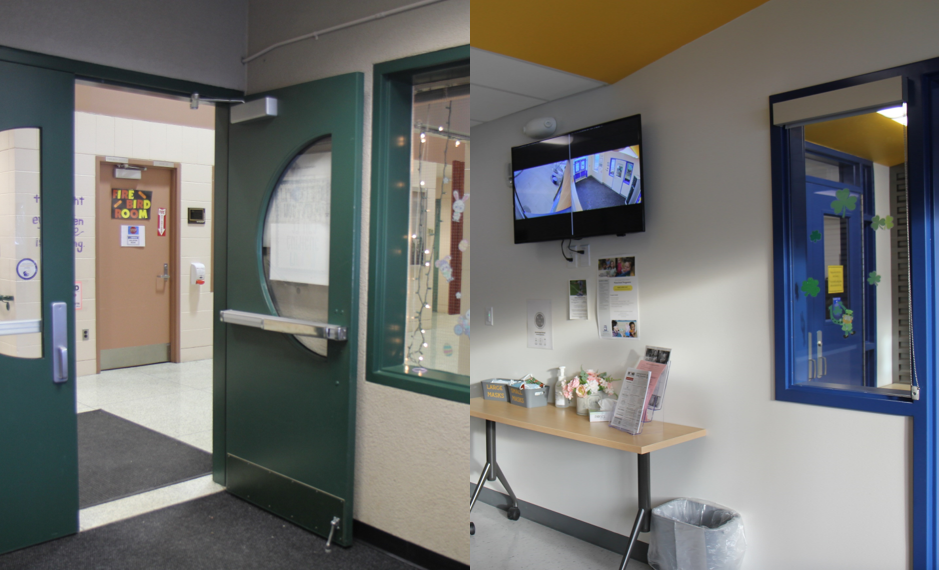
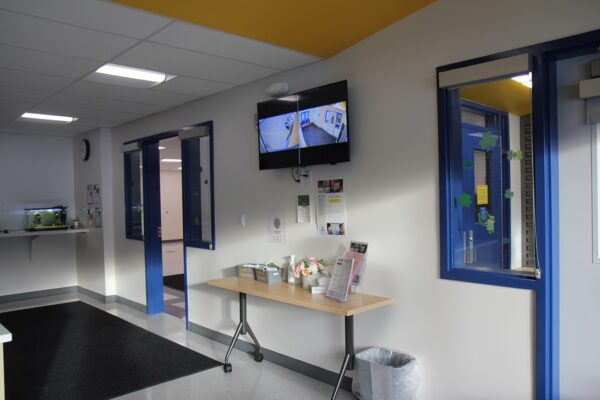
When Thomas Fenoseff walks up to the blue front doors of Eagle River Elementary College, he simply cannot wander suitable inside. As an alternative, he walks up to a digicam lens and presses a button.

The outer doorway opens up and potential customers into a modest home. Doors leading into the university are straight in advance, but they are locked. As a substitute, he has to go via a doorway to the remaining and walk into the workplace.

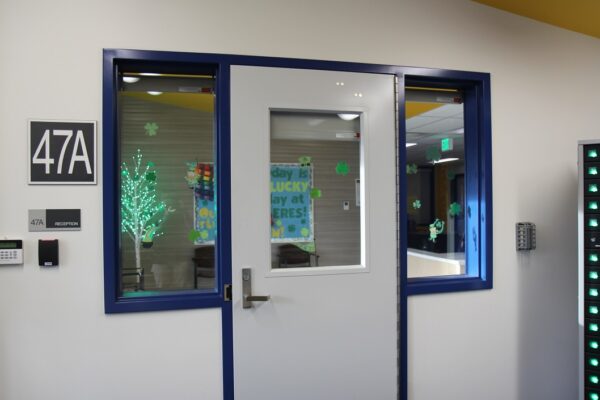
Personnel can see him the entire time, both by way of windows or on safety cameras. The school’s principal, personnel, and even district security can see the large-def stability footage at any time.

Guests should wander through the office environment and indication in right before moving into Eagle River Elementary University. (Katie Anastas/Alaska Community Media)

On this year’s ballot in the April municipal election, Anchorage voters will be requested no matter whether they support Proposition 1. The two-yr proposal would situation $111 million in bonds for the Anchorage Faculty District to assemble and renovate colleges.

The district has designed secure vestibules at 17 elementary educational facilities so significantly. At 1 of people colleges, Denali Montessori, a protected vestibule prevented a taking pictures victim from moving into the faculty just after a dispute in the parking large amount in 2018. This year’s bond would fund them for 12 much more educational facilities.

Fenoseff is the district’s senior director of cash planning and design, and he would like every elementary school in the district to have a vestibule like Eagle River Elementary’s.

“About 2018, when there was a rise in the selection of school shootings and lively shooter cases, we took a glimpse at how to tackle and make our universities safer,” he mentioned. “So we labored with nearby designers, we labored with APD, in developing crime prevention through environmental style benchmarks to implement to our educational institutions.”

Just one faculty on the record to get a safe vestibule is Hearth Lake Elementary University, just two miles absent from Eagle River Elementary. The school’s entrance already has some valuable options: there’s an intercom process outside the house the front door, and the principal’s office has a window future to the entrance. But the moment you’re as a result of the front door, there is no doorway to the front place of work. Rather, there’s an unlocked doorway leading to the relaxation of the school.

Hearth Lake Elementary School’s current entrance does not require guests to go by way of the place of work. (Katie Anastas/Alaska Public Media)

Fire Lake principal Daniel Salazar said he likes the idea of requiring site visitors to verify in.

“Right now, a parent or a visitor, if they get in — for illustration, somebody’s leaving and they pop in — they can walk appropriate down the corridor without definitely examining in,” he said. “To me, that’s the biggest benefit to getting the secure vestibule. They’ll have to examine in and walk via our front business right before getting into the rest of the constructing.”

Developing the 12 new vestibules would price tag $16 million of the $111 million bond. Fenoseff claimed person projects array from $250,000 to $2.5 million relying on the university. Some of the more mature educational facilities have their primary offices in the middle of the college, so going that to the entrance entrance of the university usually takes more work than modifying an existing front workplace like Hearth Lake’s.

Other tasks protected by the bond include roof replacements and other structural upgrades at 13 educational facilities. All those would cost $32 million. Fenoseff says replacing the roofs will help save the district income in the lengthy-run. The synthetic rubber material they use in the new roofs — termed ethylene propylene diene monomer, or EPDM — or enhances insulation and aids the district conserve on heating charges, he states. In addition, it’s much easier to repair.

“EPDM roofs can go by a course of action called restoration, where they can recoat what’s there, and you do not have to adjust nearly anything underneath — insulation, structural,” he claimed. “It’s about a 3rd of the price.”

If this year’s proposal passes, the district will not go after a bond in 2023.

[Sign up for Alaska Public Media’s daily newsletter to get our top stories delivered to your inbox.]

Iowa’s CSD to spend $115,784 in ESSER funds on physical education equipment, choral risers | Iowa

Iowa’s CSD to spend 5,784 in ESSER funds on physical education equipment, choral risers | Iowa

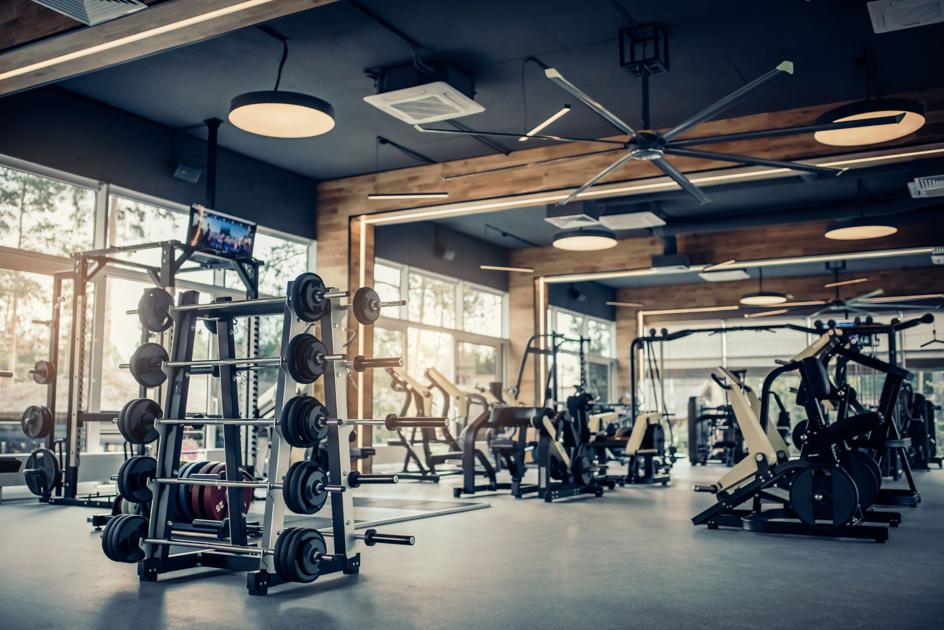
(The Heart Square) – Roland-Tale Community University District’s school board accepted the shelling out of $100,000 of federal Elementary and Secondary School Unexpected emergency Relief III cash on actual physical instruction products and new flooring in their superior school’s excess weight space.

“This use of funding is very well inside the rules founded by the federal govt, and our software for this particular expenditure was authorized by the Iowa Division of Training in late July,” Superintendent Matt Patton instructed The Heart Square in an emailed statement Oct. 8. “However, it is important to observe that the weight room expenditure was only a compact portion of the $1,126,651 in complete COVID-19 relief cash out there to our district.”

He reported the district, in Story Metropolis, Iowa, strategies to make the subsequent more expenditures:

•           PPE Materials, which include disposable masks, hand sanitizer, foggers, disinfecting materials, thermometers and band instrument handles: $71,365

•           Selecting of 1.5 extra special training teachers for 3 several years: $310,000

•           Complete-time contract with Youth & Shelter Companies for a psychological wellbeing therapist for two several years: $116,000

•           Selecting of an additional entire-time university nurse for two a long time: $134,760

•           Expansion of summertime school for K-12 college students for a few several years: $75,000

•           Order of 25 hotspots with regular monthly facts ideas for pupils learning remotely: $8,554

•           Invest in of expanded choral risers for vocal songs (with ESSER III money): $15,784

•           Masking expenditures similar to staff leaves of absence owing to COVID: $28,988

Patton claimed the college experienced obtain to $1,126,651 in overall COVID-19 aid resources, and it has about $275,000 remaining from federal money.

“Due to the specified goal and defined timelines, it’s achievable that we will not be equipped to utilize all of the remaining money,” he reported.

Iowa Department of Instruction Communications Director Heather Doe confirmed for The Center Square in an emailed assertion Oct. 11 the department authorised the requests.

“However, the Iowa Section of Education’s function in reviewing district expenditures for reimbursement via ESSER III is to make sure that the utilizes, as indicated by the district, are allowable works by using as outlined in federal legislation,” Doe reported. “Whether or not this is the greatest use of these cash is a community conclusion. If the district establishes this is a sensible use of these resources, the Office has no authority to deny these use unless of course the expenditure is surely unallowable.”

Under the Code of Federal Laws (CFR) §200.439, money expenses for “general reason devices, buildings, and land” and $5,000 or more for “special reason equipment” are permitted if school districts obtain prior created approval from the point out.

Doe claimed the university district’s ask for fell less than the classes of “Developing methods and utilizing community well being protocols including, to the finest extent practicable, guidelines in line with advice from the Facilities for Condition Command and Prevention for the reopening and procedure of school amenities to correctly retain the wellbeing and protection of college students, educators, and other staff” and “Other functions that are necessary to manage the procedure of and continuity of products and services in local academic businesses and continuing to employ present personnel of the neighborhood educational company.”

Iowa Senate Bulk Chief Sen. Jack Whitver (R-Ankeny) reported in an job interview Oct. 8 with Iowa Press that “spending federal stimulus bucks or pandemic income on sporting activities … does not look to be an ideal use.”

School districts must use funding from ESSER I (by way of Coronavirus Help, Relief, and Economic Stability Act) by September 2022, ESSER II (via Coronavirus Reaction and Relief Supplemental Appropriations Act) by September 2023, and ESSER III (American Rescue Program) by September 2024.

Districts can file for reimbursement of costs courting again to March 13, 2020. Any remaining funds will be returned to the U.S. Office of Schooling, Doe reported.

Iowa is necessary to allocate at minimum 90{e4f787673fbda589a16c4acddca5ba6fa1cbf0bc0eb53f36e5f8309f6ee846cf} of grant cash as subgrants to districts in proportion to every single faculty district’s Title I, Component A 2020-2021 faculty 12 months funding share, which is based on the percentage of small-revenue college students the district serves. University districts ascertain how and when to use their allocations. Their spending have to meet up with ESSER III specifications.

Doe mentioned the aspects on districts’ use of resources will become readily available when the division submits its once-a-year report to the U.S. Division of Schooling.

“We do not know a day still for submission of the report, but anticipate a due day in early 2022,” she said.

Iowa’s CSD to spend $115,784 in ESSER funds on physical education equipment, choral risers | National News

Iowa’s CSD to spend 5,784 in ESSER funds on physical education equipment, choral risers | National News

(The Heart Square) – Roland-Tale Neighborhood Faculty District’s university board permitted the shelling out of $100,000 of federal Elementary and Secondary University Emergency Aid III money on bodily instruction products and new flooring in their higher school’s weight area.

“This use of funding is well in the pointers proven by the federal government, and our application for this unique expenditure was accepted by the Iowa Department of Education in late July,” Superintendent Matt Patton informed The Centre Square in an emailed statement Oct. 8. “However, it is crucial to note that the excess weight home expenditure was only a tiny part of the $1,126,651 in total COVID-19 reduction money accessible to our district.”

He reported the district, in Story Town, Iowa, programs to make the pursuing additional expenditures:

•           PPE Supplies, together with disposable masks, hand sanitizer, foggers, disinfecting materials, thermometers and band instrument covers: $71,365

•           Employing of 1.5 extra unique education instructors for three many years: $310,000

•           Full-time contract with Youth & Shelter Services for a mental health therapist for two yrs: $116,000

•           Choosing of an extra total-time faculty nurse for two a long time: $134,760

•           Expansion of summer season faculty for K-12 learners for a few several years: $75,000

•           Order of 25 hotspots with regular data strategies for learners mastering remotely: $8,554

•           Acquire of expanded choral risers for vocal music (with ESSER III resources): $15,784

•           Masking fees linked to employee leaves of absence owing to COVID: $28,988

Patton claimed the faculty experienced entry to $1,126,651 in complete COVID-19 reduction cash, and it has about $275,000 remaining from federal resources.

“Due to the specified function and described timelines, it is achievable that we won’t be ready to make use of all of the remaining money,” he said.

Iowa Section of Training Communications Director Heather Doe verified for The Centre Square in an emailed statement Oct. 11 the department accredited the requests.

“However, the Iowa Section of Education’s role in examining district expenses for reimbursement through ESSER III is to assure that the takes advantage of, as indicated by the district, are allowable uses as outlined in federal legislation,” Doe stated. “Whether or not this is the best use of these money is a local final decision. If the district establishes this is a reasonable use of these money, the Division has no authority to deny these use unless the expenditure is undoubtedly unallowable.”

Underneath the Code of Federal Laws (CFR) §200.439, money expenses for “general objective machines, properties, and land” and $5,000 or extra for “special purpose equipment” are permitted if college districts get prior published acceptance from the condition.

Doe mentioned the college district’s ask for fell less than the categories of “Developing strategies and implementing public wellbeing protocols together with, to the best extent practicable, insurance policies in line with advice from the Centers for Ailment Command and Prevention for the reopening and procedure of faculty facilities to proficiently maintain the wellness and security of pupils, educators, and other staff” and “Other activities that are essential to preserve the procedure of and continuity of companies in nearby academic companies and continuing to make use of present team of the community instructional agency.”

Iowa Senate Majority Leader Sen. Jack Whitver (R-Ankeny) claimed in an interview Oct. 8 with Iowa Press that “spending federal stimulus pounds or pandemic cash on sporting activities … doesn’t feel to be an appropriate use.”

School districts must use funding from ESSER I (by Coronavirus Aid, Relief, and Financial Stability Act) by September 2022, ESSER II (as a result of Coronavirus Response and Aid Supplemental Appropriations Act) by September 2023, and ESSER III (American Rescue Approach) by September 2024.

Districts can file for reimbursement of bills dating back to March 13, 2020. Any remaining money will be returned to the U.S. Division of Schooling, Doe explained.

Iowa is required to allocate at the very least 90{e4f787673fbda589a16c4acddca5ba6fa1cbf0bc0eb53f36e5f8309f6ee846cf} of grant resources as subgrants to districts in proportion to each individual college district’s Title I, Portion A 2020-2021 college year funding share, which is based mostly on the proportion of minimal-cash flow learners the district serves. University districts figure out how and when to use their allocations. Their spending will have to meet up with ESSER III needs.

Doe reported the information on districts’ use of cash will come to be obtainable when the office submits its yearly report to the U.S. Office of Schooling.

“We do not know a day nonetheless for submission of the report, but foresee a owing date in early 2022,” she said.