
When home is school: A lobbying group’s state-by-state fight against oversight

When home is school: A lobbying group’s state-by-state fight against oversight

This story was produced by Mary Steffenhagen, Harry Parker, Griffin Kelly, Sophia Lebowitz and Keith Paul Medelis for the NYCity News Service at the Newmark Graduate School of Journalism at CUNY. For the full report, go here.

More American families than ever educated their children at home during the pandemic, a trend that has continued for many households even after schools reopened. About one in 10 families were homeschooling near the start of the 2020-2021 school year, the latest available federal statistics show.

For businesses, this growing market is lucrative, valued at perhaps $2.5 billion. Many firms are lining up to sell textbooks and everything from bowling alleys to inflatable bouncy houses.

Home schooling is growing faster in certain states and among particular demographic groups. But there’s a lack of reliable research on how home schooled children are faring. Among the blind spots: Fewer than half the states even require educational assessments of home schooled students. And attempts to require criminal background checks for home schooling parents have failed in at least 12 states. 

This rapid expansion is also raising more troubling concerns, with battles over government oversight and individual cases of child abuse unfolding in courtrooms and legislatures across the country.

At the center of these debates is a little-known, relatively small lobbying group with evangelical Christian roots, the Home School Legal Defense Association, whose outsized influence has been shifting public policy for decades.

The group has provided legal advice for parents of children in cases of suspected abuse and has fought some child-protection efforts as government overreach.

The NYCity News Service analyzed hundreds of court cases across the country, combed through lobbying and financial filings, and documented the patchwork of state-by-state home schooling regulations.

Among the findings:

  • Courts across the country are grappling with how to protect children from abuse while HSLDA attorneys have been challenging many aspects of enforcement — even when authorities said they had reasonable cause to be concerned about the safety of children.
  • HSLDA’s lobbying efforts extend far beyond education, claiming government oversight limits parents’ rights and religious freedom. A West Virginia lawmaker who proposed a bill to protect children at risk of abuse later said he never dreamed of the backlash he would face.
  • HSLDA’s legal efforts encompass more than how children are taught, including actions contesting enforcement of an international chemical-weapons treaty and challenging how the military court-martials soldiers.
  • HSLDA’s mission taps into a broader culture war over politics and religion. In our Home Ed podcast, listeners hear from a 30-year-old woman who was homeschooled as she recounts how that mission shaped her family’s life.

A powerful advocate for homeschooling lobbies against vaccine rules, other oversight

By Harry Parker and Mary Steffenhagen

A driving force behind America’s rise in home schooling is the Home School Legal Defense Association, a little-known group that lobbies across the country to ease government restrictions and oversight.

The Virginia-based group, almost four decades old with deep evangelical roots, vigilantly tracks legislation on homeschooling. Its work has spurred families to flood legislators’ phone lines, sparked rallies on Capitol Hill and pushed its causes through social media to spur supporters.

The HSLDA is “the most powerful legal and political advocate for homeschooling,” attorney Timothy B. Waddell wrote in a Vanderbilt Law Review analysis of the rise in homeschooling and lobbying by its proponents.

An examination by the NYCity News Service of public filings and other documents shows the organization, while combating rules on homeschooling, simultaneously presses legislatures on issues that have seemingly nothing to do with homeschooling.

In the past year alone, it has been fighting vaccination requirements and opposing a national child abuse registry—both in the name of defending parental rights.

A screenshot from the HSLDA website opposing a national child abuse registry.

How the HSLDA rallied supporters to oppose a national child abuse registry. (HSLDA website)

Two recent lobbying efforts underscore the ways the HSLDA fights to give parents more say in educating their children.

It has fought a California proposal mandating kindergarten, contending parents should have the choice of when to start children’s schooling.

And when the pandemic began in 2020, HSLDA spotted a proposed Ohio law that a “qualifying parent” would determine if a homeschooled child was in a building that addresses COVID-19 safety concerns. The group was concerned the phrase could be interpreted to limit decisions by any parent homeschooling their child. The group deemed the provision “unnecessary and confusing” and launched a campaign to erase it. The bill did not get out of committee.

Jim Mason, HSLDA’s president, told the News Service his group is a typical lobbying organization using standard approaches. (Mason was HSLDA’s vice president of litigation and development at the time of this conversation.)

“We write, and we speak, and we travel, and we talk, and we hold rallies and we give speeches  and homeschool families go to Capitol days. and deliver apple pie to the legislators to kind of get acquainted,” he said.

But there are a range of issues it lobbies on that are not about homeschooling.

Lobbying around immunization

Last year, the HSLDA fought a proposed Colorado rule that would require homeschooling parents to file immunization records with school boards, calling such documentation “unnecessary bureaucracy.”

That is not the only time it has fought immunization regulations. It opposed a Washington, D.C., immunization law enacted during the pandemic allowing children as young as 11 to decide with their doctors, and not their parents, if they wish to get government-approved vaccinations. HSLDA and other groups argue parents should have a say in whether their children get immunizations.

In addition, HSLDA opposed proposed congressional reauthorization last year of a federal child abuse prevention law, and seeking changes in the National Child Abuse Registry, the database of suspected or convicted abusers.

It favored a Michigan bill that would have exempted homeschooled children from needing work permits when seeking jobs during the school year. HSLDA said current rules require “homeschooled parents to trudge down to the local school office” needlessly. The proposal was vetoed by the governor.

“It’s just an ideological thing,” Mason said of HSLDA’s support of causes outside homeschooling. “I mean, we are more in favor of liberty and a permissive approach to child rearing and education as opposed to a kind of top-down, compliance-based model.”

Scott Somerville, a former HSLDA attorney who remains a supporter and has written about the organization’s growth, said its lobbying efforts on political issues beyond homeschooling regulations are an outgrowth of its members’ concerns.

A map of the US that shows states with pertinent laws to search.

Screenshot from HSLDA’s Legislative Action Center, from earlier this year.

“If there’s legislation that’s going to create a whole lot of new dumb stuff, I’m going to oppose it,” he said. “And if there’s legislation that’s going to make dumb stuff go away, I’ll support it,” Somerville told the News Service.

Somerville said one of the keys to understanding HSLDA is its evangelical Christian roots,

“It’s a religious organization,” said Somerville. “But the mission of HSLDA is to defend the right of every parent, not just Christian parents,”

“God gave parents rights,” he said. “Because we’re Christians, we believe in God. And because we’re Christians, we believe in those rights. And because we’re Christians, we’re gonna defend those rights.”

A central belief is protecting family privacy from what HSLDA sees as unneeded government regulation.

“We’re just simply sort of standing there, like the knob on the door, that keeps [the world] from busting in and interrupting what the family’s doing,” he said.

Jeremy Young, the then interim executive director of the Coalition for Responsible Home Education, which often opposes HSLDA on homeschool regulations, sees the efforts differently.

“There is a pervasive sense that anything that strengthens the hand of social services, [or] of child protective services in any way, is a slippery slope toward banning homeschooling and taking rights away from parents,” he said.

Raising Its Money

To finance its political lobbying efforts, HSLDA solicits money from homeschooling families and others by promising to help “overcome discrimination—in the courts, the legislatures, and public and private sectors—and by promoting the success of homeschooling in the court of public opinion.”

The HSLDA has more than 100,000 members, charging a $130 yearly fee. Their most recent publicly available tax documents show expenses totaling $12.9 million.

HSLDA also has a related political action committee that has supported several U.S. Senate candidates recently, spending a total of more than $300,000.

Federal Election Commission records show HSLDA Action supported unsuccessful Senate campaigns by spending $157,148 to help John James in Michigan and $39,915 for aiding Kelly Loeffler’s bid in Georgia. It also spent $135,589 to help the campaign of Thom Tillis in North Carolina, who won. All are Republicans.

The spending was in large part to bring volunteers to those states for door-to-door canvassing and support. HSLDA flew in volunteers on Delta, United, American and Southwest airlines.

When they were on the ground, there was spending for rental cars, gas, food and supplies. Receipts were billed for Chipotle, Dominos, Walmart, Walgreens, Einstein Bagel Co., Hobby Lobby and more.

FEC records detailing HSLDA Action spending on volunteers for John James campaign. (Federal Election Commission site, Jan. 18, 2022)

FEC records detailing HSLDA Action spending on volunteers for John James campaign. (Federal Election Commission site, Jan. 18, 2022)

Federal Election Commission

Funding for the political action committee came overwhelmingly from another evangelical conservative political organization, the Family Research Council, which contributed $513,520 in late October 2020, just before the November national elections.

Sometimes HSLDA’s lobbying can be small-bore. In New Hampshire, HSLDA spent $270 in 2018 for a dinner and an event that included a legislator who is an ardent supporter of homeschooling.

To some critics HSLDA’s methods are overly aggressive.

“They’re using terrifying tactics,” said Elizabeth Bartholet, a professor at Harvard Law School. “The moment a bill is put on the table HSLDA is going to call its membership in that state, and that legislator’s going to have his office flooded or her office flooded. They’re going to have hundreds of emails, they’re going to have hundreds of telephone calls. Pretty much what’s happened is the legislators just say, ‘It’s not worth it.’ ”

Bartholet said HSLDA exaggerates the scope of those it represents and in reality is lobbying on behalf of a small slice of homeschoolers.

HSLDA, which has previously clashed with Bartholet, discounts claims that its lobbying is unusual. 

“I kind of laugh when I read those sorts of things,” says Mason of the criticism. “Because I know what we actually do, and we’re just kind of like regular…we do just kind of regular advocacy. You know, through lawful means.”

Other opponents don’t see HSLDA’s approach as aggressive, just successful. 

“I think they’re just doing politics very well,” says Young of the Coalition for Responsible Home Education. “The idea of mobilizing parents, homemakers, to advocate with legislators in large numbers with state legislators, many of whom don’t receive a lot of advocacy over time. That’s not new, it’s just being used very effectively. They’re bringing a very big gun to bear in a very small, with a very small target.”

National and international reach

HSLDA has also engaged in international efforts promoting homeschooling.

The organization filed an asylum application with the U.S. government to grant refugee status for a German family that wanted to homeschool their children but was prevented by rules in their native country. The effort was successful. It has pushed the Brazilian government of Jair Bolsonaro to foster homeschooling.

The U.S. State Department tells its diplomats and other employees that HSLDA is a resource if they are considering homeschooling their children overseas and want to further understand laws abroad.

State Department online resources for overseas employees include links to HSLDA. (State Department website)

State Department online resources for overseas employees include links to HSLDA. (State Department website)

There are other groups that promote lobbying, including independent organizations that may work with HSLDA on key issues.

In Texas, the Texas Home School Coalition has become a prominent HSLDA ally and become integral in a state where Republican elected officials are dominant.

Jason Sabo, a progressive lobbyist in the state’s capital of Austin, has witnessed how HSLDA and others have worked to persuade state legislators. He said they match better financed groups with grassroots energy.

“When it comes to lobbying, these groups like the HSLDA or Texas Home School Coalition, their power doesn’t come so much from the immediate money, but from just all of their supporters that are so impassioned,” Sabo said. “That’s where the power comes from. The lobby money is inconsequential.”

“You physically cannot walk around the Capitol building without basically being accosted by an incredibly polite, incredibly, well spoken, young men and young women–homeschool kids who will come up to you and say, ‘Excuse me, what do you do? Who are you? Why are you in the building?’” says Sabo. “They start off when kids are like 13 or 14, and they inculcate them to politics and to retail lobby.”

In West Virginia, HSLDA lobbied with a state ally, Christian Home Educators of West Virginia against a proposed law restricting suspected child abusers from homeschooling children.

The bill was proposed by Shawn Fluharty, a Democratic state lawmaker, after an 8-year-old girl was killed by a father who was under investigation by child protective services. The legislation would prevent a parent from beginning to homeschool a child if there the subject of an open investigation or if they had a child abuse conviction.

“I thought, well, the easy fix, right?” Fluharty said. “It’s really something that could have a drastic impact for the positive.”

Fluharty was surprised by the opposition.

“I thought it was a non-issue.”

Griffin Kelly and Keith Paul Medelis contributed to this story.
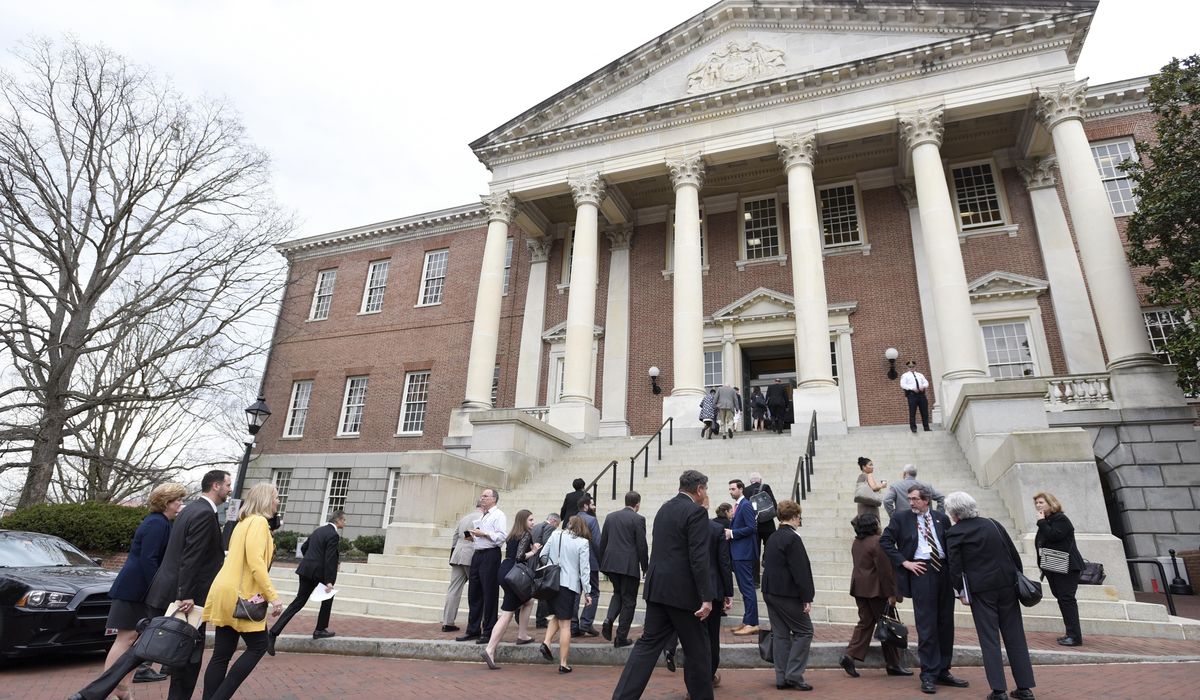
Maryland home-schoolers fight bill that would ‘gather information’ on them

Maryland home-schoolers fight bill that would ‘gather information’ on them

Maryland home-schoolers anxious about governing administration overreach are combating a proposal in the point out legislature that would build an advisory council to “gather information” on them.

Dan Beasley, an legal professional for the Property University Authorized Protection Affiliation that signifies 1,500 member people in Maryland, will testify March 3 on their behalf at a hearing about the invoice, H.B. 832.

“The development of a dwelling-faculty advisory council in the Maryland Department of Training is avoidable and provides a risk to liberty,” Mr. Beasley explained. “Home schooling is a grassroots motion that has thrived mainly because mother and father are empowered with freedom to deliver a personalized-tailor-made education for their small children.”

The monthly bill would set up the Maryland Homeschool Advisory Council in the Condition Office of Schooling “to gather data on the requirements of property-faculty mothers and fathers and homeschool umbrella educational institutions and advise the State Superintendent of Educational institutions, the Condition Board of Schooling, the General Assembly, and the Governor on issues relating to dwelling education and normally relating to the Maryland Homeschool Advisory Council.”

Delegate Sheila Ruth, a Democrat who signifies Baltimore County, launched H.B. 832 in the Democrat-controlled Maryland Property of Delegates on Feb. 3.

Ms. Ruth did not react Monday to a ask for for comment. But in a doc responding to concerns about the monthly bill posted on her web site, she stresses that the council would have no oversight authority in excess of homeschooling mother and father.

“It would simply just act as a liaison among the homeschool neighborhood and the Maryland Point out Department of Schooling,” Ms. Ruth claims in the assertion. “It would not set any demands on house-college moms and dads. You would nonetheless be cost-free to educate your youngsters as you currently are, in accordance to your private beliefs and house-education solutions.”

The delegate provides that she options to improve the phrase “gather information” to “conduct surveys” in the monthly bill, heading off any privateness issues.

Surveys will mainly search for to identify no matter if household-schooled youngsters really should take part in condition-sponsored athletics, qualify for scholarship specifications and supply “simple clarifying guidance” to counties about how to do the job with homeschoolers, she included.

But Delegate Daniel L. Cox, a Republican who signifies components of Frederick and Carroll counties, stated in a testimonial letter that the bill’s proponents signify only “approximately .001{e4f787673fbda589a16c4acddca5ba6fa1cbf0bc0eb53f36e5f8309f6ee846cf} of the Maryland homeschool neighborhood.”

“The large the greater part of the hundreds in the Maryland homeschool neighborhood are bipartisan moms and dads who just want a quality instruction for their kids without having oppressive state interference,” wrote Mr. Cox, a gubernatorial candidate. “H.B. 832 will entangle the condition, in partnership with aggressive actors, to interfere with and ‘gather information on’ households and applications, and ‘report’ to the State.”

Joel Fischer, administrator of the K-12 residence-schooling academy Wellspring Christian Family Universities in Sabillasville, claimed the state presently has “broad channels” to communicate with homeschoolers that make a condition advisory council pointless.

“Our most significant problem about Maryland’s H.B. 832 is that whilst it is purported to give a larger voice to the property-education group in Maryland, it will do just the reverse,” explained Mr. Fischer, an lawyer. “Maryland dwelling-education households currently have many channels to express their needs and or concerns.”

He stated those people channels involve the area board of instruction residence-school liaisons in just about every university district, who routinely preserve in touch with property-schooling people and property-university umbrellas many condition and local homeschool umbrellas like Wellspring that provide various communities of residence-schooling people and immediate accessibility to elected officers who can voice the issues of residence-education constituents anytime necessary.

Maryland legislation at this time gives two main choices for home education: Mother and father could home-college specifically less than the supervision of the nearby board of education and learning or they enroll beneath the supervision of a nonpublic academic institution, such as dwelling-school umbrellas like Wellspring.

Mr. Fischer and his spouse Mikaela, a tunes instructor, reported they have lived in Frederick for the final 10 years and are currently property-schooling a preschooler and 1st-grader. He said moms and dads in his group oppose the new bill due to the fact they like advocating for them selves alternatively than dealing with state officers.

“By transferring that advocacy to a principally political, point out-level entity, the voice of household-education people would be diminished from a wide, grassroots local community, to a slender, bureaucratic overall body that will primarily provide as a rubber stamp for the majority get together in electricity,” Mr. Fischer said.

The new advisory council would be comprised typically but not entirely of household-education mother and father, according to H.B. 832.

Other users of the council would include things like one representative from the Maryland Point out Office of Instruction, just one from the Maryland Greater Education Commission and two house-school liaisons from county departments of instruction picked from amongst the state’s 24 counties.

The monthly bill has been assigned to the House’s Techniques and Means Committee for even further work prior to it can attain the flooring for a vote, but whether or not it passes may ultimately depend on which occasion wins the Nov. 8 election to change expression-constrained Republican Gov. Larry Hogan.

Mr. Hogan, who not long ago identified household-schoolers by proclaiming Jan. 23-29 to be Maryland University Option Week, has yet diverged at times from his party’s legislative priorities.

“School choice is about supplying every relatives the chance to put together their little ones for a improved future,” Mr. Hogan said in his Jan. 20 proclamation, touting the millions of bucks in scholarship income his administration has supplied to families for choices to general public schooling.

While the household-schoolers are lobbying Republican politicians to pledge opposition to the bill, point out Democrats assistance it.

Michelle C. Williams, administrative director of the Abrahams Covenant Instruction Companies dwelling-education umbrella in Charles County, claimed she hopes the invoice does not achieve the following governor.

“Home-schoolers want other household-schoolers to be thriving,” mentioned Ms. Williams, who home-schools 6 of her young children. “I’m opposing the invoice mainly because I already stand for the condition of Maryland in a residence-schooling cooperative, for each the mandates we previously have in put as a supervising entity, and this bill wishes to govern what we by now have the authority to determine.”

Correction: A former version of this tale misstated the quality of a scholar house-schooled by Mr. Fischer and his spouse Mikaela.

CPS puts up vigorous court fight over disabled student’s claim he was sexually assaulted in 2016

CPS puts up vigorous court fight over disabled student’s claim he was sexually assaulted in 2016

Three a long time just after findings of common mishandling of sexual abuse rocked the faculty district and prompted a federal investigation, Chicago Community Educational facilities lawyers are in court docket aggressively combating a particular instruction university student who documented being raped, inquiring a choose to rule in its favor in a lawsuit in advance of a trial afterwards this thirty day period.

In court filings as new as mid-January, officers have attacked the student’s testimony as “self-serving” and forged uncertainties as to no matter whether an assault, allegedly committed by a classmate in a faculty toilet, experienced even happened. The district has probed whether the incident was consensual and if the student’s mothers and fathers experienced informed him it was undesirable to be gay.

The 2017 grievance in opposition to the Board of Training, filed on behalf of a college student and his mothers and fathers who selected to be unnamed to defend their privacy, centers on a documented 2016 sexual assault in a toilet at Bogan Computer Complex High University on the Southwest Side. The facts of the circumstance were being very first documented in the Chicago Tribune’s “Betrayed” series that uncovered system-extensive predatory habits in Chicago faculties.

The scenario is in courtroom Tuesday at the Daley Centre for arguments on the district’s ask for for Choose Lorna Propes to grant summary judgement forward of a Feb. 17 demo.

“We had been anticipating it to be about a great deal faster than this. It’s been a extensive time,” reported the student’s mom, talking to the Sunshine-Instances on the affliction she and her son not be recognized.

“They dropped the ball. And now they are seeking to blame him mainly because they cannot just accept that they did this, and this took place underneath their look at.”

The Board of Education has denied fault in its courtroom filings and argued the family’s legal professional has unsuccessful to make a case but fairly relied on “provocative rhetoric, unsupported arguments, conflated details, and speculative conclusions to sway notice from the legal guidelines.”

The two boys, the two with intellectual disabilities, had been 15 at the time of the incident. A single was much more substantial than the other and had a documented historical past of verbal, bodily and sexual aggression — a calendar year and a half earlier, at his elementary faculty, the larger sized boy was located in a toilet stall guiding another boy who was bent more than with his pants down. That was a person of at the very least 27 student code of conduct violations in his file, according to the lawsuit, which explained university workers decided the incident occurred in section for the reason that the college student did not have an aide.

In the early 2016 incident, the two boys ended up unsupervised in a Bogan rest room when the burlier pupil took his peer into a stall and sexually assaulted him, the lawsuit stated. The same occurred when additional that spring.

At the core of the complaint versus the university district is that equally students’ Individualized Instruction Options — documents that lay out federally mandated products and services based mostly on each individual unique instruction student’s one of a kind requires — termed for complete-time supervision by a instructor or aide. The smaller college student, whose disability stops him from recognizing risky predicaments, testified he was often allowed to wander to the bathroom without having an aide.

The district has disputed that declare, contacting his testimony “self-serving” due to the fact officials discovered no evidence to definitively say he went to the toilet with no an aide.

“It’s unwell,” his mom stated of the district’s characterization. “He desires to not don’t forget any of it. … He does not even know what self-serving indicates.”

The assault “took a lot of his have faith in absent from him, he’s additional anxious,” she mentioned. “It took a ton of his good attributes.”

In addition to putting in-home legal professional Mara Warman on the case, CPS has hired non-public lawyer Elizabeth Grover of the Nielsen, Zehe & Antas agency, a move normally created when the district strategies to aggressively defend alone in courtroom.

In early 2019, a choose barred CPS lawyers from asking the student about his sexual historical past. But they went on to check with if he believed it was poor to be gay, and if anyone such as his mother and father had explained to him so, in accordance to his family’s law firm.

“They’re seeking to make it all on him,” the student’s mother mentioned, introducing she never did or would tell her son it would be a challenge if he was gay. “No regard at all he’s sitting down suitable here and you’re indicating all this, and we’re sitting down in this article and you’re saying this, to make us truly feel like we did some thing wrong. It was just horrible and it was just disgusting to have to sit there by all that.

“They were leaping all over to various good reasons without just acknowledging, ‘We weren’t looking at him.’”

CPS doesn’t accept assault took put

In its filings, CPS has not acknowledged an assault occurred. Even if there was an attack, the district has argued its personnel didn’t bring about any accidents and did not fail to enforce any regulations, crafting “CPS did not owe plaintiffs a duty to guard versus unforeseen third-get together felony attacks.” Most central to its protection is its declare that there is no evidence, other than the boy’s testimony, that aides did not supervise the two college students. CPS also argued the faculty did not have a obligation to supervise the children within the bathroom.

The district has questioned the judge to grant its ask for for summary judgement for people causes, also citing the Tort Immunity Act, which safeguards public bodies from selected lawsuits — however not from accidents on federal government home when general public staff were reckless.

“Publicly, the Board of Training in the information and to the standard community has stated that they are attempting to suitable prior wrongs and that they are attempting to assistance victims,” explained the family’s lawyer, Carolyn Daley. “At the very same time, in the courtroom method, the Board of Education and learning routinely hires outside counsel to appear in and litigate these cases and protect these cases tougher than ever.”

Daley, who also serves as the president of Specific Olympics Chicago, is representing one more student’s loved ones in a almost similar case: A further boy in Bogan’s exclusive education and learning software described remaining raped in February 2017 in a college bathroom by the similar classmate who allegedly assaulted the scholar in this case. In the eight months ahead of the 2nd boy was attacked, faculty directors made no variations to protect peers from the aggressive college student, the lawsuit alleges.

In the case which is in court docket this thirty day period, Daley reported the boy gave consistent particulars in interviews with college workers, boy or girl advocates and Chicago law enforcement detectives who ended up investigating the situation, nevertheless the district doesn’t consider him.

1 of these interviews was with Bogan Principal Alahrie Aziz-Sims the day just after he described the assault. In a conference with his mother and father and a pair other directors, the principal directed the pupil to stand up and demonstrate how the attack took place and questioned regardless of whether it damage, the lawsuit said.

Aziz-Sims is continue to the principal at Bogan. The student’s mother explained it “makes me sick” each time she drives past the college and sees the principal’s title on a indicator outdoors the building. “Just to think she’s still there and going alongside like absolutely nothing took place. She should not be there,” the mother mentioned.

Bogan Principal Alahrie Aziz-Sims

Bogan Principal Alahrie Aziz-Sims
Chicago Public Faculties

CPS spokeswoman Mary Fergus declined to remedy inquiries, citing pending litigation. Aziz-Sims also didn’t remark for the same explanation. It is unclear no matter if Aziz-Sims ever faced self-discipline or been given added training.

Daley mentioned CPS has not made a “good religion effort” to settle the lawsuit, providing in early 2020 to pay very well down below the family’s monetary desire.

The lawsuit claimed law enforcement identified evidence adequate to cost the other university student with a criminal offense, but the dad and mom of the boy who reported the attack declined to press costs because they felt the other student desired assistance, not incarceration. Chicago police documents present the case was investigated but an arrest was not designed.

“I know that he’s the a single who did it, but I never imagine he knew any far better,” the mother claimed. “We did not want to see him in jail. We required to see him get help. He’s in the exact same boat with [my son]. And [the district is] there to supposedly help them and enjoy them. … They are the terrible male.”