This is an edition of Up for Debate, a newsletter by Conor Friedersdorf. On Wednesdays, he rounds up timely conversations and solicits reader responses to one thought-provoking question. Later, he publishes some thoughtful replies. Sign up for the newsletter here.
Last week, I asked readers, “What are your thoughts … about weight gain, the weight-loss industry, diet, exercise, beauty standards, diabetes, medical treatments for obesity, or anything related?”
Vera writes that “the weight-loss industry has ruined my life.” She explains:
If I had never gone on that first diet, I’d be a slightly chubby, slightly more-than-middle-aged, comfortable-in-my-skin woman. Instead, I’m a fat old lady. I’m not talking about broken promises or wasted money. It’s worse. With every fad diet or “sensible eating plan,” I had a net weight gain of 20 or so pounds and a drop in self-confidence and joy.
Everyone knows diets don’t work—except for 15-year-old me. She thought if she was just “good” and had willpower, she’d be thin and lovable in no time.
Joe is a doctor who regularly encounters patients who want to treat their weight with pharmaceuticals:
In my training days I fell victim to the common misperception that weight loss is a matter of simple thermodynamics: fewer calories consumed + more calories expended = healthier you! This is reductionistic. The scale of the problem is immense, and obesity, like many of the pathological conditions we encounter in medicine, is complex and multifaceted. It ought rightly to be considered a chronic disease, no different from hypertension or type 2 diabetes, rather than a character flaw worthy of scorn.
Obesity represents neither a failure of the will nor a lack of self-discipline, but a societal-level problem that will require societal-level restructuring to mitigate. Virtually all of my obese patients are highly committed to weight loss—absence of motivation is NOT the issue—but they invariably become frustrated when the age-old “eat less, exercise more” bromide produces no result.
Many Americans’ relationship with food is, shall we say, “complicated.” Food insecurity abounds. Healthy meal planning requires time, forethought, practice, stable income, and genuine effort—inputs that are not always in abundant supply in our frenetic lives. Add the near-universal availability of cheap, highly processed, shelf-stable, calorie-dense, nutrient-poor food, and you’ve all the ingredients necessary to trigger a metabolic catastrophe.
Exercise, too, requires time, which too often is in short supply. I counsel my patients that any amount of bodily movement constitutes exercise, but our reliance upon technology to work, communicate, and recreate keeps us in sedentary states for more hours of the day than ever. Zoning laws in many jurisdictions render communities unwalkable. Transit infrastructure, too, has long favored the automobile over all other modes, such that even those who would be inclined to walk or bike do so at their peril. Cumulative exercise declines, and weight gain ensues.
Lastly, consider persistent gaps in health-insurance coverage, lack of paid sick leave, inadequate workplace parental accommodations, the unaffordability of child care and education at all levels, a dearth of affordable housing units, etc. Is it any wonder that many of us feel bereft?
When one must work more for less, little remains to reinforce those “pillars of wellness”—i.e., healthy diet, regular exercise, adequate sleep, and effective stress management—that might free us from the obesity shackles.
There are no easy answers here, and drugs like Wegovy/Ozempic are certainly not a panacea, but they do offer a measure of hope to patients looking to reassert some control over their lives. That is no small achievement. Convoluted insurance-coverage restrictions for these pharmaceuticals are a separate matter altogether and a topic worthy of further discussion, to be sure. For now, though, I’ll do what I can to improve the lives of my patients in the here and now while the noble fight for a healthier, more equitable, and more sustainable future continues.
Daniel would love to take a drug that reduces his appetite:
I’ve been heavy my whole life, pretty much from the get-go. Nevertheless, I’ve had few interactions with the weight-loss industry, except that I did the Atkins thing back in the day. That was always handy for beating back a few pounds. I was never altogether that worried about my weight; I’ve always had a reasonably active lifestyle with hiking, hunting, bicycling. Never “exercise,” just things I liked to do.
In the past decade, though, things have gotten away from me. Getting older, the confines of city living, a sedentary job, and sedentary hobbies have all contributed. My weight has crept up until it’s significantly impacted my quality of life. It’s harder to do the things I’ve always enjoyed. I’ve got kids whom I have to keep up with and clean up after, and it’s just getting harder all the time.
It was easier to diet when I was a single man. Now I have to cook for my kids, and they’re not going to eat low-carb and such. I don’t have the time for fixing two meals, and who can say no to mac and cheese when it’s right there?! And I made it myself, so I know it’s good.
The doctors all want to hack a length of my guts out, which seems like a terrible idea. I respect their expertise, of course, but it just seems too extreme a thing to do when I am otherwise healthy as an ox. My heart’s good, blood pressure’s fine, cholesterol and blood sugar are fine. I’ve seen what it’s done to some other folks of my acquaintance, and while it has made them slimmer, it’s caused some issues too. I don’t love the trade-off.
Long story short, I’d love to take a drug that reduces my appetite. I suppose I should indulge in all the self-flagellation that we fat people are supposed to engage in, that I should diet and have self-control. But I know who I am. I don’t apologize for enjoying a good hearty meal. It’s bliss.
Also, I am a man whose work as a librarian requires that I be helpful and friendly all the time, and I struggle with being friendly when I’m hungry. Who doesn’t? A jolly fat man is great for customer service. A grouchy thin one? Not so much.
But I’m told that I have to go through a whole bunch of hoops to get my insurance to pay for weight-loss drugs, and frankly I don’t have the time for all that. I’d pay out of pocket, but they’re not available at a price point I can afford. Perhaps their cost will come down a bit over time. Until then, I’ll just have to figure out the diet and exercise thing. I’ve done it before. It’s just harder now that I have a family and a full-time job and am a tired middle-aged man.
Judith does take the drug Ozempic for the purpose of weight loss:
I have struggled with my weight since childhood. During my 40 active working years, through deprivation and 24/7 vigilance, I managed to stay below obese on the body-mass-index scale. Retirement and pandemic isolation destroyed my years of “success.” Recently my doctor suggested Ozempic. For me, it is nothing short of a miracle. I eat what I want in small quantities and food does not “call to me” as it used to. I hope I can be on it for the rest of my life.
Carrie urges movement:
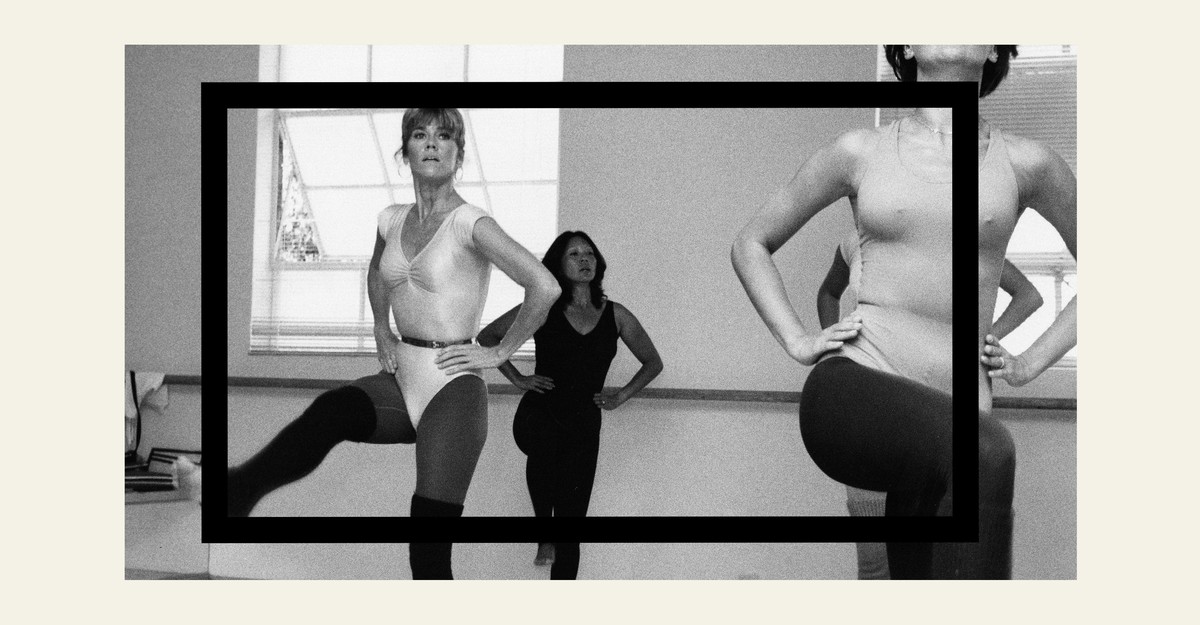
As a 58-year-old woman, I have reached the conclusion that movement is the most important thing we can do to be healthy, followed by a diet of fresh, unprocessed food. I started exercising in junior high as a basketball player, and by the end of high school, I knew what it meant to be really fit. In college I discovered the Jane Fonda workouts, then other video workouts from people like Kathy Smith.
I’ve tried so many different kinds of movement—step aerobics, dancing for exercise, walking, hiking, Zumba, yoga and Bar Method (the hardest thing I’ve ever done, btw). You can say I’ve tried just about every type of exercise! And I’ve loved it all.
I don’t see these kinds of things as promoting poor body image or being about weight as much as about strength, energy, flexibility, and overall good health. There are many ways to exercise, and its purpose is not just to keep ourselves slim; exercise is necessary for us to live well, feel good, and be productive. Sadly, we don’t teach that in school.
There are so many different paths to being healthy, and movement is not just for people who love or play sports. It’s sad how in elementary school we are already focusing the kids on learning skills for sports. We should be teaching them how to move—because while not everyone is interested in sports, we all need to move regularly.
Kelly moves but is still overweight:
I’m 61 and have been on the weight-loss roller coaster most of my life. The only time I was able to lose weight and keep it off was when I was single. Because of the American obsession with thin, thin, thin, I have struggled with self-esteem issues forever, to the point where people were telling me I was getting too skinny. I couldn’t see it myself. I had periods of making myself throw up, but that never became a habit.
I’m overweight now, but I’m not obsessing about losing weight. I eat mostly healthy foods, I walk my dog a lot, and I try not to care too much about how people see me. Ozempic is not for me. I’d rather be overweight than dependent on still more chemicals and supporting Big Pharma.
Kevin worries about understating the health risks of obesity:
Some years ago, Serena Williams appeared in the Sports Illustrated swimsuit issue. Clearly, Serena had a different body type than the rail-thin models who adorned the other pages. But it was equally clear that she was fit, athletic, healthy. I thought this was a reasonable challenge to the conventional beauty standard.
Unfortunately, these days, nothing is kept in reasonable proportion. Now we see a once-overweight singer get criticized for losing weight. We hear an absurd lie like “Healthy at any weight” pushed as some kind of virtue signaling. Really? Healthy at any weight? At 400 pounds?
I realize that for some people, keeping a healthy weight is very difficult. Sugar is addictive. And I understand how hard it can be to kick an addiction. For years, I smoked cigarettes. But no one told me “Quitting smoking is too hard. And that is okay. You are healthy whether you smoke or not.” Such a lie is preposterous on its face.
But so is “Healthy at any weight.”
We need to be able to hold two thoughts in our head at the same time. The people who complain of an unrealistic beauty standard are, and long have been, correct. The people who point out that Americans have become unhealthily overweight are also correct.
Shelley sometimes wishes that food was harder to come by:
I kept my weight in check throughout my life via a combination of starving via the now-popular idea of intermittent fasting, sometimes leading to episodes of hypoglycemia and smoking. When I was diagnosed as diabetic six years ago, my doctor was shocked. She surmised that my lifelong habit of skipping meals was largely responsible for my now-runaway insulin resistance.
I quit smoking and started eating breakfast. So I’ve gained weight. Still, people are always surprised to learn that I’m diabetic, because I’m not obese.
I was prescribed Ozempic last year. My current doctor was very gung-ho. I lasted three weeks. I’d rather go back to starving than the constant feeling of nausea and never enjoying my favorite foods. It’s not natural to never feel hungry.
All the diet and exercise fads I’ve ever seen are attempts to undo the damage of our long work days and short lunch hours. Food should be hard to get, take a long time to prepare, and be the first focus of our days. Think what the world could be if we inverted the worktime/mealtime ratio. What if we had to pick our vegetables, dress our proteins, and mill our grains to prepare and eat them? Oh, I know it’s completely unworkable. But that’s what’s wrong.
Food is too easy and abundant; working hours and hours a day at a desk, in a truck, or on the production line, all on a nice full belly, is wildly unhealthy.
Frank describes how he lost weight successfully:
Simply go to a qualified weight-management nutritionist recommended by your general practitioner. You will be told not to go on a diet but, instead, you will be given a daily-caloric-intake goal. Then you will go out and purchase a calorie-counter book and a daily food journal. Then you simply write down what you eat and drink at each meal and snack on every day, calculate the total caloric intake, and compare that with your daily goal.
Over time, you will become more conscious of your actual caloric intake from different foods and learn how to stay within your daily caloric goal. You will also log your actual weight first thing in the morning, how much daily physical activity you get versus the nutritionist’s recommendations, how much water you drink versus the daily recommended amount, and any other lifestyle specifics such as hours of sleep versus the recommended eight hours. Then you meet with your nutritionist every six weeks to review what you have previously logged, how close you came to staying within your daily goal, reasons you missed on certain days, and what, if any, change in weight you were able to achieve. Pretty simple, obvious, and effective. You can only manage what you measure.
Tamlyn describes herself as “an almost lifelong sufferer of obesity.” She writes:
What I am writing about can be summarized as the pain that I feel when I am confronted by the dueling influences of both America’s sedentariness and glut of food and the increasingly vocal purveyors of body positivity. I feel like being fat is not noble or beautiful, and that the society that makes it so easy has robbed me of an irreplaceable joy.
Obesity and weight gain can feel like you are being robbed of your bodily autonomy. I have yo-yo dieted, followed fads and trends, and had numerous phases of gain and loss. The process is imperceptible in the short term. Never have I felt worse than when the magnitude of my weight gain is eventually realized, when my brain’s ability to smooth out the small changes of day to day is interrupted by a novel mirror that happens to show me to myself.
Willpower and the seemingly simple notions of how to lose weight or maintain a desired weight are no match for the ever-growing number of ways to gain weight. It is a process encouraged in almost every way you could imagine by modern society. The number of men, women, and children who suffer from obesity in America grows every single year. It almost feels like gaslighting when I am told that we are a fatphobic culture, or that I should feel positive about my body, that I ought to find beauty in it and other bodies like it.
It feels absurd and cruel to receive such messages, like telling me I should feel joyful that someone has robbed me or lied to me. I want to shout that I have little to no choice in the matter; I have been fattened by some awful combination of genes and environment.
It feels alien and inhumane when I am admonished for my self-directed fatphobia, told that my self-hatred is surely just a function of our sick society.
I feel almost exactly the reverse of this: that our society enables this robbery of my health and happiness. That being fat is not beautiful, or joyful, or anything positive at all.
Fritzi prefers body positivity to an alternative that she experienced:
My mother was an actress and she always thought I was overweight. Looking back on photos of myself as a child, I was well within the normal range. But she was petite and I took after my father, who was husky.
When I returned from spending the summer with my dad (my parents were divorced), Mother would grab my upper arm and tell me I got fat over the summer. She started me on diet pills when I was 11. I tried many approaches in my quest to have a slender, petite body. The grapefruit diet. The Atkins diet. Weight Watchers. Anorexia. Injections of human gonadotropic enzyme in the 1970s.
Luckily, at about that time, I got married and came to my senses. My husband loved me and my natural body. When our daughter was born, I vowed that the word diet would never be spoken in our home. I would never speak negatively about my body, or anybody’s else’s body.
That has worked for me for the past 45 years.
Charlotte shares the story of how and why she lost weight as a college student:
My freshman year of college, in 1974, I began gaining weight—about eight pounds. I was always a thin cheerleader, straight As, perfect daughter. My parents gave me a target to lose 10 pounds before my December birthday—2.5 weeks away—so I went to a fashion magazine that suggested a 500-calorie-a-day diet. It worked until it didn’t.
Seven years later, my hair fell out, my skin came off, I cried incessantly, my legs were lead, my period lasted 63 days, and then I passed out while driving a car during my second term of law school in Knoxville, Tennessee. Diet-culture propaganda is grotesque. And you can believe what you read about dysfunctional families when they demand perfection.
James is skeptical of doctors:
I wish that doctors would stop treating correlation as causation. Obesity isn’t unhealthy. Obesity can be caused by unhealthy things—not exercising, eating a poor diet, etc.—and therefore many people in larger bodies are unhealthy. But obesity in itself is not a cause or a risk factor for all the grave ills that are attributed to it, which is what made the American Academy of Pediatrics’ recent guidelines so infuriating and scary. There’s nothing wrong with having a large body as a child, but these guidelines are going to cause untold damage to our young generation in the form of lifelong eating disorders and body issues in the hope of ending this “epidemic.”
The problem isn’t with larger bodies; it’s with how we treat them. Make clothes that fit, that are comfortable and that look good. Stock those clothes in real stores, not just online. Stop equating fatness with laziness. Stop assuming people exercising are trying to lose weight. Stop equating mouth breathing with stupidity. So much of the problem is created or compounded by our prejudice.
Jaleelah is skeptical of body positivity as a tactic:
Many people tell themselves they are losing weight to improve their health or self-esteem. In some cases, these reasons are genuine—weight loss can mitigate the effects of certain health conditions. In most cases, I think people are oversimplifying things.
Body shape is a metric that people use to judge character. Obese people are seen as lazy and greedy, while thin people are seen as disciplined and healthy. It doesn’t matter that these judgments are often inaccurate; they affect your chances of getting promoted at work and being treated nicely by your family. There is no inherent reason that being thin should make you feel better about yourself. But when people treat you more kindly, laugh more at your jokes, and buy you more drinks, of course you’ll feel nicer.
The body-positivity movement has not improved people’s self-esteem. The reason is simple: Everyone can see through its lie. Beauty is not something that can be intellectualized. Your gut determines whether or not you find something “beautiful,” not your head. No one really thinks all bodies are beautiful, so no one really believes the “empowering” ads that instruct them to love the way their body looks.
During my bout of disordered eating, my health and self-esteem plummeted alongside my weight. I bruised easily and bled more when my skin was cut. I couldn’t go for walks or eat at restaurants or stay awake during class. Losing my body’s functionality was far worse than any self-deprecating thought I had ever had about my appearance.
I think the weight-loss industry would take a far greater hit if we pushed for body neutrality instead of body positivity. Bodies are made to live, not to be beautiful. Attractiveness should matter less than happiness.
Errol defends peer pressure to lose weight:
This country is in a health emergency because people are encouraged to eat food riddled with dangerous and overloaded ingredients. As someone who lived for years off of nothing but food stamps and selling his plasma once every two weeks, I can tell you this is not an unachievable goal for anyone.
I know as much as the next guy how delicious Funyuns and Oreos and McDonald’s are, and by all means I’m not suggesting these be eliminated, but they have to be outliers in your diet. iIf your cupboard is replenished with junk food every week, you should be rightly heckled for it by your friends and family, because they care about you. It worked with smoking; it’s time to do it with garbage food.
Here is a cheap chicken-dinner recipe from a chef on YouTube whom I love dearly, and his recipes are (almost) always quick, simple, delicious, and elegant. His name is Chef Jean-Pierre, and he will change your cooking game permanently and for the better.
Phoebe shares a contrasting perspective:
I worked in a bariatric-surgery clinic, a medical-weight-management clinic, and with people who have diabetes.
The question of “Is obesity a disease or not?” or its variations of “Is an individual’s weight within their control?” are front and center right now. My opinion is this: All individuals of any weight status could benefit by making small, consistent changes in diet and exercise. But not everyone doing that will see weight loss. Person A and Person B don’t necessarily carry excess weight for the same reasons. If we think of a person having a pie chart of what the contributing factors are for their excess weight, the pies would look quite different.
So to me, hearing that “Everyone who is obese is so because of their genetics, full stop,” or “Everyone who is obese is so because of their individual choices, full stop,” is too reductive. What is clearly ineffective is shaming and stigmatizing people of any weight. To me, this is what the Health at Every Size (HAES) movement gets right. Let’s focus on health indicators. Let’s avoid stigmatizing and dehumanizing people.
However, what I think that movement gets wrong: I feel people have a right to decide if weight loss is their goal or not. My understanding of HAES is that weight loss is not “discussable.” What if that’s the patient’s goal? Are we as practitioners really honoring their wishes?
Providers can be respectful but honest with patients about their weight. I never bring up anyone’s weight, or weight-loss goals, unless they specifically ask me about it. If they do ask, I try to suggest small changes that the person feels sound good to them and can be sustained over time.
Losing weight is hard. Let’s congratulate people for achieving or working to achieve their goals, accept that might include drugs, and remain open.
Mike thinks health-care providers should bring up weight:
Body positivity has gone too far. It’s concerning to see people pressuring doctors to avoid talking about weight and ideas for losing that weight because it’s “shaming.” While we don’t need to make fun of people for being overweight, that doesn’t mean that there is no objective standard for health. Sufficient studies show the negative impacts on health and longevity of being overweight. I don’t understand why people celebrating body positivity don’t realize that they are celebrating someone right into an early grave.
Lizzy writes, “I have been fat my whole life, and in my adolescence, I fell for a lot of harmful and untrue messages about being fat.” She continues:
Despite growing up in a body-positive home, I started counting calories in high school, and I eventually had to stop because the mental load of calculating every piece of food and every minute of physical activity was all-consuming in an unhealthy way. Sure, I lost 20 pounds (which I immediately gained back and then some as soon as I was not eating net 1,200 calories a day), but I also ironically spent the years when I was probably the skinniest I will ever be being insecure about my body. I’m 100 pounds heavier than I was then, but I am much happier and healthier now. The biggest lesson I have learned in the years since is that being skinny and being healthy and having good self-esteem are all separate things, and are not correlated in the way our culture assumes they are.
I am still fat, and I’m healthy. I work out three times a week, spend my workday active and on my feet, eat nutritious meals, and am lucky to have a clean bill of health. I like the way I look for the most part, and I have a very satisfying love life. There is a common perception that fat people must hate the way they look and have a hard time finding love, but in my experience, my fat friends generally have a better body image and an easier time trusting that their intimate relationships aren’t superficial than my skinny friends.
Fat people are forced to confront fatphobia every day and then choose whether or not to continue internalizing those messages, whereas skinnier people have the luxury of leaving this aspect of their life unexamined. However, I think this lack of critical examination (of self and of society) is detrimental to skinny people as well. In my experience, skinny people are constantly telling me how much they hate their bodies. Another common topic at the workplace potluck, family holiday, or really any event that involves eating is the moralization of food with comments like “This is a cheat day” or “This cake is sinfully delicious” or “I’ve been so bad this week.” Maybe I’m the recipient of this commentary because people assume I have the same narrative about food as they do because I’m fat.
Casual fatphobia is incredibly socially acceptable compared with other prejudices like sexism or homophobia. But our society and, perhaps specifically, medical professionals need to recognize that being fat is not a moral failure. For most, it is not really a choice, any more than being American or living in poverty is a choice.
June shares the story of her weight across life:
My weight was normal for years. Or at any rate, I looked normal, but the numbers on the scale were higher than I looked like they would be. I joke about being a Polish peasant—if the ox died, I could pull the plow. I’ve always been naturally muscular. A guy I had sex with once said it was like having sex with a man (even though I’m not flat-chested). But though being muscular leads to a higher metabolic rate, you can still out-eat it.
In my mid-20s, I started drinking quite a bit and put on about 25 pounds. My boss said something to me about it. I started Weight Watchers the next day and kicked up my exercise regimen. My weight has fluctuated ever since.Doctors have occasionally said I should lose weight. I have no doubt that my medical issues (high blood pressure, high cholesterol, arthritis) would all improve if I lost weight. That, and my nephew’s wedding in Spain this coming May, are my current incentives.
I guess I’ve just not had bad enough consequences from being overweight, and I don’t care enough about what other people think to work very hard at getting my weight down. I would never do a program that requires you to buy food from the program. Those folks are just looking for your money, not your well-being.
Steven shares his trick:
I’ve developed a healthier relationship with my body since I started thinking about what I want it to do instead of how I want it to look. I’ll never really know if I’ve shed enough belly fat for my liking, but I know exactly when I am able to run five miles. This has also scaled nicely as I age, recover from injuries, or have to get started again after a bunch of months of inactivity. I try to set goals that are achievable in a few months given my starting point and what else I have going on (usually a lot!). I don’t look as good as people in magazines, or even many of my friends, but I’m a healthier version of myself. That makes me happy.
/cdn.vox-cdn.com/uploads/chorus_asset/file/22048891/1.jpg "A new Indiana law targets enrollment incentives. What effects will it have?")