WATERLOO — Second-graders at Highland Elementary School were introduced to FIRST Lego League Explore in class during December, just before the holiday break.
The colorful plastic bricks are well known to young children. But adding battery-powered components like a Lego motor and learning computer coding to make them work are a different matter.
“The first day we were trying to build this, we didn’t know what to do,” Edvin Revolorio said Friday as he and three classmates demonstrated their creations during an expo at the school. “We just got our Lego pieces and started playing.”
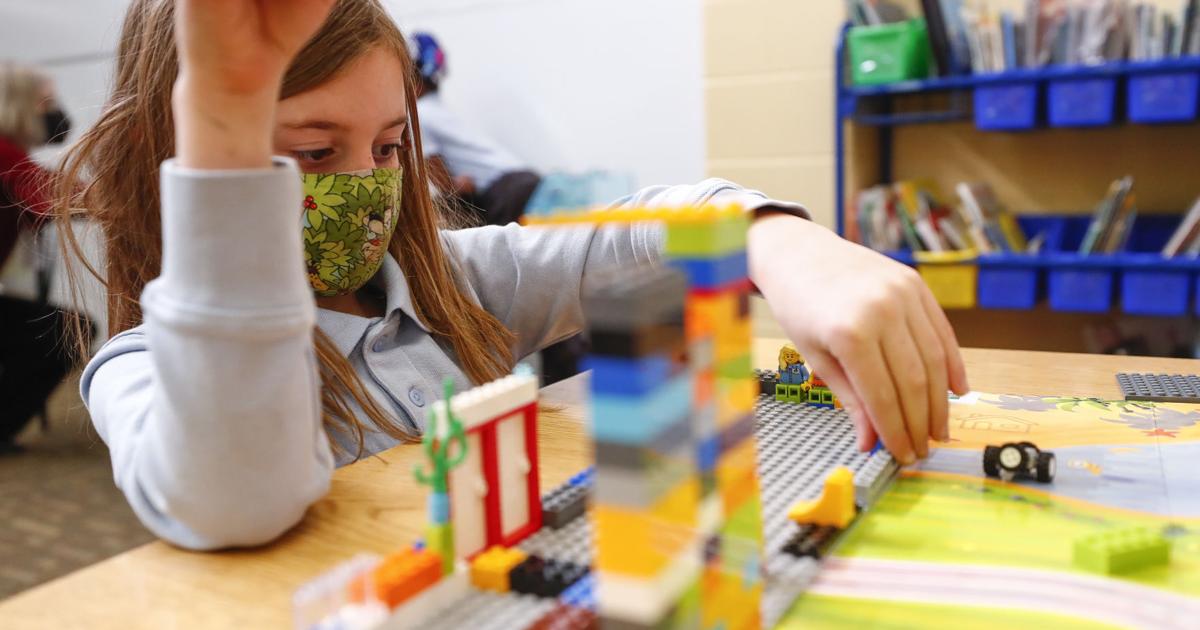
Teams of three to four students were designing elements based on the current Lego League theme of Cargo Connect, including a sorting center and truck. They could also build trains, boats, airplanes and more to help transport cargo. All of it is placed on a mat with a spot for the sorting center along with roads, train tracks and a river.
Iowa counties with highest COVID rates
Revolorio and his classmates Jyonna Taylor, Vung Len and Elvionna Ellis said they kept trying different ideas and began to figure out what to do as a team. Learning to work as a team is one aim of For Inspiration and Recognition of Science and Technology, or FIRST, the organization that developed Lego League. As for the coding, their teacher provided instruction on the basics.
People are also reading…
“It turned out to be pretty easy and it was really fun to code,” said Revolorio.
Highland’s second grade was the district’s pilot for bringing FIRST Lego League Explore into the classroom during the school day. The program, which was previously known as Lego League Junior, is for children ages 6 to 10. It is being used as a way to introduce science, technology, engineering and mathematics – or STEM – concepts to students.
“Typically, with Lego League, there’s after-school teams that form,” said Erin Sale, Waterloo Community Schools’ STEM coach. That has meant only a small number of students have been able to participate in the past.
The district is bringing the program to all of its second- through fourth-grade classrooms this year, more than 2,300 students. This is being done with the help of a scale-up grant from the Governor’s STEM Advisory Council and funding provided by John Deere.
“All these kids are going through their own design process,” noted Sale. “The coding and building is really great. … With this, the teacher is facilitator rather than holder of the knowledge.”
On Friday, she joined teachers at the Highland expo reviewing the 17 student teams’ Lego models and the process used to create them, reflected on posters each group displayed. Awards were to be given for accomplishments in areas like coding, teamwork and design.
Armonte McCoy, who was part of the team Best Kid Creators, said he didn’t know at first why a computer would be needed with Legos. But at the expo, he explained how the students used it to program their Lego Technic Small Hub.
Some people are so good at deception that you feel it’s impossible to distinguish between what is false and what is true
The rectangular device was built into the sorting center and powered the motors, lights, and color sensors students worked with. It is Bluetooth-enabled and contains two input and output ports plus a rechargeable battery.
The sorting center includes a chute that Lego boxes can be dropped into. Concerning the cargo in the boxes, McCoy said, “these are like chicken nuggets, shoes, velcro” – different products that could be sorted for transport to stores or people’s homes.
Before dropping the boxes in the chute, “we press the play button and it starts moving,” he said of a motorized arm that can send them in different directions. “Then we get the boxes and put them in here in the truck and transport them to the houses.”
He and his teammates, Terr’kyah Williams and Gabby Peyton, said they learned in class about cargo shipping and companies in Waterloo – John Deere, Tyson Fresh Meats and several cabinet makers – whose products are transported to other places.
Maddie Boesen, a Highland second-grade teacher, said students did a lot of problem-solving and built social skills during the Lego League project. They also learned about making presentations through the process.
“It’s fun for us as teachers,” she said, to see that growth. “For being the pilot, I think it went great.”
Third-grade classes at Highland will now go through the program, followed by the fourth grade, Sale said. All other Waterloo Schools’ elementary buildings will be starting Lego League Explore in their classrooms, as well.
Photos: Waterloo West girls and boys host Waterloo East, Jan. 28
BGBBall West vs. East 4
Waterloo West junior Keishaun Pendleton makes gets the reverse layup against Waterloo East on Friday at West.
CHRIS ZOELLER Courier Staff Photographer
BGBBall West vs. East 2
Waterloo West senior Brooklynn Smith reaches for the rebound against Waterloo East on Friday at West.
CHRIS ZOELLER Courier Staff Photographer
BGBBall West vs. East 7
Waterloo West senior Alen Dizdaric stretches to get the rebound over the head of Waterloo East junior Kewone Jones on Friday at West.
CHRIS ZOELLER Courier Staff Photographer
BGBBall West vs. East 3
Waterloo West junior Sahara Williams takes the jump shot against Waterloo East on Friday at West.
CHRIS ZOELLER Courier Staff Photographer
BGBBall West vs. East 6
Waterloo East junior Jameel Montgomery drives to the basket for a fast break dunk against Waterloo West on Friday at West.
CHRIS ZOELLER Courier Staff Photographer
BGBBall West vs. East 1
Waterloo West junior Halli Poock dribbles down court against Waterloo East on Friday at West.
CHRIS ZOELLER Courier Staff Photographer
BGBBall West vs. East 5
Waterloo West junior Si’Marion Anderson drives towards the baseline against Waterloo East on Friday at West.
CHRIS ZOELLER Courier Staff Photographer
BGBBall West vs. East 8
Waterloo East junior Jameel Montgomery takes a shot from under the basket against Waterloo West on Friday at West.
CHRIS ZOELLER Courier Staff Photographer
Get our local education coverage delivered directly to your inbox.
(This is the final post in a two-part series. You can see Part One here.)
The new question-of-the-week is:
What are your favorite classroom games?
In Part One, Shannon Jones, Jennifer Bay-Williams, Molly Ness, and Sheniqua Johnson shared their favorites.
Today, Jenny Vo, Donna L. Shrum, David Seelow, Kathleen Rose McGovern, Melisa “Misha” Cahnmann-Taylor, and Ciera Walker provide their recommendations.
‘Students Are More Focused’
Jenny Vo has worked with English-learners during all of her 26 years in education and is currently the Houston area EL coordinator for International Leadership of Texas. Follow her on Twitter at @JennyVo15:
Games are great tools to engage students in their learning. There are many educational benefits to playing games in the classroom. One, games make learning fun. Two, they encourage the students to pay attention. As a result, the students are more focused when playing games. Three, students learn to collaborate and cooperate with their team members when playing on a team. They learn the social skills of communication, listening, and compromising, just to name a few. The best benefit that occurs from playing games in the classroom is that students are learning content in a fun, engaging way!
Games can be used anytime during your lesson. You can use them to assess students’ background knowledge about a certain topic before you begin a unit. You can also use games to build background knowledge before you actually introduce your lesson/topic. There are some great games to practice and review vocabulary. Other games are perfect for whole-group or individual reviews before an assessment. Below are some of my favorite classroom-learning games.
Charades, Pictionary, and Pyramid are great games to use for vocabulary review. Charades is a word guessing game. Students can be paired with partners or in teams. One member will act out a word or phrase without talking or making noises. Along the same vein, Pictionary requires a team member to draw pictures, and the rest of the team guesses what the word or phrase is based on the pictures. Pyramid is a two-person game and relies on words only. The objective is to guess the mystery word using only words or phrases given by the teammate. I love using these three games because they require the students to pay attention to each other, collaborate with each other, and study/learn the vocabulary beforehand so their team can do well.
Another game that my students love to play is Kahoot!, a game-based learning platform. It is made up of quizzes that the students can play in class and at home. Teachers can access a database of ready-made games or create the games themselves. I used Kahoot! in a variety of ways—to build background knowledge, as vocabulary practice, and to review before an assessment. Students are not only competing against each other but also a time limit (adjustable by the teacher). With online learning during the pandemic, I relied on Kahoot! a lot for both in-person and virtual classes. The students loved the competitive aspect of the game and worked hard to see their names on the Kahoot! virtual podiums at the end.
The third kind of game that my students love to play in class is the old-fashioned board game. This may be surprising considering the technology-advanced world we live in, but my students LOVE rolling the dice and moving the game pieces around the game board! One year, when I was given extra money by my department, I bought a bunch of board games that focused on reviewing reading-comprehension skills such as main idea, details, inference, context clues, etc. Each year after that, whenever I would be given extra money, I would add to my collection with games from other subjects—math, science, and social studies. We had so much fun playing them, and the students asked to play them so much that we designated Friday as our game day. I chose the Friday game based on the skill we were working on that week. I think the students knew we were doing schoolwork, but they didn’t mind because we were also having fun, not sitting at our desks and doing worksheets.
Adding ‘Snap, Crackle, and Pop’
After teaching English for over 20 years, Donna L. Shrum is now teaching ancient history to freshmen in the Shenandoah Valley of Virginia. She remains active in the Shenandoah Valley Writing Project and freelance writing for education and history magazines:
When students play a game, their brains reward them with dopamine. Incredibly, your curriculum alone doesn’t always provide that same brain rush for your students, so mixing games into your curriculum can add some snap, crackle, and pop. In fact, some teachers are completely gamifying their courses, structuring their curriculum as an ongoing game. But that is a discussion for another day.
While teaching with Zoom, I struggled to find ways to adapt the active games I’d used in my physical classroom. One success was playing tag: Someone in Zoomland was “it” and tagged someone of whom I asked a question. Answer the question wrong, and you’re “it”; get it right, and the tagger had to try again with another student.
This year, while teaching 8th grade civics, I used some of the review games I’d used for years to introduce material. I discovered that creating a Kahoot about current events was a fun way for the students to see if they could predict the correct answer and then I’d briefly fill in the details of the event once they saw the answer. I used Kahoot as an anticipation guide in the same way, creating brief “What Do You Already Know?” Kahoots before teaching a topic. At the end of the lesson, students could play again to see what they had learned.
I sometimes use Quizizz for variety, but this year, I have fallen in love with Quizizz Lessons. Instead of introducing material on Google Slides, I could put it into a Quizizz slide, then follow with a formative-assessment slide as a poll, open-ended answer, or multiple-choice question. Video slides are part of the paid package. Lessons still gave a score at the end, and I was surprised students viewed Lessons as a competitive game. It was a wonderful tool for Zoom, because providing the code allowed them to see the game on their computers (a feature Kahoot also introduced this year) without relying on a possibly unsteady Zoom screen share.
I’ve had the paid version of Gimkit for three years now, and in that time, an increasing number of other teachers have found out about this treasure, which offers a high level of competition as well as multiple game modes. As the school year drew to a close, I used the Drawing mode for short curriculum breaks. Drawing didn’t work well with my existing Kits, so I created ones just for drawing in which I entered words and phrases and then simply put a period as all the answers. In the future, I plan to create drawing Kits related to the classes I teach.
I comb online sites to find new game ideas, and these are the most popular with my students and links explaining how to play:
The Unfair Game While I sometimes played whole class, I usually let them partner up and keep their own scores while they played on one computer between them.
Grudgeball For some reason, honors classes play Grudgeball the most intensely.
Motor Mouth. Use Google Draw to create playing cards. On each, put 4-6 terms you’d like students to learn. Print on card stock and laminate. Create enough sets for students to play in pairs. The game is like Password: The students split the cards, then take turns trying to get the other person to correctly guess the term. The partners who finish first win.
I have several favorite games for different grades levels. For the elementary grades, Dragon Box Algebra 5+ is wonderful. It introduces algebra through fun, engaging activities that transition seamlessly into algebra without students even realizing they are solving mathematical equations. Minecraftremains a favorite. Students can build entire worlds and work either individually or as part of a team.
Pokémon Gotakes the class out of the school building into the world where students can explore famous geographical and historical landmarks by visiting pokestops. In keeping with a geography theme, the board game Trekking: The National Parks allows students to experience an outdoor adventure indoors, learn valuable information about the country’s national parks, and cultivate the value of conservation, while enjoying magnificent photography of our natural wonders. KidCitizen uses primary documents in an interactive experience pertaining to democracy. The KidCitizen Editor gives teachers the tool to create their own episodes tailored to their class. Castle Panic provides children with a rich fantasy world to capture their imagination while also requiring cooperation to be successful in the game. Learning how to work in teams at an early age will be indispensable throughout a child’s education.
For the middle school age group, Biome Builder-Card Game has students build food chains in a race to help one of four biomes (the American Prairie, Pacific Ocean, Amazon Rain Forest, Sahara Desert) survive. Before leaving the middle grades, I want to recommend the online game Kind Words; students learn the value of being kind and helping others by responding anonymously to requests for help. The game promotes the best in social and emotional learning and can have a transformative impact on students’ approach to life.
Kind Words also reminds me to point out that many games can be played across grades levels. Biome Builder, mentioned above, has curricular alignment with elementary, middle, and high school students. Portal 1 and 2 can be applied to learning missions ranging fromr using statistics in 6th grade all the way up to AP Physics. iCivics has a suite of 30-minute games exploring all aspects of the U.S.’s three branches of government. Every student will benefit from playing these games in class.
Finally, for the high school age, making ethical decisions should be an essential skill, and no game teaches this better than Papers, Please. In the game, you play an immigration officer making life-changing decisions about who can or cannot cross the border of a totalitarian country. The board game Pandemic has immediate relevance for students living through COVID-19. Importantly, this game requires cooperative learning to win. The game effectively simulates the need to cure, cope with, and prevent a pandemic in 60 minutes play time.
Language arts/English are well served by two narrative-based games: Gone Home and What Remains of Edith Finch. In both games, players explore a family home in the Pacific Northwest. In the former, as protagonist Kate, you learn about family secrets including a nuanced depiction of an LFBTQ+ relationship. In the latter game, you explore a haunted ancestral house in a brilliantly executed story reminiscent of Edgar Allan Poe and perfect for teaching literary elements. Finally, encouraging students to slow down and appreciate both the wonders of the natural world and the marvels of language will prove invaluable to their future lives. Students need to step outside their screen-dependent world to reflect on their surroundings and their own life, and, paradoxically, Walden, a Game helps them do just that.
Oh, before I go, Jeopardy! is still a great game for the classroom; just have students design the answers.
Building a ‘Trusting Community’
Kathleen Rose McGovern is a TESOL specialist with the U.S. Department of State and a lecturer in applied linguistics at the University of Massachusetts Boston. She’s authored several publications at the intersections of drama, language teaching, and immigration theories, including Enlivening Instruction with Drama and Improv:
One of my favorite games to play with intermediate learners involves an extension of the popular language-teaching (and party) game: 2 Truths & 1 Lie.
Basically, it involves inviting students to share three personal stories (not statements, but stories with a beginning, middle, and end). Then, after each person has told their stories, and classmates have guessed the lie, I divide students into groups and guide them through an improvisational process in which they perform one another’s stories.
I find that students are typically very engaged because they are sharing stories that are important to them with their classmates and negotiating the language involved in putting together a scene (e.g., “come in from the right and stand by that table”). This also offers opportunities for literacy practice as students can write out their stories or even draft scripts from their improvisations. This activity was the backbone for my work devising plays with my intermediate ESOL students at a nonprofit language school for immigrant learners in Massachusetts. But I have used it in nonperformative contexts as well. It’s a wonderful way to collaboratively explore language relevant to the students’ interests and build a trusting community at the same time.
Improv Games
Melisa “Misha” Cahnmann-Taylor, a professor of language and literacy education at the University of Georgia, is the author of five books addressing intersections between language education and the literary, visual, and performing arts including her newest co-authored book, Enlivening Instruction with Drama and Improv: A Guide for Second and World Language Teachers (Routledge, 2021):
“Getting to know you” games can be terrific for any time you want a group to learn more information about each “player” in the class, including and going beyond learning one another’s names.
By using it at the beginning of any class or semester, teachers gather a great deal of information about who is in the room, including how comfortable and familiar each student is with performance as well as information about any limitations or concerns students may bring to these embodied practices. The information garnered from these games, including students’ individual needs, strengths, and limitations, will assure greater trust and success in play and language learning throughout your group’s time together.
One of my favorites that I use with any group is the Poetry in Names Game. Even if a group already knows one another, it can be a fun and lyrical challenge to create a class poem for which each student uses alliteration and/or rhyme to describe themselves in their person. First, show students how to play by saying your name and something you like in the following formula: [Name], he/she likes _______. E.g.: “Misha, she likes marshmallows.” While you say this, make an exaggerated movement (e.g., mime eating lots of marshmallows). Advanced learners may consider things that have the same first-letter sound (alliteration), consonance sounds, assonance (vowel) sounds, or rhyme (exact or slant). Here’s a video of a group of TESOL educators playing this game.
Many theater and improv games can and should be played repeatedly. By changing the prompt, teachers can change the target language of the game—from vocabulary acquisition to specific grammatical forms or pronunciation features such as intonation and stress. Just as the same game can be played differently, the same words can be communicated differently depending on how they are said, where, to whom, by whom, and for what ends. These games introduce or review target language words and phrases that help students understand an important communicative lesson: It’s both what you say, and how you say it!
A wonderful example of this is the game, “The house is on fire, let’s…”. One person in the pair begins, saying, “The house is on fire, let’s_____,” filling in the end of the sentence with ANY suggestion not connected to the actual scenario of a house on fire. (For example, “Let’s buy a canoe”; “Let’s eat some candy”; “Let’s study math”; “Let’s braid our hair.”) This game exercises students’ fluency, creativity, sense of humor, and ability to laugh in light of making L2 (second language) errors. See this video to watch how hilarity ensues and fluency is developed!
‘Running Dictation’
Ciera Walker is a seventh-year systemwide elementary school ELL teacher in east Tennessee:
At the beginning of the school year, my students set academic goals based on their WIDA Access scores from the previous year. While goals always vary, this year, many students had a goal to improve their speaking scores. I set out to intentionally create differentiated lessons for my students that involved multiple opportunities to speak. Each week, students use Flipgrid with rubrics and personalized feedback to practice and improve speaking. Additionally, I utilized a learning game I read about in 39 No-Prep/Low-Prep ESL Speaking Activities for Kids written by Jackie Bolen and Jennifer Booker Smith called Running Dictation. This game was a favorite among my students this year. Below is a list of materials needed for the game, a description of my interpretation of the game and how I used it in my classroom, some benefits of the game, and suggested improvements to the game to fit my students’ needs in the future.
Materials:
Printed phrases, sentences, or paragraphs from a text that students are reading (I typed out sentences from passages or novels that we were reading in class.)
Paper
Pencil
Description/How to Play:
Benefits:
Students are constantly communicating very specific information.
Students are engaged in using punctuation and spelling patterns.
Students must be able to verbalize when they need more information or are confused.
Students are actively engaged in grammar while writing.
Students are practicing speaking, listening, reading, and writing all in one game.
Cross-curricular connections can be made in various subjects such as language arts, science, or social studies.
Implications for the Future:
I hope to use Flipgrid captions in combination with the running-dictation game to show students that what they say isn’t always interpreted or heard correctly. This will help emphasize the importance of speaking clearly.
For higher English-proficient students, I might use a paragraph, and once the paragraph is written, have students put it in order (as suggested by Bolen and Booker Smith).
Have students use the original text to answer questions about what they wrote during the running-dictation game.
Have students interpret and discuss the paragraph.
Use a paragraph that students haven’t read yet to introduce a new unit/topic/vocabulary.
The game is a wonderful and fun way to get students reading, writing, listening, and speaking. Additionally, I would recommend the book 39 No-Prep/Low-Prep ESL Speaking Activities for Kids for anyone looking to enhance engagement in the ESL classroom.
Thanks to Jenny, Donna, David, Kathleen, Melisa, and Ciera for contributing their thoughts!
Consider contributing a question to be answered in a future post. You can send one to me at lferlazzo@epe.org. When you send it in, let me know if I can use your real name if it’s selected or if you’d prefer remaining anonymous and have a pseudonym in mind.
Education Week has published a collection of posts from this blog, along with new material, in an e-book form. It’s titled Classroom Management Q&As: Expert Strategies for Teaching.
Just a reminder; you can subscribe and receive updates from this blog via email (The RSS feed for this blog, and for all Ed Week articles, has been changed by the new redesign—new ones are not yet available). And if you missed any of the highlights from the first 10 years of this blog, you can see a categorized list below.
Spiking COVID-19 instances in Orange County and all through California – driven by the Omicron variant – are elevating questions about how neighborhood and point out officials ought to take care of educational institutions as hospitalizations keep on raising.
Editor’s Notice: As Orange County’s only nonprofit & nonpartisan newsroom, Voice of OC brings you the most effective, most thorough regional Coronavirus news definitely free. No ads, no paywalls. We will need your enable. You should, make a tax-deductible donation today to guidance your neighborhood news.
Gov. Gavin Newsom and state community wellness officials have repeatedly mentioned on the web studying is not going to be an selection at any time shortly. Alternatively, initiatives have been built to get extra screening and masks to college districts all over the condition, while the efforts to get assessments to OC knowledgeable delays.
But for parents, teachers and personnel through the Golden Point out, the university debate in essence boils down to two thoughts:
Need to schools proceed owning college students in lecture rooms or briefly change to on the net training right until the fourth wave dies down?
“They’re truly caught among a rock and a difficult location. We received conditions that are spiking, we obtained specified age groups who aren’t vaccinated still and you bought to think about that screening has not truly been obtainable,” mentioned Richard Carpiano, a public overall health scientist and sociologist at UC Riverside.
In a Tuesday cellular phone interview, Carpiano observed that on the net discovering will work for some people, particularly if the mom and dad have the capability to work from household.
But, he mentioned, the tactic strains family members who really do not have that option.
“Some dad and mom require to go to do the job, so there’s the challenges of needing to send out young ones to university and daycare … but even in performing from home, they are sending their child to school and if they arrive back again house and could probably infect their family members,” he stated, incorporating the existing surge will disproportionately hit functioning class family members really hard.
“It constantly hits reduced revenue the worst, fundamentally any crisis hits them the worst,” Carpiano explained, noting doing the job course communities have previously experienced the brunt of past waves.
In Orange County, the pandemic has disproportionately impacted the Latino group.
[Read: OC’s Latino Community Remains Behind on COVID-19 Vaccines One Year Later]
§
Gina Clayton-Tarvin, president of the Ocean View School District as effectively as a trainer in Los Angeles county, reported in a cellphone interview Wednesday educational facilities ought to keep in-person and numerous young ones are returning to campus from quarantining.
She included the condition has manufactured it “almost difficult to go to thoroughly online school”.
“The funding isn’t actually there,” Clayton-Tarvin claimed. “If we desired to shut colleges, we could most likely lose funding and that is just something that faculty districts just cannot get a gamble on.”
The complicated circumstance, Carpiano reported, exhibits a disconnect among university districts, community and point out governments, and the clinic method.
“It’s starting off to develop into a little bit of a flashpoint between university devices and governing administration as we’re starting off to see the circumstances are actually spiking, the exam figures are going up … The wellbeing procedure is declaring we’re strained, so we cannot just be contemplating about educational institutions as a individual process from our health care program.”
Richard Carpiano, a public well being scientist and sociologist at UC Riverside.
As of Wednesday, 1,071 folks have been hospitalized in OC, such as 169 in intense care models, according to point out knowledge.
Those people are quantities not seen given that very last year’s winter season wave, which noticed nearly 2,200 people hospitalized at 1 level.
Clayton-Tarvin explained young children ought to be needed to don health care-grade masks and not the fabric ones. She also mentioned little ones need to also dress in masks outside the house when they’re bunched with each other.
§
Mari Barke, a trustee on the Orange County Board of Instruction, claimed in a cellphone job interview Wednesday that determining to preserve pupils in school rooms or temporarily reinstate on-line mastering should be up to mom and dad and the regional college districts.
“There’s some mothers and fathers that unquestionably would like to keep their children residence performing digital [learning]. There’s other kids that we know suffer far more by not remaining in college,” she explained.
Sanghyuk Shin, a community well being specialist and epidemiologist at UC Irvine, explained point out officers have to have to rethink their tactic to faculties throughout the surge.
He stated universities need to be given funding to briefly swap to on-line understanding in school districts serving the toughest hit regions throughout the state.
If the faculties did briefly go distant, Shin claimed a substantial general public outreach campaign ought to be held by community wellbeing officials, coupled with group primarily based companies, in an energy to vaccinate far more people in difficult-hit communities.
“Poll after poll shows that in communities of shade, people who are not vaccinated are prepared to be vaccinated if their worries are satisfied … I do assume that public health interventions such as remote instruction could bide that time to get to these communities.”
Sanghyuk Shin, a community wellness professional and epidemiologist at UC Irvine
Whilst fully vaccinated people today can however get the virus, information reveals the photographs noticeably cuts down their chances of acquiring significant indicators and getting hospitalized.
According to the OC Wellbeing Care Company, 87{e4f787673fbda589a16c4acddca5ba6fa1cbf0bc0eb53f36e5f8309f6ee846cf} of all the county’s hospitalized patients are unvaccinated.
§
In the meantime, some dad and mom want to stay the class.
Hengameh Abraham, a Costa Mesa father or mother, stated school rooms need to stay open up since young ones want social interactions and students didn’t study as very well during the pandemic at dwelling.
“It is extremely unfair for children that have gone by way of kindergarten, initially quality, or even preschool all through the pandemic, two yrs back.”
Hengameh Abraham, Costa Mesa Father or mother
She also pointed out in a Wednesday interview that lots of of people little ones now discover them selves powering in school.
Abraham added that she understands there requires to be protection precautions and mom and dad must keep their children house if sick.
She also stated that she pulled her youngster out of the Newport-Mesa Unified College District in September around the mandates, in particular the mask mandate and more than the quality of education her child was obtaining.
“We have been homeschooling due to the fact September,” she said of the change, incorporating “I experience like we have been homeschooling considering that March of 2020.”
The debate will come as some faculty districts in OC are working with hundreds of newly verified COVID circumstances due to the fact winter split finished.
[Read: Some OC School Districts Have Hundreds of Confirmed COVID-19 Cases After Winter Break]
Grace Hobbs, a mum or dad in the Newport-Mesa Unified district, also needs to maintain classroom mastering likely.
“First of all, the loss of education that the small children experienced final yr did not make any sense,” she explained in a cellular phone job interview Wednesday.
Hobbs termed the safety measures in place “ridiculous” and mentioned some mothers and fathers have been trying to get the district to press back again on mask needs and the expected vaccine mandate like other districts have.
She also expressed concern about potential facet results the vaccine may have on kids.
Professionals and community health and fitness officials have also been urging mothers and fathers to get their young children vaccinated, holding on the web panels to handle parents’ security and efficiency concerns from the vaccine for little ones 5-11 and argue COVID by itself provides a more substantial danger than the vaccine.
Public overall health industry experts like Carpiano and Shin warn that unchecked virus transmission could overwhelm hospitals and delay non-COVID methods – like what was observed throughout very last year’s winter season wave.
Orange County is also enduring its optimum COVID positivity rate witnessed in the course of the pandemic, so much.
As of Wednesday, the county sat at a 28.2{e4f787673fbda589a16c4acddca5ba6fa1cbf0bc0eb53f36e5f8309f6ee846cf} positivity fee, in accordance to condition info.
Carpiano said, no matter of how serious or gentle Omicron infections may possibly be, it is still quickly spreading – quicker than preceding variants – and putting persons in hospitals.
“People are still finding hospitalized, which includes young ones and a lot more people today acquiring contaminated. This is the paradox of it – you have additional chances for instances, for factors like hospitaliations and strains on the method,” he mentioned.
§
Other mother and father want lecture rooms open, but with stricter virus safeguards amid the surge like demanding masks outside and weekly tests mandates.
Some aren’t certain if they need to send out young children to school or preserve them at residence – like Placentia-Yorba Linda Unified School District mum or dad Caron Berkley.
“I’m truly torn mainly because I really feel horrible, sending them off to college each day and understanding that there’s a hazard with them currently being out there and a surge. But they need the educational understanding, they will need the social and psychological advancement and it’s just like Sophie’s Decision for mom and dad appropriate now.”
Caron Berkley, Placentia-Yorba Linda Unified Faculty District Father or mother
Berkley also explained districts require to make certain kids are sporting correct masks and have to have robust screening.
People in the course of OC have noted trouble in discovering timely exams.
[Read: School Absences, Anger in OC as Hunt for COVID-19 Tests Turns Up Fruitless For Many]
Shin claimed faculties need to have to double-down their efforts on basic safety measures, like upgraded air flow – as well as a huge push from state officials to give cost-free or subsidized rapid testing and large-quality masks to pupils.
He explained various research, which includes some carried out by UCI, display the virus poses a far greater chance to Latinos than other communities.
“Latino populations have up to a 50{e4f787673fbda589a16c4acddca5ba6fa1cbf0bc0eb53f36e5f8309f6ee846cf} greater hazard of currently being contaminated,” he reported. “Young men and women deliver back bacterial infections to the residence wherever usually multi-generational families dwell below just one roof and there are restricted prospects to isolate and quarantine. So these are … households who are at higher chance of becoming exposed to COVID compared to affluent communities.”
Shin extra, “These are the communities where colleges by and large are improperly ventilated and with overcrowded ailments where by COVID-19 can spread extremely fast.”
Other OC mothers and fathers like Vinnie Morrison want educational institutions to go again to distant discovering for at the very least a couple weeks.
“We retain looking at every single solitary working day an email from the principal indicating, ‘hey, a single or additional pupils examined good,’” he said in a cell phone job interview Wednesday.
“If we had a short term return to remote schooling for even a two week time period … I believe you’d see a whole lot far more flattening of that curve somewhat than the vertical spike of instances that instills dread into my coronary heart.”
Vinnie Morrison, Dad or mum
Morrison reported his complete family has tested constructive for COVID, which includes his two-12 months-previous daughter who continue to can not get vaccinated.
“It’s a roll of the dice no matter whether or not it’s going to be the one that sends her to the more than-impacted healthcare facility,” he stated.
Some instructors also want faculties to change on the web quickly and have started off a petition to go again on the web temporarily in the Santa Ana Unified Faculty district.
“We did a 12 months and a 50 {e4f787673fbda589a16c4acddca5ba6fa1cbf0bc0eb53f36e5f8309f6ee846cf} of remote mastering so if we experienced to go for like, a week or two, I think that our colleges have the capacity to do it,” claimed Mike Rodriguez, a Santa Ana Unified College District trainer mentioned in an job interview previous week.
“It’s about holding our college students risk-free, holding our personnel secure and trying to keep our community safe and sound.”
Hosam Elattar is a Voice of OC Reporting Fellow. Get hold of him at helattar@voiceofoc.org or on Twitter @ElattarHosam.
Spencer Custodio is a Voice of OC staff reporter. You can reach him at scustodio@voiceofoc.org. Adhere to him on Twitter @SpencerCustodio.
§
»Begin each and every working day informed with our free of charge and OC-concentrated publication.
»Be in the know with Voice of OC’s cost-free breaking information text messages.
Considering that you have created it this significantly,
You are clearly linked to your community and worth very good journalism. As an independent and neighborhood nonprofit, our news is accessible to all, irrespective of what they can pay for. Our newsroom facilities on Orange County’s civic and cultural life, not ad-pushed clickbait. Our reporters hold strong pursuits accountable to safeguard your high-quality of life. But it is not free of charge to develop. It depends on donors like you.
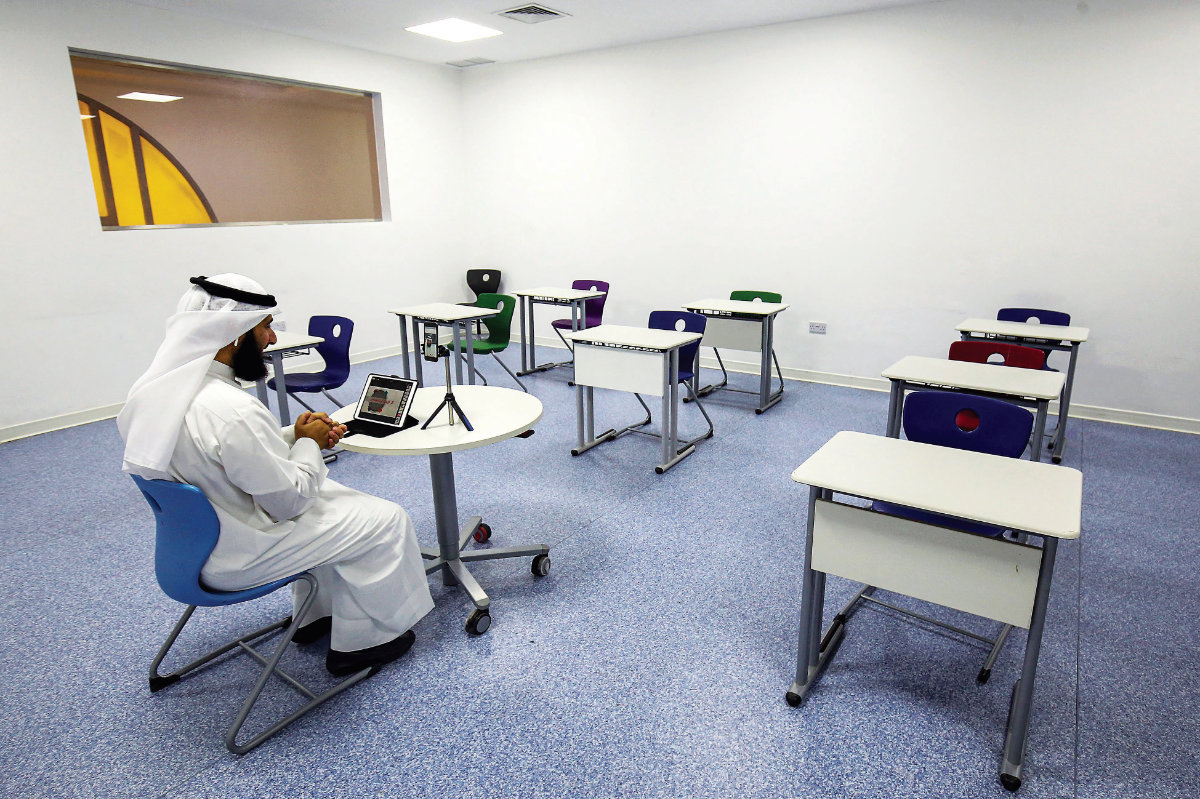
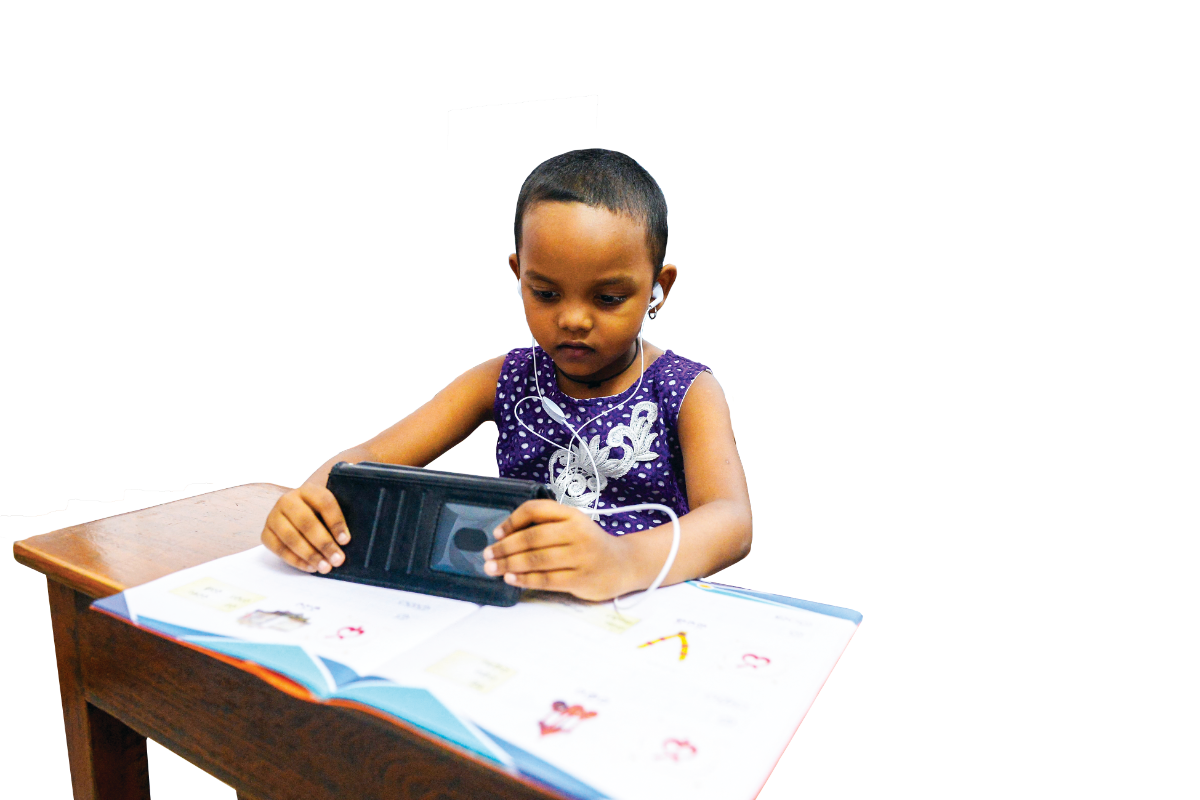
DUBAI: Remote finding out, wherever the university student and the instructor are not physically current in a conventional classroom natural environment, has develop into the norm in most components of the globe that have been in the grip of the COVID-19 pandemic considering the fact that 2020.
Details is relayed as a result of discussion boards, movie conferencing and on line assessments. Instructional activities have assumed a selection of formats and methods, most of which use pc know-how over the Online.
Now, with new variants of problem emerging these types of as the omicron strain, and bacterial infections all over again on the rise in many pieces of the globe, it more and more appears as if remote learning, rather of remaining a stopgap, is here to stay.
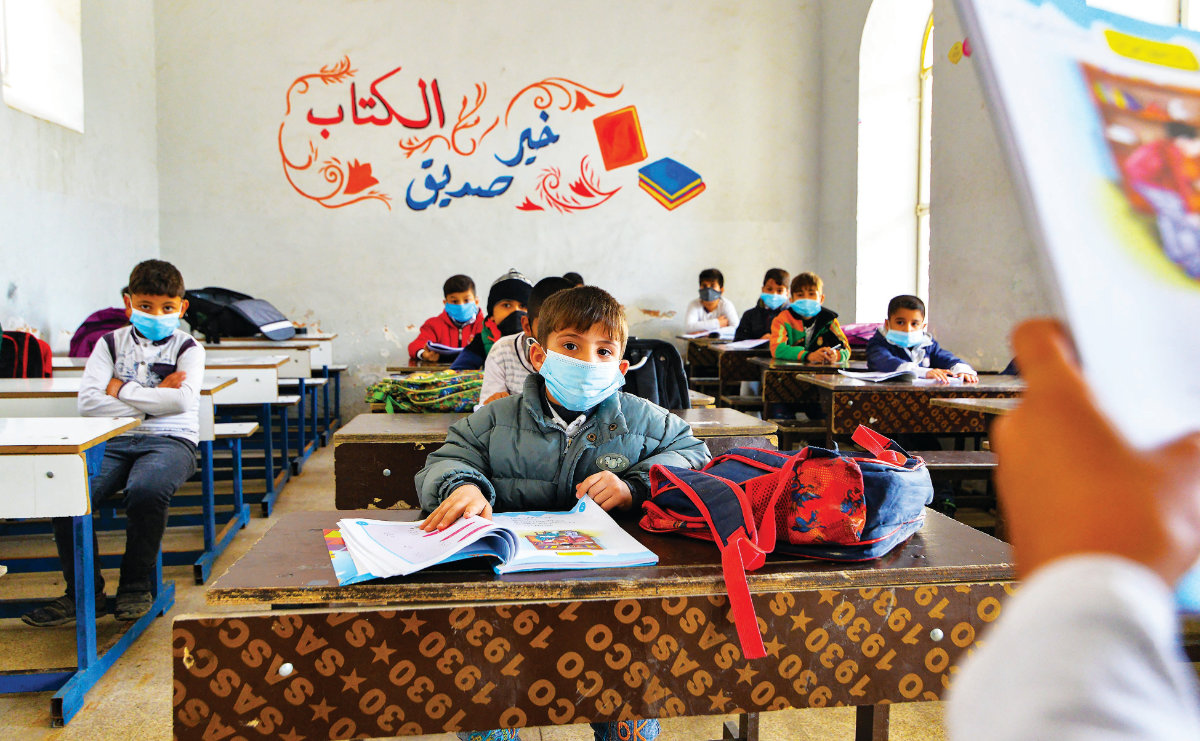
Iraqi pupils sporting deal with masks show up at course on the very first day of the new tutorial calendar year in Mosul. (AFP)
Disrupting the faculty yr for a lot more than 1.7 billion learners throughout the world, the pandemic has accelerated an present trend toward digitalization, altering the way in which men and women study, do the job and interact.
What commenced as a non permanent answer to allow for schools and universities to complete the academic 12 months although conforming to stringent social-distancing rules has develop into a fixture of the instruction program.
On the web training is now tightly woven into versions of education, overturning the past reliance on standard classroom instructing. As a end result, a new hybrid product of education and learning that combines the two on the internet and in-human being instructing has emerged.
A lot of educators in the Gulf Cooperation Council countries say that the combination is a extra “practical” and “economical” tactic to mastering in the 21st century. Jeffrey Smith, director of school partnerships at iCademy Middle East, thinks blended finding out, or hybrid studying, is the way ahead.
“Today’s college students and families are demanding additional overall flexibility than a regular schooling product can support,” Smith told Arab News, highlighting the evolving calls for of the present day office as a single of the principal variables driving this improve.
“They have to have speedy and economical obtain to information and courses to receive abilities.”
Developments in the education technology sector, identified as EdTech, also reflect the new development. Demand from customers for on the internet mastering alternatives has skyrocketed through the pandemic. The EdTech sector, which was valued at $227 billion in 2020, is forecast to develop to $404 billion by 2025.
Desire for on the net and hybrid classes at GCC universities had previously been developing well before the pandemic. “Online finding out generates greater retention prices, which suggests larger graduation premiums and extra earnings for the universities,” Smith stated
Instructors and lecturers have also had to adapt to the realities of the COVID-19 pandemic. (AFP)
In Saudi Arabia, the GCC’s major training sector, some 77 percent of instructing was carried out remotely in excess of the study course of the pandemic, according to a review by cloud computing enterprise Citrix Techniques released in June.
The examine, which surveyed a sample of C-degree executives, IT managers, teachers and administrators at Saudi universities, showed that a vast majority (81 p.c) consider the hybrid studying model will improve the mastering practical experience more than the following academic yr, with fifty percent agreeing the new method will considerably enhance learning.
Main educational establishments in the UAE, Qatar, Oman, Bahrain and Kuwait have also fully commited to digitalizing their schooling sectors.
Unsurprisingly, the Middle East and Africa’s EdTech and smart-classroom sector is projected to soar to $7.1 billion by 2027, in accordance to a study by The Perception Associates.
Europe now has the biggest EdTech neighborhood, with a lot more than fifty percent of the continent’s prime 20 EdTech companies dependent in the British isles — one particular of the largest suppliers of sensible-education and learning remedies to the Gulf location.
A person example is Firefly, a portal applied by extra than a million learners, academics and mom and dad, accessible in additional than 600 colleges in the UAE, Qatar, Oman and Saudi Arabia.
The Middle East and Africa’s EdTech and sensible-classroom marketplace is projected to soar to $7.1 billion by 2027. (AFP file image)
The expanding popularity of online studying is apparent at the Utilized Science University in Bahrain, where college students had been offered the selection to both return to campus right after the lifting of COVID-19 limitations or to proceed their scientific tests remotely for the 2021 tutorial yr.
“We had 25 p.c of our college students who decided to examine on campus and 75 percent who made the decision to examine from home,” Ghassan Aouad, ASU president, told Arab News.
Even though damaging “psychological” impact of the pandemic on students is a significant worry, Aouad suggests, on the internet finding out has important positive aspects.
“We have shipped the discovering results to our pupils in the best high quality and, in actuality, it might have been advantageous by owning all the lectures recorded for them,” he explained.
The shift on-line has also enhanced IT skills, enhanced time management and enhanced unbiased mastering among the students, he mentioned.
INFigures
1.7 billion – Learners who experienced their training disrupted by the COVID-19 pandemic.
460 million – Younger people around the globe who can’t entry remote-discovering courses.
$404 billion – Global price of the EdTech sector by 2025, up from $227 billion in 2020.
To be specified, the hybrid product is not without its negatives, thinking about that just about 50 percent the world’s population does not have completely ready entry to the Online. For institutions lacking the correct on the net infrastructure, difficulties with know-how, accessibility and conversation concerning lecturers, college students and moms and dads are pretty common.
A high selection of educational facilities and universities were not organized for the changeover when the pandemic struck, but were being compelled to undertake the length finding out model as a way to keep afloat.
In actuality, in accordance to a modern UNICEF report, at minimum 460 million students around the globe are not able to access remote mastering programs since they absence the required devices or infrastructure.
In the passions of inclusivity, educational facilities and universities are operating tough to return students to classroom discovering. In the UAE, not too long ago declared safety protocols have been intended to aid a return to 100 per cent in-man or woman finding out from Jan. 2022.
In the same way, the Saudi federal government has invested more than SR1 billion on upgrading amenities in accordance with security protocols to make certain the clean return of learners and employees to colleges and universities.
The Saudi Meals and Drug Authority has also accepted the Pfizer vaccine for small children aged 5-11, which will allow for pupils in that age group to return to the classroom.
Whilst on the web types of understanding have offered a sensible answer to satisfy the wants of the pandemic, couple feel regular classroom studying has experienced its day.
Practically half of the world’s inhabitants has no world-wide-web accessibility. (AFP)
“I simply cannot consider the hybrid model currently being 50-50,” Aouad mentioned. “On-campus, traditional understanding will be dominant with an factor of on line discovering. This will develop into the norm, in particular for normal experiments varieties of courses. For functional programs, nonetheless, pupils will have to be on campus.”
In addition, according to him, the interpersonal, analytical, and crucial-pondering skills that college students want to thrive in a lot of professions simply cannot be taught in excess of a webcam.
Mom and dad obviously are divided over the benefits of in-individual and distant finding out. A new UAE federal government poll involving 28,171 participants observed that 59 percent of mothers and fathers would instead their children master remotely, versus 41 {e4f787673fbda589a16c4acddca5ba6fa1cbf0bc0eb53f36e5f8309f6ee846cf} who have been in favor of in-human being courses.
George Tharakan, whose 10-year-previous baby attends the Apple Intercontinental Neighborhood College in Dubai, thinks learning from residence has improved spouse and children interaction, eliminated school bullying and allowed moms and dads to assistance with assignments and actions.
Interpersonal, analytical, and essential-contemplating competencies that college students need to realize success in quite a few professions can not be taught in excess of a webcam. (Supplied)
On the other hand, he admits that his little one may well be lacking out on formative interactions with other students, neglecting their creating abilities in favor of typing and verbal interaction, and struggling disruptions brought about by technological issues.
Aaliyah Khan, a mother of two, was impressed by the fast and sleek changeover to on the internet discovering in the course of the pandemic, but continues to be a supporter of regular classroom learning.
“Online understanding really should only be out of requirement, not out of alternative. I am not a big supporter of a hybrid product either, as it includes exposure to display time, which I do not help,” Khan instructed Arab Information.
“With confront-to-encounter understanding, college students socialize and develop healthy connections. That is why we individuals are known as social animals. Apart from social techniques, the little ones can focus improved and participate extra actively in classroom finding out.”
Nashville, TN – The American Heart Association, the world’s leading nonprofit organization focused on heart and brain health for all, the National Football League (NFL) and the Tennessee Titans are doubling down on kids physically active through NFL PLAY 60 as students return to the classroom following remote, distant and hybrid learning due to COVID-19 Coronavirus.
Now in its 15th year, the NFL PLAY 60 program establishes healthy habits and reduces sedentary behaviors in kids, which is key to immediate and long-term health benefits that can play a role in the classroom experience.
“Now that school is back in session, moving more is even more important following more than a year at home away from physical education classes, team sports, and daily recess,” Annie Thornhill, Executive Director of the Middle Tennessee American Heart Association. “Research has shown healthy behaviors are important in the classroom as active kids learn better. When kids are active, they focus more, think more clearly, react to stress more calmly, and perform and behave better in the classroom.”
In a recent scientific statement released by the American Heart Association, data continues to show poor cardiorespiratory fitness in youth, which includes cognitive and academic functions. As children return to the classroom, it is important for parents and educators to prioritize physical activity for immediate and long-term health.
Rooted in science, NFL PLAY 60, helps children to develop healthy physical and mental health habits for a better chance of a healthy adulthood. The program encourages kids to get a minimum of 60 minutes of vigorous physical activity each day to meet the U.S. Department of Health and Human Services’ 2018 Physical Activity Guidelines for Americans (Department of Health and Human Services, Physical Activity Guidelines, page 14. Available for download here).
The American Heart Association and the NFL will continue to provide free resources to support parents and educators in making physical activity fun and engaging.
Resources available now:
Powered by GoNoodle, a landing page of videos and activities to help kids get 60 minutes of movement each day along side fun animated characters.
NFL PLAY 60 App– The free NFL PLAY 60 app helps kids get more movement throughout the day. The PLAY 60 app allows users to control personalized avatars onscreen with their own physical movement. The app is available for iOS and Android devices.
NFL PLAY 60 Exercise Library– In collaboration with the 32 NFL clubs, the first-ever NFL PLAY 60 library features kid-friendly exercises to help kids to get their recommended 60-minutes of daily physical activity.
The NFL and the American Heart Association have teamed up since 2006 to inspire kids through a fun and engaging way to get physically active. The impact of physical activity on overall mental and physical wellness is essential to help children grow to reach their full potential.
Additional NFL PLAY 60 resources can be found online at heart.org/nflplay60.
About the American Heart Association
The American Heart Association is a relentless force for a world of longer, healthier lives. We are dedicated to ensuring equitable health in all communities. Through collaboration with numerous organizations, and powered by millions of volunteers, we fund innovative research, advocate for the public’s health and share lifesaving resources. The Dallas-based organization has been a leading source of health information for nearly a century.
NFL PLAY 60 is the League’s national youth health and wellness campaign to encourage kids to get physically active for at least 60 minutes a day. Since PLAY 60 launched in 2007, the NFL has committed more than $352 million to youth health and fitness through PLAY 60 programming, grants, and media time for public service announcements. Over the past decade, the NFL has partnered with leading academic, scientific, and nonprofit organizations to help children of all abilities lead healthier, active lives.
The NFL and its clubs have supported programs in over 73,000 schools and constructed more than 265 youth fitness zones nationwide—giving more than 38 million children an opportunity to boost their physical activity levels. NFL PLAY 60 is also implemented locally, as part of the NFL’s in-school, after-school and team-based programs.
HELENA — Some parents got a taste of homeschooling during the pandemic, but for thousands of Montana families—homeschooling is just normal, everyday life.
Lareena Enquist lives in the Boulder Valley with her husband and three boys. She has been homeschooling for about seven years.
“Every day is a little different with three boys,” Enquist said.
The Enquist family decided to homeschool when her oldest son was getting ready to move on from preschool. Enquist said a lot of different considerations went into the decision, but the main concern was class size.
MTN News
“My oldest was in a preschool for two years—a co-op preschool—and he did okay, but even with eight kids in the room, it was sometimes a lot,” Enquist said.
In the Helena area, Chris Hauer homeschools four of her seven kids—it’s something she’s been doing for about 10 years.
“You start homeschooling when your child is born,” Hauer said. “You teach them to talk and walk, and if you’re ambitious, the ABCs and how to count. One day, you’re like ‘maybe I can teach them to add too.’”
Hauer said her family makes the decision to homeschool—or not to homeschool—based on the child. For example, she said one of her daughters learns better in a public school setting.
Since three of her children are in public school, Hauer’s homeschool schedule follows the public school schedule for breaks and summer vacation.
Enquist, on the other hand, describes her family as year-rounders, meaning they do school throughout the year.
“We consider all learning,” Enquist said. “Whether we’re at church, whether we’re in Yellowstone—we just were on a road trip to Yellowstone—there’s learning on vacation if you make use of it.”
The Enquists and Hauers are just two of thousands of Montana families who have chosen to homeschool their kids. According to the Montana Office of Public Instruction, 9,868 kids were homeschooled during the 2020-2021 school year—that is 6.1{e4f787673fbda589a16c4acddca5ba6fa1cbf0bc0eb53f36e5f8309f6ee846cf} of total enrollment.
Homeschooling has also grown over the past three years, from 5,743 kids homeschooled during the 2018-2019 school year, to 5,815 in 2019-2020, to the nearly 10,000 in homeschool this past school year.
Hauer runs a homeschool group in the Helena area, the Enrichment Co-Op, and she said she has noticed that growth.
“We saw a 25{e4f787673fbda589a16c4acddca5ba6fa1cbf0bc0eb53f36e5f8309f6ee846cf} increase this year in families,” Hauer said.
Hauer said about 120 kids are enrolled in the Enrichment Co-Op this year. The program meets on Fridays and provides different parent-led classes for kids, like art, physical education and performance.
MTN News
Hauer said it’s meant to supplement what kids are learning at home, allow kids to socialize, and let parents mingle too.
“The only requirement is you show up and actually be part of it,” Hauer said.
Enquist said she often supplements at-home learning with trips to the library and museums. She said there are also other homeschool families nearby for her kids to socialize with.
“There are kids in town,” Enquist said. “Through Facebook, I’ve met some homeschool families, through church—we have quite a few homeschool families at church.”
While homeschooling is a choice thousands of Montana families make, it isn’t always an easy choice.
Enquist said she uses some boxed curriculum to teach her boys, but she also does a lot of reading of her own to find things that fit her boys’ learning styles.
“The hard part is knowing what to do and how to do it,” Enquist said. “Your kids aren’t all the same, they’re not the same as other kids. A favorite quote of mine is ‘comparison is the thief of all joy.’ Don’t compare.”
Hauer said she uses a set curriculum too, and standardized testing to see how her kids perform, and where she needs to improve as a teacher.
Hauer said she enjoys that homeschooling allows her kids to learn at their own pace.
“The most rewarding thing for me is when they are able to succeed and move on at their pace,” she said. “Sometimes, my second oldest will decide she wants to skip through a whole chapter of math—she’ll read through it all, say ‘I understand all this,’ take the test, and be like, ‘I’m done with that, I got 100{e4f787673fbda589a16c4acddca5ba6fa1cbf0bc0eb53f36e5f8309f6ee846cf} on the test, I’m moving on.’”
Enquist said the freedom of homeschooling has allowed her boys to explore their own interests. Her oldest son has recently taken up drawing—specifically vintage trucks.
“He has taught himself how to draw, I had nothing to do with that,” Enquist said. “I’m letting him explore that.”
Being a full-time parent and full-time teacher can be challenging, but both Enquist and Hauer say it is worth it for them, their kids and their families.
“It’s amazing how when a kid is able to just be who they want to be, how that just changes everything,” Hauer said.





 Nashville, TN – The

