Remote learning apps tracked kids for ads

Remote learning apps tracked kids for ads
Placeholder while article actions load

Millions of children had their online behaviors and personal information tracked by the apps and websites they used for school during the pandemic, according to an international investigation that raises concerns about the impact remote learning had on children’s privacy online.

The educational tools were recommended by school districts and offered interactive math and reading lessons to children as young as prekindergarten. But many of them also collected students’ information and shared it with marketers and data brokers, who could then build data profiles used to target the children with ads that follow them around the Web.

Those findings come from the most comprehensive study to date on the technology that children and parents relied on for nearly two years as basic education shifted from schools to homes.

Researchers with the advocacy group Human Rights Watch analyzed 164 educational apps and websites used in 49 countries, and they shared their findings with The Washington Post and 12 other news organizations around the world. The consortium, EdTech Exposed, was coordinated by the investigative nonprofit the Signals Network and conducted further reporting and technical review.

What the researchers found was alarming: nearly 90 percent of the educational tools were designed to send the information they collected to ad-technology companies, which could use it to estimate students’ interests and predict what they might want to buy.

Researchers found that the tools sent information to nearly 200 ad-tech companies, but that few of the programs disclosed to parents how the companies would use it. Some apps hinted at the monitoring in technical terms in their privacy policies, the researchers said, while many others made no mention at all.

The websites, the researchers said, shared users’ data with online ad giants including Facebook and Google. They also requested access to students’ cameras, contacts or locations, even when it seemed unnecessary to their schoolwork. Some recorded students’ keystrokes, even before they hit “submit.”

The “dizzying scale” of the tracking, the researchers said, showed how the financial incentives of the data economy had exposed even the youngest Internet users to “inescapable” privacy risks — even as the companies benefited from a major revenue stream.

“Children,” lead researcher Hye Jung Han wrote, were “just as likely to be surveilled in their virtual classrooms as adults shopping in the world’s largest virtual malls.”

Did we really learn anything about schools in the pandemic?

School districts and the sites’ creators defended their use, with some companies saying researchers had erred by including in their study homepages for the programs, which included tracking codes, instead of limiting their analysis to the internal student pages, which they said contained fewer or no trackers. The researchers defended the work by noting that students often had to sign in on the homepages before their lessons could begin.

The coronavirus pandemic abruptly upended the lives of children around the world, shuttering schools for more than 1.5 billion students within the span of just a few weeks. Though some classrooms have reopened, tens of millions of students remain remote, and many now depend on education apps for the bulk of their school days.

Yet there has been little public discussion of how the companies that provided the programs remote schooling depends on may have profited from the pandemic windfall of student data.

The learning app Schoology, for example, says it has more than 20 million users and is used by 60,000 schools across some of the United States’ largest school districts. The study identified code in the app that would have allowed it to extract a unique identifier from the student’s phone, known as an advertising ID, that marketers often use to track people across different apps and devices and to build a profile on what products they might want to buy.

A representative for PowerSchool, which developed the app, referred all questions to the company’s privacy policy, which said it does not collect advertising IDs or provide student data to companies for marketing purposes. But the policy also says the company’s website uses third-party tools to show targeted ads to users based on their “browsing history on other websites or on other devices.” The policy did not say which third-party companies had received users’ data.

The policy also said that it “does not knowingly collect any information from children under the age of 13,” in keeping with the Children’s Online Privacy Protection Act, or COPPA, the U.S. law that requires special restrictions on data collected from young children. The company’s software, however, is marketed for classrooms as early as kindergarten, which for many children starts around age 4.

Virtual learning is the new fault line in education: It’s either on the way out or on the rise

The investigation acknowledged that it could not determine exactly what student data would have been collected during real-world use. But the study did reveal how the software was designed to work, what data it had been programmed to seek access to, and where that data would have been sent.

School districts and public authorities that had recommended the tools, Han wrote, had “offloaded the true costs of providing education online onto children, who were forced to pay for their learning with their fundamental rights to privacy.”

The researchers said they found a number of trackers on websites common among U.S. schools. The website of ST Math, a “visual instructional program” for prekindergarten, elementary and middle school students, was shown to have shared user data with 19 third-party trackers, including Facebook, Google, Twitter and the e-commerce site Shopify.

Kelsey Skaggs, a spokeswoman for the California-based MIND Research Institute, which runs ST Math, said in a statement that the company does not “share any personally identifiable information in student records for the purposes of targeted advertising or other commercial purposes” and does not use the same trackers on its student platform as it does on its homepage.

But the researchers said they found trackers not just on ST Math’s main site but on pages offering math games for prekindergarten and the first grade.

How the pandemic is reshaping education

Google spokesperson Christa Muldoon said the company is investigating the researchers’ claims and will take action if they find any violations of their data privacy rules, which include bans on personalized ads aimed at minors’ accounts. A spokesperson for Facebook’s parent company, Meta, said it restricts how businesses share children’s data and how advertisers can target children and teens.

The study comes as concern grows over the privacy risks of the educational-technology industry. The Federal Trade Commission voted last week on a policy statement urging stronger enforcement of COPPA, with Chair Lina Khan arguing that the law should help “ensure that children can do their schoolwork without having to surrender to commercial surveillance practices.”

COPPA requires apps and websites to get parents’ consent before collecting children’s data, but schools can consent on their behalf if the information is designated for educational use.

In an announcement, the FTC said it would work to “vigilantly enforce” provisions of the law, including bans against requiring children to provide more information than is needed and restrictions against using personal data for marketing purposes. Companies that break the law, it said, could face fines and civil penalties.

Clearly, the tools have wide impact. In Los Angeles, for example, more than 447,000 students are using Schoology and 79,000 are using ST Math. Roughly 70,000 students in Miami-Dade County Public Schools use Schoology.

Both districts said they’ve taken steps to limit privacy risks, with Los Angeles requiring software companies to submit a plan showing how student information will be protected while Miami-Dade said it had conducted a “thorough and extensive” evaluation process before bringing on Schoology last year.

The researchers said most school districts they examined had conducted no technical privacy evaluations before endorsing the educational tools. Because the companies’ privacy policies often obscured the extent of their monitoring, the researchers said, district officials and parents often were left in the dark on how students’ data would be collected or used.

The FTC takes aim at education technology companies

Some popular apps reviewed by the researchers didn’t track children at all, showing that it is possible to build an educational tool without sacrificing privacy. Apps such as Math Kids and African Storybook didn’t serve ads to children, collect their identifying details, access their cameras, request more software permissions than necessary or send their data to ad-tech companies, the analysis found. They just offered simple learning lessons, the kind that students have relied on for decades.

Vivek Dave, a father of three in Texas whose company RV AppStudios makes Math Kids, said the company charges for in-app purchases on some word-search and puzzle games designed for adults and then uses that money to help build ad-free educational apps. Since launching an alphabet game seven years ago, the company has built 14 educational apps that have been installed 150 million times this year and are now available in more than 35 languages.

“If you have the passion and just try to understand them, you don’t need to do all this level of tracking to be able to connect with kids,” he said. “My first beta testers were my kids. And I didn’t want that for my kids, period.”

The researchers argued that governments should conduct data-privacy audits of children’s apps, remove the most invasive, and help guide teachers, parents and children on how best to prevent data over-collection or misuse.

Mass school closures are driving a new wave of student surveillance

Companies, they said, should work to ensure that children’s information is treated differently from everyone else’s, including by being siloed away from ads and trackers. And lawmakers should encode these kinds of protections into regulation, so the companies aren’t allowed to police themselves.

Bill Fitzgerald, a privacy researcher and former high school teacher who was not involved in the study, sees apps’ tracking of students not only as a loss of privacy but as a lost opportunity to use the best of technology for their benefit. Instead of rehashing old ways to vacuum up user data, schools and software developers could have been pursuing fresher, more creative ideas to get children excited to learn.

“We have outsourced our collective imagination and our vision as to what innovation with technology could be to third-party product offerings that aren’t remotely close to the classroom and don’t have our best interests at heart,” Fitzgerald said.

“The conversation the industry wants us to have is: What’s the harm?” he added. “The right conversation, the ethical conversation is: What’s the need? Why does a fourth-grader need to be tracked by a third-party vendor to learn math?”

Back in the classroom, teachers are finding pandemic tech has changed their jobs forever

Abby Rufer, a high school algebra teacher in Dallas, said she’s worked with a few of the tested apps and many others during a frustratingly complicated two years of remote education.

School districts felt pressured during the pandemic to quickly replace the classroom with online alternatives, she said, but most teachers didn’t have the time or technical ability to uncover how much data they gobbled up.

“If the school is telling you to use this app and you don’t have the knowledge that it might be recording your students’ information, that to me is a huge concern,” Rufer said.

Many of her students are immigrants from Latin America or refugees from Afghanistan, she said, and some are already fearful of how information on their locations and families could be used against them.

“They’re being expected to jump into a world that is all technological,” she said, “and for many of them it’s just another obstacle they’re expected to overcome.”

Virtual learning apps tracked and shared kids’ data and online activities with advertisers, report says

Virtual learning apps tracked and shared kids’ data and online activities with advertisers, report says
Human Legal rights Enjoy, an global advocacy corporation, this 7 days released the results of an investigation done from March 2021 to August 2021 that looked into the educational expert services, together with on-line mastering resources, employed by learners all above the earth when faculty districts shifted to remote discovering.

Of the 164 products and solutions reviewed throughout 49 nations around the world, Human Rights Watch discovered 146 (89{e4f787673fbda589a16c4acddca5ba6fa1cbf0bc0eb53f36e5f8309f6ee846cf}) appeared to interact in information techniques that “risked or infringed on children’s rights.” These procedures incorporated checking or having the skill to observe little ones devoid of the students’ or parents’ consent, and collecting a array of private facts, in accordance to the report, such as their identification, spot, their on line action and behaviors, and facts about their family members and close friends.

“Children, mom and dad, and academics had been largely retained in the darkish,” Hye Jung Han, children’s rights and know-how researcher at Human Legal rights Watch, advised CNN Business enterprise. “But even if they experienced regarded what was heading on, they experienced no option. Youngsters experienced to either use these solutions and pay for it with their privateness, or be marked as absent and fall out of college all through Covid-19.”

Han reported the the vast majority of the applications and web-sites examined by Human Legal rights Check out sent details about kids to Google and Fb, which collectively dominate the electronic promoting market.

A spokesperson for Fb-mother or father Meta told CNN Business enterprise the enterprise has policies around how organizations can share children’s data and promoting limits for how minors can be focused. A Google spokesperson claimed it calls for developers and consumers to abide by information and privateness protections, and prohibits any personalized or marketing and advertising advertisements aimed at minors’ accounts. “We are investigating the distinct report statements and will take acceptable motion if we come across plan violations,” the spokesperson reported.

The report was shared with a consortium of far more than a dozen international news shops, together with The Washington Submit, The Globe and Mail, and El Mundo.

Albert Fox Cahn, founder and executive director of the Surveillance Technology Oversight Task and a fellow at the NYU Faculty of Legislation, claimed the findings add to mounting problems all around the selection of information amid youthful men and women. In the latest months, there has been extreme scrutiny from lawmakers about the impact tech platforms have on teenagers.

“We currently knew technologies ended up currently being abused and putting children at hazard, but this report is genuinely important mainly because it exhibits the scale of hurt and how the exact slip-up is staying built by educators and governments all around the globe,” he stated.

Underneath the Family members Educational Legal rights and Privacy Act, a US regulation, procedures are in put to offer wide privateness protections for pupil instructional information and protect them from invasive online tracking.

“But schools and tech firms are circumventing the rules we’re supposed to have that make it more difficult for advertisers to monitor learners and minors on line,” Cahn said. “Platforms that, by way of loopholes, can make students some of the most surveilled persons on the world.”

John Davisson, director of litigation and senior counsel for the Digital Privateness Information Heart, identified as the problem “a regulatory failure, pure and uncomplicated.” But he reported he’s encouraged by the Federal Trade Commission recently warning edtech sellers about their obligations to defend children’s privateness.

Past 7 days, the FTC announced options to crack down on corporations illegally surveilling little ones through online mastering. “Pupils have to be equipped to do their schoolwork with no surveillance by corporations hunting to harvest their knowledge to pad their base line,” explained Samuel Levine, director of the FTC’s Bureau of Client Protection, in a assertion. “Parents should not have to decide on involving their children’s privateness and their participation in the electronic classroom.”

Bart Willemsen, an analyst at analysis company Gartner who focuses on privateness problems, explained universities and ed tech vendors have a obligation to be fully transparent about what they’re perhaps doing with info, have detailed regulate above how it is made use of, and establish why the facts is wanted at all.

“The data should provide a function, but the intent can’t be promoting,” he stated. “If it is not a thing we do in physical classrooms, it is not one thing that need to be aspect of electronic faculty lifetime.”

He also mentioned the selection of this style of info could have a lengthy-lasting affect on their kid’s electronic footprint, as that knowledge is not simply erased. “Mom and dad have a position listed here,” he reported. “Still in scenarios like these, their strongest action is to permit their voice be heard.”

Top 10 Best Educational Apps For Android

Android games are for more than just driving, shooting, hacking, and slashing, as they can be used for educational purposes as well, and we’ve rounded up some of the best apps for that. There are tons of games out there that are targeted at grades k-12 to help them learn.

But which ones are the best out there? It can be tough finding the apps that will actually have a positive impact on your child’s education. Here’s a list of 10 of the best educational apps on the Google Play Store.

Game Download Cost In-app cost (per item)
PBS Games Free Free
Khan Academy Kids Free Free
Sago Mini School Kids 2-5 Free $7.99 – $59.99
Lingo Kids Free $.99 – $139.99
Kidzooly Preschool Games Free $2.49
Kiddopia Free $.99 – $99.99
ABC Mouse Free $9.95 – $79.99
Adventure Academy Free $9.99 – $79.99
Montessori Preschool Free $.99 – $59.99
Animal Preschool Free $.99 – $3.99

PBS Games

Everyone should be familiar with PBS Kids and its collection of popular educational shows. The company developed its own app, and it comes with a slew of educational and kid-safe games to keep your toddler entertained.

It has an easy-to-navigate interface with large pictures representing your kids’ favorite shows. Right now, there are 29 shows that your kids can choose from, each with its own selection of games. Each show has a thumbnail of the show’s lead character, so kids can navigate them easily.

As an added treat, everything in the app is free of charge. There are no subscriptions, in-app purchases, or ads. There’s a “grownup; section where you can donate money to PBS if you please.

Khan Academy Kids

Khan Academy has been around since 2008, and it’s become a popular nonprofit educational organization. Khan Academy Kids brings this same mentality, only in app form. This app contains a plethora of different educational activities that kids are sure to enjoy.

This app is definitely for younger kids; most of the activities are really basic. They are meant to focus on developmental skills like motor skills, color identification, and basic phonics. There are also some fun interactive music videos, and the kids are led around the app by a cast of fun animated animals.

Since Khan Academy is a nonprofit organization, you won’t have to pay for any of the activities or features. It’s free to download and there are no in-app purchases.

Sago Mini School For Kids 2-5

  • Download Cost: Free
  • In-App Cost: $7.99 – $59.99
  • Install: Google Play

Sago Mini School takes a different approach to its educational material. Instead of subjects, kids navigate themes like trash and recycling, plant life, snow, birds, firefighters, bicycles, and a bunch more. Each theme has several different educational activities for kids to play.

There’s enough music, animated characters, and voice acting to keep children entertained for a long time. Like most educational games, the UI is divided into large and easily identifiable pictures and icons.

Sago Mini School is free to download, but if you want the full experience, it’ll cost you $7.99/month with the option to pay $59.99/year. If you have Google Play Pass, you will automatically have a yearly subscription.

Lingokids

  • Download Cost: Free
  • In-App Cost: $.99 – $139.99
  • Install: Google Play

Lingokids is one of the more advanced apps on this list as it’s an entire suite of games, activities, music videos, and animations. As your kid progresses through the content, they’ll unlock more content.

Linogkids stands out among most educational apps with its use of fully animated videos and live-action videos as well. Not only that, but the company has its own cast of recognizable characters that populate all of the activities and videos.

In order to get the full experience, parents will have to pay $14.99/month. The amount of content you get is definitely worth the high price tag.  If you want a yearly subscription, you can pay $139.99/year.

Kidzooley Preschool Games

Kidzooly Logo

  • Download Cost: Free
  • In-App Cost: $2.49
  • Install: Google Play

Kidzooley Preschool games is relatively simple compared to the other apps, but it’s still really useful. This is definitely for those in early education, and it shows. There are activities like simple puzzles, letter tracing, simple spelling games, and more.

As with all of the educational apps, the UI is really easy to navigate with large and colorful buttons. They’re all animated GIFs that give you some idea of what the activity is. There’s also some cheery music playing in the background. What’s neat is that you can play these games offline.

The only downside to this game is that there are ads. When you complete some activities, you’ll get a short video ad. Fortunately, if you want to unlock all of the activities and remove the ads, it’s only a one-time payment of $2.49

Kiddopia

  • Download Cost: Free
  • In-App Cost: $.99 – $99.99
  • Install: Google Play

Kiddopia, like most other educational apps, hits you hard with playful music and colorful visuals. The interface is divided into 16 different subjects, and each subject has a plethora of different types of activities. Plainly put, there’s a ton of content with this app.

There’s a cast of animal characters that your child can interact with, and these animals are part of every activity. Along with games, there are animated music videos that also teach your kids.

If you want access to all of the content, you will need to pay $7.99/month with a one-week free trial. That’s more than decent of a price for all of the content you’re getting

ABCmouse

  • Download Cost: Free
  • In-App Cost: $9.95 – $89.99
  • Install: Google Play

ABCmouse has been a popular brand in education for some years now. The app brings a similar learning experience to the website with a wide range of educational activities. The interface isn’t as straightforward and easy to read as most educational apps out there, so younger kids may need their parents to navigate for them.

You have the typical array of games, activities, and animated shows that you can choose from. Your child has the option to pick and choose what they want to do at random or they can try the “Learning Path” with activities presented in order.

In order to access the educational content, you’ll be paying $12.99/month. That’s a decent price for such a complete suite of content. There’s also the option to pay $59.99/year.

Adventure Academy

  • Download Cost:
  • In-App Cost: $9.99 – $79.99
  • Install: Google Play

Adventure Academy is an app that’s in the same vein as ACBmouse. It’s from the same company, and it has much of the same approach to learning. There is an ocean of educational content to keep your child busy; this includes videos, games, cartoons, and activities.

What makes this different from ABCmouse and other educational apps is the 3D rendered interface. You play as an avatar, and you roam the halls of this huge educational academy. There, you meet a bunch of different professors that you interact with and complete tasks for. Along with the professors, there are kiosks that you can go to if you want to access all of the content.

If you’re interested in Adventure Academy, it will cost you $12.99/month to access everything. If you want to pay yearly, it will cost you $59.99/year.


Montessori Preschool

  • Download Cost: Free
  • In-App Cost: $ – $
  • Install: Google Play

Montessori Preschool is, unsurprisingly, for preschoolers. It’s chock-full of fun and simple activities to help develop young minds. It’s pretty simple in its nature; no music or flashy animations. It does, however, have a good selection of games to choose from.

You get the typical array of subjects like math, colors, code and logic, literacy, music, and plenty more. The interface is pretty straightforward with all of the subjects represented as tiles on the bottom of the screen.

You get a pretty limited amount of content for free, but to unlock everything, it will cost you $9.99/month. There’s also the option to pay $59.99/year.

Animal Preschool

  • Download Cost: Free
  • In-App Cost: $.99 – $3.99
  • Install: Google Play

Animal Preschool is about as straightforward as an educational app can get. The interface centers around large and bubbly cartoon animals. You scroll through the animal icons to select which subject you want to play. Navigating this way should make it easy for a child to find their favorite subject.

This game is a bit different from the other games in that each activity you choose gives you a succession of activities rather than letting you choose which one to play. You see the animal on one side of the screen, and they’re trying to make it to the other side. Each question you answer correctly gets the animal a step closer to its goal.

Animal Preschool is one of the more inexpensive apps on this list. You get a pretty good amount of content for free, but you can pay $3.99 to unlock the rest of the animals.

Educational Halloween apps, videos and games for kids

The thirty day period of October can be about significantly additional than just trick-or-dealing with. Grab your laptop or machine and allow young children encounter these instructional and enjoyable choices with a spooky aptitude.

Halloween has evolved about centuries from a Celtic holiday break to a glorified costume social gathering. But it can also be a time to use the enjoyable aspects of the period and learn a small some thing together the way. There are a lot of video clips, applications and games for children of all ages that are academic and entertaining at the exact time.

No Halloween would be total without Charlie Brown and his Fantastic Pumpkin. And Loudcrow Interactive has introduced the animated tv vintage to daily life in an interactive reserve. “It’s the Terrific Pumpkin, Charlie Brown” makes it possible for end users to generate their very own Peanuts character, go to Charlie Brown’s Halloween celebration and opt for from thousands and thousands of costume combinations. The tale comes alive as players contact and drag objects, and it capabilities appears, songs and dialogue from the 1966 primary. Don’t forget about to get the most out of the application by carving a pumpkin, enjoying Schroeder’s piano and bobbing for apples with your best pal Snoopy. This application is $4.99 for iOS and $2.99 in the Google Perform shop with in-app purchases.

Advised for people ages 12 and up, Dave Morris’ Frankenstein is an interactive adaptation of Mary Shelley’s tale of terror. Frankenstein is your tutorial and you are his adviser as you decide the path of the story in a pick-your-own-adventure model. The illustrations and textual content are beautiful and when the tale is condensed, the application presents entry to the complete novel to examine as very well. The app for iPad and Apple iphone expenditures $3.99.

Ghost Typing is a uncomplicated recreation to perform on-line that assists young children practice keyboarding. Phrases look on ghosts that arrive nearer and closer. Youngsters can turn out to be typing Ghostbusters as they attempt to important in the letters that seem just before the ghosts get too close.

Shocking people you adore by jumping out from a hiding location is an OG Halloween transfer, which you can do in Toca Boo. This activity for iOS and Android costs $3.99 and allows kids to enjoy as a little lady dressed up like a ghost. She can take a look at a big, spooky house, cover in tons of places (even the rest room), interact with objects in the house and then scare household customers. The ghost can eat items to get larger scares and should keep out of the gentle to continue to keep hidden. This game is proposed for youngsters ages 4 to 11 and aims to aid them develop creativity. Moreover, they’ll get a giggle out of the outlandish reactions from the characters they scare. App designer Chris Lindgren suggests this game can give a wonderful possibility to speak with young ones about feelings and that they are in demand of how they come to feel.

“With your assistance this can be a prospect for your youngster to discover to handle emotions and come to be self-assured when taking on new troubles — beneficial items in every day life,” Lindgren described on the web site.

This app costs $3.99 and is available in the App Retail store, the Google Enjoy keep and for Kindle Hearth.

Numerous of the academic films on YouTube have horribly in excess of-the-top rated voices to attractiveness to little ones, but that can be excruciating for parents’ ears. If you’d like to allow your little ones to enjoy pleasurable and educational video clips without having needing earplugs for oneself, right here are some that will be great for youthful types and pleasurable for grownups also.

Yoga for young children receives a Halloween vibe from Cosmic Little ones Yoga with an episode on its YouTube channel that incorporates primary yoga moves with a tale about a tiny girl who is a witch. It entertains youngsters though receiving them to transfer and extend their bodies.

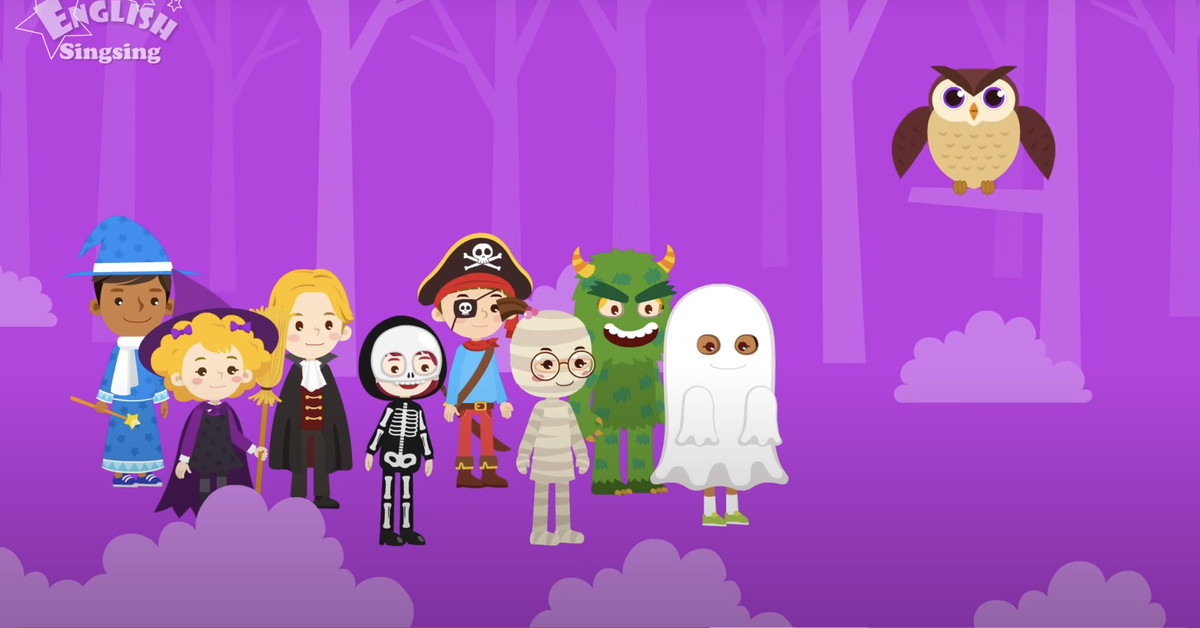
English Singsing has a pleasant, simple online video with the really feel of a toddler’s board reserve to instruct kids fundamental Halloween vocabulary.

For those wanting their children to know the origins of Halloween, try out this interesting online video from Peekaboo Kidz. Minor types and their parents can find out all types of appealing info. For instance, did you know Halloween began in Ireland and that Celts carved faces into turnips to gentle the way to their homes? Only when the custom arrived to The usa did they find out that it was a lot much easier on a pumpkin.

And ultimately, the Annie and Ben YouTube channel has a exciting puzzle recreation the place young ones aid monsters make right options about where they reside, what they search like and what they take in.

Instead of making use of Halloween exclusively as a sweet gathering enterprise, mothers and fathers can use these applications, videos and video games this period to aid kids study a small right before they rot their teeth out.