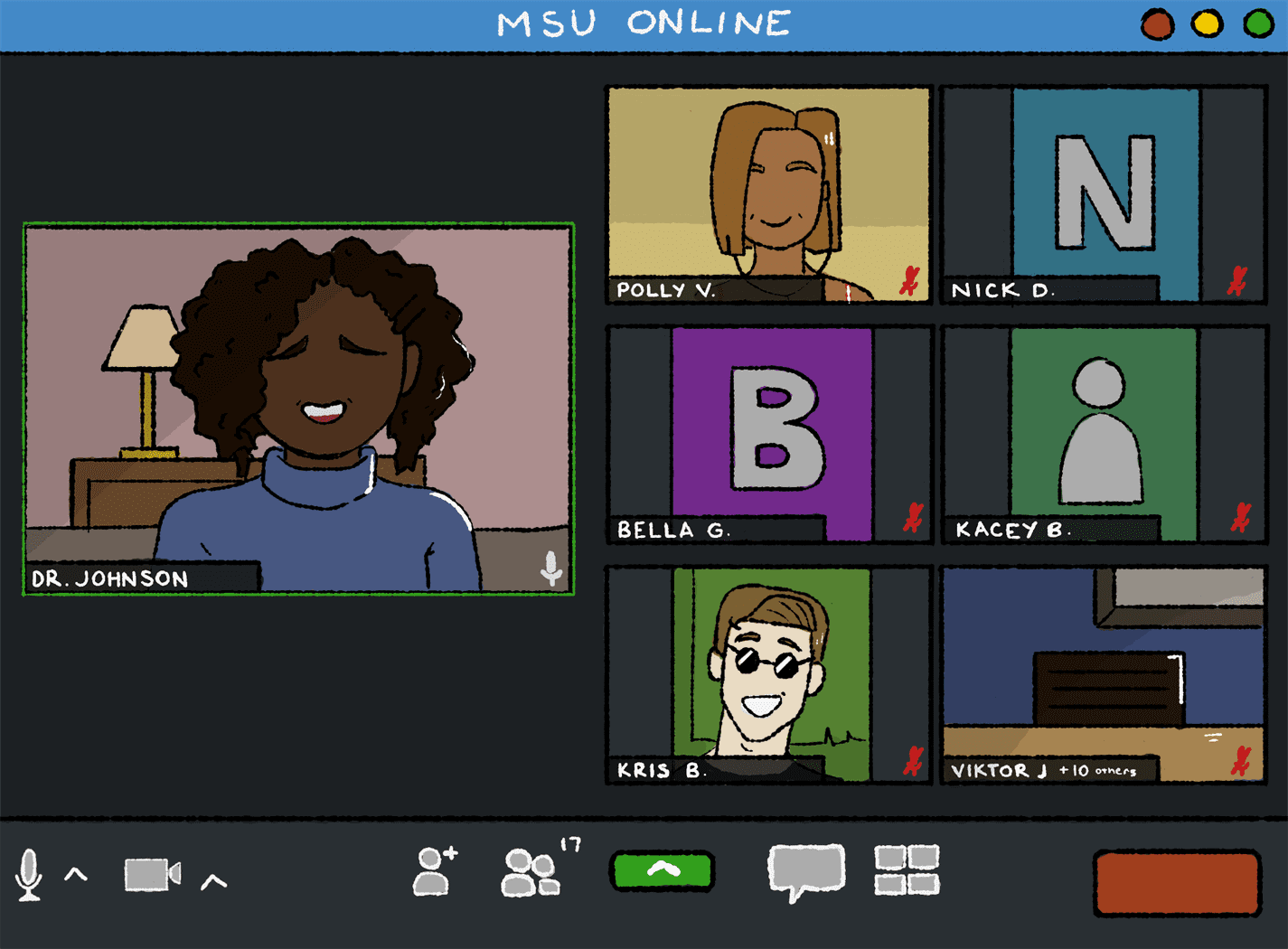
“Teachers Want to Teach!” Flexpoint Education Cloud on what Teachers Need from Online Learning

“Teachers Want to Teach!” Flexpoint Education Cloud on what Teachers Need from Online Learning

DECEMBER 6 – At the height of the pandemic, online learning was essential in keeping schools up and running on a remote basis. According to the United States Census Bureau, in 2020, nearly 93{e4f787673fbda589a16c4acddca5ba6fa1cbf0bc0eb53f36e5f8309f6ee846cf} of households with school-age children reported some form of distanced learning, with 80{e4f787673fbda589a16c4acddca5ba6fa1cbf0bc0eb53f36e5f8309f6ee846cf} of that being online. Flexpoint Education Cloud, an online learning provider, helped school districts across the US train over 14,000 educators, amounting to more than 500 hours worth of live professional development (PD).

The Florida-based company has been operating for over 20 years in providing learning materials for schools to create kindergarten to K-12 level learning programs. This is coupled with their catalog of over 180 online learning courses which can be customized to various state standards. With this background, the company has pinpointed several training topics teachers are most eager to learn, from leveraging LMS to keeping students engaged.

A 2021 Survey from Educators for Excellence found that 67{e4f787673fbda589a16c4acddca5ba6fa1cbf0bc0eb53f36e5f8309f6ee846cf} of teachers learned ways to integrate technology into their teaching and plan on carrying this on after the pandemic.

Personalized learning is a big issue that can be tackled through online tools. Teachers are looking at how best to utilize their learning management systems to create customized interactions with their students, according to Brooke Bess, the National Training Manager for Flexpoint. When training teachers in their PD sessions, Flexpoint uses a variety of visualization techniques that help educators transfer the activities they implement in a traditional brick-and-mortar classroom, to an online classroom setting. These activities are translated into the LMS, e.g. creating a digital homeroom that students can go to before logging on to their classes.

Bess goes into further detail about how LMS can be used by teachers, “we helped a group of science teachers build out a science fair project in their learning management system for students to participate in. We partnered with them to identify the assets and resources they wanted to include in the project and trained them on how to use the tools in the learning management system to create an engaging scientific inquiry experience for their students.”

Since 2018, Flexpoint has also been offering online learning courses for elementary school and pre-kindergarten teachers called Littlest Learners, which helps young students with learning online.

The Littlest Learners series contain multiple courses adapted for online learning, from their Emerging Readers course to their Littlest Mathematician course. Similar to the K-12 training sessions, teachers are taught how to implement LMS into their learning activities, and how best to plan and track the programs they deliver to their students. Also, like older students, young learners too benefit from connection and building a relationship with their teachers. This, in part, helps students become more engaged with their work.

“We show elementary teachers how to take their tried-and-true best practices from the physical classroom, and evolve them into fun and engaging activities for their students online,” Says Brooke Bess, when describing the type of training offered to kindergarten and elementary school teachers specifically. “Sometimes it looks like a “lunch bunch” so that teachers and students have more time to interact outside of lessons or teachers doing a science experiment that involves making a mess of their kitchen while their students laugh in Zoom. The engagement comes from the connections and relationships that the teachers make with their students.”

Flexpoint is also part of the Florida Virtual School (FLVS), a fully accredited statewide school district, providing tuition-free part-time and full-time online learning platforms. Students outside of Florida can also benefit from FLVS with the Global School.

The stress of the pandemic provided even more incentive for Flexpoint to extend online learning materials to hard-to-reach places. In early 2020, the company partnered with the Alaska Department of Education & Early Development (AK DEED), to create its first statewide virtual school. Alaska is home to some of the most rural school districts in the US, where teachers from small schools tend to teach across multiple subjects and grade levels.

Deborah Meyer, the Senior Director at Flexpoint, went into further detail about the importance of a virtual schooling platform for such remote learning environments in Alaska. “The COVID-19 pandemic hit, forcing school closures and requiring AK DEED to press fast forward on their plans for Alaska’s first statewide virtual school. With no time to spare, we partnered with AK DEED to launch Alaska State Virtual School in March 2020, two years ahead of schedule. We also licensed our digital curriculum with more than 180 courses and hosted intensive teacher training for more than 190 Alaskan teachers who wanted to help as many of their students as possible by teaching online during the pandemic. By partnering with AK DEED, we were able to establish a Kindergarten-12th grade virtual school to ensure equity and opportunity for all their students.”

With a virtual school, parents from hard-to-reach areas in America can enroll their children outside their designated state school, expanding their options for education.

A recent Flexpoint survey found that 75{e4f787673fbda589a16c4acddca5ba6fa1cbf0bc0eb53f36e5f8309f6ee846cf} of parents believe that online learning does help their children learn new skills which they would not otherwise learn in traditional teaching.

Meyer goes on to cement the ethos of Flexpoint, explaining how the importance of online learning and training extends past the immediate needs of the COVID-19 pandemic.

“Our goal is to be able to help even more educators deliver the right learning experience so their students can succeed – whether they are new to online learning and are looking for best practices or have experience with online teaching and want new and innovative techniques to use in the classroom.”

The 25 Most Popular New Online Courses of 2021

The 25 Most Popular New Online Courses of 2021
  • Foundations: Data, Data, Everywhere from Google via Coursera: This course introduces “the world of data analytics through hands-on curriculum developed by Google.”

  • Foundations of Project Management from Google via Coursera. The first of a series of six, this course is designed “to equip you with the skills you need to apply to introductory-level roles in project management.”

  • Foundations of User Experience (UX) Design from Google via Coursera. The first of a series of seven courses, it “will equip you with the skills needed to apply to entry-level jobs in user experience design.”

  • Ask Questions to Make Data-Driven Decisions from Google via Coursera. This one “will help you learn how to ask effective questions to make data-driven decisions.” 

  • Prepare Data for Exploration from Google via Coursera. In this class “you’ll learn how to use tools like spreadsheets and SQL to extract and make use of the right data for your objectives and how to organize and protect your data.”

  • Project Initiation: Starting a Successful Project from Google via Coursera. “This course will show you how to set a project up for success in the first phase of the project life cycle: the project initiation phase.”

  • Process Data From Dirty to Clean from Google via Coursera. “In this course, you’ll continue to build your understanding of data analytics and the concepts and tools that data analysts use in their work.”

  • Start the UX Design Process: Empathize, Define, and Ideate from Google via Coursera. “In this course, you’ll complete the first phases of the design process for a project that you’ll be able to include in your portfolio.”

  • Psychological First Aid: Supporting Children and Young People from Public Health England via FutureLearn. No extra credit for guessing why this one was popular in the time of Covid. It teaches adults “to support children and young people’s mental health during emergencies and crisis situations.”

  • Analyze Data to Answer Questions from Google via Coursera. In this one you move along to “explore the ‘analyze’ phase of the data analysis process.” 

  • Excel for Everyone: Core Foundations from the University of British Columbia via edX. “Learn Excel fundamentals including data wrangling, spreadsheet management, and basic data analysis.”

  • Data Analysis With R Programming from Google via Coursera. “You’ll discover how R lets you clean, organize, analyze, visualize, and report data in new and more powerful ways.” 

  • Introduction to Statistics from Stanford University via Coursera. This course is designed to help you “gain the foundational skills that prepare you to pursue more advanced topics in statistical thinking and machine learning.”

  • Share Data Through the Art of Visualization from Google via Coursera. “This course will show you how data visualizations, such as visual dashboards, can help bring your data to life. You’ll also explore Tableau, a data visualization platform.”

  • Agile Project Management from Google via Coursera. “This course will explore the history, approach, and philosophy of Agile project management, including the Scrum framework.”

  • Project Planning: Putting It All Together from Google via Coursera. “This course will explore how to map out a project in the second phase of the project life cycle: the project planning phase.”

  • Google Data Analytics Capstone: Complete a Case Study from Google via Coursera. The eighth course in the Google Data Analytics Certificate. “You’ll have the opportunity to complete an optional case study, which will help prepare you for the data analytics job hunt.”

  • Nature-based Solutions for Disaster and Climate Resilience from SDG Academy via edX. Another course on the list that speaks to the anxieties of our time. It aims to answer: “What are ‘nature-based solutions,’ or NbS? How can they help build resilience to disasters and climate-change impacts? Why is NbS relevant? How can I apply NbS in my work and everyday life?”

  • Build Wireframes and Low-Fidelity Prototypes from Google via Coursera. “In this course, you’ll continue to design a mobile app for your professional UX portfolio.”

  • AWS Cloud Technical Essentials from Amazon Web Services via Coursera. A course for those in a technical role who want to learn the fundamentals of AWS.  

  • Project Execution: Running the Project from Google via Coursera. “This course will delve into the execution and closing phases of the project life cycle.” 

  • Python Project for Data Science from IBM via Coursera. “This mini-course is intended for you to demonstrate foundational Python skills for working with data. The completion of this course involves working on a hands-on project.” 

  • Conduct UX Research and Test Early Concepts from Google via Coursera. “In this course, you will learn how to plan and conduct a usability study to gather feedback about designs.”

  • AWS Cloud Practitioner Essentials from Amazon Web Services via Coursera. This course provides an understanding of “fundamental AWS Cloud concepts to help you gain confidence to contribute to your organization’s cloud initiatives.”

  • Introduction to Google Workspace Administration from Google Cloud via Coursera. In this course “you will be introduced to your Cloud Directory and will learn how to split your organization into organizational units to simplify user and service management.”

  • Why NC State is a leader in online learning :: WRAL.com

    Why NC State is a leader in online learning :: WRAL.com

    This article was written for our sponsor, NC State Online.

    Since the COVID-19 pandemic necessitated periods of social distancing and isolation, remote learning went from an exception to a norm. While many schools, universities and colleges were experimenting with online learning for the first time, at North Carolina State University, online learning has been around for decades.

    In fact, the university even offered correspondence courses for years before there was an internet, mailing students VHS tapes, then later CDs and DVDs of instructional material. Students would watch or review that content and mail their assignments to their instructors. Today, N.C. State’s online graduate programs and certificates prepare students for in-demand jobs and career advancement.

    N.C. State’s DELTA, or Digital Education and Learning Technology Applications, started in the year 2000 and aimed to support teaching and learning with technology both on and off campus. Now, two decades later, DELTA is still going strong — and N.C. State’s online programs are benefiting greatly from the wide variety of available services including course development and faculty support.

    Michael Kanters, a professor in the university’s College of Natural Resources, has been a long-time advocate of online programs, and even serves as a coordinator for two fully online graduate programs.

    “I’ve been a college professor for 35 years, so I’m always looking for creative ways to keep students and myself engaged, because the two go hand-in-hand. I’ve always been intrigued by the online environment, and I’m constantly looking for ways that technology could be integrated into my teaching, both as an opportunity to capitalize on my own interest, as well as to reach a broader audience for courses,” said Kanters. “There’s no perfect methodology for teaching out there, but I believe that online learning can cater to a wider array of people. It makes the courses more accessible, it accommodates a wider range of learning styles and it allows for flexibility for both the students and myself.”

    In order to provide robust and refined online programs, N.C. State faculty members put in the time and effort to become experts in teaching with technology through attending workshops and conferences of all types.

    By leveraging available resources and technologies, N.C. State is taking online learning to the next level — which proved to be an asset of distinction.

    “We at N.C. State really are leaders in online education in the nation, and I think that’s a testament to the university’s dedication to prioritizing online learning, and pushing the envelope all the time as far as new technologies and techniques,” said Kanters. “The online world is an environment that is always moving and always changing. N.C. State has outstanding professionals that have a passion for not only bringing innovation to online learning and technologies, but also for sustaining the university.”

    NC State Online : Spotlight : Inset_NCStateOnline_1-1

    While Kanters has been accustomed to quality online learning, the shift to emergency remote teaching and learning has meant that every faculty member has been exposed not only to multiple learning technologies, but to new pedagogical approaches and the awareness that online education, when intentionally designed, can help students by supporting a more flexible approach to student learning.

    Faculty who may not have thought about online learning before can now see the potential to reach more students by offering online sections of their courses — and N.C. State and DELTA are the model to follow.

    “With the experiences we’ve had, not only during the pandemic but because we have a long history of offering outstanding online courses, N.C. State is in an excellent position to consider how we continue to offer a range of course types to students that match their needs, whether that is in-person, online or some blend of the two,” said Donna Petherbridge, interim vice provost for DELTA.

    NC State Online : Spotlight : Inset_NCStateOnline_1-2

    “Moving forward, the key to our success will be to keep the student experience as our front-and-center touchstone, ensuring we are delivering courses via innovative technologies and pedagogical practices, and paying close attention to other support services that students may need to be successful.”

    “Having come through the pandemic has really highlighted what people can do and how students can learn online — it’s one of the silver linings of the pandemic, because it’s brought some attention to online learning,” added Kanters. “But there are still people out there who may be afraid of it and students that don’t think that they can learn effectively in this environment.”

    “If those courses are structured well, I truly believe there isn’t a course out there that can’t be taught effectively in this medium.”

    This article was written for our sponsor, NC State Online.

    Can Online Education Be a Force for Equity and Institutional Sustainability?

    Can Online Education Be a Force for Equity and Institutional Sustainability?

    Many reviewers, in my judgment, have misread Robert Ubell’s new book, Staying Online. It’s been largely treated as a compendium of practical advice about how colleges and universities can successfully embrace online learning.

    Ubell, a pioneer in online program development at the Tandon School of Engineering at New York University and Stevens Institute of Technology, certainly offers a great many sensible recommendations about:

    • Formulating and implementing an online strategy, including calculating the right price for an online degree and making solid enrollment and revenue projections.
    • Designing, developing, delivering and growing online programs and providing online student services.
    • Integrating active learning into digital instruction.
    • Mitigating cheating in online courses.
    • Managing online course ownership.
    • Using data analytics to improve online instruction.
    • Deciding whether or not to partner with an online program manager.

    But at its core, the book offers a compelling argument that online learning can be a force for equity, despite the widespread claim that low-income and first-generation college students fare relatively poorly in online courses.

    Done properly, Ubell contends, online learning can boost outcomes for marginalized students, increase retention rates, improve student learning and stabilize institutional costs.

    Staying Online is, in short, a clarion call for institutions to mainstream virtual learning.

    In addition, he is convinced that digital instruction can be the savior of many traditional institutions, not just during the pandemic, but beyond, as they seek to sustain and increase enrollment.

    Online teaching offers a practical and pragmatic way to address the market forces that are upending institutional finances: the shrinking college-age population, deepening economic inequality, rising numbers of adult learners and stiffening competition among institutions for undergraduates and master’s students.

    Were it not for lower-cost online education, he argues persuasively, the national decline in postsecondary enrollment would have been far worse than it has been.

    As economic inequality intensifies, Ubell contends, it is more important than ever that colleges and universities take steps to bridge the economic divide. That will require these institutions to deliver an education that is more affordable, flexible and convenient than they have historically offered.

    Scaled online education, in his view, must be a big part of the solution.

    Myth busting constitutes a big part of Ubell’s book.

    • Must it cost tens of thousands of dollars to develop effective online courses? Absolutely not, he insists. High-end production values are far less important than effective online pedagogy.
    • Must a digital education be more expensive than a face-to-face education? Certainly not. It’s undeniable that some institutions do treat online learning as a revenue generator. But any accurate cost accounting shows that online classes can be cheaper to deliver, especially if campuses are willing to embrace alternate staffing models that allow the classes to be scaled.
    • Must lower-income and other nontraditional students perform less successfully in online classes? Nope. Ubell cites numerous examples of online students outperforming their in-person counterparts.

    But if institutions are to succeed online, campus leadership and faculty must recognize that delivery methods aren’t the only difference between face-to-face and virtual instruction. Pedagogy, assessments, curricula and support structures all need to change if online students are to succeed.

    In Ubell’s opinion, the keys to effective online learning involve:

    • Rejecting the notion that effective online instruction should replicate the conventional in-person experience.
    • Recognizing that online students differ markedly from their on-campus counterparts; they are much more likely to work part- or full-time, to be older, and to have to juggle demanding work and family responsibilities.
    • Re-engineering courses around a more student-centered approach to engaging, motivating, instructing and assessing students that emphasizes active learning, peer-to-peer interaction, inquiry, digital exercises, virtual labs and guided projects.
    • Treating student support not as an afterthought but as central to academic success in an online environment.

    Among the many important arguments that Staying Online advances are these:

    • An online education need not be inferior to an in-person experience. Online learning generally allows students to process information in their own time, to take part in online discussions and ask questions without losing face, and to engage more actively with peers and in interactive activities.
    • A scaled online education can also be a more personalized education. Data analytics can allow instructors to identify students who are disengaged, confused or at risk of failure so they can address these challenges in near real time. Such data can also pinpoint material or skills that are particularly difficult to comprehend or master and prompt instructors to develop tutorials and activities to help students achieve proficiency.
    • Cheating is more a consequence of misguided approaches to assessment than it is to students who are unethical or unprincipled. Here, Ubell is one of many innovators calling for more frequent low-stakes assessments distributed throughout a course.
    • Online learning need not be alienating or isolating. The design challenge is to make online courses more participatory, collaborative and interactive than their conventional in-person counterparts.
    • Institutions without an online strategy will deprive themselves from key sources of future enrollment. One of the greatest benefits of digital education in this century is its capacity to offer greater access to colleges and universities to students who must work while they advance their studies. It allows campuses to serve not only nontraditional students but growing international markets as well.
    • A successful online strategy at the postbacc level requires institutions to convert individual courses into bundles of steeply discounted, connected classes that carry credit in targeted high-demand fields. He also stresses the importance of branding these programs effectively. Here, he cites the example of Specializations, MicroMasters, Nanodegrees and Professional Certificates.

    For many academics, the pandemic has been a wake-up call. It’s among those once-in-a-generation occurrences that forces a reconsideration of many taken-for-granted assumptions.

    Many of us now recognize that the kind of education that we offered in the past, for all its virtues, hasn’t served many of our existing students well, while ignoring the needs of the nonstudents who could benefit from a college education. Cost and a rigid academic calendar are part of the problem, but so too is pedagogy and delivery modalities.

    If we truly want to address postsecondary equity, online—or hybrid or low-residency—education must be part of the mix. Short-term certificates and certifications and alternate credentials, too, need to be part of the future.

    But as Staying Online makes clear, it’s not enough to deliver conventional classes online. We need to radically rethink the academic experience and our pedagogies, curricula and assessment strategies. Ubell’s most important takeaway: input from the learning sciences and instructional designers and educational technologists won’t simply help online students; it will benefit more traditional on-campus students as well.

    It’s a lesson we should take to heart.

    Steven Mintz is professor of history at the University of Texas at Austin.

    #FocusDisruption: How Online Education Affected Students and Professors Alike

    #FocusDisruption: How Online Education Affected Students and Professors Alike

    When students and educators were sent home in March 2020, they quickly had to figure out what to do without being in person. Our ways of teaching and learning were disrupted by the coronavirus (COVID-19) pandemic and so we had to make do with what we had: online learning.

    Around a year and a half later, online learning has turned the way we think about education on its head. Even today, as we are still slowly making our way out of the pandemic, virtual education is still implemented. Whether it be the virtual days due to inclement weather or the asynchronous classes that students are still taking this year, online learning is the way that we dealt with COVID-19 interrupting our education.

    Students at Montclair State University have a lot to say about their experience with learning via Zoom. Although experiences differed in some ways, they left a lasting impression on most. Cam Martin, a junior sports media and journalism major, described how he handled the initial transition to learning online.

    “Using Zoom for the first time was definitely unique to me partially because I’d never experienced an online school,” Martin said. “I can sleep in a little bit, but this is still kind of new to me. I’m good with technology, so I could find a way to successfully complete this, but it’s just really a matter of, ‘Can I really do this at the moment?’”

    Cam Martin, a junior sports media and journalism major, was one of many students who had to make the transition to online learning. -photo courtesy of Cam Martin

    Cam Martin is one of many students who had to make the transition to online learning.
    Photo courtesy of Cam Martin

    Mari Zuniga, a senior communication and media arts major, had a more difficult transition into what became the new normal for education.

    “I find it hard to concentrate on the computer,” Zuniga said. “It’s really difficult for me because I’m looking at this and looking at that. I’m hearing them, but I’m not listening. I’m not paying attention.”

    Mari Zuniga, a senior communication and arts student, had her mental health affected by online learning. -photo by Sal DiMaggio

    Mari Zuniga had her mental health affected by online learning.
    Sal DiMaggio | The Montclarion

    Dr. Erik Jacobson, an associate professor in the teaching and learning department, noted how different students reacted in different ways to the initial switch over to virtual learning.

    “[For students who prepared for online learning], it might’ve been slightly different than they were expecting, but I think classes still worked for them,” Jacobson said. “I think they got maybe not 100{e4f787673fbda589a16c4acddca5ba6fa1cbf0bc0eb53f36e5f8309f6ee846cf} of what they would have gotten normally, but I think they got a good chunk of it. And the students who were not prepared for it, I think really suffered.”

    Dr. Erik Jacobson, an associate professor in the Department of Teaching and Learning, had much to say about how online learning impacted our way of education.- Photo by Sal DiMaggio

    Dr. Erik Jacobson had much to say about how online learning impacted our way of education.
    Sal DiMaggio | The Montclarion

    Students weren’t the only ones impacted by the move to Zoom. Professors had to deal with this change as well. Dr. Michael Koch, an adjunct professor for the School of Communication and Media, was one of many.

    “[Online teaching is] not my preferable way to teach, but I wasn’t completely against it either,” Koch said. “I wanted to be safe, and I wanted everybody to be safe, too. So it was challenging, but I made the best of it that I could and I tried to be as accommodating as [I] possibly could be.”

    Dr. Micheal Koch, an adjunct professor in the School of Communication and Media, said the online learning made it difficult for him to engage properly with his students.- photo by Sal DiMaggio

    Dr. Michael Koch says online learning made it difficult for him to engage properly with his students.
    Sal DiMaggio | The Montclarion

    Mental health was also something that online learning affected. Going to classes has a social aspect to it as well as an educational one, and being forced to learn from home took that away.

    In addition to being a professor at Montclair State, Koch is also a therapist, and he saw students struggling with their mental health. But he also noted that sometimes it’s hard to know what students are going through.

    “I think that it’s a bit of a cliché to say everybody is struggling, but there is a lot of cumulative impact of this,” Koch said. “Maybe six months ago, some people [would say], ‘Yeah, I’m fine. I’m doing alright.’ But as it drags on and on, it just gets tiring. I think there’s a lot of mental exhaustion. [Even] myself and [other educators] are not immune to that at all.”

    Zuniga went on to discuss her struggles with mental health while learning over Zoom.

    “Before COVID-19, [my mental health] was already on the rocks,” Zuniga said. “So when online learning happened, it slightly got worse. [I thought] ‘How am I going to get through this? Are we always going to be on Zoom?’”

    According to Jacobson, the decline in mental health wasn’t quite invisible to professors, but it was hard for them to tell exactly what was going on.

    “I had students who would straight up tell me how they were doing and how they were feeling and others who fell off the radar,” Jacobson said. “So I [would] email them, ‘How are you doing? Is everything okay?’ But then there were students who showed up, did their work, were engaged and their personality wouldn’t lend themselves to saying, ‘Actually I’m struggling right now.’”

    Despite this, online learning may have its advantages going forward if used correctly, especially here at Montclair State where traffic and parking seem to always be cause for concern for students, according to Jacobson.

    “It certainly provides flexibility, right?” Jacobson said. “In terms of time, schedule and physical location. Montclair State has a lot of students who work outside of school. We have a lot of students who are commuters, [and] we’ve got terrible traffic and parking problems on campus. So certainly Zoom and using online learning platforms may be a way to address some of those things.”

    As the future unfolds, the COVID-19 pandemic will continue to shape our education systems. No one can predict the future and tell what it has in store for us, but at the end of the day, one thing is clear: online learning has changed the way we think about education forever.

    Teen who endured tragedy finds success through online education

    Teen who endured tragedy finds success through online education

    Estimated read time: 4-5 minutes

    One of the great lessons from the pandemic is that education must include flexibility. While some students struggled during a year of mostly crisis virtual instruction, most flourished with intentional online learning. Utah Online School is leading the way in online education and has been for years.

    With more than 15 years of experience in a flexible learning environment and serving more than 10,000 students each year, UOS has time-tested methods for accommodating the needs of students.

    UOS emphasizes student success by tailoring learning to student needs with the support of certified teachers, adult mentors, and counselors. Best of all, UOS is an accredited public school, free to Utah students.

    How UOS helped one student

    At 15, Kelly has experienced a lifetime’s worth of trauma, including multiple moves, her parent’s divorce and eventually the tragic death of her father days before the start of her freshman year in a new school.

    A few months later, COVID hit and effectively ended her schooling for many months.

    Kelly moved to Utah to live with her grandparents. She was short on some credits needed, so during the summer, she enrolled in and completed two classes through UOS. Best of all, they were courses she couldn’t take at her boundary school because demand exceeded capacity.

    “The Utah Online School experience was great,” said her grandfather. “The courses were thorough and the process was smooth. There was no pressure, so Kelly was able to work at her own pace. Anytime there was a question or concern, the teachers and staff at UOS responded the same day.”

    Now a junior, Kelly is able to make up some of her missing credits at her boundary school, and she also plans to take additional summer courses at UOS.

    Focused on needs and flexibility for students and families

    Even with the current school year underway, students have options of taking courses from UOS while still attending their local school. No matter the situation, UOS can support the needs of students through their expansive course offerings and supportive learning environment.

    Early high school credit available for 6-8th grade students

    Many students are eager and able to get a head start on their high school credits. This allows flexibility in their future high school schedule or early graduation for students interested in this option.

    Teen who endured tragedy finds success through online education
    Photo: oushad Thekkayil/Shutterstock.com

    Grade replacement

    Utah Online provides students the opportunity to retake a course to replace a grade on their transcript.

    Credit recovery

    Utah Online helps students recover failed credit needed for graduation. Students may sign up for credit recovery during the school year or summer.

    Expansive course offerings

    At many schools, popular elective courses are often restricted to seniors or are filled by random selection because demand far exceeds available slots. That’s not a problem at UOS. In fact, UOS offers far more courses than many boundary schools.

    In addition to traditional subjects like reading, art, history and math, UOS has courses like computer science, programming, coding, world languages (20-plus), music (guitar, ukulele, music theory and more), wildlife and marine biology, honors courses and ACT prep.

    Do you have a student who will be old enough to drive? UOS offers drivers education that includes the curriculum and simulator requirements. Students can also earn physical education credit for participating in any physical activity they are involved in, privately or through club sports. Students receiving private music instruction can earn high school credit through the Independent Studio Study course, which can be taken repeatedly as long as they are in music or voice lessons with an instructor.

    You can see the vast list of course offerings at the UOS website and the list of available subjects is constantly growing.

    A record of success

    Utah Online School serves more than 10,000 students each year with more than 150 teachers, counselors and staff. In 15-plus years, the cumulative total of students served has exceeded 110,000. Those numbers continue to rise as parents seek ways to provide their children with the best available education.

    Over that time UOS has achieved a course completion rate exceeding 90{e4f787673fbda589a16c4acddca5ba6fa1cbf0bc0eb53f36e5f8309f6ee846cf} and a graduation rate of 99{e4f787673fbda589a16c4acddca5ba6fa1cbf0bc0eb53f36e5f8309f6ee846cf}.

    Teachers and staff at Utah Online School are highly qualified, licensed and certified. They are also passionate about helping students. “I am able to customize and individualize content for students’ specific needs in a way that was not possible previously. And as someone who went into education because I truly love teaching high school kids and love this age group in general, this has been a dream job!” says teacher Kellie Richins.

    Madison Belnap, another teacher at Utah Online School says, “Teaching for Utah Online High School is a privilege. I love the opportunity to teach students from all over the state, with diverse backgrounds and varying circumstances. Connecting with these different students is so expanding for me as their lives add a level of abundance to my experience as an educator.”

    Whether your student is seeking part-time, full-time or concurrent enrollment, Utah Online School has the experience and expertise to help them find educational success.

    More stories you may be interested in