
Masters Of Education
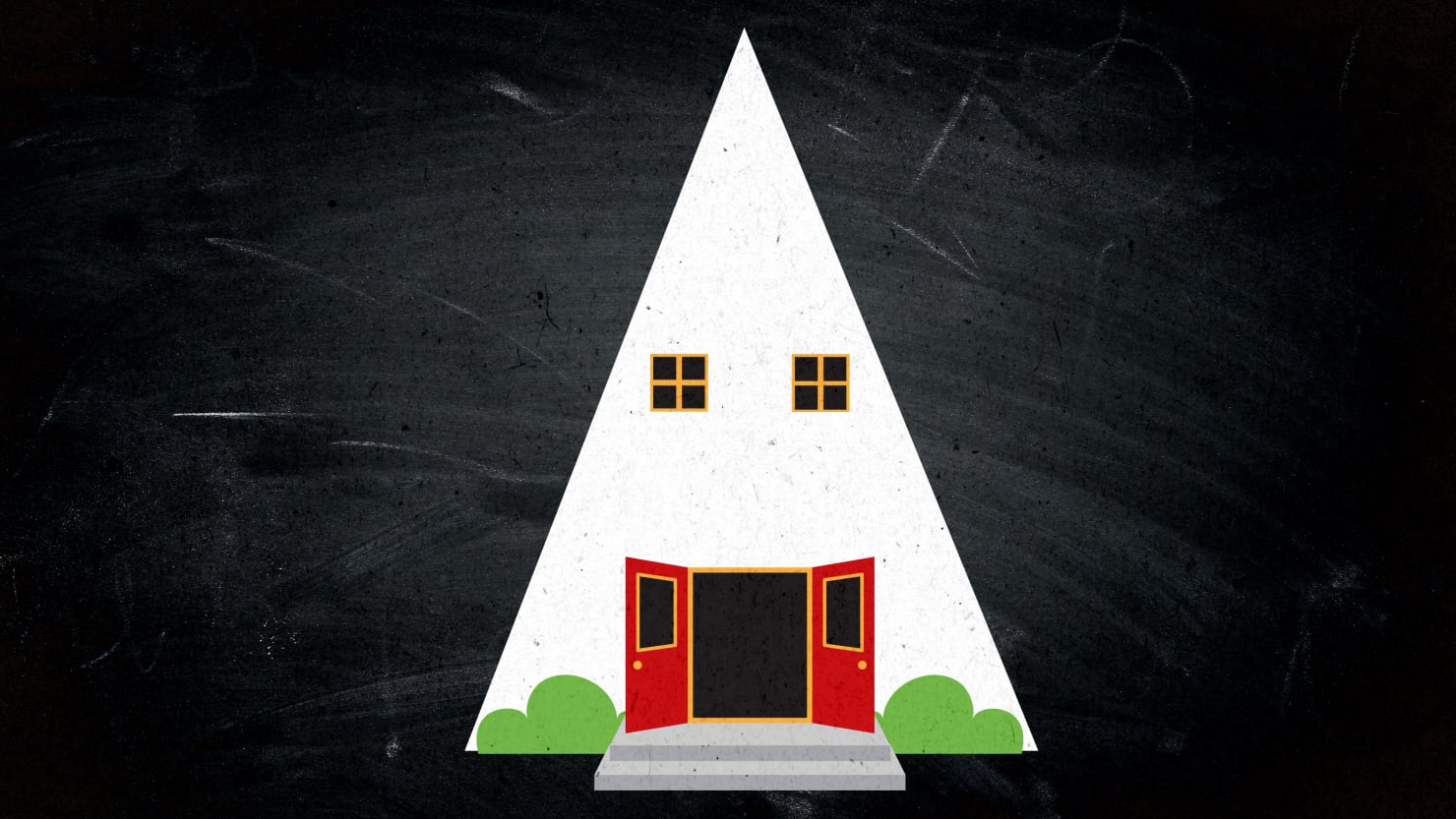
The School of the West, a recently launched online “educational resource for homeschooling parents,” offers a smattering of materials—some free, some only for paying members—to help teach kids standard subjects like math, science, and language arts. But its key selling point is a unique and deeply disturbing field of study that the site has dubbed “White Wellbeing.”
A write-up on the contents of an upcoming three-month live-streamed white wellbeing course, advertised for students ages four and older, explains that it will help children “understand the gift of being born a member of Westernkind and the qualities that separate us from the other races.” In case it wasn’t clear, the write-up later clarifies that “the White race is known as Westernkind.” It also promises to teach them how to spot and respond to the “anti-white propaganda” that supposedly suffuses modern life, why white people are the only true citizens of Western nations, and how “feminism destroys the family unit,” the supposed backbone of all Westernkind, “thus weakening our societies.”
This blatant white-nationalist ideology is infused into some of the site’s lessons on conventional subjects, as well. Its history materials, for example, falsely teach that the notion European colonization led to the spread of new diseases that decimated indigenous populations is not established historical fact, but an anti-white myth. The School also links to the Institute for Historical Review, as a “reliable online source for the study of history.” The IHR notoriously publishes materials that push for Holocaust denial and antisemitic readings of history, using the language and formatting of conventional academia, but none of its rigor. And the School’s life sciences materials are just a series of seven videos and attendant worksheets on the supposed science of human racial differences, which deliver a series of thoroughly debunked pseudoscientific arguments as if they were hard facts.
“When you develop trust with your students, they’ll believe pretty much everything you say.”
— Brant Williams
As if to underscore its focus on white-nationalist indoctrination, one video on the site even tells children that, in the face of a supposedly virulently anti-white culture, “it’s important to do your schoolwork, but it’s even more important to feel good about yourself and your own people.”
Oh, and an ad for the site floating around the dark corners of the internet opens with pictures of all-white communities and schools in the mid-20th century, then juxtaposes them with images of diverse classrooms and clips of Black kids hitting white kids, among other racial fear-baiting imagery. Towards the end of the ad, text pops up that reads “Enough. Reclaim Your Destiny.” It then shows a copy of White Fragility—the pop explainer on systemic and often unconscious racism—burning over coals.
It is easy to dismiss the site as a gross but ultimately marginal aberration. After all, it appears to be one guy’s pet project: On the site, he goes by Brant Danger, but the Anti-Defamation League extremism researcher Mark Pitcavage and The Daily Beast have identified him as Brant Williams, who until this spring was a teacher in the majority-Native American Page Unified School District, which serves Page, Arizona, and surrounding areas. A representative for the PUSD told The Daily Beast that Williams left of his own volition at the end of the last school year. The representative said they weren’t aware of his work on the School of the West.
Williams did not respond to repeated efforts to reach him for comment on this story.
But experts on homeschooling and white nationalism alike say that his School actually reflects longstanding efforts to indoctrinate children into extremism. It’s just far more blatant, visible, and organized than many past extremist homeschooling endeavors. Amy Cooter, a sociologist who studies white nationalism, and grew up in a private Southern Baptist church school with connections to far-right homeschooling groups, argued the School’s blatant racism is not a naïve mistake, but a logical step in larger efforts to bring white-nationalist ideas into mainstream consciousness.
“Our political environment is more receptive to this sort of messaging at the moment,” she told The Daily Beast.
Notably, in recent months, fans of the School of the West have started to drop links to it in a few small social media communities focused on anti-critical race theory activism, in the hope that people who’ve bought into that twisted, partially manufactured, and racially charged furor might be amenable to the school and its ideology. This tactic probably won’t be as successful as fans of the School might hope, the experts The Daily Beast spoke to argued. But it may be more successful than many mainstream observers—and anti-CRT activists, most of whom vigorously dispute charges that their movement is tinged with racism—would be comfortable with.
“I’m sure that some people who’ve thought of themselves as not racist will buy into this,” Cooter told The Daily Beast.
Motives for homeschooling children in the United States have always been diverse. But for decades, a particularly vocal and visible subset of homeschoolers have advocated pulling kids out of school to escape the supposedly secular, liberal bias of public education. There’s also a longstanding connection between homeschooling and anti-integration white flight. Overt white nationalists in particular started to go all-in on homeschooling in the early 2000s, Pitcavage noted.
“White nationalists are interested in creating their own parallel society,” explained Sophie Bjork-James, an anthropologist who studies white-nationalist communities. “Educating children in white-supremacist values is part of this plan… White nationalists understand that exposing their children to multicultural curricula can lead to a rejection of their beliefs.”
However, Jameson Brewer, an education researcher who studies homeschooling tactics and trends, said that public resources and curricula created for these communities “tend to be more shrouded, to use dog whistles.” Their textbooks might, for example, frame slavery as a necessary evil, or present a both-sides narrative about Nazi policies. Cooter added that these sorts of materials also tend to show only images of white families, and talk exclusively about white people’s histories. Even curricula that express openly far-right ideologies often stop short of talking about things like core racial differences, instead just waxing poetic about loaded concepts like Western Christianity, nationalism, and tradition, while castigating social justice and wokeness as anathema to good, orderly society.
Richard Fording, a University of Alabama professor who tracks white-nationalist trends, said that there are more explicit “white-nationalist homeschooling groups out there, but they are normally kind of under the radar, not open to just anyone.” White nationalists also swap ideas about what to teach kids on their own niche platforms so as to help each other develop private, idiosyncratic curricula. In the mid-2000s, a Klan group did create what it called the first homeschooling resource for white-nationalist parents, but said it didn’t “intend to provide all the information, all the tools, books, etc.,” and instead just wanted to point folks “in the right direction.” Similarly, a white-nationalist women’s group on the West Coast created something that it called a curriculum, but that actually just guided those who purchased it through how to build their own.
Experts stressed that these efforts have always been small scale, ad hoc, and/or fleeting. Brant Williams clearly felt there was a major gap in educational offerings for open white-nationalists—and took it upon himself to fill it.
Williams has told a consistent story on a number of far-right livestreams and podcasts about how he came to develop the School of the West.
In these interviews, as on the School of the West site, he consistently goes by the name Brant Danger, and is often cagey about his location or exact job title. But after Pitcavage of the ADL learned about the School of the West this summer, he found an old social media handle and email address that used that pseudonym, and were both connected to the name Brant Williams. Both used the same profile photo, which resembles “Brant Danger,” who makes no effort to hide or disguise his face during livestreamed interviews or in School of the West videos. The social media account also included a white pride meme and some materials related to teaching.
Williams appears to have slipped up in a few of his Brant Danger interviews—if he ever was truly attempting to conceal his identity—mentioning that he taught in Arizona, near a reservation. Pitcavage noticed that and, after some searching, found the name Brant Williams on the faculty page of a Page Unified School District school. He also found a YouTube video in which a man who looks exactly like “Brant Danger” identifies himself as Brant Williams, a Page-area earth and space sciences teacher, and castigates the local school district.
The Daily Beast checked public records and found a Brant Williams connected to an address in Page. The Arizona Department of Education’s teacher certification database also lists a Brant Williams with an active certificate and a specialization in earth sciences. The Daily Beast could not find any record of any other person named Brant Williams with a certification to teach in Arizona living within a 100-mile radius of Page. A Page Unified School District representative also told The Daily Beast that Brant Williams taught there until the end of the last school year, which lines up with details “Brant Danger” has given about his career status in interviews. The representative reviewed the YouTube video of Brant Williams deriding the district as well, and confirmed the man who appeared in it seemed to be the same Brant Williams who taught in their schools.
The Daily Beast also identified Arizona business incorporation papers that list a “Brant Williams” as the owner and operator of School of the West LLC, and connect him to an address in Page. The School of the West’s website used an anonymization service to hide its owner from registration databases. But within a trove of data published by hackers who broke into the far right-friendly web hosting service Epik, The Daily Beast found information showing that the site was registered by a “Brant Williams,” and linked to a post office box in Page.
In online interviews, Williams (speaking as “Brant Danger”) has claimed that he had a slow “racial awakening” over the course of his childhood, as he observed the differences between majority-white and majority-minority communities and schools. But in 2016, he’s said, he started researching Muslim immigration to Europe online and went “further and further down the rabbit holes.”
Eventually, he found Jason Köhne, an author and streamer instrumental in the development of a seemingly genteel new flavor of white nationalism focused on fostering so-called white wellbeing in the face of a supposed deluge of anti-white policies and propaganda. Köhne notably advocates for the open expression of white cultural pride as a counter to alleged systemic anti-white degradation and oppression. Williams became a mod in the chats that accompany some of Köhne’s livestreams, and clearly states in School of the West materials that many of his lessons are heavily informed by Köhne’s works, or even in some cases direct attempts to adapt their arguments for younger audiences. (Köhne did not respond to a request for comment on this story.)
Williams has also claimed that teaching in a majority-minority community deepened his belief in the fundamental differences between different races—or, put another way, reinforced his racism. Notably, he’s described his Native students as inherently less focused and punctual than his white students, and argued that the reservation communities near Page are covered in trash and full of mangy dogs because Native Americans don’t care about cleanliness or animals—baldly bogus and bigoted claims. He’s insisted that he loves all of his students, and bears no ill will towards other races—that they can and should live according to their supposed inborn and unique racial impulses. But he’s argued that diversity, and the influence of other cultures, is detrimental to white communities.
He’s also said that he’s long chafed at depictions of multiculturalism in school materials, and at efforts to promote equality or equity within classrooms and wider school systems. At times, he’s said, when he felt that school textbooks were teaching lies, he’d close the door to his classroom and teach what he believes to be the truth instead. In one interview, he recounted an instance in which his students asked if something was racist and he told them not to use that word because “that R word for white people is like the N word for black people… it’s just meant to hurt white people. Don’t use that word.”
“Here’s the thing with kids,” he recently told another interviewer. “If I told them that aliens came down and made these people in Hollywood and now everyone in Hollywood is aliens, they’d go, ‘Yeah, OK, alright.’ When you develop trust with your students, they’ll believe pretty much everything you say.”
This is bad when teachers promote anti-white propaganda, he argued. But it’s an asset when someone like him comes along to tell them the so-called truth about race and society.
As his urge to spread his blatantly racist gospel to young, impressionable minds—and his frustrations with the supposed anti-white bent of his district—festered, Williams apparently started talking in niche social-media communities about the importance of creating venues “for white kids who want to be taught by whites.” While he found people online who agreed with him, he couldn’t find any resources that he felt fit the bill.
Then in early 2020, the coronavirus pandemic forced his school to go remote. This, he’s claimed, gave him the time and space he needed to start making his dream a reality—building the foundations of the School of the West while still teaching in a public school. Registration data show that Williams began to create the School’s site in April 2020. (It is not entirely clear why he left the school at which he taught at the end of the last school year.) He’s claimed that Köhne helped him to connect with other so-called white wellbeing advocates across the web who helped him develop lessons; around a dozen white-nationalist figures, some obscure and some relatively well-known in this niche digital scene, appear to have contributed to the project. Williams has claimed that he’s still working with collaborators to build out the curriculum, which he boasts will grow far more comprehensive in the months and years to come.
Even before he officially incorporated and launched the School this past summer, far-right streams and social-media accounts started to promote and celebrate his venture. But awareness of the project was seemingly confined to niche white-nationalist spheres.
Then the right-wing panic over critical race theory exploded into public view.
The anti-CRT movement is largely alarmist and disingenuous. It thrives on misrepresentations of what CRT actually teaches, and of what is actually taught in most schools, in a way that demonizes discussions about systemic racism or unconscious bias in educational settings, or in some cases even discussions of America’s history of racism overall. However, even critics of the critical race theory backlash acknowledge that there’s a big gap between that freak-out and the full-throated white nationalism that the School of the West promotes. Most anti-CRT figures promote a willful colorblindness—often grounded in decontextualized and sanitized Martin Luther King Jr. quotes—that white nationalists find abhorrent.
But as Wendy K.Z. Anderson, an expert on critical race theory at the University of Minnesota, noted in an interview, some anti-CRT activists believe the framework is mainly “a mechanism to convey guilt onto white children.” Analyses have also suggested that the most fervent CRT debates track to areas experiencing notable demographic change. So there’s a current within the anti-CRT sphere that is anxious about and sensitive to perceived slights against whiteness, above all else.
White nationalists recognize that current. That’s why, Bjork-James argued, they ultimately “see in the current focus on critical race theory an opportunity to recruit new members.”
Or, as a far-right streamer put it in a conversation with Williams a few months back: “The anti-CRT movement, I think, is the best place to … present our movement.”
““I wouldn’t go so far as to use the School of the West to argue that homeschooling shouldn’t exist. But I think it shows what can happen when homeschooling is so unregulated: It opens itself up to these extremist ideologies.””
— Jameson Brewer
The streamer later added, “We need to co-opt that movement.”
In recent months, far-right figures like Candace Owens, Ron Paul, and Steve Bannon have urged families to consider homeschooling their kids to save their minds from supposed liberal racial propaganda. The number of homeschooled students in America has more than doubled since the spring of 2020, but it’s not clear how much of that tracks to anti-CRT sentiment. (Notably, the fastest-growing homeschooling demographics are actually people of color, many of whom opt for homeschooling to avoid systemic racism.) But the idea that families might heed these calls has seemingly captivated some extremist homeschooling curriculum developers, who’ve started to use explicit anti-CRT messaging to advertise their materials to anxious parents.
Hence the logic and appeal of seeding School of the West links in anti-CRT social-media circles. As Fording put it, the School and its advocates are “banking on the fact that there are people who are now not embarrassed to embrace their inner white nationalism due to the fact that their concerns [about so-called anti-white sentiments and policies] have been normalized.”
On a stream a few weeks back, when asked for his thoughts on rising anti-CRT furor, Williams said, “You have a population of parents that have finally woken up, because the anti-white material is being propagandized and advertised so loudly now that they can’t ignore it… So overall, I think this is a good thing.” He suggested that this popular outrage will bring some around to his line of thought, and to homeschooling.
The Daily Beast reached out to several prominent anti-CRT groups for comment on the School of the West and its and other white-nationalist groups’ apparent interest in co-opting them. Only one, Parents Against Critical Theory, replied. Their founder, Scott Mineo said he and his compatriots “do not believe in a race-based or -centric education, no matter the race,” and that he had never heard of the School of the West.
“I’m not here to judge how any family conducts the homeschooling of their kids,” he added. “It’s not my business, no matter the ethnicity.”
However, a few anti-CRT advocates appear to have noticed School of the West links showing up in their communities. One recent movement newsletter specifically called the School out, and took pains to instruct fellow activists not to be confused or seduced by white-nationalist rhetoric.
Khalilah Harris, an expert on education policy and critical race theory at the left-wing Center for American Progress, doubts that too many anti-CRT types will buy into the appeal of the School. Open white nationalism is still beyond the pale, even for many individuals with clear racial anxieties.
But most of the experts The Daily Beast spoke to believe that, even if the School doesn’t draw in a huge number of anti-CRT activists, it could still pull a non-negligible section of the movement into the white-nationalist orbit by stoking and affirming their worst race-based fears.
The open bigotry of the School of the West—and its potential for radicalizing adults and children alike—mean that “this project might be viewed by many as a threat to all of American society,” as Jim Dwyer, a law professor and author of a history of homeschooling in the U.S., put it.
But there are currently no clear legal injunctions against something like the School of the West. Although homeschooling laws vary from state to state, in most of the country, parents can basically teach their kids whatever they want at home. Even in states that require education in certain subjects and ask parents to submit curricula, it’s easy to tick all the right boxes on a form, then just teach whatever you like in practice. There’s no real follow-up. And as long as a parent is covering all the materials required, the state is not in a position to critique the ideological spin they may put on it.
“We have no meaningful checks on whether parents are teaching their children stuff we might think of as bad—in fundamental conflict with the values of our society, like white nationalism,” Elizabeth Bartholet, a legal scholar, child-welfare law expert, and critic of homeschooling norms and regulations, told The Daily Beast.
“I wouldn’t go so far as to use the School of the West to argue that homeschooling shouldn’t exist,” added Brewer, the homeschooling scholar. “But I think it shows what can happen when homeschooling is so unregulated: It opens itself up to these extremist ideologies.”
However, strong political trends and practical constraints pose obstacles to the implementation of any reforms that might meaningfully curb the use and abuse of homeschooling as a hate-indoctrination pipeline. “Even people who feel strongly that there should be more regulation and have recommended various changes will say, ‘But it’s hopeless,’” Bartholet said.
In other words, the School of the West likely won’t be going away anytime soon.

We nevertheless do not know how extreme the Omicron wave will be, and debates are raging about closing nightclubs, alcohol curfews and function-from-household guidance. It can occasionally truly feel like past Christmas all above once again. But a person selection need to be clear. Presented the resources and know-how we have now, school closures really should be off the desk.
Why had been universities shut at all in past lockdowns? The most effective method was to minimise hazard, given the confined knowledge about Covid-19 transmission and with no vaccination out there to defend from extreme overall health outcomes and death. Worries about a lot of different groups factored into policy choices on faculties.
The initial worry was the risk to academics and university personnel these types of as cleaners and protection guards remaining in an atmosphere where they could contract Covid-19 for the duration of their functioning working day. Then there was risk to family users, significantly grandparents and susceptible mothers and fathers, of small children initial contracting Covid-19 at college and then bringing it property to their households. There was also the chance to young children by themselves of contracting Covid-19 at college the concern for children was less about severe outcomes and loss of life, and far more about long Covid and opportunity long-phrase wellness impacts.
The closing worry was modelling details that proposed that faculties getting open led to broader overall societal mixing, and a better selection of contacts for every man or woman, which could improve the R variety and travel exponential progress in transmission stages. But vaccines, screening and expertise on how to manage Covid-19 transmission have radically altered all of the earlier factors.
We now have safe and sound vaccines that are productive at lessening the critical wellness outcomes of Covid-19, especially with boosters for around-18s. It is optimistic news that the JCVI has supported vaccinating at-risk kids aged concerning 5 and 11 and those people dwelling with immunocompromised men and women. Having said that, the United kingdom is once again out of line with other nations around the world, lots of of which opened up vaccination to all little ones in that age group some months back.
We know that we can cut down transmission in indoor options this kind of as schools by means of excellent air flow and air-filtration techniques: this can range from opening home windows to permit a breeze via school rooms and hallways to HEPA filters that totally clear the air numerous instances in an hour.
And rapid at-house lateral-move screening is a simple, quick way of pinpointing infectious persons and making certain they continue to be out of the university ecosystem until finally they’re previous the infectious time period. Possibly the largest impression on slowing Covid-19 distribute and breaking chains of transmission is to have infectious persons isolate and not move on Covid-19 to any one else. The British isles has led in featuring totally free at-house screening to lecturers, college personnel and pupils, and that is seen as just one of the elements in slowing spread in just educational facilities.
We also now have concrete proof on the harms of children being out of faculty, which we need to harmony against the danger of harms from Covid. Although some cling to the idealised edition of on the internet studying with middle-class youngsters with devoted mothers and fathers sitting down next to them instructing with rapidly broadband and a laptop per boy or girl at house, this is not the actuality for most youngsters, especially these in very low-cash flow homes.
Access to equipment these kinds of as desktops and tablets, and the online – and acquiring parents with plenty of absolutely free time to assistance students – are not confirmed. Young children could also have to do perform inside of the family, for instance using care of youthful siblings. And they may perhaps have to figure out how to set up the technological know-how by themselves if they are in households exactly where parents are performing exterior or absent. In brief, virtual mastering operates for loaded households, but not for lousy people today.
This is not just about academic attainment. In-person education is also about offering kids with a risk-free, heated house for the duration of the day, food stuff, guides, outside participate in regions and entry to grownups properly trained in training and interacting with young children. University closures also lead to a decline of engage in and social interaction, they’re connected with greater domestic abuse, a minimize in physical exercise, delayed obtain to paediatric care, and additional mental wellness concerns.
Whatever Covid-19 command measures are reviewed, college closures ought to be off the desk. Home or distant education just doesn’t do the job and should not be found as an acceptable final result for young children. The risks from Covid are better regarded, and we have a lot more resources to struggle it.
So in its place of closing educational institutions, we need to have to focus on improving the protections we now have: far better vaccination coverage, air flow and filtration of the air, and figuring out infectious people with swift tests. Now is the time to commence building plans for universities as important societal infrastructure, just as hospitals, supermarkets and other crucial establishments stayed open up even during the strictest lockdown actions.

Schools are meant to be a place where every student can go and learn. In some cases, though, certain populations find that mainstream public schools don’t always meet their unique needs or aren’t inclusive enough.
Whether a child has a disability or just specific religious beliefs, public schools may or may not be the best option for them. However, there are other options out there, like these seven alternatives to public schools.
Homeschooling is a type of education that takes learning out of the traditional classroom setting and takes it into the home. According to the Home School Legal Defense Association, many parents love having their child’s education in their hands so they can help their kid reach their full potential. In fact, homeschooling gives parents the freedom to completely customize their child’s education to meet their individual needs.
There are many homeschool approaches parents can take, especially if you live in an area where homeschool groups are available. There are also a wide variety of curriculums, or options like unschooling.
Unlike public schools, which are typically free for anyone, private schools are institutions that are supported through private funds. In most cases, private schools are run by individuals or private organizations.
Since private schools are not funded and governed by federal or local governments, they are not required to follow the same rules and regulations as public schools. This often means that private schools have application processes, charge tuition, and require students to meet specific criteria to stay enrolled. While this can make private schools trickier, it also helps them offer unique educational opportunities for children, especially children who are intelligent, creative, or interested in specific topics.
A charter school is a combination of a public school and a private one. Essentially, charter schools are funded like public schools but privately run. These schools don’t charge tuition, but families can choose to send their children to them, regardless of how close these schools are to their primary residence.
According to Education Week, charter schools are often exempt from most of the laws that public schools follow. Instead, each charter school draws up a specific contract (called a charter) that includes the school’s mission, academic goals, accountability measures, and financial guidelines. This gives charter schools more freedom in terms of education and curriculum plans, while also ensuring that students are still learning and meeting academic milestones.
Believe it or not, magnet schools are actually a specific type of public school that offers unique instructional programs that aren’t offered within traditional public schools in the areas. In many instances, these schools have a focus area, such as the arts, technology, or science.
Unlike other public schools, though, magnet schools operate as “school of choice” buildings, meaning students complete applications to attend there. While students don’t have to live in a specific “zone” to attend the magnet school, many of them do have certain admission requirements, which are often academic related or tied to the magnet school’s focus area. Overall, though, these schools are great options for children with special interests.
As the name implies, a virtual school is a unique type of school where everything is provided online. According to the team at Method Schools, students typically login to an online portal and attend school. Some of these have virtual classes, whereas others are just assignment-based.
Virtual schools are sometimes offered through the public school system, but other virtual schools are operated through private or charter schools. There are many options out there, but parents should carefully research their options before selecting a virtual school as some are not fully accredited.
Parochial Schools are a specific type of private school that is affiliated with a specific religious denomination and usually supported by an individual church. While these schools started out as Catholic schools connected to a specific Catholic parish, they have expanded into other religious systems as well.
Like other private schools, parochial schools have the flexibility to choose their own curriculum and academic offerings, which means they often include religious teachings within their school day. However, these schools often still cover the same subjects taught in public schools, like math, reading, and science.
Military Schools are a specific type of private school that’s modeled similarly to many of the military colleges throughout the United States. These schools offer discipline and structure for students, while also teaching them valuable life skills and preparing them for future careers both inside and outside the military.
Military schools operate like other private schools in that they have enrollment requirements and rules students must follow once accepted. However, these schools can be great options for certain children, and many students thrive with the structure and strict requirements.
While public schools are great for most students, they don’t always meet the unique needs of certain populations. Luckily, there are other options, like the ones listed above. School should never be a one-size-fits-all approach, and these options make sure that each student has a place where they can succeed.
Sources: Home School Legal Defense Association, Education Week, Method Schools
Read Next
About The Author

(The Center Square) – The Cedar Rapids Community School Board on Monday approved $750 bonuses from ESSER funding for full-time school staff.
The funding addresses employee shortages, which have impacted school districts across Iowa.
“Due to the number of open positions and substitute shortage across all positions in our school district, our current CRCSD staff members have had to take on more in order to serve students every day,” Bush said in a statement to TV9.
School districts have been responding to persistent shortages of substitute teachers.
For example, Urbandale Community School District announced earlier this month that it would increase daily teacher substitute pay from $135 to $165. After subbing 50 days in a school year, teachers receive a loyalty bonus that will increase the rate for the remainder of the year to $185.
The Iowa Department of Education’s listing of shortages was the following, as of 4:30 p.m. Dec. 21:
|
Endorsement Number Endorsement Title |
|||||||||||||||||||||||||||||||||||
|
Iowa school performance has declined in several districts during the pandemic based on the Iowa Statewide Assessment of Student Progress, the department has reported. From 2019 to 2021, the number of schools in the Exceptional category decreased by six and the number of schools in the Needs Improvement and Priority categories (the lowest categories) increased by seven and 21 schools, respectively.
The Iowa Department of Education reported last week that 2021 fall enrollment across school districts has increased nearly 1,500 since last year. Certified enrollment, which helps determine school funding, increased at 169 school districts (52), with Waukee taking the lead and Des Moines Public Schools experiencing the greatest decrease. Certified enrollment increased in school districts that included Ankeny, Pleasant Valley, Clear Creek Amana, Dallas Center-Grimes, Norwalk, Ames, Southeast Polk, Bondurant-Farrar, Iowa City and Cedar Falls. Council Bluffs, Dubuque, Cedar Rapids, Mason City, Muscatine, Nevada, Creston, South Tama and Davenport had decreases.
Pre-K, kindergarten, and ninth grade had the largest increases. The number of English learner students also increased. About three-quarters of the increased enrollment of English learner students speak Spanish at home. Participation in local school district-supported home school, which is optional for home schooling families, decreased from 8,735 in fall 2020 to 7,707 in fall 2021.
Applications and guidance to open charter schools are now available, the Iowa Department of Education announced Tuesday. Feb. 1, 2022, is the deadline to apply to launch a charter school during the 2022-2023 school year. Beginning in 2023-2024, the application deadline will be the Nov. 1 of the preceding school year. For example, Nov. 1, 2022, would be the deadline for the 2023-2024 school year.
Many moms and dads, like myself, observed them selves operating at residence with their kids ideal future to them through the pandemic. In simple fact, I invested a entire faculty calendar year accomplishing a “hybrid” 1st grade program with just one of my young children: he attended regular community university in the building for two times and was at house for 3 days. In the at-home phase, I oversaw his finding out by way of various assignments such as reading through aloud to me. His teacher was wonderful and flexible and it labored out as well as it could.
At the identical time, I identified that the moment he got his get the job done performed in a reasonably concentrated span of time, he had a lot of absolutely free time in the afternoon to do other items, such as operate on math and looking at personal computer systems, and yes, even view Tv (just a minor, I promise!). Now that the two my young children are back again to full time in person general public education I’m incredibly relieved, but my practical experience with my older son at residence designed me know that there are many distinct options for educating little ones both inside of and outside colleges.
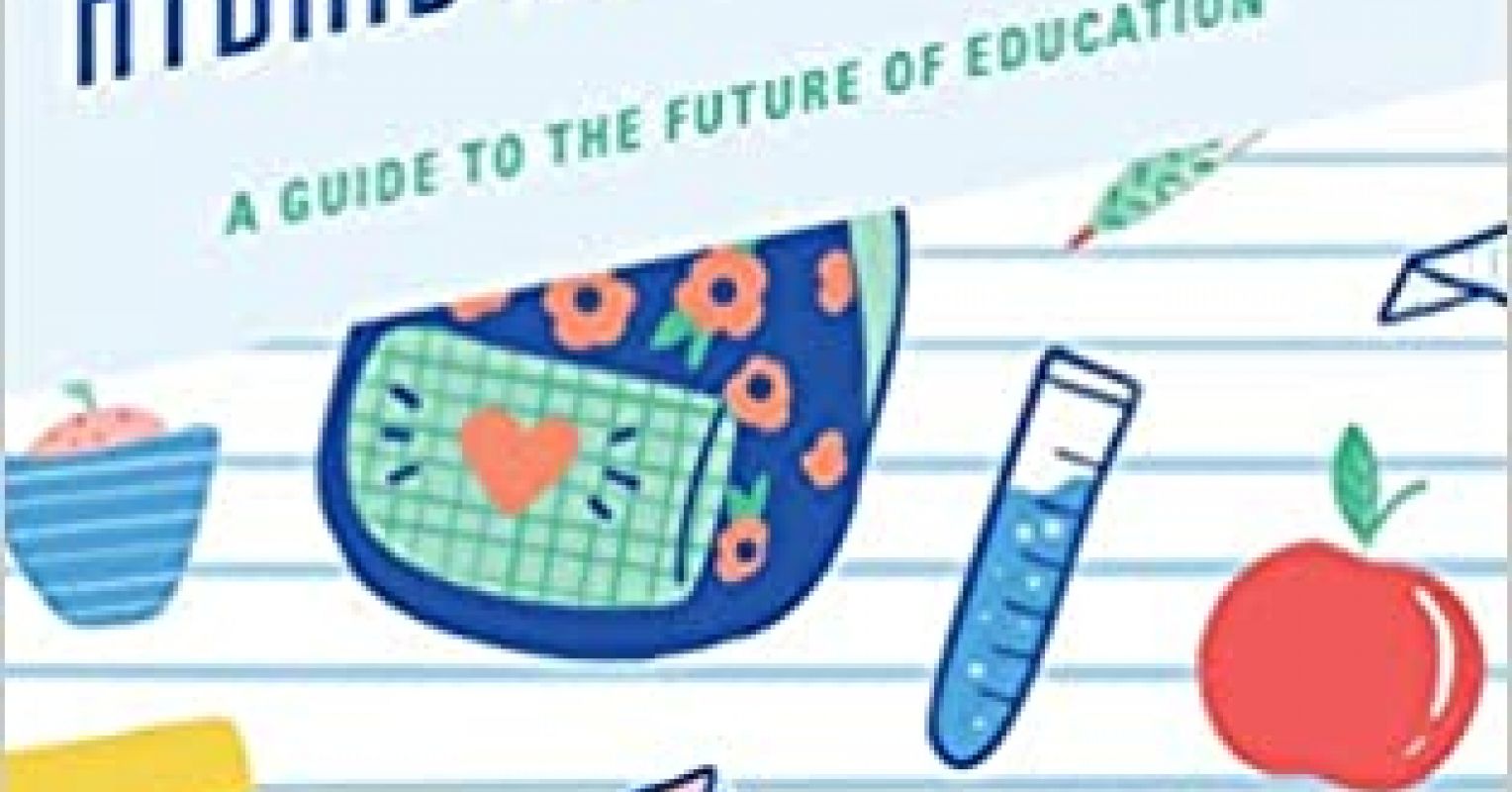
Michael McShane, director of countrywide exploration at EdChoice, not too long ago wrote a book that I located educational and fascinating titled Hybrid Homeschooling: A Guidebook to the Foreseeable future of Instruction. Many dad and mom have started to investigate numerous instructional alternatives during the pandemic, and Mike’s e book is an great and obviously composed text describing the role that hybrid homeschooling could possibly play in the foreseeable future of instruction. Mike kindly responded to a couple of my queries.
Hybrid homeschooling is a kind of education where little ones go to official courses in classic brick-and-mortar lecture rooms for element of the 7 days and function from property the other aspect of the 7 days. Diverse schools do it otherwise, with some having students in university for two days a 7 days and home for three, in university for a few and residence for two, or other combinations. Now, there is a ton of fuzziness all over the edges of a very good definition of hybrid homeschooling, as some homeschool co-ops could possibly meet on a regular basis more than enough to seem to be hybrid homeschools, and some community faculties permit little ones to enroll portion time (and have for decades). I tend to use a 3-component definition, typical, substantial, and bodily. That is, a hybrid homeschool (or hybrid homeschool method within just a school) fulfills at standard intervals, for at minimum one particular college day a 7 days, in a actual physical school developing.
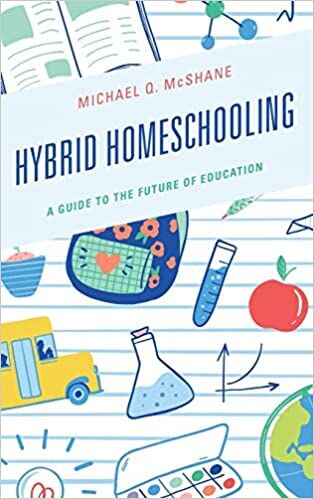
Supply: ‘Mike McShane, employed with permission’
When I interviewed mom and dad who hybrid homeschooled their small children (and these had been dad and mom who had been hybrid homeschooling before the pandemic), they gave me a couple of causes for their preference. A phrase that I listened to in excess of and about all over again was “the present of time.” Quite a few of these parents really feel that the regular university day, week, and year are out of sync with the rhythms of their spouse and children. Students lurch from faculty to extracurriculars to research to slumber without the need of time for family bonding. Dad and mom want to reclaim some of that time.
Mom and dad also respect the customized awareness that hybrid homeschooling offers. Although students may be in a regular classroom for section of the 7 days, they then arrive home for the other portion of the 7 days, the place they can get close help from their dad and mom. It’s a kind of most effective-of-equally worlds method, with the rewards from owning a classroom studying neighborhood and all of the great issues that a conventional faculty arrangement gives with the individualization and personalization that homeschooling delivers.
Several hybrid homeschooling mom and dad also spoke to me about the mental health benefits that the alternative college agenda experienced for their youngsters. I’ll in no way forget about a mom telling me that she would often tell her son following he had a bad working day, “you really don’t have to go again tomorrow.” I’m a previous high faculty instructor and bear in mind learners whose poor Monday turned an even worse Tuesday and the relaxation of the 7 days went downhill from there. In schools that alternate in between in-particular person and at-household studying, struggling students get a probability to reset and begin clean each working day.
Our polling at EdChoice displays that a substantial share of dad and mom would like to see some sort of hybrid faculty plan for their young children. There is a substantial option for schools across sectors—traditional community, constitution, and private—to get the job done to generate new schedules and calendars to meet up with the demands and wishes of family members. As the planet of perform changes and schedules come to be much more adaptable and operate locations migrate, additional chances will be readily available for experimentation in the exactly where and when of university. Ground breaking and entrepreneurial educators are by now growing to the problem and I think about much more will do so in the long term.
But there is just one issue that can’t, or at least must not, get misplaced in all of the pleasure around new university versions and new educational modalities: educational institutions are communities. I’m bullish on the potential of hybrid homeschooling due to the fact the two mothers and fathers and teachers that I interviewed spoke about how limited knit hybrid homeschooling communities are, how when the pandemic struck they definitely appeared out for every single other and supported just about every other for the reason that they knew and reliable a person yet another. They are tight knit simply because they are attempting to do a thing different and they have to do the job alongside one another to do it. Petty variances become considerably less significant when there is work to do.
Provided the disruption of coronavirus and the atomization, deficiency of believe in, and alienation that it both of those brought about and uncovered, families are crying out to be reconnected to group. Universities that prioritize the desires of households and comprehend how education suits into the broader ecosystem of a child’s daily life will find heaps of individuals fascinated and keen to enroll.


