Home schooling nearly doubled in NYC since pandemic’s start

Home schooling nearly doubled in NYC since pandemic’s start

Mirroring trends across the nation, the number of children being home-schooled has dramatically increased in New York City.

This school year, roughly 14,800 children across the five boroughs have opted to learn outside of school walls, according to internal education department data obtained by Chalkbeat. That number jumped by nearly 7,000 — or 88{e4f787673fbda589a16c4acddca5ba6fa1cbf0bc0eb53f36e5f8309f6ee846cf} — since the pandemic hit with the biggest gain occurring this school year, as more than 4,000 new students registered to home-school.

The largest increases were in districts with higher shares of low-income students, a Chalkbeat analysis found.

The reasons families decide to educate their children at home vary. For some parents, the pandemic may have pushed them out of the workforce or into remote jobs where they found themselves with the time and desire to educate their children after getting a taste of it during remote learning.

Some may have been unhappy with what they saw when their children were in online classes last year, and families of color, in particular, may have been upset witnessing firsthand curriculum that wasn’t culturally responsive. For others, it was a trust issue: They felt their children were safer at home because of COVID fears or other school-related violence.

Bushwick mom Shalonda Curtis-Hackett started out this school year keeping her three children home as a form of protest, striking along with other families who wanted a remote learning option in New York City amid the ongoing public health crisis.

On top of COVID, Curtis-Hackett has long been skeptical of her children’s public-school education, concerned about anti-Blackness and bias she saw in the teaching and curriculum. She officially notified the city’s education department in November of her plans to home-school her children.

Now, she’s deep in the process of “unschooling” her children, following their interests instead of a prescribed curriculum. She’s plugging into a growing movement of Black home-schoolers on Instagram, sharing tips and resources with other parents.

“Our kids are harmed in public school,” Curtis-Hackett said. “Because we’re unschooling, we play a lot of games. I let them play video games. We put together a puzzle globe, and we spin and pick a place to research.”

Yes, her fifth grader is playing a lot of Minecraft, Curtis-Hackett said, but she’s also reading more. Her second grader is playing a lot of board games, and he’s learning math in the process. Both of those children and her ninth grader have recently started learning instruments — one is doing piano, another is studying guitar, and the other is playing the flute.

Home-schooling is hard for many families to pull off, and it still remains relatively rare, accounting for roughly 1.5{e4f787673fbda589a16c4acddca5ba6fa1cbf0bc0eb53f36e5f8309f6ee846cf} of students, city education department officials said. But the increase may explain part of the enrollment decline among the city’s traditional public schools.

Students in grades K-5 moved into home schooling at the highest rates, jumping 119{e4f787673fbda589a16c4acddca5ba6fa1cbf0bc0eb53f36e5f8309f6ee846cf} on average since the 2019-2020 school year, a Chalkbeat analysis of the data since the 2019-20 school year found. Middle school saw a 74{e4f787673fbda589a16c4acddca5ba6fa1cbf0bc0eb53f36e5f8309f6ee846cf} increase in home-schoolers, while high school home-schoolers increased by 64{e4f787673fbda589a16c4acddca5ba6fa1cbf0bc0eb53f36e5f8309f6ee846cf}.

There is also evidence that low-income families may have opted to homeschool at higher rates. The number of home-schooled students in the six highest poverty districts increased about 119{e4f787673fbda589a16c4acddca5ba6fa1cbf0bc0eb53f36e5f8309f6ee846cf}, on average, while home-schooling students in the six lowest poverty districts increased about 79{e4f787673fbda589a16c4acddca5ba6fa1cbf0bc0eb53f36e5f8309f6ee846cf} over the past two years.

“The past two years have been challenging for school communities across the nation, and families made the best decisions suited to their unique needs and circumstances,” education department spokesperson Sarah Casasnovas said. “As New York City recovers from the impacts of the pandemic, families are returning to classrooms. Chancellor Banks is committed to engaging with families and working to restore trust in New York City schools.”

COVID-era home schooling

Home schooling has grown in popularity across the country during the pandemic. The number of Florida students enrolled in home education jumped by 35{e4f787673fbda589a16c4acddca5ba6fa1cbf0bc0eb53f36e5f8309f6ee846cf} in the year after the pandemic started. In Virginia, there was a 56{e4f787673fbda589a16c4acddca5ba6fa1cbf0bc0eb53f36e5f8309f6ee846cf} jump in home schooling, though the numbers fell somewhat this school year. And in Michigan, researchers found students left public schools for home-schooling arrangements at significantly higher rates when the pandemic hit.

There are no official national counts of families who home-school. A Census survey found that home school rates roughly doubled in the immediate aftermath of the pandemic, with an even more dramatic jump among Black families, though some analysts believe those figures are overstated.

The 88{e4f787673fbda589a16c4acddca5ba6fa1cbf0bc0eb53f36e5f8309f6ee846cf} increase in home schooling in New York City is consistent with large increases in other parts of the country, said Andrew Bacher-Hicks, an assistant professor at Boston University who has studied home-schooling trends during the pandemic. He noted that public school districts that offered in-person learning in the fall of 2020, such as New York City, tended to see larger increases in families choosing to home-school. Schools that did not offer in-person schooling tended to see more parents leave for private schools.

“The leave to home schooling might be related to health concerns,” Bacher-Hicks said. (New York City did not offer a virtual option this school year, which coincided with a larger increase in home schooling.) But “no matter what modality was offered, some subset of households and parents and families are going to be unhappy with the public offering.”

Bacher-Hicks added that Black and low-income families tended to opt for home schooling at higher rates. New York City education department officials declined repeated requests to share demographic data of home-schooled students and did not return a public records request for that information.

Historically, home schooling has generally been considered a “white phenomenon,” said James Dwyer, a professor at William and Mary Law School and co-author of “Homeschooling: The History and Philosophy of a Controversial Practice.”

In the 1960s, home schooling was driven by left-wing concerns “about the authoritarian nature of public schooling” and skepticism toward the state. In the 1970s and 1980s, growth in home schooling was driven by evangelical Christians who were wary of secularization, desegregation, and liberal values in public education, Dwyer said.

The pandemic may have prompted a more diverse group of parents to try home schooling, Dwyer said, a claim backed up by the census figures and anecdotal reporting.

Khadijah Z. Ali-Coleman, co-editor of the book “Homeschooling Black Children in the U.S,” said the pandemic gave some parents a clearer sense of what their children are taught or how they’re treated — and some Black families didn’t like what they were seeing.

“You have this whole experience culturally — whether it’s the lack of cultural competency within the school or cultural relevance — to also some of the punitive responses to their children,” said Ali-Coleman. “It definitely led parents to realize and be more empowered that [homeschooling] is something they could do when things went virtual.”

District-level data obtained by Chalkbeat showed that the numbers of home-schooled students increased across the board since the 2019-2020 school year, but more than doubled in nine of the city’s 32 districts as well as District 75, which serves students with disabilities who need intensive support.

The top three districts with the largest percentage increase were all in Brooklyn: Bushwick’s District 32, District 13 (spanning Bedford-Stuyvesant, Prospect Heights, Fort Greene and Brooklyn Heights), and District 21, which includes Coney Island and Brighton Beach.

Curtis-Hackett, the Bushwick mom, said there were several reasons she decided to home-school her children this year. Some had been brewing for a while.

Curtis-Hackett struggled last year with her children’s elementary school. She wanted the school to teach more explicitly about the tenets of the Black Lives Matter movement and Black history, more broadly, as well as to include LGBTQ-affirming resources.

During online schooling, when she overheard her daughter’s then-fourth grade teacher talking about Susan B. Anthony, Curtis-Hackett piped up asking why Black women weren’t included. The teacher said, ‘If you know so much, why don’t you teach?’ Curtis-Hackett recounted. So Curist-Hackett, who is Black, made a cameo, telling the class about Sojourner Truth, a former slave, abolitionist, and women’s rights activist.

“My kids are getting the same education I got, just with fancier books and technology. You might change ‘slavery’ to ‘enslaved.’ But there’s still a whole entire unit that says ‘European exploration’ written on the front page of the book,” said Curis-Hackett, a doula and makeup artist.“To me that’s violence, I couldn’t take that chance for my children to not be recognized and seen in school.”

Whether most families who began home-schooling during the pandemic stick with it is an open question. Dwyer, the William and Mary professor, noted that home schooling can be resource-intensive for families, and some are likely to send their children back to traditional schools for extracurricular activities and other social opportunities that can be harder to replicate in a home-school environment.

“The reasons people have always had for sending their children to school every day still exist,” Dwyer said. “I expect most children will be returning to schools.”

Looking for home-school help

Seventeen-year-old Jonica Jenkins this week returned to finish her senior year at Frederick Douglass Academy II after spending these past several months as a home-school student, learning from her family’s Harlem apartment.

Jenkins developed a daily routine: After waking between 6 a.m. or 7 a.m. she would eat breakfast and then log onto an online learning platform where she took such courses as government and art history, wrapping up around noon or 1 p.m. Then she spent her afternoons watching YouTube videos and playing Roblox, Tycoons or other video games.

She had decided not to return to school this fall, not just because of coronavirus concerns, but also because of other safety issues.

“COVID was one of the reasons. But I had a lot of bad experiences in school. I dealt with a lot of bullying,” Jenkins said. “It’s not even having to deal with the bullying itself. When I see other kids acting out and fighting in school, it messes with my mood — it gives me anxiety. I’m tired of having to deal with that.”

Jenkins’ mother Johndca Spencer had wanted to home-school her three children years prior to the pandemic, but was too busy running a home cleaning business. When that business fell apart after the pandemic shut down many parts of New York City, Spencer reevaluated.

The main reason for the return to a traditional school: Spencer didn’t know how colleges would accept her daughter’s home-school diploma, and she worried it wouldn’t carry as much weight as a Regents diploma from a brick-and-mortar school.

Spencer wasn’t sure how to find out the answers to her questions.

“How can you prove you graduated — just because your mom said you’re done?” Spencer said. “Basically I was on my own with that. The red tape surrounding that for this state was too much to navigate, especially when you’re not getting any assistance … There’s not enough resources and not enough help, and I just didn’t know how to access it.”

Without finding a community of families with high school seniors, Spencer felt ill-equipped to navigate her daughter’s graduation.

She was incensed that New York, unlike most other states, has no virtual public school option. The home-school office advised her daughter to get her high school equivalency diploma by taking the General Educational Development, or GED, test, and suggested the family could reach out to individual colleges to see what they might accept, Spencer said.

Fortunately, Jenkins’ school will accept the credits from the online platform she had been using this year so far, the mom said. And she’s looking forward to seeing her daughter don a cap and gown.

“She needs to be celebrated. She’s so smart and has worked so hard,” Spencer said. “I could do an awards ceremony with just her, but she deserves to walk across a stage and for other people to clap for her.”

Back to online learning

Harlem mom Inaya Shujaat became a reluctant home-schooler last summer when it became clear the city’s schools weren’t going to provide a remote option.

Shujaat was nervous about sending her children back into classrooms that she believed were not safe, though city officials have insisted that all classrooms have proper ventilation and transmission in school buildings is rare.

When a remote option didn’t materialize, Shujaat opted to enroll her two children, who are in the fifth and sixth grades, in The Muslim Academy, a virtual school that includes a mix of religious and secular studies at a cost of about $600 a month for the pair. (The children are considered home-schooled.)

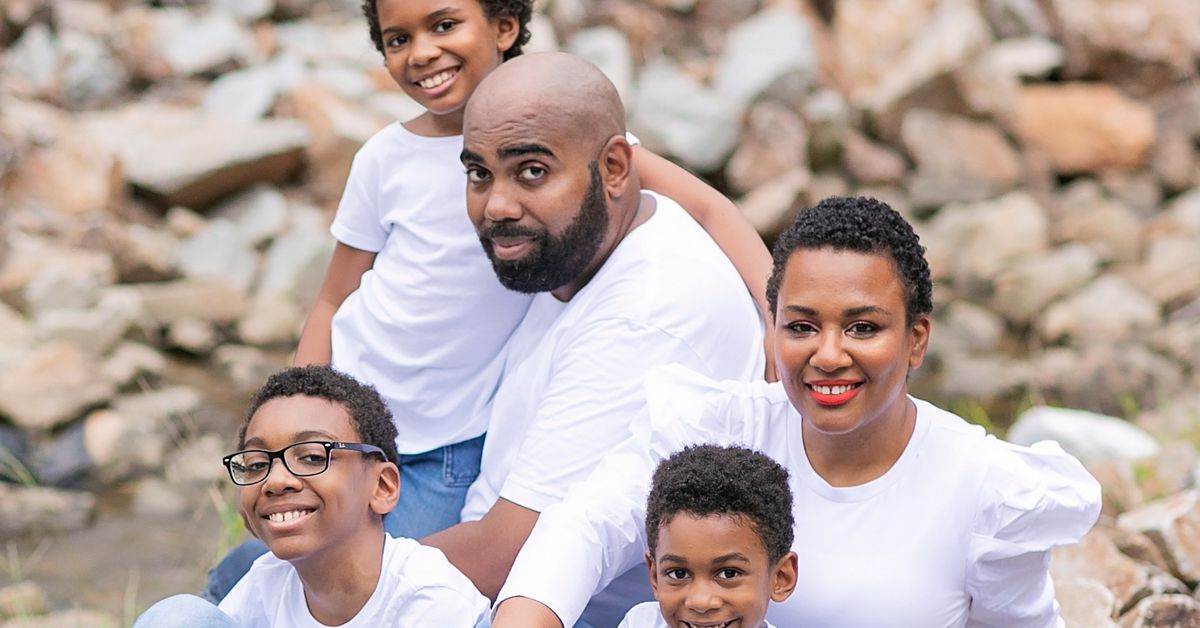
Inaya Shujaat with her two children, Zubeda and Asad.
Courtesy of Inaya Shujaat

“I never considered home-schooling them myself,” she said. “They provide the curriculum and all the parent has to do is provide support for the child.”

The curriculum is largely pre-recorded except for two classes: a creative art class and a course that focuses on the Quran, Arabic, and Islamic studies, Shujaat said. A recent art class involved her son constructing a three-dimensional fire using paper. Shujaat said her children have been able to participate with minimal support from her.

Shujaat said she’s generally happy with the program, though she noted her children receive little qualitative feedback from their teachers.

Still, she said the program is sufficient for now, as the family considers next steps. Shujaat’s husband, who is a physician, is considering jobs outside of New York City.

“It’s definitely a stopgap or a big frickin’ band-aid,” Shujaat said. “We’re playing it by ear.”

Cam Rodriguez contributed.
Bill would only require WV home-schoolers who aren’t on vouchers to submit test results once | Education

Bill would only require WV home-schoolers who aren’t on vouchers to submit test results once | Education

Watch now: Classical Conversations provides support for homeschooling families | Education

Watch now: Classical Conversations provides support for homeschooling families | Education


Noah Hynds 1 021122.JPG

Noah Hynds, 13, talks about his project during a science fair at Antioch Christian Church. Hynds is part of Classical Conversations. Students in homeschooling and the parents who teach them get together on Thursdays at Antioch, where the younger children concentrate on Foundations and Essentials, the elementary level.


DECATUR — When Noah Hynds began his project on the merits of various bridge styles, he thought he knew for certain which bridge was the best.

“My hypothesis was that the truss bridge would be the strongest,” he said, “but the beam bridge is actually the strongest. I was wrong, but I learned a lot more being wrong than being right.”


Noah Hynds 1 021122.JPG

Noah Hynds, 13, talks about his project during a science fair at Antioch Christian Church. Hynds is part of Classical Conversations. Students in homeschooling and the parents who teach them get together on Thursdays at Antioch, where the younger children concentrate on Foundations and Essentials, the elementary level.


Being wrong, said Amanda Pflum, a parent in the Classical Conversations group that meets weekly at Antioch Christian Church, is not as important as the process of learning, and learning how to conduct experiments, how to present your findings and that being wrong is not a bad thing, is a major part of the Classical Conversations curriculum.

Students in homeschooling and the parents who teach them get together on Thursdays at Antioch, where the younger children concentrate on Foundations and Essentials, the elementary level.

“We are a community of homeschool moms going through a curriculum,” said Kelli Langstron, director of Foundations and Essentials.

People are also reading…

Classical Conversations was created in 1997 by a homeschooling mom as a way to provide other families with a guide to follow that begins with the basics when children are small, building each year and gradually giving the kids the tools to work more independently, choose their own projects, and pursue their own interests while still having a well-rounded education.

The students learn Latin, English, spelling, American and world history, geography, science and math. By the time students are Noah’s age, for example, Langston said, they can draw a world map from memory, marking each country and its capital, thanks to the years of memorization of facts.

“I’ve come here since I was 8 or 9 years old,” said Noah, now 13. “I really like it because you can learn at your own pace. It’s really fun because I get to hang out with my friends here and still do home school at home. I still do the same amount of work that another kid would do, but I just do it here.”

The guides that are available allow any parent, whether a trained educator or not, to move through the levels with their kids, and the weekly meetings give the kids and parents a chance to get together. The parents support each other and if one parent is good at science and not as comfortable in math, another parent can lend a helping hand and advice. Langston said she didn’t remember as much as she thought she did about fractions until she had to teach her own children, and with five kids, she’s learned right along with them.

Challenge A is for students who are at least 12, roughly seventh grade, and those students spend the day weekly in Latin, research, math and debate. The goal is for the students to be confident and comfortable with presenting their projects and discussing their findings no matter who walks up and asks, Pflum said. The group recently held its annual science fair and while there were no “winners,” they did have a chance to win prizes for various aspects of their presentations.

Challenge B is the next level, eighth grade equivalent, and those students are learning about the legal system by researching and preparing to hold a mock trial.

“We go through a written case,” said Katy Grube, the parent overseeing Challenge B. “It has evidence, and witness statements, and we go through all the rules of trials and the judicial system.”

The guide is in a thick binder and divided into sections devoted to prosecution, defense, choosing a jury and presenting arguments, and the students learn that the same facts might look different depending on whether the prosecution or defense is presenting their case. Student Josiah Porter said it’s a good lesson in learning to discern the merits of both sides of an argument.

“I didn’t know the jury was just regular people,” said Ava Langston. “I guess I thought it was a job, that they hired people to be jurors.”

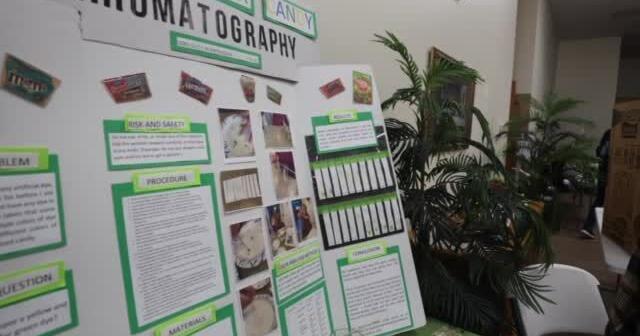
Violet Pflum, 12, studied the various dyes used for candy, joking that as a kid, she’s a big fan of candy. She chose green candy, using a bowl of green M&Ms as a visual aid in her presentation, and found that yellow and blue dyes are combined to make green; there isn’t a “green” dye at all.


Violet Pflum 1 021122.JPG

Violet Pflum, 12, talks about her science project, which examined different colors of candy. “We get to learn stuff you wouldn’t be able to learn in a normal school,” Violet said of Classical Conversations. 


“We get to learn stuff you wouldn’t be able to learn in a normal school,” Violet said. “We learn Latin. We learn logic. And it’s really fun and you get to do (this) once a week, which gives you time to understand the lesson through the (rest of) the week. It’s a great way to make new friends and have a lot of fun.”

Contact Valerie Wells at (217) 421-7982. Follow her on Twitter: @modgirlreporter

Home schooling: Ex-teacher raises education quality doubts

Home schooling: Ex-teacher raises education quality doubts

A Previous trainer has voiced doubts about scores of Stockton youngsters becoming educated from household. 

Several dad and mom experienced to get to grips with virtual classes all through the pandemic – and attempted their hand at helping out in lockdowns. 

About 180 youngsters in the borough are now electively property educated out of a whole of all around 30,000.

Former major college teacher Barbara Inman was involved about the top quality of education they were being having at the latest Stockton kids and younger folks choose committee. 

The member for Roseworth reported: “There is no way I would want to dwelling-university. The amount of things you have to go by. 

“Those kids who are dwelling-schooled can’t probably be obtaining the exact as they would get if they were in a school situation.”

A group of dwelling educators has taught small children from household for many yrs in Stockton, and a past overview by the find committee uncovered a huge rise in the selection of youngsters getting household-schooled.

Stockton children’s solutions director Martin Gray stated there have been people house educating who ended up quite competent in what they were executing.

“It’s an option and a option but I agree with you in the key – you just can’t replicate the composition and the high quality,” he included. “The large vast majority of our educational institutions – 93 for every cent – are good or superb.”

Cllr Inman stated: “It’s the social mixing with other children which is pretty vital.” 

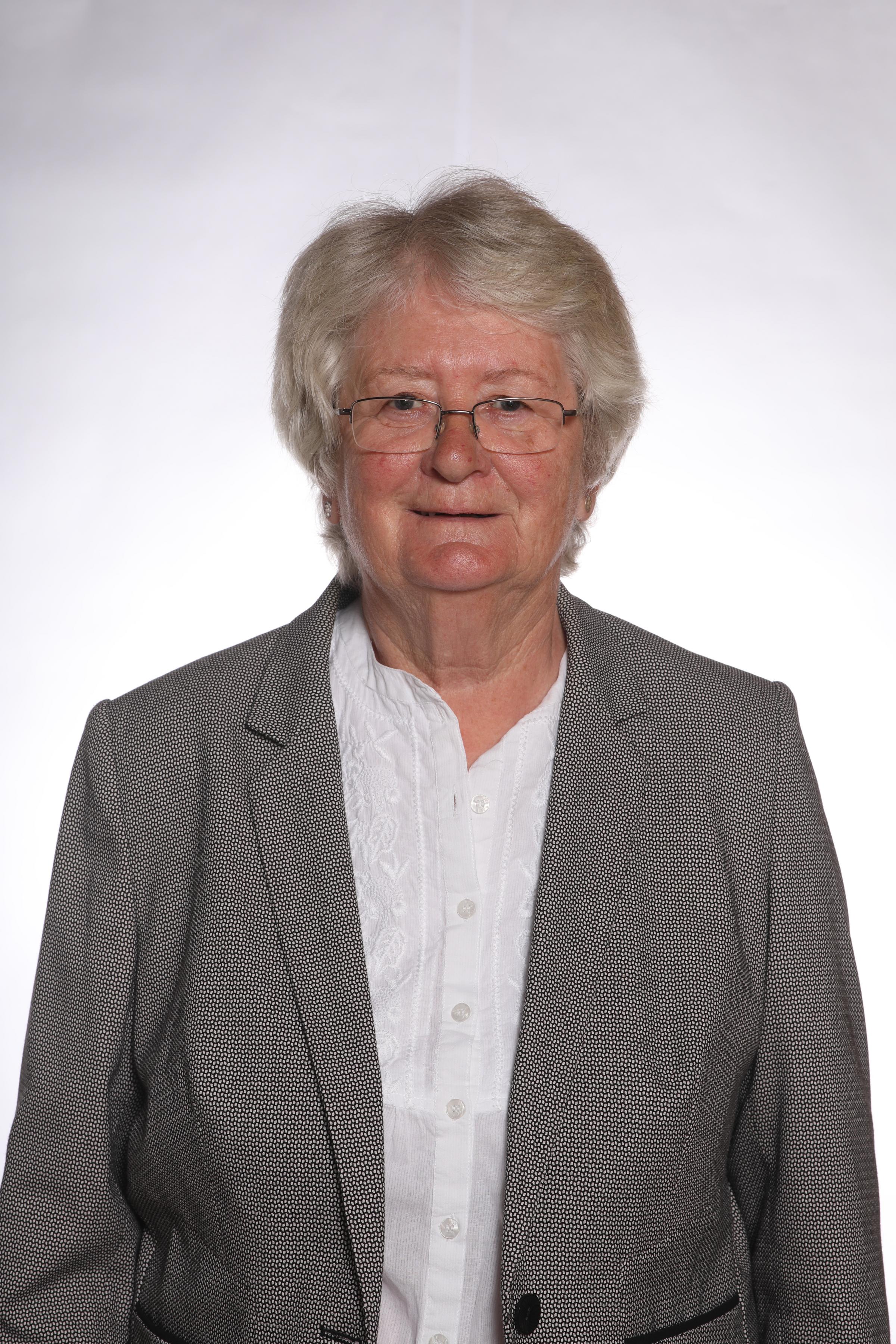
Roseworth Cllr Barbara Inman, Labour member on Stockton Council

Roseworth Cllr Barbara Inman, Labour member on Stockton Council

Mothers and fathers have a suitable to educate their kids from home. On the other hand, councils can provide notices if they never consider the schooling they are receiving is suitable. They can also use their safeguarding powers.

Panel chairwoman, Cllr Carol Clark, explained there were folks who “did a wonderful job” household educating – but feared there were being other individuals who did not.

She additional: “My be concerned is the little ones who are not getting taught what they should really be – and how complicated it is to intervene. What do we do?”

Federal government steerage states property education and learning does not require to refer to the countrywide curriculum – and there is no necessity for small children to be entered for public tests. 

Dissatisfaction with the college procedure, quick time period interventions and exclusive educational requires not remaining achieved inside of the faculty process can be aspects for men and women thinking about dwelling instruction. 

Mr Grey explained to the panel the variety of youngsters household educated experienced gone up after Covid lockdowns – but not by as significantly as some had forecast. 

He extra: “There was a spike and then a gradual return of young children coming back into schools. The fact about the truth they are not finding the lesson provision, and all the stuff they’re getting from the college, can make it substantially extra tough.

“That’s a bit of a national development but it’s not anything which has been significant.”

Mr Gray sought to ease issues about any specific dilemma in Stockton borough. 

“We’ve acquired 30,000 youngsters of college age – and we’ve acquired about 180 elective dwelling educated,” he extra. “I’m not dismissing it as an situation, but I would not want you to really feel the scale of it is so considerable. It is an solution quite a few persons just take for a lot of distinctive reasons.”

Blue state parents turn to home schooling

Blue state parents turn to home schooling

Closed public colleges. COVID-19 mandates. Woke curricula. For these reasons and extra, mothers and fathers in blue states are turning to home education in droves.

Nationally, dwelling schooling has boomed. In accordance to Census Bureau knowledge, the proportion of households household-education their youngsters skyrocketed from 5{e4f787673fbda589a16c4acddca5ba6fa1cbf0bc0eb53f36e5f8309f6ee846cf} in spring 2020 to 20{e4f787673fbda589a16c4acddca5ba6fa1cbf0bc0eb53f36e5f8309f6ee846cf} in spring 2021.

This residence school increase has occurred not just in purple states but also in blue ones.

For illustration, in the first calendar year of COVID-19, from spring 2020 to tumble 2020, the proportion of New York households home-education their kids jumped from just 1{e4f787673fbda589a16c4acddca5ba6fa1cbf0bc0eb53f36e5f8309f6ee846cf} to 10{e4f787673fbda589a16c4acddca5ba6fa1cbf0bc0eb53f36e5f8309f6ee846cf}.

In tumble 2021, Susan Dantoni, a home schooling advocate in Rochester, New York, stated 10-20 requests every single day “from men and women stating, ‘I’m not sending my kid back to faculty mainly because of the masks.’”

In excess of the preceding yr, Dantoni stated her upstate New York house-college Fb team experienced received more than 1,000 new requests from members fascinated in household schooling. Her team now has 5,000 customers.

In the course of the pandemic, New York mother Kailey Grape made the decision to residence-college simply because “families are just losing additional and additional control around conclusions for their own children and their have family members. And I imagine that’s what is alarming mothers and fathers.”

In Midwestern blue states, there are also apparent indications of a home schooling growth.

In Minnesota, Census Bureau information confirmed the proportion of households residence-schooling their little ones doubled, heading from less than 5{e4f787673fbda589a16c4acddca5ba6fa1cbf0bc0eb53f36e5f8309f6ee846cf} in spring 2020 to nearly 10{e4f787673fbda589a16c4acddca5ba6fa1cbf0bc0eb53f36e5f8309f6ee846cf} in slide 2020.

Ellen Crain, who begun a Fb website page for Minnesota household-schoolers, suggests the quantity of followers to her page “jumped to a lot more than 7,000 followers given that the pandemic commenced.”

“Home education has unquestionably develop into a lot less daunting since of the web,” says Crain, for the reason that mothers and fathers “have a great deal more accessibility to means.”

In Michigan, a 2021 review by the University of Michigan discovered that enrollment of college students at general public educational facilities fell by almost 46,000 from 2020 to 2021. The analyze said that property schooling accounted “for a the greater part of Michigan students who did not return to the public method.”

And out West, in bluer-than-blue California, house schooling is also escalating.

There are several ways to dwelling-school in California. If mothers and fathers want to home-university their children impartial of any relationship with the govt, they file a private faculty affidavit, which declares their residence a private college.

The variety of dad and mom submitting these types of affidavits more than doubled between the inception of the pandemic and previous 12 months.

In 2018-19, 14,548 affidavits were being submitted with the California Division of Education. In 2020-21, that range had surged to 34,715.

Bay Space mother Cathy Yu decided to home-school her teenage son soon after he struggled with length learning.

“He now has extra push,” she reported. “It has been a extremely optimistic expertise for us.”

According to a report by the California Globe, “Pre-pandemic, California had approximately 200,000 homeschooled students.”

“However,” the publication pointed out, “with the pandemic, as nicely as other variables these as an improve in mother and father getting rid of students owing to issues above what is being taught,” the selection of pupils rose “to 400,000 currently being homeschooled for at minimum element of the 2020-21 college yr.”

Yet another way to property-faculty in California is by enrolling students in a house-school academy at a publicly funded charter faculty. These academies offer enrichment classes for dwelling-schooled pupils and moms and dads get totally free entry to numerous curricula.

Since of large need, Pursuing Tutorial Choice Alongside one another, a dwelling-faculty charter university in Sacramento, held an admissions lottery for the initial time in its historical past in 2021.

“I consider that individuals are commencing to think about home education as a feasible possibility, not a fringe possibility,” mentioned PACT head Alicia Carter, and, consequently, dwelling schooling “has become a lot more assorted religiously, ethnically, and socioeconomically.”

What these blue-condition trends show is that property education is a really national phenomenon and, specified prevalent dissatisfaction with the general public schools, will most likely be the instruction wave of the upcoming.

Lance Izumi is senior director of the Heart for Instruction at the Pacific Investigate Institute. He is the author of the new e book The Homeschool Growth: Pandemic, Guidelines, and Options.

World of Wonder Academy provides home-school enrichment | East County

World of Wonder Academy provides home-school enrichment | East County

Mote Ranch’s Heather Manley stood in entrance of a dozen young children and enthusiastically go through “Penguinaut!”

Alongside one another, Manley and the small children counted down from three just before indicating, “Blast off,” as the penguin in the ebook went into room.

The youngsters laughed and answered thoughts from Manley as they went alongside for the ride. 

Soon after looking at the space-themed e book, Manley inspired the little ones to check out distinct stations of crafts and things to do. A person youngster went to draw a rocket ship. A different went to create a structure applying plastic sticks. Some youngsters lined up to launch toy rockets. 

Free of charge-participate in and exploration are critical to the World of Wonder Academy, a new supplemental house-school enrichment software that hopes to spark children’s passion for learning by means of themed lessons that will integrate math, science and English. 

“We’re hoping to give courses for pupils that support foster curiosity, make them energized and encourage speculate,” said Manley, the co-founder of Globe of Question Academy. 

Manley is a accredited trainer who decided to residence-school her 5-year-aged son Liam. She preferred to ensure he nevertheless experienced the exact same social alternatives as students in traditional educational institutions. 

Manley commenced having courses with a compact informal group of other dwelling-college moms at St. Mary Magdalene Episcopal Church last spring. The group stopped meeting around the summer time and met yet again in the fall. 

Liam Manley, who is 5, suggests hi to Shenicka Claxton dressed as an astronaut.

Manley worked with Lakewood Ranch’s Shenicka Claxton to formally start off Earth of Marvel Academy Feb. 14 for kids ages 3 to 6. 

Classes will be at the time or 2 times for each week for 8 months. At the end of each and every eight-7 days session, mom and dad, close friends and household will be invited to show up at the scholar-developed art show.

Each week, kids will go to World of Wonder Academy for a working day or two. Little ones will sing a tune, do art initiatives, participate in interactive things to do, and have tale time. The interactive actions are centered all around a topic possibly Manley and Claxton will decide on or the little ones select. Little ones will have time to do what pursuits them whether it is crafting, developing, reading through or a different activity.

“We desired to be in which moms and dads can structure their own training to fulfill their child’s wants,” Manley claimed. “I felt it was critical to adhere to the students’ passions. If I was next their passions, I could instruct all distinctive forms of topics primarily based on that desire that would maintain and they would soar.”

Kiajia Claxton, Shenicka Claxton and Heather Manley will lead Planet of Marvel Academy classes.

Manley does not want little ones to feel like “empty vessels to place info in” with a 1-measurement-matches-all education. 

“It’s much more to let them go after their desire and we can incorporate looking through, math and science,” Manley mentioned. 

Michelle Wikerd life in Canada and spends time in Lakewood Ranch for 5 months of the calendar year. Her 4-year-aged son, Kai, participated in Entire world of Surprise classes last year and beloved them. 

Wikerd reported Earth of Marvel is interactive, participating and superior than what her son encounters at college in Canada wherever college students mainly sit at their desks performing worksheets. 

“(Kai) was generally tremendous thrilled to go and never ever required to leave when it finished,” Wikerd claimed. “He would request each and every working day, ‘Is currently Wow university working day?’”

East County’s Shannon Keever residence-educational facilities her 5-year-outdated daughter Hope and has not been able to locate instructional and social help in addition to what she was teaching at house. Keever was hesitant mainly because her daughter does not often do nicely with super structured actions.

When they arrived at their first Environment of Marvel class, Keever was shocked. Hope walked straight to the circle where by the little ones ended up sitting down and begun participating. 

“I understood we experienced observed our market,” Keever said. “This was our put. They pay back focus to the kids and their pursuits, and they steer the instructional possibilities into what the little ones are interested in.”

Lakewood Ranch’s Kali Hill, who is 4, launches a toy rocket into the air.

Keever loves that the program offers some construction but focuses primarily on engage in-based understanding. 

“I experienced a difficult time making an attempt to educate her letter appears and letter recognition, but when she was going here, out of the blue at home she would start pointing out letters and being aware of them,” Keever claimed. “It’s been a fantastic health supplement as a household-school mother.”

Environment of Speculate also positive aspects the mom and dad. Keever mentioned the application has furnished options for the mothers and fathers to master from each individual other diverse ways to instruct their youngsters. They can explore challenges and appear up with remedies with each other. 

Keever mentioned one particular of the biggest problems for house schooling is offering options for socialization, specifically in the course of the pandemic. Environment of Question Academy has presented social options for small children.

“I try to remember from university the classroom events, holiday break things to do and discipline journeys,” Keever said. “I do not want them to pass up out on the enjoyable that I recall from faculty. It’s good when we have a neighborhood wherever you can do individuals factors alongside one another.”

Manley hopes to extend the program to offer you academic prospects for more mature little ones.


Sign up for the Community! Our 100{e4f787673fbda589a16c4acddca5ba6fa1cbf0bc0eb53f36e5f8309f6ee846cf} community content material allows bolster our communities by offering news and info that is relevant to our visitors. Aid independent local journalism by joining the Observer’s new membership system — The Newsies — a group of like-minded group citizens, like you. .