Why it’s time to reinvent selective colleges — and how to do it

Why it’s time to reinvent selective colleges — and how to do it

Comment

When the coronavirus pandemic hit the United States in 2020, some predicted that many schools would embrace online education not just as a short-term remedy to the closing of campuses but as a longer-term strategy to draw in more students. This post looks at what happened with that thinking with selective colleges and explains why it is time to ye about reinventing them.

It was written by Jake Weissbourd and his father, Rick Weissbourd. Jake Weissbourd is a consultant on higher education strategy who works with Verto Education, which offers overseas opportunities for first-year college students; Outlier.org, which offers affordable and career-aligned online courses and degrees; and College 101, an advocacy organization focused on innovation and accountability in higher education. He is also a founder of the Future of Higher Ed, a professional community in which more than 1,000 leaders across the sector share ideas and exchange feedback on building a more innovative and effective higher education system.

Rick Weissbourd is a child and family psychologist on the faculty of Harvard Graduate School of Education and the Kennedy School of Government whose work focuses on moral development, the nature of hope, vulnerability and resilience in childhood, parenting and effective schools and services for children. He leads an initiative to reform college admissions called Turning the Tide, which has engaged more than 300 college admissions offices in an effort to elevate ethical character, reduce excessive achievement pressure and increase equity and access in the college admissions process.

College enrollment declines for third straight year since pandemic

By Jake Weissbourd and Rick Weissbourd

Faced with a global pandemic, selective colleges — colleges that accept fewer than half of their applicants — made changes in 2020 that they wouldn’t have dreamed of implementing before. They invested heavily in online and hybrid learning, new teaching strategies and cutting-edge technologies in ways they had strongly resisted.

These changes did more than address a crisis; they created new capabilities and expertise. They accelerated opportunities to better educate more — and more-diverse — students. And they revealed that even the most hidebound colleges can pivot quickly.

Yet, the large majority of selective colleges have sped back to normal, and highly selective colleges continue to reject staggering numbers of qualified students. Applicants found it even harder to squeeze themselves into these colleges this year. For the Class of 2026, Harvard University, for example, accepted 3.19 percent of its applicants, Columbia University 3.7 percent, and Princeton University 4 percent. Selective colleges remain wildly inequitable and inaccessible to huge numbers of students. At 38 selective colleges in the United States, there are more students from the top 1 percent of the income spectrum than the bottom 60 percent.

In 2020, New York University Business School professor Scott Galloway famously predicted that elite universities would partner with big tech to scale enrollment. Now, he says, “I was wrong. The highly selective colleges are doubling down on exclusivity.”

But why not move forward, not back? Now is a time that begs for courageous invention, a time to build on innovations created before and during the pandemic. Selective colleges can become far more versatile, expanding and diversifying enrollment by providing multiple, more affordable routes to a college degree.

Fully online degrees are one way of expanding. But what is likely to be far more attractive to a wide range of students are new, varied combinations of traditional campus learning, remote learning, innovative lower-cost campuses and community experiences and the types of exciting public or private-sector internships that universities such as Northeastern University provide. These options would enable more students to build an educational experience that is affordable and accommodates their needs. And these options not only would open doors for low-income students and reduce the brutal competition for seats, they could also enrich learning and better prepare students both for citizenship and modern jobs.

Why are we focusing just on selective colleges? After all, only 3 percent of students attend colleges that accept fewer than 25 percent of their applicants, and only 20 percent attend colleges that accept fewer than 50 percent of applicants. What’s more, almost two-thirds of Americans don’t graduate from four-year colleges. Yes, we urgently need more affordable degree options at many types of colleges, as well as less expensive, non-college pathways to careers for young people, such as skills boot camps and apprenticeships created by employers. But selective colleges are a critical portal for low-income students, especially into key leadership positions across a wide range of fields. And changes in these colleges often influence a broad array of colleges and universities.

America’s student loan crisis stems from a war on education as a public good

What would more versatile colleges that address these problems look like? Here are a few promising options that far more colleges could take up and combine:

Adding online degree programs

One option is for colleges to reduce costs for students, increase access for underrepresented students and bolster enrollment by offering largely or fully online bachelor’s degree programs, as colleges including Southern New Hampshire, Arizona State University and Purdue University have done while maintaining their traditional campuses. Some colleges also offer fully online master’s degrees in, for example, business, public health and education. These options tend to save costs for students because students can often live at home and maintain jobs in their communities. Aware of these advantages for students and already heavily invested in online learning because of the pandemic, the Harvard Graduate School of Education, where one of us works, launched a fully online degree option for full- and part-time students in the summer of 2020. In six weeks, this program attracted 50 percent more applicants, and considerably more experienced and diverse applicants, than typically apply in the standard admissions cycle for an on-campus experience.

To be sure, a big part of the value of the college experience comes from routine face-to-face contact among professors and students in classrooms and on campuses. Yet, many students simply can’t relocate to a college campus. That number includes students with family obligations — such as caring for sick or elderly relatives or younger siblings — some students with disabilities and soaring numbers of adult learners, many of whom are parents. Ultimately, meaningful equity of opportunity in education will require that colleges become far more organized around these students. As Alex Hernandez, who recently left his post as the dean of continuing and professional education at University of Virginia, put it: “We can’t keep expecting people to come to us. To prioritize public access and equity, we also have to go to them. In UVA’s early days, faculty members would load books in covered wagons and take them to families across the commonwealth. There is so much value in that approach.”

Of course, without the right design or investment in both student support and faculty preparation, online courses can be dismal. But various studies indicate that online learning on balance is as effective as in-person learning. Many different types of learners benefit from the rich interactivity of online learning, including live chat, polls, breakout rooms, educational games, rapid feedback and access to guest speakers. And new technologies are in development, including game-based and immersive experiences, and augmented and artificial reality, that may markedly improve online learning outcomes.

Taking only online courses for long periods, though — even when these courses are high quality — is isolating and life-sapping for many students. Most students from all backgrounds, particularly undergraduate students, are more likely to be drawn to options that don’t rely solely on remote learning but that provide a variety of remote and in-person learning options that they can mix.

While taking online courses, an engineering student could, say, do a paid internship at Google; or a student studying hotel management could intern at a hotel, gaining the kind of field experience that employers increasingly prize. A student could work on a local election or do a year of service, receiving some form of compensation from the government or a nonprofit. A recent University of Michigan graduate told us that he is now a fan of online learning because it enabled him to start a job as a baseball scout while still taking courses. Students might also take classes from home for a semester or a year if they have family obligations, or they might take some classes online and some in person to accommodate their work schedules. And online students could still maintain ties to a campus. Online students might attend on-campus institutes several times a year, taking full-day workshops and classes, say, over four days. A far wider array of such options would reduce costs for students and enable higher enrollment by freeing up space on traditional campuses.

Students appear to both appreciate and benefit from having these options. A recent survey indicates that 68 percent of students are interested in taking a combination of in-person and online courses. Most on-campus students at Arizona State University opt to take at least one course online. According to Philip Regier, the university dean of educational initiatives at ASU: “Students prefer and they’re likely to do better academically if they can take courses when they want, where they want and in the mode they want.” As Bharat Anand, the vice provost for Advances in Learning at Harvard, put it: “The reality is that both in-person and online classes have advantages. We should be asking how we can best integrate residential and virtual learning to meet the needs of all students.”

Colleges could also reduce costs for students by allowing students to take online courses while living in less expensive campuses domestically or abroad. That’s the model at Minerva University, a selective private college, started in 2012, that is entirely online-learning. Students take remote classes while living alongside peers in seven cities around the world. The founder, Ben Nelson, says Minerva doesn’t compete in the campus amenities race — no fancy libraries, cafeterias or expensive sports programs — and instead leverages the cities where students live to bring costs down. For example, Minerva students cook for themselves in shared kitchens and use gyms and libraries in their host cities.

Rural universities, already few and far between, are cutting majors

There are also creative ways to provide more seats on campuses without relying on remote learning. While a handful of selective colleges, including Rice and Yale universities, have built additional housing, selective colleges can also expand by adjusting their academic calendar. They could free up space on campus by, for example, allowing students to graduate in three years by taking summer courses. Selective colleges could also create more on-campus space by supporting more students in studying abroad, including during their freshman year. Through in-person course work, hands-on projects with faculty, engagement with local communities and regular reflection, students enter their second year of college with stronger learning skills, clearer direction and global experience.

Will selective colleges resist these innovations? Absolutely. Online courses are often expensive to mount, and support for students taking them is costly. Administrators we spoke with also anticipate resistance from many faculty members, alumni and trustees who treasure a traditional four-year college experience that has been central to their identity.

Yet, selective colleges can recoup the costs of developing online courses over time with increasing numbers of students. Colleges could also reduce their expenses — and lower tuition — by offering at least a few high-quality, low-cost online courses elsewhere. One of Harvard’s most popular classes, a primarily online computer science course, has enrolled more than 2 million students around the world free on edX, and is available for credit for Yale University students. Why shouldn’t an outstanding online political science or economics course from City University of New York or Ohio State University be available for credit for students from selective colleges or any other type of college?

For every individual faculty member who resists change, there may be just as many who are committed to meaningful equity or will welcome the flexibility of remote teaching, including being able to teach at home or from anywhere in the world.

The biggest rub for particularly the 80 highly selective colleges that accept fewer than a quarter of their applicants may be something else entirely. They’ll fear brand dilution if they enroll more students. They’ve relied partly on a scarcity model to convey their value, obtaining status from how few students they admit, and many college trustees, administrators, alums and faculty members covet that exclusivity.

Shifting from a brand built on exclusivity to one built on reach and impact certainly won’t be easy. Yet, it may be that admitting more students won’t hurt many colleges’ brands. It hasn’t hurt the University of Michigan’s brand that it has increased undergraduate enrollment almost every year since 1960, more than doubling undergraduate enrollment during this time. There is, too, a compelling ethical case for gaining status not from how few students you admit, but from a far more democratic and constructive metric — how many students you educate, and how well.

How to get from here to there? Catharine Hill, an economist and a former president of Vassar College, said colleges may be pushed to expand because their exclusivity is generating escalating public hostility heightened by the fact that they receive large amounts of public money in public grants, tax exemptions and incentives for charitable contributions. It would make sense for these schools to get ahead of public policies that are likely to force them to expand in ways they’re determined to avoid, she said.

Selective colleges could start small, piloting new programs with small numbers of students, and success may become contagious. Galloway suggests that large donors could tie their gifts to expansion. Employers might also incentivize colleges by subsidizing internships and online courses. Selective colleges could simply encourage more students to study abroad, freeing up substantial space for additional enrollment on campus. These colleges could also generate goodwill, particularly in the aftermath of the pandemic, by raising funds to subsidize tuition for students who do public service for a year.

The time is ripe to reinvent selective colleges.

Correction: Fixing spelling of Columbia University.

Greendale School pilot program helps enrich learning

Greendale School pilot program helps enrich learning

GREENDALE, Wis. — In the 2021-2022 college yr, there had been a lot more than 29,000 Wisconsin learners in a homeschooling method. According to the Wisconsin Division of Instruction, that’s up nearly 9,000 in the previous five many years.  


What You Will need To Know

  • Discipline Workshop opened in Greendale in 2020
  • It started as a “tinker shop” the place children could occur in to build and develop
  • Now, they teamed up with the Greendale Parks and Recreation section and university district to present enrichment systems for homeschooled and virtual finding out pupils

Subject Workshop in Greendale, alongside with the Greendale College District and Greendale Parks and Recreation, introduced a pilot program in the drop to enable enrich people learners.

Alex Dollar is an instructor at Area Workshop. She teaches various courses involving science, technology, engineering and math.

1 of the classes she teaches is named “Storybook STEM.” 

“We do stem subjects that are dependent off of a photo reserve. We study ‘The Gingerbread Man’ currently and then the little ones had been finding out about inclined planes and zip traces, and supporting their gingerbread gentleman operate absent as rapid as they can,” Greenback stated. 

Ellie Marki is one particular of Dollar’s pupils. She expended a current course building a bed for a gingerbread gentleman to experience down a zip line. 

“I’m heading to make a basket for him and I’m heading to make it like a mattress so he receives some relaxation, so when he gets off of the zip line, he will continue to have plenty of electrical power to run absent from the kids,” Marki claimed. 

To build that bed, she made use of a lot of diverse crafting products. 

“I’m using Popsicle sticks, tape, I’m going to use Q-Ideas to make it comfortable, and I’m likely to use pipe cleaners,” Marki stated. 

Marki is a fourth grader who just begun homeschooling this year. She explained she enjoys being equipped to spend extra time with her mother, but she also enjoys coming to the Subject Workshop for some extra lessons. 

Whilst it may seem to be like Marki’s just carrying out arts and crafts, creating this automobile for a cutout paper gingerbread guy to ride on a zip line has a real lifetime lesson. 

“Sailing a gingerbread man down a zip line is enjoyable, but we also talked about in our team circle time like, how are inclined planes beneficial to use, and how engineers use inclined planes,” Greenback claimed. 

Making use of that creativity for true-globe classes was the target for Erin Dummert when she and her good friend begun Subject Workshop. It was intended to be a area for youngsters to appear and produce, and get arts and crafts home to work on. 

Equally Dummert and her buddy homeschooled their youngsters and desired to offer some thing a tiny additional. 

“We wanted to type of produce a area the place our young ones could continue to choose element in community actions and do some learning that was exterior of our dwelling, not to substitute our homeschool curriculum but to complement it,” Dummert reported. 

Kim Amidzich, the Greendale Faculty District superintendent, mentioned she’s actually relished looking at the program get off in its 1st semester. She mentioned staying able to start this pilot method is one thing the district has been interested in for a even though. 

“We understand that we experienced a selection of family members who ended up deciding on homeschooling or virtual courses immediately after the pandemic, and we required to know how we could support help the studying of people college students,” Amidzich explained. 

Considering the fact that commencing the software, instructors said they’ve observed the courses support in the students’ research. 

Even even though she’s homeschooled, Marki claimed she likes staying resourceful and socializing with other young ones. 

“You can be actually innovative and there are usually other young children below,” she stated.

The pilot plan was currently accepted for a 2nd semester in the spring. Field Workshop is featuring 21 lessons to university-aged youngsters. 

“It’s enrichment that I just can’t convey to my very own kitchen desk for my baby,” Dollar extra. 

Area Workshop is even now registering for the spring courses. You can come across a lot more info here.

Taiwan in Time: Soccer madness in the Japanese era

Taiwan in Time: Soccer madness in the Japanese era

Even with the point out of soccer in the country nowadays, the sport has a colourful record dating to the 1910s, commencing from when a British missionary brought a ball to today’s Chang Jung Substantial University

  • By Han Cheung / Workers Reporter

Jan. 2 to Jan. 8&#13

When Thomas Band established out for Taiwan in 1912, he built confident he introduced a person product with him: a soccer ball. &#13

The 26-year-outdated British missionary was the captain of his soccer crew at seminary faculty, and he believed that the activity embodied the physical and mental power that his occupation desired. &#13

Taiwan in Time: Soccer madness in the Japanese era

Photo courtesy of Kuo Jung-pin

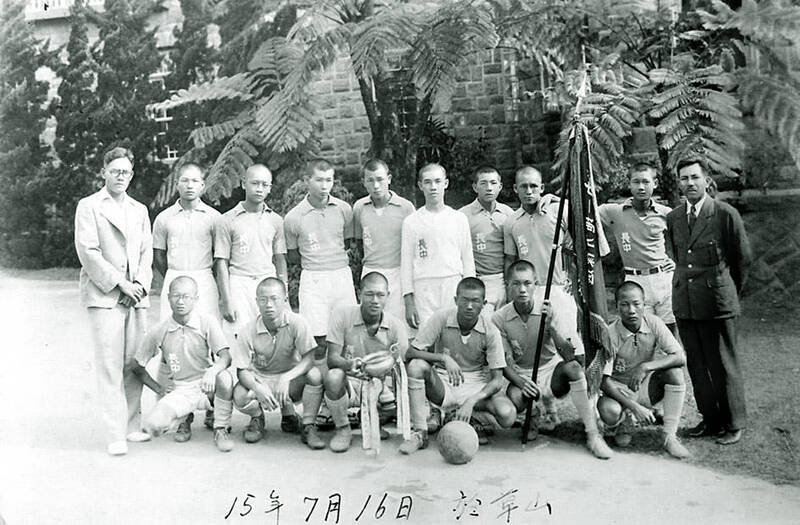
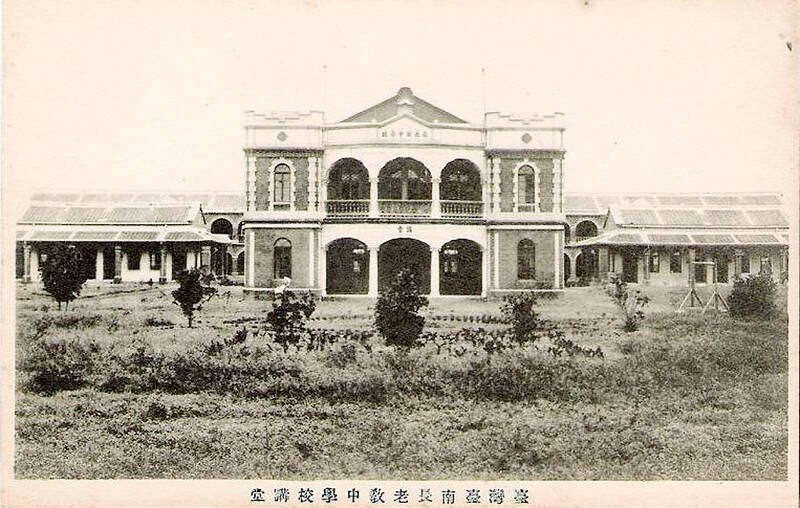
Actual physical schooling was not a prevalent subject matter then, and as principal of Tainan’s Presbyterian Church Superior School (renamed Chang Jung Large Faculty in 1939), he at initial had to drag the college students from their dorms immediately after faculty to the discipline. But before long, the sport took off and the school turned a regional powerhouse, representing Taiwan in the 1940 national event in Japan.&#13

Meanwhile in northern Taiwan, Japanese educators hoping to infuse additional Western elements into the curriculum also launched their individual soccer golf equipment, and starting in the late 1920s, faculties across the colony consistently engaged in intense regional and nationwide tournaments that captivated fervent spectators. The rivalry concerning the predominantly Taiwanese Presbyterian school and the largely-Japanese Tainan Initial Superior Faculty was the most heated, and brawls were being common right after particularly actual physical matches.&#13

“For Taiwanese, soccer was not only a activity to prepare your system and intellect, it was a way for them to split out of their position as a colonized men and women, and by way of reasonable competition, problem the Japanese and even the planet,” Lin Hsin-kai (林欣楷) writes in his new book, Our Soccer Dreams (我們的足球夢). &#13

Photo courtesy of Wikimedia Commons

Despite this promising starting, Taiwan never ever identified a great deal worldwide results besides for a miraculous operate by its women’s workforce in the 1970s and 80s. As the fad of the World Cup subsides, there’s been significantly dialogue about how to improve Taiwan’s profile in the sport. With the modern release of Lin’s reserve, it’s an suitable time to take a look at in detail the sport’s lesser regarded early days.&#13

Climbing Activity&#13

A number of yrs immediately after Band’s arrival, learners could be observed playing barefeet by means of the streets and in the parks, Lin writes. Alumnus and previous player Hung Nan-hai (洪南海) recollects observing more mature classmates use the city’s southeast gate as a soccer objective.&#13

Photo courtesy of publications.com.tw

By 1920, the Presbyterian college experienced two soccer groups, and it was the most preferred action during recess. Upon graduation, Band brought the college students on an exchange to China with church educational facilities there, with soccer matches staying a person of the major activities.&#13

The activity produced independently in the north, becoming promoted by the Japanese around the very same time. In 1918, soccer turned part of Japan’s faculty curriculum, and by extension Taiwan. However, baseball was still closest to people’s hearts — to the level that the Asahi Shimbun newspaper posted a sequence of content warning of the hazardous consequences of baseball, arguing that it wasn’t really a total-system sport and that it induced the students to neglect their experiments. Governor-common Nogi Marusuke even chimed in: “It’s extremely dangerous to spend so a great deal time and enthusiasm on the final results of a match.”&#13

Taihoku Second Significant School principal Hanshiro Kawase agreed, likely versus the grain to advertise soccer, kendo and swimming. He considered that soccer was a much better group sport than baseball and additional conducive to instructing the worth of cooperation, Lin writes. Japanese troopers docked in Keelung could be seen competing with learners all through their down time.&#13

Image courtesy of Wikimedia Commons

This also happened in the south, as the crew of a going to British warship performed a friendly match with the Presbyterian college students. The students quickly beat the troopers and created the front web site of the newspapers.&#13

Intense RIVALRY&#13

In November 1929, the Presbyterian Center School and Tainan To start with Large introduced the Southern Soccer League with Band as president. Two universities from Kaohsiung also joined, and founding associates incorporated British, Japanese and Taiwanese.&#13

With missionary Thomas Barclay donating the trophy, the inaugural Barclay Cup kicked off on Nov. 30, 1929, with 4 Tainan schools competing the Kaohsiung faculties did not join owing to the distance. The Presbyterians won the very first of 3 straight championships and the matches had been reportedly incredibly physical as foul procedures ended up loose.&#13

The news unfold to Taipei, and the island-extensive Mitsuzawa Cup took position the following calendar year with 13 groups competing. It turned just one of the four common soccer events using area in the funds all through the 1930s.&#13

Presbyterian Center School and Tainan To start with Higher designed an extreme rivalry throughout these a long time, and raucous, cheering supporters could be found at their games. The government’s ever more intrusive measures toward Christian educational facilities (this sort of as mandating that they worship at Shinto shrines) further fueled the animosity of the pupils toward their Japanese counterparts. Write-up-match brawls were being frequent, and the authorities tacitly authorized them to take place as a way for people today to blow off steam as imperialism grew.&#13

In 1932, the Presbyterians suffered a stunning reduction to Tainan Initial High, and it was seen as the most significant disgrace in college record. With funding from the alumni affiliation, the pupils trained all summer in 1933 and quickly exacted their revenge in September. They then headed north to enjoy the 3 top Taipei groups, successful two out of 3 matches.&#13

Most gamers returned for the 1934 college year, with the star remaining Ping Tien-ming (兵田明), an ethnic Siraya multi-activity athlete nicknamed “The All-Potent Fleet Carrier” (萬能航空母艦). With the arrival of Liu Chao-ben (劉朝本), the squad was regarded the strongest at any time, and the university arranged for them to head to Japan and sq. off towards its prime teams.&#13

They did not stand a opportunity in opposition to Kobe 1st Significant School, losing 10-. The fatigued, dejected group then took on Hiroshima 1st Higher College, with the sport ending in a 1-1 tie.&#13

Formal Competitiveness &#13

The Taiwan Min Pao (台灣民報) newspaper in 1931 named the colony’s 4 soaring athletics stars, together with “Soccer Overlord” Lin Chao-chuan (林朝權) of the Presbyterian alumni staff. While his squad identified achievement in Taiwan, they had been not yet authorized to contend in Japan.&#13

This rule was reversed in 1938. That 12 months, the all-Japanese Taihoku Superior Faculty beat out the competition to stand for Taiwan, but they dropped in the first round. In 1940, Presbyterian Middle College (by then renamed Chang Jung Substantial College) finally acquired its probability to contend, becoming the to start with all-Taiwanese squad to enjoy in official levels of competition. They were also knocked out in the initially round, but that year’s dim-horse winner also arrived from a colony — Korea’s Boseong Large College.&#13

Sporting activities things to do arrived to a halt as Entire world War II intensified. Official soccer matches resumed under the Chinese Nationalist Party (KMT) with the Provincial Soccer Match in July 1946, and Chang Jung High School’s alumni squad took property the trophy.&#13

At 1st, Lin was satisfied to help the new authorities rebuild Taiwan’s sports activities scene, serving as director of the Provincial Sports activities Affiliation. On the other hand, following his beloved trainer Lin Mao-sheng (林茂生) “disappeared” in the aftermath of the 228 Incident, he still left for China and never returned.&#13

In November 1947, the KMT put on a countrywide sporting activities event in Shanghai to celebrate Taiwan’s “return” to the motherland. Shanghai reporters came to Taiwan to take a look at the regional sporting activities scene, concluding that its weakest factors ended up soccer and basketball. &#13

Upon listening to this, the dollars-strapped provincial governing administration did not mail a soccer staff to the levels of competition. Lin Hsin-kai writes that this was the commencing of the “Taiwanese cannot play soccer” label that has haunted the nation for 70 several years, primarily as the countrywide team’s accomplishment in the 1950s and 1960s relied on borrowed players from Hong Kong.&#13

Taiwan in Time, a column about Taiwan’s background that is published each and every Sunday, spotlights essential or appealing situations close to the country that either have anniversaries this week or are tied to present-day situations.

Comments will be moderated. Retain reviews pertinent to the short article. Remarks containing abusive and obscene language, individual assaults of any type or marketing will be taken out and the person banned. Final determination will be at the discretion of the Taipei Situations.

Virginia’s Largest School System Pays $455,000 for ‘Equal Outcomes’ Consultant

Virginia’s Largest School System Pays 5,000 for ‘Equal Outcomes’ Consultant

by Hans Spader

College students fluctuate widely in intelligence and willingness to get the job done tough. Why would everyone assume “equal results for each university student, devoid of exception”? But which is what academic consultants paid for by Virginia’s greatest university district expect. The consultants were being employed by Fairfax County General public Educational institutions, which have 180,000 college students.

Their goal is to “produce equivalent results for each scholar, without exception,” reports The College or university Fix:

Virginia’s Fairfax County Community Schools reportedly paid out just about 50 percent a million bucks to a business whose “Equity Imperative” is that all students’ tutorial overall performance outcome in equivalent outcomes. Paperwork attained by Asra Nomani show the district compensated $455,000 to Oakland, California’s Overall performance Point to “analyze student information to determine trends and suggestions in assist of the development of strategic plans,” among the (lots of) other matters. It also “facilitated” college board “work classes/retreats” which allegedly had been “focused on the enhancement of the [district] strategic approach.”

The September 20, 2022 retreat was led by enterprise CEO Mutiu Fagbayi. … A PowerPoint for the retreat titled “Equity-centered Strategic Planning” is, like several diversity/fairness/inclusion (DEI) documents, comprehensive of flowery, yet vacuous, educational lingo. It involves the common comparison between equality (“resources and supports are dispersed evenly, irrespective of personal requires or assets”) and fairness (“incorporates the notion of want distribution of sources and supports is purposefully unequal”)….Then there is that “Equity Imperative” which is “equitable accessibility to resources and prospects that warranty honest, just, and affirming experiences and deliver equivalent outcomes for each individual student, with out exception” (emphasis included).

When regarded anathema in instruction and in other places, expecting equal outcomes has become far more and additional popular as a facet of anti-racism instruction. For example, previous 12 months Harvard featured the head of the UK’s “leading independent race equality consider tank,” who advocates for equal outcomes.

Outcomes equality is also a tenet of anti-racism expert Ibram Kendi’s philosophy. In 2019 he advised an assembly at George Washington University that “racists feel unequal societies [and] racial disparities stem from unequal peoples,” while “antiracists believe that that the racial teams are equivalent.” As such, any variances amongst teams come from racist guidelines. “It’s that uncomplicated,” mentioned Kendi.

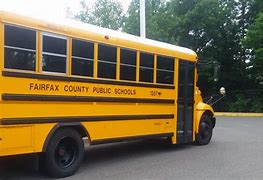
In 2020, Fairfax County Colleges paid Kendi $20,000 for a just one-hour presentation on “anti-racism” to university staff members. At the time, they had been also paying out bus motorists to drive completely empty faculty buses.

Kendi is improper to declare that unequal racial results are all due to racism. Lots of certainly are not. For case in point, Latinos stay 3 years longer than whites, on ordinary, even however doctors don’t discriminate in their favor. Asians make additional revenue than whites, on average, even although Japanese and Chinese- People in america applied to face significant discrimination. And while blacks make less money than whites, on common, immigrants from some African countries like Ghana and Nigeria normally make additional revenue than whites do.

Unequal racial outcomes exist everywhere in culture and the earth, ordinarily for explanations unrelated to racism, as the black economist Thomas Sowell chronicles in his e book Discrimination and Disparities.

The “key concept” in Ibram Kendi’s ebook How to Be an Antiracist is that discrimination from whites is the only way to realize equality: “The only cure to earlier discrimination is current discrimination. The only solution to existing discrimination is long run discrimination,” writes Kendi in that e-book. Kendi is a major “critical race theorist.”

The consultants hired by Fairfax are so lazy they don’t even use “demographic information” from the Fairfax faculties in their presentation to district staff members — they reuse knowledge from yet another school district, claimed The School Correct. “The Fairfax County district equivalent results revelation arrives on the heels of a report that officials from one particular of its educational institutions had withheld Countrywide Merit Scholarship awards from college students — mainly because they believe that in ‘recogniz[ing] pupils for who they are as people today, not emphasis[ing] on their achievements.’ They also did not want to ‘hurt’ the thoughts of college students who did not make any awards.”

A class complete of failing students whose trainer doesn’t train something would have “equal outcomes for every single university student,” as the consultants employed by Fairfax advocate. But that wouldn’t be fascinating.

Hans Bader is an attorney residing in Northern Virginia. This column was to start with published on Liberty Unyielding and is republished with authorization

Study Finds Teen Suicides Declined With Online Learning

Study Finds Teen Suicides Declined With Online Learning

(TNS) — On-line schooling may perhaps have decreased suicide fees in LGBTQ+ young adults in Dane County through the top of the COVID-19 pandemic, according to a research from UW-Madison’s College of Education and learning, potentially due to the fact the college natural environment for some teenagers was harmful.

But suicide prices for LGBTQ+ teens are even now two to three situations increased than their cisgender and straight friends.

“I you should not want any other guardian to ever, ever, ever truly feel like this,” reported Dia Caulkins, whose child Graciella-Sawyer Caulkins-Feltz died by suicide in November.


Graciella-Sawyer, who was non-binary, was only 14 when they died. They cherished the colours pink and yellow, and unicorns. They had just picked up photography, snapping pics of flowers, sunsets and ice product. They cared about animals and experienced just begun piano classes.

They had been also really form and compassionate, almost to a fault, Caulkins explained.

“They failed to do this to harm us, they did this since they couldn’t see a way out,” she mentioned. “And we have to be executing extra so that they have a place the place they in shape, the place they are acknowledged.”

Globe occasions these kinds of as the war in Ukraine and George Floyd’s death deeply afflicted Graciella-Sawyer. They stopped to communicate with men and women dealing with homelessness, volunteered in the group and checked in on their siblings generally. They were being awesome to anyone, even to those people who had been unkind to them.

“Their capacity for love, apart from for themselves, was wonderful,” Caulkins stated.

“I consider we require to be accomplishing a lot more,” she said.

UW doctoral pupil Erin Gill and assistant professor Mollie McQuillan, who authored the research, stated discovering remedies is specially crucial as anti-LGBTQ+ rhetoric raises, specifically encompassing youth and colleges — from lawsuits above faculty districts’ gender identification insurance policies and discourse in the 2022 gubernatorial race to endeavours to repeal sex schooling curriculum and worries to children’s Satisfaction displays in libraries.

“Our research highlights that we need extra organizational supports and reforms for queer and trans young ones who are obtaining pushed out of faculty and usually are not risk-free in faculty,” McQuillan said.

At the get started of the pandemic , there had been “two stories” about how LGBTQ+ youth ended up fairing, Gill said.

“We were hearing that some kids had been genuinely flourishing not staying in faculty any longer because they had been out of unsafe university environments,” she explained. “But we might also been listening to this other story where youth ended up really struggling at household, regardless of whether they have been in a dangerous property setting or they lacked the supports they had in college.”

THE Research

Those people divergent ordeals are borne out in the UW review, in which McQuillan and Gill as opposed final results from the Dane County Youth Assessment from 2018 and 2021.

The evaluation is a survey given to pupils each and every three decades, inquiring them about distinctive behaviors and risk components, such as drug use and bullying.

Gill and McQuillan’s review found that LGBTQ+ youth described “considerably less” attempts of suicide in 2021 than in 2018, but higher stress and anxiety.

Especially, in 2021, nearly 39 percent of gay or lesbian substantial schoolers documented seriously contemplating or acquiring attempted suicide, when compared with practically 42 percent in 2018.

That rate was approximately 47 {e4f787673fbda589a16c4acddca5ba6fa1cbf0bc0eb53f36e5f8309f6ee846cf} for bisexual college students in 2021, in contrast with approximately 51 percent in 2018.

And for pupils questioning their sexual identification, the price was just more than 35 {e4f787673fbda589a16c4acddca5ba6fa1cbf0bc0eb53f36e5f8309f6ee846cf} in 2021 and just above 38 per cent in 2018.

Corresponding premiums for straight learners, having said that, have been a lot reduced: 14 p.c of them in 2021 and 17 p.c in 2018.

In the meantime, anxiety in substantial schoolers rose from almost 30 percent in 2018 to a lot more than 32 per cent in 2021.

McQuillan stated environmental aspects could assistance reveal why stress enhanced in college students even though suicidal thoughts might have lowered.

Anxiety is thought to be joined to a home natural environment and added pandemic-similar stressors family members had been experiencing, even though other supports in university and the group ended up lower off, McQuillan explained.

But suicide is imagined to be connected far more to peer victimization, or bullying.

“So, victimization does not explain all of this boost in suicidality amongst queer and trans little ones, but it describes some of it. And when young ones were being out of university and enduring likely considerably less victimization, we observed that link of suicidality and not anxiety,” McQuillan stated.

Caulkins miracles if students whose mental wellness improved all through on the web education already had buddies and peer help. “If you will not have any mates, that’s a very lonely spot to be at 12 and 13.”

For Graciella-Sawyer, “the pandemic was horrible,” their mother said.

“It wasn’t like life was straightforward for them right before that, but it was like they had been treading h2o all right,” Caulkins explained. “And as the pandemic went on, they got lonelier and sadder.”

As soon as in-particular person mastering returned, Graciella-Sawyer tried out to make buddies by becoming a member of clubs and keeping associated. But some young children bullied them verbally, and some even took photographs of them and threatened to publish them on line.

“We as grownups, we as the grown-ups, have to instruct kids that their phrases make a difference and they stick with kids who are lonely and sad and isolated,” Caulkins mentioned. “As moms and dads, we have a responsibility to make sure that our youngsters know they are not Okay.”

What she hopes to see: Additional local community constructing in universities, to expose college students to distinctive backgrounds and identities, and better mental overall health services.

The course of action to get counseling for Graciella-Sawyer was sluggish, and now as Caulkins is striving to find counseling for her other little ones as they grieve, the waitlist is months long.

Gill said the research reinforces the value of bolstering and multiplying approaches to assist LGBTQ+ youth. And McQuillan mentioned there ought to be more assistance to “disrupt” bullying that is most likely happening yet again now that young children are again in educational institutions.

“I am seriously encouraged by LGBTQ youth who have been standing up to this political stress,” Gill included. She stated that while college students may perhaps be battling mainly because of the increased rhetoric, there is also an raise in peers and LGBTQ+ youth “championing” one an additional.

McQuillan and Gill hope to broaden their examine next by hunting at statewide info.

As for Graciella-Sawyer, they had been offering to the last: Their organs had been donated.

“And all moms enjoy their young ones, of training course, but definitely, Sawyer definitely preferred to make the planet a improved area, and they need to have been below to do that as an adult,” Caulkins said. “They would have devoted their life to generating it much better.”

©2023 The Wisconsin State Journal (Madison, Wis.). Distributed by Tribune Content Agency, LLC.

Arkansas public school data shows uptick in enrollment

Arkansas public school data shows uptick in enrollment

Public college enrollment in Arkansas made a sizable climb early in the 2022-23 university yr as when compared with the past two several years but it continues to be beneath the full documented in 2019-20 — just before the covid-19 pandemic slammed the point out and world.

Home-college numbers, which arrived at a file high in the pandemic-marked 2020-21 college year, have declined this yr as as opposed with quantities recorded in the recent earlier, according to the Arkansas Division of Elementary and Secondary Instruction.

As for personal schools, the Arkansas Non-community University Accrediting Affiliation experiences that there are 19,932 pupils enrolled in its 95 accredited member educational institutions and associate member schools, which are in search of the organization’s accreditation.

Past university yr, 96 member and affiliate colleges experienced a complete enrollment of 18,920, according to the organization’s annual directory. And that compares with 98 educational facilities and 19,045 college students in the 2019-20 college yr.

The biggest of the member schools is Minor Rock Christian Academy with 1,553 students. That is adopted by Shiloh Christian Academy in Springdale with an enrollment of 1,313.

The broad wide variety of data reported by the unique organizations and the traits mirrored by 12 months-to- yr figures reveal, in part, the global pandemic’s affect on training.

The state’s general public faculty Oct. 1 enrollment for this college yr is 476,579, which is up from 473,861 a year in the past and 473,004 in the 2020-21 college 12 months, the year most affected by the pandemic.

Prior to the start off of the pandemic in March 2020, the state’s public college enrollment approached 480,000 — a lot more exclusively a whole of 479,432.

Household-school enrollment for final college year, 2021-22, was 30,205 college students. That has dropped to 26,378 in this 2022-23 college calendar year, in accordance to figures supplied by Kimberly Mundell, a spokesperson for the elementary and secondary education and learning division.

“Considering the fact that pupils can start out property-education at any time for the duration of the yr and can also return to general public college at any time through the 12 months, the quantities are normally in a little bit of flux in the course of the recent university 12 months,” Mundell explained. “

Though household-faculty counts have dropped, the overall continues to be above pre-pandemic counts. In the 2019-20 school calendar year, there ended up 22,461 home-college learners, and 22,104 home-college pupils in the 2018-19 faculty year, according to information accounts from those several years.

In 2021-22, Arkansas instruction leaders took some consolation in the change between community and house-school counts.

“You listen to in a ton of other states that they shed contact with substantial figures of college students,” Arkansas Deputy Commissioner Ivy Pfeffer reported in late 2021 about the decline of standard community college learners. “I imagine for us, in conditions of all round quantities, we know exactly where they are because we did see that maximize in property-university figures.”

Even with their diminished whole this calendar year, dwelling-college students would represent the state’s most significant university district, if house-university pupils constituted a faculty district.

House schools are not general public colleges. Property-university learners are those whose dad and mom or guardians have opted to suppose the comprehensive duty of educating their small children — which includes the fiscal price of curriculum. Mom and dad who dwelling-college need to register their intent to home-faculty with the state.

The annual Oct enrollment counts in the state’s 259 college programs — such as open up-enrollment constitution schools — are informational and can be used for detecting developments and preparing for setting up new schools, closing or reconfiguring the use of more mature campuses.

Enrollment is also utilized to ascertain annual point out funding for districts in the forthcoming year. For each scholar condition funding, even so, is centered not on the Oct enrollment but on averaging the pupil counts from each and every of the initially a few quarters of the faculty calendar year.

The state’s biggest faculty district proceeds to be the Springdale University District with a kindergarten via 12th quality rely of 21,801.

Little Rock College District is the second most significant with 20,135 and Bentonville Faculty District is the 3rd most significant with 18,674 in kindergarten by way of 12th grades. Rogers and Fort Smith spherical out the major five, adopted by the Pulaski County Exclusive Faculty District, Fayetteville and Cabot, Conway and Bryant — each and every of which exceeds 10,000 college students.

The covid-19 pandemic pushed Arkansas college methods to use digital or remote instruction. Remote learners are enrolled in classic faculty districts or charter educational facilities, but they are taught at property with school-delivered teacher steering and district-equipped technological know-how and other substance.

In the 2020-21 university calendar year, when there ended up to begin with no covid-19 vaccinations and then vaccinations ended up just for grown ups, far more than 88,000 of the state’s students were digital learners. Another 55,000 pupils ended up viewed as hybrid learners — making use of a blend of on-campus and at-property discovering.

This past faculty 12 months, the quantity of virtual students dropped substantially to about 18,523 or 3.9{e4f787673fbda589a16c4acddca5ba6fa1cbf0bc0eb53f36e5f8309f6ee846cf} of the full public college enrollment.

This school 12 months, state knowledge stories exhibit that there are 11,682 public college learners understanding remotely, or 2.46 {e4f787673fbda589a16c4acddca5ba6fa1cbf0bc0eb53f36e5f8309f6ee846cf}. There are 1,606, about a 3rd of 1 {e4f787673fbda589a16c4acddca5ba6fa1cbf0bc0eb53f36e5f8309f6ee846cf}, making use of a mix on onsite and distant finding out.