
Best UAE Free Zones & Business Consultants: Testimonials – My entrepreneurial journey

Sep-28-UAE-Free-Zones-testimonials-lead-for-web

Image Credit: Shutterstock

Laura Wittka, Operations Manager and Co-Founder, EDU International Business Institute FZCO

Co-founder Nicolas Ballaz and I launched EDU International Business Institute in June 2021 to provide legally binding contracts to recent graduates who are looking for an internship or a position in a company. We aim to provide graduates the most convenient and fast service, while enhancing their career opportunities and brighten their future.

Nicolas Ballaz, Managing Director and Co-Founder, EDU International Business Institute FZCO
IFZA answered our questions in a very professional and kind manner, thus ensuring that IFZA would be the right partner for us to set up our company in Dubai. While setting up our company, we received a tremendous amount of support. The process was super-fast and convenient, and we registered our company within two weeks. After setting up the company, we continuously received further support to apply for the visa.

Shukhratbek Mirzaev, Managing Director, SH.A.M Consulting Services FZCO

I came to Dubai with my family at the end of August to continue my healthcare management consulting business here in the UAE, which is at the crossroads of international business. I chose IFZA after comparing various free zones in the UAE because of their offers and business license packages that suit my business needs.

In addition, the IFZA representatives I spoke with were very professional and all my enquiries were answered. Within one week, I received my business license, which also allowed me to conduct management consulting and commercial brokerage business activities in addition to healthcare management. After getting my business license and establishment card, they continued to help me through the residence visa process.

Ehab asaad mohammed, Director General, Cvit Software House

Cvit Software House began in 2016 as an enterprise resource planning (ERP) implementation and service provider. We now cater to the ERP needs of public and private sectors in the UAE and provide outsourcing services to companies worldwide. We have fully integrated smart processes and applications to support the digital transformation of our clients. Not only do we focus on providing first-class support and services to our clients but we also offer up-to-date training on the latest versions of our software solutions to further enhance their operations.

Ajman Free Zone (AFZ) has a variety of attractive features and services that are compatible with our needs to ensure success. From business registration, licence approval, and many other procedures, the AFZ team is able to assist us without any hassle. They were able to provide clear instructions and fast responses to our queries prior to starting our business. Also, AFZ supported us through its adoption to sustainable procurement policies, prioritising the execution of contracts and purchases with the free zone’s companies. As proof of AFZ’s confidence in our offerings, they have also signed procurement deals with us. Best of all, they offered us a very competitive package, and so far, we have been enjoying a business-friendly experience during our stay here.

AFZ has been providing the ideal environment for our business to flourish and our innovative solutions to mature. In fact, they gave us the opportunity to operate as the IT arm of AFZ. We have also been receiving ample support for us to grow in various aspects and expand our services.

ReUben Benjamin, Founder and CEO, Anima LLC

I launched Anima in July 2020. We develop unique sustainability initiatives for businesses in any industry. As we team up, we consider the company’s goals and develop initiatives around their business model. I chose SHAMS due to its flexible rates and tailored activities, a no-brainer for Anima. What SHAMS did well was enrich the experience of opening a company, which can be overwhelming. However, the assurance and good energy from the staff are what I needed to bring Anima to where it is today. SHAMS’ staff was prompt with any requests or queries that I had through the process. To know that you are well received is a feeling I will carry throughout my entrepreneurial journey.

Jade Robertson, Director, International Publishing

International Publishing was launched in London in 2006, followed by our Sharjah and New York branches in 2017. Our key activities include publishing books across all genres in Arabic and English for all ages.

In the UAE, we chose SPCFZ to start our business due to its accessibility, being able to have a warehouse and office space and work alongside other publishing professionals. SPCFZ had everything we needed to operate effectively as a publisher.

In terms of support from the organisation during and after launching our firm, the staff at SPCFZ are highly efficient and provided assistance at every step, from suggesting appropriate premises to documentation and licensing.

Suraj Mohan, Executive Director , Var Ange Project Support Services Limited

We were confused about the cheap business licences available in the market and it was team Aurion that helped guide us to Masdar Free Zone, Abu Dhabi, which I believe is the right free zone for us based on our line of business, which deals with energy goods and services.

We are delighted with the free zone’s operations as well as the pace at which our business is successfully running.

Yashraj V. Rathor, Director, Palm Hospitality Ventures FZC
Palm Hospitality Ventures was launched in September, 2018 in Ajman Free Zone and deals in general trading of hospitality and travel products.

We commend the excellent zero-defect prompt services provided to us continuously by Hatem and Mafaza at Business Link, who have always been committed towards building exceptional confidence and trust, and ensuring clients like us look to them for assistance in specialised processes.

Professional service delivery through a highly talented team for market communications and enterprise management, and leveraging trust built assiduously with local government to create bridges, navigate legal labyrinths and solve client problems are their strengths. We respect Business Link for being a one-stop shop for all corporate affairs and public relations needs in the most progressive region of the world, the UAE. We highly recommend Business Link to global clientele who are interested in looking at opportunities to set up business in the UAE.

Faranak, Founder, Enaya Education

I am humbled to have been asked to share how my experience has been with the Capital International Group. My name is Faranak and I am the founder and owner of Enaya Education. My vision for Enaya was born in June 2020, out of my own struggles I faced as a parent of a child with learning differences. Our comprehensive support for the educational needs of children with learning differences includes supporting and advocating for parents; providing individual academic support for students; training teachers; and consulting with schools on best practices.

In August this year, I decided to take Enaya to the next level and move to an office. After looking around several offices, I came across a great office with an ideal location by Capital International Group. The approach of their staff was very professional and understanding from the beginning. They have listened to all our concerns and have accommodated all our needs. I am blessed to be here and feel that we are all part of one family. Thank you Capital International Group – you’re our continuous support.

Chris Calumberan, Chris Calumberan FZE

My company offers photography, videography and commercial photography. We work with brands like McDonald’s, Enoc and Adnoc, to name a few.

With the help of Creative Zone, I recently moved to SHAMS as this suits my business activities more. The customer service that Creative Zone provides me every single time is commendable. These people know what they are doing, and that trust factor is crucial for business owners.

I always look forward to renewing my licence with them and meeting the team whom I have grown very fond of.

Ismail Tekin, Founding Partner, Lambert & Co. FZ LLC

We launched the first office for Lambert & Co. in 2013, in Creative City in Fujairah, with a focus on investment management and management consulting. EZone has been instrumental in assisting us with our expansion into Dubai and Abu Dhabi. We value our long-term relationships and Maribe. She and her team are extremely knowledgeable.

Mohamed Abdi Mohamed, Owner and Director, GOIN Shipping & Cargo

I am glad to be associated with Make My Firm Business Set-up Services for the past three years and I am happy that I have chosen a very professional firm for my business set-up. They have deep knowledge of business set-up rules and regulations, offering me the right guidance. I have set up four companies with Make My Firm and it has always been an amazing experience. They are very accurate with processes and timelines. They made everything easy for me to set up my business in Dubai.

I recommend everyone to seek advice from Make My Firm as they are a one-stop solution for everything a business owner will need to set up a new business in the UAE.

Courtney Smith, Mercantile Nexus Management Consultancy

I decided that our company could do a lot of business in the UAE, so I started to look for a company to help me. It was overwhelming!

Then, I came across Smart Zone and realised that their energy and enthusiasm was the ticket for me. My activities were investment training and management consulting and we wanted to locate in Dubai because it is the business hub of the UAE. My company was then set up in Dubai mainland with no issues. The experience was wonderful!

I had very little to do. Smart Zone did all the work, particularly all the boring work like filling in forms. Their driver then took me to all the government offices so I could get a residency visa in Dubai. It was so easy! I’ve never seen anything like it!

An observational study of 79,503 UK Biobank participants

Abstract

Methods and findings

We used data on 79,503 adult participants from the population-based UK Biobank cohort, which recruited participants between 2006 and 2010 (mean age at accelerometer wear 62.1 years [SD = 7.9], 54.5{e4f787673fbda589a16c4acddca5ba6fa1cbf0bc0eb53f36e5f8309f6ee846cf} women; mean length of follow-up 5.1 years [SD = 0.73]). We derived (1) the total time participants spent in activity categories—sleep, sedentary, light activity, and MVPA—on average per day; (2) time spent in sedentary bouts of short (1 to 15 minutes), medium (16 to 40 minutes), and long (41+ minutes) duration; and (3) MVPA bouts of very short (1 to 9 minutes), short (10 to 15 minutes), medium (16 to 40 minutes), and long (41+ minutes) duration. We used Cox proportion hazards regression to estimate the association of spending 10 minutes more average daily time in one activity or bout length category, coupled with 10 minutes less time in another, with all-cause mortality. Those spending more time in MVPA had lower mortality risk, irrespective of whether this replaced time spent sleeping, sedentary, or in light activity, and these associations were of similar magnitude (e.g., hazard ratio [HR] 0.96 [95{e4f787673fbda589a16c4acddca5ba6fa1cbf0bc0eb53f36e5f8309f6ee846cf} CI: 0.94, 0.97; P < 0.001] per 10 minutes more MVPA, coupled with 10 minutes less light activity per day). Those spending more time sedentary had higher mortality risk if this replaced light activity (HR 1.02 [95{e4f787673fbda589a16c4acddca5ba6fa1cbf0bc0eb53f36e5f8309f6ee846cf} CI: 1.01, 1.02; P < 0.001] per 10 minutes more sedentary time, with 10 minutes less light activity per day) and an even higher risk if this replaced MVPA (HR 1.06 [95{e4f787673fbda589a16c4acddca5ba6fa1cbf0bc0eb53f36e5f8309f6ee846cf} CI: 1.05, 1.08; P < 0.001] per 10 minutes more sedentary time, with 10 minutes less MVPA per day). We found little evidence that mortality risk differed depending on the length of sedentary or MVPA bouts. Key limitations of our study are potential residual confounding, the limited length of follow-up, and use of a select sample of the United Kingdom population.

Introduction

Physical activity is associated with many health benefits such as better cardiovascular health and reduced risk of some cancers and type 2 diabetes [1]. A recent systematic review of prospective studies suggested that higher levels of physical activity at any intensity, and less time spent sedentary, are associated with a reduced risk of mortality [2].

Policy in the UK recommends that people accumulate 150 minutes each week in moderate physical activity or 75 minutes in vigorous activity [3], while policy in the US and the World Health Organization (WHO) guidelines have been recently updated to recommend ranges (150 to 300 minutes each week for moderate intensity and 75 to 150 minutes for vigorous intensity) rather than minimum amounts alone [4,5]. Until recently, the advice also stated that activity should be accumulated in bouts of 10 minutes or more, but this has now been removed from the UK, the US, and WHO guidelines [35]. These changes were based on evidence from cross-sectional, prospective cohort, and randomised trials. For example, the removal of minimum bout length from WHO guidelines was based on a systematic review [6] of 27 research studies: 13 cross-sectional studies, 2 prospective cohort studies, 1 nonrandomised trial, and 11 randomised trials. The trials had small sample sizes (all ≤255) and short-term follow-up (≤18 months). The largest sample size among the included prospective cohort and cross-sectional studies was 6,321.

Few prospective cohort studies have assessed how the duration of moderate-vigorous physical activity (MVPA) bouts relates to health. A meta-analysis of 29,734 children (4 to 18 years old) across 21 cohort studies found a similar benefit of MVPA on cardiometabolic risk factors across different bout durations [7]. In that study, an isotemporal approach was used to estimate associations of spending more time in one MVPA bout duration category coupled with less time in another MVPA bout duration category. They controlled for the overall time in MVPA to investigate its composition, but did not account for time spent in other activity categories such as sleeping or sedentary [7]. Of 3 studies in adults, 2 found no notable association of MVPA bout length with their respective outcomes: cardiovascular risk factors (N = 2,190) [8] and all-cause mortality (N = 4,840) [9]. The other (N = 3,250) reported smaller mean waist circumference and lower body mass index (BMI) in those who spent more time in MVPA bouts of 10+ minutes rather than shorter bouts [10]. None of these studies considered couplings of activity categories, thus did not examine whether results differed depending on the form of activity substituted for MVPA. They all grouped bouts ≥10 minutes together [710]. Other studies have used 2 summary variables to characterise MVPA bouts: (1) the number of bouts; and (2) the average time spent in bouts (in total) per day, but these do not describe the range of bout lengths a person undertakes or how often they undertake them [1115]. We have found only 1 study that examined the importance of sedentary bout length (N = 7,985 adults) [16]. It found that higher percentage of total sedentary time in shorter sedentary bouts (< = 29 minutes) was associated with lower mortality, but overall time spent sedentary was not accounted for (S1 Fig).

The aim of our study is to examine whether mortality differs depending on time spent in different activity categories (e.g., including sleep and sedentary, not just being physically active) and whether time spent sedentary or in MVPA is accumulated in longer versus shorter bouts. We use a novel analytical approach that addresses limitations of previous studies to assess associations of overall time spent in different activity categories and bout length categories in terms of coupling more time spent in one category with less time in another category.

Methods

The analysis plan was developed by LACM, DAL, KT, and TRG prior to analyses beginning. We initially sought to investigate the impact of physical activity bout length on BMI, but changed this to all-cause mortality because BMI is measured prior to accelerometer wear in the UK Biobank. Following reviewers’ comments, we made one change to our main analysis: splitting our MVPA 1- to 15-minute bout length stratum into 2 categories: 1 to 9 minutes and 10 to 15 minutes, so that the different impact of <10- and > = 10-minute bouts could be directly assessed. We also added 2 additional sensitivity analysis: (1) using the isometric log ratio transformation as an alternative approach to analysing compositional data; and (2) repeating our main analyses excluding the first year and first 2 years of follow-up to explore whether undiagnosed prevalent disease might confound our results. This study is reported as per the Strengthening the Reporting of Observational Studies in Epidemiology (STROBE) guideline (S1 STROBE Checklist).

Participants

We used data from the UK Biobank participants. UK Biobank is a large prospective cohort of approximately 500,000 adults (5{e4f787673fbda589a16c4acddca5ba6fa1cbf0bc0eb53f36e5f8309f6ee846cf} of those invited [17]) aged 40 to 69 years old at recruitment between 2006 and 2010 [18]. Written informed consent was obtained to collect and store data and bio samples, to link participants to health and administrative data, and for researchers to use these data for health research. UK Biobank received ethical approval from the UK National Health Service’s National Research Ethics Service (ref 11/NW/0382). This research was conducted under UK Biobank application number 17810.

In 2013, participants who had provided valid email addresses were invited to participate in the accelerometer substudy, apart from the participants of one assessment centre (3,797 participants; 0.76{e4f787673fbda589a16c4acddca5ba6fa1cbf0bc0eb53f36e5f8309f6ee846cf} of the cohort) who were excluded due to participant burden concerns as they had been invited to participate in pilot studies [19]. Between 2013 and 2015, participants were sent devices in order of acceptance. Of those invited, 106,053 agreed to participate, and 103,711 (44{e4f787673fbda589a16c4acddca5ba6fa1cbf0bc0eb53f36e5f8309f6ee846cf} of invited) provided some accelerometer data [19]. Our study includes 84,176 participants with at least 72 hours accelerometer wear time and no missing data for confounding factors used in our analyses (Fig 1, Section A in S1 Text).

Data collection

Potential confounders.

We considered the following to be likely confounding factors (based on their known or plausible effects on physical activity and mortality): sex, age at the time of accelerometer wear, ethnicity, socioeconomic position, smoking, BMI, and general ill health (S2 Fig). Sex, ethnicity, and smoking status (never, current, or previous) were self-reported at the baseline assessment. We used education level, household total income, and Townsend deprivation index (a score representing the deprivation of the participant’s neighbourhood) to reflect participant’s socioeconomic position (see Section B in S1 Text for details of these measures). At the baseline assessment, weight was measured (to the nearest 100 g) in light clothing and unshod using a Tanita BC418MA body composition analyser and height to the nearest cm using a Seca 202 device. We used 3 indicator variables for existing cardiovascular diseases, cancer, and respiratory diseases prior to accelerometer wear as measures of baseline ill health.

The season in which participants wore the accelerometer, while not a confounder since it would not plausibly affect subsequent risk of death, may affect activity. We therefore derived 2 variables denoting the day of the year on which the accelerometer was worn using the cosine function approach, defined as and , where d is the day of the year accelerometer wear began [20]. We included c1 and c2 as covariates in our models to reduce the variation in activity exposure variables.

Accelerometer data preprocessing

We used the UK Biobank accelerometer analysis tool (available at https://github.com/activityMonitoring/biobankAccelerometerAnalysis/) [19,21,22] to preprocess the accelerometer data and derive summary activity variables for each 1-minute epoch in each participant’s accelerometer time series. The steps conducted by this tool include resampling x/y/z axes to 100 Hz, calibration to local gravity [23], noise and gravity removal, epoch generation—including both average vector magnitude and machine learning predictions of physical activity categories for each epoch—and nonwear detection. The machine learning model [21] predicts activity categories (sleep, sedentary, walking, light activity, and MVPA) from accelerometer data. It was trained using accelerometer data captured in free-living conditions and labelled with “ground truth” activities from accompanying videos and the Compendium of Physical Activities determined using a body-worn camera [24].

Statistical analyses

Dealing with missing accelerometer data.

While the UK Biobank participants were asked to wear the accelerometer continuously for 7 days, 24{e4f787673fbda589a16c4acddca5ba6fa1cbf0bc0eb53f36e5f8309f6ee846cf} of our sample had some missing data. We identified periods of nonwear using the Biobank accelerometer analysis tool, defined as consecutive stationary episodes (where all 3 axes had a standard deviation of less than 13.0 milligravities [m-grav]) lasting for at least 60 minutes (the sensitivity of the accelerometer makes it possible to detect very small movements indicating it is being worn) [19]. We used 2 approaches to explore missing accelerometer data—a “complete days” approach and an “other day” imputation approach—that make different missingness assumptions. The complete days approach uses only days with complete accelerometer data in our analyses (referred to as “valid” days). The other day imputation approach involved finding all periods of accelerometer data on other days that are during the same time period and have no missing data (including from days with missing data at other times). One of these periods is then randomly chosen as the imputed sequence for the missing region. Imputed “valid” days are those with no missing data after this imputation. Details on missing data assumptions of these approaches are provided in Section C in S1 Text. We report results using the complete days data as our main results, and results using the imputed data are provided in the Supporting information.

Deriving physical activity bouts.

We assigned each 1-minute epoch (interval) of accelerometer data to an activity category—either sleep, sedentary, light activity, or MVPA. The machine learning model (see “Accelerometer data preprocessing” section above) predicted the activity categories with varying levels of success. For example, while 91{e4f787673fbda589a16c4acddca5ba6fa1cbf0bc0eb53f36e5f8309f6ee846cf} of minutes spent sleeping were correctly classified as sleep, only 25{e4f787673fbda589a16c4acddca5ba6fa1cbf0bc0eb53f36e5f8309f6ee846cf} of light activity minutes were correctly classified as light activity. For this reason, we used a hybrid approach that first identified MVPA as minutes≥100 m-grav (a threshold used in previous research [25]) and then used the machine learning model to identify minutes of sleep and sedentary behaviour from those not already assigned to MVPA [21]. All other minutes not assigned to MVPA, sleep, or sedentary categories were assigned to the light activity category. For each participant, we identified contiguous sequences of 1-minute epochs with a given activity category; these are referred to as activity bouts and can be of any length so long as the participant remains in the same activity category.

As a sensitivity analysis, we used only the machine learning model to define all categories and refer to this as the ML-only approach. As well as categories of MVPA, sleep, and sedentary, this model predicts walking and light activity. There are 2 reasons we used the hybrid approach as our main analysis: (1) the degree of misclassification of the machine learning model for MVPA estimated in the study publishing this model [21] (e.g., only 58{e4f787673fbda589a16c4acddca5ba6fa1cbf0bc0eb53f36e5f8309f6ee846cf} of MVPA minutes were predicted correctly as MVPA); and (2) the activity categorisation in [21] included a separate walking category, whereas we sought to categorise brisk walking as moderate activity and slow walking as light activity, with no separate walking category.

Estimating the association of overall time spent in activity categories with all-cause mortality taking account of total time spent in that activity and coupling of spending more time in one activity category with less time in another category.

We used Cox proportional hazards regression to test the association of each activity summary variable with all-cause mortality. All models were performed with age as the time variable. We tested each association before and after adjustment for potential confounders. Exact dates of birth were not available so ages were estimated assuming birth on July 1 in the reported year of birth.

It is possible that BMI and ill health subsequent to activity assessment could mediate the effect of activity on mortality. While we adjusted for BMI and ill health assessed at baseline (3 to 9 years prior to activity assessment), tracking of these factors across time (e.g., due to factors that affect BMI across the life course) means that BMI and ill health measured before activity are also proxies for these factors measured after activity (S2 Fig). Adjusting for proxies of mediating factors could attenuate our estimates towards the null [26]. We therefore performed a sensitivity analysis excluding BMI and ill health as covariates.

Within 1 day, there are 1,440 minutes so a greater amount of time spent in one activity category must be coupled with a lesser amount of time spent in one or more other activity categories. For this reason, we model associations in terms of couplings of activity categories, in a similar way to our previous activity bigrams approach [27]. We assign, in turn, one activity category as the baseline and estimate the hazard associated with spending 10 minutes less time in this baseline category when coupled with spending 10 minutes more time in a given comparison category, on average per day. Further details of this approach are provided in Section E in S1 Text.

Results

Of the 84,176 eligible participants, 79,503 and 82,277 were included in our complete days and other day imputed samples, respectively (Fig 1). Other day imputation greatly increased the number of valid days (e.g., 96{e4f787673fbda589a16c4acddca5ba6fa1cbf0bc0eb53f36e5f8309f6ee846cf} and 24{e4f787673fbda589a16c4acddca5ba6fa1cbf0bc0eb53f36e5f8309f6ee846cf} of participants had 7 valid days in the imputed and complete days data; S3 Fig). Descriptive statistics of our main (complete days) sample are provided in Table 1. The total person years at risk in the complete days analysis was 405,438, and 1,615 participants died, giving a mortality rate of 5.10 per 1,000 person years (equivalent numbers for other day imputed sample were 419,520 and 1,688, with a mortality rate of 5.10 per 1,000 person years). Participants who were included in our analyses, compared with those who were invited to wear an accelerometer but did not respond, did not accept or had missing accelerometer of confounder data, were younger, more likely to be white, more educated, and living in an area with less social deprivation, had a higher income, lower BMI, were less likely to have ever smoked, less likely to have a circulatory disease or cancer, were more likely to have worn the accelerometer in winter, and were less likely to die during the follow-up period (S1 Table).

S2 Table shows the distributions of the average number of minutes per day in each activity category. Sedentary time was more often accumulated in bouts of longer duration, and MVPA was more often accumulated in shorter bouts. Participants with more time sedentary on average spent more time in long sedentary bouts and less time in short or medium sedentary bouts (S3 Table). Participants who spent more time in MVPA on average spent more time in all categories of MVPA bout length, but particularly shorter bouts. On average, participants appeared to spend more time in MVPA using the hybrid approach compared with the ML-only approach. Patterns of correlation of overall time sedentary or in MVPA with bout length categories were similar for the hybrid and ML-only approaches. Correlations between the same characteristics derived using the hybrid and ML-only approaches were variable. Overall time sedentary was very strongly correlated (Pearson rho >0.99), with reasonable correlation for the sedentary bout length categories (Pearson rho of 0.73, 0.76, and 0.96 for short, medium, and long sedentary bouts, respectively) and lower correlations for MVPA (e.g., Pearson rho = 0.45 for overall time spent in MVPA and 0.26 for long MVPA bouts).

Associations of overall time spent in activity categories, with all-cause mortality

Associations of time spent in activity categories are shown in Fig 2. Overall, time spent in the different activity categories relates differently to mortality. Spending more time in MVPA was associated with lower mortality when coupled with less time spent sleeping, sedentary, or in light activity, and these associations were of a similar magnitude (e.g., hazard ratio [HR] 0.94 [95{e4f787673fbda589a16c4acddca5ba6fa1cbf0bc0eb53f36e5f8309f6ee846cf} CI: 0.93, 0.95; P < 0.001] and 0.96 [95{e4f787673fbda589a16c4acddca5ba6fa1cbf0bc0eb53f36e5f8309f6ee846cf} CI: 0.94, 0.97; P < 0.001] for 10 minutes more MVPA coupled with 10 minutes less time spent sedentary and in light activity, respectively). Those spending more time sedentary had higher mortality risk if this replaced light activity (HR 1.02 per 10 minutes more sedentary time, with 10 minutes less light activity per day [95{e4f787673fbda589a16c4acddca5ba6fa1cbf0bc0eb53f36e5f8309f6ee846cf} CI: 1.01, 1.02]; P < 0.001) and an even higher risk if this replaced MVPA (HR 1.06 per 10 minutes more sedentary time, with 10 minutes less MVPA per day [95{e4f787673fbda589a16c4acddca5ba6fa1cbf0bc0eb53f36e5f8309f6ee846cf} CI: 1.05, 1.08]; P < 0.001). Results of sensitivity analyses using the ML-only approach were largely consistent, although there were some differences (e.g., spending more time in light activity coupled with less time sleeping or sedentary were consistent with the null; S4 Table, S4 Fig). Results attenuated towards the null when starting follow-up 1 year and 2 years after accelerometer wear (S5 Fig).

thumbnail

Fig 2. Associations of less time spent in baseline activity category coupled with more time in comparison category, with all-cause mortality.

HR of spending 10 minutes more time on average per day in comparison activity category, coupled with spending 10 minutes less time in baseline activity category. Using the complete days data. Equivalent results using the other data imputation approach are shown in S6 Fig. Covariates: age at accelerometer wear, sex, ethnicity, season, smoking, SEP (education, Townsend area deprivation index, and income), BMI, and 3 indicators denoting whether the participant had had cardiovascular disease, cancer, or respiratory disease prior to accelerometer wear. Results shown are also provided in S4a Table. BMI, body mass index; HR, hazard ratio; MVPA, moderate-vigorous physical activity; SEP, socioeconomic position.


https://doi.org/10.1371/journal.pmed.1003757.g002

Associations of MVPA and sedentary bout length with all-cause mortality

We found little evidence to suggest that associations differed across MVPA bout lengths (Fig 3A, S5 Table). For example, our estimate of association for spending 10 minutes less time in the shortest MVPA bouts (<10-minute duration) coupled with spending 10 minutes more time in long MVPA bouts (40+ minutes duration), with all-cause mortality, was consistent with the null (HR 1.01 [95{e4f787673fbda589a16c4acddca5ba6fa1cbf0bc0eb53f36e5f8309f6ee846cf} CI: 0.93, 1.10; P = 0.740]). We also found little evidence that associations differed across sedentary bout lengths (Fig 3B, S6 Table). For example, our estimate of association for spending 10 minutes less time in short sedentary bouts (<16 minutes duration) coupled with spending 10 minutes more time in long sedentary bouts (40+ minutes duration), with all-cause mortality, was consistent with the null (HR 1.03 [95{e4f787673fbda589a16c4acddca5ba6fa1cbf0bc0eb53f36e5f8309f6ee846cf} CI: 0.99, 1.06; P = 0.120]). Sensitivity analyses using the ML-only approach showed some differences compared with the hybrid approach (S7 Fig). Most notably, they suggest that spending less time in shorter sedentary bouts coupled with spending more time in longer sedentary bouts, associates with a lower all-cause mortality. Results starting follow-up 1 and 2 years after accelerometer wear were consistent with our main analysis (S8 Fig).

thumbnail

Fig 3. Associations of time spent in MVPA and sedentary bouts of given duration, with all-cause mortality.

HR of spending 10 minutes more time on average per day in comparison activity category, coupled with spending 10 minutes less time in baseline activity category. Using the complete days data. Equivalent results using “other day” imputation approach are shown in S9 Fig. Covariates: age at accelerometer wear, sex, ethnicity, season, smoking, SEP (education, Townsend deprivation index, and income), BMI, and 3 indicators denoting whether the participant had had cardiovascular disease, cancer, or respiratory disease prior to accelerometer wear. Results shown are also provided in S5a and S6a Tables. BMI, body mass index; HR, hazard ratio; MVPA, moderate-vigorous physical activity; SEP, socioeconomic position.


https://doi.org/10.1371/journal.pmed.1003757.g003

Results of sensitivity analyses using “other day” imputed data were broadly consistent with the results of our main analyses using the complete days data (S4, S6, S7, and S9 Figs, S4S6 Tables). Results of sensitivity analyses excluding BMI and ill health as covariates were comparable to our main analyses (S4S6 Tables). Results using isometric log ratio transformed activity variables were consistent with our main analyses (S10S12 Figs).

We found little evidence of violation of the proportional hazards assumption across all Cox regression models (S4S6 Tables).

Discussion

In this study, we found that time spent in MVPA was associated with lower mortality, irrespective of whether it was coupled with less time spent sleeping, sedentary, or in light activity and irrespective of whether it was obtained from several short bouts or fewer longer bouts. We also found that time spent sedentary was associated with higher mortality if it was coupled with less time in light activity (but to a lesser extent than if it was coupled with less time in MVPA). These findings emphasise the specific importance of MVPA. They also support recent changes to policy in the UK and the US and WHO guidelines that have removed the suggestion that MVPA should be accumulated in bouts of at least 10 minutes [35]. Those policy changes were made on the basis of cross-sectional, prospective cohort, and randomised controlled trial evidence, but those studies were small (e.g., in the systematic review on which this change in WHO guidelines was based, the largest observational study had 6,321 participants and the largest trial had 255 participants [6]).Our results do not support the specific promotion of accumulating MVPA in several smaller bouts but rather suggest that accumulating MVPA in any bout length could reduce risk of premature mortality. Similarly, they also suggest that replacing sedentary periods of any length with light activity, and, to a greater extent, with MVPA, could be beneficial. This is an important public health message as it allows people with different preferences and lifestyles to improve health through accumulating activity in different ways.

Importantly, the methods that we have used here address limitations of other studies that appear not to have controlled for overall time spent across all bout lengths of a given activity category [16], considered that greater amounts of one activity should be coupled with lesser amounts of another [8,10,16] or assessed each coupling combination [7,8,10,16]. We provide all of our code (https://github.com/MRCIEU/UKBActivityBoutLength/) so that others can use this method for exploring other outcomes, or risk factors for different patterns of activity, and examine associations in other studies with similar accelerometer data.

To our knowledge, there is only one existing study that assessed the association of MVPA bout length with mortality; it was considerably smaller than our study (N = 4,840), and, consistent with our findings, found no strong evidence of association between MVPA bout length and mortality [9]. Our findings contrast with those of a previous study that analysed sedentary bout length and concluded that longer versus shorter sedentary bouts (defined on the basis of the percent of all time spent sedentary) were associated with a higher risk of premature mortality [16]. We hypothesise that their results may be explained by an effect of total time spent sedentary on all-cause mortality, which was not taken into account in that study.

Study strengths and limitations

Strengths of this study include the large sample size and use of accelerometer data rather than self-report to measure activity and the prospective nature of the study. We have developed and used a method that appropriately accounts for coupling of activities. We have appropriately explored associations of total time spent in MVPA and sedentary with mortality, including whether this differs by bout length and depending on what alternative activity it is coupled with. This was possible because of our use of accelerometer data and would not be possible using the UK Biobank self-reported activity data. The UK Biobank self-reported data (or most other self-reported data) on activity bouts cannot be analysed in a compositional way because they do not include time spent in bouts of different length of each activity category (only average time spent in bouts for some activities or the number of days the participant did at least 10 minutes of moderate or vigorous activity). We undertook sensitivity analyses to assess missing accelerometer data assumptions. The code for generating our variables is freely available so can be used by others to explore associations with other health outcomes in the UK Biobank and in other studies with similar activity data.

Our study has a number of limitations. We used a previously published machine learning model to predict activity categories, and so it is possible that misclassifications of those predictions biased our estimates of association. For example, the model uses some orientation specific movement variables, and it is possible that the accelerometer orientation varied between participants. However, our main analysis used a hybrid approach where MVPA was identified using a threshold (>100 m-grav), since prediction accuracy for MVPA from the machine learning model was particularly low. This also has the benefit that average activity (denoted using the average vector magnitude) used to define MVPA in our hybrid approach is orientation independent. We also conducted sensitivity analyses using the machine learning predictions only (ML-only). These results were largely consistent for associations with overall time spent in each activity category, but showed some differences for our bout length results that may be due to biases in the types of activities assigned as MVPA by the ML-only approach compared with the hybrid approach. Further work is needed to compare the types of misclassifications of the hybrid and ML-only approaches.

Participants tended to spend relatively little time in MVPA overall and have MVPA bouts of short duration (the most common bout length was 1 minute, which was the shortest possible bout length in our data) so these estimates were imprecise. Further studies are needed in larger samples (e.g., when larger cohort studies are created) and with more precise measures of MVPA activity bouts (e.g., through more accurate prediction of MVPA using machine learning) to further explore these associations. We chose to use the same bout length strata for MVPA and sedentary behaviour for consistency, but we may have had more statistical power by defining strata according to the distribution of bout lengths for each category (e.g., participants spent more time in longer (versus shorter) sedentary bouts and more time in shorter (versus longer) MVPA bouts). We used 1-minute epochs to derive activity bouts (e.g., a 10-minute bout is a set of 10 adjacent 1-minute bouts), but using a different epoch definition may affect the values of derived bout variables and hence our results [29].

While we accounted for known, measured confounders, our analyses may be biased by residual confounding. It is possible that adjustment for other confounders might attenuate results (e.g., of overall time spent in MVPA) to the null. For example, it is possible that having mobility limitations, or little access to green space or facilities to be physically active, might be related to less time spent in light activity or MVPA and more sedentary behaviour and also to increased risk of mortality during follow-up. Adjustment for 3 different measures of socioeconomic position, including an area-based measure and BMI, is likely to have controlled for some of the potential confounding by these and therefore potentially reduced residual confounding [30]. Residual confounding could also occur due to undiagnosed underlying chronic disease, which could result in being less active and more sedentary, and be associated with increased mortality, particularly in the early years of follow-up. To explore this, we conducted sensitivity analyses starting follow-up 1 and 2 years after accelerometer wear. Results from these analyses showed some attenuation towards the null for our overall time spent in activity categories, which may suggest that our results are biased by confounding with existing ill health, but might also be explained by any true effect of activity on mortality being short term. Longer follow-up time would allow further sensitivity analyses starting follow-up 5 years after accelerometer wear. This, and repeat assessments of physical activity, would help to ensure that associations are not due to confounding via existing ill health and to explore the impact of changes in activity levels and whether any beneficial effect of activity might be short term.

Our use of time spent in each activity category and in activity bout length strata does not account for variability of activity levels within each of these. For example, participants spending more time in short MVPA bouts may have higher activity intensity levels within these compared to those spending more time in longer MVPA bouts. It also does not account for energy expenditure. Other recent work assessing the association of physical activity estimated energy expenditure (PAEE) with mortality, also in the UK Biobank, found that higher overall PAEE was associated with lower mortality and that associations were stronger with an increasing time spent in MVPA [31].

UK Biobank is a highly selected sample of the UK population with a response rate of 5.5{e4f787673fbda589a16c4acddca5ba6fa1cbf0bc0eb53f36e5f8309f6ee846cf} [32], and evidence suggests that those who volunteered are more affluent and healthy than those who did not [17]. The participants who were included here were also a more affluent and healthier group than the UK Biobank participants who were not included. This “selection” may mean our estimates are biased (see Section G in S1 Text for further discussion of this). Most of the participants in the UK Biobank are of white European origin, and our results may not generalise to other populations.

To conclude, we have used a novel approach to assess whether time spent in different activity types, and in short, medium, or long bouts of MVPA and sedentary behaviour, are associated with all-cause mortality. Our study confirms a strong association between active time and lower mortality, particularly for MVPA compared with light activity. We found little evidence that associations with time spent in MVPA or sedentary differ according to bout length. These results support the recent decision to amend the UK and the US physical activity guidelines to remove the advice that MVPA should be accumulated in bouts of 10 minutes or more [3,4]. Further work is needed to replicate our results in independent data and to investigate causality. Finally, our results highlight the importance of the isotemporal “coupling of time” perspective and suggest that this should be commonplace in any activity analyses, as public health advice based on increasing time spent in a given activity type is misleading without accompanying details of the activities from which this time should be taken.

References

  1. 1.
    Lee I-M, Shiroma EJ, Lobelo F, Puska P, Blair SN, Katzmarzyk PT, et al. Impact of Physical Inactivity on the World’s Major Non-Communicable Diseases. Lancet. 2012;380:219–29. pmid:22818936
  2. 2.
    Ekelund U, Tarp J, Steene-Johannessen J, Hansen BH, Jefferis B, Fagerland MW, et al. Dose-response associations between accelerometry measured physical activity and sedentary time and all cause mortality: systematic review and harmonised meta-analysis. BMJ. 2019;366:l4570. pmid:31434697
  3. 3.
    Physical activity guidelines: UK Chief Medical Officers’ report. 2019. Available from: https://www.gov.uk/government/publications/physical-activity-guidelines-uk-chief-medical-officers-report.
  4. 4.
    Piercy KL, Troiano RP, Ballard RM, Carlson SA, Fulton JE, Galuska DA, et al. The Physical Activity Guidelines for Americans. JAMA. 2018;320:2020–8. pmid:30418471
  5. 5.
    Bull FC, Al-Ansari SS, Biddle S, Borodulin K, Buman MP, Cardon G, et al. World Health Organization 2020 guidelines on physical activity and sedentary behaviour. Br J Sports Med. 2020;54:1451–62. pmid:33239350
  6. 6.
    Jakicic JM, Kraus WE, Powell KE, Campbell WW, Janz KF, Troiano RP, et al. Association between Bout Duration of Physical Activity and Health: Systematic Review. Med Sci Sports Exerc. 2019;51:1213–9. pmid:31095078
  7. 7.
    Tarp J, Child A, Whitet T, Westgate K, Bugge A, Grøntved A, et al. Physical activity intensity, bout-duration, and cardiometabolic risk markers in children and adolescents. Int J Obes (Lond). 2018;42:1639–50. pmid:30006582
  8. 8.
    Glazer NL, Lyass A, Esliger DW, Blease SJ, Freedson PS, Massaro JM, et al. Sustained and shorter bouts of physical activity are related to cardiovascular health. Med Sci Sports Exerc. 2013;45:109–15. pmid:22895372
  9. 9.
    Saint-Maurice PF, Troiano RP, Matthews CE, Kraus WE. Moderate-to-Vigorous Physical Activity and All-Cause Mortality: Do Bouts Matter? J Am Heart Assoc. 2018;7:e007678. pmid:29567764
  10. 10.
    Strath SJ, Holleman RG, Ronis DL, Swartz AM, Richardson CR. Objective physical activity accumulation in bouts and nonbouts and relation to markers of obesity in US adults. Prev Chronic Dis. 2008;5:A131. pmid:18793519
  11. 11.
    Brooke HL, Atkin AJ, Corder K, Brage S, van Sluijs EM. Frequency and duration of physical activity bouts in school-aged children: A comparison within and between days. Prev Med Rep. 2016;4:585–90. pmid:27843758
  12. 12.
    Masse L, Fuemmeler B, Anderson C, Matthews CE, Trost SG, Catellier DJ, et al. Accelerometer data reduction: a comparison of four reduction algorithms on select outcome variables. Med Sci. 2005;37:S544–54. pmid:16294117
  13. 13.
    Rowlands A, Pilgrim E, Eston R. Patterns of habitual activity across weekdays and weekend days in 9–11-year-old children. Prev Med. 2008;46:317–24. pmid:18162187
  14. 14.
    Trost S, Pate R, Sallis J, Freedson P, Taylor WC, Dowda M, et al. Age and gender differences in objectively measured physical activity in youth. Med Sci. 2002;34:350–5. pmid:11828247
  15. 15.
    Riddoch CJ, Mattocks C, Deere K, Saunders J, Kirkby J, Tilling K, et al. Objective measurement of levels and patterns of physical activity. Arch Dis Child. 2007;92:963–9. pmid:17855437
  16. 16.
    Diaz KM, Howard VJ, Hutto B, Colabianchi N, Vena JE, Safford MM, et al. Patterns of Sedentary Behavior and Mortality in U.S. Middle-Aged and Older Adults: A National Cohort Study. Ann Intern Med. 2017;167:465–75. pmid:28892811
  17. 17.
    Fry A, Littlejohns TJ, Sudlow C, Doherty N, Adamska L, Sprosen T, et al. Comparison of Sociodemographic and Health-Related Characteristics of UK Biobank Participants With Those of the General Population. Am J Epidemiol. 2017;186:1026–34. pmid:28641372
  18. 18.
    Sudlow C, Gallacher J, Allen N, Beral V, Burton P, Danesh J, et al. UK Biobank: An Open Access Resource for Identifying the Causes of a Wide Range of Complex Diseases of Middle and Old Age. PLoS Med. 2015;12:e1001779. pmid:25826379
  19. 19.
    Doherty A, Jackson D, Hammerla N, Plötz T, Olivier P, Granat MH, et al. Large Scale Population Assessment of Physical Activity Using Wrist Worn Accelerometers: The UK Biobank Study. PLoS ONE. 2017;12:e0169649. pmid:28146576
  20. 20.
    Stolwijk AM, Straatman H, Zielhuis GA. Studying seasonality by using sine and cosine functions in regression analysis. J Epidemiol Community Health. 1999;53:235–8. pmid:10396550
  21. 21.
    Doherty A, Smith-Byrne K, Ferreira T, Holmes MV, Holmes C, Pulit SL, et al. GWAS identifies 14 loci for device-measured physical activity and sleep duration. Nat Commun. 2018;9:5257. pmid:30531941
  22. 22.
    Willetts M, Hollowell S, Aslett L, Holmes C, Doherty A. Statistical machine learning of sleep and physical activity phenotypes from sensor data in 96,220 UK Biobank participants. Sci Rep. 2018;8:7961. pmid:29784928
  23. 23.
    van Hees VT, Fang Z, Langford J, Assah F, Mohammad A, da Silva ICM, et al. Autocalibration of accelerometer data for free-living physical activity assessment using local gravity and temperature: an evaluation on four continents. J Appl Physiol. 2014;117:738–44. pmid:25103964
  24. 24.
    Ainsworth BE, Haskell WL, Herrmann SD, Meckes N, Bassett DRJR, Tudor-Locke C, et al. 2011 Compendium of Physical Activities: A Second Update of Codes and MET Values. Med Sci Sport Exerc. 2011;43:1575–81. pmid:21681120
  25. 25.
    Bell JA, Hamer M, van Hees VT, Singh-Manoux A, Kivimaki M, Sabia S. Healthy obesity and objective physical activity. Am J Clin Nutr. 2015;102:268–75. pmid:26156738
  26. 26.
    Groenwold RHH, Palmer TM, Tilling K. To adjust or not to adjust? When a “confounder” is only measured after exposure. Epidemiology. 2021;32:194–201. pmid:33470711
  27. 27.
    Millard LAC, Tilling K, Lawlor DA, Flach PA, Gaunt TR. Physical activity phenotyping with activity bigrams, and their association with BMI. Int J Epidemiol. 2017;46. pmid:29106580
  28. 28.
    McGregor DE, Palarea-Albaladejo J, Dall PM, Hron K, Chastin S. Cox regression survival analysis with compositional covariates: Application to modelling mortality risk from 24-h physical activity patterns. Stat Methods Med Res. 2020;29:1447–65. pmid:31342855
  29. 29.
    Orme M, Wijndaele K, Sharp SJ, Westgate K, Ekelund U, Brage S. Combined influence of epoch length, cut-point and bout duration on accelerometry-derived physical activity. Int J Behav Nutr Phys Act. 2014;11:34. pmid:24612726
  30. 30.
    Groenwold RHH, Sterne JAC, Lawlor DA, Moons KGM, Hoes AW, Tilling K. Sensitivity analysis for the effects of multiple unmeasured confounders. Ann Epidemiol. 2016;26:605–11. pmid:27576907
  31. 31.
    Strain T, Wijndaele K, Dempsey PC, Sharp SJ, Pearce M, Jeon J, et al. Wearable-device-measured physical activity and future health risk. Nat Med. 2020;26:1385–91. pmid:32807930
  32. 32.
    Swanson JM. The UK Biobank and selection bias. Lancet. 2012;380:110. pmid:22794246

Parents fear online learning changes could force thousands of students to find new schools

Parents of on the internet learning college students close to B.C. are anxious that changes to the method could power 1000’s to obtain new universities.

The Ministry of Instruction intends to introduce a new on the net studying model starting up in the 2022-23 calendar year.

Between the modifications, college students would be necessary to show up at an on line mastering faculty in just their district — unless they enrol in a school that has been designated to instruct students from across the province.

Just about 76,000 students go to the 69 on the web discovering educational facilities in B.C. Of people college students, around 14,000 go to online faculties exterior of their districts, meaning they may well no lengthier be capable to attend the school of their family’s deciding on.

A adaptable studying environment

During the pandemic, the Banez family members switched to online discovering and under no circumstances seemed again.

“I really noticed the progress in both of those my little ones,” said Kaye Banez — especially with her nine-12 months-outdated son Lazarus, who has autism.

“He was hitting educational milestones all the time. All these points that we did not realize he was ready to do mainly because in the university process we have been working with behaviour all the time.”

The residing place of the Banez family’s Richmond, B.C., household has considering the fact that been turned into a classroom for Lazarus and his seven-12 months-old sister Estella. 

The flexibility of online mastering and the specialized system presented by a school in Kamloops, B.C., works for the Banez family members — but now they are apprehensive that upcoming yr they won’t be allowed to re-enrol because the school is outside their district.

“Autism and transform do not go properly alongside one another. The transition is so a lot harder when we’ve previously uncovered our sanctuary of a college,” Banez said.

Estella Banez does her school perform on the computer system in the family’s dwelling home. (Garbiel Osorio/CBC Information)

Autism B.C., of which Banez is a board member, has sent an open letter to the ministry expressing issue and inquiring for clarity all over the modifications.

It states numerous family members conclude up choosing schools exterior their district mainly because the guidance they need isn’t obtainable in their local faculty.

Banez states the firm will satisfy with the ministry in Oct.

Star Nap chose on-line studying for her a few children — ranging from kindergarten to Quality 6 — because it provided her loved ones greater versatility. 

The Nap household reside in the Comox Valley but the children’s on the internet school is primarily based in Powell River, meaning they, way too, are at risk of shedding the school of their decision.

Nap claims on line finding out creates fairness between students.

“For rural family members, families up north, Indigenous families in remote communities, on the web understanding is seriously opening up enormous opportunities for them,” suggests Nap.

“It is definitely levelling the taking part in area for so a lot of family members and which is why these ministry improvements are so about.”

Impending session

Even while the new on the internet mastering design is owing to be carried out considerably less than a year from now, dad and mom say facts about it keep on being slim.

According to the Ministry of Education and learning, students and families will be capable to pick out classes or plans in online educational institutions in their faculty district or unbiased university authority — or at a public or impartial provincial university, which will be open to learners from across B.C.

The ministry claims suitable educational facilities are welcome to use to be provincial suppliers, but it truly is unclear how numerous will be selected.

Our aim is to supply the most effective understanding experience achievable for learners, no make any difference in which they reside, and to make sure the minimum doable disruption to a kid’s training as we modernize the shipping and delivery of on the net studying applications,” the ministry explained in a statement.

“The changes are currently being set in location to guidance B.C.’s curriculum and guarantee every student has equivalent and dependable obtain to a quality education.”

Banez and Nap say mothers and fathers haven’t been bundled in the discussions and they’re trapped digging for answers.

The ministry states dad and mom and households are invited to voice their issues at public boards that will be hosted through October or through the on line finding out website. On the other hand, the mom and dad say participation in the community forums is limited to two dad and mom from every college.

Kennesaw State professors develop virtual reality games to teach children cybersecurity basics

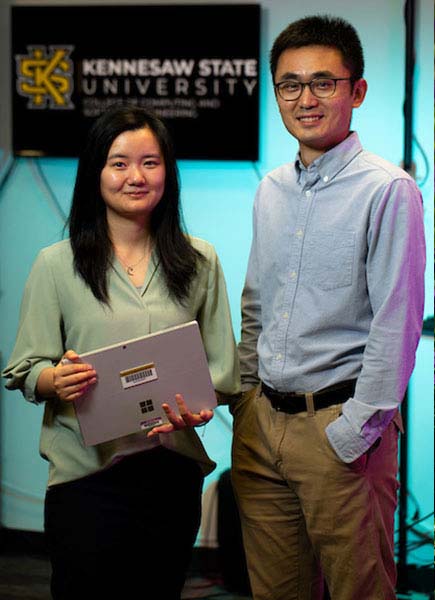
Joy Li and Yan Huang


KENNESAW, Ga.
(Oct 1, 2021)
— In buy to educate college-age little ones the basic principles of cybersecurity, two Kennesaw State
University professors are collaborating on a approach to provide classes in which K-12
college students devote most of their time: playing video clip video games.

Launched by Joy Li, assistant professor of pc sport layout and progress, and Yan Huang, assistant professor of program engineering, the task is pegged as an choice to standard studying routines by instructing
students the ideas of cybersecurity in a immersive digital truth (VR) ecosystem.
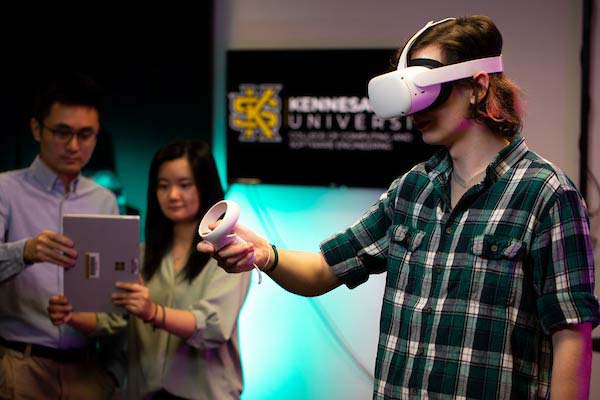
The system works by introducing students to 360-degree educational films and then
screening their information in a video game placing utilizing a VR headset.

“Our aim is to just take concepts that are in any other case very intricate for college students and put
them in a format that is considerably less difficult for them to comprehend,” explained Huang, who teaches
in Kennesaw State’s College of Computing and Software program Engineering. “This supply process also permits us to continue on refining our lesson options to be certain
they are available to pupils no matter of background and are productive in instructing
them about cybersecurity.”

Virtual Reality

Inside of the VR headset users are transported to “Cybersecurity Park,” where they will
have entry to 6 instruction modules covering subjects that range from ransomware to
hacking ethics to phishing attempts. Each module has a exclusive theme and game connected
with its lesson. In the phishing module, which mimics the leisure act of fishing
with a rod and reel, pupils are scored on their potential to acknowledge phishing messages,
these kinds of as people inquiring them to disclose particular information and facts. In the ransomware module,
students must defend a medieval castle from threats that are disguised as armored
knights.

“Cybersecurity is not nevertheless an official element of university curriculums, yet we are residing
in an progressively digital globe,” Li stated. “This presented us a wonderful chance
to make an affect on instruction by utilizing online games, which has turn out to be one of the most successful
techniques to get their interest. On a secondary degree, we hope that this sort of publicity
will motivate youngsters to pursue professions in cybersecurity.”

Beyond the instructional objectives, Li said the undertaking offered a special opportunity
for two professors to lend their skills on an interdisciplinary energy. When she
has in depth expertise in acquiring educational video games getting earlier collaborated
on an academic task with a Georgia-centered professional medical faculty, Huang’s investigation interests lie typically in cybersecurity innovations.

Now, four of the six modules are completely ready to perform even though KSU undergraduate and graduate
students completing the remaining modules. The moment complete, the undertaking will be released
on the net cost-free of charge, letting K-12 teachers and learners to obtain the training
modules throughout the world.

– Travis Highfield


Similar Tales


A leader in revolutionary educating and understanding, Kennesaw Point out University features undergraduate, graduate and doctoral degrees to its far more than 41,000 learners. With 11 schools on two metro Atlanta campuses, Kennesaw State is a member of the University Program of Georgia and the 2nd-major college in the condition. The university’s vibrant campus tradition, assorted population, potent world-wide ties and entrepreneurial spirit attract college students from during the region and from 126 nations throughout the world. Kennesaw State is a Carnegie-specified doctoral exploration institution (R2), putting it amongst an elite group of only 6 percent of U.S. faculties and universities with an R1 or R2 position. For extra information, stop by kennesaw.edu

Memorization and practice are still important to learning

Instead of building college students memorize a bunch of useless information, we ought to support them consider like experts and historians. This is most effective accomplished by an inquiry-dependent strategy that allows students to tutorial their individual finding out process.

Does this reasoning make feeling to you?

It likely does if you have recently attended a faculty of instruction exactly where instructors are properly trained. This is also what lecturers are often informed at their expert progress classes.

The challenge is that this approach is erroneous. Not just completely wrong by a small, but by a large amount. Irrespective of boasting to be centered on reliable evidence, the true science of mastering details in the opposite route.

In actuality, college students find out finest when they are immersed in a content material-abundant discovering surroundings that builds up their qualifications knowledge. Exercise is also a critical element of assisting pupils grasp new abilities. Discovering is tough do the job and for this rationale on your own it is crucial for academics, not learners, to set the path in the classroom.

Cognitive psychologist Dr. Daniel Willingham outlines a number of essential research conclusions in the recently released 2nd version of his typical e-book, “Why Don’t College students Like Faculty?”

1st, history know-how is essential to looking through comprehension. You are much a lot more most likely to understand a e book or write-up if you now know one thing about the subject at hand. If there are as well numerous unfamiliar words or ideas, you probably won’t have an understanding of it. Naturally, the much more you know about a subject matter, the simpler it becomes to master additional.

Next, it makes perception for learners to practice their multiplication tables and to memorize the spelling of typically used words. Why? Due to the fact lack of room in doing work memory is the key bottleneck in learning. For illustration, pupils who do not know their math information come across it extremely tough to remedy a lot more sophisticated problems since they conclude up wasting useful mental capacity on anything that should really be automatic.

While most instruction professors and lots of academic consultants usually deride repetitive follow as “drill and destroy,” the point is that this procedure gives the foundation for deeper discovering. We do our brains a important favour when we dedicate primary information and abilities to memory. It may not be incredibly enjoyable to observe performing the exact point around and around, but it pays off in the extended-time period.

The fact is that it requires researchers and historians quite a few many years of analyze and practice before they become industry experts in their fields. There is no this sort of matter as a generalized “expert way of thinking” that transfers seamlessly across topic regions. Knowledge is a little something that will come with lots of many years of observe, and it is unrealistic to expect learners to acquire know-how in a brief period of time.

The variance amongst chess industry experts and chess novices is an illustrative instance. As Willingham explains, “it appears that much of the change amid the world’s ideal chess players is not their capacity to cause about the activity or to approach the greatest shift relatively, it is their memory for activity positions.”

Merely put, chess industry experts have fully commited a huge selection of video game positions to memory, and this frees up room to assume about a profitable system in the sport they are enjoying. Genuine know-how in chess will come from comprehensive familiarity with a wide range of board positions.

In truth, the most effective chess players have about 50,000 board positions in their prolonged-expression reminiscences. This is why expert gamers continue being proficient in blitz tournaments where activity time is substantially minimized. Mainly because of the sheer quantity of board positions dedicated to memory, pro players can make decisions in fractions of a 2nd although novices are pressured to waste worthwhile time wondering through primary moves.

So, lecturers should commit additional time supplying direct instruction about important knowledge and techniques and significantly less time trying to get learners to consider like experts and historians. Inquiry finding out has its spot when learners have a fair sum of expertise about a subject, but it is almost worthless at encouraging college students discover about brand name new concepts.

Memorizing specifics even now has an significant place in faculties. So does practising competencies. The science of training and studying is very distinct about what successful instruction appears like.

Our learners are entitled to the very best instruction we can give them. Let’s make absolutely sure we present it.

COVID-19 pushing more Coloradans into home schooling

When Amber Ingram became a mother, dwelling-education her children appeared like a natural upcoming action to just about absolutely everyone but her. As a community college instructor in Colorado Springs, and married to a different community faculty trainer, Ingram saw herself training at the head of a classroom, not the head of her kitchen area table.

But which is precisely where by she found herself past drop and yet again this school 12 months, together with lots of other newcomers to Colorado’s residence-schooling landscape.  

The footprint of dwelling schooling in Colorado is expanding, with the amount of young children formally designated as finding out from dwelling doubling from tumble 2019 to slide 2020. The dramatic maximize isn’t necessarily a surprise, household-school advocates and condition education officers say, specified how the pandemic has pressured little ones to discover at residence alternatively of classrooms and pushed parents into the part of educator. But the face of property education is also changing, as new waves of mom and dad turn into inclined to take the obstacle of instructing at house if it means skipping the uncertainties of existence in pandemic-shaken universities.

Caleb, Aubrey, and Amber Ingram glimpse up words and phrases from a Bible verse in a dictionary on Wednesday, Sept. 8, 2021, at their property in Colorado Springs. Amber Ingram, a former kindergarten teacher, started off her 2nd comprehensive year of home-schooling her youngsters in slide 2021. The Ingrams did not originally prepare to instruct their kids from property, but about time cited the benefits of a more personalized curriculum together with combatting the setbacks of mask mandates in public universities. (Olivia Sunshine, The Colorado Solar)

“They’re staying pressured to test it, and then as they are remaining pressured to test, they are learning that they can do it,” stated Stephen Craig, government director of Christian House Educators of Colorado, which aids families understand property-education possibilities and offers information to parent educators.

In slide 2020, about 7 months into the pandemic, the state counted 15,773 household-schooled pupils, up from 7,880 the 12 months prior to. They remain a very small group in contrast to the extra than 883,000 college students enrolled in community educational institutions throughout 178 districts.

But the progress in the state’s household-university populace is anticipated to be long-lasting, reported Monthly bill Kottenstette, government director of the Colorado Office of Education’s Faculties of Choice Unit. He anticipates that the selection of home-schooled college students will stay higher than it was just before the pandemic but that the progress will begin to taper off this faculty 12 months. He expects much less families to opt for home education this 12 months in contrast with last 12 months, when there was “less certainty as to how issues have been likely to evolve.” 

And he anticipates quite a few people who turned to dwelling schooling mainly because of the coronavirus will transition again into general public or private schools. “More parents have experienced residence education for the initial time,” he mentioned. “That will consequence in some determining that that’s not what they want to do.”

But the pandemic has designed it less difficult for other parents to stick with it.

“There’s better top quality means to aid parents,” Kottenstette explained. “Technology advancements have produced it simpler for mom and dad to present dwelling schooling and parents’ versatile work arrangements might make it much more feasible as perfectly.”

The point out will have a clearer plan of the number of youngsters who are household schooled this 12 months when it counts all pupils in Oct, as it does every yr.

Amber Ingram teaches her a few young children, Brynley, 5, Aubrey, 9, and Caleb, 12, on Wednesday, September 8, 2021, at their dwelling in Colorado Springs. (Olivia Solar, The Colorado Sunlight)

There also is “a increasing fascination in a blend of household faculty and community school” in which college students divide their time in between them, Kottenstette mentioned. Very last slide, the state education office recorded 9,532 residence-schooled students who were being also having lessons element time in general public schools, up from 8,744 college students in fall 2019.

Craig, of Christian House Educators of Colorado, claimed it is “a pivotal instant for household schooling as a complete.” 

As the residence-university population expands, there is an raising assortment in the styles of problems that led people to flip away from conventional educational institutions, Craig said. He’s read from parents of struggling pupils who want a extra customized tactic to finding out. Other people complained their small children were being bullied and that schools didn’t do plenty of to shield them. Opposition to mask prerequisites has contributed to the boom — alongside with the acquainted conflicts around lesson strategies in subject areas like heritage and sex training.

“They’re just searching for options,” Craig explained.

“All over the map”

Barbara West, a Colorado Springs resident who has residence-schooled 5 kids, has seen curiosity explode among the all sorts of families — which include households with unique religious backgrounds, mother and father who aid the use of vaccines and some others who oppose them, and households with a solitary dad or mum. The complexion of residence education is a great deal broader than in the earlier, when it was generally composed of two-dad or mum households in which a person dad or mum, often the mother, would remain home to choose the guide in educating, West explained.

“It’s all above the map,” she explained. “It is so diversified.”

West, who sits on the boards of a few household-schooling corporations and who operates a Facebook team titled Homeschooling Colorado, reported quite a few mothers and fathers are reimagining education and experimenting with when, in which and how their children learn. She called it a throwback to a time when educating small children was a lot less formal.

Aubrey Ingram, 9, addresses her ears when her mother reads a suspenseful chapter of “The Tanglewoods’ Secret” aloud on Wednesday, September 8, 2021, at their household in Colorado Springs. (Olivia Solar, The Colorado Sunlight)

“I think mom and dad are seeing it’s possible some places the place they can actually enable their children to comprehend principles in education and learning, to love studying, and they see discovering exterior of the faculty constructing,” West said.

Ingrid Welch is taking that strategy and jogging with it — all the way across the nation. Welch, who life in Jefferson County, commenced residence-education her daughter final yr as she entered sixth quality. The relatives is continuing dwelling-education this calendar year but with a twist as they try out out “road-schooling.” 

Last 7 days, Welch, her associate and her daughter revved up two autos and a fifth wheel camper that will be their new foundation for property schooling around the subsequent year as they travel countless numbers of miles.  

The family’s initially stop: Antelope Island in Utah, wherever they will discuss about environmental concerns like drinking water conservation. From there, they will make their way to Yellowstone National Park and Glacier Countrywide Park and then onward with a target to go to the lessen 48 states.

The pandemic nudged Welch into house schooling for her daughter. The girl was bullied in faculty and had a hard time retaining her classes specified on the web by a non-public firm.

“(The pandemic) gave me braveness to do one thing a minimal bit out of the box since everybody at that position was doing some thing out of the box,” Welch stated.

Welch, who went to school for instructing but under no circumstances became a trainer, property-schooled her more mature daughter when the relatives was in between universities when going again to the U.S. from the Bahamas. She never ever envisioned property-schooling her young daughter.

The Ingram kids memorize the get of Bible verses on Wednesday, September 8, 2021, at their home in Colorado Springs. A typical faculty day lasts from 8:30 a.m. to 12:30 with distinctive topics staggered via the 7 days. (Olivia Sunshine, The Colorado Sunshine)

“It just didn’t look doable for our lifestyle at that point,” she explained, specially as she labored as a healthcare aid expert in a quick-term disaster center for adolescents. 

She modified her intellect right after the start off of the pandemic, feeling that her daughter’s faculty wasn’t furnishing sufficient support. Even though she taught her daughter in the afternoons following work last 12 months, this following university 12 months will carry much more adaptability on the open up road and, with it, much more self esteem for her daughter.

She’s presently found a alter in her daughter, who utilised to often don hoodies about her head and attempt to cover herself at college.

“It’s presented us an chance to do all these items we would not have been able to do right before,” Welch stated. “I think my daughter has thrived with it. I assume she’s extra self-confident.”

The pandemic also pulled Ingram, of Colorado Springs, into house education — a deviation from her family’s strategies to teach their three children in public educational facilities. A mix of concerns about some of the lessons getting taught to their young small children on subject areas like gender identification, frustrations with at the very least one of their small children not staying challenged plenty of in university and COVID-19 restrictions, like masking, solidified their selection to school the youngsters at house.

Amber Ingram and her youngsters, Caleb, Aubrey, and Brynley analyze a spider in the course of a examine-aloud session on Wednesday, September 8, 2021, at their residence in Colorado Springs. (Olivia Sunshine, The Colorado Sun)

Now, Ingram utilizes “a hodgepodge” of supplies to teach her young ones and outlines a everyday program for them to master all jointly and individually. For about 3 to four hours a working day, she sits with them to pray jointly, operate on handwriting, go through, memorize poetry and Bible verses, aim on grammar and spelling, and apply significant considering competencies and math. Her teaching places an emphasis on record, science, tunes and artwork all over the week. As considerably as she tries to hold her little ones in a schedule and plot out chunks of time for lessons, her kids often run in excess of time, she reported, just as psyched to study as she is to train them. As soon as a week, they get alongside one another with other residence-schooled small children to master and socialize. 

The swap has altered Ingram’s notion of home schooling. She once viewed household-faculty learners as missing social competencies and taking an “archaic” strategy to education and learning.

Other folks, like West, have battled a stigma in opposition to people who residence-faculty their kids as people look at them as “kind of dowdy” and presume they dress in jeans for “five times straight.”

“I believe I had put it in a box that was minimal,” Ingram claimed. “I didn’t recognize all the alternatives that household college can open up.”


The Colorado Sun has no paywall, indicating audience do not have to pay back to accessibility stories. We think very important facts desires to be witnessed by the persons impacted, no matter whether it’s a general public wellness disaster, investigative reporting or maintaining lawmakers accountable.

This reporting is dependent on guidance from readers like you. For just $5/thirty day period, you can devote in an knowledgeable neighborhood.