
Physician Assistant Students’ Perception of Online Didactic Education: A Cross-Sectional Study

Physician Assistant Students’ Perception of Online Didactic Education: A Cross-Sectional Study

Purpose: This study describes physician assistant students’ perception toward online didactic education and highlights relationships between student characteristics and their preference for online learning.

Methods: A previously validated survey questionnaire was administered online to physician assistant students enrolled in traditional, in-person training programs across the United States. The survey consisted of five Likert-scale statements measuring perceptions of online learning and was rated on a seven-point Likert scale. Students also reported their age, gender, history of taking an online course, and preferred learning style. Mean scores were reported for agreement with each Likert-scale statement; Pearson correlation coefficients, one-way ANOVA with post hoc Tukey tests, and independent samples t-tests were used to determine relationships between student characteristics and their preference for online learning.

Results: A total of 391 completed surveys met the inclusion criteria for the study and were used in data analysis. The average age of respondents was 25.98 years, 81.1{e4f787673fbda589a16c4acddca5ba6fa1cbf0bc0eb53f36e5f8309f6ee846cf} (n = 317) were female, 96.2{e4f787673fbda589a16c4acddca5ba6fa1cbf0bc0eb53f36e5f8309f6ee846cf}, (n = 376) reported taking an online course previously, and preferred learning styles were reported as 36.1{e4f787673fbda589a16c4acddca5ba6fa1cbf0bc0eb53f36e5f8309f6ee846cf} (n = 141) visual, 7.7{e4f787673fbda589a16c4acddca5ba6fa1cbf0bc0eb53f36e5f8309f6ee846cf} (n = 30) auditory, 15.6{e4f787673fbda589a16c4acddca5ba6fa1cbf0bc0eb53f36e5f8309f6ee846cf} (n = 61) reading/writing, and 40.7{e4f787673fbda589a16c4acddca5ba6fa1cbf0bc0eb53f36e5f8309f6ee846cf} (n = 159) kinesthetic. Nearly a quarter of respondents indicated they preferred online courses, particularly students with a preferred learning style of reading/writing. No relationships were observed between age, gender, or history of taking an online course and preference for online education.

Conclusion: Most physician assistant students prefer in-person learning. However, a substantial number prefer online learning, and a significant number of these students reported a preferred learning style of reading/writing. More research is necessary to give educational institutions the ability to make data-driven, student-centered program development decisions. However, data in this study indicate a need for continued development of online/hybrid physician assistant programs to better align with current student preferences. 

Introduction

Since the inception of the profession in 1965, physician assistants (PAs) have learned to practice medicine through a combination of in-person didactic instruction followed by the completion of supervised clinical practice experiences at affiliated hospitals and clinics. Although this is an effective curriculum delivery method, pioneers in the field have also recently demonstrated the feasibility of hybrid PA education [1]. In the hybrid model, students complete the didactic year predominantly online, followed by traditional, in-person clinical training. Anderson summarized some of the benefits of online medical education [2]. These include fostering the development of self-directed learners [3], enhancing student engagement in the classroom [4], expanding opportunities for interprofessional education experiences [5,6], promoting digital literacy with medical technology [7], widening the instructor pool [7,8], removing barriers to attending PA school [9], repurposing time spent commuting [4], allowing students to live in and learn about the communities where they may one day practice, and helping to close the gap of clinician shortages in underserved areas [10]. The ability to teach didactic content online may also prove beneficial considering recent changes to the educational landscape following the severe acute respiratory syndrome coronavirus 2 (SARS‑CoV‑2)/coronavirus disease 2019 (COVID-19) pandemic. During this time, remote learning in the didactic year across PA programs increased from 6.4{e4f787673fbda589a16c4acddca5ba6fa1cbf0bc0eb53f36e5f8309f6ee846cf} before the pandemic to 96.8{e4f787673fbda589a16c4acddca5ba6fa1cbf0bc0eb53f36e5f8309f6ee846cf} during the pandemic [11]. During this time, there has also been increasing program director support for online didactic education in PA programs [12]. Now that online didactic PA education is possible, innovative PA educators should seek to determine what method of curriculum delivery students prefer, and analyze these preferences to help guide future program development decisions.

A review of the current literature indicates an overall preference for traditional in-person education over online learning among health professions students, both within and outside of the PA profession; however, research specific to the PA community is limited. In a 2006 seminal study, Day et al. concluded that PA students preferred in-person over online curriculum delivery [13], and in 2009, York et al. observed that 78{e4f787673fbda589a16c4acddca5ba6fa1cbf0bc0eb53f36e5f8309f6ee846cf} of PA students enrolled in a web-based evidence-based medicine course stated they would have preferred in-person lectures instead of, or in addition to, online learning [14]. A review of the literature outside of the PA profession yields similar findings [15-17]. Although video-recorded lectures were found to be of equal or more educational value when compared to in-person instruction, Harvard Medical School students continued to attend traditional lectures if given the choice [15]. Hamilton et al. reported that third-year pharmacy students favored a blended educational approach as opposed to an exclusively online course [16]. A study by Bramer et al. also found that United Kingdom nursing students preferred a balanced mixture of online and face-to-face learning and did not feel that online learning should replace traditional teaching [17].

Further research is needed to explore the current preferences of didactic PA students regarding in-person versus online education to ensure PA program development decisions are student-centered, evidence-based, and data-driven. This is especially important considering the number of new PA programs in development and the number of existing programs that are adapting their curricula to combat current and evolving barriers to medical education. The current study sought to narrow this information gap by determining the curriculum delivery preferences of currently enrolled didactic PA students. Participants were also asked to report their age, gender, history of taking an online course, and preferred learning styles to determine if an association existed between any of these factors and their preference for online education.

Materials & Methods

Study description 

This was a cross-sectional survey study. Risks were minimal and consisted of time lost by students to complete the survey and the potential loss of confidentiality among participants. To mitigate these risks, the survey was designed to be completed in fewer than five minutes, participation was a one-time endeavor with no follow-up, and no personally identifiable information was collected. The primary benefit of the study was insight into the preferences of didactic PA students regarding their preferred curriculum delivery method. This could help current and future programs plan the instructional design of their curriculum. The study proposal was reviewed and approved by the institutional review board (IRB) of A.T. Still University, Mesa, Arizona, United States (approval number: 2021-174), and secondary approval was given by Franklin Pierce University, Rindge, New Hampshire, United States (protocol number: 08252021) for exempt status prior to data collection. 

Study sample

The Physician Assistant Education Association (PAEA) Program Report 35 reported that the maximum capacity enrollment of didactic students in PA programs across the United States was 11,299 [18]. According to a sample size estimator by Qualtrics (Seattle, Washington, and Provo, Utah, United States), 372 individuals from this population needed to be sampled to adequately represent the target population [19]. Inclusion criteria for participation were as follows: students had to be at least 18 years old, be enrolled in a currently accredited PA Program in the United States, and be in their didactic phase of study. Students at the Yale PA online program were excluded from participation as the principal investigator felt they may reasonably have a favorable bias toward online education. The principal investigator currently works for Franklin Pierce University and has previously been employed by the University of South Alabama; therefore, students from these institutions were also excluded to limit participation bias. 

Survey design and distribution

A previously validated survey instrument from O’Malley et al. [20] regarding perceptions of online education was adapted for use in the study, with the author’s permission. The adapted survey consisted of two questions to identify eligibility criteria, five Likert-scale questions regarding student perception of online education, and four student characteristic/demographic questions: (i) age, (ii) gender, (iii) history of taking an online course previously, and (iv) preferred VARK (visual, auditory, reading/writing, kinesthetic) learning style [21]. An alphabetical list of currently accredited PA programs by state from the Accreditation Review Commission on Education for the Physician Assistant (ARC-PA) website was used to determine which programs to target for student recruitment [22]. The program director for the first accredited program listed for each state was sent a recruitment email asking whether they would offer participation to their didactic students. Those who agreed were asked to forward a standardized student-specific recruitment email to their currently enrolled didactic students that described the study’s purpose, risks, and benefits, and informed students that participation was voluntary, and completion of the survey was considered their consent to participate. The email also provided a link to the survey should they wish to complete it. If no response was received from a program director after one week, the recruitment email was sent for a second and final time. At the end of every two-week period, the next accredited program listed on the ARC-PA website for each state was contacted. This process continued, every two weeks, until the needed sample size of 372 qualified surveys was completed. 

Data collection, storage, and analysis

Data were collected from September through December 2021. Both ordinal and nominal (categorical) data were collected and stored on the SurveyMonkey platform (Momentive Inc., Waterford, New York). Following data collection, descriptive (frequencies, percentages, means, standard deviations, and confidence intervals) and comparative statistics were conducted using IBM SPSS Statistics for Windows, Version 28.0 (Released 2021, Armonk, New York). To determine if a correlation existed between age and preference for online education, a Pearson correlation coefficient was calculated for each Likert-scale statement; p-values less than .05 were used to determine statistical significance. A one-way ANOVA test was used to compare means among Likert-scale statements according to the four different preferred learning styles of participants; p-values less than .05 were used to determine statistical significance. Post hoc Tukey tests were then conducted to determine pairwise differences between the preferred learning styles for each Likert-scale statement; p-values less than .05 were used to determine statistical significance. Independent samples t-tests were used to determine if there was a significant difference in mean Likert-scale scores between genders or between those who had taken an online course previously versus those who had not; because multiple t-tests were conducted, the criterion for statistical significance was adjusted downward to a p-value less than 0.1 to control for alpha inflation in accordance with the Bonferroni correction.

Results

PA program participation and student characteristics 

The researchers did not directly access the study sample (didactic PA students), which instead had to be recruited to the study by PA program directors of invited programs. Therefore, the total number of student participants who received the survey was unknown and an accurate response rate could not be calculated. Approximately 35{e4f787673fbda589a16c4acddca5ba6fa1cbf0bc0eb53f36e5f8309f6ee846cf} (50/141) of PA programs invited to the study responded to the email request, and 32{e4f787673fbda589a16c4acddca5ba6fa1cbf0bc0eb53f36e5f8309f6ee846cf} (45/141) opted to participate. These programs represented didactic PA students across 31 states. At the conclusion of data collection, 472 surveys were received, of which 391 were complete, met inclusion criteria for the study, and were subsequently used for data analysis. The average age of the study sample was 25.98 years (range = 21-51 years). Gender was reported as 18.4{e4f787673fbda589a16c4acddca5ba6fa1cbf0bc0eb53f36e5f8309f6ee846cf} (n = 72) male, 81.1{e4f787673fbda589a16c4acddca5ba6fa1cbf0bc0eb53f36e5f8309f6ee846cf} (n = 317) female, 0.3{e4f787673fbda589a16c4acddca5ba6fa1cbf0bc0eb53f36e5f8309f6ee846cf} (n = 1) gender non-binary, and 0.3{e4f787673fbda589a16c4acddca5ba6fa1cbf0bc0eb53f36e5f8309f6ee846cf} (n = 1) preferred not to answer. Most participants (96.2{e4f787673fbda589a16c4acddca5ba6fa1cbf0bc0eb53f36e5f8309f6ee846cf}, n = 376) reported taking an online course previously. The distribution of preferred learning styles of the sample was 36.1{e4f787673fbda589a16c4acddca5ba6fa1cbf0bc0eb53f36e5f8309f6ee846cf} (n = 141) visual, 7.7{e4f787673fbda589a16c4acddca5ba6fa1cbf0bc0eb53f36e5f8309f6ee846cf} (n = 30) auditory, 15.6{e4f787673fbda589a16c4acddca5ba6fa1cbf0bc0eb53f36e5f8309f6ee846cf} (n = 61) reading/writing, and 40.7{e4f787673fbda589a16c4acddca5ba6fa1cbf0bc0eb53f36e5f8309f6ee846cf} (n = 159) kinesthetic (hands-on). 

Participant preferences for online education

Table 1 reports the study participants’ agreement and disagreement with statements pertaining to their perception of online education. Most students disagreed to some degree (strongly disagreed, disagreed, or somewhat disagreed) with four out of the five Likert-scale statements studied; 76.5{e4f787673fbda589a16c4acddca5ba6fa1cbf0bc0eb53f36e5f8309f6ee846cf} (n = 299) disagreed with the statement “Most people believe that online learning is more effective than traditional methodologies”, 72.4{e4f787673fbda589a16c4acddca5ba6fa1cbf0bc0eb53f36e5f8309f6ee846cf} (n = 283) disagreed with the statement “In a course with both traditional and online methodologies, I learn better through the online portion”, 69.4{e4f787673fbda589a16c4acddca5ba6fa1cbf0bc0eb53f36e5f8309f6ee846cf} (n = 271) disagreed with the statement “I prefer online courses to traditional courses”, and 59{e4f787673fbda589a16c4acddca5ba6fa1cbf0bc0eb53f36e5f8309f6ee846cf} (n = 231) disagreed with the statement “I believe that I can learn the same amount in an online course as in a traditional course.” In contrast, most students (56.5{e4f787673fbda589a16c4acddca5ba6fa1cbf0bc0eb53f36e5f8309f6ee846cf}, n = 221) agreed to some degree (strongly agreed, agreed, or somewhat agreed) with the statement “I believe that I can make the same grade in an online course as in a traditional course.”

Likert-scale Statement Strongly Disagree, n ({e4f787673fbda589a16c4acddca5ba6fa1cbf0bc0eb53f36e5f8309f6ee846cf}) Disagree, n ({e4f787673fbda589a16c4acddca5ba6fa1cbf0bc0eb53f36e5f8309f6ee846cf}) Somewhat Disagree, n ({e4f787673fbda589a16c4acddca5ba6fa1cbf0bc0eb53f36e5f8309f6ee846cf}) Neither Agree nor Disagree, n ({e4f787673fbda589a16c4acddca5ba6fa1cbf0bc0eb53f36e5f8309f6ee846cf}) Somewhat Agree, n ({e4f787673fbda589a16c4acddca5ba6fa1cbf0bc0eb53f36e5f8309f6ee846cf}) Agree, n ({e4f787673fbda589a16c4acddca5ba6fa1cbf0bc0eb53f36e5f8309f6ee846cf}) Strongly Agree, n ({e4f787673fbda589a16c4acddca5ba6fa1cbf0bc0eb53f36e5f8309f6ee846cf})
Most people believe that online learning is more effective than traditional methodologies. 96 (24.6) 125 (32.0) 78 (19.9) 29 (7.4) 39 (10.0) 14 (3.6) 10 (2.6)
In a course with both traditional and online methodologies, I learn better through the online portion. 104 (26.6) 117 (29.9) 62 (15.9) 35 (9.0) 29 (7.4) 27 (6.9) 17 (4.3)
I prefer online courses to traditional courses. 116 (29.7) 96 (24.6) 59 (15.1) 27 (6.9) 41 (10.5) 25 (6.4) 27 (6.9)
I believe that I can learn the same amount in an online course as in a traditional course. 74 (18.9) 83 (21.2) 74 (18.9) 22 (5.6) 55 (14.1) 48 (12.3) 35 (9.0)
I believe that I can make the same grade in an online course as in a traditional course. 41 (10.5) 48 (12.3) 42 (10.7) 39 (10.0) 67 (17.1) 101 (25.8) 53 (13.6)

Relationships between participant characteristics and their preferences for online education 

Age

One survey respondent was omitted from analysis due to an erroneous input of their age (“2t”) which could not be validated. As reported in Table 2, no significant correlation was observed between age and preference for online education. 

Likert-scale Statement What is your current age?
n Pearson Correlation p-value
Most people believe that online learning is more effective than traditional methodologies. 390 0.02 0.66
In a course with both traditional and online methodologies, I learn better through the online format. 390 0.09 0.07
I prefer online courses to traditional courses. 390 0.06 0.23
I believe that I can learn the same amount in an online course as in a traditional course. 390 0.03 0.56
I believe that I can make the same grade in an online course as in a traditional course. 390 0.01 0.79

Gender

Only male and female genders were used in the analysis as these categories made up 99.49{e4f787673fbda589a16c4acddca5ba6fa1cbf0bc0eb53f36e5f8309f6ee846cf} of the sample. As reported in Table 3, no significant relationship existed between gender and preference for online education. 

Statement Gender n Mean Standard Deviation t df Two-sided p-value Mean Difference 95{e4f787673fbda589a16c4acddca5ba6fa1cbf0bc0eb53f36e5f8309f6ee846cf} Confidence Interval of the Difference
Lower Bound Upper Bound  
Most people believe that online learning is more effective than traditional methodologies. Male 72 2.64 1.50 -0.16 387 0.87 -0.03 -0.43   0.37    
Female 317 2.67 1.56  
In a course with both traditional and online methodologies, I learn better through the online format. Male 72 2.72 1.68 -0.31 387 0.76 -0.07 0.23 -0.52  
Female 317 2.79 1.75  
I prefer online courses to traditional courses. Male 72 2.89 1.84 -0.09 387 0.93 -0.02 -0.51 0.47  
Female 317 2.91 1.92  
I believe that I can learn the same amount in an online course as in a traditional course. Male 72 3.58 2.07 0.59 387 0.56 0.15 -0.36 0.66  
Female 317 3.43 1.95  
I believe that I can make the same grade in an online course as in a traditional course. Male 72 4.33 2.06 -0.44 387 0.66 -0.11 -0.61 0.39  
Female 317 4.44 1.93  

History of Taking an Online Course Previously

As reported in Table 4, no significant relationship existed between taking an online course previously and preference for online education. 

Statement Online Course Previously n Mean Standard Deviation t df Two-sided p-value Mean Difference 95{e4f787673fbda589a16c4acddca5ba6fa1cbf0bc0eb53f36e5f8309f6ee846cf} Confidence Interval of the Difference
Lower Bound Upper Bound  
Most people believe that online learning is more effective than traditional methodologies. Yes 376 2.66 1.53 -0.74 14.58 0.47 -0.41 -1.59   0.77  
No 15 3.07 2.12  
In a course with both traditional and online methodologies, I learn better through the online format. Yes 376 2.77 1.71 -0.79 14.56 0.45 -0.50 -1.85 0.86  
No 15 3.27 2.43  
I prefer online courses to traditional courses. Yes 376 2.90 1.88 -0.61 389 0.54 -0.30 -1.29 0.68  
No 15 3.20 2.31  
I believe that I can learn the same amount in an online course as in a traditional course. Yes 376 3.44 1.96 -1.86 389 0.06 -0.96 -1.98 0.06  
No 15 4.40 2.20  
I believe that I can make the same grade in an online course as in a traditional course. Yes 376 4.38 1.94 -2.74 15.53 0.02 -1.22 -2.17 -0.27  
No 15 5.60 1.68  

Preferred Learning Style

As reported in Table 5, the highest mean score (most agreement) for each Likert-scale statement was observed with those who selected reading/writing as their preferred learning style; four out of the five differences in means reached statistical significance. There were also statistically significant findings on the pairwise analysis of the different learning styles (Table 6). 

Likert-scale Statement Visual n Mean Standard Deviation 95{e4f787673fbda589a16c4acddca5ba6fa1cbf0bc0eb53f36e5f8309f6ee846cf} confidence interval for mean p-value
Lower Bound Upper Bound
Most people believe that online learning is more effective than traditional methodologies. Visual 141 2.75 1.49 2.50 3.00 0.04
Auditory 30 2.70 1.70 2.06 3.34
Reading/Writing 61 3.08 1.80 2.62 3.54
Kinesthetic 159 2.44 1.44 2.21 2.67
In a course with both traditional and online methodologies, I learn better through the online format. Visual 141 2.84 1.71 2.56 3.13 0.02
Auditory 30 2.77 1.87 2.07 3.46
Reading/Writing 61 3.33 2.07 2.80 3.86
Kinesthetic 159 2.53 1.56 2.29 2.78
I prefer online courses to traditional courses. Visual 141 3.01 1.83 2.71 3.32 0.01
Auditory 30 2.73 1.91 2.02 3.45
Reading/Writing 61 3.56 2.25 2.98 4.13
Kinesthetic 159 2.60 1.75 2.32 2.87
I believe that I can learn the same amount in an online course as in a traditional course. Visual 141 3.57 1.99 3.24 3.90 0.55
Auditory 30 3.57 1.96 2.83 4.30
Reading/Writing 61 3.66 2.06 3.13 4.18
Kinesthetic 159 3.30 1.94 3.00 3.61
I believe that I can make the same grade in an online course as in a traditional course. Visual 141 4.43 1.97 4.10 4.75 0.04
Auditory 30 4.47 2.13 3.67 5.26
Reading/Writing 61 5.03 1.75 4.58 5.48
Kinesthetic 159 4.19 1.93 3.89 4.49
Likert-scale Statement Preferred Learning Style (a) Preferred Learning Style (b) Mean difference
(a-b)
95{e4f787673fbda589a16c4acddca5ba6fa1cbf0bc0eb53f36e5f8309f6ee846cf} confidence interval for mean p-value
Lower Bound Upper Bound
Most people believe that online learning is more effective than traditional methodologies. Visual Auditory 0.05 -0.75 0.85 1.00
Reading/Writing -0.33 -0.94 0.28 0.50
Kinesthetic 0.31 -0.15 0.77 0.30
Auditory Visual -0.05 -0.85 0.75 1.00
Reading/Writing -0.38 -1.27 0.50 0.68
Kinesthetic 0.26 -0.53 1.05 0.83
Reading/Writing Visual 0.33 -0.28 0.94 0.50
Auditory 0.38 -0.50 1.27 0.68
Kinesthetic 0.64 0.04 1.24 0.03
Kinesthetic Visual -0.31 -0.77 0.15 0.30
Auditory -0.26 -1.05 0.53 0.83
Reading/Writing -0.64 -1.24 -0.04 0.03
In a course with both traditional and online methodologies, I learn better through the online format. Visual Auditory 0.08 -0.82 0.97 1.00
Reading/Writing -0.48 -1.17 0.20 0.26
Kinesthetic 0.31 -0.21 0.82 0.41
Auditory Visual -0.08 -0.97 0.82 1.00
Reading/Writing -0.56 -1.55 0.43 0.46
Kinesthetic 0.23 -0.65 1.12 0.91
Reading/Writing Visual 0.48 -0.20 1.17 0.26
Auditory 0.56 -0.43 1.55 0.46
Kinesthetic 0.79 0.12 1.46 0.01
Kinesthetic Visual -0.31 -0.82 0.21 0.41
Auditory -0.23 -1.12 0.65 0.91
Reading/Writing -0.79 -1.46 -0.12 0.01
I prefer online courses to traditional courses. Visual Auditory 0.28 -0.69 1.25 0.88
Reading/Writing -0.54 -1.28 0.20 0.23
Kinesthetic 0.42 -0.14 0.98 0.22
Auditory Visual -0.28 -1.25 0.69 0.88
Reading/Writing -0.82 -1.90 0.26 0.20
Kinesthetic 0.16 -0.83 1.10 0.98
Reading/Writing Visual 0.54 -0.20 1.28 0.23
Auditory 0.82 -0.26 1.90 0.20
Kinesthetic 0.96 0.23 1.69 0.00
Kinesthetic Visual -0.42 -0.98 0.14 0.22
Auditory -0.14 -1.10 0.83 0.98
Reading/Writing -0.96 -1.69 -0.23 0.00
I believe that I can learn the same amount in an online course as in a traditional course. Visual Auditory 0.00 -1.03 1.03 1.00
Reading/Writing -0.09 -0.87 0.69 0.99
Kinesthetic 0.27 -0.33 0.86 0.65
Auditory Visual -0.00 -1.03 1.03 1.00
Reading/Writing -0.09 -1.23 1.05 1.00
Kinesthetic 0.26 -0.75 1.28 0.91
Reading/Writing Visual 0.09 -0.69 0.87 0.99
Auditory 0.09 -1.05 1.23 1.00
Kinesthetic 0.35 -0.42 1.12 0.64
Kinesthetic Visual -0.27 -0.86 0.33 0.65
Auditory -0.26 -1.28 0.75 0.91
Reading/Writing -0.35 -1.12 0.42 0.64
I believe that I can make the same grade in an online course as in a traditional course. Visual Auditory -0.04 -1.04 0.96 1.00
Reading/Writing -0.61 -1.37 0.16 0.17
Kinesthetic 0.24 -0.34 0.81 0.72
Auditory Visual 0.04 -0.96 1.04 1.00
Reading/Writing -0.57 -1.68 0.55 0.56
Kinesthetic 0.28 -0.72 1.27 0.89
Reading/Writing Visual 0.61 -0.16 1.37 0.17
Auditory 0.57 -0.55 1.68 0.56
Kinesthetic 0.84 0.09 1.60 0.02
 Kinesthetic Visual -0.24 -0.81 0.34 0.72
Auditory -0.28 -1.27 0.72 0.89
Reading/Writing -0.84 -1.60 -0.09 0.02

Discussion

Purpose and major findings

The PA educational community has endured many challenges and evolved significantly over the last few years. Due to the unfortunate COVID-19 global pandemic, almost every PA program across the country quickly discovered its ability to implement didactic curriculum online and continue the education of PA students at a time when clinicians were crucially needed [23]. Academic administrators, faculty, students, and other stakeholders must now decide what role hybrid PA programs have in the future of PA education. Perceptions of PA students toward online learning should be considered in this discussion; determining these perceptions was the purpose of this study. 

Most pre-COVID-19 studies show that health professions students generally prefer in-person over online education [13-17], and the results of the current study align with those findings. However, the current study also reveals a significant number of PA students who do prefer learning in an online environment. Despite the majority of participants (69.31{e4f787673fbda589a16c4acddca5ba6fa1cbf0bc0eb53f36e5f8309f6ee846cf}, n = 271) preferring traditional courses, the survey nevertheless identified 23.79{e4f787673fbda589a16c4acddca5ba6fa1cbf0bc0eb53f36e5f8309f6ee846cf} (n = 93) who preferred online learning. Furthermore, as the sample population did not include students from programs that currently use online programming as a major component of their curriculum [2], the preference for online education of the entire PA student population may be slightly higher than reported here. The current study also provides insight into the type of student who may prefer learning online. Interestingly, data analysis showed no correlation between age and students’ preference for online education. Similarly, there were no significant relationships between gender or having previously taken an online course and preference for online education. However, a statistically significant relationship did exist between self-reported preferred learning styles and preference for online learning. Although only 15.6{e4f787673fbda589a16c4acddca5ba6fa1cbf0bc0eb53f36e5f8309f6ee846cf} (n = 61) of the sample reported their preferred learning style as reading/writing, this group had the most agreement with all Likert-scale statements favoring online education; four out of five of these results were statistically significant. 

Relevance of findings 

A substantial interest among PA students in online didactic education is not surprising considering other recent studies of medical students in a post-COVID-19 educational environment. Stoehr et al. collected cross-sectional data from 3,286 medical students across 12 countries [24]. In their study, 91{e4f787673fbda589a16c4acddca5ba6fa1cbf0bc0eb53f36e5f8309f6ee846cf} of participants agreed that lecture-style education was a suitable teaching concept for online learning, 97{e4f787673fbda589a16c4acddca5ba6fa1cbf0bc0eb53f36e5f8309f6ee846cf} indicated they had the devices required for online learning, 80{e4f787673fbda589a16c4acddca5ba6fa1cbf0bc0eb53f36e5f8309f6ee846cf} felt comfortable using the software required for online learning, 76{e4f787673fbda589a16c4acddca5ba6fa1cbf0bc0eb53f36e5f8309f6ee846cf} felt well prepared for online learning, and 62{e4f787673fbda589a16c4acddca5ba6fa1cbf0bc0eb53f36e5f8309f6ee846cf} reported being happy with the quality of online courses [24]. Another post-COVID-19 study of 64 medical students at a United States-based allopathic medical school that moved the entire pre-clinical curriculum to a virtual format during the pandemic demonstrated that 70.3{e4f787673fbda589a16c4acddca5ba6fa1cbf0bc0eb53f36e5f8309f6ee846cf} of students reported an unchanged or improved overall medical education in a virtual course module compared to a previous module that was taught in a traditional face-to-face setting [25]. Furthermore, a recent systematic review of 24 studies measuring medical student satisfaction with e-learning during the pandemic indicated that 51.8{e4f787673fbda589a16c4acddca5ba6fa1cbf0bc0eb53f36e5f8309f6ee846cf} of the 15,473 medical students studied were satisfied [26]. 

Study limitations

A potential limitation to this study is that it was conducted during the COVID-19 pandemic and perceptions of online education may have been influenced by either positive or negative experiences encountered during this turbulent time in medical education. Furthermore, the study was not experimental in nature and, therefore, could not control for other variables that may have influenced student perception of online PA education, such as the quality of instructional design and the types of resources made available to students at different institutions. Another limitation was that students were asked to self-report their VARK [21] learning style instead of completing the VARK questionnaire, and students were limited in their selection to only a single preferred learning style. Other limitations to this study are those inherent to survey-based research, including an inability to clarify study questions if needed and not allowing respondents to further explain their answers beyond predetermined survey selections. 

Conclusions

Most didactic PA students (69.31{e4f787673fbda589a16c4acddca5ba6fa1cbf0bc0eb53f36e5f8309f6ee846cf}) prefer traditional in-person education over online learning. However, the number of didactic PA students that do prefer online learning (23.79{e4f787673fbda589a16c4acddca5ba6fa1cbf0bc0eb53f36e5f8309f6ee846cf}) is also substantial. If we generalize these findings to the 11,299 maximum enrollment slots available per the last PAEA Program Report, there are potentially 2,689 students who may benefit from online/hybrid PA education. Despite these findings, only three out of the 282 currently accredited PA programs are designed to offer a significant portion of their curriculum in an online/hybrid format. Although more research is needed regarding hybrid PA education, based on the findings of this study, the researchers recommend more institutions consider exploring and/or piloting this type of program delivery. Future studies may consider determining the characteristics and preferred learning styles of students who decide to apply to online/hybrid PA programs and how a student’s preferred learning style relates to their satisfaction with, and success in, an online PA educational environment.

Importance of Online Learning

Importance of Online Learning

On-line finding out has become increasingly common in new several years, and for very good reason. It features a wide vary of positive aspects that common classroom understanding simply just can’t match. In this write-up, we will discover the relevance of online discovering in element, together with its ease, flexibility, and price tag-effectiveness.

On-line discovering, also recognized as e-finding out, is a sort of instruction that makes use of the world wide web and digital technologies to supply training course material and facilitate interaction amongst pupils and instructors. This method of schooling has developed considerably in attractiveness about the previous ten years, as innovations in technological know-how have designed it a lot more accessible and convenient for learners of all ages and backgrounds.

Rewards

Just one of the main benefits of on the internet finding out is that it makes it possible for learners to find out at their have tempo and on their personal agenda. This is specially helpful for men and women who have fast paced do the job or family commitments, as effectively as for individuals who are living in remote or underserved regions. On the web learning also makes it achievable for students to accessibility a broad assortment of educational assets and course choices, regardless of their bodily spot.

A person of the most significant positive aspects of on line finding out is its advantage. College students can entry system elements and complete assignments from any where, at any time, as prolonged as they have an online connection. This is notably valuable for all those who have hectic schedules, these kinds of as operating older people and mom and dad, who could not have the time to attend regular classes. On the web finding out also lets learners to understand at their possess pace, which is significantly useful for these who want added time to grasp specific ideas or who have studying disabilities.

One more critical gain of on the web mastering is its flexibility. On-line lessons can be taken at any time of day, letting students to suit schooling into their active schedules. This is notably effective for those people who do the job whole-time or have other obligations that make it hard to show up at common courses. Also, online classes can be taken from everywhere in the earth, building it feasible for pupils to keep on their training even if they shift or travel.

An additional benefit of on line mastering is that it makes it possible for for a much more interactive and participating studying encounter. Many on the net programs use multimedia things, this kind of as films and interactive simulations, which can make the articles more partaking and simpler to understand. In addition, on the internet learning platforms normally supply alternatives for college students to collaborate and converse with their friends, instructors, and other experts in the field, which can foster a perception of local community and assistance.

On the web finding out

Online discovering also has the opportunity to maximize entry to schooling for underrepresented populations, these as reduced-profits men and women and individuals with disabilities. By removing limitations of place and time, on-line learning can supply opportunities for people who may possibly not have been equipped to access traditional types of education.

Nevertheless, on the internet discovering also has some troubles and limitations. One of the principal issues is ensuring that college students have obtain to the necessary technology and world wide web connectivity to participate in on the net classes. Moreover, online studying can be isolating for some college students, who may perhaps pass up the social interactions and encounter-to-facial area interactions that are a part of classic classroom-based mostly education and learning.

On the internet mastering has come to be an progressively well-liked strategy of education and learning in the latest a long time, with additional and more college students opting to get courses and even complete degrees on line. This development is pushed by a quantity of things, which include convenience, flexibility, and cost-success.

1 of the largest strengths of on the net discovering is advantage. With on the web classes, students can entry elements and lectures from any place, at any time. This usually means that college students who operate full-time or have other time constraints can however pursue their education with out getting to give up their other commitments. In addition, on the internet courses normally have asynchronous format, which implies learners can comprehensive coursework and assignments on their possess routine.

Another benefit of on-line learning is overall flexibility. On line courses frequently provide a broader assortment of selections than classic on-campus courses, which includes a wide variety of system formats, this sort of as self-paced, hybrid and synchronous. This lets college students to tailor their education to their person demands and preferences. Furthermore, on-line studying makes it possible for students to just take courses from establishments that they may possibly not have been capable to show up at in person, these as a college or college located in a different point out or state.

Online understanding can also be a price-powerful alternative for college students. On the web programs normally have lessen tuition fees than regular on-campus classes, and pupils do not have to spend for room and board or transportation. Moreover, quite a few on the web programs and diploma systems have been designed for the non-conventional university student and have been produced inexpensive for them. This opens up education and learning to a wider vary of students who may not have been able to afford to pay for it if not. On the net understanding is important simply because it supplies flexibility and accessibility to instruction. It lets people to learn at their personal speed and on their have routine, irrespective of their place or actual physical abilities. Moreover, on-line understanding can also enhance access to training for people in distant or underserved parts, and it can supply a broader assortment of academic options and specialized courses. On top of that, on the internet mastering can also be charge-efficient and can help to bridge skill gaps in the workforce.

However, on line understanding is not with no its difficulties. One of the most important troubles is that pupils may possibly feel isolated and disconnected from their peers and instructors. Online classes generally deficiency the perception of local community and interaction that is present in traditional on-campus classes. Also, online college students might have trouble being enthusiastic and on monitor with out the framework and accountability of a traditional classroom placing.

To defeat these problems, on-line understanding establishments have carried out different procedures to boost university student engagement and offer a feeling of community. For instance, some on the web classes use discussion boards and on-line group work to foster conversation among the pupils, and virtual place of work hours enable college students to interact with instructors in serious-time. Moreover, quite a few on line applications have executed aid products and services, such as tutoring and counseling, to enable pupils continue to be on monitor and triumph academically.

on-line understanding has become an increasingly common process of instruction, providing usefulness, flexibility, and expense-success to college students. Even so, it is critical for college students to be conscious of the potential difficulties of online learning and to get steps to overcome them. With the suitable aid and techniques in put, online discovering can be a extremely powerful and rewarding practical experience for pupils of all ages and backgrounds.

Online discovering also provides price-successful solutions to classic education. On the internet classes are usually much less pricey than standard courses, as they do not require the very same amount of infrastructure and methods. On top of that, students can help you save dollars on transportation and other expenditures involved with attending standard courses. This is particularly effective for these who are on a tight spending plan or who reside in places where entry to larger education and learning is limited.

Online finding out also gives a extensive selection of study course options that may possibly not be readily available in classic lecture rooms. Numerous online plans and courses are created to satisfy the unique wants of students, and they frequently offer you a diverse assortment of topics and specializations. Additionally, on the web mastering provides accessibility to courses that may possibly not be accessible in specified geographic destinations, earning it attainable for learners to choose classes that are not provided in their neighborhood space.

In summary, on line mastering delivers a broad assortment of rewards that conventional classroom mastering only are unable to match. It is effortless, adaptable, price-productive, and offers a extensive range of program possibilities. As the entire world continues to improve and technological innovation proceeds to progress, online finding out will turn into even more widespread and essential in the years to appear. It is an outstanding solution for those who want to continue their instruction, but may well not have the time or assets to do so in common ways.

importance of on the net finding out
great importance of on the web studying essay
great importance of on the internet understanding pdf
great importance of online mastering in present situation
significance of on the net mastering to pupils
relevance of on the internet finding out platforms
great importance of on-line learning all through pandemic
the significance of on the internet discovering neighborhood
speech on worth of on the web discovering
great importance of online mastering resources
rewards of on the net mastering and disadvantages
rewards of on line lessons and disadvantages
pros of e-mastering and disadvantages
what is the importance of on the web discovering
what is the worth of on the net education
what are the great importance of on the net courses
what are the impression of on the net understanding
great importance of the research about on line understanding
significance of on the web training and discovering ppt
value of facial area to encounter and on-line mastering
worth of online and modular learning
significance of on-line instructing and learning
worth of assessment in on the internet understanding
great importance of on line evaluation in the e-understanding system
relevance of on-line education and why on-line learning
essay about the importance of on the web studying

How Online Education Can Help You Become a Better Artist

How Online Education Can Help You Become a Better Artist

 Looking to come to be a far better artist? With so a lot of methods quickly out there on line, it is much easier than ever to just take your artwork to the future level. By harnessing the power of on-line training, you can obtain programs taught by industry experts, study new strategies and abilities, and refine your artistry in any medium you opt for. In this short article, we’ll discuss the techniques on the internet education and learning can enable you become a much better artist. Let’s get started.

Far better Educational institutions

Just one of the significant benefits of studying on the web is that you can access greater academic chances. Quite a few faculties and universities offer you great courses in the arts, but they are not usually accessible in the vicinity of exactly where you live. With on the web training, on the other hand, you can acquire courses from prime establishments no matter where you are positioned. You can simply click right here to verify for the options and techniques to be a part of. This supplies an unprecedented chance to find out from some of the greatest lecturers in the world and achieve precious competencies that will assist progress your profession.

When picking these colleges, it is essential to contemplate the excellent of their classes and their reputation. Make certain the chosen college is accredited and gives dependable levels or certificates. For instance, if you want to develop into a superior visible artist, appear for an on the web university that features a diploma or certification in art.

Selection of Programs

Yet another wonderful benefit of on the net schooling is the range of courses accessible. No make a difference what medium you are fascinated in pursuing (portray, drawing, sculpting, and so forth.), you can find programs customized to your unique demands. Some classes protect the essentials of artwork, these types of as color concept, style and design concepts, and composition.

These classes offer an great foundation for more highly developed classes. In addition, you can find programs concentrating on numerous art types (abstract, impressionism, realism, etc.) and tactics (oil portray, electronic art, etc.). By getting advantage of these programs, you can build a further knowledge of the mediums and methods you are intrigued in and hone your creative capabilities.

Accessibility to Industry experts

By means of on the web schooling, you also get accessibility to field professionals. Lots of courses attribute instructors who have years of practical experience in the arts. Not only do they deliver useful insight, but they can also give you feedback on your get the job done and assist you build as an artist. For illustration, if you are doing work to getting to be a painter, your teacher may possibly propose ways to strengthen your approach or present tips for generating far better compositions.

Other than, you can discover mentors on the net who will give you information and aid you get the job done via any problems you confront in your inventive journey. For instance, if you are learning tunes, you can achieve out to expert musicians who have absent by way of the same encounters you’re facing.

Adaptability

Studying on the web is also unbelievably convenient. You can analyze on your have schedule, this means you can come across the time to exercise and hone your craft even if you have a active lifestyle. Moreover, lots of on line courses allow for you to go at your possess tempo, so you really do not have to get worried about keeping up with the rest of the course. You can simply just emphasis on mastering the material and perfecting your skills.

Moreover, you can quickly entry your course products at any time. This suggests you can evaluate subject areas any time you want, allowing for you to retain far more data and progress quicker. As well as, numerous programs give resources exterior of course (video tutorials, looking through elements, and so forth.) that can assistance dietary supplement your discovering.

Lowered Learning Fees

Finding out online can also conserve you money. You do not have to fret about the charge of transportation or shopping for textbooks due to the fact these are ordinarily bundled in your system charges. Furthermore, quite a few on the net universities present savings and scholarships that can drastically minimize your tuition prices.

Moreover, you really don’t have to pay back for supplies like canvases, paints, or other supplies when you research on the internet. Most of your understanding will be completed digitally, doing away with the need for bodily materials. So if you do not have the cash to acquire art supplies, studying online is a wonderful possibility.

Networking Opportunities

Lastly, studying on the internet enables you to make associations with other gurus in the artwork globe. You can link with persons who share your interests and enthusiasm for artwork by way of message boards, discussion boards, and social media networks. You can also locate artists and instructors from all around the planet who will supply suggestions, respond to queries, and aid you uncover possibilities.

By having benefit of these networking possibilities, you can produce meaningful interactions and attain important insight that will enable you on your inventive journey. You will be savoring ideas and factors you have hardly ever believed of prior to.

Online training has assisted lots of artists attain the techniques and awareness they have to have to attain their objectives. Regardless of whether you are a beginner or an professional artist, a good deal of classes and resources are out there to support you turn into a greater artist. With the ideal steering and commitment, you can make excellent strides in your artwork career. So don’t be reluctant to take benefit of on line education right now.

  • Allen Brown

    The info contained in this post is for informational functions only and is not in any way intended to substitute professional guidance, clinical treatment or information from your doctor.

    Perspective all posts

The beauty of online education is the speed at which it can evolve

The beauty of online education is the speed at which it can evolve

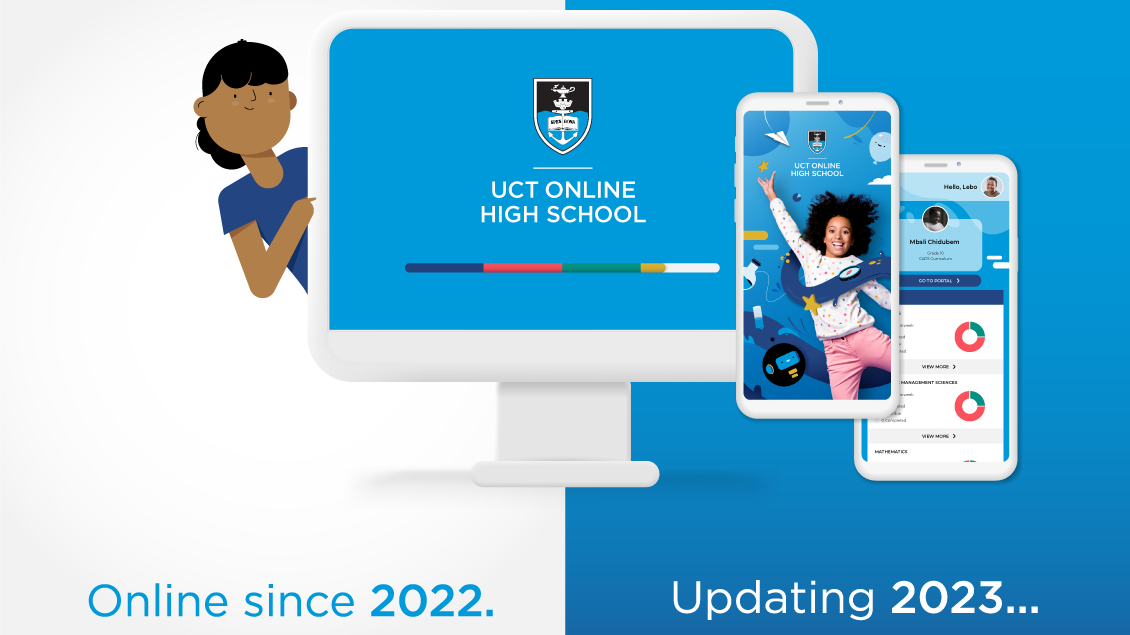
At UCT Online Substantial School, they are constantly doing work difficult to make points superior for their learners and guardians. This suggests examining what they do, getting advantage of the greatest innovations in tech, and, higher than all, listening to their local community.

They will be making a amount of key upgrades that will appear into outcome at the beginning of the 2023 school 12 months, to better the way they instruct the youth of South Africa.

https://www.youtube.com/look at?v=SYslT9qkmoM

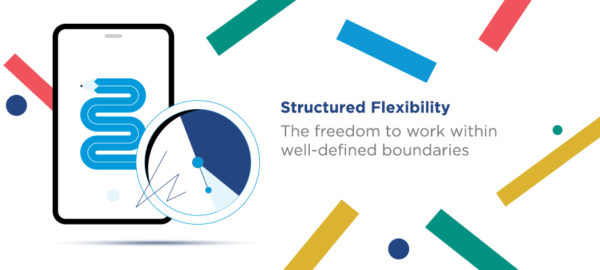
They’re introducing additional construction, with outlined phrases in an educational yr, scheduled breaks, weekly assignment deadlines, weekly module release, and all the versatility in between – and contacting this “Structured Flexibility” – the liberty to function inside of properly-outlined boundaries.

Photograph: Supplied

In line with Structured Flexibility, they will tutorial learners with weekly operate plans, serving to them regulate their time far better. Curriculum and On the net Campus Updates will see more videos included, a extra streamlined mastering route, and content material chunked into 45-moment lessons.

They are putting the “earn” in discovering many thanks to their new finding out benefits and gamification programme. Launching in this new school yr, the points amassed have true benefit and can be redeemed in a customized storefront.

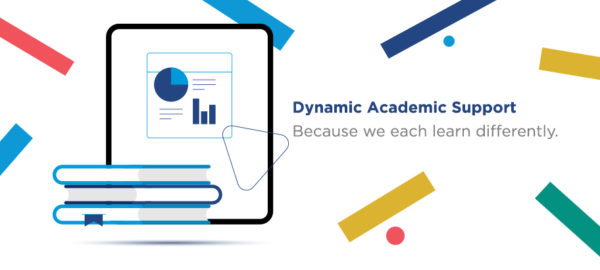
Discovering online can be challenging. There’s no educator in the space to stop learners from looking at their phones, no timetable to tell them when to move from class to course, and tiny to quit the outdoors entire world from interrupting their finding out. That is wherever their multi-layer aid arrives in. Along with their crew of motivating Guidance Coaches, who are there to excite, encourage and inspire excellent understanding patterns, Dynamic Educational Guidance will be delivered in the sort of matter facilitation in dialogue message boards, weekly “Ask Me Anything” classes, and Mastery Boot Camps for learners who do not realize success in their casual assessments.

Picture: Equipped

They are restructuring the roles and obligations of some of their team associates. Alternatively than relying on the talent set of an unique instructor, they’ve made teams of qualified Issue Experts and Discovering Facilitators to style and design dynamic mastering content and assessments for every subject. They’ve also upgraded their grading approach to make improvements to moderation and make grades available to learners and guardians with a more quickly turnaround time.

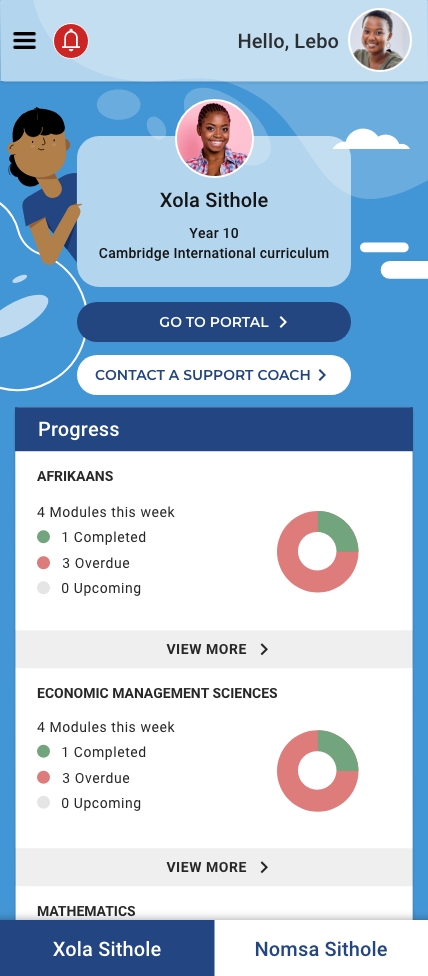
Guardian Orientation has not been launched to better equip guardians to support their learners in an on line mastering natural environment. Plus, their model new and exclusive Guardian Cell App has launched this January to aid guardians in preserving track of learner progress, with scheduled enhancements to be rolled out during the calendar year.

Picture: Equipped

These enhancements and continuous updates to the way we do things at UCT On the net Substantial School will free learners to unleash their likely, enabling them to realise their ambitions and establish their futures!

“We have a excellent option in training right now to carry in a new period of teaching and discovering, one that is obtainable to an abundance of African learners across a wide range of backgrounds. I am deeply passionate about community and the interesting prospects that info-pushed educating know-how can give us. This, combined with understanding initiatives this kind of as aid schooling and collaborative reflection, can make UCT Online Higher Faculty 1 of the most fascinating potential customers in the education sector in South Africa. It is my deep honour to lead the future generation of learners into this fascinating new chapter,” suggests Ms. Banele Lukhele, Executive Head of School and Main Educational Officer.

Be part of the university that will work for you and your little one! Head to their web-site to uncover out more and get your software in.

https://www.youtube.com/view?v=zPpey-4pNUc

Also go through:

UCT On the internet Superior Faculty “rewinds 2022” with an uplifting 2022 wrap-up video

Photograph: Supplied


Shriner selected inaugural leader of digital, online learning | Nebraska Today

Shriner selected inaugural leader of digital, online learning | Nebraska Today

Kevin Shriner has been appointed the University of Nebraska–Lincoln’s inaugural assistant vice chancellor for electronic and online learning.

He will formally presume the posture Feb. 1. Katherine Ankerson, govt vice chancellor, manufactured the announcement on Jan. 12.

“I am enthusiastic to welcome Dr. Shriner to Nebraska,” Ankerson mentioned. “He delivers 25 many years of expertise in increased schooling, with deep expertise in online systems a passion for earning better instruction obtainable to all college students and a genuinely collaborative technique to his work.

“I search ahead to his management as the college will take the subsequent step in our loaded background of online and distance education.”

Shriner will come to the university from EAB, an training organization targeted on ideal observe investigate, technological innovation providers, and enrollment products and services for non-financial gain establishments, the place he is senior director of enrollment method. In this part, Shriner consulted with far more than 800 establishments, which includes Large Ten institutions, in all 50 states to utilize enrollment techniques, advertising insights, and sector information on building, launching, and strategically arranging educational systems to fulfill the academic prerequisites of pupils and supply pathways to workforce results. He is the primary strategist, marketing consultant, and topic make a difference qualified to hundreds of schools and universities in search of to increase advertising, recruitment, and student results for grownup degree learners and graduate learners, with a concentration in online programs.

He formerly served as affiliate dean for institutional success and affiliate dean for student achievements at Florida Southwestern University. In the course of his tenure, he collaborated with faculty to build a to start with-year experience method and streamline method assessment and basic education assessment.

“I am honored to champion Nebraska’s flagship university as it reaffirms its commitment to expansion in on line plans,” Shriner mentioned. “I glimpse ahead to elevating UNL’s already effective distance schooling packages and producing new, accessible on line instructional possibilities for all pupils that will contribute to the progress and prosperity of our communities.”

As assistant vice chancellor, Shriner will direct the development, integration, and implementation of a in depth, transformative, and inclusive method for on the net and electronic education and learning, reflective of the goals and aims in the N2025 Strategic Strategy. He will report to the executive vice chancellor and work intently with her leadership workforce and the schools to establish campus-wide strategic priorities, a eyesight for on the web programming, and chart and put into practice a system for achievement. Shriner will provide experience, leadership, and coordination on functions and initiatives that advance and assistance digital and online learning.

Shriner holds a Bachelor of Science in park resource management from Kansas Condition College. He also holds a Master of Arts in history, with an emphasis in African-American record, and a Master of Training in higher instruction from the College of Arkansas. His doctorate in higher training management is from Nova Southeastern University.

6 Reasons Why You Should Consider Online Learning

6 Reasons Why You Should Consider Online Learning

With so many instructional alternatives at our fingertips, it can be complicated to make a decision which route is very best for you. When classic schooling may possibly be the norm, on the internet finding out has come a prolonged way in recent years. It can deliver learners with a wide variety of strengths. In this report, we will go over 6 factors why opting for on-line finding out may be the right option for you. From higher versatility and advantage to greater access to authorities and much more, there are loads of added benefits when it comes to undertaking an on the net class. So if you’re thinking of getting your schooling in a new route, browse on to find out why on the internet discovering could be the fantastic in good shape.

Entry to Professional instructors

When you take classes on-line, you have obtain to expert instructors who can support you study the material. These instructors are generally professionals in their industry. They can offer you you insight that you would not get from a common classroom setting. They can also answer any queries that you may perhaps have about the training course substance. Furthermore, most online classes also give boards in which college students can communicate and request queries to a single a further. Numerous online classes also supply extra assets like program components, review guides, and apply assessments to assistance you much better recognize the product.

Cost-effective and versatile

There are a lot of motives to consider on the net studying, but one particular of the most essential is that it is affordable and adaptable. With on the web understanding, you can preserve revenue on tuition and charges by getting classes from home. You can also save time by taking classes at your very own tempo and timetable. Also, lots of on-line colleges offer you free laptops to enable you triumph in your scientific tests. On the web learning is a wonderful way to advance your vocation or instruction. It is also a effortless way to just take courses if you have a fast paced life-style. You can take programs at any time of day or night, and you can analyze at your personal pace.

If you are taking into consideration on-line studying, be sure to exploration the diverse choices obtainable. There are many reliable online faculties and universities that offer higher-high quality systems. Make confident you select an accredited institution so that you can be sure you are getting a excellent training.

Discover at your individual pace

A single of the excellent things about on the net mastering is that it can be done at your personal rate. If you want to just take a program or two to boost your skillset for operate, you can do so without having getting to dedicate to a whole-time degree plan. You can also review at your very own pace if you are making an attempt to discover a new subject matter or talent for own progress. This can be specially valuable if you have other commitments that make attending regular classes challenging. Plus, you can get as minimal or as much time as you need to have to soak up the material without stressing about fitting into a rigid class timetable.

Get forward in your career

Despite the fact that the conventional instructional program has a great deal to provide, it is not the only option obtainable for furthering your vocation. On line finding out has turn out to be a well-known and easy alternative for many pupils and gurus who want to gain new skills or advance their occupations with no attending a brick-and-mortar university.

There are a number of factors why you should contemplate on the web mastering if you want to get ahead in your profession:

  1. On line courses are generally more very affordable than common faculty packages.
  2. You can study at your individual rate and full classes on your schedule, which is particularly helpful if you work whole-time.
  3. Many employers now identify the benefit of on the internet schooling and are keen to devote in staff who pursue it.

Networking prospects

On the net mastering presents a range of networking options that can be useful to your vocation. You can link with other industry experts in your industry, construct associations with professors and mentors, and acquire a community of peers.

When you network with other industry experts, you can find out about new task opportunities, get guidance on profession growth, and obtain mentors who can assist you develop in your subject. You can also develop associations with classmates and peers who may well be equipped to offer you guidance and steerage as you navigate your profession.

Developing associations with professors and mentors can be incredibly useful as you start your vocation. These interactions can give steering and assistance, present options for internships or positions, and give you a reference when you implement for positions.

Acquiring a community of friends is also useful as you changeover into the workforce. Your peers can present help and guidance, help you hook up with other specialists, and serve as a sounding board for thoughts.

Find out new issues

With on the internet learning, you have the chance to just take classes on a variety of matters that you may not be in a position to review in a traditional brick-and-mortar school. For illustration, if you’re interested in learning about a new lifestyle or heritage, you can get an on-line class on that topic. You can also discover programs on pretty much any other subject matter, from business and finance to cooking and gardening. In addition, on line mastering can be a terrific way to obtain new abilities or understanding in a particular spot.

Keep in thoughts that there are also loads of absolutely free means available on the internet. From instructional movies to podcasts and articles or blog posts, there’s an abundance of expertise out there that you can use to find out one thing new. Not to mention, online libraries and bookstores are nonetheless great locations to come across information and means to enable you understand.

6 Reasons Why You Should Consider Online Learning

On the net mastering can deliver an outstanding instruction although delivering college students the adaptability they want to fit it into their life. With a variety of training course alternatives, self-paced studying, and typically lessen tuition expenses than regular colleges, there are lots of motives why on-line finding out could be proper for you. Irrespective of whether you’re searching to finish a diploma or get some new competencies, consider exploring what on line programs could do for your potential. Also, don’t overlook to just take edge of the free of charge methods readily available on the internet to even more your instruction. With a little bit of investigate, you can obtain an on line system that will aid you reach your instructional and profession targets.