Practitioners, Not Teachers, Will Dominate Online Learning

Practitioners, Not Teachers, Will Dominate Online Learning

Last week’s elections showed that if democracy means closed schools, millions of American parents are prepared to go in a different direction. Fearful for the future of our democracy, millions of others felt a sense of loss. I feel that way about every election. Not because I’m always on the losing side, but because I grew up in Canada’s parliamentary system and remember elections as more fun than terrifying. Parliamentary democracies are less likely to produce demagogues since elections are at the constituency or riding level only. And within a constituency, there are often some very amusing candidates.

Not that there aren’t fringe candidates in U.S. elections. Last week’s New Jersey gubernatorial race included Socialist Workers Party candidate Joanne Kuniansky, a deli worker at Walmart. But Walmart deli doesn’t hold a candle to the UK’s Monster Raving Looney Party, which runs wacky candidates in the constituencies of prominent politicians in order to appear in ridiculous costumes next to the likes of Margaret Thatcher and Tony Blair as local results are read live on the BBC. The Monster Raving Looney Party has touted policies such as abolishing the income tax (only meant as a temporary measure during the Napoleonic Wars), minting a 99p coin, and punching holes in the roof of the Chunnel to create a mega carwash. Rather than advocating for hard Brexit or soft Brexit, the Party campaigned for an al dente Brexit. Monster Raving Looney membership only costs £12 per year and gets you a party ID card, a letter from the party leader, and a certificate of insanity.

The Canadian version of Monster Raving Looney is the Rhinoceros Party, so named because politicians are thick-skinned, slow-moving, and dim-witted, not to mention the large, hairy horns growing out of the middle of their faces. Rhino policies have included counting the Thousand Islands to see if the U.S. has stolen any, strengthening Canada’s military by towing Antarctica north to the Arctic Circle in order to monopolize cold (so Canada will be unbeatable in the next Cold War), and furthering higher education by building taller schools. The Rhino Party’s current platform says:

  • Canadian Heritage being THE number one priority of the Rhinoceros Party… make “Sorry” the new official motto of Canada. (I thought it already was. Sorry.)
  • Employment being THE number one priority of the Rhinoceros Party… reduce the number of accidents in factories by wrapping all workers in bubble wrap.
  • Education being THE number one priority of the Rhinoceros Party… replace teachers on leave with photos of famous scientists.

For millions of students in Zoom school last year, replacing teachers with photos of famous scientists wouldn’t have had much of a negative effect on learning. It might even have been salutary; online, even a patina of expertise attracts students.

Allowing experts to teach a multitude has been the promise of online learning since dot-com days of yore. In 2000, the New York Times predicted that a “pot of gold” awaited top professors who’d leverage technology to sell “the knowledge inside [his or her] head directly to a global online audience. That means that, just by doing what [he or she] does every day, a teacher potentially could grow rich instructing a class consisting of a million students.”

Late last month, the marketplace for online courses from over 50,000 instructors – Udemy – went public at a $4 billion valuation. With nearly $500M in revenue over the past 12 months, $4 billion is a hefty 8x revenue multiple on a business that hasn’t yet demonstrated an ability to make money. As Susan Adams reported in Forbes, Udemy spends $1.20 to generate a dollar of revenue, prompting her to quote my partner Daniel Pianko: “It’s like the Polish farmer joke. The farmer goes home to his wife and says, ‘I made nine zloties selling my wheat.’ The wife slaps him across the face and says, ‘It cost us 10 zloties to grow the wheat.’ And the farmer says, ‘But I sold a lot of it.’” Udemy’s stock price has traded down from the IPO.

Udemy’s underlying challenge may be that not all experts are created equal. Consider the top-selling course, Double Your Confidence & Self-Esteem, taught by Jimmy Naraine, a “high-end coach” who “helps his clients [take] that big step to a completely different lifestyle” (and who must have an uncanny ability to quantify self-esteem – how else would he know it’s a double?). Or there’s Udemy for Recurring Income, where students learn how to come up with “profitable Udemy course ideas.” If the rule is that on the Internet, nobody knows you’re a dog, the exception may be online courses, as demonstrated by the tawdry universe of self-proclaimed experts shilling them. But just as the New York Times foresaw 21 years ago, the future of online learning won’t be driven by Udemy carnival barkers, but rather by real experts in two categories of real market value: (1) love; and (2) money.

Several strong businesses have already been built around love-courses – tapping experts to teach people what they’re passionate (or at least curious) about. MasterClass offers courses from experts you may have heard of: Alicia Keys on songwriting; Martin Scorsese on filmmaking; Gordon Ramsay on cooking; Frank Gehry on architecture; Carlos Santana on guitar playing; Christina Aguilera on singing; and Gary Kasparov on chess. It took MasterClass years to convince these masters to allocate time and attention to creating an online course, and presumably, like a book deal, meaningful guaranteed or advanced payments. But the upshot is a collection of 130 master classes attracting a great deal of interest from subscribers. And although The New Yorker is predictably snooty about the notion of mastery in a few hours, MasterClass is one of the few online education players to reach New York Times million-student status and was recently valued at nearly $3 billion.

MasterClass’s first masterstroke was recognizing that when it comes to conveying expertise online, brand matters a lot. According to The New Yorker, MasterClass has standing offers to Barack and Michelle Obama, Stephen King, and Elon Musk. Also on the list: Queen Elizabeth and The Pope (albeit in “non-actionable” status). Its second was recognizing that expertise isn’t worth much without production and design. Courses involve elaborate sets, big crews, and even stand-ins for lighting. Its Hollywood-caliber productions are budgeted at close to a million dollars per course. Production also includes instructional designers and interviewers working with experts to help them get their message across in the most teachable way. MasterClass itself has already become something of a brand. Steph Curry wanted to do a MasterClass because “I saw who you had on the shelf, and I want to be on the shelf with those people.” MasterClass is to Udemy as Penguin Random House is to self-publishing.

Because there’s only one Queen of England (and it’s not clear to me what her MasterClass would be –corgis?), another company in the passion category is pushing the envelope on expert branding for online education. Yellowbrick, a University Ventures company, offers career discovery courses that chart a path to careers in dream fields like videogames, sneakers, or streetwear. As the real experts in these areas aren’t necessarily brand names (at least not to people whose idea of fun is writing newsletters), Yellowbrick brands experts by promoting where they work: Google, ESPN, the Brooklyn Nets, Stephen Curry 30, Inc, and Yellowbrick’s university partners like Columbia, NYU, FIT, and Parsons School of Design. Like MasterClass, Yellowbrick invests heavily in course design and production, and like MasterClass, Yellowbrick is growing rapidly.

So what about category #2, money-courses? Not as celebrity-dense for sure, but the Yellowbrick model ought to work: branding experts through where they work e.g., prestige companies like Microsoft, Amazon, or Tesla. So who’s combining high production values and instructional design with online learning from branded experts in sectors of significant economic opportunity?

Coursera is a natural first stop, delivering experts via high-value courses in data science and self-driving cars from brand-name university partners like Johns Hopkins and University of Toronto, as well as courses and certificates from technology brands like IBM and Google. But with over 3,000 courses, Coursera isn’t delivering MasterClass-level production. Likewise, with its acquisition of Coursera rival edX, 2U may be thinking about instilling its renowned production values into edX’s most popular money-courses. Udacity is laser-focused on skill gap sectors and its approximately 100 courses have higher production values. But Udacity treads lightly with branding instructors; course marketing focuses on the meat and potatoes of tech skills with no branded experts in sight. Pluralsight is similarly focused on high-value tech courses, but instructors look like a more curated version of Udemy: some world-class experts, others may be the Jimmy Naraine of microservices architecture.

In online learning, the biggest difference between self-proclaimed experts and real experts is that real experts are too busy with their day jobs to think about packaging and selling courses. Just as passive candidates for jobs are often more desirable than active candidates (the ones you really want probably already have good jobs), real experts in hot sectors need to be sold on the idea of an online course; before it can be designed, produced, packaged, and sold to learners, the best online learning is sold to real experts. And selling experts is not for the faint-hearted, let alone fly-by-night e-learning companies. It requires reputation, proven production capabilities (i.e., quality on par with what experts do in their professional lives), distribution, and an economic model that will get an expert’s attention. Notably, none of the aforementioned online learning leaders have taken this MasterClass approach.

Among money-courses, the best synthesis to date is found at Reforge. With a subscription model like MasterClass, Reforge organizes courses around business problems like retention and engagement, experimentation and testing, and monetization and pricing. Who builds and leads them? Executives from companies like Tinder, SurveyMonkey, HubSpot and Instacart. Reforge has attracted these experts through MasterClass-like persistence and networking (and presumably an attractive economic model). And as with MasterClass, it’s now at the point where tech leaders are seeking out Reforge.

Beyond branded experts and production values, Reforge has added a critical third element that we haven’t seen in less expensive love-courses: synchronous learning. Reforge casts itself as a membership network where “each has something to offer.” So in addition to 2-3 hours of self-paced material each week, members attend live sessions where instructors apply concepts through work-based scenarios.

Earlier this year, departing New York Times CTO Nick Rockwell included a shout out to Reforge in his farewell: “Reforge in particular really helped us educate ourselves en masse, injecting great thinking and practice into the org. I think about 150 Timesians went through their Growth Series.” Reforge’s growth is outpacing an already fast-growing sector, and its formula represents the future of online learning.

Where are universities in this picture? After all, selective schools are top brands themselves – brands already leveraged by Coursera, edX, and Yellowbrick.

There are four reasons to believe colleges and universities won’t be launching Reforge-like models anytime soon:

1.      As digital transformation accelerates, the most sought-after experts in the highest value sectors are practitioners, not theorists – those who do rather than teach. If your goal is economic advancement (i.e., making money), who would you rather learn from? Someone who’s done it or merely taught?

2.      The vast majority of higher education courses are developed and delivered by a single faculty member. In contrast, Reforge courses are developed and taught by teams; the product strategy course is led by a former product director at Facebook, the former product director at Slack, and the chief product officer at Eventbright. In the future of online learning, classes taught by a single instructor may become an anachronism.

3.      In producing a MasterClass or a Reforge course, instructors are likely to hear this a lot from producers: “feel free to put this into your own words, but say something like…” Practitioners who don’t teach for a living are grateful for the help. Faculty not so much.

4.      Even if faculty can get over these hurdles, it’s hard to see universities matching the course quality learners will come to associate with brand-name experts. Not only in terms of production values, but also instructional design. As Jeff Young noted last month in EdSurge, during a grand tour of commercial expert-led courses, Grand Valley State math professor , Robert Talbert was blown away by “the quality of the video, the programming, the selection of tools, [and] the construction of the learning materials.” He especially called out the instructional design: “One thing that I did not expect to see was just the quality, the pedagogical quality of the learning materials. They had put some serious time and effort—with probably a small army of instructional designers.” There’s simply no reason to believe colleges and universities have a monopoly on world-class instructional design. Some of the best work is being done by instructional design service providers with no formal higher education affiliation, like Freedom Learning Group, an Achieve portfolio company.

The onset of instructional design service providers, course production infrastructure, and best practices for online learning has yet another impact on colleges and universities. Because as MasterClass and its brethren have shown, said infrastructure can be extended to translate expertise from practitioners with no training or teaching experience whatsoever. So the money in online learning will be in tapping branded experts – mostly practitioners – in a highly curated and designed manner and assembling the resulting content into learning experiences that are lavishly produced and synchronous. While Coursera, edX, and Yellowbrick will ensure universities make an appearance (primarily for love-courses), establishing the requisite expert networks for money-courses will be led by Reforge-like models in verticals like financial services, healthcare, pharma, retail, logistics, automotive, and consumer products, and economy-shifting subsectors of tech like AI and BCI (brain-computer interfaces).

In the New York Times article from 2000, an unnamed “president of an elite eastern university” said he “always thought our new competition [online] was going to be Microsoft University.” He wasn’t entirely wrong. Microsoft won’t do it, but specialists like Reforge will.

Like most things digital, online learning will help the rich get richer. And the real rich (in terms of money, not love) are practitioners, not professors. Ironically, after a year of unprecedented advances in online learning at colleges and universities, it’s clearer than ever that the future of online learning lies off campus. Only rhinos, monster raving looneys, and higher education leaders might think otherwise.

Game on!: Video games becoming part of educational experience for Utah students

Game on!: Video games becoming part of educational experience for Utah students

Pleasant GROVE, Utah (ABC4) – Enjoyable Grove Significant University trainer Audra Yocom was amazed to hear how properly her pupils ended up doing work as a staff although actively playing jointly at the condition championships final 12 months.

“It was just about creative to listen to the way that they communicated with every single other,” Yocom describes to ABC4.com. “When the vibe was on, it was wonderful to listen to.”

Cheers stuffed the air, fist bumps and substantial fives were abound, and by the conclusion, the crew from Pleasant Grove took house the title.

This was not, nonetheless, in a classic athletics location. Yocom’s students had been participating in Rocket League, a popular video clip activity exactly where a group of a few gamers basically participate in a soccer activity while driving automobiles.

It may well appear to be foolish to see a fusion of gaming and education with each other. The two worlds have generally been pitted jointly as normal rivals, much like Mario and Bowser, or Sonic and Dr. Eggman.

Recently, having said that, educators have caught on to an unmistakable reality: gaming is a significant enterprise and a feasible job path.

They’re even heading as considerably as internet hosting esports festivals, this sort of as the kinds hosted by the Ken Garff Achievements in Instruction Basis for center schoolers on Thursday and significant schoolers on Friday. In excess of 700 pupils from 61 unique educational institutions across 18 different districts are expected to participate in the pleasurable this 7 days.

In accordance to Statista, the movie sport market place in the United States on your own is valued at $65.49 billion. Gaming, which has been about in some form due to the fact the days of the vintage Atari residence technique, which by the way, was invented by Nolan Bushnell, a Clearfield native and graduate of the College of Utah. Realizing the affect gaming previously has and the likely to further disrupt the entertainment market, Bushnell’s alma mater has introduced one of the most effective Enjoyment Arts and Engineering plans in the country.

It is now feasible to important in movie online games, or even get a complete master’s degree in gaming at the University of Utah. Finding a scholarship for gaming is also now a fact.

The potential does not seem to have an conclude in sight for youngsters hunting to get into gaming. Yocom, who also operates as the Director of Engineering Training for the Ken Garff Good results in Instruction software, suggests that finding a satisfying occupation in online video games currently is not compared with finding a occupation in a further amusement business enterprise, like say, athletics.

“Take the Jazz, for instance, you have bought the professional gamers on the Utah Jazz, but you have also got the announcers, you have bought the staff supervisors, you have bought the coaches, you’ve bought the function planners, there is so substantially that goes into a crew or an celebration like this, but the vocation alternatives broaden very well outside of just the professional participant,” she suggests.

Speaking of which, the Jazz organization alone has gotten into the esports scene by fielding its individual squad of avid gamers to use the team’s emblem as section of the NBA 2K League. To have a confirmed entity place their support driving gaming speaks hugely of the pastime/profession’s opportunity to be a real task, Yocom thinks. Young supporters of the experienced pixelated basketball stars can study a whole lot from the staff.

“It’s interesting to see an institution like the Jazz get into it mainly because then the youngsters can see that there is far more to it than just sitting down and enjoying games, you have received to problem, you’ve acquired to practice, you have received to consider treatment of your self in get to carry out perfectly.”

And even if none of the youngsters who will participate in both Rocket League or Super Smash Bros. in a aggressive location at Nice Grove Superior School this week never make it as a professional gamer, the classes realized by university-sanctioned gaming are nevertheless particularly important.

“It’s a good deal about the social-emotional connection that college students get in a gaming club, as very well as receiving learners who may well not be typically component of a regular athletics group some kind of aggressive ecosystem and environment to understand teamwork, some resiliency, how to drop gracefully, and how to get gracefully.”

Of program, getting the participant of the character that the other figures are pressured to applaud at the finish of a Tremendous Smash Bros. melee is without doubt the most satisfying component of the match.

Study details homeschooling risks and benefits as pandemic drags on

Study details homeschooling risks and benefits as pandemic drags on

A new observational review revealed in the peer-reviewed journal PLOS One particular facts some potential hazards and rewards related with homeschooling. The conclusions appear amid a substantial spike in the quantity of individuals educating their children at dwelling, quite a few of whom have designed the changeover out of concerns about COVID-19 and in-particular person courses throughout the pandemic.

Hananeko_Studio/Shutterstock

Training at house

Homeschooling — the act of educating one’s little one at home instead than by a general public or non-public school — was as soon as largely relegated to people with political or religious motivations. That actuality has altered around the yrs, having said that, significantly as modern-day technological know-how permits little ones to remotely attend classes taught by professionals.

Very last yr brought an unparalleled wave of homeschooling across the US thanks to faculty closures and a fast transition to on line-based mostly learning platforms. The quantity of men and women pushed to homeschooling spurred renewed interest in study on this strategy of education and how it may possibly look at with the schooling offered at public and non-public educational institutions.

Risks and gains

The new review information some notable variances concerning learners who were homeschooled and peers who attended far more conventional education. In some scenarios, homeschooling offered some benefits in comparison to community and private schools — homeschoolers have been extra very likely to volunteer and convey a willingness to forgive, for illustration.

Other variances amongst the two instructional groups have been a lot more neutral. Homeschoolers have been far more probably to go to church in comparison to their community and non-public university friends and less probably to go to higher education and generate a degree. Other notable differences integrated a greater sense of mission in lifetime among the homeschoolers, a reduced selection of life span sexual partners, and a somewhat lower fee of cannabis use.

Examine details

The scientists evaluated info on 12,288 adolescents from the Growing Up Now Review (GUTS). The information baseline started out in 1999 and protected children who have been the children of nurses. The details on these young children was gathered from the ages of 11 to 19, which include the place they went to college.

Centered on the info, the analyze found “few statistically sizeable differences” in between the college students who ended up homeschooled and those people who went to general public and personal universities. It is vital to continue to keep in intellect that this was an observational study, on the other hand, and the children had educated moms and dads. As nicely, the inhabitants examined was not quite assorted with the vast majority of information coming from non-Hispanic white pupils.

Irrespective of some of the study’s limits, the conclusions may perhaps support shape procedures relevant to homeschooling, the researchers say. This is specifically important in mild of the pandemic and the prospective of ongoing house schooling for several family members.

Kids Are Feeling Isolated. P.E. May Help Them Bounce Back

Kids Are Feeling Isolated. P.E. May Help Them Bounce Back

Adolescents coming of age all through the pandemic have seasoned social “learning decline,” and will require remedial assist in social, not just academic, development, suggests new study presented this 7 days at the Culture for Neuroscience’s virtual yearly convention.

And at a time when recess and actual physical schooling programs may perhaps sense a squeeze from colleges trying to find far more time for examining or math, experiments counsel boosting students’ bodily activity time also has an important part. It may help pupils rebound from the social isolation several have knowledgeable in the course of the pandemic.

Even as most educational institutions have returned to in-human being classes, the previous two several years have made patterns of increased distancing, the use of virtual technological know-how in social predicaments, or other methods that “fundamentally adjusted the way we interact with men and women,” mentioned Alexa Veenema, an affiliate professor in behavioral neuroscience at the College of Michigan. “The world-wide pandemic, even although it impacted all of us, primarily induced kids and adolescents to be isolated from their friends for prolonged durations of time—and in particular through these developmental periods that they showed the most intensive want for interactions with friends.”

When the neuroscience experiments used animals to design the extended-phrase effects of social isolation on adolescents’ mind growth, their findings mirror related exploration on human small children, which finds social isolation has elevated worry, stress, and melancholy, particularly amid young adults.

For instance, in an array of new research, scientists discovered isolating younger mice from peers all through adolescence changed their brain methods connected to anxiety, possibility-and-reward, and social recognition.

For example, Yong-Seok Lee, a neuroscientist with the Seoul National College College or university of Drugs, observed that mice that have been separated from other folks for 8 weeks through early adolescence showed improved mind styles and considerably less means to figure out friendly versus threatening friends in social conditions, even after they had been returned to close interactions with friends for 4 months. The benefits echo human reports that have found young children who have skilled trauma and isolation can turn into hypersensitive to perceived threats from peers.

“I feel that educators really should be ready to see some significantly significantly less experienced social interaction among the these [isolated] children,” Lee explained. “I assume the educators have to have to be very patient … because these small children will need to have more time.”

Separate studies uncovered adolescents with gaps in their social conversation also were a lot more nervous and at a increased threat of abusing medicines these types of as cocaine.

Action Buffers From Social Isolation Challenges

1 sequence of experiments indicates that boosting adolescents’ workout could counter some of all those destructive consequences through and after periods of isolation.

Enrique Pérez-Cardona, a professor and the chairman of the education department at the University of Puerto Rico, tracked the stress and stress degrees of adolescent rats who experienced been isolated from peers. Individuals who exercised on a treadmill at least four days a 7 days all through and after remaining isolated confirmed lessen exercise in areas of the brain linked with worry, and confirmed considerably less nervous behavior.

Also, the greater physical exercise helped reduce panic, even if it did not involve performing exercises with others—important, as more than 60 percent of lecturers in a 2020 survey by the Society of Wellbeing and Bodily Educators documented needing far more virtual and bodily distanced actions for students through and immediately after the pandemic.

“Our effects counsel for all those learners that are returning to college and that had been socially isolated, educational institutions have to have to realize that they might carry stress and they could be intense,” Pérez-Cardona stated. “The faculty has to be well prepared and outline a great actual physical instruction application, so those kids can try to launch those people destructive effects of isolation.”

For example, federal pointers propose adolescents get an hour a day of work out that features at least:

  • Reasonable or superior-depth aerobic exercise, these kinds of as functioning or dancing, at the very least a few times a week
  • Muscle-strengthening, these as working with weights or mountaineering, three days a 7 days and
  • Bone strengthening, such as resistance routines, three days a 7 days.

A person new examine of virtually 10,000 children and adolescents in China found their typical each day actual physical exercise has dropped substantially during the pandemic, and learners with a lot less time expended doing at minimum moderate exercise had drastically worse moods and psychological health and fitness.

Hays CISD seeking name nominations for new elementary school

Hays CISD seeking name nominations for new elementary school

Hays CISD is trying to find title nominations for the district’s fifteenth elementary school.

The faculty is at the moment under design in the Sunfield subdivision in Buda and is scheduled to open up in August 2022. Voters authorised the new university in the Might 2021 bond.

People today who desire to post name suggestions may well do so electronically until finally noon on Monday, November 29. 

The Hays CISD Naming Committee, appointed by the Board of Trustees, is billed with earning a advice to the Board, which in the end selects the names of new educational institutions centered on recommendations from the committee, suggests the district.

New colleges can be named for:

  • An historic or geographical web-site or community
  • The subdivision in which the facility is located
  • A sizeable neighborhood, state, or national determine (living or deceased)
  • A person who has created a sizeable contribution to education and learning in the district (residing or deceased)
  • A area, state, or countrywide historical party or position or
  • A particular person or men and women who have donated land or revenue for the assets or facility.

Nominations can be approved from:

  • A resident or student of the district
  • An entity that pays taxes into the district’s general fund
  • A nonprofit entity that delivers solutions or funding, direct or in-variety, to the district.

Extra Requirements:

  • Nominations should be in excellent taste, and not frequently considered offensive, silly, or embarrassing.
  • If the nominated title is an historical or geographic website, the name submitted will have to be accompanied by a published summary and/or a description of the significance of the name.
  • If the nominated identify is an specific, the title submitted need to be accompanied by a created rationale and/or description of the named person’s achievements. Each and every identify nominated must satisfy the adhering to criteria:
    The nominee shall be commonly respected, regardless of any partisan affiliation.
    The nominee shall be a man or woman of character who embodies a healthful image that would be envisioned to stand the take a look at of time.
    The nominee shall have a background of assistance to individuals of the District, Texas, or the United States.
  • The nominee shall be commonly revered, regardless of any partisan affiliation.
  • The nominee shall be a human being of character who embodies a wholesome image that would be envisioned to stand the exam of time.
  • The nominee shall have a background of company to persons of the District, Texas, or the United States.

The naming committee will fulfill just after nominations shut to start narrowing name selections. The committee could suggest a identify, or slate of feasible names, to the Board of Trustees as early as December. The Board could then select a final title for the school in January 2022, suggests Hays CISD.

People can look at complete information and facts about the naming system, see the committee member record, and counsel a name on the web.
___
Obtain: FOX 7 AUSTIN Information Application
SUBSCRIBE: Day-to-day Newsletter | YouTube
Observe: Facebook | Instagram | Twitter

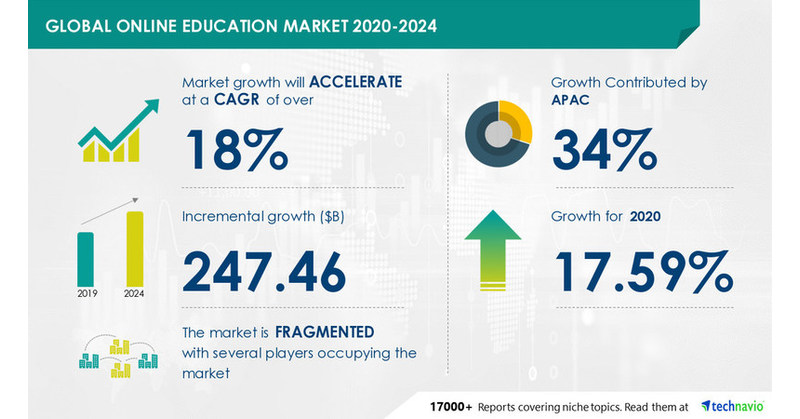
Online Education Market to grow at a CAGR of 18{e4f787673fbda589a16c4acddca5ba6fa1cbf0bc0eb53f36e5f8309f6ee846cf} from 2019 to 2024 |17000+ Technavio Reports

Online Education Market to grow at a CAGR of 18{e4f787673fbda589a16c4acddca5ba6fa1cbf0bc0eb53f36e5f8309f6ee846cf} from 2019 to 2024 |17000+ Technavio Reports

Market Dynamics

Factors such as the growing advantages of online learning and rapid penetration of internet-enabled devices will drive the growth of the Online Education Market. 

Company Profiles

The online education market report includes information on the product launches, sustainability, and prospects of leading vendors including 2U Inc., Ambow Education Holding Ltd., Coursera Inc., edX Inc., iTutorGroup, LinkedIn Corp., McGraw-Hill Education Inc., Pearson Plc, Udacity Inc., and Udemy Inc.

Some Companies with Key Offerings

  • 2U Inc., –The company offers a line of low-cost tools to help students better engage in online learning.
  • Ambow Education Holding Ltd. – The company offers a line of courses related to school education, tutoring services, international education programs, and online educational offerings through its business segment K-12 Education.
  • Coursera Inc. – The company offers online courses including free courses and university degrees at a breakthrough price.

Competitive Analysis

The report includes the competitive analysis, a proprietary tool to analyze and evaluate the position of companies based on their industry position score and market performance score. The tool uses various factors for categorizing the players into four categories. Some of these factors considered for analysis are financial performance over the last 3 years, growth strategies, innovation score, new product launches, investments, growth in market share, etc.

Market Segmentation

  • By Type, the market is classified into Higher education, Test preparation, Language and casual learning, Prim & sec supplemental edu., and Reskilling & online certifications.
  • By Geography, the market is classified as North America, APAC, Europe, South America, and MEA. APAC will have the largest share of the market.

Related Reports
Edtech Market –The Edtech market has the potential to grow by USD 112.39 billion during 2021-2025, and the market’s growth momentum will decelerate at a CAGR of 17.85{e4f787673fbda589a16c4acddca5ba6fa1cbf0bc0eb53f36e5f8309f6ee846cf}. Download a free sample now!

Virtual Schools Market in North America –The virtual schools market in North America has the potential to grow by USD 294.17 million during 2021-2025, and the market’s growth momentum will decelerate at a CAGR of 4.78{e4f787673fbda589a16c4acddca5ba6fa1cbf0bc0eb53f36e5f8309f6ee846cf}. Download a free sample now!

Online Education Market Scope

Report Coverage

Details

Page number

120

Base year

2019

Forecast period

2020-2024

Growth momentum & CAGR

Accelerate at a CAGR of 18{e4f787673fbda589a16c4acddca5ba6fa1cbf0bc0eb53f36e5f8309f6ee846cf}

Market growth 2020-2024

USD 247.46 billion

Market structure

Fragmented

YoY growth ({e4f787673fbda589a16c4acddca5ba6fa1cbf0bc0eb53f36e5f8309f6ee846cf})

17.59

Regional analysis

North America, APAC, Europe, South America, and MEA

Performing market contribution

APAC at 34{e4f787673fbda589a16c4acddca5ba6fa1cbf0bc0eb53f36e5f8309f6ee846cf}

Key consumer countries

US, China, Germany, UK, France, and Canada

Competitive landscape

Leading companies, competitive strategies, consumer engagement scope

Companies profiled

2U Inc., Ambow Education Holding Ltd., Coursera Inc., edX Inc., iTutorGroup, LinkedIn Corp., McGraw-Hill Education Inc., Pearson Plc, Udacity Inc., and Udemy Inc.

Market Dynamics

Parent market analysis, Market growth inducers and obstacles, Fast-growing and slow-growing segment analysis, COVID-19 impact and future consumer dynamics, market condition analysis for the forecast period

Customization purview

If our report has not included the data that you are looking for, you can reach out to our analysts and get segments customized.

About Us

Technavio is a leading global technology research and advisory company. Their research and analysis focus on emerging market trends and provides actionable insights to help businesses identify market opportunities and develop effective strategies to optimize their market positions. With over 500 specialized analysts, Technavio’s report library consists of more than 17,000 reports and counting, covering 800 technologies, spanning across 50 countries. Their client base consists of enterprises of all sizes, including more than 100 Fortune 500 companies. This growing client base relies on Technavio’s comprehensive coverage, extensive research, and actionable market insights to identify opportunities in existing and potential markets and assess their competitive positions within changing market scenarios.

Contact

Technavio Research
Jesse Maida
Media & Marketing Executive
US: +1 844 364 1100
UK: +44 203 893 3200
Email: [email protected]
Website: www.technavio.com/

SOURCE Technavio

Related Links

http://www.technavio.com